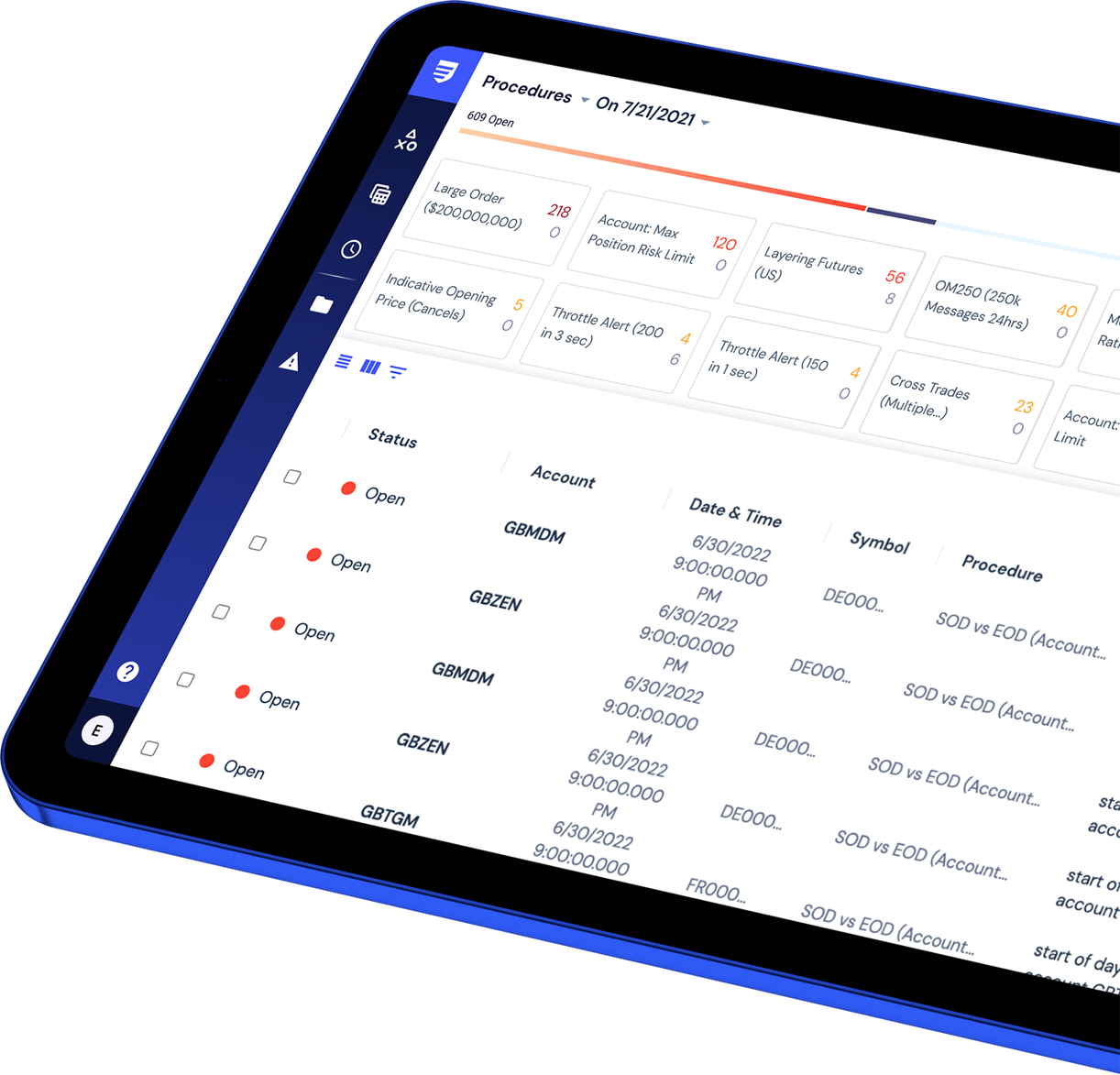
Eventus and STX have announced that the prediction market operator has deployed the Eventus Validus trade surveillance platform as the core monitoring system for the regulated exchange it is preparing to launch. While the announcement is about surveillance software, it also highlights one of the biggest challenges facing the rapidly expanding prediction market industry: convincing regulators and institutional participants that these markets can detect and prevent manipulation as effectively as traditional futures exchanges.
STX said Validus will monitor all trading activity across its platform as the company continues seeking recognition from the U.S. Commodity Futures Trading Commission as both a Designated Contract Market and a Derivatives Clearing Organization through its XV Exchange and XV Clearing entities.
The decision reflects a broader trend across regulated prediction markets, where surveillance technology has become a prerequisite for regulatory approval rather than an operational enhancement added after launch.
Prediction Markets Create New Surveillance Challenges
Unlike traditional equity or futures markets, event contracts can experience dramatic bursts of activity immediately after new information becomes public. A breaking news headline, injury announcement, regulatory decision or economic release can trigger thousands of orders within seconds as traders rapidly reassess probabilities.
Those conditions make surveillance significantly more complex.
Market operators must distinguish between legitimate trading driven by genuine information and activity designed to manipulate prices or create misleading market signals. Techniques familiar to regulators in traditional markets, including spoofing, layering and momentum ignition, may appear differently when contracts are linked to rapidly changing real-world events rather than continuously traded financial instruments.
STX said the Eventus platform will monitor for a wide range of potentially abusive behaviour, including insider dealing, price ramping, layering, spoofing, cross-product spoofing, cancel-after-fill activity and unusual order or trade patterns.
For regulators, the objective extends beyond identifying misconduct after it occurs. Modern surveillance systems increasingly focus on detecting suspicious activity quickly enough for compliance teams to investigate and intervene before market integrity is compromised.
Surveillance Has Become a Requirement for CFTC Approval
The announcement comes as several firms compete to establish federally regulated prediction markets in the United States.
To obtain Designated Contract Market status, exchanges must satisfy the CFTC’s Core Principles covering market integrity, surveillance, governance, operational resilience and participant protections. Demonstrating effective surveillance capabilities has therefore become one of the central components of every regulatory application.
According to STX, Eventus has worked with the exchange throughout its engagement with the regulator, supporting demonstrations of the platform’s surveillance capabilities and continuing to assist as STX prepares its production environment.
The approach mirrors developments elsewhere in the industry, where exchanges increasingly build compliance infrastructure before launching commercial operations rather than adding it later.
Earlier this week, FinanceFeeds reported how Novig secured one of the fastest Designated Contract Market approvals in CFTC history, supported by regulatory consultancy Tölt Strategies. Together, the announcements illustrate how governance, surveillance and compliance have become strategic differentiators as competition intensifies among prediction market operators.
Eventus Continues Expanding Into Digital Assets and Prediction Markets
For Eventus, the partnership reflects a broader expansion beyond traditional financial markets.
The company’s Validus platform is already deployed across equities, options, futures, foreign exchange, fixed income and digital asset markets. Prediction markets represent another area where regulators increasingly expect surveillance standards comparable to those applied across established financial exchanges.
The company has steadily expanded its client base among exchanges, broker-dealers, futures commission merchants and regulators as market abuse detection becomes increasingly technology driven.
Modern surveillance platforms analyse millions of orders and executions in real time, identifying patterns that would be virtually impossible for human analysts to detect manually. Artificial intelligence and behavioural analytics have further improved the ability to identify potentially manipulative activity while reducing false positives that overwhelm compliance teams.
Trade surveillance has become one of the fastest-growing areas of regulatory technology, driven by increasing regulatory expectations and rising trading volumes across both traditional and digital markets.
Market Integrity May Become the Industry’s Biggest Competitive Advantage
Prediction markets have attracted growing attention because they offer a regulated way to trade the probability of future events, including elections, economic releases, sporting events and geopolitical developments.
That growth, however, also increases the importance of market confidence.
Participants must believe prices genuinely reflect collective expectations rather than manipulation by insiders or sophisticated traders exploiting weaknesses in market oversight. Institutional firms considering participation will expect surveillance standards similar to those already established across futures and options exchanges.
Earlier this week, TS Imagine announced the integration of prediction market data into institutional portfolio risk management, illustrating how event markets are increasingly becoming part of mainstream investment infrastructure rather than standalone speculative venues.
If institutional adoption continues accelerating, surveillance systems will become increasingly important because the consequences of manipulation extend beyond individual contracts. Distorted prediction market prices could influence investment decisions, portfolio hedging strategies and even broader market expectations if institutions begin incorporating these probabilities into trading models.
Infrastructure Is Becoming as Important as Liquidity
Justin Deutsch, Founder and Chief Executive Officer of STX, said, “At STX, we believe the long-term success of prediction markets depends on market integrity. As we prepare to launch our regulated platform, we have made significant investments in surveillance technology and compliance infrastructure from day one, rather than treating these capabilities as an afterthought.”
Deutsch added that the firm’s objective extends beyond satisfying regulatory obligations. “Our objective is not simply to satisfy regulatory requirements; it is to help establish a new benchmark for trust and transparency in prediction markets. We believe users should have confidence that markets are actively monitored, abusive behavior is identified and investigated, and participants compete on a level playing field.”
Eventus Chief Executive Officer Cameron Routh said, “We’re honored that STX has chosen Eventus to underpin the integrity of its new regulated market. STX joins a growing roster of prediction and information markets that treat surveillance as core infrastructure from day one.”
The announcement illustrates how the prediction market industry is evolving. Early competition focused on contract design and user acquisition. The next phase is increasingly centred on building institutional-grade infrastructure, where surveillance, compliance, governance and operational resilience may prove just as important as liquidity in determining which exchanges earn the confidence of regulators and professional investors.