Archive

October 2, 2026

Browsing

Investors often assume that sticking to domestic stocks is a safe way to avoid the chaos of international politics, but a new report reveals that American portfolios are far more entangled in global conflicts than they appear. Researchers Matteo Crosignani, Lina Han, and Marco Macchiavelli have identified a growing phenomenon called geoeconomic risk, where companies lose value when governments use trade or financial leverage for political goals. Even if an investor never buys a single foreign share, they may still be heavily exposed to these risks through the complex web of global supply chains and overseas customers that sustain many U.S. corporations.

The researchers focused specifically on the ongoing technological rivalry between the United States and China, using export controls imposed by the Department of Commerce as a primary case study. When the U.S. government adds a Chinese entity to an export control list for national security reasons, it does not just hurt the targeted company in China; it creates a ripple effect that hits its American suppliers. By analyzing over 5,000 mutual funds from 2010 to 2023, the team found that roughly 20 percent of domestic fund assets are tied to U.S. firms with Chinese customers, with some science and technology funds seeing that figure climb as high as 43 percent.

These geopolitical shocks lead to immediate and measurable financial pain for shareholders. Data shows that U.S. suppliers typically see their stock prices drop by about 3.6 percent shortly after their Chinese partners are hit with sanctions. Because so many different companies rely on similar international partnerships, this type of risk is incredibly difficult for investors to diversify away. It acts as a systemic drag on performance rather than an isolated incident affecting just one business, leading to increased volatility and lower overall returns for highly exposed funds.

In response to these pressures, active fund managers are increasingly treating geoeconomic instability as a permanent threat rather than a temporary dip in pricing. After export controls are announced, managers tend to aggressively rebalance their portfolios by selling off affected suppliers and other China linked firms regardless of whether those specific companies were named in the latest order. This shift suggests that professional investors now view geopolitical friction as a fundamental driver of market value and are proactively scrubbing their holdings to protect against future diplomatic fallout.

Wall Street investors can breathe a sigh of relief now that September is behind them. Historically, September holds the dubious honor of being the worst month of the year for stock market returns, often dragging down the S&P 500 into negative territory. While this year saw a modest positive gain of less than one percent, the shift in momentum sets the stage for a potentially explosive October. On average, October delivers solid gains, serving as a springboard for the final stretch of the calendar year.

The real excitement for this month lies in several major catalysts, most notably the beginning of fourth-quarter corporate reporting. Investors are eagerly awaiting third-quarter results from the AI hyperscalers, specifically tech giants like Alphabet, Amazon, and Microsoft. These companies have been pouring hundreds of billions of dollars into data centers and artificial intelligence infrastructure. Because these three megacaps represent such a massive portion of the overall market value, their performance tends to dictate whether the broader index soars or sinks.

Much of the anticipation surrounds future capital expenditure guidance for 2027. While analysts generally expect these firms to increase spending to maintain their competitive edge in AI, the critical question is whether those costs will be offset by continuing revenue growth. If these companies can demonstrate that their cloud computing divisions are seeing massive demand and maintaining strong margins—similar to Google Cloud’s recent impressive trajectory—the market could react with overwhelming optimism.

A bullish outlook for these tech titans wouldn’t just benefit their own shareholders; it would likely create a ripple effect across the entire sector. Chipmakers such as Nvidia, Broadcom, and Taiwan Semiconductor Manufacturing stand to gain significantly if the big spenders signal continued investment in hardware. Ultimately, if these industry leaders report strength and confidence during their October updates, they could easily lift the rest of the S&P 500 along with them, turning October into a standout month for portfolios everywhere.

Charles Payne recently took to the airwaves to offer his perspective on the latest swings in the stock market, providing investors with a much needed reality check amidst ongoing volatility. During his analysis, Payne examined the current momentum of major indices and what these movements signal about the broader economic health of the country. He emphasized that while short term fluctuations can be nerve wracking for the average trader, it is essential to look at the underlying fundamentals rather than reacting emotionally to daily price changes.

The financial commentator pointed toward several key drivers currently influencing investor sentiment, including shifting expectations around interest rates and corporate earnings reports. Payne suggested that many of the recent gains reflect a growing confidence in business resilience, though he cautioned that complacency could be a risk if traders ignore potential headwinds coming from global markets. His approach remains rooted in identifying long term value over chasing temporary hype cycles.

Throughout his reflections, Payne encouraged viewers to maintain a disciplined strategy and avoid panic selling during inevitable dips. By focusing on companies with strong balance sheets and sustainable growth models, he argued that investors can weather any storm regardless of political noise or macroeconomic uncertainty. His insights serve as a reminder that patience often pays off more than frantic activity in an unpredictable trading environment.

Investors can breathe a sigh of relief now that September is behind them, having successfully navigated what is historically the most treacherous month for stock market returns. While the S&P 500 typically struggles during this window, this year managed to stay in the green, albeit with a modest gain of less than one percent. This stability sets a promising stage for October, a month that traditionally averages positive returns and often serves as a springboard for late year rallies.

The real excitement for October lies in the arrival of the fourth quarter and the subsequent wave of third quarter earnings reports. Market watchers are particularly focused on the AI hyperscalers, specifically giants like Alphabet, Amazon, and Microsoft. Because these companies represent such a massive portion of the total market value, their performance doesn’t just affect their own shareholders but tends to dictate the direction of the entire index. Investors are eager to see how these firms are managing their colossal investments in AI data center capacity and whether those bets are continuing to pay off.

A critical point of contention will be future spending plans. Many analysts expect these tech titans to reveal aggressive capital expenditure guidance reaching into 2027. While massive spending can sometimes spook investors, there is strong evidence that high demand justifies the cost. For instance, Google Cloud recently saw revenue surge 82 percent year over year with impressive margins, suggesting that expanding capacity is a smart move rather than a reckless gamble. If Amazon and Microsoft report similar strength and justify their spending with continued revenue growth, it could trigger a significant market surge.

Such success would likely create a ripple effect across the broader technology sector. A bullish outlook from the big three would provide a major tailwind for essential hardware providers like Nvidia, Broadcom, and Taiwan Semiconductor Manufacturing. Since these chipmakers form another heavy pillar of current market valuations, any confirmation that AI infrastructure demand remains insatiable could propel stocks higher throughout the month. Ultimately, if these dominant players deliver strong numbers in October, they could lift the rest of Wall Street along with them heading into winter.

The United States Senate blocked a Republican led effort to restrict stock trading by members of Congress on Wednesday, falling seven votes short of the threshold required to even begin a formal debate. In a party line divide, every Democrat and independent voted against the Stop Insider Trading Act, which had previously cleared the House in July. Coming just five weeks before the November midterm elections, the collapse of the bill highlights a deep partisan rift over how to handle perceived conflicts of interest within the halls of power.

Democrats argued that the proposed legislation was fundamentally flawed, describing it as a permission slip for corruption rather than a genuine reform. They contended that because the bill allowed lawmakers to maintain their existing portfolios and reinvest dividends, it essentially left loopholes wide open. Furthermore, Democratic leaders like Chuck Schumer claimed the measure was intentionally sabotaged by being bundled with strict voter ID requirements, which they labeled a poison pill designed to distract from the core issue and obstruct any real progress toward ethics reform.

Republicans reacted with indignation, accusing their colleagues across the aisle of protecting a corrupt system often referred to as the swamp. Senator Pete Ricketts emphasized the urgent need to restore public faith in government institutions, while Republican National Committee Chair Joe Gruters suggested that voters should be the ones to hold Democrats accountable at the polls next month. This clash follows years of stalled attempts to curb congressional trading, including various iterations of bills targeting high profile figures like Nancy Pelosi or attempting to expand restrictions to include presidenital officials.

The debate arrives amid staggering data regarding financial activity in Washington and beyond. Recent disclosures sparked controversy when reports surfaced detailing thousands of trades linked to Donald Trump during his time in office, volumes that some legislators described as unprecedented for a sitting president. While there has been no evidence produced showing illegal insider trading, watchdog groups continue to point toward millions of dollars in trades made by members of both parties as proof that current laws are insufficient. As the Senate adjourns for the remainder of the campaign season, these unresolved tensions remain a central talking point for candidates seeking to prove their integrity to an increasingly skeptical electorate.

Austin based startup Supra Elemental Recovery has taken a significant step toward securing the American supply chain after landing a Phase I Small Business Innovation Research contract from the U.S. Department of Defense. Working specifically with the Defense Logistics Agency, the company will evaluate whether its proprietary separation platform can feasibly and scalably recover high purity scandium from domestic industrial byproducts. This move comes as part of a broader federal push to reduce reliance on foreign imports, particularly those coming from China, which currently dominates the rare earth refining market.

The technology behind Supra’s approach was born out of research at the University of Texas at Austin before the company officially spun off in early 2026. Rather than relying on conventional refining techniques that are often slow and environmentally taxing, Supra uses specialized reusable cartridges that act like sponges to dissolve and capture critical minerals from industrial waste. According to the company, this method can be up to 100 times faster and more selective than existing processes, all while avoiding the production of toxic byproducts.

CEO Katie Durham emphasized that while the United States possesses plenty of scandium resources onshore, the challenge has always been extracting them efficiently enough to meet domestic demand. By focusing on both scandium and gallium initially, Supra aims to provide a resilient alternative to current supply chains. However, their ambitions extend beyond those two elements; the firm is already working to validate its platform for other essential battery and magnet materials such as lithium, cobalt, and various lanthanides.

Industry confidence in Supra’s vision is growing quickly beyond government contracts. The startup recently secured an investment from mining giant Rio Tinto and joined the Defense Industrial Base Consortium to help strengthen national security infrastructure. As COO Jordan Sessler noted during the company’s launch, rare earths themselves are not actually rare but are notoriously difficult and expensive to purify. By diversifying both their sources and the elements they recover, Supra believes it can finally break the bottleneck in critical mineral refinement.

The future of the Bell Bay aluminium smelter has been secured until at least 2031 following a complex multi tiered agreement between Rio Tinto, the Tasmanian government, and the Australian Commonwealth. The deal resolves a looming energy crisis for the facility, whose previous power supply contract with state owned Hydro Tasmania was slated to run out by the end of 2026. Under the new five year arrangement, Hydro Tasmania will continue to provide electricity at rates the state government describes as globally competitive and the lowest possible price available.

To ensure the plant remains viable against volatile international markets, federal and state authorities are providing a combined support package of 200 million Australian dollars. Federal Industry Minister Tim Ayres explained that this subsidy is designed with safeguards to protect taxpayers, meaning the level of government assistance will fluctuate based on global aluminium prices. By implementing caps on yearly expenditure and specific thresholds, officials believe they have created a smart investment platform that keeps the industry competitive without granting an unconditional blank check.

For the community in northern Tasmania, particularly within the George Town municipality, this announcement provides much needed stability after a period of significant economic anxiety. The region recently suffered a blow when its only commercial manganese alloy smelter closed down, resulting in over 200 job losses. Given that Bell Bay pumps roughly 260 million dollars annually into the local economy via nearly 200 suppliers, maintaining its operation is seen as critical for regional survival.

Established in 1955 as the first aluminium smelter in the Southern Hemisphere, Bell Bay currently produces about 190,000 tons of metal each year. This long term commitment comes as Rio Tinto continues to strengthen its broader presence across Australia, including recent moves to expand its bauxite sourcing in Northern Queensland. Together with other recent modernization funds provided to various smelting operations across Hobart and Port Pirie, these deals signal a concerted effort by several levels of government to shore up Australia’s industrial base during a time of global transition.

Australian mining giant Lynas Rare Earths is making a massive move to secure its global standing with an all-share deal to acquire Meteoric Resources for 678 million US dollars. This strategic takeover gives Lynas full control of the Caldeira project in Brazil, which holds the title of the largest known ionic clay rare earth deposit outside of China. By absorbing Meteoric, Lynas effectively diversifies its asset portfolio, blending the new Brazilian deposits with its established high-grade hard rock operations at Mount Weld in Western Australia.

The financial structure of the deal involves an exchange where Meteoric shareholders will receive 0.0207 Lynas shares for every share they currently hold. From a technical standpoint, the addition of Caldeira is a game changer for Lynas, boosting its measured and indicated total rare earth oxide mineral resources by about 79 percent and increasing ore reserves by roughly 26 percent. According to recent feasibility studies, the site is expected to produce thousands of tons of neodymium-praseodymium and dysprosium-terbium oxides annually throughout the life of the mine.

Company leadership expressed strong confidence in the merger, with Lynas Chairman John Humphrey highlighting the synergy between two world class deposits. Meanwhile, Meteoric Executive Chair Andrew Tunks noted that his team’s disciplined approach made Caldeira an attractive target due to its high recoverability and low operating costs. Beyond just extraction, Lynas is now weighing whether to ship materials back to its existing processing plants in Malaysia or build entirely new downstream facilities right there in Brazil.

This acquisition comes during a period of significant growth and stability for Lynas, following a long term supply extension with Japan Australia Rare Earths and a renewed decade long license for its Malaysian plant. The move also aligns with the interests of major stakeholders like billionaire Gina Rinehart, who has consistently supported efforts to develop critical mineral supplies independent of Chinese influence. As geopolitical tensions continue to shape the energy transition market, this consolidation positions Lynas as a dominant player in the non Chinese rare earths landscape.

The battle for control of Congress is entering its final sprint, with Republicans and Democrats just over a month away from learning who will wield power for the final two years of President Donald Trump’s presidency.

House Democrats lead House Republicans in the most recent Fox News Power Rankings, with the left projected to win 215 seats in the lower chamber compared to 201 for the GOP. But 19 seats are still ranked as toss-ups, meaning the final majority is still anyone’s to claim.

One issue that’s given Republicans a glimmer of hope in an otherwise bleak cycle is the far-left insurgency that’s gripped the Democratic Party. Several key victories by socialist candidates could threaten to push the party further left than most Americans are, a warning that GOP candidates across the country have shared.

FOX NEWS POWER RANKINGS: DEMOCRATS LEAD IN THE HOUSE, BUT REDISTRICTING KEEPS THE GOP IN THE GAME

Below is a list of 10 House districts currently held by Democrats where Republicans could see key victories that help them retain control.

Alabama’s 2nd Congressional District

Rep. Shomari Figures, D-Ala., is running for re-election in a congressional district that’s been redrawn to significantly favor Republicans.

SUPREME COURT ALLOWS ALABAMA GOP-BACKED CONGRESSIONAL MAP FOR MIDTERMS

A 2023 Supreme Court decision ordered Alabama to create a second Black opportunity district ahead of the 2024 election, meaning Black voters there would have meaningful sway in the general election. The resulting boundaries helped Figures win his seat, which was previously held by Rep. Barry Moore, R-Ala., who ran in a neighboring district that cycle.

But the Supreme Court’s ruling in Louisiana v. Callais earlier this year significantly curbed the Voting Rights Act’s enforcement of racial considerations in congressional maps, paving the way for southern states to alter district boundaries that were drawn to give minorities more representation.

BLOCKBUSTER SUPREME COURT VOTING RIGHTS RULING IGNITES REDISTRICTING WAR ACROSS SOUTHERN STATES

That hit Figures particularly hard. The new district would have voted for President Donald Trump by roughly 14% in 2024, according to 270ToWin. Both Fox News Power Rankings and the nonpartisan Cook Political Report (CPR) rate it as “likely Republican.”

Florida’s 9th Congressional District

Florida lawmakers also altered their state’s map ahead of November, aimed at giving Republicans a slight edge in the already-red state.

Rep. Darren Soto, D-Fla., who is running for a sixth term representing his district, was one of the Democrats whose seat was hit the hardest.

His newly redrawn district voted for Trump by nearly 18%, 270ToWin’s analysis states.

REDISTRICTING GIVES REPUBLICANS AN EDGE, BUT AFFORDABILITY WILL DECIDE THE MIDTERMS

Fox News Power Rankings rates it as “lean Republican” while CPR ranks the seat as a “likely” Republican pickup.

Florida’s 14th Congressional District

The Tampa-area House seat held by Rep. Kathy Castor, D-Fla., was also among the blue seats redrawn by the Sunshine State’s government to make it more competitive for Republicans.

The longtime moderate Democrat has served in Congress since 2007 and represented her current district since 2013.

She’s facing off against a former Florida state lawmaker, Republican Mike Beltran, who also has name recognition in the area.

Under its new lines, which remove more Democrat-leaning places around the city of St. Petersburg in favor of more rural and suburban areas in the south and east, Trump would have won the district by 10.5% in 2024, according to 270ToWin.

Both Fox News Power Rankings and CPR rate it a “toss-up,” meaning it’s anyone’s game.

Florida’s 22nd Congressional District

Republicans redrew Florida’s 22nd Congressional District in a way that could have pitted incumbent Reps. Jared Moskowitz, D-Fla., and Debbie Wasserman Schultz, D-Fla., against each other in a likely expensive and bruising primary.

But both opted to run in other districts, leaving the seat currently occupied by retiring Rep. Lois Frankel, D-Fla., as a potential opportunity for both parties.

Under Florida’s new map, 270ToWin projects Trump would have won the district by roughly 10% in 2024.

Democrat Pia Dandiya, a political newcomer, is running against Republican businessman and Marine Casey Askar.

Both Fox News and CPR rank the district a “toss-up.”

Florida’s 25th Congressional District

Rep. Jared Moskowitz, D-Fla., is running in Florida’s 25th Congressional District after the GOP’s aforementioned redistricting play, a seat that on paper was amended to give Republicans a slight edge.

Redistricting shifted the seat from one that ex-Vice President Kamala Harris won by single digits to one that Trump would have won by nearly 10 points.

Moskowitz has long touted his bipartisan work in Congress and as Florida’s emergency management director under Gov. Ron DeSantis, giving Democrats some confidence that he could overcome the political shift in Republicans’ favor.

Fox News’ latest projections have the seat leaning Democrat, while CPR ranks it a “toss-up.”

Louisiana’s 6th Congressional District

Rep. Cleo Fields, D-La., is retiring at the end of this year, making his seat another open race.

But the same 2023 and 2026 Supreme Court decisions that affected Figures in Alabama are at play in the Bayou State this year.

After the most recent decision rolling back the Voting Rights Act, Republicans were able to redraw the 6th district in a way that diluted the Black population, who primarily voted Democrat in 2024, to factor in more red-leaning areas.

Because of the Supreme Court’s ruling earlier this year, Louisiana Gov. Jeff Landry signed legislation delaying the state’s House primary races to Nov. 3 and the general election to Dec. 12.

Both Fox News’ and CPR’s rankings project the seat to fall into Republican hands.

Maine’s 2nd Congressional District

The retirement of moderate Rep. Jared Golden, D-Maine, has opened up a rare opportunity for a GOP pickup in the American Northeast.

Golden, who is known for frequently breaking from his own party on key issues like immigration and tariffs, represents a district that Trump won by 9% in 2024, according to 270ToWin.

Republicans have a particularly strong candidate in that open race, former Gov. Paul LePage.

Fox News rates the district a “toss-up,” while CPR projects it as a likely Republican victory.

North Carolina’s 1st Congressional District

Perennial battleground Rep. Don Davis, D-N.C., is facing one of his toughest re-election battles yet thanks to North Carolina also joining the nationwide redistricting fight ahead of November.

Like Golden, Davis also won a district that went to Trump over Harris in 2024.

But under the state’s new maps, Trump’s margin of victory in that state widened considerably — and with it, Republicans’ chances of winning.

Davis is facing Republican Laurie Buckhout, who he defeated in 2024 by less than 2%.

Fox News rates the district a “toss-up,” while CPR’s rankings say it leans slightly for Republicans.

Texas’ 35th Congressional District

Lone Star State Republicans kicked off the nationwide redistricting fight ahead of the 2026 midterms with a map that was redrawn to win the GOP up to five more seats in November.

Among those is a district currently represented by Congressional Progressive Caucus Chair Greg Casar, D-Texas.

But Casar is now running in the nearby 37th Congressional District, leaving the 35th a wide-open race that both parties see opportunity in.

Under the new boundaries, Trump would have won the district by roughly 10%, according to 270ToWin.

A GOP victory there, however, will depend heavily on its considerable Hispanic population shifting to the right again this year.

Both Fox News and CPR project the district leaning slightly in favor of Republicans.

Ohio’s 9th Congressional District

Rep. Marcy Kaptur, D-Ohio, is also running a tougher race this year thanks to her state’s new congressional map.

Kaptur’s battleground district was shifted slightly to include more Republican-leaning areas, making an already difficult re-election bid even more of an uphill battle.

Trump would have won the district by 10.5% under its new lines, according to 270ToWin.

But Kaptur has survived several attempts at redistricting by Republicans since her first victory in 1982. She is the longest-serving woman in congressional history and the longest currently-serving House member from Ohio.

Both Fox News and CPR rated the district a “toss-up” in November.

Fox News’ Remy Numa contributed to this report.

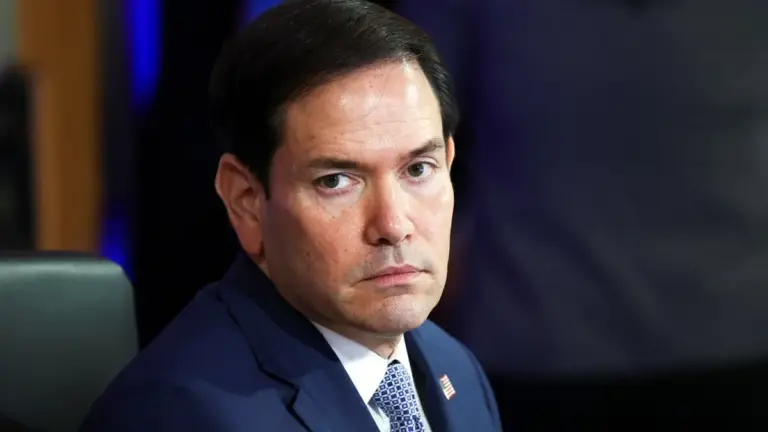
Secretary of State Marco Rubio abruptly ended talks and ordered the Iranian delegation to leave the U.S. after negotiations stalled, yet again, with no clear sign of a breakthrough more than seven months into the conflict, an official confirmed to Fox News Digital.

And now, President Donald Trump is directly warning Iran it’s “possible” he will go harder with strikes in the Middle East after the midterm elections in November and revealed the U.S. military has significantly rebuilt its arsenal in recent months.

The latest messaging from the White House and State Department signals an increasingly strained diplomatic track, after days of negotiations failed to close the gap between Washington and Tehran over the terms of ending the war.

IRAN ‘MISCALCULATING’ BY BETTING ON MIDTERMS AFTER 3-HOUR TALKS, TRUMP OFFICIALS WARN

Asked in an interview with Time whether he would “ramp up bombing after the midterms,” Trump replied: “Possible.”

Further pressed on whether such an escalation was under consideration, the president declined to discuss potential targets but said the U.S. had spent months rebuilding its arsenal.

“We have a lot of weapons. You know, we’ve been stocking up for the last six months,” Trump said.

Trump also used the word “possible” when asked whether he “might annihilate Iran.”

After little progress in weekend meetings involving Iranian officials and Qatari mediators, Rubio told Iranian Foreign Minister Abbas Araghchi and his delegation on Monday that they needed to leave New York, an official confirmed to Fox News Digital after Axios first reported on the confrontation.

Rubio concluded the Iranians had “overstayed their welcome” after the high-level U.N. meetings had ended. Araghchi had remained in New York for indirect talks seeking to end the blockade of oil and shipping through the Strait of Hormuz, ending the conflict overall and restarting negotiations over Iran’s nuclear program.

TRUMP, IRANIAN PRESIDENT CONVERGE ON NYC FOR ‘DRAMATIC’ UN SHOWDOWN AS TEHRAN FACES TIGHT RESTRICTIONS

Trump said in his speech to the United Nation’s General Assembly last week that he would continue to make sure Iran is not able to obtain nuclear weapons.

Araghchi and his team departed early Tuesday. Iran disputed the U.S. account, saying the delegation’s Monday night departure had already been scheduled and communicated to the State Department on Sept. 17.

The order to leave amounted to an unusually sharp diplomatic rebuke at a moment when mediators are still trying to keep negotiations alive.

The latest talks have centered on a seven-day confidence-building proposal aimed at reopening the Strait of Hormuz and reviving the June framework that briefly halted the fighting. Qatar has been shuttling messages between Washington and Tehran, with the two sides still divided largely over the sequencing of concessions — including when Iran would reopen the strait, what nuclear steps Tehran would take and what economic relief the U.S. would provide in return.

Trump rejected Iran’s latest proposal over the weekend, later saying Tehran’s offer to reopen the strait was “not good enough. Nearly.” He also denied reports that he had offered sanctions relief or the release of frozen Iranian funds in exchange for movement on the nuclear issue.

Despite the diplomatic stalemate, oil flows through the region have been recovering. Estimates cited by major banks put recent Middle East exports close to pre-war levels, helping ease some of the supply fears that sent crude prices sharply higher earlier in the conflict.

But the lack of a deal is still putting pressure on energy markets. Brent crude settled above $103 a barrel Wednesday, while U.S. crude closed above $90, with oil posting steep September gains as traders weighed stalled U.S.-Iran talks against the recovery in regional supply.

Americans are still feeling that pressure at the pump. The national average for regular gasoline was about $4.43 a gallon Wednesday, compared with roughly $3.15 a year earlier, while diesel stood above $6.40 a gallon.

The Strait of Hormuz remains central to both the negotiations and the economic stakes. Before the war, roughly one-fifth of global crude oil and liquefied natural gas supplies passed through the waterway, making even partial disruption a major driver of global energy prices.