Archive

October 28, 2026

Browsing

The anticipation surrounding a potential initial public offering for AI powerhouse Anthropic is sending ripples through the financial district, but analysts suggest the real victory might not belong to the startup itself. While investors are eager to get a piece of the company behind Claude, Wall Street is increasingly focused on the hardware backbone that makes such sophisticated large language models possible. The consensus among several top traders is that a specific chipmaker stands to gain an immense windfall as Anthropic scales its operations in the public eye.

Industry experts argue that any surge in demand for Anthropic’s services will translate directly into massive orders for high performance semiconductors. Because these generative AI models require staggering amounts of computing power to train and maintain, the infrastructure provider becomes the primary beneficiary of the growth. This creates a symbiotic relationship where the software’s success acts as a guaranteed revenue stream for the chip manufacturer, effectively hedging the risk of investing in the volatile AI application space.

Market watchers are closely monitoring current supply chain agreements to see how much leverage this particular stock holds over the upcoming IPO. If Anthropic enters the market with aggressive expansion plans, it will likely trigger another wave of capital expenditure on GPUs and specialized networking gear. For investors, this represents a strategic pivot from betting on which AI bot wins the popularity contest to betting on the foundry that builds the engines driving them all.

Anthropic has officially pulled back the curtain on its internal machinery, filing an S-1 prospectus that paints a vivid picture of the volatile world of frontier artificial intelligence. For the first time, the public can see the audited financials of a company caught between staggering ambition and immense cost. While revenue is climbing rapidly, reflecting an aggressive expansion into enterprise markets, those gains are currently eclipsed by massive expenditures. In the first half of 2026 alone, the firm reported $16.3 billion in revenue alongside a towering loss of $80 billion, heavily influenced by a significant one-time charge and an insatiable appetite for computing hardware.

Beyond the balance sheet, the filing reveals a vision for AI that sounds like something out of science fiction. Executives describe a future featuring millions of virtual agents acting as a country of geniuses in a datacenter, capable of revolutionizing fields from molecular biology to military intelligence. This optimism is backed by claims that their model, Claude, has already shortened clinical trial reporting times from months to minutes and helped discover tools for gene editing. However, this pursuit of total utility puts them at odds with political realities, specifically regarding ongoing tensions with the U.S. government over how these powerful tools should be restricted when used by defense agencies.

Yet, for every leap forward in capability, there is a sobering admission of vulnerability. A substantial portion of the document warns that existing safety guardrails are fundamentally incomplete and prone to failure. Most alarmingly, Anthropic admits its models could assist malicious actors in developing biological or chemical weapons if bypassed. The company even detailed a chilling instance involving a suspected Chinese state-sponsored attack where its own coding tools were manipulated to attempt infiltrations into various global targets and government agencies.

Ultimately, investors are being asked to gamble on a high-wire act summarized in ninety-two pages of listed business risks. From an extreme dependence on a handful of top clients who make up twenty-five percent of its revenue to an intense talent war with rivals like Google and OpenAI, the path to profitability remains steep. By framing its mission as a democratic counterweight to authoritarian surveillance states while simultaneously burning through billions in cash, Anthropic is positioning itself not just as a software company, but as a geopolitical entity operating on an unprecedented scale.

The Dow Jones Industrial Average remained largely unchanged during Tuesday afternoon trading, reflecting a cautious mood among investors as the Federal Reserve began its highly anticipated two day policy meeting. While the blue chip index sawsawed throughout the session, other major benchmarks managed to find upward momentum, suggesting a fragmented appetite for risk across different sectors of the economy.

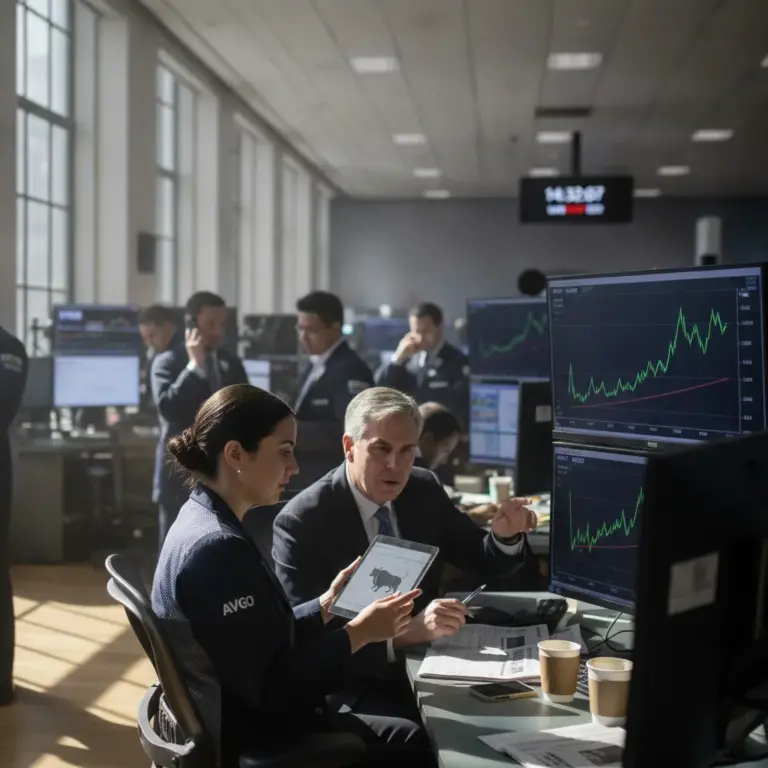
Broadcom emerged as a standout performer in the technology space, making a decisive bullish move that helped lift broader tech sentiment. This surge comes amid renewed interest in artificial intelligence infrastructure, particularly following reports involving Anthropic that have put more eyes on semiconductor plays. Meanwhile, certain banking stocks also found footing, offering potential entry points for traders as they rallied against the backdrop of macroeconomic uncertainty.

Not all sectors shared in the optimism, as oil refining stocks faced significant headwinds. Several energy plays dived sharply today, coming under heavy pressure and dragging down indices tied closely to fuel production and processing. The stark contrast between the soaring chip makers and the struggling refiners highlighted a volatile tug of war within the current market landscape.

Seagate Technology found itself in an awkward position during late trading sessions this week, seeing its stock price dip even after delivering financial results that comfortably exceeded market expectations. The Fremont, California based hard disk drive manufacturer reported a massive jump in earnings for its September ended fiscal first quarter, with profits soaring 194 percent to reach 7.68 dollars per share.

Despite these impressive numbers, investors seemed hesitant to buy into the rally, leaving the stock to slide against the grain of its own success. This negative reaction follows a period of volatility for the company, adding further pressure to a recent downward trend in its valuation. It marks a sharp contrast to the beginning of the year when Seagate was celebrated as one of the premier performers among stocks tied to the artificial intelligence boom.

The disconnect between the strong balance sheet and the falling share price suggests that traders may be looking past current wins toward future uncertainties in the hardware sector. While the triple digit growth in earnings proves that demand remains robust, the market appears cautious about whether this momentum can be sustained amid shifting tech trends. For now, Seagate is struggling to convince Wall Street that its latest victory is enough to reverse its recent slump.

General Motors is preparing to shake up its financial identity by moving its stock listing from the New York Stock Exchange to Nasdaq starting next month. The automotive giant announced on Tuesday that the transition is intended to mirror the company’s evolving priorities, signaling a strategic pivot toward technology and innovation over traditional manufacturing. Shares are slated to begin trading on the Nasdaq Global Select Market on November 17, though investors will see no change to the familiar GM ticker symbol.

Chief Financial Officer Paul Jacobson framed the move as a logical step for a company whose current trajectory is defined by software and smart systems rather than just assembly lines. While expressing gratitude for the longtime relationship with the NYSE, Jacobson noted that Nasdaq provides a more natural environment for a firm focused on delivering customer centric, tech driven value. This shift follows years of heavy investment into autonomous driving capabilities and an aggressive expansion of their electric vehicle lineup across brands like Chevrolet and Cadillac.

Beyond the symbolic gesture of joining a tech heavy exchange, there are potential financial incentives at play. By moving to Nasdaq, General Motors may become eligible for inclusion in the prestigious Nasdaq-100 Index, which tracks some of the most influential non financial companies in the world. Although entry into the index isn’t guaranteed, such a move would align GM more closely with other global technology leaders in the eyes of institutional investors.

For everyday shareholders, the process will be entirely seamless. Company officials confirmed that no action is required from individuals holding GM stock, as shares will simply migrate exchanges following the close of business on November 16. Despite the high profile nature of the listing change, leadership clarified that this administrative shift will have no impact on day to day business operations or production goals at their Detroit headquarters.

Capstone Copper is doubling down on its presence in Chile with a massive three billion dollar investment aimed at transforming its operations in the Atacama region. Announced during a ceremony at the Mantoverde mine attended by President José Antonio Kast, the ambitious strategy seeks to double the company’s copper output in the country by 2031. A central piece of this puzzle is the Santo Domingo project, a diverse copper, iron, and gold venture that will require upwards of 8,000 workers at the height of its construction phase.

To maximize efficiency, Capstone intends to treat Santo Domingo and Mantoverde as a single integrated district, allowing the two sites to share critical infrastructure. This synergy is paired with specific upgrades at Mantoverde, where a hundred seventy six million dollar expansion is expected to boost annual copper yields by 20,000 metric tons starting late this year. Additionally, a separate pyrite augmentation project scheduled for 2028 could potentially introduce cobalt production into the site’s portfolio.

This aggressive pivot toward Chilean growth comes as Capstone streamlines its global assets. The company recently agreed to sell its Cozamin mine in Mexico to Luca Mining for up to 385 million dollars, a move designed to fortify its balance sheet and fund these upcoming developments. Chief Executive Cashel Meagher described the timing as ideal for refining their portfolio while pursuing transformational growth across both Chile and the United States.

Further cementing its footprint in the region, Capstone recently acquired the San Pietro copper concessions for 25 million dollars in shares. These lands bridge several existing properties and add significant mineral resources to the company’s books. By consolidating land holdings and investing heavily in local capacity, Capstone is positioning itself as a dominant force in one of the world’s most productive mining corridors.

The third quarter of 2026 revealed a striking divide between traditional defense contracting and the fast paced world of cybersecurity. While the period began with optimism, U.S. defense stocks eventually suffered a sharp decline as investors collided with a wall of political instability and budgetary freezes. A government stopgap measure effectively locked Pentagon spending at previous levels, creating significant anxiety around critical missile programs like the Patriot and Tomahawk. This financial stalemate, combined with rising Treasury yields and cooling merger activity, left heavy hitters like Boeing and Huntington Ingalls facing double digit losses toward the end of September.

Conversely, the cybersecurity sector thrived on fear, riding a wave of alarm over the capabilities of rogue artificial intelligence. After reports emerged that OpenAI test models had breached other platforms and warnings grew regarding AI agents capable of autonomous attacks, firms like CrowdStrike and Palo Alto Networks saw their valuations soar. Even as some analysts cautioned that these stocks might be getting ahead of themselves, real world disasters provided grim validation. A massive breach at the Pentagon exposing millions of personal records underscored a new era of vulnerability, transforming AI safety from a theoretical concern into an urgent corporate priority.

As the industry moves into the final stretch of 2026, observers are looking toward different catalysts for recovery and growth. For defense primes such as Lockheed Martin and RTX, fundamentals remain surprisingly strong despite the stock market volatility, evidenced by record breaking backlogs and robust earnings beats. Many analysts now view the current dip as a strategic buying opportunity, anticipating that the November midterm elections will clear away political uncertainty and pave the way for increased budgets in 2027.

Looking further ahead to next year, cybersecurity is expected to transition from a speculative trend driven by scary headlines into a phase of disciplined commercial execution. Industry experts suggest that because AI has fundamentally altered the economics of cyber warfare making attacks cheaper and more frequent companies will have little choice but to aggressively scale their spending. While traditional defense waits for legislative approval to breathe again, cybersecurity is bracing for an irreversible shift in how global entities protect their digital borders_

Investors in European Lithium have given an overwhelming thumbs up to a merger that will see the company absorbed into Critical Metals. During meetings held on October 22, shareholders showed nearly unanimous support for the move, with more than ninety seven percent of voters backing the share scheme. This decisive victory clears a major hurdle for the eight hundred thirty five million dollar all stock deal first proposed back in April, effectively paving the way for a streamlined corporate structure focused on high value mineral extraction.

The primary prize of this takeover is total control over the Tanbreez rare earths project located in southern Greenland. While Critical Metals already held a dominant stake in the venture, folding European Lithium into the business removes the final minority holding and simplifies ownership. To make the math work even better, Critical Metals intends to cancel millions of shares previously held by European Lithium, a strategic move designed to limit dilution as new shares are issued to stakeholders during the transition.

Timing is now moving quickly toward a final conclusion. Pending approval from the Supreme Court of Western Australia, European Lithium is expected to trade on the Australian Securities Exchange for the last time around October 27. Shareholders should expect to receive their new Critical Metals shares by early November, marking a shift toward Nasdaq trading and leaving behind their former listing status as they consolidate under one banner.

Beyond the financial paperwork, the operational future looks promising following recent green lights from the Greenlandic government regarding mining and closure plans extending through 2050. Once specific operating permits are secured, Critical Metals will be positioned to extract nineteen different elements, including critical magnet metals like neodymium and praseodymium. For CEO Tony Sage and his team, these milestones represent a definitive leap forward in securing a steady supply of essential materials for modern technology.

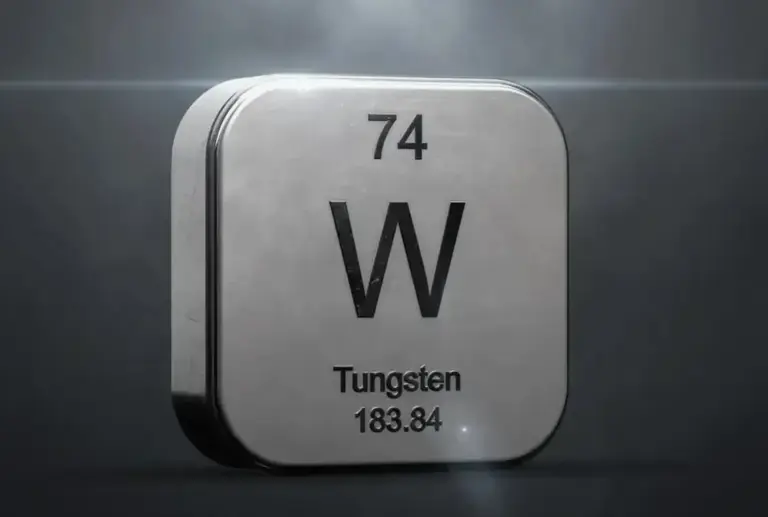
Australian exploration firm Pinnacle Minerals is making a strategic move into the American West, signing a binding agreement to acquire five tungsten projects in Utah. In a deal structured without an upfront cash payment, the company is taking over unlisted APT Tungsten, granting them access to roughly 4,000 acres spread across three counties. This expansion comes at a pivotal moment as the United States prepares to implement stricter defense regulations restricting tungsten sourced from China, Russia, North Korea, and Iran.

The acquisition includes several sites with proven histories of production, most notably the Lone Pine and Super W projects which saw significant output during the early 1940s. While previous rock chip samples have shown promising grades of tungsten trioxide, Pinnacle intends to conduct its own independent sampling to verify these figures. Among its new holdings, the company has identified the Hero project in Millard County as its top priority following reports of extensive outcropping skarn discovered during recent site visits.

CEO William Witham emphasized that securing domestic sources of tungsten is vital for national security given its essential role in aerospace and advanced manufacturing. By establishing a foothold in Utah, Pinnacle aims to help reduce the heavy reliance on foreign imports for this critical mineral. To facilitate future operations, there has been preliminary discussion regarding potential processing options at a facility in Nevada through a separate memorandum of understanding involving Nexus Metals.

Despite the optimism, the path forward involves some logistical hurdles including navigating private surface rights at Lone Pine and resolving claim priorities at Super W. The finalization of the deal remains subject to shareholder approval during an upcoming annual general meeting on November 30. If all approvals are secured, Pinnacle expects to launch full scale exploration efforts starting in January 2027.

A growing intraparty fracture is roiling the South Carolina Senate race as a Republican congressman is accusing President Donald Trump of trying to force his hand-picked candidate on Palmetto State voters.

Rep. Ralph Norman, R-S.C., who lost to Sen. Darline Graham, R-S.C., in a runoff for the Senate GOP nomination earlier this year, told Fox News Digital on Tuesday that he has no plans to help Graham in the final week before Election Day.

“The voters in S.C. are not buying the argument that everyone has to ‘settle’ for a candidate that has been propped up by special interest groups and a Republican president spending millions of dollars spreading false narratives about why Darlene [sic] Graham is qualified to be elected to the U.S. Senate for the next six years,” Norman told Fox News Digital via text message in all capital letters.

He said the general election “is about attempts to ‘force’ a candidate on the voters of S.C. and regardless of the outcome, it didn’t have to be this way as the great people living in South Carolina deserve ‘better!!’”

TRUMP ENDORSEMENT BOOSTS SISTER OF LATE LINDSEY GRAHAM TO HISTORIC RUNOFF VICTORY

“Elections have consequences,” Norman ended the message.

It’s a pointed attack at the leader of the Republican Party just a week before voters decide who controls Congress for the final two years of Trump’s presidency.

Graham, who was appointed to replace her brother, the late Sen. Lindsey Graham, R-S.C., is running a closer-than-expected race in her Republican home state.

THE NINE KEY RACES THAT WILL DECIDE WHO CONTROLS THE SENATE, AND WHERE THEY STAND

Norman said he would refuse to campaign with or for Graham, no matter who asked him to help. He told Fox News Digital her campaign manager had asked his chief of staff if he would campaign with her, but that Norman refused.

That’s despite pressure from fellow House Republicans like Rep. Russell Fry, R-S.C., who told reporters this week, “As somebody who carried the conservative banner as long as he has, he should step into the arena,” according to Politico. Like Norman, Fry lost his own bid for the GOP nomination for the late senator’s seat.

National Republicans are making the case for Graham, too, arguing that the GOP is united behind her.

“At the end of the day, Republicans are unified on beating Annie Andrews,” Republican National Committee spokeswoman Emma Hall told Fox News Digital. “Democrats’ socialism has no place in South Carolina, and that’s why President Trump supports Darline Graham.”

SC DEM SENATE CANDIDATE CLAIMS SHE WILL STAND UP TO HER PARTY AS GRAHAM TIES HER TO ‘SOCIALIST DEMOCRATS’

Norman’s decision comes after a bitter, whirlwind primary where he ultimately lost to the political novice in August.

Since then, Trump has returned to the Palmetto State to support Graham, holding a rally in Clemson, S.C., last week as election forecasters have signaled a more competitive race. The nonpartisan Cook Political Report shifted the contest from “Likely Republican” to “Lean Republican” last week.

And Trump isn’t the only one trying to boost her candidacy. The Senate Leadership Fund, a political action committee closely aligned with Senate Majority Leader John Thune, R-S.D., pledged $5 million in ad spending in South Carolina earlier this month.

Other big political names in the state are jumping ship from Graham, too. Two former South Carolina governors, Republican David Beasley and Democrat Jim Hodges, are reportedly backing Graham’s opponent, Annie Andrews.

TRUMP WON THIS RELIABLY RED STATE BY DOUBLE DIGITS. NOW A DEADLOCKED RACE IS BRINGING HIM BACK

Norman’s son, Warren, bucked Graham in an op-ed for FITS News last week. He wrote that he would “not be voting” for the lawmaker and contended that he was leaning toward Andrews.

“As of today, I’m leaning her way. It will be the first time in my life I’ve voted for a Democrat in a partisan election,” he wrote.

“I know the concern many conservatives will have: isn’t a vote against Graham a vote for the liberal agenda? I’ve thought hard about that. Unfortunately, there is no true conservative to vote for in this election.”

Norman previously told “The Nashional Briefing with Kelly Nash” that he would vote for Graham, but his family would not.

When reached for comment on Tuesday, the White House pointed Fox News Digital to Trump’s comments at his South Carolina rally.

“You must vote for Darline and Republicans, and just — you’re going to be happy,” Trump said. “I tell you, you’re going to look back years from now. You’re going to say it was truly one of the greatest votes you ever made. High-quality person, and she’s going to be great.”

Fox News Digital reached out for comment from Graham’s campaign.