Archive

October 31, 2026

Browsing

eBay is capturing the attention of the trading community this week after delivering a strong earnings report that exceeded analyst expectations. This positive financial momentum has earned the e-commerce veteran the title of stock of the day according to Investor’s Business Daily, signaling a period of renewed confidence in the company’s growth trajectory.

The latest figures suggest that eBay is successfully navigating a competitive digital landscape, managing to beat estimates through strategic operational improvements and steady demand across its marketplace. Investors have reacted favorably to these results, driving a surge in price action as the market digests the implications of the company’s improved profitability and efficiency.

Market analysts note that while historical performance does not guarantee future returns, eBay’s current trend reflects a robust ability to adapt its business model for modern consumers. By maintaining this upward swing, the platform is positioning itself as a resilient player in an era where consumer spending patterns continue to shift toward diversified online shopping experiences.

Altria shares surged by 5.2 percent on Thursday, defying a broader market slump that saw the S&P 500 dip slightly. The rally came on the heels of the company’s third-quarter earnings report, which beat analyst expectations on both the top and bottom lines. Adjusted earnings reached 1.52 dollars per share on revenue of 5.44 billion dollars, prompting management to raise its full-year guidance for 2026. Investors were particularly encouraged by a narrowed and elevated earnings target of between 5.66 and 5.74 dollars per share, along with a fresh one billion dollar authorization for share repurchases.

The financial results reveal a curious trend where Altria is managing to extract more profit even as people buy fewer traditional cigarettes. Despite a nearly three percent drop in domestic cigarette volume, adjusted earnings per share actually climbed by almost five percent compared to last year. This disconnect is largely thanks to aggressive pricing strategies in the smokables business and significant growth in alternative nicotine products, specifically the on! nicotine pouches, which saw shipment volumes jump over thirteen percent.

This spike pushed Altria stock to a closing price of 76.75 dollars, marking its highest point in a full year. It is part of a larger winning streak for the tobacco giant; including dividends, the stock has delivered a total return of nearly thirty percent over the last twelve months, far outpacing the general market index. Other industry peers like Philip Morris International also saw gains during the session, though none matched the intensity of Altria’s climb. As investors look toward early 2027, all eyes will be on whether final annual figures can meet these newly ambitious targets.

Intel shares tumbled more than 20 percent in extended trading on Thursday after the semiconductor giant issued a bleak outlook for the final quarter of the year. Despite reporting third quarter earnings and revenue that slightly beat analyst expectations, investors reacted sharply to management’s warning that the global personal computer market remains soft. Finance chief David Zinsner noted that the company expects this downturn to persist at least through the first half of next year, prompting a strategy of tighter investment discipline.

Adding to the financial strain is a tragic industrial accident at one of Intel’s fabrication plants in Israel. CEO Lip Bu Tan described an explosion that claimed two lives and left another worker seriously injured, resulting in an extended shutdown of the facility. This operational disruption specifically impacted 10 nanometer chip shipments and is expected to cost the company approximately 600 million dollars in lost revenue over two quarters. These combined headwinds come at a volatile time for the chipmaker, whose stock had seen massive gains earlier this year but has recently faced pressure amid wider concerns regarding AI infrastructure spending.

While traditional PC sales struggle, Intel is attempting to pivot toward different growth engines. Data center and AI revenue surged by 78 percent, driven partly by agentic AI applications that rely on CPUs rather than just GPUs. Meanwhile, the company continues its push into foundry services to compete with Taiwan Semiconductor Manufacturing Company, highlighting progress at its Arizona facilities and upcoming developments in Ohio. Though currently lacking major external customers for its newest chips, Tan suggested that several announcements are expected within the next six months.

The S&P 500 has been on an absolute tear lately, fueled largely by an insatiable appetite for artificial intelligence. From chipmakers like Nvidia to software titans like Microsoft, the rush into AI has propelled the major index upward, delivering staggering gains since early 2023. For many, it feels like a gold rush where the possibilities are endless because we are still in the early stages of how this technology will be practically applied across industries.

However, beneath this optimistic surface, a growing sense of anxiety is beginning to creep in among seasoned investors. There are concerns that tech giants might be overspending on AI infrastructure, which could eventually lead to a painful correction in earnings and stock prices. Compounding this stress is the looming threat of persistent inflation and the high likelihood of further interest rate hikes from the Federal Reserve. With valuations currently sitting near record highs according to metrics like the Shiller CAPE ratio, some fear that the market is overdue for a significant pullback or even a full scale crash.

While talking about a market collapse can feel alarmist, financial history teaches us that these cycles are inevitable parts of the economic landscape. The key to surviving them is not panic selling, but rather adopting a disciplined strategy centered on two fundamental habits. First, investors must commit to a long term horizon. By viewing investments through a lens of five years or more, short term volatility becomes mere noise. Historically, the broader market has always rebounded from its lowest depths, meaning those who stay patient typically recover their losses and move toward new highs.

Beyond patience, history suggest that a crash is actually one of the most opportunistic times to build wealth. The second crucial move is to actively shop for quality companies while they are trading at steep discounts. While most people are driven by fear during a downturn, savvy investors use that blood in the streets to acquire blue chip assets at bargain prices. By combining a long term perspective with aggressive buying during dips, investors can turn a frightening market event into a powerful engine for future growth.

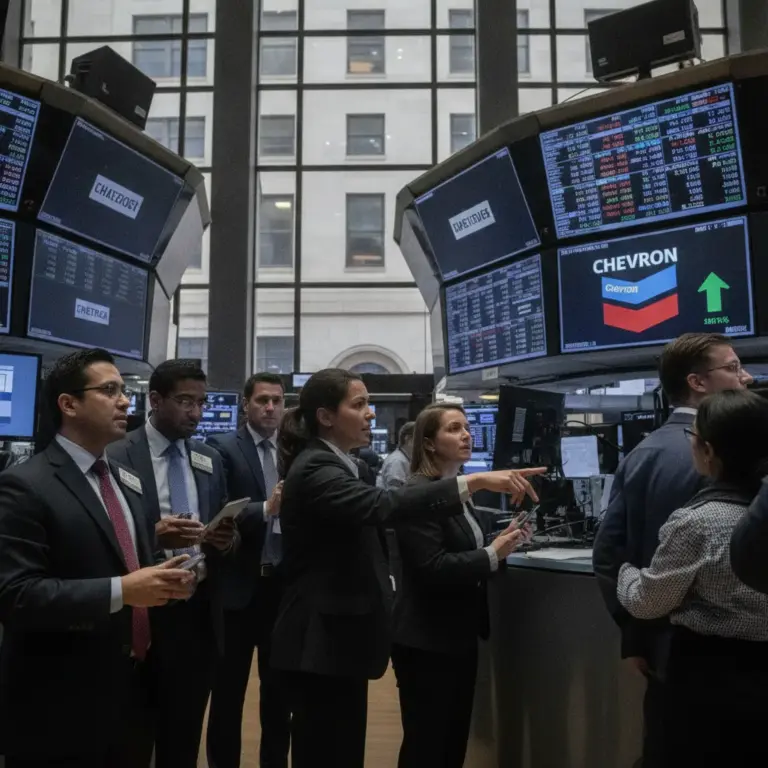
Chevron has emerged as a focal point for investors this week, leading a select group of fifteen high performing stocks that have successfully cleared the rigorous benchmarks set by Investor’s Business Daily. This latest batch of equities represents a diverse cross section of the market, yet the strong showing from the energy sector suggests a renewed confidence in large cap commodities players amidst shifting global economic conditions.

The inclusion of these companies on top screens typically indicates a combination of robust price action and strengthening fundamental indicators. By meeting these strict technical criteria, Chevron and its counterparts demonstrate the kind of momentum that often attracts institutional buyers looking for stability paired with growth potential. Analysts suggest that when heavyweights like Chevron lead such lists, it can signal a broader rotation into value driven assets across various industries.

While the current list highlights significant strength, seasoned traders remain cautious about relying solely on historical patterns. Market volatility continues to play a role in daily fluctuations, meaning that even those stocks currently topping the charts require careful monitoring. Investors are encouraged to view these screenings as starting points for deeper research rather than guaranteed paths to profit.

Ultimately, the appearance of these fifteen stocks underscores a dynamic period for equity markets where traditional industry leaders are finding ways to reinvent their growth trajectories. As more companies hit these elusive markers, the focus shifts toward whether this trend will sustain itself through the next quarter or serve as a temporary spike in valuation.

Converting high value assets like real estate, stocks, and private funds into digital tokens promises to democratize global investing, but simply putting an asset on a blockchain is not enough. While the technology allows for easier ownership transfer, it does not inherently create a thriving marketplace. Vladimir Tikhomirov, the founder of Theorem, recently pointed out that there are significant infrastructure gaps that must be filled before tokenized finance can reach its true potential.

The most pressing issue facing the industry today is a lack of liquidity. When investors buy tokenized assets without a functional secondary market, they often find themselves trapped in positions with long redemption periods. For these markets to actually work, there needs to be consistent secondary trading which enables accurate price discovery and better risk management. Relying solely on an issuer’s initial valuation isn’t sustainable; prices need to be refined through active open market competition to remain realistic.

Technical hurdles also persist regarding how these assets settle across different networks and borders. While managing multiple blockchains is becoming simpler thanks to arbitrage, navigating international regulatory frameworks remains a daunting task for many firms. At the same time, the nature of digital cash is evolving, with more participants moving away from standard stablecoins in favor of yield bearing tokenized US Treasury bills to make their capital work harder while it sits on chain.

Despite these challenges, the long term outlook for on chain markets remains optimistic because of the inherent advantages they offer over legacy systems. The ability to trade twenty four hours a day and utilize composable collateral provides a level of flexibility that traditional finance cannot match. However, this future depends entirely on whether developers can successfully build the essential lending protocols and exchange infrastructures required to support a truly liquid ecosystem.

Nova Minerals has cleared its final regulatory hurdles in Alaska, securing the necessary permits to move forward with a strategic antimony project backed by the U.S. Department of War. In a surprisingly swift turnaround, the company received approval from the Alaska Department of Natural Resources just three months after submitting its application. This green light authorizes construction and operational activities for an initial three year period, setting the stage for the company to hit its production targets by 2027.

The scope of the project is comprehensive, spanning everything from raw stibnite mining at the Styx and Stibium prospects to processing at the Whiskey Bravo concentration site and final refining at Port MacKenzie. To get there, Nova is utilizing a forty three point four million dollar grant from the Department of War to fund the first phase of development. Engineering work is already complete, with plans to produce high purity antimony metal and military grade trisulfide to bolster domestic supplies of this critical mineral.

Rather than building every piece of machinery from scratch, CEO Christopher Gerteisen opted for a pragmatic approach by acquiring modern equipment from a decommissioned facility in North America. Hundreds of tons of crushing and refining gear have already been barged from Seattle to Port MacKenzie via over forty containers. By repurposing existing industrial assets, Nova aims to accelerate its timeline and reduce costs while leveraging existing rail and deepwater port infrastructure for efficient transport.

Looking ahead, the Port MacKenzie plant is being developed as a modular hub capable of expanding beyond its initial goals into other refined products like antimony trioxide. With all critical long lead equipment now on site and permits finalized, Gerteisen noted that the company’s primary focus has shifted entirely toward execution. The project represents a significant step in reducing reliance on foreign sources for minerals essential to national security and advanced manufacturing.

A liberal-majority appeals court in California handed the Trump administration a victory by blocking a lower court’s ruling that ordered the State Department to open its application pool for the 2027 Diversity Visa lottery, which admits roughly 55,000 immigrants from low-immigration countries each year.

In a 2-1 ruling, the Ninth Circuit Court of Appeals blocked a preliminary injunction issued by U.S. District Judge Jinsook Ohta requiring the lottery pool to be opened after Secretary of State Marco Rubio issued a notice in November delaying the program’s acceptance of new applications in order to “implement certain changes,” but the application period never opened.

A month later, the State Department ordered an indefinite pause on issuing diversity visas after a Portuguese national who was issued a lottery visa in 2017 committed a mass shooting at Brown University, killing two people and injuring nine others. The shooter, Claudio Manuel Neves Valente, was also tied to the murder of a Massachusetts Institute of Technology (MIT) professor two days after the Brown University shooting.

FBI REVEALS BROWN UNIVERSITY MASS SHOOTER BEGAN PLOTTING MASSACRE AS EARLY AS 2022, BLAMED VICTIMS

The Ninth Circuit has been a perennial thorn in the side of President Donald Trump, having ruled against key portions of Trump’s 2017 executive order restricting travel from predominantly Muslim countries and blocked a policy barring immigrants from being eligible for asylum if they crossed the southern border between ports of entry.

However, the appeals court ruled that the lower court’s preliminary injunction could not be enforced, finding that the immigration law firm Red Eagle, which represents individuals going through the visa lottery process, did not have standing to sue the federal government. The appeals court ruled that the program was intended to “encourage immigration, not generate revenue for law firms.”

LIBERAL COURT STUNS WITH RULING THAT HANDS TRUMP MAJOR IMMIGRATION WIN

The court wrote, “If Red Eagle Law were allowed to allege standing based upon its hypothetical or conjectural collateral injury, we would be opening the floodgates, allowing all lawyers to ‘roam the country in search of governmental wrongdoing.’”

However, the court made clear that its ruling was based on procedural grounds and did not weigh whether the State Department failed to follow the law.

“We do not endorse the Department’s failure to open the lottery registration period,” the court wrote.

Abhishek Kambli, a former federal prosecutor and partner at Holtzman Vogel, said the decision by the liberal court was a “very easy call” in a post on X.

“Here, the plaintiff was a law firm not bringing a claim on behalf of someone in the diversity visa lottery but on behalf of the firm itself,” Kambli wrote. “The district court should have never gone beyond standing but CA9 corrected this one.”

TRUMP ADMIN ANNOUNCES EXPANSION OF VISA RESTRICTION POLICY IN WESTERN HEMISPHERE

President Donald Trump has been vocal about his opposition to the Visa Lottery Program for years. During his January 2018 State of the Union address, he called for ending the program, arguing that visas should be issued based on merit.

Earlier that same month, Trump said during a bipartisan meeting with lawmakers at the White House that lottery visas allow the “worst of the worst” to come into the country.

SIGN UP TO GET THE POLITICS NEWSLETTER

“They call it ‘visa lottery,’ I just call it ‘lottery.’ But countries come in and they put names in a hopper,” Trump said. “They’re not giving you their best names; common sense means they’re not giving you their best names.”

Countries eligible for the 2026 lottery included Afghanistan, New Zealand, Ecuador, Iran, Uganda, Somalia and Russia. The program was designed to create an additional pathway for people seeking visas who may not qualify through traditional channels, such as employment- or family-based immigration.

Rep. Angie Craig, D-Minn., directed a Minnesota state lawmaker to the congressional ethics complaint process in 2019 after he urged her to seek an investigation into Rep. Ilhan Omar, D-Minn., according to correspondence obtained by Fox News Digital.

In a 2019 letter, Craig told Steve Drazkowski, then a Minnesota state representative, he could submit a complaint himself to the Office of Congressional Ethics (OCE) if he wanted to pursue an investigation into Omar. 

The Office of Congressional Ethics website states that members of the public, advocacy organizations and members of Congress can submit information regarding alleged misconduct to the agency’s Office of Congressional Conduct (OCC). 

Complaints may also be submitted to the House Committee on Ethics.

ILHAN OMAR’S TURBULENT WEEK EXPLAINED: THE DUELING PROBES THAT THREW THE SOMALI-BORN PROGRESSIVE INTO CHAOS

Craig wrote, “With respect to your request for an ethics inquiry into Rep. Omar, the Office of Congressional Ethics (OCE) of the U.S. House of Representatives is the independent, non-partisan entity charged with reviewing allegations of misconduct against Members, officers, and staff of the U.S. House of Representatives and, when appropriate, referring matters to the House Committee on Ethics.

“The OCE accepts and reviews information concerning allegations within its jurisdiction from members of the public.”

Craig’s response came two days after Drazkowski sent her a letter urging her to refer his concerns to the House Ethics Committee, then chaired by former Rep. Ted Deutch, D-Fla.

Among Drazkowski’s accusations was that Omar filed joint tax returns with Ahmed Abdisalan Hirsi in 2014 and 2015, despite the two not being legally married at the time.

Fox News Digital obtained a copy of a report by the Minnesota Campaign Finance and Public Disclosure Board indicating that Omar and Hirsi jointly filed their tax returns in 2014 and 2015.

Omar legally married Ahmed Nur Said Elmi on Feb. 12, 2009, in Hennepin County, Minn., according to Newsweek. Omar and Elmi’s legal divorce proceeding concluded in December 2017. In a 2017 filing from her divorce case obtained by Fox News Digital, Omar stated she had not been in contact with Elmi since 2011. 

“Representative Craig, I am your constituent. In that capacity, I formally request that you immediately forward the attached material, and open an ethics investigation in the United States House of Representatives regarding actions taken by Rep. Ilhan Omar leading up to the 2018 election,” Drazkowski wrote.

COULD TRUMP REVOKE ILHAN OMAR’S CITIZENSHIP FOR ALLEGED BROTHER MARRIAGE? EX FEDERAL PROSECUTOR BREAKS IT DOWN

“This month, the Minnesota Campaign Finance Board issued a report on Rep. Omar, who found that she broke multiple Minnesota campaign finance laws,” Drazkowski wrote.

Drazkowski told Fox News Digital he was first prompted to seek an investigation from the Minnesota Campaign Finance Board into Omar after noticing that she had not filed a required statement of economic interest with the board.

The board confirmed in a statement to Fox News Digital that Omar submitted the statement of economic interest after she was made aware that Drazkowski’s complaint triggered an investigation.

Drazkowski said the information he included in two complaints to the board ultimately contributed to the board’s determination that Omar had violated state campaign finance laws.

FEDERAL AGENTS RAID ILHAN OMAR’S DC HOME AMID IMMIGRATION FRAUD INVESTIGATION

On June 6, 2019, the board issued findings after Drazkowski filed two separate complaints. The board found that Omar had improperly used $1,500 in campaign funds to pay for personal tax-related services concerning the tax returns she filed jointly with Hirsi in 2014 and 2015.

The board also required Omar to repay campaign funds she had used to pay for travel to Boston, New York and Washington, D.C.

After the campaign’s 2019 assessment of the violations, Omar stated that she was “glad” the process was over and was “glad” to know that the board did not find her guilty of having used the money for personal use as was first alleged. 

After receiving Craig’s response, Drazkowski, who lived in her congressional district, submitted his own complaint seeking an ethics investigation into Omar.

“Please find below my formal request for an investigation into the activities of Congresswoman Ilhan Omar (D-MN),” Drazkowski wrote to the Ethics Committee, which he also shared with the OCE.

“The United States of America is a nation of law and order. No one is above the law, and our elected officials must always be held accountable. We demand the highest of ethical standards from every member of Congress.”

Despite submitting his concerns, Drazkowski told Fox News Digital he struggled to obtain a substantive response through the congressional ethics process.

He said he subsequently brought his allegations to the FBI’s Minneapolis office after receiving no substantive response from the ethics process or Craig’s office.

“I went to the FBI and unloaded all the information I had to them, including names and phone numbers of people,” Drazkowski told Fox News Digital.

Drazkowski said he received no meaningful response from federal investigators and expressed frustration with the bureau’s handling of the information.

The House Ethics Committee and FBI declined Fox News Digital’s requests for comment.

Omar and Craig did not respond to Fox News Digital’s requests for comment.

Leadership at the Department of Justice is escalating the Trump administration’s fight with California over suspected illegal voting, directing top federal prosecutors to pursue criminal subpoenas of local and state officials.

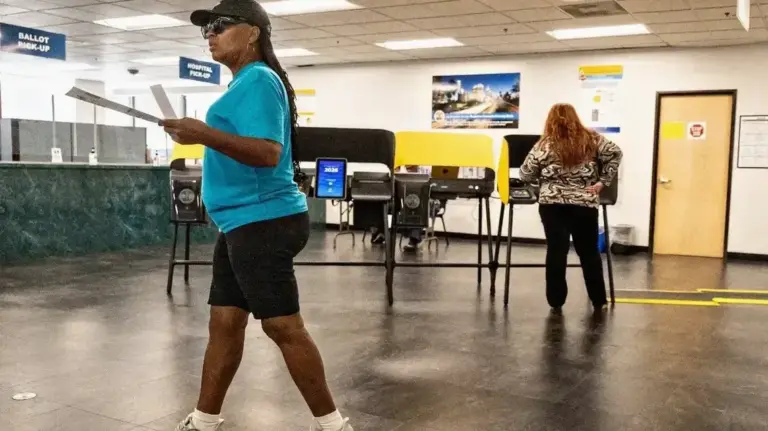
At least four election workers in California have received federal criminal grand jury subpoenas within the last week, CalMatters reported. At least one of these subpoenas was delivered on Thursday, after a federal judge rejected the DOJ’s request that California set aside mail-in ballots associated with over 20,000 registered voters whose citizenship the Trump administration has called into question.

A subpoena sent to three election employees at the Los Angeles County Registrar-Recorder’s office requested records on how the department stops non-citizens from voting as well as “records relating to or involving evidence collected by your agency which tends to indicate an alien has voted in a federal election.” An official in Orange County received a similar subpoena, local media reported.

JUDGE REJECTS DOJ REQUEST TO BLOCK CALIFORNIA FROM IMMEDIATELY COUNTING BALLOTS LINKED TO ALLEGED NONCITIZENS

“This court believes it would be wise that any threats to state or county employees cease immediately,” the judge said during court proceedings. “These threats must stop,” he wrote in his Wednesday decision.

A Justice Department spokesperson pushed back against characterizations that the administration was targeting individuals with subpoenas, noting that receiving a subpoena doesn’t mean you are a target and that the DOJ generally doesn’t subpoena targets.

DOJ FIRES BACK AT DEM AG OVER ELECTION DAY GUIDANCE TELLING OFFICIALS WHEN TO CALL COPS ON FEDERAL AGENTS

“To be clear, the district court judge explained that voting unlawfully results in criminal exposure. Consistent with this, California also wrote in its filing that the remedy for unlawful voting is through criminal prosecution,” Justice Department spokeswoman Kiersten Pels said in an emailed statement. “Thus, while DOJ maintains that a civil remedy is still available, all agree that noncitizen voting is properly addressed through criminal law.”

She declined to comment on the “alleged grand jury subpoenas,” citing departmental policy.

JUSTICE DEPARTMENT CHARGES 16 ACROSS MULTIPLE STATES WITH ALLEGED ILLEGAL VOTING, ELECTION CRIMES

The DOJ’s clash with California is part of a broader effort undertaken by the Trump administration to prove widespread voter fraud. While the administration has turned up a number of examples of non-citizens registered to vote in federal elections, it has yet to prove widespread illegal voting.

The DOJ has appealed the decision blocking it from compelling California to separate ballots associated with more than 20,000 registered voters it suspects may be noncitizens. Many of these ballots, however, have already been cast by early voters and anonymized, making it virtually impossible to identify them.

The California governor’s office did not respond to a request for comment when reached by Fox News Digital on Friday.