Archive

October 31, 2026

Browsing

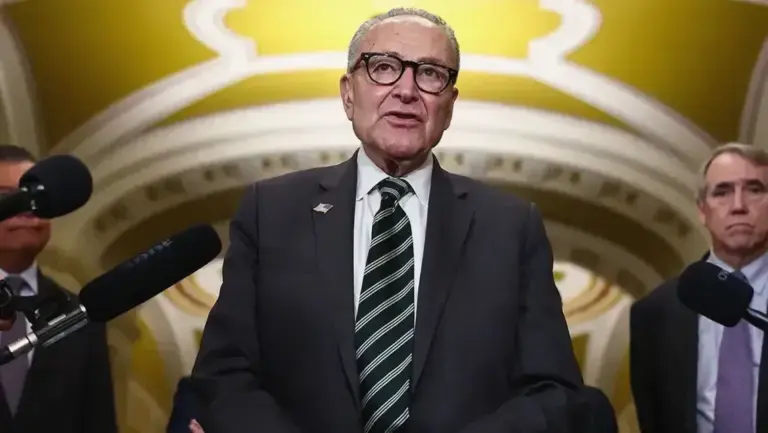
The Senate’s No. 2 Republican believes that Senate Minority Leader Chuck Schumer, D-N.Y., had a hand in the alleged scheme unfolding in the Alaska Senate race.

Operatives for Rep. Mary Peltola’s Senate campaign, along with top aides in Senate Democrats’ campaign apparatus, the Democratic Senatorial Campaign Committee (DSCC), are alleged to have been involved in creating one of the stranger races this election cycle: finding and recruiting another candidate named Dan Sullivan to run against the incumbent Sen. Dan S. Sullivan, R-Alaska, according to reporting from The New York Times.

National Democrats have maintained they had no hand in the move, but Senate Majority Whip John Barrasso, R-Wyo., told Fox News Digital in an interview that he believes the campaign received help from the very top.

SEN DAN SULLIVAN BRANDS PELTOLA’S ALLEGED BALLOT SCHEME A ‘SCANDAL AT THE HIGHEST ORDER’

“I mean, this is criminal behavior to steal the Alaska Senate race, it’s now been fully exposed,” Barrasso said. “And there is proof that the Peltola campaign knew about it, and that Schumer schemed and colluded with them for over a year to try to search for and then coax a decoy of Dan Sullivan onto the ballot with a purpose only to deceive the voters.”

Schumer’s office and Peltola’s campaign did not respond to requests for comment from Fox News Digital.

The peculiar situation in Alaska has been ongoing for months and has sparked legal battles at the state and national levels, as well as condemnation from Republicans across the country, including Sen. Lisa Murkowski, R-Alaska.

‘DECOY DAN’ SULLIVAN CASE LEADS TOP SENATOR TO BREAK FOUR-YEAR X SILENCE: ‘PATTERN OF LIES’

Murkowski argued on X that “ballot-stacking should have no place in our electoral process.”

“Alaskans deserve the honest truth from Mary and her campaign — what has been revealed is a pattern of lies and coverups and a culture of deception that belongs nowhere in our elections or among our elected officials,” she said.

Much of the consternation over the matter is because of Alaska’s ranked-choice voting system, meaning that both candidates named Dan Sullivan, Peltola and Gerald Heikes will all appear on the same ballot.

Peltola weighed in on Thursday at an event in Juneau, Alaska, telling supporters she wanted to “clear the air.”

PELTOLA CAMPAIGN’S ALLEGED DAN SULLIVAN SPOILER PLOT TAKES NEW TURN AS DOJ FACES MAJOR LEGAL HURDLE

“I knew nothing about any other candidates on the ballot except for me and the incumbent,” Peltola said. “That is all I have ever known about. I am not interested in tricking voters. I know I can beat Dan Sullivan.”

The point of the scheme was allegedly to sow confusion among voters as to which Sullivan was which in an attempt to give Peltola an edge. Barrasso said that while he was confident the incumbent Sullivan would win, the plan showed that the “Democratic campaign has secretly been making fun of Alaskan voters for being so easily tricked.”

“I mean, these people just are, you know, dirty, rotten scoundrels — cheaters,” Barrasso said.

“I mean, how more cynical can you get than what the Democrats have done here,” he continued.

This post appeared first on https://www.foxnews.com
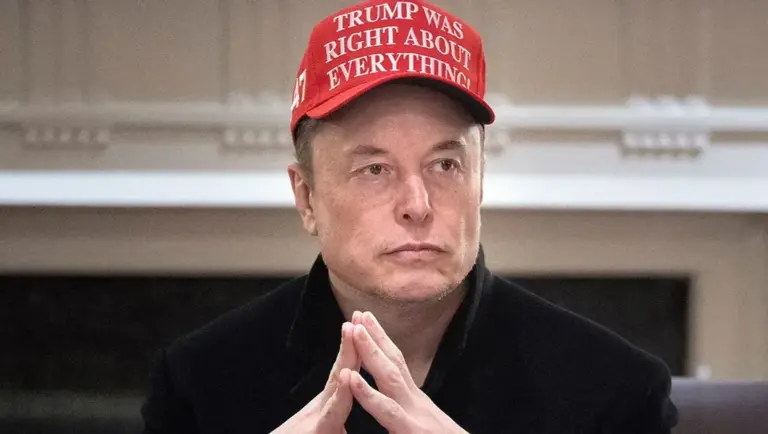
Ahead of the midterm elections, billionaire Elon Musk warned that a Democratic sweep of the White House and Congress in 2028 could spell the “end of democracy,” outlining three moves he fears the party would make to cement its political power.

The stark warning comes as Musk pours money into Republican campaigns, arguing that maintaining GOP control of the Senate is essential to preventing what he described as a “permanent one-party state.”

Musk outlined his three “biggest” concerns about Democrats gaining unified control of Washington, in an X post, warning that the party would move to grant statehood to Washington, D.C., and Puerto Rico, legalize immigrants living in the country illegally and expand the Supreme Court.

AMERICANS CLASH OVER SUPREME COURT EXPANSION AS FIGHT OVER 9 JUSTICES HEATS UP: ‘LET’S PACK IT NOW’

“My biggest concern is that if there is a clean sweep by Democrats of the House, Senate and Presidency in 2028,” Musk wrote, listing three top scenarios he fears.

Musk argued that granting statehood to Washington, D.C., and Puerto Rico would help Democrats gain a strong Senate majority, while opening the borders and legalizing immigrants in the country illegally would help the party cement a lasting electoral advantage.

He also warned that Democrats would increase the number of Supreme Court justices to secure an immediate majority on the nation’s highest court.

“This would result in America becoming a permanent one-party state and the end of democracy in any meaningful sense of the word,” Musk wrote.

SENATE CONTROL IS A COIN FLIP — AND DEMOCRATS’ PATH RUNS THROUGH TRUMP COUNTRY

The Tesla and SpaceX CEO argued that Republicans need to hold at least 51 Senate seats following the 2028 elections to prevent those outcomes, making an urgent appeal to voters ahead of the midterms.

“That is why you should vote for Republican senators this election,” Musk wrote. “Other reasons are irrelevant compared to this one.”

The Senate is still a toss-up with six states to decide the majority, according to Fox News Power Rankings. The best outcome predicted for the Democrats is that their ceiling rises to 54 seats and for Republicans, they could see them retain control with up to 52 seats.

Musk’s warning comes amid his financial involvement in Republican campaigns, with the billionaire directing significant resources toward helping GOP candidates win elections.

ARTHUR HERMAN: MUSK AND OTHERS PROVE THAT THIS ELECTION CASH IS KING. WILL IT BE ENOUGH?

He contributed hundreds of millions of dollars to Republican political groups ahead of the November midterms. A representative for his America PAC confirmed to Fox News earlier this month that the billionaire had contributed $276 million to Republican super PACs and organizations over the previous three months.

That includes $158 million to the Senate Leadership Fund, a super PAC aligned with Senate Majority Leader John Thune, R-S.D., and $10 million to Lone Star Liberty PAC, which is backing Texas Republican Senate candidate Ken Paxton.

Former Secretary of State Hillary Clinton took aim at Musk’s political spending, accusing the billionaire of attempting to use his fortune to influence the midterm elections in Republicans’ favor.

“Elon Musk is flooding the midterms with money to help Trump,” Clinton wrote on X earlier this week. “But even his millions may not be enough to counteract reality.”

The world’s largest cryptocurrency exchange has become the site of the most significant digital theft in history, with investigators pointing toward state sponsored actors from North Korea. Security researchers at TRM Labs and Elliptic have linked the breach to a notorious hacking cell known as TraderTraitor, which specializes in draining massive sums from crypto platforms to fund Pyongyang’s sanctioned weapons programs. In a lightning fast operation that lasted roughly twenty minutes, attackers managed to siphon away at least 6.3 billion dollars in digital assets.

The vulnerability reportedly began not with a systemic failure of encryption, but with a single point of human error. Binance revealed that the intruders gained entry to its network by compromising the laptop of one of its engineers. Once inside, the hackers accessed a service container that allowed them to authorize fraudulent withdrawal transactions without needing the company’s master private keys. While Binance insists that user funds remain safe and denies any widespread leak of core security credentials, the exchange has suspended all deposits and withdrawals as it works to secure its infrastructure.

Recovery efforts are currently underway, with industry partners reporting that approximately 3 billion dollars of the stolen loot has already been frozen across various blockchains. Despite these gains, the sheer scale of the loss raises urgent questions about how a single compromised device could grant access to billions of dollars in capital. Critics and analysts are now questioning whether Binance underwent rigorous third party security audits prior to the attack or if internal safeguards were dangerously insufficient.

This latest raid follows a pattern of aggressive cyber warfare conducted by North Korea against global finance. The same group associated with this heist was previously blamed for a 1.4 billion dollar theft from Bybit and another multi million dollar hit on Bitget earlier this year. As Binance promises to publish an updated proof of reserves upon completing its remediation process, the event serves as a stark reminder of the volatility and risk inherent in centralized digital asset storage when faced with nation state adversaries.

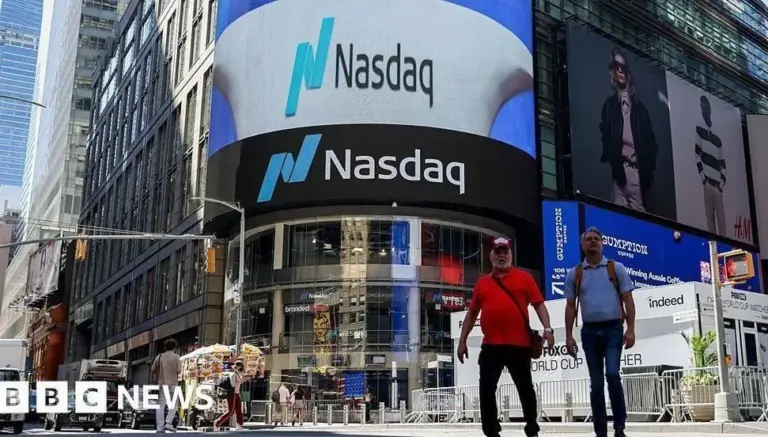
Wall Street experienced a wave of volatility this week as tech stocks plummeted for a second consecutive session, driven by mounting anxiety over the staggering costs of artificial intelligence development. The Nasdaq index took a hit, sliding more than 3.5 percent as shareholders began to question whether the massive capital injections into AI are actually yielding proportional returns. With industry giants like Meta, Alphabet, Oracle, Amazon, and Microsoft collectively pledging over 800 billion dollars toward AI by 2026, the market is increasingly wary of a potential bubble where expenses outpace profits.

The fallout was particularly severe for Alphabet and Intel. Alphabet saw its valuation plunge after admitting that its own AI search summaries were eating into core advertising revenue, all while the company prepares to spend roughly 205 billion dollars this year on AI infrastructure. Meanwhile, Intel faced devastating losses, with its market value dropping by over 130 billion dollars. Despite a slump in personal computer demand, the chipmaker signaled it would continue ramping up expensive equipment investments, leaving investors concerned about a lack of immediate cash flow.

The contagion spread beyond the biggest names to platforms like Amazon and Reddit. Amazon shares dipped after reporting earnings that missed expectations and revealing a six fold increase in spending over just three months to fund data centers and servers. Reddit suffered even more dramatically, with its stock crashing 26 percent following weak user growth and warnings that Google’s AI tools are diverting traffic away from its site. Similar trends hit gaming platform Roblox, which saw its share price tumble nearly 20 percent alongside falling active user numbers.

Market analysts suggest that investors have shifted from blind optimism to a state of ruthlessness, demanding concrete evidence of profitability rather than promises of future innovation. While most of these companies still hold higher valuations than they did a year ago, there is a growing fear that the era of easy gains from the AI hype cycle has peaked. If these tech titans cannot prove that their trillion dollar gamble is paying off soon, experts warn that traders may abandon the sector entirely in search of a new market driver.

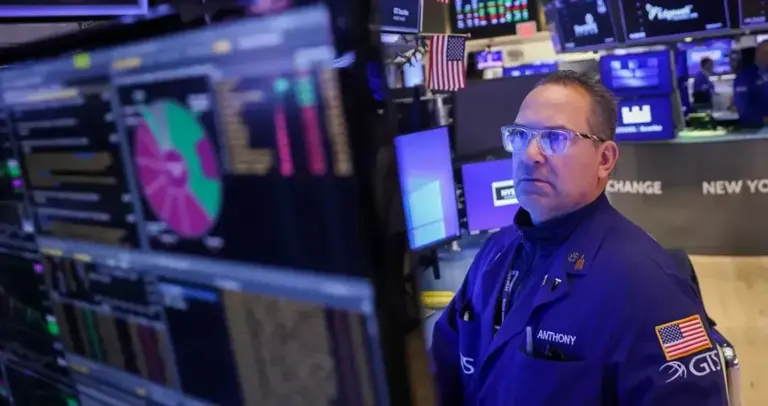
Investors shifted from excitement to anxiety on Friday as a massive sell-off erased over one trillion dollars in market value across the tech sector. The Nasdaq 100 plummeted 3.4 percent, marking its steepest single-day decline since mid-June and bringing the index dangerously close to correction territory. While the broader S&P 500 also felt the blow, dropping 1.8 percent, the technology sector bore the brunt of the damage with a tumble of more than 4.2 percent as confidence in the current AI trajectory began to waver.

The turmoil centered on a growing skepticism regarding the astronomical costs associated with building artificial intelligence infrastructure. For months, markets cheered whenever tech giants announced increased spending on data centers, but that patience is wearing thin. Investors are now demanding concrete evidence that these hundred-billion dollar investments will translate into actual returns. This shift in sentiment was evident during Amazon’s latest reporting cycle where CEO Andy Jassy warned shareholders to prepare for even higher capital expenditures through 2027, a revelation that failed to inspire the market as it once did.

Nowhere was this volatility more apparent than at Intel, which suffered its worst single-day crash since the 1980s with shares plunging 29 percent. The collapse was triggered by disappointing profit forecasts and admissions from CEO Lip-Bu Tan regarding severe supply chain bottlenecks and a memory crunch that hampered the company’s ability to meet demand. The carnage spread quickly through the semiconductor industry, dragging down heavyweights like AMD and Qualcomm, while neocloud startups focused on specialized data centers saw their valuations slide by double digits.

This retreat follows a brutal week for Big Tech, including a historic loss of half a trillion dollars in market value for Alphabet just days prior. As these corporations tap debt markets to fund their AI ambitions, they have inadvertently skewed traditional financial indicators, occasionally driving investors toward safer havens like U.S. Treasuries. What was once viewed as an inevitable gold rush is now being scrutinized as a high-stakes gamble, leaving traders wondering if the promised productivity gains can eventually justify the staggering price tag of progress.

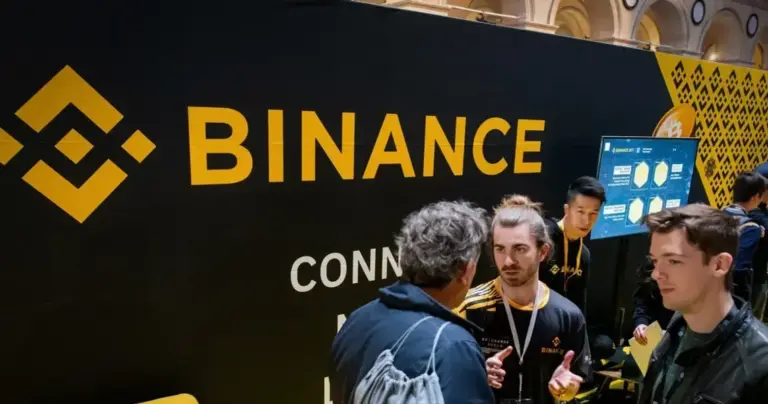
The world’s largest cryptocurrency exchange, Binance, has become the center of a financial firestorm after a massive security breach resulted in the loss of approximately 6.3 billion dollars in client assets. This incident marks the largest heist in the history of digital currency, sending shockwaves through a market already wary of centralized storage. According to early investigations, hackers managed to penetrate the firm’s withdrawal systems to execute unauthorized transfers, though the company insists there is no current evidence that the private keys governing those wallets were compromised.

Despite the staggering scale of the theft, Binance has moved quickly to reassure panicked investors by pledging to cover all customer losses. The exchange is leaning on its Secure Asset Fund for Users, better known as SAFU, alongside over 6 billion dollars of its own corporate reserves to make clients whole. There is some immediate relief in the fact that nearly half of the stolen assets have already been frozen across various blockchain networks, potentially allowing for a significant portion of the funds to be clawed back before they can be laundered or cashed out.

This crisis serves as a stark warning about the inherent dangers of leaving digital tokens in the hands of third parties. Industry experts point out that while exchanges provide convenience and liquidity, users are ultimately betting on a company’s internal controls and balance sheet rather than owning their assets outright. Past examples like the collapse of FTX show that even explicit promises regarding asset ownership can vanish during a corporate failure, and others, such as Cryptopia, demonstrate that recovery processes following a hack can drag on for several agonizing years.

To mitigate these risks, many seasoned traders suggest a hybrid approach called self-custody, where individuals manage their own private keys via personal wallets. However, this autonomy comes with its own peril; unlike an exchange with a support team, losing a recovery phrase in self-custody means the funds are gone forever with no hope of retrieval. For most investors, the safest path forward involves keeping only active trading capital on platforms while securing long term holdings independently, balancing the ease of institutional access against total personal responsibility.

The global cryptocurrency market was thrown into turmoil this week following a staggering cyberattack on Binance, the world’s largest exchange. In what is being described as the biggest heist in the history of digital assets, hackers managed to move more than 6 billion dollars through connected wallets in a lightning fast operation that lasted only twenty minutes. While some funds have already been frozen across various platforms, analysts warn that billions in Bitcoin and Ethereum may be lost forever, dealing a severe blow to an industry already fighting for legitimacy and mainstream trust.

Despite the massive scale of the theft, Binance leadership is moving quickly to prevent a panic among its millions of users. Co-CEO Richard Teng issued a public reassurance stating that only corporate holdings were targeted and that customer assets remain secure. To back up these claims, the company revealed it has existing reserves of over 1 billion dollars and is earmarking an additional 6 billion from its vast balance sheet to ensure that users do not shoulder the financial burden of the breach. This effort to stabilize the ship comes as Bitcoin prices dipped following the news, echoing memories of past industry collapses like FTX.

Government agencies and private sector partners are currently scrambling to track the stolen loot. The Secret Service confirmed it is working alongside Binance to identify and recover funds, while President Donald Trump noted his administration is monitoring the situation closely. Although Binance has not officially named a culprit, multiple blockchain analysis firms pointed toward patterns typically associated with North Korean state sponsored actors. The vulnerability began with what appeared to be a compromised laptop but evolved into a more complex series of breaches during the afternoon hours on Thursday.

The fallout from the attack has sparked tension even among high profile figures in the tech world. When Elon Musk posted a skeptical reaction referencing similar empty promises made by FTX before its crash, Binance co founder CZ Zhao pushed back against the trolling during such a critical moment for the sector. As stablecoin providers like Tether and Circle work together to lock down illicit assets, legal experts suggest this crisis will force a long overdue conversation about systemic security and collective accountability within the volatile crypto landscape.