Archive

October 29, 2026

Browsing

The Department of Justice faces an uphill legal battle in Alaska, where it is trying to convince a federal court that confusion between two Senate candidates with nearly identical names could be enough to delay certification of the election results.

Roughly two weeks before Election Day on Oct. 22, the DOJ filed a federal lawsuit seeking to delay certification if Sen. Dan Sullivan loses and votes cast for another candidate named Daniel J. Sullivan could have changed the result, pending an investigation into whether voters mistakenly selected the wrong candidate.

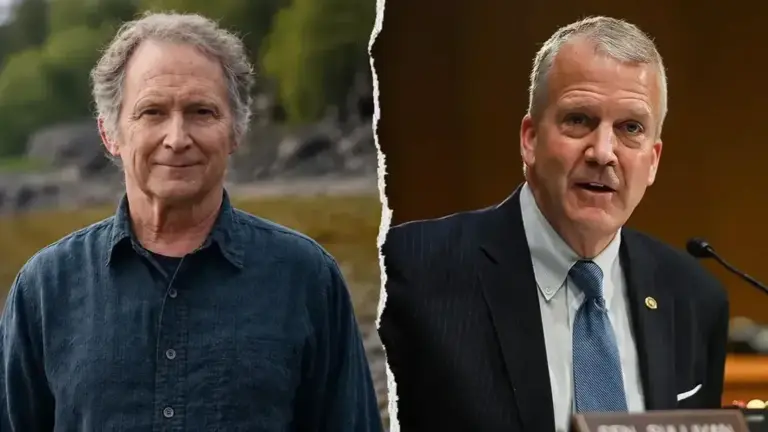
The DOJ’s complaint stems from a controversy in Alaska where two individuals by the name of Dan Sullivan, one a retired schoolteacher and the other the state’s incumbent senator, appear alongside each other on the state’s ballots. Although Alaska has traditionally been a Republican stronghold in Senate elections, the state’s race could carry greater national significance this year as Republicans seek to defend their narrow Senate majority.

The New York Times reported Wednesday that the campaign of Mary Peltola, the Democrat running for Senate in Alaska, reportedly worked with operatives to recruit another Dan Sullivan to run for Alaska’s Senate seat, hoping voter confusion would draw support from the incumbent Republican senator. Citing interviews, text messages and documents prepared for a potential lawsuit, the Times reported that the effort also targeted other potential spoiler candidates, despite the Peltola campaign’s repeated denials of involvement in the second Sullivan’s candidacy.

TODD BLANCHE CHALLENGES DANA BASH FOR ONLY CITING PART OF CONSTITUTION DURING HEATED ELECTION CLASH

On Sunday, Peltola’s campaign and the Democratic Senatorial Campaign Committee filed a proposed motion to dismiss the Justice Department’s lawsuit, arguing that the federal law cited by the DOJ governs voter registration, not candidate eligibility or ballot design. They also urged the court to resolve the case before Election Day.

Conservatives have argued that two similar names on the same ballot could possibly lead to voters who would prefer to reelect the state’s Republican senator accidentally voting for the retired school teacher. Opponents of the effort to remove Daniel J. Sullivan from the ballot argue that sharing a name with an incumbent is not grounds for disqualification and that Alaska’s ranked-choice voting system allows voters to rank both candidates, potentially limiting the effects of mistaken selections.

Alaska’s Division of Elections initially sided with conservatives, disqualifying Sullivan the schoolteacher by finding that his candidacy was not a genuine, good-faith bid for office but instead was designed to confuse voters into mistaking him for the senator. Alaska Superior Court Judge Thomas Matthews overturned the decision in June, holding that the Division of Elections had no authority to void a candidacy on that basis.

Alaska’s general election ballot identifies the incumbent as “Sullivan, Dan S.,” with Republican and incumbent designations, while listing the other candidate as “Sullivan, Daniel J. Jr.,” without a party affiliation, a measure some argue is enough to clear up potential confusion. Lawyers at the Justice Department, however, remain unconvinced.

Although Attorney General Todd Blanche has suggested that officials could examine ranked-choice ballot patterns for signs of confusion, the Justice Department has not explained how those patterns could establish that individual voters mistakenly selected the wrong candidate. Voter privacy protections pose a major obstacle to a potential federal case, as it would be nigh impossible to tie specific voters to specific ballots to serve as evidence of confusion.

ALASKA HAS A VOTING SYSTEM LIKE NO OTHER STATE; REPUBLICANS WORRY IT COULD COST THEM IN NOVEMBER

“This is just the stuff that is just impossible to measure after the fact,” Notre Dame law professor Derek Muller said of the DOJ’s plan to infer voter intentions from anonymous ballots.

Blanche, in interviews with the press, has provided some insight into how he would like the DOJ to go about solving this problem.

“So, because of rank-based voting, voters… they write not just one, not just two, but multiple names on the ballot. And so there are a number of scenarios where it could be obvious that a voter was confused by the way they wrote down candidates,” Blanche told CNN’s Dana Bash.

Blanche’s comments suggest that the Justice Department could examine ranked-choice ballot patterns for potential signs of confusion, although such patterns alone would not establish whether voters intended to support a different candidate.

“It will be obvious from the results and from the ballots that voters were confused, and that could be obvious from the way that they rank the Dan Sullivans or not including a Dan Sullivan on the ballot,” he said in a later interview with CBS.

ALASKA REPUBLICANS SCRAMBLE TO EDUCATE VOTERS ON SUSPECTED DEM PLANT AS ‘BALLOT FATIGUE’ THREATENS RACE

Don Palmer, senior legal fellow for election integrity at the right-of-center Heritage Foundation, told Fox News Digital that he feels the Justice Department might have a case if the agency’s lawyers construct it properly. Statistical analysis of ballots alone, he maintains, will likely not be sufficient to convince a judge of the administration’s position. 

“You’ll have the opportunity to interview witnesses, do some statistical analysis, and make a decision whether or not the campaign wants to contest the results of the election,” Palmer said. “So it’s actually quite a high standard where you have to bring in witnesses. You can’t generally just prove it with some statistical analysis… the campaign would have to show to the court through statistical and expert testimony, plus witness testimony, plus affidavits, that enough voters were confused, that they made inaccurate choices on what they intended to do. Then and only then could the court determine whether the race should be overturned.”

“If voters voted for the non-Republican Dan Sullivan as their first choice, but voted down ballot for Republicans as their first choice otherwise, that could indicate patterns of confusion whereby voters were looking to vote straight Republican as their first choice and were prevented from doing so because the inclusion of Daniel J. Sullivan on the ballot confused matters,” a spokesman for the America First Policy Institute told Fox News Digital.

Ben Hovland, a senior fellow at the left-of-center Center for American Progress and an expert on elections, was more bearish on the DOJ’s prospects.

SEEING DOUBLE: SECOND DAN SULLIVAN ADVANCES, SETTING UP BIZARRE ALASKA SENATE BALLOT

“You’ve never seen a claim like this made under the National Voter Registration Act,” he told Fox News Digital. “This is not a matter of federal law. This is a state ballot qualification issue and the Alaska Supreme Court addressed this issue months ago. For the Department of Justice to step in at this point and sort of make this claim, you know, doesn’t appear to be about winning in a lawsuit because it doesn’t seem like there’s any scenario where [they win], this is clearly about trying to sow confusion or sow doubt or set the stage to undermine the results of the election if the administration doesn’t like what the voters will have to say.”

Walter Olson, a senior legal fellow at the libertarian Cato Institute, also isn’t convinced that the Justice Department will be able to get its case off the ground.

“I wouldn’t expect Blanche’s local allies to get very far in this effort unless a federal court rules in favor of his theory that Alaska violated federal (as opposed to state) law by letting the schoolteacher stay on the ballot,” Olson told Fox News Digital. “I think the state is likely to beat Blanche in federal court on that point, and that should end the case.”

Alaska has already moved to have the DOJ’s case dismissed.

The DOJ did not respond to a request for comment when reached by Fox News Digital on Tuesday.
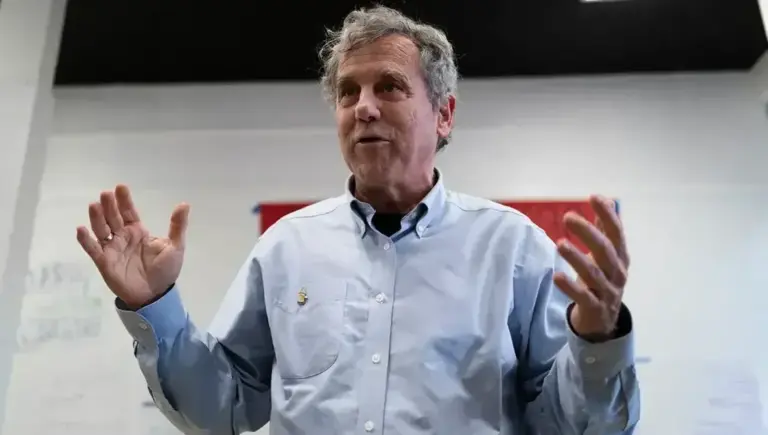
Two of the country’s most watched Senate races, in Ohio and South Carolina, remain neck and neck with under a week to go until the Nov. 3 midterm elections, polling results released on Wednesday show.

In both states, the tight margins are a welcome sign for Democrats as they try to unseat a pair of Republican incumbents: Sen. Jon Husted, R-Ohio, and Sen. Darline Graham, R-S.C. Should both races go their way, Democrats would find themselves within striking distance of eliminating the current 53-seat Republican majority in the Senate.

Ohio: Within the Margin of Error

FOX NEWS POLL: GENDER GAP AND POCKETBOOK PAIN SHAPE OHIO SENATE RACE

In Ohio, findings from Suffolk University show Democratic nominee Sherrod Brown leading Sen. Jon Husted, R-Ohio, 47% to 44%. The poll has a margin of error of plus or minus 4.4 percentage points, putting the race within the margin of error. Four percent of voters were undecided, while 3% backed another candidate.

Brown, a former senator who lost his seat in 2024, is trying to make a political comeback, pitching himself as a familiar face amid public frustration with the cost of living.

Throughout his campaign, he has highlighted his career as a policymaker, promising to bring that expertise to issues like affordability and data center expansion. Before losing his seat to Sen. Bernie Moreno, R-Ohio, Brown represented Ohio from 2007 to 2025, chairing the Senate Banking, Housing and Urban Affairs Committee.

South Carolina: Dead Heat

DARLINE GRAHAM FOCUSES ON KITCHEN-TABLE ISSUES AS SHE ANNOUNCES FULL-TERM SENATE BID

In South Carolina, polling from the Siena Research Institute, in partnership with The New York Times, has found Sen. Darline Graham, R-S.C., in a tie with Annie Andrews, the Democrat in the race, at an even 48% apiece. In that race, 3% of respondents said they were still undecided, while less than 1% said they planned to vote for some third candidate.

Graham, the sister of the late Sen. Lindsey Graham, R-S.C., who was appointed to the seat in July, is looking to secure a full six-year term after beating out a crowded field of Republican challengers in the primary.

Although new to the political scene, Graham has the backing of President Donald Trump and is running in a state that went the president’s way by a 17.8% margin in 2024.

Andrews, Graham’s opponent, has framed her as inexperienced and an extension of Lindsey Graham — one of Trump’s key allies in the Senate.

For her own part, Andrews has championed policy positions like enshrining access to abortion, increased requirements for gun ownership and expanding access to healthcare.

What was marketed as a lifelong dream of residential travel has come to an abrupt halt in the Gulf of Thailand. The MV Odyssey, a U.S. cruise ship designed to serve as a permanent floating home for its guests, has suspended its ambitious three year journey across seven continents. Currently docked in Sihanoukville, Cambodia, the vessel remains stationary as its Florida based operator, Villa Vie Residences, struggles to cope with staggering operational losses driven by a global energy crisis.

The financial collapse stems from skyrocketing fuel costs linked to conflict in Iran and subsequent disruptions in the Strait of Hormuz. According to the company, monthly fuel expenses per cabin have surged from a historical average of 1,800 dollars to as much as 8,000 dollars in some Asian regions. Despite attempts to cut costs by slowing down their itinerary and remaining in port longer, the operators claim they can no longer absorb the losses without passing unsustainable costs onto the residents who paid up to 230,000 dollars for their suites.

For the 203 passengers aboard, many of whom are Americans who viewed the ship as their primary residence, the suspension has been chaotic. While Villa Vie Residences claims it is coordinating disembarkation and helping find temporary housing, some travelers tell a different story. One passenger reported being dropped off by shuttle buses in the center of town with little to no guidance or assistance regarding hotel accommodations or logistics for leaving the country.

The situation leaves the aging vessel adrift in both a literal and figurative sense. Originally built in 1993 and refitted before departing Belfast in late 2024, the Odyssey represents a gamble on luxury nomadic living that failed against geopolitical volatility. Local officials suggest the ship may refuel and leave Cambodian waters shortly, but until the company successfully restructures its finances, those who bought into the vision of a life at sea find themselves stranded on land.

The Department of Health and Human Services is bypassing traditional regulatory hurdles to allow compounding pharmacies to produce six specific peptides, effectively granting a temporary hall pass while formal rules are drafted. By exercising enforcement discretion, the agency has signaled that it will not pursue legal action against pharmacies creating BPC-157, epitalon, KPV, MOTS-c, semax, and TB-500. This maneuver allows these substances to hit the market immediately despite lacking official FDA approval for human use.

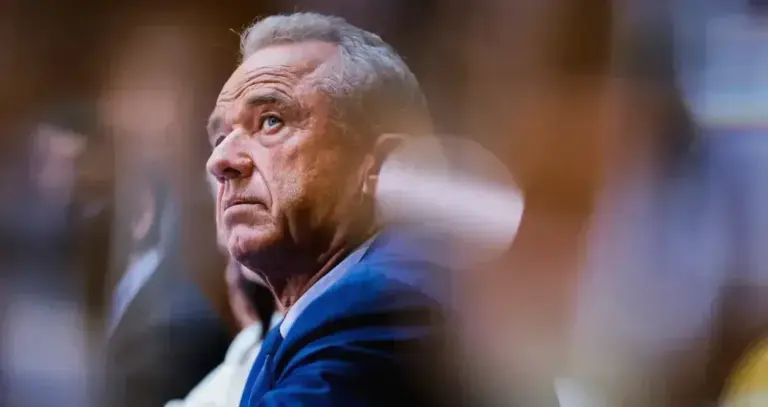
Health Secretary Robert F. Kennedy Jr. and his allies argue that this shift is a necessary move to protect consumers from a burgeoning gray market. For years, many of these peptides have been sold online under the guise of being for research purposes only, a loophole used by retailers to avoid medical regulations. According to an HHS spokesperson, moving these products into regulated compounding pharmacies puts patient safety first by steering users away from unpredictable black-market sources and requiring pharmacists to certify purity and report side effects.

However, the decision has sparked significant backlash from medical watchdogs and safety advocates who warn that the government is ignoring its own scientific findings. FDA scientists had previously concluded there is simply not enough data to prove these compounds are safe or effective for their promoted uses, which range from anti-aging to accelerated healing. Critics like Dr. Peter Lurie suggest the agency is turning a blind eye to established protocols just to expand access to unproven drugs.

Questions regarding influence have also surfaced following a narrow advisory panel vote in July that favored adding these peptides to the bulk drug substance list. Some observers noted that several new appointees on that panel maintain close ties to the peptide industry or political figures pushing for wider availability. While proponents see this as cutting through red tape for the sake of wellness, opponents view it as a dangerous precedent that undermines the role of the nation’s top drug regulator in protecting public health from untested substances.

The Federal Reserve decided on Wednesday to keep benchmark interest rates unchanged, choosing a path of patience despite clear signs that inflation is proving harder to tame than previously hoped. By maintaining the overnight funds rate between 3.75 percent and 4 percent, the committee signaled a desire to gather more data before committing to further tightening. While the official statement acknowledged that inflation remains elevated, officials emphasized that a cautious approach is necessary to eventually steer prices back down to their long term two percent target.

The decision was not without internal friction, as two of the twelve voters broke ranks to call for a quarter percentage point increase. Governor Lisa Cook and Cleveland Fed President Beth Hammack argued for a more aggressive stance, reflecting a growing divide within the committee over how to handle persistent price pressures. This tension comes at a sensitive time, with many analysts wondering if the proximity of the November 3 midterm elections played any role in the decision to avoid a hike, though Fed officials maintain that political independence remains their guiding principle.

Economically, the central bank finds itself in a difficult position. On one hand, economic activity continues to expand at a strong pace and unemployment remains low, bolstered by resilient consumer spending and an investment surge driven by artificial intelligence. On the other hand, core inflation figures are expected to remain stubbornly high, leading some economists to worry that price increases have spread far beyond just energy costs. This creates a paradox where the economy looks healthy enough to withstand higher rates, yet those very rates may be needed urgently to stop inflation from becoming entrenched.

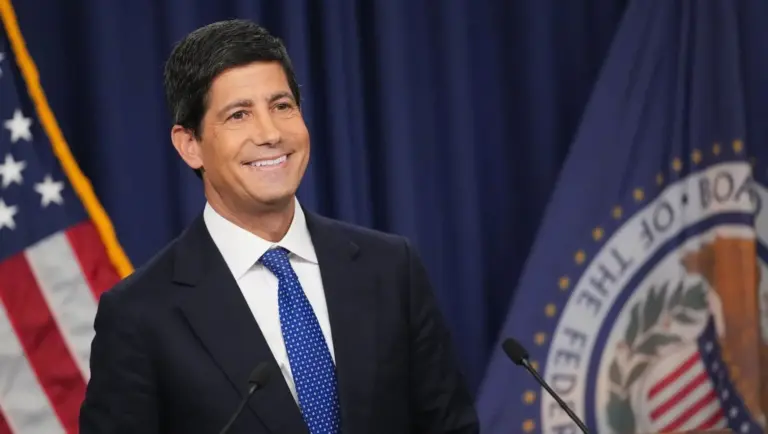
Looking ahead, investors are already bracing for potential shifts in December, as futures markets suggest another hike could be on the horizon. Meanwhile, Fed Chairman Kevin Warsh introduced plans to restructure upcoming meetings, suggesting that future sessions may shift away from constant rate adjustments toward broader strategic discussions. For now, policymakers seem content to watch and wait, hoping that previous hikes are working behind the scenes while avoiding a move that could potentially break an otherwise robust economic engine.

The atmosphere inside Weil Gotshal & Manges has shifted from prestige to panic following a stark warning delivered to the firm’s youngest attorneys. Alex Lynch, who heads the capital markets group, reportedly urged his junior associates during a Tuesday meeting to begin searching for new jobs. While those lawyers are still expected to handle their current client loads for now, Lynch provided no guarantee regarding how much longer they would have desks at what was once one of the most formidable names in American law.

This internal alarm comes as the firm grapples with a leadership vacuum and a wave of high-profile defections. Confidence in the partnership has plummeted, evidenced by the recent movement of corporate chairman Michael Aiello toward rival Cravath. Adding to the chaos, Ramona Nee recently declined her role as the incoming leader of the organization, leaving the storied institution without a clear captain just as it enters its most turbulent period.

In a twist of irony for a firm world-renowned for navigating bankruptcies like Enron and Lehman Brothers, Weil is now seeking help from outside restructuring experts. Partners from Davis Polk & Wardwell, specifically specialist Brian Resnick, have been brought in to advise the company on its survival strategies. This move suggests that the situation has evolved beyond simple personnel changes into a fundamental existential crisis for the operation.

Efforts to save the business through consolidation appear to be failing, with reported merger discussions involving Willkie Farr & Gallagher collapsing last week. With over 1,200 lawyers and billions in annual revenue at stake, these failed negotiations leave few remaining paths forward. As senior partners flee and external consultants step in, many within the industry wonder if total dissolution is becoming an inevitability for this former Big Law powerhouse.

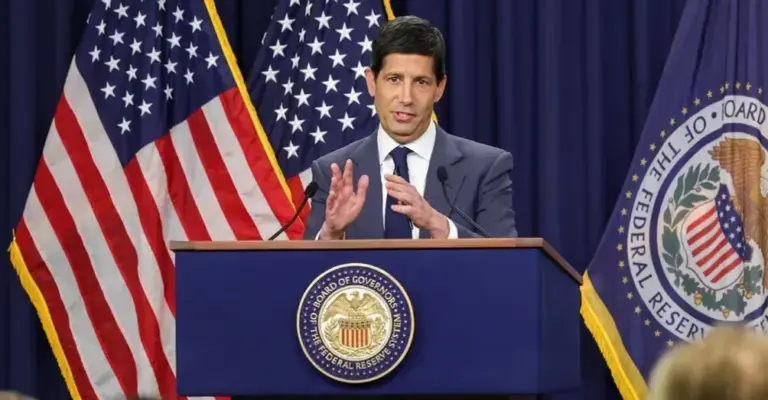
The Federal Reserve opted to keep interest rates unchanged on Wednesday, choosing a path of cautious observation despite ongoing concerns over elevated inflation. Chairman Kevin M. Warsh signaled that the central bank feels it has enough flexibility to gather more data before making another move, noting that current evidence suggests the economy is not overheating. While most members agreed with the pause, the decision was not unanimous, as two officials pushed for a quarter-point increase. Among them was Governor Lisa D. Cook, whose tenure has become a flashpoint in a broader political battle involving former President Trump.

Beyond the immediate rate decision, Chairman Warsh unveiled a significant change to how the Fed operates. Starting next year, the bank will begin reducing the frequency of its formal interest rate votes to carve out more room for long-term strategic planning. By 2027, only seven of the eight annual meetings will involve rate decisions, and by 2028, that number will drop further to six. This shift has sparked debate among economists; some fear it limits the Fed’s agility in responding to sudden economic shocks, while others believe it allows policymakers better breathing room to analyze deep structural trends rather than reacting to short-term noise.

The timing of the announcement adds a layer of tension as mid-term elections approach and political pressure mounts from Washington. Warsh insisted that politics played no part in the decision to hold rates steady, even as Donald Trump continues to criticize the Fed for not lowering rates faster and calls for Governor Cook’s removal following allegations of mortgage fraud. Despite this turbulence, Wall Street reacted positively in the short term, with the S&P 500 edging higher as investors bet that easier monetary policy is on the horizon.

However, some market analysts remain skeptical about whether the Fed is doing enough to curb inflation. Discrepancies in Treasury yields suggest that while traders expect shorter-term rates to stay low, they are worried about long-term price stability. Some critics argued that Warsh failed to provide a clear explanation during his press conference as to why rates weren’t hiked given how persistent inflation remains. For now, the central bank appears content to wait and see if tightening credit conditions for businesses and households will naturally steer the economy back toward its two percent inflation target.