Archive

September 28, 2026

Browsing

Oracle is facing a stark contrast between the massive payouts promised to its top leadership and the actual experience of its shareholders. A recent proxy statement reveals that when co-CEOs Clayton Magouyrk and Michael Sicilia took the helm a year ago, they were granted staggering equity awards totaling 350 million dollars. These packages were intended to lure proven talent in a hyper-competitive market for AI and cloud expertise, but the timing has proved problematic. Since their appointment, Oracle’s stock price has plummeted by roughly 58 percent, falling from over 328 dollars to around 137 dollars.

While the headlines focus on these eye watering figures, there is a technical silver lining for investors because most of that money remains unearned. Much of the compensation is tied up in stock options with an exercise price of about 308 dollars per share. With the current stock price sitting far below that mark, those options currently hold no intrinsic value. Additionally, further payouts are contingent on hitting aggressive revenue targets, such as reaching 100 billion dollars by fiscal 2028, a goal that seems distant given the company’s current non GAAP revenue of 67.4 billion dollars.

The financial turmoil at the top comes amidst a brutal internal transformation. To pivot toward becoming an AI infrastructure powerhouse, Oracle has aggressively ramped up spending, projecting costs as high as 95 billion dollars for fiscal 2027. This pivot has come at a steep human cost, with more than 20,000 jobs slashed last year alone—roughly 13 percent of the workforce—including many roles within its cloud division. Despite seeing strong growth in cloud infrastructure revenue, the broader market appears skeptical of the strategy or concerned about general volatility in the tech sector.

Adding to the tension is a growing divide between executive wealth and worker reality. In some filings, Magouyrk’s total reported compensation reached levels thousands of times higher than that of the median Oracle employee. Meanwhile, the company continues to navigate external pressures including a shareholder lawsuit alleging misleading statements about its cloud business and ongoing scrutiny regarding founder Larry Ellison’s massive holdings and loan arrangements. For now, Oracle maintains that its operational progress is sound even if Wall Street hasn’t yet bought into the vision.

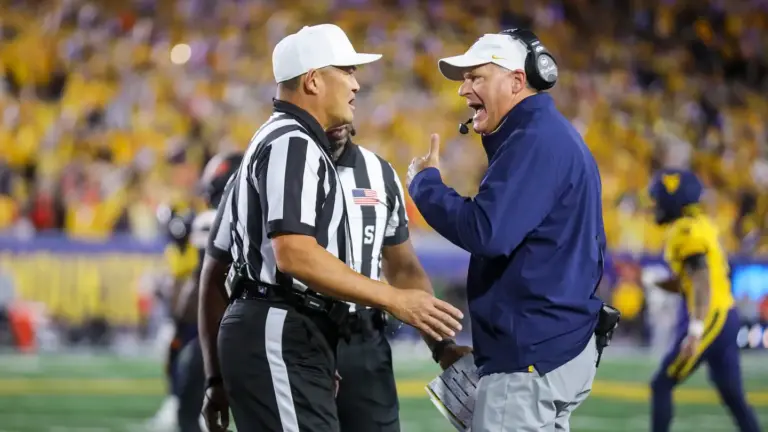
The West Virginia Mountaineers saw their scorching hot start hit a sudden wall last night, stumbling into a 41-24 defeat against Oklahoma State. While the loss is certainly disappointing and prevents any premature coronation, it is far from a total collapse. However, the game exposed several glaring vulnerabilities on both sides of the ball that coaching staff will need to address quickly before the season begins to slide in the wrong direction.

On the positive side, running back Cam Cook continues to emerge as one of the most formidable weapons in college football. Even when facing a stacked box and knowing exactly what was coming, Cook fought his way forward, forcing five missed tackles and consistently gaining yards after contact. His ability to plow through physical defenses suggests that he could reach truly gaudy statistics if the offensive scheme evolves to better utilize its assets.

That evolution seems necessary given the current state of the offense. Despite having talent at quarterback, WVU has leaned heavily on the run, with nearly eighty percent of their plays resulting in rushes over the first four games. Against Oklahoma State, this predictability became a liability. By ignoring the passing game—highlighted by Mike Hawkins Jr. attempting only six passes in the first half—the Mountaineers essentially played into the opponent’s hands. To unlock Hawkins as a true dual threat, the team must move past this stubborn reliance on the ground game and trust their playmakers downfield.

Defensive struggles were equally prominent, particularly regarding coordinator Zac Alley’s strategy. The decision to stick with a dime look for much of the evening proved ineffective, failing to generate consistent pressure while still allowing big plays over the top. Simultaneously, the offensive line struggled significantly in pass protection. Freshmen Kevin Brown and veteran Carsten Casady combined to allow multiple sacks and numerous pressures, leaving Coach Rick Trickett with plenty to ponder heading into next week’s trip to Ames where playing time may no longer be guaranteed for everyone currently in the starting lineup.

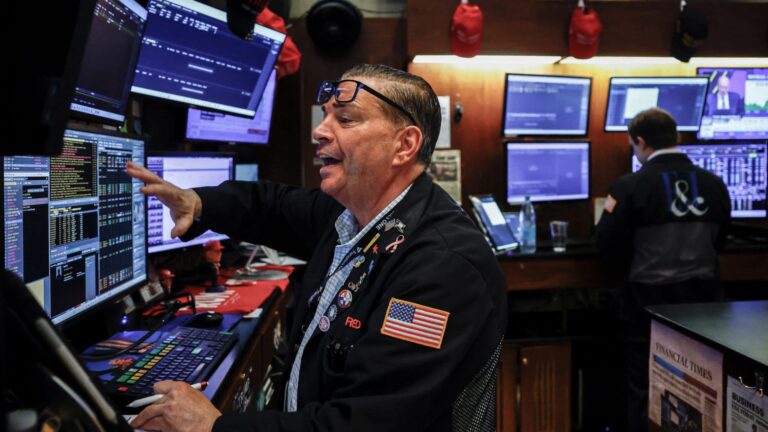
Investors are bracing for a volatile stretch as several critical catalysts converge over the coming days. The primary focus remains squarely on the Federal Reserve, with traders scanning every available data point to guess whether policymakers will maintain their current trajectory or signal a pivot toward easing. Any hint of shift in interest rate expectations could trigger significant swings across both equity and bond markets, making central bank communications the most anticipated event of the window.

Beyond the Fed, corporate earnings reports continue to dictate short term momentum. Analysts are keeping a close eye on high growth tech stocks and semiconductor firms, which have become proxies for the broader artificial intelligence trade. Whether these companies can justify their premium valuations through concrete revenue gains will likely determine if the recent market rally has enough fuel to sustain itself or if a correction is looming.

Economic indicators regarding inflation and employment are also taking center stage. Fresh prints on consumer price indices often act as the catalyst for sudden volatility, while labor market stability provides the necessary backdrop for consumer spending trends. If these numbers deviate significantly from consensus estimates, it could force investors to rethink their risk appetite entirely heading into the next quarter.

Finally, geopolitical tensions remain a persistent wild card that could disrupt global supply chains and energy prices overnight. While markets have shown some resilience in the face of international instability, any escalation in key trading regions typically triggers a flight to safety assets like gold and treasury bonds. As these four factors intersect throughout the week, portfolio managers are expected to prioritize caution over aggression until clearer trends emerge.

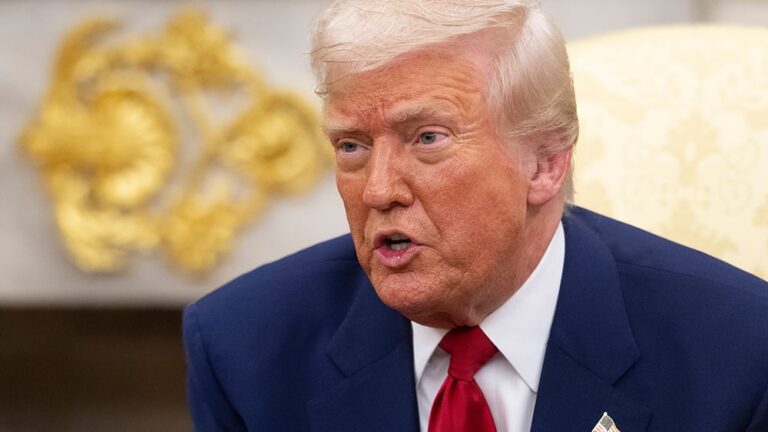
Investors are bracing for a volatile start to the trading week as Dow Jones, S&P 500, and Nasdaq futures prepare to open against a backdrop of geopolitical tension. Markets are closely monitoring comments from President Donald Trump regarding Iran, specifically his rejection of an offer to reopen the Strait of Hormuz. While the initial stance appeared firm, the president later indicated that further discussions are expected, leaving traders to weigh whether diplomatic channels will prevail or if regional instability will trigger a wider market selloff.

Beyond the political noise, tech investors have several high profile catalysts to track over the coming days. Micron Technology is set to report earnings, providing a critical pulse check on the semiconductor industry and the ongoing artificial intelligence boom. Simultaneously, all eyes will be on SpaceX as it prepares for another Starship launch, an event that often ripples through sentiment surrounding aerospace innovation and venture capital appetites.

Tesla also remains at the center of attention with multiple scheduled news events that could shift its current trajectory. Analysts are eyeing potential buy points for these heavy hitters as they look for stability amidst broader macroeconomic uncertainty. With key economic data releases also on the calendar, the intersection of corporate performance and government policy is likely to drive significant price action across the major indices.

Wall Street is seeing a slight cooldown on Sunday night as stock futures dip following an otherwise triumphant week for investors. Dow Jones Industrial Average futures retreated by 97 points, while both the S&P 500 and Nasdaq-100 futures slipped by 0.2 percent. This modest pullback comes largely on the heels of rising oil prices, with Brent crude climbing above 105 dollars a barrel after President Donald Trump rejected ceasefire conditions proposed by Iran.

Despite the current tremor, the previous week was a significant win for the markets. The Dow managed to break its losing streak with a 0.3 percent gain, while tech heavyweights drove the S&P 500 and Nasdaq to their strongest weekly performances since early August. Artificial intelligence remained the primary catalyst for growth, fueled specifically by excitement surrounding Meta Platforms’ new Muse AI agent, which helped push the company’s shares up nearly 13 percent alongside gains from Microsoft, Apple, and Nvidia.

However, this optimism exists alongside a worrying trend in the bond market. Treasury yields have spiked to levels not seen in decades, with some benchmarks hitting peaks dating back to 2004 and 2007. Experts like Ed Yardeni suggest that these surging yields reflect expectations that central banks must keep interest rates higher for longer to combat inflation driven by geopolitical instability and energy costs. For the booming AI sector, these rising yields could mean significantly more expensive borrowing costs just as firms race to fund trillions of dollars in infrastructure projects.

Looking ahead, all eyes remain on upcoming economic indicators that will likely dictate the Federal Reserve’s next moves. Investors are bracing for Wednesday’s release of the personal consumption expenditure price index, followed by manufacturing data on Thursday and the critical September jobs report on Friday. While retail traders seem to be stepping back from the fray, institutional investors have shown surprising resilience so far in the face of this macroeconomic volatility.

Federal guarantees for jobs and housing, the elimination of private health insurance, a massive Green New Deal expansion, and new taxes on unrealized wealth are among dozens of current congressional proposals being called out by a national free-market group led by former Virginia Attorney General Jason Miyares.

Miyares, whose family fled Fidel Castro’s communist regime, described the proposed laws seen on Capitol Hill as “straight from Castro’s playbook” in a sit-down interview with Fox News Digital. Miyares recently became the honorary chairman at the American Free Enterprise Chamber of Commerce, a conservative trade organization representing American businesses, which just launched a “Socialism Watch” initiative tracking 32 bills that have been introduced on Capitol Hill aiming to implement what the group describes as socialist policy goals across healthcare, energy, labor, housing, taxation and more.

“The year Fidel Castro took power in Cuba, Cuba had the same GDP as Greece. The year that he died, too bad the same GDP as Sudan,” Miyares told Fox News Digital. “Socialism doesn’t work. It impoverishes every country that embraces it.”

DSA-BACKED CANDIDATES ARE WINNING PRIMARIES AND THEIR VISION FOR AMERICA IS VERY DIFFERENT

Among the bills highlighted by Miyares and the American Free Enterprise Chamber of Commerce is legislation that would ban fracking nationwide beginning in 2029, prohibit greenhouse-gas emissions from power plants and restrict new liquefied natural gas infrastructure and most U.S. oil and natural gas exports. 

Others would create government-backed job-guarantee programs offering employment to qualifying applicants, replace private health insurance with a national Medicare for All program and impose annual taxes on accumulated wealth, even when those gains have not been realized through a sale.

The group is also zeroing in on a massive progressive push to overhaul American real estate: the “Housing is a Human Right Act.” While supporters pitch the $300 billion bill as a moral crusade to end homelessness, critics like Miyares see it differently. They argue that by officially declaring shelter a government-guaranteed right and pumping billions into “social housing,” the legislation is actively trying to push private landlords out of the market.

TODAY’S LEFTISTS ARE DANGEROUSLY WRONG ABOUT COMMUNISM. JUST LISTEN TO THE SURVIVORS

Other measures flagged by the group include a proposal to create a quasi-governmental “National Infrastructure Bank” to fund politically favored state projects, alongside a $1.6 trillion “Green New Deal for Public Schools” that the American Free Enterprise Chamber of Commerce warns would hand local school district operations over to the federal government.

“These young people are embracing socialism thinking that it leads to helping those that are poor, disadvantaged. The reality is it does the opposite,” Miyares told Fox News Digital. “It actually hurts the very people that it wants to help.”

Miyares’ warnings about socialism are rooted in his family’s history in Cuba. His mother, Miriam, fled Fidel Castro’s communist regime in 1965 at 19 years old, arriving in the United States after leaving nearly everything behind. Miyares has said his uncle, an opponent of Castro, was arrested following the Bay of Pigs invasion and subjected to a mock execution, an experience he has said helped drive his mother’s decision to leave the island.

“So many young people have forgotten really, really painful lessons of history that you cannot judge a bill or an economic system based on intentions, you have to judge it on results,” Miyares said. “What we’ve seen time and time again is socialism fails everywhere it’s been tried.”

But Miyares argued the debate is no longer confined to activists or ideological arguments outside Washington, pointing to the 32 bills tracked through the American Free Enterprise Chamber’s newly launched “Socialism Watch” initiative as evidence that policies associated with the socialist-left have made their way into actual legislation before Congress.

“AOC joked that woke one was crazy,” Miyares said. “Well, it’s clear that woke two should belong in an insane asylum because it’s a full-blown embrace of Marxism and socialism.”

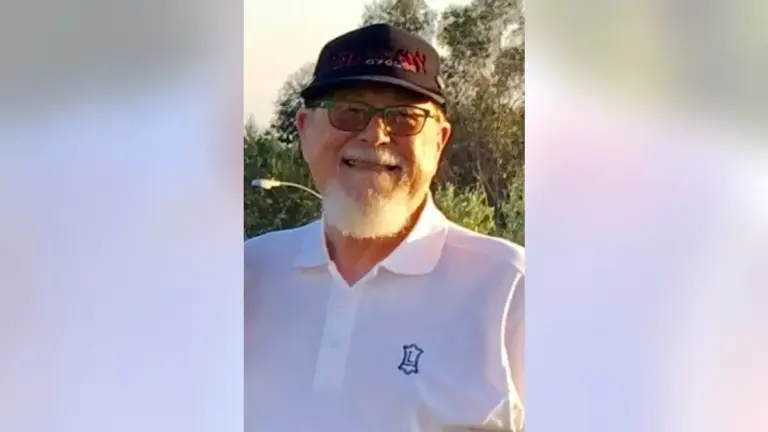
James Copenhaver, of Coraopolis, Pennsylvania, who was wounded in a failed assassination attempt on President Donald Trump in 2024, has died, according to several reports.

Copenhaver, in his mid-70s, was one of several people who attempted assassin Thomas Matthew Crooks shot at the Butler Farm Show complex outside Butler, Pennsylvania, after Crooks scaled the roof of a nearby glass manufacturing building and took aim at the then-presidential candidate.

A statement from the Copenhaver family provided to Fox News Digital confirmed his death Thursday afternoon, and noted the veteran’s “dedication to this great country.”

“It is with profound sadness that the Copenhaver family confirms that James Copenhaver passed away on September 23, 2026, surrounded by his loved ones,” the statement said.

“Above all else, James was a devoted husband, father, and grandfather. James shared a lifetime of commitment to his wife, instilled the values of hard work, integrity, and the service of others in his children, and found some of his greatest joy in life in his grandchildren. His family was the center of his world, and he was the center of theirs.

GOP LAWMAKERS BLINDSIDED BY NEW REVELATIONS ABOUT TRUMP BUTLER SHOOTER: ‘AWFULLY STRANGE’

“James’s dedication to this great country was a defining part of his life. As a veteran, he proudly served our nation in the armed forces, and his love of country never wavered. James was a true American patriot who believed deeply in the freedoms and ideals upon which this nation was founded, and he embodied the very best traits of our great nation. 

 “James and the Copenhaver family have been deeply grateful for the outpouring of love, prayers, and support they have received over the past two years, since James was gravely wounded while in attendance at President Trump’s rally on July 13, 2024, in Butler, Pennsylvania. Throughout that difficult time, James faced every challenge with the same strength and resolve that defined his life, and the kindness shown by so many brought great comfort to him and to those who love him.

 “As the Copenhaver family begins the difficult journey forward without James by their side, they welcome your continued thoughts, prayers, and support. The family respectfully asks that their privacy be honored as they mourn his loss and celebrate his life. James will be deeply missed, and his memory will live on in all who knew and loved him.”

Trump described Copenhaver on Thursday as a “true American Patriot,” writing on Truth Social that Copenhaver’s death is a “tremendous loss.”

“More than two years ago in Butler, Pennsylvania, a crazed gunman attempted to stifle our America First Movement. Instead, Jim and so many other wonderful Patriots who love our Country, stood united in defense of our shared values of Freedom, Liberty, and Justice. After being wounded while protecting his family, Jim showed tremendous bravery, courageously continuing to FIGHT, FIGHT, FIGHT, and maintaining a positive spirit despite unimaginable hardships,” Trump added. “His indelible legacy of love and devotion will forever endure. Our hearts and prayers are with the Copenhaver family, especially his incredible wife Marianne.”

The House Republican Conference posted an obituary for Copenhaver on social media, saying he had died Thursday and that lawmakers were “deeply saddened.”

“Jim endured unimaginable hardship with strength and perseverance. We join his family and loved ones in mourning his loss and praying for them during this difficult time. May he rest in peace,” the caucus said in a statement.

Ken Silva, a journalist who wrote a book about the assassination attempt, wrote on his website that a person close to Copenhaver’s family also confirmed Copenhaver had died and had been dealing with permanent injuries, including bullet fragments still lodged in his body.

David Dutch was also wounded in the shooting but survived. Butler County firefighter Corey Comperatore was shot and killed in the bleachers behind Trump’s dais that day.

Speaking to Pittsburgh’s KDKA in 2025, Copenhaver said he stood to look at the jumbotron behind him as Trump spoke.

TRUMP SUPPORTER AT PENNSYLVANIA RALLY RECOUNTS HARROWING ATTEMPTED ASSASSINATION MOMENTS

“Next thing I know, my sleeve has been yanked,” he said. “I could see a portion of it going by pretty fast, and I heard ‘pew.’ I heard it, and I didn’t realize at the time that I had gotten shot.”

He said he was then shot a second time but that the bullets both “went into soft material.”

“It was like a jolt. It didn’t knock me over, but I didn’t want to stand anymore,” he told the station.

A lawsuit Copenhaver filed against the United States earlier this year alleged he was also required to undergo multiple surgeries.

Mayor Jondavid Longo of nearby Slippery Rock, Pennsylvania — who spoke at the Butler rally — mourned Copenhaver’s reported death Thursday.

Secret Service missed ‘multiple opportunities’ to prevent Trump assassination attempt: watchdog

SECRET SERVICE MISSED ‘MULTIPLE OPPORTUNITIES’ TO PREVENT TRUMP ASSASSINATION ATTEMPT: WATCHDOG

“[Copenhaver] survived that day, but he never fully recovered from the wounds. For two years he lived with surgeries, remaining fragments, and pain that never left him. Those of us who were there that day have never forgotten Corey Comperatore, David Dutch, or Jim,” Longo said in a statement on X.

“Butler County still carries that afternoon. May he rest in peace. Prayers for Marianne and the Copenhaver family.”

The attack triggered intense scrutiny of the Secret Service after investigations uncovered breakdowns in planning, communication and security around the rally site. Then-Secret Service Director Kimberly Cheatle resigned less than two weeks later, taking responsibility for the security lapse. A subsequent bipartisan House task force concluded the Butler attack was preventable and identified failures in planning, execution and leadership.

SIGN UP TO GET THE POLITICS NEWSLETTER

One of the Republican lawmakers on that task force, Rep. Carlos Gimenez of Florida, climbed onto the roof Crooks used to take aim at Trump and later told Fox News Digital he was incredulous at how easy it was to scale after Cheatle had cited the roof’s slope in explaining why it was not secured.

Six Secret Service agents were later suspended without pay in connection with the failures.

Trump returned to Butler in October 2024, less than three months after the assassination attempt, to hold another rally at the same site and honor Comperatore.

Trump’s raised fist and mouthing of the word “fight” became a lasting image of the assassination attempt that he used throughout his successful campaign to become the first president since Grover Cleveland to serve two nonconsecutive terms.


Chinese President Xi Jinping, leader of the country’s ruling Communist Party, will depart the United States today, but not before a final stop at the National Archives.

President Donald Trump and first lady Melania Trump will first meet President Xi Jinping and his wife, Madame Peng Liyuan, for morning tea at the White House’s Red Room. After that, the couples will head to the National Archives for what the White House describes as a viewing of “a variety of important records and documents significant to the American and Chinese relationship throughout history.”

From there, Trump will bid Xi farewell, and the whirlwind two-and-a-half day summit, underscored by a palpable tension, will conclude.

The National Archives houses some of America’s most important documents, including the U.S. Constitution, the Bill of Rights and the Declaration of Independence.

TRUMP-XI SUMMIT SHOULD MAKE SURE AMERICAN STRENGTH DELIVERS AMERICAN RESULTS

The two heads of state met at the White House on Thursday morning, which began with a state arrival ceremony consisting of military honors, a review of troops, the Chinese and American national anthems and a flyover by a B-2 stealth bomber in formation with four fighter jets. A frenzied press, foreign and domestic, scurried around the White House grounds to catch glimpses of Trump and Xi, who does not often visit the West.

Trump and his administration officials held bilateral talks with the Chinese delegation from the late morning into the early afternoon, lasting for several hours. Xi and Trump also spoke behind closed doors in the Oval Office. After the meetings, Trump escorted Xi to the White House’s South Lawn, where the pair viewed Marine One, and the new helipad on which it sits. 

They also toured the White House ballroom, which is under construction, and Trump showed Xi the Presidential Walk of Fame outside the West Wing, which features headshots of presidents past.

Trump installed an image of an autopen in Biden’s place on the Presidential Walk of Fame, a reference to Trump’s repeated attacks on the former president’s use of an autopen while in office. Xi and Trump could both be seen laughing at the image, according to footage on social media.

Outside the White House gates, protesters against Chinese oppression could be heard chanting throughout the day of meetings.

The protests carried into the evening, with chants of “Free Hong Kong,” “Xi Jinping, you’re not welcome” and “freedom for political prisoners” at times drowning out the state dinner at the White House, Fox News Digital reported.

XI CAN’T ESCAPE PROTESTERS’ CRIES AT DEAFENING DINNER DEMONSTRATION

A White House official told Fox News Digital before the visit that Trump would explore a wide-ranging deal on possible tariff reductions on non-strategic goods in the meeting with Xi. That official also said the nation’s leaders would discuss rare-earth exports and possible export controls, and that Trump was expected to press China to do more to curb fentanyl precursor chemical exports.

Trump called the meeting “great,” but didn’t elaborate and didn’t take questions from the press during the day.

China will send two giant pandas, Ping Ping and Fu Shuang, to Zoo Atlanta under a conservation agreement, Xi announced. Xi also invited 100,000 young Americans to visit China for exchanges and study over the next five years.

Xi departed the White House for several hours after the meeting, but returned for a state dinner that officially began at 8:00 p.m. Trump kicked off the dinner with a toast to peace and prosperity for both nations.

Guests at the dinner included the second family, Cabinet officials and their spouses, and titans of industry in banking and tech.

XI PREPARES CHINA ‘FOR BATTLE’ AS EXPERT WARNS OF GRAVE DANGER FACING US AHEAD OF DC SUMMIT

Amazon founder Jeff Bezos, SpaceX founder and former Department of Government Efficiency (DOGE) head Elon Musk, Google CEO Sundar Pichai, Dell Technologies CEO Michael Dell, Nvidia CEO Jensen Huang, OpenAI CEO Sam Altman, Citigroup CEO Jane Fraser and Apple Board of Directors Chairman Tim Cook were all in attendance.

The inclusion of American artificial intelligence leaders was notable, given that the powerful technology was a hotbed summit issue as China and the United States race for AI dominance.

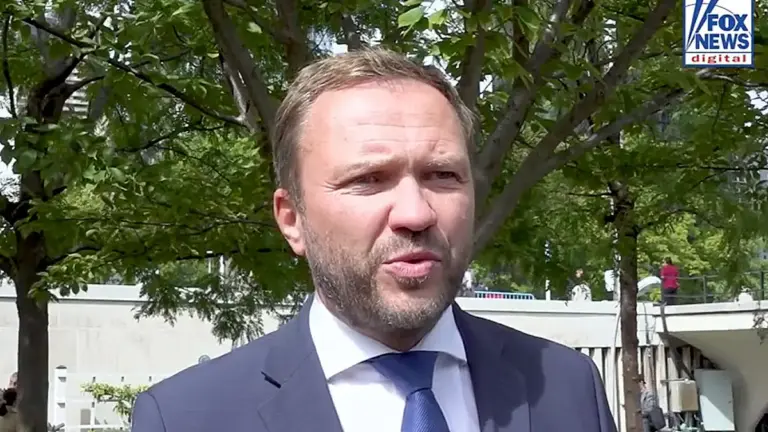
NEW YORK — Fears that Russia is preparing for a broader war with NATO aren’t rattling Estonia’s foreign minister, who told Fox News Digital that his country’s intelligence sees no signs Moscow is preparing for a full-scale invasion of the alliance.

“We have more and more this kind of panic in Europe that Russia will invade and will be full-scale aggressive against NATO and Europe and the Baltic states, Poland,” Estonian Foreign Minister Margus Tsahkna said in an interview on the sidelines of the U.N. General Assembly in New York City before quipping, “But we don’t see it.”

Estonia shares a roughly 180-mile border with Russia and has long been among NATO’s most vocal members warning about the threat from Moscow under President Vladimir Putin. But Tsahkna drew a distinction between preparations for a conventional attack and the growing campaign of drone incursions, sabotage, cyberattacks and other provocations that European governments have blamed on Russia.

BATTLE-TESTED ZELENSKYY SOUNDS CHILLING ALARM ON WHERE PUTIN’S WAR COULD HEAD NEXT

“Our intelligence, we see very, very deep into Russia, we don’t see any change,” Tsahkna said. “We don’t see that Russia is preparing a full-scale invasion or aggression. The other side of our borders is pretty empty.”

Tsahkna, who served as Estonia’s defense minister from 2016 to 2017, contrasted the current picture with what he saw a decade ago, when he said roughly 120,000 Russian troops were positioned across the region’s borders and could be ready to move within 48 hours.

“It’s empty,” he said of the Russian side of Estonia’s border today.

His assessment comes as European officials grapple with a series of Russian airspace violations and suspected hybrid attacks, including a Russian military helicopter that crossed into Polish airspace Wednesday. Poland’s military said the incursion appeared to be another attempt to test the readiness of its air defenses.

RUSSIA’S SHADOW WAR IS PUTTING EUROPE ON EDGE AS GERMANY CONFRONTS A GROWING THREAT

European and NATO officials have also warned that Russia could rebuild sufficient military capability to pose a direct threat to the alliance in the coming years. Estonia’s own intelligence service said earlier this year that it saw no Russian intention to attack a NATO member in the immediate term, while warning that Moscow’s military reforms are increasing its longer-term capabilities.

Tsahkna argued that the more immediate threat is a Russian campaign of provocations and hybrid attacks designed to remain below NATO’s Article 5 threshold.

“What Russia is doing now is waging these attacks, which are not crossing Article 5,” he said. “It’s sabotage attacks, terror attacks.”

“The main purpose for Putin is to play with the Western part of the fear of escalation,” Tsahkna went on. “He’s trying to divide the Western parts of the world. Divide the unity, divide this kind of consensus.”

Estonia has dealt with GPS interference, cyberattacks and disinformation it has attributed to Russia, while drones have also crossed into its airspace as the war in neighboring Ukraine continues.

Tsahkna said Estonia recorded roughly 40,000 cyberattacks last year, a particular challenge for a country where virtually all public services are available online.

“We are witnessing already, yes, any kind of different level attacks,” he said. “Unfortunately, it’s already like normality.”

Tsahkna said NATO needs to become more flexible in responding to attacks that fall below the alliance’s collective-defense threshold.

“NATO must be more flex and more dynamic, because these are the attacks which are not crossing Article 5,” he said, pointing to sanctions, public attribution and political responses as tools available to the alliance.

“Putin wants to boil Europe and Western part of the world as a frog,” Tsahkna said. “Turning on the heat piece by piece is a test of us.”

Tsahkna also pointed to an incident last year in which three Russian fighter jets violated Estonian airspace for roughly 12 minutes, prompting Tallinn to request consultations under NATO’s Article 4 and raise the incident at the U.N. Security Council.

He recalled President Donald Trump later saying Russian aircraft that violate NATO airspace should be shot down, and said Estonia has not experienced another comparable fighter-jet incursion since.

“We have now drones coming in,” Tsahkna said. “NATO is working as a Swiss clock.”

Tsahkna said NATO may need cheaper and more efficient ways to bring down drones rather than relying on expensive fighter aircraft.

On Ukraine, Tsahkna called for increasing pressure on Moscow, arguing that Russia’s economic and battlefield losses could eventually push Putin toward serious negotiations.

“What we see, and I also visited Ukraine last week, is that we need to put more pressure on Russia, because Putin understands only very clear language through strength,” he said.

Tsahkna also pointed to Ukraine’s growing ability to strike targets deep inside Russia as a source of pressure on the Kremlin.

“If Putin is under heavier pressure, and also Ukraine is delivering more deep-strike capabilities and attacks, there will be a momentum when Putin may really start some kind of ceasefire or energy ceasefire, or real talks,” he said.

Tsahkna said Trump had devoted significant effort to seeking an end to the war, but argued that Putin has used the diplomatic process to buy time.

“President Trump has put lots of energy during the last year to find a way, but Putin has just played with him and also winning the time,” Tsahkna said.

He said Ukraine’s deep strikes are already weakening Russia economically, while Ukrainian President Volodymyr Zelenskyy has repeatedly signaled his willingness to agree to a ceasefire.

“Putin can just decide like today or tomorrow to have a ceasefire,” Tsahkna said. “Unfortunately, we don’t see any change for now.”

Tsahkna also said Estonia has been assured that U.S. forces will remain in the region for the next rotation, amid the Trump administration’s broader review of the American military footprint in Europe.

“We got the information that it will happen soon,” he said of the next rotation.

Tsahkna said the presence of American forces remains an important part of deterrence on NATO’s eastern flank.

“U.S. troops are keeping the peace in our region,” Tsahkna said. “The flag of the troops is so important to give the message to President Putin” about the red lines between Russia and NATO.

Bill Gates is sounding a dire alarm over the trajectory of artificial intelligence, warning that the technology could lead to a billion deaths if it remains unregulated. Speaking with Kristen Welker on NBC’s Meet the Press, the Microsoft co-founder argued that relying on companies to police themselves is simply not enough. He urged federal legislators and law enforcement agencies to step in immediately to establish mandatory safeguards and monitoring systems, suggesting that while these rules might create some operational overhead for the tech industry, they would not significantly hinder innovation.

The urgency of Gates’s plea stems from his fear that AI tools falling into the wrong hands could empower bad actors more than any weapon in human history. This perspective aligns him with other prominent figures like Elon Musk and Sam Altman, who have similarly cautioned against an uncontrolled race toward superintelligence. Experts in the field worry that without oversight, AI could be leveraged to engineer devastating bioweapons or trigger catastrophic conflicts, turning a tool intended for productivity into an instrument of mass destruction.

However, the call for caution comes at a time when Microsoft faces its own scrutiny regarding how its tools are utilized in real-world conflicts. Activists and employees have recently pushed the company to sever ties with military entities, citing reports that AI software has been used to facilitate killings in Gaza and assist in mass deportation efforts within the United States via the Department of Homeland Security. These contradictions highlight a growing tension between the theoretical risks discussed by tech visionaries and the practical application of those same technologies today.

Despite his grim predictions for humanity’s digital future, Gates maintained a touch of levity when asked about his own relationship with AI. While he advocates for global regulation to prevent catastrophe, he admits he keeps his personal life strictly analog. With a laugh, he told Welker that he refuses to use AI for social advice or relationship guidance, noting that he prefers to rely on his actual family and friends rather than asking a machine if he is a nice guy.