Archive

October 6, 2026

Browsing

The chip sector took a breather on Monday as investors stepped back following a strong two day rally. The Philadelphia semiconductor index, widely tracked as the SOX, moved mostly sideways throughout the session, ending the day with a slight dip that suggested traders were pausing to digest recent gains rather than pushing for further breakouts.

While the broader index stalled, Advanced Micro Devices remained a bright spot of confidence among institutional observers. Analysts at several major firms raised their price targets for AMD stock during the session, signaling continued belief in the company’s growth trajectory despite the general cooling off seen across the hardware landscape.

However, not every player in the space enjoyed a quiet day of consolidation. Some companies faced more significant headwinds as negative analyst reports dragged down shares of GlobalFoundries and Credo Technology. These declines helped offset some of the stability found elsewhere in the tech group, contributing to the flat performance of the overall semiconductor benchmark.


The Dow Jones Industrial Average climbed on Monday as a wave of optimism swept through the broader stock market. After an initial period of volatility, the industrial average managed to reverse its course and trend upward, fueled by strong performances from some of the world’s most influential technology companies. Investors showed particular enthusiasm for giants like Microsoft and SpaceX, while chipmaking leader Taiwan Semiconductor successfully cleared a key buy point, signaling renewed confidence in the semiconductor sector.

Beyond the tech surge, geopolitical developments in South America provided fresh opportunities for traders. Markets reacted positively to better than expected election results favoring right wing candidate Flavio Bolsonaro in Brazil. This political shift triggered a rally in several Brazilian plays and boosted shares of MercadoLibre, which shone brightly alongside other growth stocks during the trading session.

This blend of domestic tech strength and international momentum suggests a diversifying appetite among investors looking for entry points across different sectors. With heavy hitters leading the charge and emerging markets offering strategic openings, the day’s activity reflects a general mood of resilience and opportunistic buying across global indices.

Nike appears to be steering away from political activism and returning to its roots after its stock price plummeted to a twelve year low. In a recent internal memo, CEO Elliott Hill told employees that the company has spent the last year putting sport at the center of everything they do. While framed as a forward looking mission statement, many observers see the remark as a quiet admission that the brand lost its way by prioritizing social causes over athletic performance.

The timing of this strategic pivot coincides with a brutal financial stretch for the sportswear giant. Shares recently closed at thirty three dollars and eighty seven cents, marking a staggering decline from the peak seen in late 2021. Beyond the numbers, the company is facing operational instability, having already cut staff twice this year with further layoffs expected by 2027. For a brand that once seemed untouchable, the current volatility suggests a disconnect between corporate ideology and consumer demand.

Critics argue that Nike drifted too far into identity politics through various high profile campaigns involving figures like Colin Kaepernick and Dylan Mulvaney. Some industry analysts point to specific missteps, such as the delayed release of Caitlin Clark’s signature shoe, suggesting that ideological priorities may have overshadowed market logic regarding who actually drives sales in women’s basketball. By focusing on cultural statements rather than product innovation and athlete appeal, some believe Nike alienated a significant portion of its customer base.

Hill’s memo focused largely on logistical improvements, including supply chain modernization and a new organizational structure divided by global regions. However, the insistence on centering sport serves as a telling signal for investors. After years of blending footwear with sociopolitical commentary, Nike seems to be realizing that mixing politics with athletics often results in diminishing returns both in viewership and valuation.

As investors shake off a surprisingly resilient September, experts are warning that the transition into October could bring unexpected turbulence. While the previous month avoided a total collapse despite historical trends suggesting it should be the weakest period for stocks, analysts suggest that caution remains necessary. Historical data reveals that October often hosts some of the most severe single day declines in market history, making current positioning critical as the third quarter earnings season begins to ramp up.

Market strategists highlight a stark divide in recent performance, where technology and communication sectors managed modest gains while basic materials and financials took significant hits. This divergence underscores a tricky environment for those trying to balance growth and value portfolios. Adding to the tension is the behavior of Treasury bond yields, specifically the ten year note, which has seen steady increases. There is growing concern that equity investors may be ignoring these rising rates for too long, potentially setting the stage for a correction if yields climb toward higher thresholds.

Amidst this instability, Morningstar researchers are refining their outlooks on specific companies to help traders navigate the coming weeks. Recent analysis includes a substantial reduction in the fair value estimate for Micron Technology following its latest earnings report, alongside updated evaluations for names like McCormick and Carnival. These shifts serve as a reminder that fundamental changes in company health can quickly override broader market momentum during volatile months.

To cap off their monthly strategy session, analysts identified three specific stocks to sell and three to buy as primary moves for October. While certain picks such as Constellation Brands remain under close watch due to upcoming earnings pops, others like Clorox continue to be reviewed against evolving benchmarks. With the overall U S equity market trading at a slight discount, selectors are focusing on quality assets that can weather potential swings in interest rates and economic sentiment throughout autumn.

The push to stop members of Congress and their families from trading individual stocks has hit a wall in Washington following the Senate’s recent rejection of a key piece of legislation. Despite widespread public appetite for reform, the bill that previously cleared the House died last week when Senate Democrats voted it down. While there appears to be some bipartisan agreement that something needs to change, the two parties remain locked in a bitter dispute over whether current holdings should be liquidated or simply frozen.

According to Chris Josephs, the co-founder of Autopilot and creator of a popular tracker monitoring Representative Nancy Pelosi’s financial moves, the deadlock centers on divestment. Democrats generally favor a total exit from individual stocks to avoid conflicts of interest, whereas Republicans argue that lawmakers should be permitted to retain assets they acquired before taking office. Adding further complication to the stalemate was a controversial voter ID provision tucked into the bill, which many believe ensured its failure ahead of the upcoming midterms.

The debate often circles back to high profile figures like Nancy Pelosi, who has become a symbol for those demanding stricter ethics laws due to her substantial and well timed investments. Josephs notes that Pelosi’s history of trading large sums—sometimes reaching twenty five million dollars—in companies like Tesla and Nvidia just before major legislative acts provided the impetus for his tracking software. By allowing ordinary citizens to mirror these political portfolios, Josephs aimed to shine a light on what he describes as an inherently hypocritical system.

For advocates of the ban, this latest legislative failure is more than just a policy disagreement; it is a symptom of systemic distrust between the government and the governed. Josephs maintains that allowing politicians access to nonpublic information for personal gain erodes faith in democratic institutions. As long as both sides cannot agree on how to handle existing wealth, however, it seems likely that congressional portfolios will remain open for business through another election cycle.

Global energy markets are feeling the heat as Brent crude surged past 102 dollars per barrel on Friday, driven by a volatile mix of military escalation and tight supplies. In an urgent bid to stabilize soaring fuel costs, the Group of Seven nations have pledged to unleash 100 million barrels from their strategic reserves over the coming four months. This coordinated effort, managed through the International Energy Agency, includes a rapid injection of diesel reserves within twenty days to combat critical shortages in refined products.

The spike in pricing comes amidst heightened instability in the Middle East, where U.S. military presence is expanding rapidly. Reports indicate that a third aircraft carrier and roughly 10,000 additional troops are deploying to the region following stern warnings from President Donald Trump regarding Tehran. These geopolitical frictions are exacerbated by the continued closure of the Strait of Hormuz and recent decisions by China to restrict its own exports of refined petroleum products.

While some analysts point to improving export flows from Saudi Arabia as a potential cooling factor, French President Emmanuel Macron has emphasized the need for deeper cooperation among allies. To avoid further shocks, G7 members plan to synchronize their refinery maintenance schedules so that production does not dip across multiple regions simultaneously. Macron also called upon major producing nations to resist the urge to impose outright bans on energy exports during this fragile period.

Beyond the trading floors, there is growing alarm over how these sustained price hikes affect the world’s most vulnerable countries. According to data from the United Nations Development Programme, dozens of developing nations are already struggling under heavy debt loads while spending billions to subsidize fuel for their citizens. With global fossil fuel subsidies potentially topping one trillion dollars this year, many governments find themselves exhausted financially just as energy volatility reaches a fever pitch.

Sigma Lithium has been forced to put its Brazilian mining and industrial operations on hold after a legal dispute over environmental licenses reached a stalemate in the courts. The company attributed the sudden suspension to an unusual fifteen day delay by the Federal Court of Appeals, which is currently reviewing an emergency defense against an injunction. This disruption means the producer will have to push back its annual production guidance of 240,000 tons of lithium oxide concentrate by three months, though executives insist their long term goals for 2027 remain intact.

The conflict centers on a lawsuit filed by the NGO Ngolo, which argues that the Grota do Cirilo complex is harming a nearby Quilombola community composed of descendants of enslaved Afro Brazilians. A local judge issued a preliminary injunction during a holiday weekend, leading to the current freeze on activities. While the NGO claims the mine is dangerously close to these ancestral lands, Sigma Lithium contends that the settlement is actually located across the Jequitinhonha River and several kilometers away from active mining pits, suggesting that the plaintiffs used flawed measurements to exaggerate the project’s impact.

Adding to the tension is a perceived lack of due process. Sigma Lithium claims it was not properly notified of the ruling until nearly a week after it was issued and says its requests for independent technical evaluations were ignored by the court. With Brazil approaching general elections on October 25, there are growing concerns within the company that political pressures could lead to further delays or bias against the mining sector in future rulings. If this latest injunction is upheld, the firm plans to take its case to higher federal courts.

To keep itself afloat financially during this period of uncertainty, Sigma Lithium intends to pivot toward its commercial recycling wing and sell high purity lithium fines recovered from waste materials. Despite these efforts to mitigate losses through self funding, investors reacted cautiously to the news, sending share prices dipping shortly after Thursday’s announcement. This setback comes just months after the company had settled previous environmental disputes with state authorities via a million dollar commitment toward ecological adjustments and fines.

The traditional landscape of investing is undergoing a quiet revolution as artificial intelligence begins to step in where human traders once stood. According to Han Jin, the founder and CEO of Bluwhale, we are seeing a convergence of two powerful trends: the tokenization of assets on the blockchain and the rise of autonomous AI agents. While standard brokerage accounts often operate as closed systems that limit an AI’s ability to monitor holdings or execute trades, blockchain technology opens those doors wide. Because these networks never sleep, AI agents can act as a constant execution layer, monitoring markets and managing portfolios twenty four hours a day without needing a human to click a button.

Beyond just stocks, this shift is extending into commodities like silver, oil and industrial metals as investors seek physical stores of value during inflationary periods. However, the transition isn’t about handing over total control blindly. For most users, the process starts with simple questionnaires regarding risk tolerance and specific interests. These parameters create a safety net, allowing investors to set strict limits on what an agent can trade independently and identifying which major moves require manual confirmation from the owner. Even though the AI handles the heavy lifting, Jin emphasizes that final responsibility remains with the person who configured the system.

Looking further ahead, Jin envisions a future where personal finance behaves less like a series of chores and more like modern healthcare tracking. He imagines every investor carrying a comprehensive financial profile on their phone, supported by multiple specialized agents that track various streams of wealth day and night, similar to how a fitness tracker monitors heart rate and steps. In this ecosystem, the human stays in charge as the architect of their own strategy while the machines handle the minutiae. Ultimately, the evolution of automated wealth management will be dictated by how much trust users are willing to place in their digital guardians.

Barrick Gold has reached a significant milestone in East Africa as the Tanzanian government officially renewed the special mining licenses for the North Mara gold mine. This extension guarantees the company’s right to operate at the site for another fifteen years, stretching their presence there until 2041. The mine is managed via Twiga Minerals, a joint venture formed in 2019 that ensures a fair distribution of wealth, granting the government a sixteen percent free carried interest and an even split of economic gains.

Seb Bock, who leads Barricks Rest of World division, described the renewal as a testament to the deep trust and partnership built between the company, the state, and local residents over the last few years. According to Barrick, this collaborative approach has yielded substantial results for the national economy, with roughly 5.3 billion dollars invested since they took control five years ago. In 2025 alone, contributions totaling 1.2 billion dollars were made through royalities, taxes, and salaries, earning the firm recognition as the country’s top revenue contributor.

Beyond the financial figures, the North Mara operation has focused heavily on localization. Currently, ninety six percent of the workforce consists of Tanzanian nationals, many of whom live in the villages immediately surrounding the mine. This commitment to domestic growth extends to supply chains as well, with over ninety percent of procurement needs being met by indigenous companies registered within Tanzania.

While celebrating success in East Africa, Barrick has also been managing volatility elsewhere on its continent wide portfolio. The company recently averted a potential crisis in Mali by signing a new collective bargaining agreement with unions at its Loulo Gounkoto mine. This deal resolves long standing disputes over overtime pay and expenses that had previously threatened to trigger widespread strikes across several sites during a period of political transition and regulatory change in Mali.

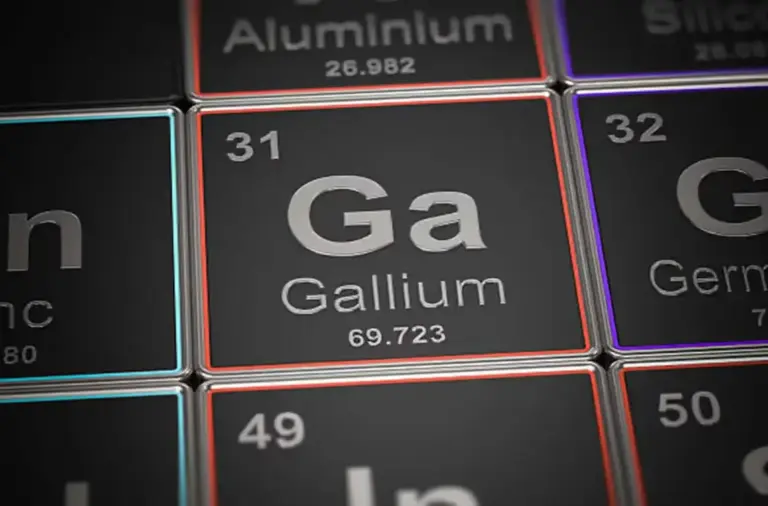
Greek industrial giant Metlen is rapidly cementing its position in the global tech supply chain after securing a significant long term deal to provide gallium to a major Japanese chemical firm. This latest agreement allocates roughly 16 percent of the annual yield from Metlen’s upcoming production site, marking the second time the company has pre sold its output before the plant even opens. The facility, which is slated to start commercial operations in late 2027, aims for a total capacity of 50 metric tons per year, and leadership expects every ounce of that production to be spoken for well before the doors open.

The venture represents a milestone for European industry as it establishes the continent’s first integrated gallium production pipeline. By leveraging proprietary technology and sourcing materials from its own Aluminium of Greece plant, Metlen is creating a streamlined process for extracting this rare metal. This move comes at a critical time when global manufacturers are desperate to diversify their sources of gallium, a component essential for everything from artificial intelligence hardware and defense systems to telecommunications and green energy infrastructure.

Metlen Executive Chairman Evangelos Mytilineos noted that the level of international interest in the project has surpassed all internal projections. He suggested that these back to back deals reflect an urgent global demand for stable and diversified supply chains away from traditionally dominant markets. According to Mytilineos, this investment does more than just grow a business; it integrates Greece into a sophisticated new technology ecosystem while helping Europe secure its footing in a market vital for future innovation.

This Japanese partnership follows another landmark deal signed last year with a prominent United States technology company, which claimed about 25 percent of the projected output. Because of its strategic importance, the European Commission has formally labeled the facility as a Strategic Project under the Critical Raw Materials Act. To ensure its completion, the project has also received financial backing from the European Investment Bank via the REPowerEU framework, highlighting how central this refinery is to broader geopolitical goals regarding resource independence.