
Archive

October 6, 2026

Browsing

During a Sunday street festival in a notoriously liberal Maryland hotspot just across the Washington, D.C. border, some attendees told Fox News Digital they wouldn’t mind if the government seized their property, including their homes.

“Yeah, I mean broadly,” said Maryland resident Matt Volk when asked if he would support the government taking his home. “It’s highly situational, but I definitely think that there’s a lot of privately owned land and property that would be better put to use for public use, for resources and housing and things like that for people who are in need of things like that.”

Fox News Digital took to the streets during a rainy Sunday at the Takoma Park Street Festival to interview area residents about just how much power they would be willing to cede to the government as socialism becomes increasingly popular, especially among younger Americans.

Takoma Park is a liberal bastion just outside the nation’s capital, where homes and businesses are adorned with LGBT pride paraphernalia, along with decorations marking their support for other leftist causes like the Black Lives Matter movement.

YOUNG SWING-STATE VOTERS COZY UP TO DEMOCRATIC SOCIALISTS, SAY PARTY ESTABLISHMENT MUST ‘LEARN’ FROM DSA WINS

One attendee, Karen Irwin, sported a t-shirt that said “Auntifa: Making White men uncomfortable since 1975.” She agreed with Volk’s sentiment.

“I mean, if we were all doing it, I’d be so game,” she said. “Do you know what I mean? And who’s coming to me? Is this a decision I’m making through democratic means? Then yes, yes, I would be so game. If I voted for it, sure.”

“You want to be able to keep your property. From what time are we talking? From what in the history of this country? Is it just right now, from right now moving forward, whatever it is you have?” Irwin asked. “Or, you know, 100 years ago, when someone else had it. But the government might have taken it away for whatever reason.”

A Fox News poll from March found that 38% of those asked said it was a good idea to move away from capitalism and towards socialism.

SHOCKING PERCENTAGE OF DEMOCRATS IDENTIFY AS ‘DEMOCRATIC SOCIALISTS’ ACCORDING TO NEW POLL: ‘TOXIC POLICIES’

Very liberal voters (66%) and Democrats under age 45 (66%) are those most likely to think moving to socialism would be good.  More than half of all Democrats (55%), Black voters (55%) and those under age 30 (53%) also favor moving away from capitalism.

While the majority of Americans, especially Republicans and conservatives, still reject socialism, only 51% say capitalism is working well. The other 49% say it isn’t.

A third person at the Takoma Park street fair on Sunday said the government seizure of his home was a possibility.

“I don’t know that I would necessarily love it, but I mean, if it was something that was beneficial I’d at least consider it,” said Jaw Blake, a Maryland resident.

“Nobody wants what they have to be taken away from them, but there is something we said about like you can set up things so that they’re available for everybody.”

THE NUMBERS DON’T LIE. YOUNG AMERICANS ARE FALLING IN LOVE … WITH SOCIALISM

Not everyone interviewed by Fox News Digital was entirely convinced of the idea of government seizure and redistribution of private property.

Jenny Sniderman said she doesn’t want to give up her property to the government, but that it wasn’t out of the question if she was paid to do so.

“Of course I don’t want to give up my private property,” she said. “Are they going to reimburse me fairly? That would be helpful in making my choice.”

Steve Ney isn’t in favor of his home being seized by the government, but he advocated for another socialist policy that recently was implemented in New York City by Mayor Zohran Mamdani.

NEW YORK CITY LANDLORDS WARN AMERICAN DREAM IS SLIPPING AWAY UNDER SOCIALIST RENT POLICIES

“I think the idea of rent stabilization, for example, is an excellent idea where you limit the rate of increase in rent in order to help people stay in their homes,” he said.

New York City’s Rent Guidelines Board voted 7-1 in July to halt increases in rent for one and two year leases on rent-stabilized apartments, enacting a core promise from socialist Mamdani’s agenda. The policy has faced legal challenges and backlash from property owners in the Big Apple.

Real Estate Board of New York (REBNY) President James Whelan blasted Mamdani’s effort.

“The mayor’s report focuses on symptoms, not causes,” he told Fox News Digital in August. “New Yorkers are paying record-high rents because there is not enough housing, and many of the reported conditions are concentrated in heavily rent-stabilized buildings that are facing significant operational and financial challenges.”

MAMDANI RIPPED OVER RECORD-HIGH NYC RENTS WITH CRITICS POINTING TO POLICY THEY SAY IS FUELING CRISIS

One Takoma Park Street Festival attendee, Nina Gilden Seavy, a self-identified historian, outrightly rejected the idea that the government should be involved of distributing resources.

“I think that’s a ridiculous idea. I mean, that’s, it’s a fool’s errand,” she said.

“The idea that somehow we’re gonna be better off if the government is in charge of allocating all resources that sounds not in any way desirable.”

Fox News’ Victoria Balara and Alexander Hall contributed to this report.
Amid a rapid rise in technological developments, the U.S. Army’s new leadership is looking to pull back on using artificial intelligence and other tools it feels forced the branch to transform too much all at once.

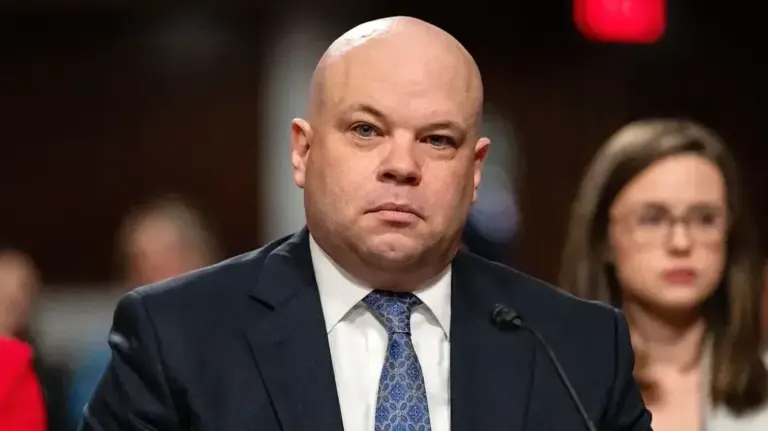
Gen. Christopher LaNeve, the Army vice chief serving as acting chief of staff, outlined on Monday how he hopes to narrow the service’s sweeping modernization push after years of experimentation with drones, artificial intelligence and other emerging technology.

“There was a lot, a lot of motion,” LaNeve told a small group of reporters. “It was almost like everything was being transformed at once.”

“You can’t AI yourself to be the best maneuver brigade commander out there,” LaNeve said.

The Army Transformation Initiative pushed new technology rapidly into formations and encouraged experimentation across the board. Army leaders credited that effort with accelerating change but acknowledged Monday that its breadth created enormous activity across the force.

INSIDE AMERICA’S LASER REVOLUTION AS THE MILITARY NEARS BIG BATTLEFIELD BREAKTHROUGH

The branch is now preparing to unveil “How the Army Fights,” a new framework intended to turn years of experimentation into a more focused set of decisions about what technology the service will prioritize, where it belongs in Army formations and how the force will organize and spend for future wars.

“The Army cannot and should not modernize everything at once,” the new blueprint states. “The answer is focused modernization.”

Sgt. Maj. of the Army Michael Weimer said experimentation through the technology push produced necessary learning, but insisted that the service had reached a point where it needed to “drop the chalk line and actually start making some decisions.”

Those decisions include which technologies warrant investment, where they belong in Army formations and which theaters take priority — with the service acknowledging it cannot afford to transform everything simultaneously.

Army leaders aren’t yet saying what will fall by the wayside.

Asked what was being left “on the cutting room floor” as the service narrows its focus, LaNeve said, “I’m not sure we’re prepared to say what we’re cutting out now.”

But one investment is moving unmistakably to the front of the line.

“If you ask me what my number one modernization priority would be, I would say command and control,” LaNeve said.

The shift is unfolding amid a broader leadership shake-up at the Army.

Acting Army Secretary Adam Telle took over after his predecessor, Dan Driscoll, resigned last month following months of reported friction with War Secretary Pete Hegseth, who had earlier ousted Army Chief of Staff Gen. Randy George, a close Driscoll ally who helped lead the service’s transformation push.

Telle, a former Trump White House aide, was tapped days later to lead the Army in an acting capacity and was publicly praised by Hegseth as “strong and whip smart.”

In his first press interview since taking the job, Telle described “How the Army Fights” as a way to impose greater coherence on the service’s modernization efforts as technology rapidly changes the battlefield.

TRUMP NAMES ADAM TELLE ACTING SECRETARY OF THE ARMY FOLLOWING DAN DRISCOLL’S RESIGNATION

That battlefield is envisioned as one in which troops operate alongside autonomous systems and under persistent drone surveillance, while AI helps commanders sift through massive amounts of sensor data and identify targets in “seconds and minutes rather than hours.”

The Army also wants autonomous systems taking on some of the most dangerous jobs that are currently performed by soldiers — this includes reconnaissance, resupply and breaching enemy obstacles.

But Army leaders are resisting the idea that advances in drones and AI have diminished the importance of traditional ground forces.

“Autonomous systems enable Soldiers to destroy and disrupt, but they can never replace the human judgment, leadership, and physical presence of Soldiers required to control the land and consolidate gains,” the blueprint states.

The Army is drawing heavily from recent conflicts, including Ukraine, Gaza and the India-Pakistan conflict, while building the new framework around its most demanding potential adversary: China.

HTAF identifies China’s People’s Liberation Army as the “pacing threat” and says the Army must organize, train and equip against it with the same institutional focus Cold War-era leaders brought to the Soviet Union.

The blueprint also assumes a future major war could reach much closer to home. It warns the U.S. homeland can no longer be treated as a sanctuary, with adversaries potentially using cyberattacks, sabotage and drones to disrupt the ports, airfields and other infrastructure needed to deploy American forces.

For Telle, the challenge is fitting rapidly evolving technology into a coherent Army rather than chasing every new system that emerges.

He compared individual weapons and technologies to ornaments on a Christmas tree.

“How the Army Fights is really the tree to hang those ornaments on,” Telle said.

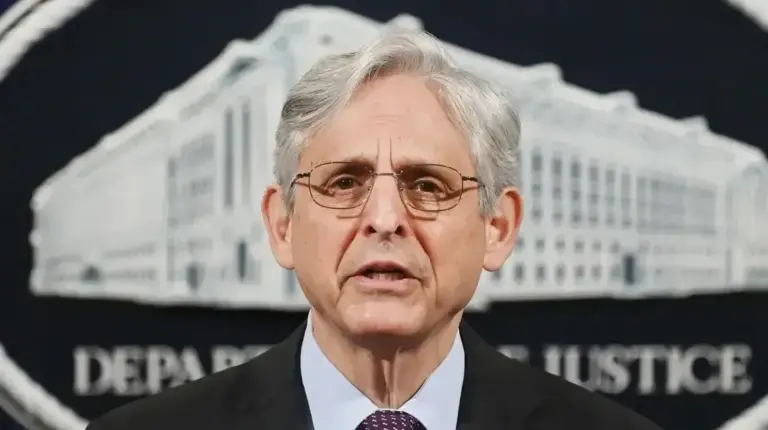
The Biden administration’s effort to combat alleged threats against school boards amid a wave of heated parent protests triggered sustained internal resistance within the Justice Department and FBI, documents released by the DOJ show.

“Five years ago, Attorney General Merrick Garland issued an infamous memorandum at the urging of the National School Boards Association and White House officials, directing the FBI and United States Attorneys to consider looking for a federal hook to prosecute parents exercising their right to free speech,” Blanche posted to X on Monday, when the DOJ released the “Report to Expose the Weaponization of Government Against Parents in Schools.”

“Along with the report, we’ve released hundreds of exhibits and emails that make official and verify what many Americans had guessed: the Garland DOJ worked hand in hand with WH officials and the National School Boards Association to chill free speech and parental rights while they threatened to prosecute parents and label them domestic terrorists,” Blanche added. 

In October 2021, Attorney General Merrick Garland issued a memo directing the FBI and U.S. Attorneys to coordinate with federal, state and local law enforcement over what it described as an “increase in harassment, intimidation and threats of violence against school board members, teachers and workers in our nation’s public schools,” amid escalating clashes involving parents at school board meetings.

TRUMP DOJ REPORT LAYS BARE BIDEN ADMINISTRATION’S ALLEGED ANTI-CHRISTIAN BIAS

Garland’s memo drew significant internal pushback across the Justice Department and FBI, with officials raising concerns about politicization, First Amendment protections and whether there was a sufficient federal basis for intervention, according to the Justice Department report released Monday.

The memo followed throngs of parents protesting at school board meetings over dissatisfaction with how gender and race were being taught in classrooms and COVID-19-era learning restrictions, prompting the National School Boards Association (NSBA) to appeal to then-President Joe Biden for federal assistance and warn that some actions surrounding the protests “could be equivalent to a form of domestic terrorism and hate crimes.”

Some of the internal messages detailed in the Justice Department’s report released Monday had been disclosed previously and reported on by Fox News Digital. In one message sent before Garland’s memo went public on Oct. 4, 2021, a deputy assistant attorney general said the operation — and proposals to link it to the DOJ’s election crimes work — looked so politically motivated that Garland “might as well rename the damn thing the Anti-MAGA Task Force.” The DOJ’s Public Integrity Section chief, meanwhile, called the proposal “stupid.”

An FBI counterterrorism official later raised concerns about the label “domestic terrorist” potentially being applied to everyone who “oppose school board actions,” while a DOJ Civil Rights Division attorney noted that much of the activity in question could be protected under the parents’ First Amendment rights.

DOJ LAWSUIT TARGETS ALLEGED SCHOOL ‘SECRET GENDER TRANSITIONS’ POLICIES THAT KEEP PARENTS IN THE DARK

Multiple DOJ officials noted that the problem at hand appeared to fall primarily within the jurisdiction of state and local authorities and questioned whether there was a sufficient federal basis to intervene, according to the report.

Internal dissent over the effort continued as the memo was implemented following its Oct. 4, 2021, release and during the resulting fallout.

On Oct. 5, 2021, an FBI lawyer claimed that the DOJ issued the press release accompanying the memo without coordinating with the bureau. The Deputy Assistant Director of the FBI’s Criminal Investigative Division, the agency’s largest operational division, stated that “we were all caught off guard by this announcement,” which was “unilaterally pushed by DOJ.”

As the DOJ began assembling its task force, objections persisted.

BLISTERING REPORT EXPOSES HOW NATIONAL K-12 GROUP’S DEI AGENDA IS TRICKLING DOWN TO LOCAL SCHOOLS

The Deputy Assistant Attorney General in the DOJ’s National Security Division stated that he didn’t “see the need for a task force like this” and that the Justice Department doesn’t “start a narrowly focused task force every time some group believes they are the subject of threat.”

Later that month, the Department of Homeland Security circulated a brief linking the threat level facing educational workers as tied to heightened opposition to masks, vaccines and critical race theory. An FBI counterterrorism official slammed the threat assessment guidelines as a “politically charged paper,” expressing his desire that the FBI not collaborate.

NSBA ultimately apologized for the language used in its letter to then-President Joe Biden seeking federal assistance, including action by the Justice Department and FBI.

“The obligation of the Justice Department is to protect the American people against violence and threats of violence and that particularly includes public officials,” he said of the memo.

Some school board officials did receive online and written threats in 2021, a fact supporters of Garland’s approach cited in defending the Justice Department’s response.

Arnold & Porter, the law firm where Garland now serves as a partner, did not respond to a request for comment when reached by Fox News Digital on Monday.

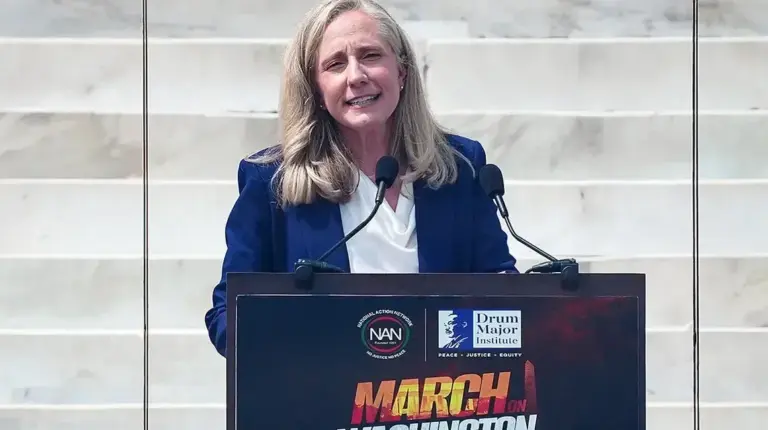
Deceased Virginians with felony convictions are reportedly among those receiving voting-rights restoration letters under Gov. Abigail Spanberger, who announced in July that she had restored voting rights to 66,000 people with felony convictions.

The notices come as Virginia separately implements a federal court ruling that sharply narrowed which felony convictions can trigger disenfranchisement, while voters this fall will decide whether to amend the state constitution to automatically restore voting rights upon release from incarceration.

“I’ve been a lawyer for 27 years and in every minute of my career, when you were convicted of a felony, you lose your voting rights. The way you get those back is you have to petition the governor and then the governor can review your case and determine whether the civil rights of a convicted felon should be restored,” Virginia Beach attorney Tim Anderson told Fox News Digital on Monday.

Anderson, who shared posts showing letters from Spanberger and her administration sent to families of deceased recipients, said the situation is “one or the other” — either Richmond is not vetting who receives the restoration notifications or its vetting is not thorough enough to catch deceased recipients.

SPANBERGER SPARKS OUTRAGE AFTER SNEAKILY ENDING YOUNGKIN-ERA WOMEN’S SPORTS PROTECTIONS

“The order specifically says that they’ve reviewed [each] case individually, right?”

He noted that Virginia has online voter registration and questioned whether an unscrupulous relative who received one of the notifications might try to register their dead relative to vote.

“These dead people clearly aren’t petitioning the governor to get their civil liberties back… they’re restoring every single felon’s civil disabilities without anybody even asking. And that’s concerning, especially when they’re dead.”

Virginia resident Howard “Skip” Lambert posted a July 1 restoration notice signed by Spanberger and an Aug. 31 notification from her administration addressed to a redacted relative, informing the recipient that their voting rights had been restored.

The July letter said that after the relative had been convicted and sentenced, Spanberger’s office “completed review of the particulars of the individual’s case.”

Anderson pointed to that line as evidence of vetting.

Lambert’s letter went on to say the relative would have their civil rights — except for the ability to transport or possess firearms — restored effective July 1.

VIRGINIA GOVERNOR ABIGAIL SPANBERGER QUIETLY ROLLS BACK YOUNGKIN’S PLANS TO PROTECT GIRLS’ SPORTS

In the ensuing letter from Secretary of the Commonwealth Candi Mundon-King, the relative was notified that Spanberger had restored their right to vote and serve on a jury and was encouraged to re-register to vote at the online “Citizen’s Portal” via a QR code.

Lambert wrote that he was upset by the mailings, saying the recipient was his daughter, who died in 2024. He also confirmed that she had a felony conviction.

“Interesting this letter arrives as early-voting begins… yet the provided official order is dated July 1,” he said on Sept. 24. “Just because cash doesn’t change hands doesn’t mean the governor isn’t trying to buy votes.

Reached by phone Monday, the Fredericksburg-area resident confirmed to Fox News Digital that the documents were authentic and that the recipient was his daughter.

“I do have a question of timing in the letter I believe my daughter voted in the previous election where it was Hillary and Donald Trump — because she had had her rights restored then,” he said.

Around the time of that election, former Democratic Gov. Terence McAuliffe attempted a mass restoration but was rebuked by the Virginia Supreme Court, which ruled that he did not have the authority to take such an action affecting an estimated 206,000 Virginians, according to NPR.

Another woman, Peggie Young, posted a similar set of documents addressed to her “dear BFF, Peter Breton.”

“I have his ashes. Is this perhaps how voter fraud begins. I’m so confused,” she said, adding that she also received the letter only on Sept. 29.

Young could not immediately be reached.

Virginia House Minority Leader Terry Kilgore, R-Gate City, told Fox News Digital that Spanberger’s purported vetting process appears to be inadequate:

“If the process is so thorough that they can’t even tell who’s alive and who’s dead, how thorough is it?” Kilgore told Fox News Digital.

The federal case began in 2023 as King v. Youngkin, when disenfranchised Virginians sued then-Gov. Glenn Youngkin and other state officials, arguing that Virginia’s blanket felony ban conflicted with the federal Virginia Readmission Act of 1870.

SIGN UP TO GET THE POLITICS NEWSLETTER

U.S. District Judge John Gibney Jr. ruled in January that Virginia could disenfranchise people only for 11 common-law felonies recognized in 1870. After rejecting the state’s effort to map those offenses onto a broader list of modern crimes, Virginia ultimately narrowed automatic disenfranchisement to murder, voluntary manslaughter and involuntary manslaughter.

The Department of Elections is separately notifying roughly 235,000 Virginians whose convictions no longer disqualify them from voting. Those court-driven notices are distinct from the Spanberger restoration orders received by Lambert and Young, which state that the governor’s office reviewed each recipient’s case before restoring multiple civil rights.

Fox News Digital reached out to Spanberger’s office and ELECT for comment.

This post appeared first on https://www.foxnews.com

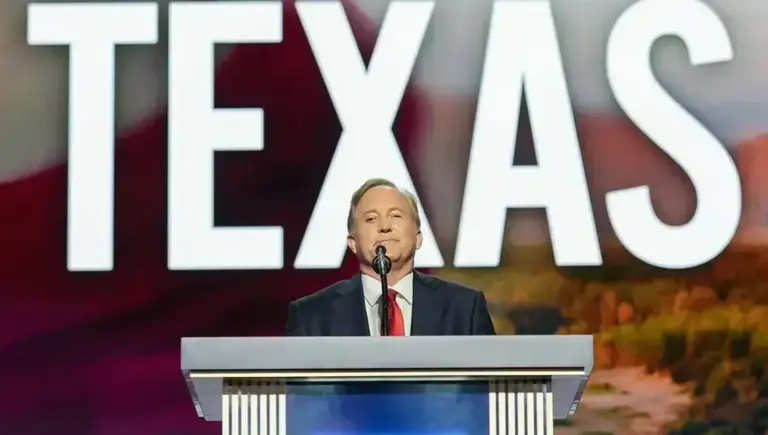
A source in Texas Attorney General Ken Paxton’s political orbit tells Fox News Digital that the Republican Senate nominee appears frustrated with a lack of control over his campaign as he faces off against Democratic nominee state Rep. James Talarico in a combustible Senate battle.

The source spoke on Monday after Politico reported on an audio recording from late last month, when Paxton said, “I’ve never been in a race where I felt less control over the campaign and, like, what issues are going to matter because it’s all coming — you know — from D.C.”

The faceoff in red-leaning Texas between Paxton and Talarico is a race to succeed longtime Republican Sen. John Cornyn, who Paxton defeated in a bruising primary fight. The contest is one of roughly a dozen that will determine if the GOP holds onto its Senate majority in the midterm elections.

“I don’t control message or what we’re doing… I don’t have ability to change anything,” Paxton added on the audio recording. “So I have to live with whatever I’ve got. So it is a challenge.”

WHAT THE LATEST FOX NEWS POLL IN TEXAS SHOWS

Paxton made the comments, according to the report, during a Sept. 24 lunch in the nation’s capital hosted by a D.C.-based lobbying firm. Politico reported it obtained the recording from a person attending the lunch who does not support Paxton.

“Campaigns don’t coordinate with super PACS and that’s obviously what AG Paxton was referring to,” Paxton campaign advisor Nick Maddux told Fox News Digital in a statement.

Super PACs and other outside groups are legally prohibited from directly coordinating with candidates and campaigns over spending and other expenditures.

Maddux added, “AG Paxton is thankful for the support and knows how important Texas is to keeping the majority, which is why he’s on the ground every day talking to Texas, raising money, and taking his message directly to the people including with his statewide television buy that started over this past weekend.”

WHO’S UP AND WHO’S DOWN IN THE LATEST FOX NEWS MIDTERM POWER RANKINGS

Paxton’s frustration at the lunch appeared to extend beyond his lack of control over outside spending. In a separate recording from the same gathering obtained by The New York Times, Paxton suggested last month’s GOP midterm convention in Dallas had hurt Republican candidates’ polling.

“Dropped our numbers. Everybody’s numbers dropped. Right now, yeah, not good,” Paxton said.

Maddux described the reporting as “manipulated nonsense.”

As he campaigned against Cornyn in the March primary and a May runoff, Paxton characterized the senator as a “Washington insider” and a “RINO” — which stands for “Republican in name only.” And Paxton, known as a MAGA firebrand, showcased his outsider credentials and support for President Donald Trump. The president made an 11th-hour endorsement of Paxton ahead of the runoff.

Paxton, meanwhile, repeatedly criticized Cornyn for being bankrolled by the D.C. Republican establishment.

“I think John spent $100 million. What a waste of money. That money should have been going to Republicans in other states, not fighting another Republican,” Paxton told Fox News Digital in Waco, Texas, on the eve of the March primary.

Groups aligned with Cornyn vastly outspent pro-Paxton groups during the primary campaign to run spots highlighting the Texas attorney general’s political baggage.

DEMOCRACY ’26: STAY UP TO DATE WITH THE FOX NEWS ELECTION HUB

Paxton has faced a slew of scandals and legal problems that have battered him over the past decade, including a 2023 vote by the Texas House of Representatives to impeach him. Paxton was eventually acquitted of all charges by the state Senate. Paxton is also currently dealing with a contentious divorce, with his wife citing “biblical grounds” based on “recent discoveries” as she filed last year to end their marriage.

Cornyn, who was supported by Senate Majority Leader John Thune and the National Republican Senatorial Committee, regularly argued that if Paxton won the nomination, the party would be forced to spend millions of dollars to keep the seat from flipping and that Republicans down-ballot would suffer.

Now, many of those groups that targeted Paxton during the primary are spending big bucks to try and save the Senate seat. A projection from the ad-tracking firm AdImpact estimates that up to $850 million will be spent in the race.

“The same people who tore him down earlier this year are now trying to rebuild him,” the Paxton source told Fox News Digital.

The source added that Paxton “genuinely doesn’t like the DC people.”

The latest Fox News poll in the race, conducted Sept. 24-28, showed Talarico with a slight 51%-49% edge over Paxton.

SIGN UP TO GET THE POLITICS NEWSLETTER

And the race in Texas, along with Senate showdowns in Ohio, Michigan, Maine, Iowa, and Alaska, is rated a toss-up in the most recent Fox News Power Rankings.

The Paxton source said that the candidate appears to be in uncharted territory.

Pointing to Paxton’s ballot box victories as a state lawmaker and his 2014 election and 2018 and 2022 re-elections as state attorney general, the source said, “I don’t think he’s ever been in a campaign situation where he’s been the underdog.”

This post appeared first on https://www.foxnews.com

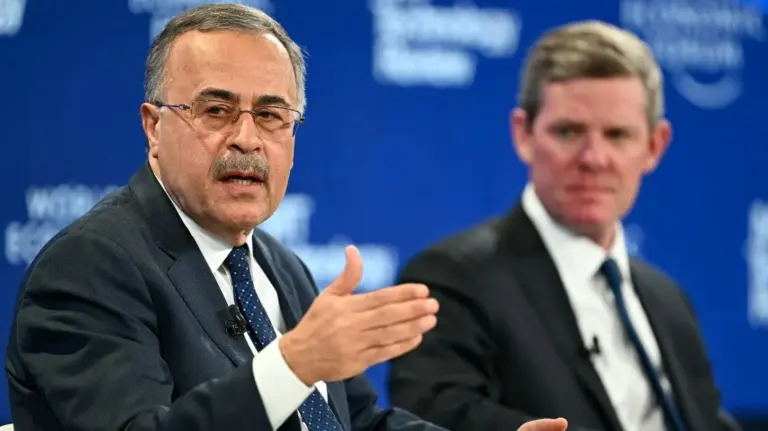
Amin Nasser, the chief executive of Saudi Aramco, has warned that the world could be waiting up to two years for global oil inventories to return to healthy levels. Speaking at the Energy Intelligence conference in London, Nasser cautioned that the current squeeze on supplies may actually worsen as the conflict between the United States and Iran continues to destabilize the region. According to the CEO of the world’s largest oil producer, market stability remains elusive until there is full confidence in the safety of the Strait of Hormuz.

The strategic importance of the Strait cannot be overstated, as it serves as a primary artery for roughly twenty percent of the planet’s oil and liquefied natural gas shipments. Recent hostilities have turned this narrow waterway into a flashpoint, disrupting shipping lanes and triggering economic tremors worldwide. While G7 nations recently moved to release 100 million barrels of emergency reserves under pressure from U.S. President Donald Trump, Nasser suggests these measures may not be enough to offset deeper systemic losses.

Data provided by Nasser indicates that nearly three billion barrels of supply have vanished since military strikes began in late February. Although one billion barrels have been drawn from existing stocks to bridge the gap, much of this came from commercial inventories rather than strategic ones. With approximately six billion barrels remaining in storage deemed practically unavailable, Nasser noted that the entire distribution system is already straining under the weight of diminished capacity.

Despite these grim projections, oil prices remained mixed on Monday as some reports indicated slight increases in flows through Saudi Arabia’s East-West pipeline and parts of the Strait. However, tensions remain high on the water; recent maritime alerts reported an Iranian naval force intercepting a tanker near Oman and ordering it to turn back. This ongoing volatility suggests that while short term trades continue, the structural recovery of global energy buffers will be a slow and precarious process.

General Motors is preparing to bring hybrid vehicles back into its United States lineup, acknowledging that consumers aren’t yet ready to make a full leap into all-electric driving. Mike Anderson, GM’s vice president of propulsion engineering, recently emphasized that the company is listening closely to its customers and intends to provide the variety of powertrains that drivers are actually asking for. This shift comes after years of the automaker focusing almost exclusively on battery-electric vehicles, a strategy that left them sidelined while competitors capitalized on the surging popularity of gas-electric blends.

The decision reflects a broader trend in the American auto market where hybrids have become the primary growth engine for electrification. Recent data from Cox Automotive shows a significant spike in hybrid sales, which far outpace the adoption rate of fully electric cars as buyers grapple with high gas prices and lingering concerns over charging infrastructure. While GM maintains that its ultimate destination remains an entirely electric future, leadership admits that reaching that goal requires a diverse technological bridge to keep drivers satisfied in the interim.

Despite the confirmation that hybrids are returning, GM remains tight-lipped about specific release dates and models. Industry analysts suggest that plug-in hybrids could start appearing across various portfolios, from SUVs like the Equinox to heavy-duty trucks like the Silverado, potentially arriving between late 2027 and early 2028. Company executives have historically been cautious about these intermediate technologies due to their added complexity and cost, but current market pressures and evolving emission standards are making a return to hybrids inevitable.

Thousands of consumers across more than two dozen states may need to check their refrigerators after the U.S. Food and Drug Administration announced a voluntary recall of over 122,000 cases of Gatorade. The alert centers on specific batches of Lemon Lime, Lemon Lime Zero, Orange, and Orange Zero flavors sold in 28 ounce bottles. According to officials, these particular drinks contain Yellow No. 5 and Yellow No. 6 food dyes that were not properly listed on the product packaging.

The FDA has categorized this as a Class II recall, which suggests that while the risk is generally low, consuming the affected beverages could lead to temporary or reversible health issues. For most people, these dyes are harmless common additives used to maintain consistent coloring in processed goods. However, those with known sensitivities or allergies to aspirin may be at a higher risk for experiencing an allergic reaction, such as a mild rash or asthma symptoms.

To determine if their drinks are part of the recall, customers should look for lot dates falling between April and June of 2027. The agency recommends checking the official FDA website for a comprehensive list of impacted dates and distribution locations. While PepsiCo has been contacted for further comment regarding how the labeling error occurred, the company’s primary focus remains removing the mislabeled stock from store shelves nationwide.

Lucid Group is feeling the pinch of a cooling electric vehicle market, reporting a 6.7 percent dip in year over year deliveries for the third quarter. The luxury automaker delivered 3,806 vehicles between July and September, falling short of the 4,078 units moved during the same period last year. This decline comes as the company intentionally throttles its manufacturing process to avoid piling up unsold inventory in an environment where consumer appetite for high end EVs has slowed.

The shift marks the first full quarter since Lucid implemented an operational reset under new CEO Silvio Napoli, who took the helm in June. As part of this strategic pivot, the company reduced operations at its Arizona plant from two shifts down to one. While overall annual deliveries remain slightly higher than they were a year ago, the recent drop highlights the difficulty Lucid faces in balancing aggressive growth targets with actual market demand.

To stabilize its finances, Lucid is hunting for roughly 1.4 billion dollars in cash flow improvements throughout the current year. These efforts involve slashing capital expenditures and reducing operating costs, while also aggressively managing existing vehicle inventory to free up hundreds of millions of dollars. Despite these internal shakeups and heavy backing from Saudi Arabia’s Public Investment Fund, investors remain cautious; shares have plummeted more than 60 percent so far this year.

Wall Street remained largely unfazed by Monday’s specific delivery numbers, with shares ending the day nearly flat despite the volume drop. Market analysts will be looking for deeper insights into the company’s recovery trajectory when Lucid releases its comprehensive third quarter financial results on November 9th after the closing bell.

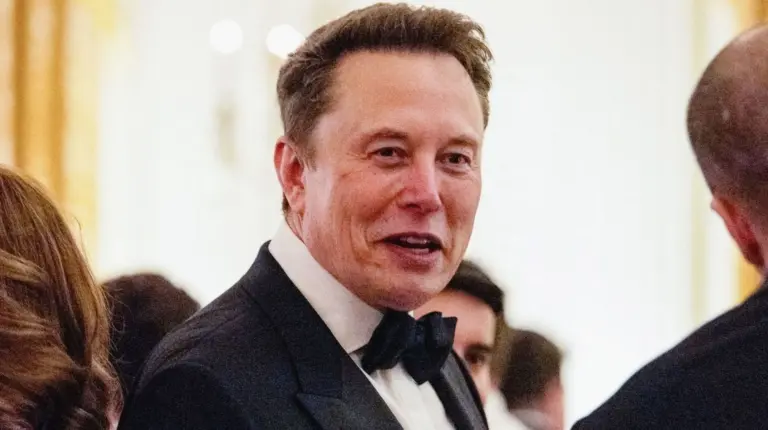
Elon Musk has officially returned to the trillion dollar club following a sharp climb in SpaceX shares on Monday. The stock jumped nearly eight percent to reach its highest point since mid June, pushing Musk’s total net worth to approximately one point zero three trillion dollars when combined with his Tesla holdings. This financial rally comes on the heels of a bullish note from Morgan Stanley analysts who described the current share price as cheap and set an ambitious price target of three hundred dollars per share.

The surge in investor confidence follows a whirlwind period of operational success for the aerospace giant. Just last week, SpaceX executed several historic missions in a single day, transporting a NASA crew to the International Space Station while simultaneously launching Google AI chips into orbit. Much of the excitement now centers on the upcoming test flight of Starship, the massive reusable rocket that promises to revolutionize satellite deployment and deep space travel. Analysts suggest that if SpaceX can successfully catch the Starship upper stage during its next landing attempt, it could trigger another massive wave of growth for the company.

Beyond rockets, SpaceX is leveraging its expanding footprint in artificial intelligence to drive revenue. By integrating xAI and acquiring Cursor, the company has turned itself into a critical infrastructure provider, renting out immense computing capacity to rivals like Google and Anthropic despite its own Grok model struggling to gain market dominance. These technological strides are bolstered by Musk’s strengthening relationship with the federal government, evidenced by his recent appointment as co lead of Project Meridian, a Pentagon initiative focused on future military capabilities.

While Wall Street celebrates these gains, some political figures are voicing concerns over the concentration of such vast wealth. During a recent New York City Council hearing on AI regulation, Councilmember Shekar Krishnan pointedly noted that AI has inflated corporate valuations and increased the fortunes of executives like Musk at the expense of public resources. Despite these criticisms and his absence from the regulatory hearings, Musk continues to align himself closely with current political trends, recently announcing plans to rename his AI division to SpaceXSI in keeping with new branding preferences from President Trump.