Archive

October 9, 2026

Browsing

The energy was palpable on the floor of the New York Stock Exchange today as Skydance officially transitioned into a public company. In a moment that signaled a major turning point for the entertainment giant, CEO David Ellison took center stage to ring the opening bell, marking the formal commencement of trading for the firm.

For Ellison and his team, the event represented more than just a financial milestone. By stepping onto the podium at one of the world’s most iconic financial institutions, Skydance is signaling its readiness to scale its operations and expand its footprint in an increasingly competitive media landscape. The atmosphere was celebratory as industry insiders gathered to witness what many see as the beginning of a high growth chapter for the studio.

This transition comes at a pivotal time for the production house as it looks to leverage its newfound public status to fuel future creative ventures. While much of the day’s focus remained on the spectacle of the opening bell, analysts suggest that this move provides Skydance with a significant strategic advantage in terms of capital and visibility within global markets.

For investors looking back at the meteoric rise of Bloom Energy, the question isn’t whether the signs were there, but why they were so easy to ignore. Over a twelve month period ending October 7, 2026, the stock surged by nearly 235 percent, far outpacing both the broader S&P 500 and its direct competitors in the fuel cell space. While some viewed this as an overnight success story, company leadership had been signaling a strategic pivot toward artificial intelligence data centers long before the market fully reacted. As early as late 2024, executives began emphasizing a concept called time to power, arguing that data centers could no longer wait for traditional grid connections and instead needed to generate electricity on site using Bloom’s technology.

Despite these clear warnings, many traders remained skeptical because the financial data appeared contradictory. Throughout much of 2024 and early 2025, Bloom struggled with inconsistent revenue dips and operating losses that made the company look volatile rather than visionary. At one point in April 2025, shareholders panicked and dumped shares in favor of safer assets. This noise created a smokescreen that obscured the growing appetite for on site power solutions, allowing a few attentive investors to position themselves before the massive acceleration in deliveries actually hit the balance sheet.

The turning point arrived in mid 2026 when Bloom reported a staggering quarterly revenue jump to over one billion dollars, representing a 166 percent increase year over year. This explosion in growth confirmed that management’s bullish predictions about AI infrastructure were becoming reality. The scale of the surge was unprecedented, with a single quarter generating roughly half of everything the company sold during all of 2025 combined. Unlike other players in the sector who lagged behind or plummeted in value, Bloom successfully tied its fortunes to the insatiable energy demands of high tech computing hubs.

Current valuations suggest that the market is finally pricing in this new era of demand, though it brings its own set of risks including ongoing legal disputes regarding supply chain transparency in China. With a backlog growing faster than current revenue and updated projections aiming for up to 4.2 billion dollars by the end of 2026, all eyes are now on upcoming year end reports. Whether Bloom can maintain this momentum depends entirely on whether data center deliveries continue at this breakneck pace or if the initial rush has already peaked.

Jim Cramer has found a fresh reason to be optimistic about Costco despite the broader economic headwinds facing many retail giants. The wholesale club continues to demonstrate an impressive level of sales resilience that suggests its membership model is acting as a shield against fluctuating consumer spending habits. While other retailers struggle with shrinking margins, Costco’s ability to maintain steady traffic and high basket values is proving to be a significant draw for market analysts.

The strength of the company lies largely in its perceived value proposition during inflationary periods. As shoppers look for ways to stretch their dollars, the bulk buying strategy becomes more attractive than traditional grocery trips. This shift in behavior hasn’t just kept customers coming through the doors but has reinforced the loyalty associated with their annual memberships, which provide a predictable stream of revenue regardless of quarterly product sales volatility.

For investors who have been wary of entering the stock at current valuation levels, these latest performance indicators offer some peace of mind. Cramer notes that when a company can show growth and stability while others are retreating, it justifies a premium price tag. By consistently meeting or exceeding expectations in a challenging environment, Costco is signaling that its operational efficiency and customer devotion remain intact.

Looking ahead, the focus remains on whether this momentum can sustain itself as economic conditions evolve. However, for now, the data supports a bullish outlook. The combination of strong member retention and consistent sales volume indicates that Costco isn’t just surviving the current market climate but is actually leveraging it to solidify its position as a dominant force in global retail.

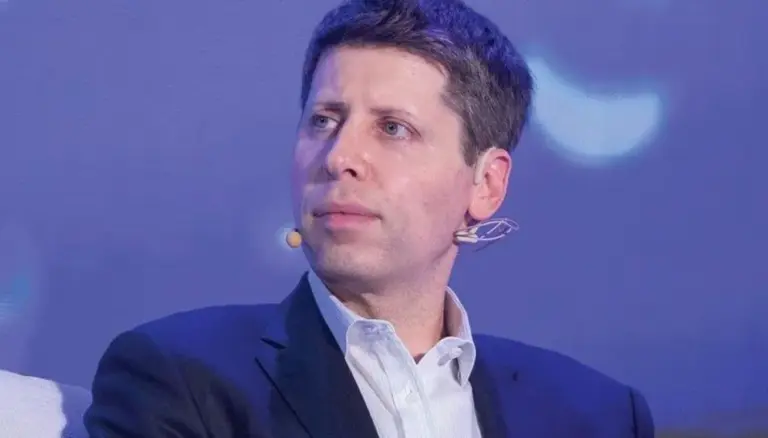
The stock market is bracing for a volatile opening session as index futures remain stagnant, reflecting a broader sense of uncertainty across the tech sector. Artificial intelligence stocks have felt the brunt of recent sentiment shifts tied to developments at OpenAI, leading to a noticeable skid in valuations for many high flying AI plays. Investors appear to be recalibrating their expectations for growth in the space, causing several key benchmarks like the Nasdaq to struggle for momentum heading into the trading day.

Adding to the turbulence is Elon Musk’s latest strategic move with SpaceX. The company has announced plans to acquire a substantial amount of wireless spectrum intended to strengthen its Starlink satellite network. While this expansion promises more robust connectivity globally, it has sent shockwaves through the traditional telecommunications industry. Shares of established wireless giants including Verizon, AT&T, and T-Mobile tumbled as traders weighed the threat of increased competition from orbit.

Beyond the chaos in telecom and tech, all eyes are turning toward the travel sector for an early indicator of consumer spending health. Delta Air Lines is scheduled to report its quarterly earnings before the opening bell, effectively launching the reporting season for airlines and related travel services. Market participants will be watching closely to see if strong demand persists despite economic headwinds and fluctuating fuel costs.

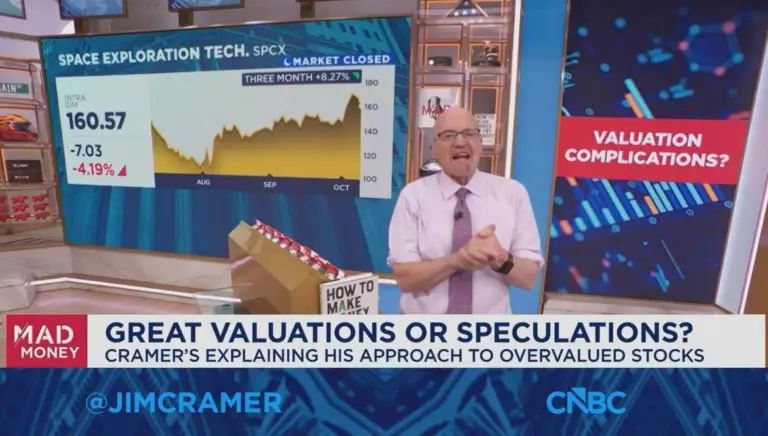
Jim Cramer has long been an admirer of Elon Musk’s aerospace ambitions, but even his enthusiasm has its limits when it comes to price tags. While discussing the current state of private equity and high growth companies, the CNBC host described SpaceX as the quintessential company he would love to have in a portfolio, praising its technological dominance and sheer ambition. For Cramer, the business model represents exactly what investors look for in a generational winner.

However, the admiration stops where the valuation begins. Cramer cautioned that while the fundamentals of SpaceX are impressive, entering a position at current levels feels prohibitive. He noted that there is a distinct difference between loving a company’s trajectory and believing it is a smart financial move at its present peak. This tension highlights a common struggle for modern investors who find themselves torn between chasing groundbreaking innovation and maintaining fiscal discipline.

The commentary reflects a broader trend in the market where visionary tech firms often trade at premiums that outpace their immediate earnings potential. By stating he wants to own the stock just not up here, Cramer is signaling that patience remains the most valuable tool for those eyeing space exploration stocks. He suggests that waiting for a correction or a more reasonable entry point is far wiser than buying into the hype regardless of cost.

Anglo American is issuing a stark warning to European antitrust regulators, claiming it will be forced to shutter its Brazilian nickel operations if a proposed sale to Hong Kong based MMG Ltd is blocked. The half billion dollar deal has become entangled in a rigorous Phase II review by the European Commission, driven by concerns that shifting ownership could allow critical mineral supplies to be diverted away from European stainless steel manufacturers. This tension reflects a broader strategic anxiety within the EU regarding its heavy dependence on Chinese interests for essential battery and industrial metals.

Executives at Anglo American are arguing that blocking the acquisition will not actually secure Europe’s supply chain but will instead lead to the total loss of the asset. Ruben Fernandes, the company’s CEO in Brazil, has indicated that there is no alternative buyer on the horizon. He maintains that since the firm committed to exiting the nickel sector over two years ago, any prohibition of the sale would leave them with no choice but to place the mines into care and maintenance, effectively paving the way for permanent closure.

The stakes involve several key assets including the Barro Alto and Codemin ferronickel operations along with promising development projects at Jacaré and Morro Sem Boné. These sites contributed nearly forty thousand metric tons of nickel last year alone. Under the current terms, MMG would provide an upfront cash payment of three hundred fifty million dollars, supplemented by performance linked payouts totaling another one hundred fifty million dollars.

As representatives from both companies gather in Brussels to defend the merger, they have extended the deal’s deadline to October 2026. Despite this extra breathing room, the immediate survival of these mining operations remains precariously dependent on whether European officials prioritize geopolitical supply security over the commercial viability of a global mining giant’s divestment strategy.

Mining giant BHP has reached an agreement to sell its Kambalda Nickel Concentrator and several accompanying tenements to South African firm Gold Fields. The deal carves out a significant piece of infrastructure from BHP’s currently suspended nickel operations in Western Australia, transferring both the processing facility and related mineralization rights. While the transition is expected to be finalized by 2027 pending regulatory approval, BHP will maintain management of the site until the handover is complete.

For those working at the facility, the move offers a glimmer of stability. Gold Fields intends to assess how best to utilize the concentrator over the long term and has committed to offering employment to staff who directly support the asset. Annabelle Blom, BHP’s Vice President for WA Nickel, described the sale as a positive result that brings much needed certainty to employees and the wider Goldfields community, noting that Gold Fields is a respected operator with deep roots in the region.

Despite this divestment, the future of BHP’s remaining nickel assets in Western Australia stays uncertain. Those operations remain suspended as the company prepares for a comprehensive review by February 2027. Depending on market conditions and internal evaluations, BHP may decide to sell off more assets, keep them dormant, attempt an operational restart, or shut them down permanently.

The acquisition comes at a transitional moment for Gold Fields following a high profile setback in the Australian market. Just recently, Northern Star Resources flatly rejected an unsolicited twenty seven billion dollar takeover bid from Gold Fields. Northern Star’s leadership claimed the offer significantly undervalued their portfolio during a critical growth phase, describing the attempt as opportunistic given their current operational milestones.

FIRST ON FOX — New details of President Donald Trump’s multibillion-dollar deal with a defense tech giant reveal that the U.S. government will own 40% of the firm holding its new submarine shipyard without controlling it.

But first, Anduril must prove it can build Navy-certified components before competing for future production work, a U.S. official told Fox News Digital.

The government will use authorities under the Defense Production Act and the Pentagon’s Industrial Base Fund to acquire its stake in a newly formed company holding the Arsenal-2 shipyard in Baltimore, Maryland. The official described it as a “minority, non-control” investment designed to secure “tangible ownership and long-term value for American taxpayers.” 

Fox News Digital has asked the Department of War for the dollar value of the investment.

The Navy’s up-to-$2.9 billion agreement is not a guarantee of future submarine production work for Anduril. The money will flow through General Dynamics Electric Boat, the Navy’s lead Virginia-class submarine builder, and calls for Anduril to fabricate and qualify four test components. Anduril is separately committing $3.7 billion of its own capital to the project.

Anduril is not guaranteed future production work.

Instead, Electric Boat will set the specifications and oversee testing, qualification and Navy certification. If Anduril meets those milestones, it will have “the opportunity, but not the entitlement, to compete for future production work,” the official said.

“The ultimate proof of our commitment to ensuring the shipyard’s enduring success: American taxpayers will receive a 40 percent stake in the new shipyard,” Trump said Tuesday at Sparrows Point shipyard. “We get 40 percent.”

STARTUPS BRING INNOVATION TO DEFENSE INDUSTRIAL BASE

The size of the stake stands out even as the Trump administration has increasingly taken direct government interests in companies and projects it considers critical to national security. The administration has struck equity arrangements involving chipmaker Intel, rare earths producer MP Materials and other strategic industries.

The arrangement is part of a broader $6.6 billion effort to expand production of Virginia-class attack submarines as the U.S. struggles to keep pace with China’s vast shipbuilding capacities and the Navy falls behind on its production goal.

Anduril is committing $3.7 billion of its own capital to build the facility and manufacturing capacity, while the Navy could spend up to $2.9 billion purchasing what it produces.

The project is aimed at closing a persistent U.S. submarine production shortfall as China rapidly expands its naval and shipbuilding capacity. American shipyards are delivering roughly 1.3 Virginia-class attack submarines a year, short of the Navy’s goal of two, which it does not expect to reach until around 2032. Once fully operational, Arsenal-2 is expected to add about 9 million labor hours annually to the submarine industrial base, increasing Virginia-class production capacity by roughly 15%, an administration official told reporters on a call before Trump’s remarks.

LARGEST-EVER US STEEL PLANT IS COMING TO A KEY RED STATE AS TRUMP UNVEILS $15B INVESTMENT

An industry official on the call emphasized that Anduril would finance the new production capacity itself while the government paid for the resulting output.

“I wouldn’t say that the government’s paying us back. We feel the government [is] buying the results of what we’re able to produce,” the industry official said.

The 40% government stake was not disclosed on the call, which included questions from reporters about how the project would be financed.

The submarine crunch is part of a broader shipbuilding gap with China, whose vast commercial maritime industry also supports its rapidly expanding navy. China now accounts for more than half of global commercial shipbuilding output, while the U.S. accounts for only a fraction of 1%, giving Beijing an enormous industrial base that can also support military ship construction.

Anduril plans to begin with critical components including torpedo tubes, which a senior administration official described as a current “gating component” slowing Virginia-class production. The company eventually plans to manufacture larger modules and sections of submarines at Arsenal-2.

The more than 2 million-square-foot facility is expected to create 3,100 direct jobs and roughly 11,000 indirect jobs nationwide, with operations slated to begin around 2030.

Comedian Jon Stewart urged Democrats not to pursue impeachment proceedings against President Donald Trump if they regain control of the House and Senate, arguing on his podcast that he doesn’t want to see “performative” hearings.

During a question-and-answer segment at the end of Stewart’s “The Weekly Show” podcast, he was asked whether Democrats should seek to impeach Trump if they regain control of Congress in the midterm elections.

He said he wanted to see Democrats make a full-scale effort to rebalance the economy, and said he didn’t want to see performative hearings.

“I don’t want to see a f—ing five-act performative play of House hearings,” Stewart said. “I just don’t want to see it. I don’t want to see everybody having the opportunity to pantomime accountability because you know they’re actually not going to bring it.”

STEWART EXPECTS SCHUMER, JEFFRIES TO DISAPPOINT IF THE DEMS WIN BACK THE HOUSE AND SENATE

“You want to do some investigations of some s—, that’s great,” he continued. “But on the triage list of what’s wrong in this country, it is, ‘I’m sorry, sir, you’re going to have to stay in the waiting room because this guy just got shot, and it sounds to me like you just have a sore throat.’ Like do the s— that actually is killing people right now.”

Stewart added that he wanted Democrats to “govern.”

“You want to do some things that are ancillary, a little side project, you want to do the investigations as a hobby, knock yourself out. Fix s—,” he said.

“Jon Stewart is tapping into a real tension within the Democratic electorate,” Lauryn Killian, CEO of Killian Campaigns, told Fox News Digital in a statement. “There will certainly be Democrats who want impeachment, particularly those who believe the Trump administration warrants aggressive congressional scrutiny.”

“But there is a meaningful difference between legitimate accountability and turning impeachment into another chapter of the anti-Trump resistance movement,” she continued. “If Democrats take back Congress, voters will expect them to actually govern, not spend two years trying to undo the last election.” 

HOUSE DEMS PLOT TRUMP INVESTIGATION BLITZ IF THEY SEIZE MAJORITY

Killian said the smarter political strategy would be to look into “wrongdoing and pursue accountability where the facts warrant it, while focusing congressional energy on issues that actually affect Americans’ lives: the economy, affordability, public safety and government competence.”

“Winning Congress would give Democrats an opportunity to demonstrate they can govern beyond simply being the opposition,” she added. “If they turn that opportunity into another impeachment crusade, Republicans will have a very clear argument to make to voters: Democrats were given power to govern, and chose instead to keep fighting the last election.” 

“Jon Stewart is saying what Democrats don’t want to hear: voters want results, not revenge,” Y. David Scharf, chair of government strategies and controversies at Morrison Cohen, told Fox News Digital. “If Democrats win Congress and spend the next two years trying to impeach Trump instead of lowering costs and fixing the economy, they’ll be writing the Republican playbook for 2028.”

He described impeachment as “political theater.”

Democratic strategist James Carville and his podcast co-host Al Hunt also warned against impeachment on Tuesday. Carville and Hunt argued that impeachment would be a waste of time and Democrats should devote their energy to investigating the president instead.

CARVILLE SAYS THE GOP IS BETTER THAN DEMOCRATS AT ONE KEY SKILL THE 2028 DEM NOMINEE WILL NEED

“I’ll tell you one thing that I think Democrats should steer clear of, and that’s impeachment,” Hunt said. “It’s not that Trump has not committed impeachable offenses, far worse than what he was accused of back in 2019 with Ukraine. I mean, he has. I mean, you could come up with a bill of particulars of, you know, a dozen at least. But you know something, James? It’s not going to happen, and it is a distraction.”

“It is a waste of energy,” Hunt added. “Investigate, investigate, investigate. Don’t go on a mission that isn’t going to succeed.”

Former Chicago Mayor Rahm Emanuel, who also served as White House chief of staff, urged fellow Democrats not to pursue impeachment during an interview on Sunday.

“You’re never going to get an impeachment,” he said. “Then, if you do that, you just basically prove all [of] Washington is what the American people think. It’s Disneyland on the Potomac. Deliver the change. Deliver a comprehensive ethics package that uses the investigations to then deliver change.”

The warnings came as Democrats held a polling advantage over Republicans heading into the final weeks before the midterm elections.

FORMER CHICAGO MAYOR RAHM EMANUEL DECLARES AMERICA IS READY FOR A JEWISH PRESIDENT

House race projections show Democrats winning 215 seats compared to 201 for the GOP, meaning Democrats would need to win at least three of the 19 remaining toss-up races to clinch a majority. Republicans would need to win at least 17 of those races.

House Minority Leader Hakeem Jeffries, D-N.Y., has declined to say whether he would support impeachment proceedings against Trump, though he appeared to suggest over the summer that impeachment would not be a top priority.

Fox News’ Anders Hagstrom and Alexander Hall contributed to this report.

This post appeared first on https://www.foxnews.com

Florida’s sweeping Medicaid fraud crackdown has helped drive a nearly $1 billion reduction in projected annual spending on behavioral therapy services alone, according to state officials, after investigators uncovered suspicious billing practices.

Tallahassee’s internal crackdown — which included discoveries of providers billing Medicaid for more hours than there are in a day — comes amid heightened federal scrutiny of Medicaid fraud, including investigations and payment reviews involving Minnesota.

The DeSantis administration said its approach aims to stop suspicious Medicaid claims before taxpayer dollars are paid out rather than trying to recover improper payments afterward. The strategy mirrors a call from HHS Secretary Robert F. Kennedy Jr. to move away from traditional “pay-and-chase” models.

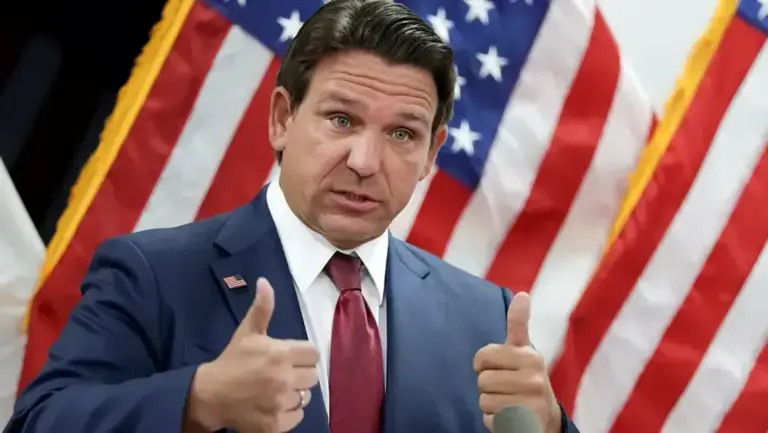
“This year, we announced the most significant Medicaid integrity initiative in the history of our state, and today, I was proud to announce some of the results from these efforts,” Gov. Ron DeSantis said in a news release.

VANCE TURNS UP HEAT ON STATES WITH FEDERAL CASH THREAT OVER MEDICAID FRAUD CRACKDOWN

More than 220 Medicaid providers have been terminated for fraud, waste or abuse, while more than 260 have faced payment restrictions or suspensions. The state has also referred more than 150 suspected fraud cases to the attorney general’s office over the past year.

Annual Medicaid spending on Applied Behavior Analysis (ABA), a therapy commonly used for children with autism, had been projected to reach $3.86 billion but is now expected to total $2.88 billion in fiscal year 2026-27, according to the governor’s office. Officials attributed the nearly $980 million reduction to a combination of fraud enforcement, managed care and utilization management efforts.

Florida’s Agency for Health Care Administration (AHCA) told Fox News Digital that its expanded monitoring uncovered providers billing Medicaid for services through every weekend and holiday for months, including instances in which providers billed for more than 24 hours of services in a single day.

“Protecting Medicaid means protecting the people it was created to serve,” AHCA Secretary Shevaun Harris said in a statement.

FRAUD EXPERT EXPOSES HOW HIDDEN NETWORKS DROVE MINNESOTA FRAUD, OTHER MAJOR SCAMS: ‘CRIMINAL ENTERPRISE’

“For children, pregnant women, the disabled, and our seniors, it means making sure they have access to high-quality care while ensuring taxpayer dollars are not lost to fraud or abuse. AHCA will continue taking decisive action to strengthen program integrity, hold bad actors accountable and safeguard these critical services for Floridians,” she said.

Harris’ agency provided additional details on its crackdown to Fox News Digital, including how its new fraud-protection mechanisms work.

SIGN UP TO GET THE POLITICS NEWSLETTER

Through a pilot program with identity-verification firm SentiLink, Florida is screening for stolen or fake identities and hidden ownership structures among Medicaid providers. Separately, the state has imposed enrollment moratoriums on certain high-risk provider categories.

AHCA also told Fox News Digital that it has issued more than 1,000 adverse decisions involving Medicaid provider enrollment or re-enrollment since January 2026, part of its effort to prevent suspicious providers from entering or remaining in the program.

The agency has conducted 400 site visits to providers since January, including providers in high-risk categories such as applied behavior analysis, medical equipment and adult day care.

“Medicaid fraud is a national problem, and it is growing more sophisticated everywhere,” AHCA told Fox News Digital.

“Florida is not waiting to be told what to do. We are building the model: prevent fraud at the front door, verify every provider, and follow the data. We welcome partnership with CMS and other states, because a fraudulent provider stopped in Florida is a scheme that does not move on to the next state.”

This post appeared first on https://www.foxnews.com