Archive

October 26, 2026

Browsing

Treasury companies like Strategy and Strive are finding themselves caught in a complex financial squeeze as they attempt to aggressively accumulate bitcoin while satisfying a growing class of income-seeking investors. To fund their massive acquisitions, these firms have leaned heavily on perpetual preferred stocks, which function as a hybrid between debt and equity. According to data from Fidelity, this strategy has successfully fueled the purchase of nearly 136,000 bitcoin since early 2025, effectively introducing the digital asset to yield-hungry investors who would typically avoid the volatility of direct ownership or standard ETFs.

While this mechanism has provided a significant boost to bitcoin demand, it comes with an enduring cost in the form of regular dividend payments. Analysts warn that as these companies issue more shares to raise capital, their recurring payout obligations grow accordingly. This creates a precarious tension where management must decide whether to allocate precious cash toward buying more bitcoin or ensuring they can meet their dollar-denominated commitments to shareholders. In some instances, Strategy has already had to sell portions of its bitcoin holdings just to cover these dividends, highlighting the fragility of the model during market shifts.

The situation is further complicated by the behavior of the preferred shares themselves. When these securities trade below par value, issuing new ones becomes less attractive, often prompting companies to pivot toward share buybacks to reduce future costs. Recent reports indicate that Strategy has diverted hundreds of millions of dollars into repurchasing its own preferred stock rather than adding to its crypto treasury. Experts suggest that while spot ETFs remain the primary engine for bitcoin demand due to their simpler structure and lack of dividend overhead, preferred stocks serve as a volatile amplifier that strengthens during bull markets but imposes heavy burdens when sentiment sours.

For decades, the quintessential image of the American Dream was rooted in land, defined by a white picket fence and a two car garage. However, recent Federal Reserve data suggests a historic pivot in how Americans build their fortunes. For the first time since World War II, U.S. households now hold more of their wealth in stocks than in real estate. Nearly half of all financial assets were held in equities during the quarter ending in June, marking a staggering climb from the lows seen back in 1982 and leaving real estate lingering around the twenty percent mark.

Financial experts point to a combination of explosive market growth and crushing housing costs as the primary drivers behind this shift. While inflation adjusted home prices have remained relatively stagnant, the S&P 500 has delivered consistent double digit returns over several years, making brokerage accounts far more attractive engines for wealth creation than property appreciation. This trend is particularly evident among Gen X and Millennials, many of whom face a prohibitively expensive housing market. With the average age of first time homebuyers hitting an all time high of forty, younger generations are increasingly turning to productive corporate assets rather than mortgages to secure their futures.

This evolution isn’t just about math; it’s about lifestyle and mobility. There has been a notable rise in millionaire renter households, suggesting that affluent Americans may now prioritize flexibility over permanent roots. While traditionalists argue that a home provides irreplaceable emotional value and unique leverage through down payments, advisors warn against tying too much capital into illiquid assets. In an era of economic volatility, having access to liquid wealth allows families to weather storms that those locked into overpriced homes cannot.

Ultimately, while the tools used to achieve security have changed, the underlying goal remains the same. Whether it is found in a deed or a digital portfolio, the pursuit of financial stability continues to drive American behavior. As housing becomes less accessible along coastal hubs and urban centers, investing early in equity markets has become less of a choice and more of a necessity for those hoping to maintain the standard of living their parents enjoyed through homeownership.

Smart investors often look toward the insurance sector not just for stability, but for the unique way these companies generate wealth. By collecting premiums upfront and investing those funds before claims are paid out—a concept known as the float—successful insurers can create a powerful dual engine of underwriting profits and investment gains. For those seeking a reliable income stream over the next ten years, a handful of industry veterans stand out for their disciplined approach to capital and their commitment to rewarding shareholders through consistent dividend hikes.

Among the most storied names is Aflac, which has raised its dividend for 45 straight years. While its current yield might seem modest, the company has historically grown those payouts at double-digit rates over the last decade. Similarly, Chubb has established itself as a gold standard in property and casualty insurance, maintaining high underwriting discipline that has caught the eye of heavyweights like Berkshire Hathaway. With a thirty three year streak of dividend growth and impressive total returns that have recently outperformed the broader market, Chubb remains a cornerstone pick for those prioritizing quality and growth.

For seekers of ultimate reliability, Cincinnati Financial earns its place as a Dividend King with an incredible sixty six year run of consecutive increases. Though it faces some short term volatility due to a heavier lean toward equity investments in its portfolio, its low payout ratio suggests that its dividend safety remains intact. Meanwhile, Old Republic is rapidly approaching that same elite status, boasting forty six years of growth despite headwinds in the title insurance market caused by a sluggish housing sector. Combined with others like Travelers Companies, these firms offer a strategic blend of resilience and reward for any patient portfolio.

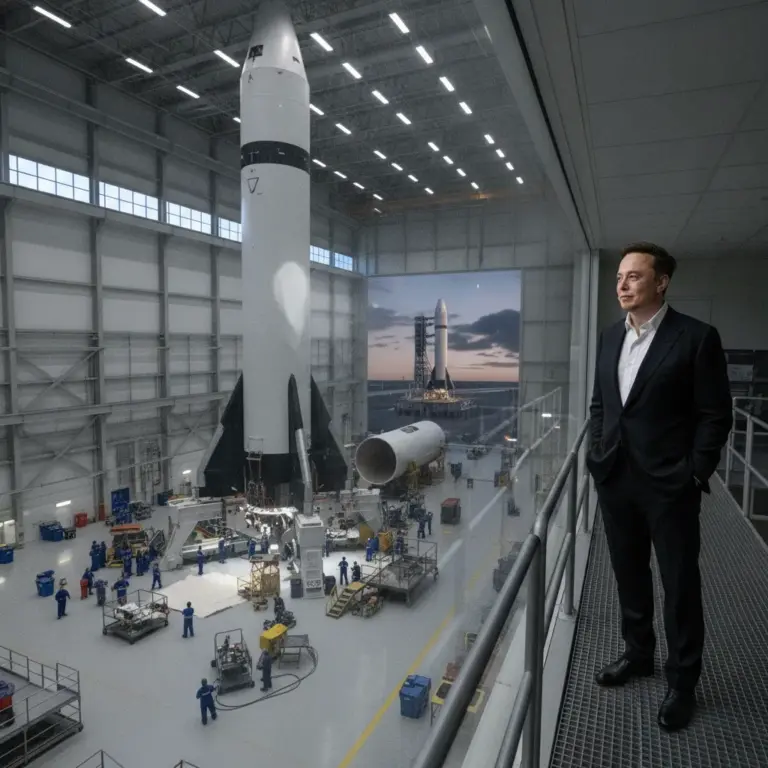
Elon Musk is setting his sights on a financial milestone that sounds more like science fiction than a corporate balance sheet. During a discussion regarding third quarter operating results, the SpaceX CEO revealed a staggering revenue forecast, suggesting the company could reach an annualized revenue of between 500 billion and 1 trillion dollars by the end of 2027. For investors who have watched the stock dip nearly thirty percent from its post IPO peak of 225 dollars, these projections suggest that the current price might actually be a bargain despite a valuation that many analysts currently find prohibitive.

The engine behind this projected explosion in wealth isn’t just rocket launches, but the rapid integration of super intelligence. Following the acquisition of xAI and its massive Colossus data centers, SpaceX has pivoted into a powerhouse for AI infrastructure. By leasing computing capacity to giants like Alphabet and Anthropic, and leveraging the explosive growth of the Grok Bot autonomous agent, Musk is transforming SpaceX into much more than a transportation company. He plans to deploy one of the world’s most powerful AI training clusters by mid 2027, utilizing hundreds of thousands of Nvidia GPUs to cement the firm as an indispensable partner in the global AI race.

While Wall Street remains skeptical, with average forecasts placing next year’s revenue significantly lower than Musk’s targets, there are deep technical synergies at play that could justify the optimism. The development of Starmind satellites allows AI workloads to be processed directly in space using solar energy, bypassing traditional cooling issues. When paired with an evolved Starlink network capable of delivering vastly increased bandwidth via new V3 satellites and the heavy lifting power of Starship, SpaceX is building an ecosystem where connectivity and intelligence merge seamlessly across orbits.

Despite these ambitions, entering a position today requires some stomach for volatility given the high price to sales ratio compared to broader tech indices. Moving from current revenues toward a trillion dollar annual run rate would represent one of the most aggressive growth trajectories in industrial history. However, for those looking past short term fluctuations toward a ten year horizon, Musk’s vision depicts a company that doesn’t just dominate space travel but owns the essential digital plumbing for an interstellar AI economy.

Wall Street is attempting to shake off a bruising stretch as stock futures ticked higher on Sunday evening. Investors are looking for a rebound following a difficult week that saw the S&P 500 and Nasdaq suffer consecutive losses, capped by a sharp Friday sell-off where the Dow plummeted over 650 points. Much of that volatility was fueled by spiking oil prices and geopolitical tensions in the Middle East, though energy costs have eased slightly entering the new week, providing some breathing room for equity markets.

The coming days are shaping up to be a critical gauntlet for global finance, with three major central banks scheduled to announce interest rate decisions. The U.S. Federal Reserve kicks things off on Wednesday, followed by the European Central Bank on Thursday and the Bank of Japan on Friday. While most traders bet that the Fed will keep rates steady between 3.75 percent and 4 percent, some analysts warn that any surprise hike could spark fears of overtightening, whereas holding steady might lead critics to question the central bank’s commitment to fighting inflation.

Beyond the central bank drama, corporate earnings from Big Tech giants are expected to drive market sentiment. All eyes will be on Alphabet and Microsoft when they report on Wednesday, alongside Amazon on Thursday. Analysts are particularly focused on whether these companies can justify their massive investments in artificial intelligence during a period of increased turbulence for AI trades. These reports will likely determine if the current rally in tech stocks has staying power or if further corrections are looming.

Meanwhile, international markets showed signs of fragmentation moving into Monday morning. Asian indices appeared mixed, with Japanese and Hong Kong futures showing modest gains while Australia’s S&P/ASX 200 dipped in early trading. In Europe, France found some relief after Moody’s maintained its Aa3 credit rating despite soaring borrowing costs, though the agency warned that significant fiscal discipline is still required to stabilize a national debt burden expected to exceed 120 percent of GDP by 2027.

A New York man was arrested after he was allegedly captured on video stealing campaign signs belonging to Republican congressional candidate Anthony Constantino while driving his employer’s vehicle.

Josef Marris was charged with two counts of criminal possession of stolen property, according to the Essex County Sheriff’s Office. He was also fired from East Branch Organics, according to Constantino’s campaign.

Constantino, who is running in New York’s 21st Congressional District, said the alleged thefts were intended to intimidate his supporters.

TRUMP ENDORSES STICKER MULE CEO WHO BATTLED OFFICIALS OVER 100-FOOT PRO-TRUMP SIGN FOR STEFANIK’S HOUSE SEAT

“My campaign has lost more than $100,000 to sign theft and vandalism,” Constantino told Fox News Digital. “There are now multiple attempts to intimidate my supporters by people who are clearly pro-crime and pro-violence. The media needs to stop pretending this is a both-sides problem.”

Constantino’s campaign alleged that Marris carried out the thefts on behalf of Democratic candidate Blake Gendebien. Gendebien’s campaign did not respond to Fox News Digital’s request for comment.

TOP ELECTION SCHEMES ROILING KEY MIDTERM RACES AS BOTH PARTIES ACCUSE RIVALS OF TRICKERY

Constantino also criticized Gendebien in a post on X, writing that the Democrat “is surrounded by FAR LEFT EXTREMISTS.”

WE NEED TO TALK TO COMMUNISTS BECAUSE THERE IS SO MUCH THEY NEED TO LEARN

Marris has described himself as a communist and an Antifa supporter, according to social media posts reviewed by Fox News Digital. In April 2023, he posted an image of the three-arrow symbol, which has historically been associated with several socialist and anti-fascist movements.

The symbol alone does not establish that Marris is a member of Antifa or that Gendebien’s campaign had any connection to the alleged thefts.

THE BLUE WAVE LOOKS REAL UNTIL YOU LOOK A LITTLE CLOSER

The incident comes as Gendebien leads Constantino in a closely watched race to succeed retiring Rep. Elise Stefanik, R-N.Y., in the 21st Congressional District.

One of the district’s media stations, North Country Public Radio, has flipped the congressional district from “solid” Republican to “likely” Republican.

SIOUX CITY, Iowa — President Donald Trump’s loyal base of supporters still have his and Republicans’ back in Iowa, but some are growing concerned over lingering issues, like the economy and gridlock in Congress, as Election Day nears.

Trump and Republicans ran on a platform of lowering inflation, halting “forever wars” and repairing an economy that they say was wrecked by former President Joe Biden and his administration. But prices are still high, and the war in Iran is still ongoing, causing a spike in fuel prices that have stuck around heading into Nov. 3.

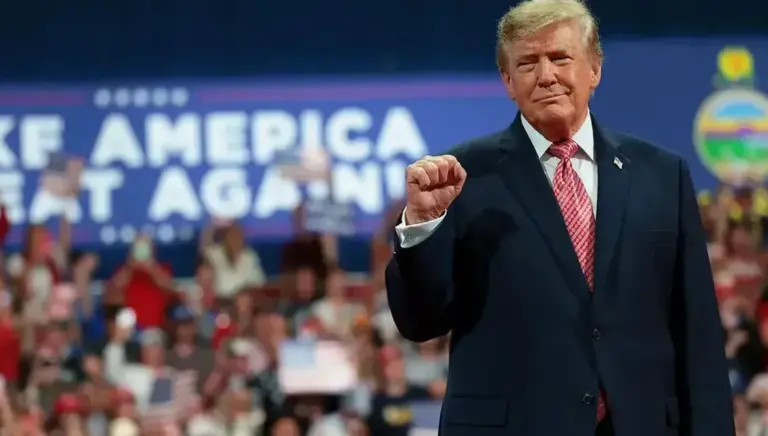
Outside of Trump’s rally in Sioux City, Iowa, where the president was set to rile up support for Rep. Ashley Hinson, R-Iowa, in a tightening Senate race against Iowa state Rep. Josh Turek, his supporters who spoke with Fox News Digital still backed Republicans but expressed hope that change would soon come.

VOTERS PREPARE TO WEIGH-IN ON TRUMP’S ECONOMY AS COSTS CONTINUE TO SURGE

Beth Fitzl, an Iowa voter, said of Trump that she didn’t “agree with everything he does, but in the end, he’s here for us.”

“This is the way I see it,” Fitzl told Fox News Digital. “He’s like the Packers, OK? They may be getting in deep, but they always pull it off in the end, and I truly think he’s going to do something to turn it around. I really think he’s going to pull something to turn it around.”

Chuck Jones, a veteran and Purple Heart recipient who made the trek from Minnesota for the Iowa rally, was frustrated about the divisive, tribal nature of politics.

He told Fox News Digital that “these politicians, they’re fighting for one thing on one side, and other people are fighting for something on the other side, but there’s nobody sitting at the table in the middle.”

TRUMP VOTERS REVEAL THEIR BIGGEST FEAR HEADING INTO MIDTERMS — AND IT’S NOT RISING PRICES

When asked if Republicans and Trump needed to do something different should they hold onto control of Washington, D.C., after the election, Jones said, “Well, I think it’s time that we’re going to have to show some difference, because people aren’t happy with the way things have been in the last few years.”

“And we’re going to have to do something about it and decisively show the American public that you can get it done and get it done correctly,” he said. “They’re going to have to work together instead of fighting each other.”

Hinson’s race is one of six toss-ups that Republicans in the Senate are trying to hold onto. She and Turek are vying for Republican Sen. Joni Ernst’s seat after she opted to retire from the upper chamber last year.

Their race, like others during this cycle, has become surprisingly close, given that Trump won the state in 2024 by roughly 13 points and has won it each time he’s been on the ballot.

THUNE MAKES BOLD PREDICTION ABOUT REPUBLICANS’ SENATE CHANCES AS GOP PULLS MILLIONS FROM KEY RACES

Dawn Stanley, an Iowa voter who has voted for Trump in each of the last three elections, still planned to support him and Hinson. She told Fox News Digital that Turek hadn’t “showed up” for Iowa and noted that he’d been absent from the state legislature “42% of the time” — Turek missed 261 votes between January and May of this year while on the campaign trail.

Still, her biggest frustration with Republicans was their inability to pass the SAVE America Act, voter ID and election security legislation that has been consistently blocked by Senate Democrats.

“I really do think it comes down to the SAVE Act,” Stanley said. “I really do, because we can’t have all these Democrats in there and bringing over all these illegals who are going to vote for those people and have chaos. That’s what it is.”

“The United States is in chaos and I really believe it’s because of the illegals and the Islamic terrorists that are coming over,” she continued. “And just look at what’s going on in France. I mean, it’s terrible. And I don’t want that for our country, and that’s what Trump can stop. And that’s why we need to bring in all the conservatives that we can.”

Others were concerned about Democrats regaining power and feared that Republicans may not show up on Nov. 3 to support GOP candidates.

“We need to get the people out to vote,” Kurt, who traveled from South Dakota for the rally, told Fox News Digital. “Republican people need to get out the vote. They stay home too much. This is a war to be won with the Left, as far as I’m concerned.”

This post appeared first on https://www.foxnews.com

President Donald Trump is holding back on sweeping new economic penalties Congress handed him to squeeze Russia.

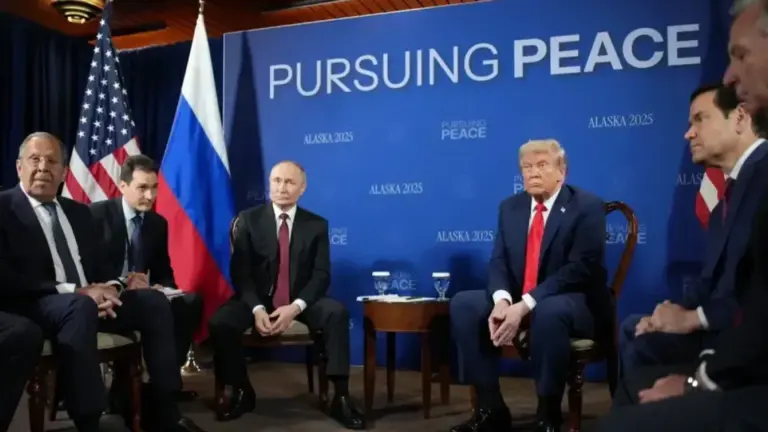
He is betting that keeping those sanctions in reserve will help bring Vladimir Putin to the negotiating table, a strategy drawing criticism from Republican allies amid questions about whether Moscow believes he will ever use them.

Over roughly a week, the administration waived most of the new Russia sanctions and tariffs enacted last month while separately easing restrictions on Russian diesel exports, moves one foreign policy expert described as Trump’s most significant effort yet to unwind economic pressure on Moscow.

“It’s probably the biggest effort that the Trump administration has made to start unwinding the U.S. sanctions architecture that’s been in place against Russia since 2022 or even earlier in some cases,” Hal Brands, a senior fellow at the American Enterprise Institute and professor at the Johns Hopkins School of Advanced International Studies, told Fox News Digital.

TRUMP TRIES DIFFERENT APPROACH WITH RUSSIA TO BRING AMERICANS RELIEF AMID ONGOING WAR WITH UKRAINE

Trump argues that imposing the new penalties could drive Russia away from peace negotiations. But Brands said repeatedly holding back economic punishment risks convincing Putin that Washington is unwilling to follow through on its threats.

“The threat of imposition may lose some credibility if over a period of time you’ve demonstrated that you would prefer not to impose those penalties in the first place,” Brands said.

REPUBLICAN LAWMAKERS BREAK WITH TRUMP ON DIESEL DEAL WITH RUSSIA

The decision has drawn criticism from Republicans who helped advance the Lindsey O. Graham Sanctioning Russia and Iran Act, including Trump allies who worked with his White House to pass it.

Sen. Katie Britt, R-Ala., who played a leading role in passing the legislation and joined Trump in the Oval Office when he signed it last month, said Tuesday the administration should be turning up economic pressure on Moscow.

“It is my belief that we need to use economic firepower to help drive Putin to the table,” Britt told Semafor. “I believe that Russia is at the darkest point that they’ve been at in this entire war, and now is the time for us to turn up the pressure.”

Sen. Shelley Moore Capito, R-W.Va., said Congress had coordinated the legislation’s timing with the White House, making Trump’s decision to waive most of its new penalties particularly surprising.

“This was an act of Congress that we had worked with the White House on,” Capito said. “We had timed this to when the president and the White House felt it was a good time to move forward with this, where it could be effective.”

Other Republicans were more blunt in their criticism.

“Beyond irresponsible,” Sen. Thom Tillis, R-N.C., wrote on X. “What part of enforcing a law passed 86-11 by the Senate does the President and his advisors not understand?”

“It’s unconscionable that this administration is capitulating to a Russian dictator who illegally invaded Ukraine and butchers innocent civilians every single day,” he added.

Sen. Darline Graham, R-S.C., the lead sponsor of the legislation named for her late brother and a Trump-endorsed candidate, said she would “choose to keep the pressure on Russia” because “I don’t trust Putin and I don’t trust Russia.”

The Graham Act, signed into law in September, provided for steep tariffs targeting Russia and major purchasers of Russian energy, along with sanctions on Russian financial institutions and foreign entities doing significant business with them.

Congress also included presidential waiver authority, which Trump invoked to put most of the law’s new Russia penalties on hold.

Brands said including a waiver was not necessarily a mistake, even if it ultimately allowed Trump to avoid imposing the penalties lawmakers had sought.

“It’s really tough to craft a sanctions or tariffs bill that forces the president to do something, and typically you don’t want to do that because there are always circumstances one can imagine in which you might want to be able to waive sanctions,” he said.

Trump has defended his decision as necessary to keep Putin at the negotiating table.

“My decision on Russia is a very simple one. I am in the process of negotiating Peace in the war between Russia and Ukraine, and don’t want to do anything that will drive, foolishly, Russia away from the bargaining table,” Trump wrote Sunday.

In his formal certification to Congress, Trump said imposing the Graham Act penalties now “would impede ongoing U.S. efforts to negotiate a durable and comprehensive peace.” He left open the possibility of imposing them later to “incentivize resolution” of the war.

Brands acknowledged that holding sanctions in reserve can give a president bargaining power, but questioned whether Putin believes Trump is prepared to follow through.

“The challenge is that it’s been clear for about 18 months now, since Lindsey Graham started pushing this bill in the first place in the early parts of 2025, that the president simply doesn’t have much appetite for squeezing the Russian energy export system to the degree that people like the late Senator Graham envisioned and desired,” Brands said.

The administration has separately eased existing restrictions to allow more Russian diesel onto the market, a move intended to relieve pressure on global fuel prices.

Trump has criticized Ukrainian strikes on Russian refineries, arguing they are straining diesel markets. Energy Secretary Chris Wright has described sanctions relief as a “carrot” that could encourage Russia to de-escalate.

Brands said the immediate financial benefit to Moscow from diesel relief is probably “fairly marginal.” The more consequential decision, he argued, was Trump’s refusal to activate the broader sanctions and tariffs Congress authorized.

“There’s a potential for pretty serious pressure to be exerted if he had used both the sanctions authorities and essentially the secondary tariff authorities to go after purchasers of Russian energy products overseas,” Brands said.

Such measures could “put a fairly significant squeeze on the Russian war economy” while discouraging other countries from doing business with Moscow, he added.

Brands acknowledged that squeezing Russian energy exports could further strain global energy markets when Trump is focused on lowering fuel prices at home.

But he argued that the larger risk lies in what Putin concludes about Washington’s willingness to sustain economic pressure.

“Putin’s theory of victory in Ukraine for a long time has been that at some point the West, particularly the United States, will get tired of the costs of confrontation with Russia and support for Ukraine,” Brands said.

The concern, he explained, is less about the immediate revenue Moscow gains from additional diesel exports than the possibility that easing restrictions reinforces Putin’s belief that Washington is growing tired of confronting Russia.

“The risk you run here has less to do with the precise dollar or ruble amount that Russia will gain by being allowed to export some additional diesel than with the strategic signal you’re sending that, in fact, the U.S. is getting tired of applying economic pressure against Russia and that the U.S.-Ukraine relationship is entering another period of conflict and divergence,” Brands said.

Brands sees little prospect for a negotiated settlement in the immediate future and argued that changing Putin’s calculation would require convincing him that the costs of continuing the war outweigh the potential gains.

“I think the only way you get there is by continuing to support Ukraine so it can take an increasing toll on Russia on the battlefield and by finding ways of ramping up rather than ramping down the economic pressure on Russia,” Brands said.

Trump’s waiver does not eliminate sanctions against Russia that predated the Graham Act, and the administration can revisit the new penalties.

The dispute now centers on whether keeping those penalties in reserve strengthens Trump’s hand with Putin — or diminishes their value if Moscow doubts he is willing to use them.

FIRST ON FOX: Some 50 radical Antifa cells in a wider network of nearly 300 groups are mobilizing to ensure this weekend’s demonstrations in France devolve into chaos and mayhem, Fox News Digital has learned.

Self-described Antifa groups are working with a sprawling network of communist, socialist, far-left and anti-Israel groups to mobilize on two fronts this weekend: an “anti-fascist village” against conservative leader Marine Le Pen’s National Rally in the city of Orléans and nationwide protests called Acte II to replicate last week’s violent riots.

A Fox News Digital investigation has mapped 287 groups in France’s expanding protest ecosystem, including 50 explicitly Antifa organizations, 27 explicitly communist, socialist, Trotskyist or revolutionary-left organizations, 24 labor unions and an expanding coalition of far-left anti-Israel, migrant-rights, environmental, feminist, transgender and other activist organizations. The demonstrations, which claim to be about youth education, include just 27 student and youth organizations.

The coordination comes amid a wider transnational campaign of mayhem organized by communist, socialist and leftist groups in Greece, Italy, Spain, India and elsewhere.

Fox News Digital has compiled a running who’s who of organizations in what has been dubbed “Chaos Inc.” and will keep updating the directory.

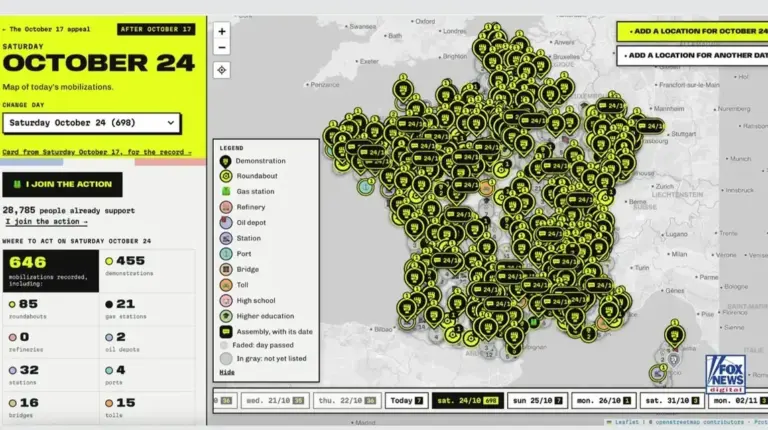
The size of the mobilization represents a huge expansion from the original 54 organizations identified in last weekend’s riots. The number of Acte II actions has also increased to 649 planned protests, as of early Friday morning in Paris, including at 21 train stations, three ports, two oil depots and one refinery.

Scores of pages of planning documents and social media posts analyzed by Fox News Digital reveal that agitators have laid the groundwork for a coordinated campaign with money, logistics and a communications infrastructure behind their efforts.

The fundraising, transportation, youth outreach, ready-made materials and centralized information hub reveal an organized mobilization operation in place days before protesters even reach the streets with expected hammer-and-sickle and Palestinian flags.

A French administrative court reportedly overturned a ban on street protests issued by Paris police, although the order was not made public and it was unclear if it would have applied to other cities which have imposed similar orders.

Already, organizers have begun planning a next-stage Acte III on Oct. 31, a broader strike and blockade mobilization on Nov. 5 and a Europe-wide action on Nov. 20.

In France, the numbers include signatories to two streams: a Ciao Fachos, or “Good-bye Fascists,” coalition that will descend on Orléans and the Acte II, or “Action 2,” campaign, led by a group called the Yellow Vests that organized last week’s mayhem. Organizations have signed onto a roster and list headed to Orléans.

“Macron must leave and make way for the people!” the Acte II organizers declared, calling “Yellow vests, high school students, university students, workers” into “demonstrations, roundabouts and blockades, everywhere in France.”

FRANCE’S MACRON BLAMES PROTESTS ON ‘ULTRA-LEFT GROUPS WHOSE AIM IS TO BRING DOWN THE REPUBLIC’

Last September, after the murder of conservative leader Charlie Kirk by an alleged leftist gunman, President Donald Trump issued an executive order that designated Antifa as a domestic terrorist organization. Soon after, Trump issued National Security Presidential Memorandum 7, targeting far-left groups. It said the “groups and entities that perpetuate this extremism have created a movement that embraces and elevates violence to achieve policy outcomes, including justifying additional assassinations.”

Despite the clear global presence of groups with self-described names of Antifa, former FBI Director Christopher Wray told Congress in 2020 that Antifa was “not a group or an organization” but rather “a movement or an ideology.”

In the U.S., while they will wave flags that say “ANTIFASCIST,” far-left activists don’t typically operate under one formal national organization called “Antifa,” leading to denials that any “Antifa” organization exists.

In Europe, it’s a different story. Activists openly organize under the Antifa name, “antifascist” banners and Antifa flags with emblems of their local chapters, and a Fox News Digital investigation has found a sprawling network mobilizing activists for another weekend of protests.

Last November, the State Department designated four European groups linked to Antifa — Antifa Ost in Germany; the International Revolutionary Front, or Informal Anarchist Federation, in Italy; and Armed Proletarian Justice and Revolutionary Class Self Defense in Greece — as Foreign Terrorist Organizations and Specifically Designated Global Terrorists, accusing them of organizing or carrying out bombings, shootings and other politically motivated attacks.

TRUMP CALLS ANTIFA ‘TERRORIST GROUP,’ FUELING FIGHT OVER FREE SPEECH AND LIMITS OF LAW ENFORCEMENT

Worldwide, Antifa chapters have built their movement around a seemingly noble opposition to “fascism,” but critics argue that they deploy tactics of threats, intimidation, harassment, violence, destruction and even murder that make them coercive, authoritarian, dangerous and deadly. What’s more, parroting the propaganda language of Russia, China and the Islamic Republic of Iran, “fascism” has become a loaded catch-all phrase to describe Western democracies.

For example, late last year, Neville Roy Singham, an American-born communist tech tycoon living in China, took to the stage at the Golden Tulip Hotel in Shanghai for a “Global South” conference and critiqued the alleged “fascism” of the United States.

Days ago, Fox News Digital reported exclusively that an internal State Department assessment warns that antifascist groups could participate in a “potentially more confrontational protest” this weekend that could “expose further security shortcomings and deepen political tensions.”

Now, the organizations themselves provide a look inside the infrastructure being assembled on the ground.

Free Buses to the “Antifascist Village”

On Friday night, a bus is set to leave Marseille at about 9 p.m. local time for Orléans, in a journey organized by “La Riposte Antifasciste Marseille,” established in October 2023 with a “strategy of massification of anti-fascism.” In its promotion, the pilgrimage leaders tell followers, “Anti-fascism is everyone’s business.” It’s joined by Marseille Unite Communiste Libertaire.

Other organizing materials advertise collective transportation from locations including Paris, Saint-Denis, Stains and Brest.

The logistical preparations provide a more concrete measure of organization than simply finding similar flags or slogans at demonstrations.

On Saturday morning, at 8 a.m., in the city of Bagnolet outside Paris, the Assemblée Antifasciste de Bagnolet, or “Bagnolet Antifascist Assembly” has plans in place to meet at the town hall, Mairie de Bagnolet, on Rue Hoche for a two-hour ride to Orléans. Its online sign-up sheet advertises 50 free seats.

La Marche des Solidarites, or “The March for Solidarity,” an online hub, directs supporters in the Paris region to buses leaving from Saturday morning from Place de la République in Saint-Denis and Stains with #NousToutes and Carré Citoyen.

On Instagram, Saint-Denis Antifa, Carre Citoyen and Marche des Solidarites are sending people to a fundraising page on the Solidaire website, where organizers have raised about $13,300 for expenses for the Saturday action, including the “printing of mobilization materials: leaflets, posters, etc.” and a “truck/sound system for a large procession of the solidarity march.”

The Saint-Denis Antifa also made crêpes last week at the Saint-Denis Hip-Hop Festival to raise money for the protest.

And organizers have centralized the machinery for mobilization online. Adults are facilitating space for high-school students, telling them, “free places are for you.”

The Marche des Solidarités online repository on antiracisme-solidarite.org describes itself as a place containing “all the information to mobilize,” including “calls, signatories, visuals, etc.”

Ciao Fachos has gone further. Its organizing documents call for “tractages, collages, réunions publiques, récoltes de fonds, transports collectifs” — distributing leaflets, putting up posters, holding public meetings, fundraising and organizing collective transportation.

The group also urges activists to prevent National Rally supporters from distributing literature at markets or putting posters on walls.

The network has also advertised Signal channels, much like far-left activists have done in the U.S., to swap information and coordinate logistics.

COULD FRANCE’S RIOTS HAPPEN HERE? EXPERTS SEE PARALLELS IN SOCIALISM, IMMIGRATION — AND KEY DIFFERENCES

A Two-Day Orléans Antifa Operation

The schedule is carefully organized with Antifa groups like Loiret Antifasciste, which is promoting a detailed program. The group’s own declaration describes the objective as larger than opposing a single National Rally convention.

Building a “mouvement antifasciste,” or “antifascist movement,” is a “collective responsibility,” the organization says, calling for a united political front.

For Saturday, organizers advertise:

  • 10:30 a.m. — A demonstration beginning near the Cathédrale Sainte-Croix d’Orléans, including a “Ciao Fachos” procession.
  • 1 p.m. — An “antifascist village” at Campo Santo with food, political roundtables and other activities, including a plan to “parade together behind a common banner” of “anti-racism” and “anti-fascism.”
  • Evening — Food, concerts and accommodations for activists.

On Sunday, Ciao Fachos advertised another demonstration toward CO’Met, the location of the National Rally gathering.

The Association France Palestine Solidarité says its members will participate in a Palestinian contingent during Saturday’s demonstration and operate a stand at the antifascist village until 10 p.m. Protest leaders chose the last protest date of Oct. 17 to memorialize a protest on the same day in 1961 when a protest by Algerian “martyrs” turned deadly in Paris.

Organizations include Urgence Palestine Orléans, AGIR POUR LA PALESTINE, Union juive française pour la paix, migrant-rights organizations including FASTI, Droits Devant!!, Coordination Sans-Papiers 75, La Cimade Aix-en-Provence, Tous Réfugiés, GASPROM-ASTI Nantes, ASTI Orléans, the Association des Travailleurs Maghrébins de France and UJFP, the French Jewish Union for Peace, which is promoting the demonstration.

The CGT Paris, the Paris branch of one of France’s largest labor confederations, is also organizing transportation to the demonstration and published the Loiret Antifaciste coalition’s call for an antifascist movement.

Solidaires 37, the Indre-et-Loire branch of the left-wing labor federation, is organizing pay-what-you-can transportation from Tours.

The coalition lists demonstrate how explicitly antifascist organizations operate inside a considerably larger political coalition.

Antifa Joins ‘Acte II’

The Orléans demonstration isn’t the only place explicit Antifa organizations are mobilizing Saturday.

Fox News Digital separately identified antifascist groups attached directly to local Acte II demonstrations.

In Angoulême, Action Antifasciste 16, also known as Action AntiFa16, appears as an official collaborator on an Oct. 24 Acte II announcement alongside NPA Charente, Révolution Permanente Angoulême, Maison des Peuples et de la Paix, Fanfare en lutte d’Angoulême and Organisation de Solidarité Trans Angoulême.

In the city of Caen, the “Caen Antifa Squad” appears as a collaborator on another announcement explicitly advertising “ACTE II — 24 OCTOBRE.”

The presence of Antifa groups provides a connective point between the nationwide Yellow Vest mobilization and the antifascist ecosystem.

One of the figures attempting to bring the different grievances together is Benjamin Ball, editor of the website coordinating the Yellow Vest action map.

“Our role is to make sure that the social anger aggregates,” Ball recently told French media, saying organizers want representatives of different sectors received at the Élysée.

REPORTER’S NOTEBOOK: FRANCE BRACES FOR MORE UNREST AFTER PARTS OF PARIS SPUN OUT OF CONTROL

In a surprising political maneuver just days before the US midterm elections, Audi CEO Gernot Döllner appeared alongside Donald Trump at a campaign rally to unveil plans for a four billion dollar SUV plant in Macon, Georgia. This marks the luxury brand’s first dedicated manufacturing facility in the United States, designed to produce 200,000 vehicles annually including the Q7, Q8, and the upcoming Q9. By moving production of these heavy hitters away from Slovakia and into Georgia, Audi hopes to bypass the punishing fifteen percent tariffs on EU imports that have crippled its margins.

The decision comes as part of a broader struggle for parent company Volkswagen, which estimates that trade wars and import duties cost it up to five billion euros every year. To survive the current climate, the automaker has been forced to shuffle production lines across borders and pivot toward larger petrol powered models specifically tailored for American tastes. Despite public complaints about how restrictive these tariffs are for international trade, Volkswagen seems determined to play ball with the administration to protect its access to one of the world’s most lucrative automotive markets.

However, this massive expansion abroad creates a jarring contrast with the situation back in Germany. As billions flow into Georgia and thousands of new American jobs are promised, Volkswagen is grappling with a domestic crisis involving potential closures and cuts of up to 100,000 positions. Executives blame this decline on fierce competition from Chinese manufacturers and the astronomical costs associated with transitioning to electric vehicles globally.

While critics point out that producing massive petrol SUVs contradicts global carbon reduction goals, Audi views the gamble as essential for survival. For Trump, who frequently claims his tariff policies are revitalizing American industry despite falling overall employment numbers in vehicle parts, the announcement provides a timely victory lap right before voters head to the polls. For Döllner and Volkswagen, it is simply a costly price they must pay to keep their premium fleet on American roads.