Archive

October 14, 2026

Browsing

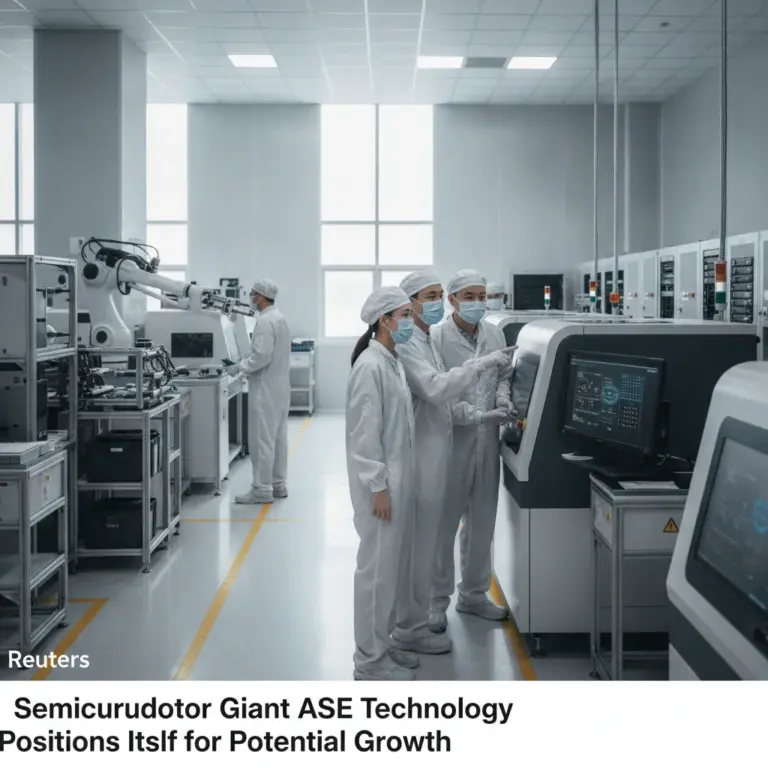
Investors are keeping a close eye on ASE Technology this week as the company emerges as a standout performer in the current market landscape. After a period of strategic movement, the stock has entered what analysts describe as the buy zone, suggesting that the valuation has reached a point where entry could be attractive for those looking to capitalize on semiconductor trends. This positioning comes at a time when global demand for advanced packaging and testing services remains high.

The recent price action indicates a stabilizing trend that often precedes a broader upward move. While volatility continues to touch various sectors of the tech industry, ASE Technology seems to be carving out a supportive base. Traders typically view these technical patterns as signals that the downside risk has diminished, making it an opportune moment for growth oriented portfolios to take notice.

However, seasoned investors remember that historical performance does not guarantee future results. Despite the optimistic technical indicators currently surrounding the stock, the semiconductor space remains sensitive to macroeconomic shifts and supply chain fluctuations. Those monitoring ASE Technology will likely watch for upcoming earnings reports and sector wide guidance to confirm if this buying window leads to sustained momentum throughout the year.

Paycom is positioning itself for a potential breakout as software stocks experience a broad wave of momentum across the market. The company appears to be moving toward a critical buy point, signaling a possible turning point for investors who have been watching the payroll and human capital management sector closely. This movement comes at a time when many enterprise software firms are seeing renewed interest as businesses modernize their digital infrastructure.

The upward trend reflects a wider confidence in cloud based service providers, which have managed to maintain stability despite fluctuating economic conditions. By aligning itself with these broader sectoral gains, Paycom is attempting to capitalize on the current appetite for growth oriented tech assets. Analysts suggest that if the stock manages to clear its current technical hurdles, it could trigger a fresh round of buying activity from institutional traders.

While the short term outlook seems optimistic due to the general rally in software equities, seasoned observers remain cautious about long term volatility. The path forward depends largely on whether Paycom can translate this technical momentum into sustained fundamental strength. For now, however, the stock remains a focal point for those looking to ride the current wave of technology advancement back into profitability.

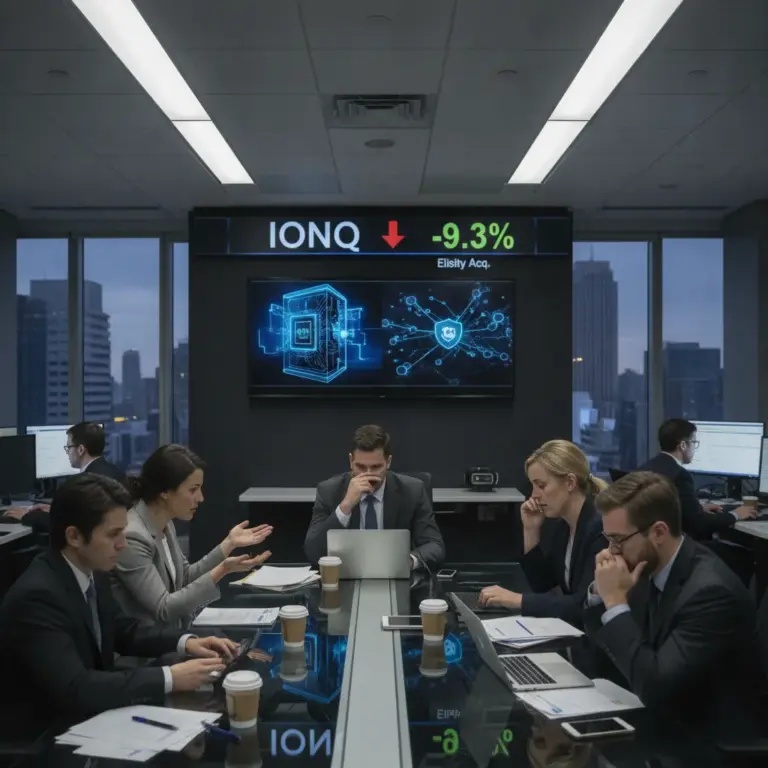
IonQ shareholders felt a sharp sting last week as the company’s stock tumbled over nine percent following the announcement of a massive all-stock acquisition. The firm agreed to purchase Elisity, a provider of zero-trust security software, in a deal valued at up to 1.3 billion dollars. While the move is designed to bolster IonQ’s long term ecosystem, the immediate reaction from investors was one of caution, largely driven by concerns over share dilution. By paying for the acquisition with equity rather than cash, IonQ may issue millions of new shares, effectively shrinking the ownership stake of current holders.

Despite the dip in share price, leadership views the Elisity deal as a critical bridge to wider commercial adoption. Chief Financial Officer Inder Singh has previously suggested that high end security services can act as a foot in the door, opening conversations that eventually lead clients toward complex quantum computing use cases. With federal mandates pushing for quantum safe security transitions by 2030, IonQ believes acquiring Elisity’s established relationships with chief information security officers will accelerate their entry into government and enterprise markets just as urgency peaks.

From a financial standpoint, opting for an all-stock transaction allows IonQ to preserve its precious cash reserves during a period of heavy spending and negative free cash flow. This strategic frugality helps extend the company’s operational runway while it pursues ambitious projects like those funded through DARPA. However, some transparency gaps remain that continue to unsettle the market; specifically, IonQ has not yet disclosed Elisity’s actual revenue figures, leaving investors to guess whether the premium being paid matches the target’s true value.

Looking ahead, holders are keeping a close eye on upcoming quarterly reports for any clues regarding Elisity’s recurring revenue and overall integration progress. While short term volatility persists due to the dilutive nature of the deal and general swings in the quantum sector, some analysts maintain an optimistic long term outlook based on aggressive revenue growth projections through 2030. For now, the stock remains caught between the excitement of rapid technological expansion and the cold reality of corporate financing costs.

On the surface, the S&P 500 appears virtually unstoppable, having maintained a relentless bullish streak for four years despite global conflicts, trade wars and aggressive interest rate hikes. However, recent data suggests that this strength is largely an illusion created by a small group of powerhouse stocks. Analysts have noted a troubling divergence beneath the index, revealing that forty-four percent of companies within the S&P 500 are actually sitting in bear-market territory, trading at least twenty percent below their yearly highs. This means nearly half of the market’s constituents are struggling even as the overall index continues to climb.

Adding to these concerns is a rare valuation alarm that has been flashing for several months. The Shiller price-to-earnings ratio, which measures whether stocks are overpriced relative to their historical earnings, has surged past the forty mark. To put this into perspective, this milestone has only been reached once before in history during the late nineties. While this specific metric does not pinpoint exactly when a crash might occur, it serves as a stark reminder that when valuations reach such extreme heights, they rarely remain there indefinitely.

The ghost of 1999 looms large here because the last time we saw these levels, it preceded one of the most devastating bear markets in modern memory. It creates a sense of impending volatility for those watching the charts closely. Yet historians remind us that while market collapses often feel apocalyptic in real time, they are fundamentally normal components of any investment cycle. From mild corrections to deep plunges like the dot-com bubble, downturns have always occurred and subsequently resolved themselves over time.

For the average investor, these warnings suggest a need for patience rather than panic. Attempting to time a market peak or guess precisely when a rebound will begin is widely considered a losing game. Instead, financial experts argue that maintaining a long term perspective remains the safest bet. By focusing on high quality companies and weathering the inevitable swings of the cycle, investors can navigate these precarious signals without succumbing to short term fear.

The high stakes world of artificial intelligence continues to drive market momentum as Advanced Micro Devices makes a commanding return to form. Despite an initial dip during Tuesday trading, the Santa Clara based chipmaker managed to rally with a two percent gain, signaling strong investor confidence in its long term trajectory within the AI sector. This recovery has propelled the company onto several prestigious stock lists, most notably joining the exclusive Big Cap 20.

Industry analysts are taking particular note of the company current standing, which is backed by a perfect composite rating of ninety nine. Such a score places AMD in the top one percent of all tracked stocks, reflecting a rare combination of price strength and fundamental growth that typically attracts institutional buyers. While other tech giants have experienced volatility leading up to major bank earnings reports, AMD appears to be carving out its own path toward record highs.

This upward movement comes at a time when the broader semiconductor landscape remains unpredictable. While some peers have slipped under pressure, AMDs resilience suggests that demand for specialized AI hardware remains insatiable. The surge reflects a wider trend where investors are aggressively hunting for quality assets capable of sustaining growth amidst shifting economic winds and evolving technological requirements.

The boundary between traditional finance and the digital asset world continues to blur as Securitize announces plans to launch tokenized versions of some of the most influential stocks in the world. By bringing shares of giants like Apple, Nvidia, and Microsoft onto the Solana blockchain, the firm aims to offer eligible investors in the US and EU a way to trade these assets during extended market hours. Unlike simple derivatives often found in offshore markets, these tokens are designed to maintain full ownership rights and economic benefits, effectively migrating regulated US capital market protections directly onto the chain.

This move comes amid a volatile but generally upward trend for major cryptocurrencies. Bitcoin recently touched levels above 83,000 dollars despite facing headwinds from geopolitical tensions in the Middle East and fluctuations in ETF inflows. Other major players followed suit with modest gains, as Ethereum climbed toward 2,500 dollars and Solana saw its own price rise alongside the announcement of New institutional integrations. Analysts suggest that while macroeconomic pressures persist, the appetite for integrating real world assets into blockchain ecosystems remains strong.

Beyond tokenization, legacy banking is showing increased interest in crypto infrastructure. Reports indicate that Wells Fargo may be exploring a liquidity partnership with Kraken to grant its clients better market access without needing to build an entirely new internal system from scratch. This follows a pattern of established firms seeking lean ways to enter the space, similar to how Chainlink is simplifying cross chain movements with its new vault adapters or how Moody’s has begun assigning formal credit ratings to decentralized protocols like Sky. Together, these developments signal a shift away from speculative trading toward a structured convergence of global finance and distributed ledger technology.

Ivanhoe Mines has reported a significant jump in its third-quarter copper production, driven largely by a thirty percent surge in underground mining rates. With monthly excavation now exceeding seven hundred thousand tons, the company has pushed linear underground development to record highs. This operational momentum helped push quarterly production to seventy six thousand four hundred and one tons, supported by improvements at its concentrators which saw a record eighty nine percent recovery rate following upgrades in July.

However, these short term gains have not been enough to keep the company on track for its most ambitious yearly goals. Despite the recent acceleration, management warned that full year output is likely to land at the lower end of its projected range of two hundred ninety thousand to three hundred ten thousand tons. While processing volume is up, technical hurdles remain, specifically elevated silica levels that have complicated smelting processes and increased slag concentrate production.

There is some silver lining in the form of secondary markets and other minerals. The company’s smelter produced a record amount of high strength sulfuric acid, fetching prices as high as nine hundred dollars per ton, while the Kipushi operation solidified its position as one of the world’s largest zinc mines with another record breaking quarter. These diversifications provide a financial cushion even as copper targets slip slightly.

Looking beyond current operations in the Democratic Republic of Congo, Ivanhoe is aggressively expanding into North America. Its US affiliate recently received preliminary support from the US Export Import Bank for over one billion dollars in debt financing for the Santa Cruz project in Arizona. By utilizing an innovative heap leaching process that skips traditional smelting altogether, the firm hopes to bring new American copper online by 2028.

The European Union has sparked a significant tremor in the global commodities market after announcing a strict annual cap on Chinese hybrid electric vehicle imports. Starting this December, customs officials will limit arrivals to 350,000 units per year, effectively blocking any additional shipments once that ceiling is hit. The move comes after European Trade Commissioner Maros Sefcovic finalized a quota system during talks in Beijing aimed at slashing China’s presence in the regional hybrid market to just three percent and curbing a staggering trade deficit that is costing the bloc roughly one billion euros every day.

The impact was felt almost immediately across financial markets, where lithium futures plummeted to their lowest levels in ten months. On Monday, the primary lithium carbonate contract on the Guangzhou Futures Exchange crashed nearly twelve percent, marking its sharpest daily slide since March. This volatility extended to industry giants like Tianqi Lithium and Ganfeng Lithium, both of which saw their shares tumble as investors braced for a slump in demand for the critical battery metal. These losses add further pressure to a market that has already seen lithium prices lose half their value since reaching peak highs earlier this year.

Brussels is bypassing traditional, slow moving anti dumping investigations by utilizing World Trade Organization safeguard measures to implement these restrictions quickly. The strategy targets hybrids specifically because they had become a loophole for Chinese automakers; while fully electric vehicles were hit with heavy tariffs in 2024, hybrid exports surged as brands pivoted to fill the gap. In recent months, those exports tripled in value to 6.7 billion euros, allowing Chinese brands to capture about twenty five percent of European hybrid sales by August.

To smooth over the friction caused by these caps, Beijing has agreed to several concessions including removing certain tariffs on auto parts and lowering duties on luxury European imports such as olive oil and ice cream. However, tensions remain high as EU leaders prepare to meet this Thursday to consider a proposed kill switch mechanism. If adopted, this tool would grant Brussels the power to instantly sever market access for specific foreign goods whenever external governments introduce trade policies deemed harmful to the union’s economic stability.

A devastating landslide triggered by heavy rains has forced the closure of the open-pit section of Chile’s El Teniente copper mine, leaving two contract workers dead and another injured. The incident occurred shortly before 2:00 p.m. on Sunday as employees from Aura Ingeniería SA were carrying out routine inspections in the south pit. While rescue teams managed to extract one survivor and rush them to a nearby medical facility, they later recovered the bodies of two men, aged 34 and 53.

Codelco, the state-owned giant that operates the flagship site in the Andes Mountains, quickly moved to suspend activities in the affected area to ensure worker safety. However, this latest tragedy comes at a precarious time for the company, marking the second major disaster at El Teniente in just over a year. It follows a catastrophic rock burst in July 2025 that claimed six lives after a seismic event tore through underground tunnels, an accident that crippled production levels and sent shockwaves through Chile’s economy.

The recurring instability at El Teniente is part of a broader struggle for Codelco, which has seen production plunge nearly thirty percent earlier this year due to mounting geological risks. With additional deaths recently reported at the Radomiro Tomic and Escondida mines, critics are questioning whether safety protocols are keeping pace with increasingly volatile conditions. These internal struggles are now coinciding with external threats from El Niño weather patterns, which risk bringing even more torrential rain to South America’s vital copper belt.

In a move that signals growing confidence in next generation mining tech, lithium startup EnergyX has signed a massive ten year deal with Swiss commodities giant Trafigura. The agreement is valued at approximately two billion dollars and commits Trafigura to purchasing 100,000 metric tons of battery grade lithium. This represents one of the largest supply contracts ever linked to direct lithium extraction technology, providing the startup with critical financial stability as it scales up its operations across two continents.

The materials will be sourced from two primary sites, splitting production between the Black Giant project in Chile and the Lonestar project in Texas. Under the terms of the take or pay contract, Trafigura will claim more than half of the initial output from the Chilean asset and nearly a third from the Texan facility. Beyond just securing a buyer, this partnership unlocks a separate six hundred ninety million dollar debt financing package from the US Export Import Bank, which required long term revenue visibility before finalizing the funds.

Teague Egan, founder and CEO of EnergyX, noted that such a high profile commitment proves there is significant market appetite for their specific extraction method. While much of the lithium is intended to fuel the American automotive and energy storage markets, some reports suggest Trafigura may initially route portions of the supply toward Chinese customers. Meanwhile, EnergyX continues to build momentum through diverse partnerships, including a recent equity injection from Italy’s Eni and a unique arrangement with the US Army to process minerals at a military depot in Texas.

Looking ahead, the company expects commercial scale production to begin at its Chilean site by 2028 and in Texas shortly after in 2029. With several other potential buyers still in talks to fill out remaining capacity, EnergyX appears to be rapidly transitioning from a developmental phase into a global industrial player. The strategic mix of government cooperation and private capital suggests that the race for sustainable battery materials is entering an aggressive new chapter.