Archive

October 20, 2026

Browsing

Elon Musk has sent ripples through the financial world following a surprising announcement that he intends to distribute his wealth to the next generation. In a social media post shared on X, the billionaire entrepreneur pledged to gift a single share of SpaceX to every child in the United States starting next year. While the gesture appears philanthropic on the surface, investors reacted quickly, sending SpaceX shares up by one percent on Monday morning as market sentiment shifted toward a more optimistic outlook for the aerospace company.

The move marks an unusual approach to corporate outreach and shareholder expansion, with Musk hinting that this initiative is merely the beginning of several planned giveaways. By introducing millions of young Americans to equity ownership via one of the most ambitious companies in history, analysts suggest Musk may be attempting to build long term brand loyalty while simultaneously increasing the visibility of his private venture within the public consciousness.

Beyond the immediate excitement over the gifts, Wall Street experts have begun speculating on deeper strategic maneuvers involving Musk’s sprawling empire. The sudden movement in SpaceX valuation has reignited intense debates among financial analysts regarding a potential merger between SpaceX and Tesla. Some industry observers believe such a consolidation would create an unprecedented conglomerate combining sustainable energy and interplanetary travel, though they remain divided on how such a deal would be priced given the volatile nature of both assets.

Wall Street showed strong resilience during today’s trading session, with both the Dow Jones Industrial Average and the Nasdaq posting notable gains. Investors appeared optimistic throughout the day, driving a broad rally across several sectors as market sentiment shifted toward growth. The tech heavy Nasdaq led much of the charge, reflecting a renewed appetite for high growth equities despite ongoing economic uncertainty.

Among the biggest winners of the session was Sandisk, which saw its shares surge as buyers piled back into memory storage plays. The stock’s momentum contributed significantly to the overall positive mood in the technology sector, signaling that investors are still willing to bet heavily on hardware infrastructure and semiconductor strength.

At the same time, traders began paying close attention to a promising biotech play that is currently testing a key entry point. While healthcare stocks have seen mixed results recently, this specific move suggests that speculative interest is returning to clinical stage companies. Analysts noted that if the stock manages to break through current resistance levels, it could trigger a wider wave of buying across the biotechnology landscape.

Tesla is heading into its third quarter earnings report facing a skeptical Wall Street that expects a dip in financial performance. While the company has spent recent months capturing headlines with high profile showcases of the Cybercab, the Semi truck, and the latest Roadster, analysts warn that these futuristic projects aren’t ready to contribute meaningful revenue just yet. The tension lies between the company’s long term vision of autonomy and the immediate reality of its current balance sheet.

Despite the gloomy projections regarding near term profits, investors seem to be looking past the numbers. Tesla shares have staged a notable rebound, suggesting that shareholders are more interested in the potential of upcoming technology than this quarter’s specific margins. This rally indicates a market belief that Elon Musk’s pivot toward AI and robotics will eventually outweigh any temporary slump in traditional vehicle sales.

As Wednesday’s announcement approaches, all eyes remain on whether the actual figures align with analyst fears or if there is a hidden catalyst capable of surprising the street. For now, Tesla remains caught in a tug of war between those who see it as a struggling car manufacturer and those who view it as a burgeoning tech giant waiting for its next major leap forward.

Truth Social appears to be spiraling toward a precarious future as its valuation plummets to unprecedented depths. The platform saw its shares slide another seven point five percent on Monday, marking a new rock bottom at six dollars and forty cents per share. This latest dip is part of a broader, more alarming trend, with the company losing nearly thirty percent of its market value over the last month alone.

The financial bleeding seems tied directly to a dwindling user base. Recent analytics indicate that daily traffic has crashed by more than thirty percent over the past year, leaving the company struggling to justify its existence beyond serving as a personal megaphone for Donald Trump. With quarterly losses mounting and political momentum shifting, investors who once viewed the site as a goldmine are now rushing for the exits.

In a desperate bid to stem the tide, Truth Social has attempted several erratic business pivots. Management has flirted with cryptocurrency and gambling ventures while pursuing an unlikely merger with a nuclear fusion firm. The company even tried monetizing direct access to Trump’s messages, though critics dismissed the move as a transparent cash grab rather than a viable growth strategy.

None of these maneuvers have managed to stabilize the ship or lure back fleeing users. As the gap between the platform’s ambitions and its actual utility widens, industry observers are beginning to question whether Truth Social possesses enough staying power to survive in an increasingly crowded digital landscape.

Anthropic is doubling down on its commitment to society by dedicating five percent of its total shares to a newly created public benefit fund. Announced Sunday via a company blog post, this move creates a flexible financial engine designed to support the broader common good. While the company has already invested two hundred million dollars into studying how artificial intelligence affects the workforce, leadership suggests that the rapid acceleration of technology requires more aggressive and scalable interventions than simple research grants.

This initiative allows the firm to pivot quickly toward diverse philanthropic efforts, ranging from substantial gifts to established nonprofit organizations to direct financial assistance for people displaced by automation. By housing these assets in a specialized internal entity, Anthropic aims to balance its commercial ambitions with a tangible safety net for those impacted by the AI revolution. This strategy aligns with the founders’ vision of operating as a public benefit corporation rather than a standard for profit venture.

The gesture is part of a larger culture of generosity at the startup, where CEO Dario Amodei and his cofounders have previously pledged eighty percent of their personal fortunes to charity. A popular employee matching program has further boosted these numbers, bringing the total portion of company shares dedicated to public good up to roughly twenty percent. There are even provisions in place to increase this percentage should the company hit certain valuation targets in the future.

These altruistic moves come at a critical juncture for the organization as it prepares for a massive transition into the public markets. With an initial public offering potentially arriving as early as November, Anthropic is signaling to investors and regulators alike that it intends to maintain its ethical guardrails even as it chases immense growth and global influence in the competitive landscape of generative AI.

The landscape of international investing is on the verge of a significant shift as tokenization begins to bridge the gap between isolated national markets. Gabe Otte of Dinari believes that connecting cross border markets directly is now within reach, citing recent explorations with Kakao Pay Securities to open up access to stocks listed in Korea. While many assume the barriers to such an ambitious project are technical, Otte argues that the real challenge lies in navigation through complex regulatory environments. He likens this transition to the historical move from paper certificates to electronic shares, noting that while the medium changes, the underlying legal obligations remain constant.

Dinari is working to strip away these frictions by converting home market tokenized shares into fully compliant digital assets. By treating what would normally be a massive structural overhaul as a manageable software task, the firm hopes to create a world where investors have direct access to foreign equities with unified liquidity and transparent pricing. This approach seeks to remove unnecessary intermediaries and reduce costs, making global diversification far simpler for the average participant.

Looking beyond simple equity trades, Otte envisions a future where this infrastructure supports various real world assets including commodities and other secure instruments. He suggests that just as stablecoins found their footing by solving specific payment problems, tokenized securities will gain traction once they provide undeniable efficiency over legacy systems. The ultimate success of this movement depends on seamless integration into existing traditional frameworks rather than attempting to build a parallel system entirely outside of current laws.

For this vision to become reality, deep coordination between local institutions and global regulators will be essential. The goal is not merely to create novel digital tokens but to achieve genuine market level liquidity across oceans and borders. When integrated correctly into compliant structures, tokenization could fundamentally rewrite how capital moves around the globe, replacing slow settlements and high fees with near instantaneous execution.

Ivanhoe Electric is currently engaged in advanced negotiations to secure buyers for copper from its Santa Cruz project in Arizona. According to CEO Taylor Melvin, these potential offtake agreements are not just about selling the metal but could serve as a critical source of financing to get the mine built. While Melvin declined to name the specific companies involved, he noted that the firm is simultaneously coordinating project financing discussions with roughly a dozen commercial banks.

The urgency behind these deals stems from a tightening global copper market, fueled largely by the massive infrastructure requirements of the artificial intelligence revolution. As demand continues to outpace current supplies and push prices toward record levels, Melvin argues that the United States desperately needs more domestic production. He pointed out that while Santa Cruz is a significant step forward, much more development across the country is required to truly bridge the supply gap.

This trend of tech giants securing raw materials directly from miners is becoming more common. For instance, Amazon Web Services recently partnered with Rio Tinto to utilize copper from another Arizona operation for its own data centers. Ivanhoe hopes to replicate similar success at Santa Cruz, where they plan to produce copper cathode on site through underground mining and heap leaching. This high grade material serves as the essential feedstock for cables and wiring used throughout the modern digital economy.

Funding for the ambitious project is already gaining momentum on a government level. The company recently received a preliminary letter from the Export-Import Bank of the United States indicating potential debt financing of 1.1 billion dollars under the Make More in America Initiative. This follows public comments from President Donald Trump regarding federal support for the venture. Though some permitting hurdles remain at various government levels, Ivanhoe aims to begin producing its first cathodes by 2029 with an estimated initial capital cost of 1.43 billion dollars.

In a decisive move to prioritize ecological health over industrial gain, Greenland’s parliament has voted unanimously to block deep sea mining and seabed exploration around the island. The resolution instructs the government to draft a comprehensive law prohibiting these activities until at least the end of 2029. While the vote acts as a legislative mandate rather than an instant freeze, officials expect the formal legal framework to be finalized during the spring session of 2027. To ensure long term protection, the upcoming laws will include provisions allowing the moratorium to be extended in two year intervals beyond 2029.

Lawmakers were clear that their primary motivation is the preservation of the marine environment and the stability of fish populations. Because Greenland relies so heavily on its commercial fishing industry for economic survival, members of parliament concluded that the risks posed by seabed disruption far outweigh any hypothetical financial windfall from mining revenues. By choosing biological welfare over extractive profits, the territory is signaling a cautious approach to managing its vast underwater resources.

The timing of the vote adds a layer of geopolitical tension, coming just one day after U.S. President Donald Trump suggested via social media that massive mineral and energy exploration was poised to begin on the island. Trump linked these prospects to a recent trilateral security agreement between the United States, Denmark, and Greenland designed to limit non NATO influence in the region. However, those claims have been met with firm corrections from diplomacy channels, with the Danish Ministry of Foreign Affairs clarifying that security pacts do not grant Washington any special rights to extract minerals under Greenlandic law.

Despite this setback for ocean floor ventures, land based mining remains a high stakes game for Western powers seeking to break China’s grip on critical minerals. Deposits like those found at Tanbreez continue to make Greenland a strategic focal point for global supply chains. For now though, existing operators remain in limbo without new licenses being issued since 2021, leaving many international firms waiting on a green light that may not come anytime soon given current priorities in Nuuk.

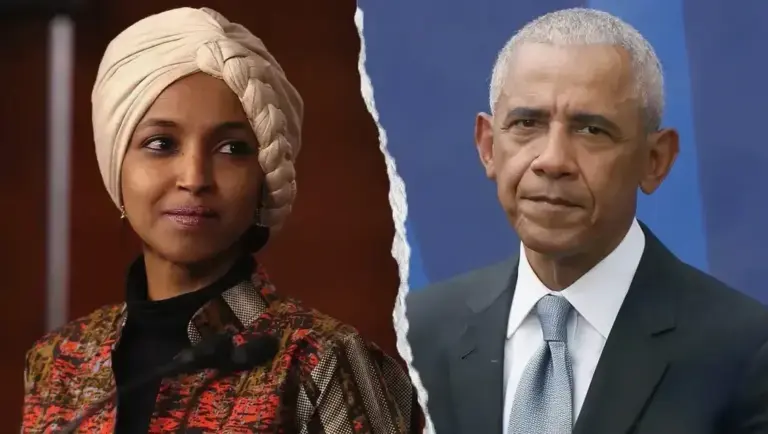
Former President Barack Obama sparked an online firestorm on Sunday after posting his support for Rep. Ilhan Omar, D-Minn., amid multiple federal investigations into her immigration status and finances.

“It is a basic principle of American democracy that the government can’t selectively target individuals simply because of their political beliefs or what they say,” Obama wrote. “But that’s exactly what the Trump Administration is doing to Congresswoman Ilhan Omar of Minnesota.”

The former president went on to explain in the lengthy post that the Omar situation is “appalling” and suggested the reason she is facing an investigation is that she is a critic of the Trump administration.

“Think about that,” Obama said. “The full weight of the federal government is being brought down on a law-abiding elected official because she has dared to criticize the president.”

ILHAN OMAR’S TURBULENT WEEK EXPLAINED: THE DUELING PROBES THAT THREW THE SOMALI-BORN PROGRESSIVE INTO CHAOS

Obama added, “The fact that any president, or any administration, is willing to engage in such transparent efforts to intimidate someone should outrage all Americans, regardless of how they feel about Congresswoman Omar’s political views.”

Obama’s post, viewed over 5 million times, was quickly blasted by conservatives, many of whom pointed to the political targeting that occurred during his administration, including the Internal Revenue Service (IRS) going after Tea Party groups and the Crossfire Hurricane investigation into then-candidate Donald Trump’s presidential campaign.

“This cannot be real,” conservative commentator and former FBI Deputy Director Dan Bongino posted on X. “This petty tyrant lecturing us about ‘American democracy’ is like being lectured by a screaming five-year-old about self-control. Sit down Mr. President, everyone knows who you really are.”

“Think about the utter gall of the man behind the Russian collusion hoax, and who, along with his henchmen and hitmen, helped bloom a million poisonous ‘probes’ and persecutions whereby the ‘full weight of the federal government’ was ‘brought down’ on the ENTIRETY OF THE OPPOSING POLITICAL PARTY,” Federalist senior contributor Benjamin Weingarten posted on X.

“Say, didn’t this guy bug Trump Tower?” Center of the American Experiment policy fellow Bill Glahn posted on X.

MIKE DAVIS: JUSTICE DEPARTMENT MUST BE WRAPPING UP REP. ILHAN OMAR’S CHRISTMAS PRESENT

“The original community organizer rushes to the defense of one of his protégés,” conservative commentator Dinesh D’Souza posted on X. “Both of them are part of a deliberate scheme to ‘decolonize’ America by uprooting its western and Christian roots.”

“This is the same guy whose IRS went after Tea Party groups,” conservative influencer Gunther Eagleman posted on X. “Spare me the lecture, Barack.”

“No one investigated more perceived ‘enemies’ of the administration than Obama did,” political commentator Matthew Brodsky posted on X. “Of course, if you support Abdul El Sayed, you’d support Ilhan Omar. Obama was the original booster of the Muslim Brotherhood (and the regime in Iran) in US politics. We continue to deal with those repercussions.”

The White House also pushed back on Obama’s comments in a statement to Fox News Digital on Sunday.

“Unlike Joe Biden, President Trump has not weaponized the Department of Justice against his political foes,” White House spokeswoman Lauren Bis said. “The Department is focused on restoring law and order and keeping Americans safe.”

DEMOCRATS’ FURY OVER ILHAN OMAR RAID DRAWS STINGING GOP REMINDER ABOUT RAID FROM THE PAST: ‘SET THE PRECEDENT’

Trump has denied involvement in the investigation, previously telling reporters that the matter was up to the Justice Department.

Fox News Digital reached out to Obama’s office for comment.

Sources previously told Fox News Digital that investigators are examining whether Omar or her father committed fraud on immigration paperwork when she became a U.S. citizen decades ago. Fox News Digital was first to report that Omar’s Washington, D.C., home was raided by federal agents last week.

Additionally, Jeanine Pirro, U.S. attorney for the District of Washington, D.C., announced her office was investigating Omar’s financial disclosures, which had previously been subject to public scrutiny and congressional oversight, but never by authorities.

Omar has defended herself on social media in recent days.

“This raid by Trump’s DHS is an outrageous abuse of power and an unprecedented escalation in the weaponization of federal law enforcement to target political enemies,” Omar’s office said in a statement.

“For a decade, Donald Trump has relentlessly targeted Congresswoman Ilhan Omar with inflammatory rhetoric, repeatedly putting a target on her back. Now, those attacks have escalated to a pointless federal raid. The Congresswoman has done nothing wrong. No president should be able to use the power of the federal government to intimidate his political enemies.”

Fox News Digital’s Stephen Sorace and Peter D’Abrosca contributed to this report

This post appeared first on https://www.foxnews.com

France is confronting a major intelligence failure after authorities badly underestimated the scale of nationwide protests that descended into riots and looting.

The days of chaos have prompted French President Emmanuel Macron to order a security review as senior officials acknowledged police “lost control” in several major cities and senior government officials have offered to resign after they failed to predict the level of pandemonium.

Some 550,000 people joined 110 marches nationwide Saturday, according to France’s Interior Ministry, far exceeding an intelligence estimate of roughly 200,000 demonstrators. Organizers put turnout even higher, at 800,000.

Cars burned in the streets, more than 1,500 stores were reportedly ransacked or destroyed and public buildings were attacked across the country. In Limoges, rioters broke into and torched a 19th-century city hall that had survived both world wars, causing its roof to collapse.

By Monday, the Louvre remained closed as student protesters blocked its entrances, extending the disruption into another day.

TOP TOURIST DESTINATION IN THE WORLD SHUTS DOWN AMID VIOLENT PROTESTS

The unrest overwhelmed some 60,000 police, gendarmes and other security personnel deployed nationwide. Nearly 1,000 law enforcement officers and firefighters were injured, at least 2,400 people were arrested and French authorities estimate some 3,000 businesses sustained damage.

As crowds swelled, police were stretched across multiple flashpoints while groups of masked rioters smashed storefronts, set fires and clashed with security forces. In some cities, authorities were unable to keep looters from moving through commercial districts even as officers struggled to contain the larger demonstrations.

By Monday, Interior Minister Laurent Nuñez was acknowledging what shopkeepers and residents had already witnessed.

FRENCH NEWSPAPER RIPS MACRON AFTER RIOTS ERUPT ACROSS FRANCE: ‘INDELIBLE STAIN’

“Yes, Saturday, in certain large cities, we lost control,” Nuñez said.

He acknowledged a “lack of anticipation” ahead of the demonstrations and said authorities had underestimated not only the number of protesters but the violent groups that would exploit the unrest.

Nuñez offered his resignation to Macron. The president refused it and instead ordered a review of what the Élysée described as failures in planning and intelligence, demanding an accounting of how authorities had been caught so badly off guard.

Justice Minister Gérald Darmanin was even more direct.

“We unquestionably failed,” Darmanin said, pointing specifically to intelligence and France’s difficulty tracking and confronting the ultra-left.

The failure is particularly striking because the unrest did not emerge without warning.

The warning signs had been building for weeks.

The unrest began in September with high school students protesting teacher shortages, deteriorating school buildings and other conditions in classrooms around Paris. The movement quickly spread nationwide, drawing teachers, labor unions and other groups frustrated by rising living costs and declining public services.

Violence had already begun creeping into the demonstrations. Students set fires at schools, cars were torched and protesters clashed with riot police as authorities made thousands of arrests.

French intelligence services were watching the shift.

At an Oct. 1 government crisis meeting, intelligence officials assessed that the movement had reached a “tipping point” from school blockades toward urban violence and attributed its origins to the hard-left France Unbowed party and its allies, Reuters reported.

Yet little more than two weeks later, authorities were caught off guard by the scale of what hit the streets.

Saturday brought together students, trade unionists, Yellow Vest veterans and other groups under a loose “convergence of struggles.” Hundreds of thousands marched peacefully, while smaller groups of masked rioters broke away, looting stores, setting fires and attacking police.

The violence has since ignited a separate political fight over immigration.

WHERE’S MACRON? FRENCH LEADER BLASTED FOR ATTENDING CONCERT AS RIOTS ESCALATED

President Donald Trump blamed the destruction on France’s migration policies, writing Monday that “the migrants have taken over France” and urging the country to close its borders. Other right-wing political leaders across Europe have made similar arguments.

French authorities, however, have not blamed immigrants for the violence. Macron and his government have instead accused ultra-left militants and criminals of exploiting demonstrations rooted largely in education, living costs and public services.

The unrest is nevertheless intensifying a political battle already reshaping France ahead of its 2027 presidential election, giving the right fresh ammunition on immigration, crime and the government’s ability to maintain public order.

Marine Le Pen’s National Rally has seized on the violence to argue that Macron’s government has lost control of the country, while other figures on the French right have pushed for tougher policing and immigration restrictions.

The images of burning buildings, ransacked stores and overwhelmed police are landing at a particularly vulnerable moment for France’s political establishment. Macron cannot seek a third consecutive term in 2027, leaving an open presidential contest as voters increasingly identify immigration, security and purchasing power among the country’s major political concerns.

The riots have also widened a debate over whether the breakdown reflects a failure of policing, deeper economic and social grievances or years of government policy on immigration and integration — competing explanations that are likely to shape France’s political fight long after the streets are cleared.

For Macron’s government, the immediate question is more concrete: how security services that were already tracking an increasingly volatile protest movement still failed to anticipate the scale of Saturday’s violence.