Archive

October 27, 2026

Browsing

For decades, the white picket fence served as the ultimate symbol of success in America. Home ownership was more than just a place to live; it was a rite of passage and the primary vehicle for building generational wealth. However, a quiet but significant shift is taking place as younger generations begin to view real estate not as an attainable goal, but as a financial barrier. Faced with skyrocketing property prices and prohibitive mortgage rates, many young adults are trading the idea of a deed for a diversified portfolio.

The transition toward digital assets and stock market investments reflects a broader change in how millennials and Gen Z perceive stability. Rather than tying their entire net worth to a single physical asset that requires constant maintenance and high taxes, these investors are opting for liquidity and flexibility. Trading apps have democratized access to Wall Street, making it possible to start investing with small sums that would never cover even a fraction of a down payment on a starter home in most major cities.

This pivot isn’t necessarily born out of a lack of desire for residency, but rather from cold mathematical reality. With housing costs outpacing wage growth across much of the country, renting has become a strategic choice rather than a failure of planning. By channeling those potential equity payments into index funds or individual stocks, young professionals are attempting to build their own version of security through compounding interest instead of home appreciation.

As this trend continues, the very definition of the American Dream is evolving from something you can walk through to something you can track on a screen. While older generations may see this move away from brick-and-mortar investment as risky or transient, today’s youth see it as an adaptation to an economy where mobility and diversification outweigh the prestige of owning land. The dream hasn’t disappeared; it has simply migrated from the suburbs to the exchange.

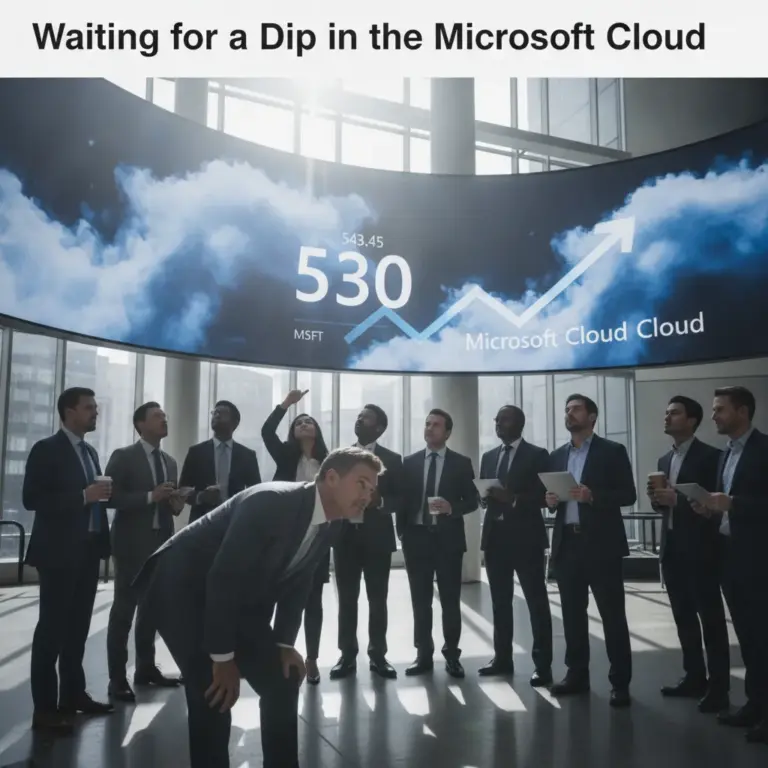
Microsoft continues to hover near record highs, trading around 530 dollars after reaching a peak of 543.45 dollars recently. While the tech giant coming off an impressive fiscal year with adjusted earnings jumping 22 percent, current valuations suggest that much of this success is already baked into the stock price. Investors are currently paying roughly 31 times earnings, a steep premium compared to the broader S&P 500 average of about 26.

Despite the strong historical numbers, there are signs that momentum may be shifting. Management forecasts indicate a gradual cooling of growth, with operating income expected to rise by only 14 to 17 percent in the upcoming quarter, down from previous rates exceeding 20 percent. Even more concerning is the massive surge in capital expenditures. To keep its AI ambitions alive, Microsoft plans to spend approximately 175 billion dollars in calendar 2026, causing free cash flow to dip as infrastructure costs climb.

Given these headwinds, waiting for a correction seems like the prudent move rather than buying at current peaks. A target entry point of around 465 dollars represents a fairer valuation, aligning Microsoft’s price-to-earnings ratio with the wider market while accounting for slowing growth trajectories. This figure is based on applying a more conservative multiple of 27 to last year’s adjusted earnings per share of 17.28 dollars.

All eyes now turn to the October 28 earnings report, which could either validate this cautious approach or shift the goalposts entirely. Stronger than expected results could push the viable buy price upward toward 483 dollars, but any disappointment regarding Azure’s cloud growth or further drops in free cash flow would make a deeper discount even more necessary. For now, unless shares slide significantly below their recent heights, it feels too risky to jump in at such an expensive vantage point.

Elon Musk has confirmed that both Tesla and SpaceX have established committees of independent directors to explore a potential combination of the two aerospace and automotive giants. Because Musk serves as the chief executive of both firms, he remains sidelined from the negotiations to avoid conflicts of interest. While the prospect of merging an electric vehicle pioneer with a space exploration leader sounds like a futuristic dream, a closer look at the balance sheets suggests that Tesla investors should be cautious about betting on such a deal to drive their stock price higher.

The financial trajectories of the two companies have diverged sharply in recent months. SpaceX is currently experiencing explosive growth, reporting a massive jump in third quarter revenue to 14.6 billion dollars and swinging toward profitability. Meanwhile, Tesla has hit a rough patch, seeing its operating income plummet by 56 percent compared to last year while revenues remained flat. This creates a strange dynamic where Tesla shareholders would essentially be trading into a company that grows much faster but operates with vastly different financial rules.

One of the most concerning aspects for prospective investors is the sheer amount of capital SpaceX consumes. While Tesla manages to produce positive free cash flow, SpaceX has spent nearly 50 billion dollars on equipment and AI initiatives in just nine months, leading to a staggering deficit in cash flow. If the companies merged at current market valuations, Tesla shareholders would likely hold about 43 percent of the new entity. Instead of owning a piece of a steady cash generator, they would suddenly be responsible for a significant portion of SpaceX’s multi billion dollar annual spending spree.

Ultimately, the valuation math does not favor those buying Tesla stock specifically in hopes of this merger. With Tesla already trading at high multiples relative to its earnings, blending it with SpaceX wouldn’t necessarily make the investment cheaper or more attractive unless the terms were heavily skewed in Tesla’s favor. Until actual terms are reached and approved by shareholders, treating this potential merger as a catalyst for growth is a gamble that ignores some very expensive realities hidden in the ledger books.

Wall Street saw a generally positive start to the week as the major indices climbed higher during Monday trading. The Dow Jones Industrial Average edged up by 146 points, representing a modest gain of zero point three percent, while the Nasdaq emerged as the top performer among the big three benchmarks. Much of the early momentum was fueled by excitement surrounding artificial intelligence developments, particularly following news that Anthropic has officially filed for an initial public offering.

The tech sector experienced specific pockets of volatility driven by high profile personalities and corporate rumors. Several neocloud companies saw their shares rally after Elon Musk shared his latest insights regarding the industry, sparking renewed investor interest in cloud infrastructure plays. This upward trend extended to established giants like Nvidia and Cisco Systems, which helped anchor the gains seen across the industrial average.

In contrast, DoorDash faced a difficult session as its stock price took a significant dive. The plunge came in the wake of reports concerning potential acquisitions, leaving investors uneasy about the company’s immediate trajectory. Despite this localized sell off, the broader market sentiment remained optimistic as traders balanced individual company shocks against a wider appetite for growth in the AI landscape.

Netflix is finding itself in a precarious position after its most recent quarterly results failed to spark a rally for its struggling shares. Despite reporting revenue of 12.9 billion dollars and beating analysts’ expectations for earnings per share, the market reacted coldly to the news. The primary culprit seems to be the company’s cautious guidance for the rest of the year, with projected revenues landing at the lower end of previous estimates. For many investors, these numbers simply weren’t impressive enough to erase long standing worries about whether the streaming leader can maintain its aggressive growth trajectory.

The fallout from this reports has pushed the stock down nearly 30 percent since January, sending valuations back to levels not seen in over two years. This slide follows a broader downward trend where the company has shed more than 40 percent of its market value over the last twelve months. However, this steep decline has created a curious situation for those watching from the sidelines, as Netflix now looks surprisingly affordable compared to much of the wider market. With a forward price to earnings ratio sitting at 17, it is currently trading at a discount relative to the average S&P 500 stock.

While there isn’t an obvious immediate trigger to reverse the current slump, some financial observers argue that this dip represents a prime entry point. Even with slowing momentum, Netflix continues to grow in double digits and maintains strong fundamental health across its global operations. For patient investors who are willing to overlook short term volatility and wait for consumer engagement metrics to stabilize, paying such a low multiple for a dominant industry player could eventually lead to significant gains as the valuation corrects upward.

The future of the Eagle Gold Mine in the Yukon looks brighter following an agreement by Singapore based Boroo to acquire Victoria Gold Corp for up to 140 million Canadian dollars. This move comes after a tumultuous year for the site, which saw production grind to a halt in June 2024 due to a heap leach failure that led to significant environmental contamination. The disaster forced Victoria Gold into receivership and resulted in its removal from the Toronto Stock Exchange this past September.

Boroo intends to breathe new life into the operation with a massive investment package exceeding 1.5 billion Canadian dollars. Through its subsidiary Gatsuurt Mining Inc, the company plans to dedicate roughly 800 million dollars toward critical cleanup efforts, water treatment, and infrastructure repairs between 2027 and 2029. An additional 600 million dollars is earmarked for general operations throughout the mine’s initial lifespan, signaling a comprehensive commitment to both ecological restoration and industrial recovery.

CEO Dulguun Erdenebaatar emphasized that rebuilding trust is just as important as repairing machinery. He stated that sustainable success depends on genuine partnerships with the Government of Yukon, local communities, and the First Nation of Na Cho Nyak Dun. By adhering to the International Cyanide Management Code, Boroo hopes to transform the site back into a safe and profitable venture while resolving the legacy of contamination left behind by previous management.

The transition is currently awaiting several hurdles, including approval from the Ontario Superior Court of Justice and regulatory clearances under the Competition Act. If approved by PwC acting as receiver in early December, the deal could close by the end of next year. For the Yukon government, this acquisition represents a major financial relief, as it promises to repay a 220 million dollar remediation loan and eliminate millions in yearly cleanup costs while restoring hundreds of local jobs.

Bannerman Energy has officially given the green light for full scale construction at its Etango uranium project in Namibia, setting a target date of 2028 for the first delivery of yellowcake. This milestone comes following a final investment decision regarding the Etango 8 design, cementing a strategic partnership between Bannerman and CNNC Overseas Limited. While Bannerman maintains a majority fifty five percent share in the joint venture, their partner provides critical financial weight and technical expertise to ensure the site becomes one of the world’s newest major greenfield uranium producers.

The financial foundation for the project appears secure, with pre production capital costs estimated at roughly 353 million dollars. Much of this burden has already been addressed through early works expenditures totaling over sixty million dollars, while existing cash reserves cover the remaining balance. According to Chief Executive Gavin Chamberlain, moving forward on a debt free basis combined with a tier one strategic partner positions Etango for success. He noted that initial bulk earthworks are largely complete and have remained strictly on budget and schedule.

Operational plans indicate that Etango will produce an average of 3.5 million pounds of uranium concentrate annually. Under the current agreement, CNOL will purchase sixty percent of that output on market based terms, leaving Bannerman to handle the marketing for the remaining forty percent independently. This arrangement leverages CNNC’s significant footprint in Namibia, where they already hold substantial interests in both the Rossing and Langer Heinrich mines.

Looking beyond the immediate build phase, there is already talk of future growth. Once the mine reaches steady state production, the partners intend to evaluate potential expansions to increase capacity further. For now, however, all focus remains on transforming the Namibian landscape into a productive hub for carbon free energy fuel over the next four years.

Institutional investors are starting to feel more optimistic about the future of U.S. cannabis stocks, but that positivity has not yet translated into actual checks being signed. According to a recent sentiment survey conducted by ATB Cormark Capital Markets, nearly half of institutional investors reported feeling more bullish over the last six months. However, roughly two thirds of those surveyed admitted they haven’t increased their positions in the sector. This disconnect highlights a frustrating reality for the industry: while the mood is improving, the structural barriers preventing massive capital inflows remain firmly in place.

The primary roadblock is the current federal classification of recreational cannabis as a Schedule I substance. Because it remains illegally categorized at the federal level, most cannabis companies are barred from listing on major U.S. stock exchanges, forcing them to trade on secondary markets in Canada. For large investment funds, these venues lack the necessary liquidity to handle high volumes of trades efficiently. Analyst Frederico Gomes notes that until regulatory reform occurs through federal rescheduling, there is little incentive or ability for big institutions to move significant money into the space regardless of how optimistic they may feel.

Beyond exchange access, the industry is fighting a grueling battle with the Internal Revenue Service under section 280E of the tax code. This rule prevents businesses dealing in Schedule I substances from deducting standard operating expenses like rent and payroll, creating a crushing tax burden that erodes profit margins. Companies are pinning their hopes on rescheduling to eliminate this penalty and perhaps even secure retroactive relief dating back to 2023. Without this shift, firms continue to carry heavy liabilities that stifle growth and discourage risk-taking among cautious fund managers.

Despite these hurdles, many operators have spent months preparing for a potential green light by restructuring their corporate homes and consolidating shares to meet Nasdaq or NYSE requirements. While Trulieve managed to carve out a path onto the New York Stock Exchange via its medical business, most others must wait for broader legislative changes. Once rescheduled, experts believe it will trigger a wave of mergers and acquisitions and allow highly leveraged companies to finally pay down debt using improved valuations and freed up cash flow. For now, however, investors find themselves in a holding pattern as court dates slip and bureaucratic delays extend an already long wait for legitimacy.

Operations have slowed down at the Highland Valley copper mine in British Columbia as workers represented by United Steelworkers Local 7619 officially walked off the job this past Saturday. The labor disruption follows the expiration of a five year collective agreement at the end of September, leaving more than a thousand employees without a current contract. Teck Resources confirmed that while the site remains operational, it is currently running at a reduced capacity until a resolution can be reached.

The path to the picket line was paved with significant tension over the last few weeks. In a striking show of solidarity, every single one of the 944 union members who voted authorized strike action, leading to a formal seventy two hour notice shortly thereafter. Union leadership claims they have exhausted all possible avenues to avoid this conflict, arguing that Teck’s latest contract offers are insufficient given the company’s recent record profits. As a result, nearly thirteen hundred members have been called to gather at the mine gates to begin organized picketing activities.

For its part, Teck Resources maintains that it is still committed to reaching a fair and responsible deal that ensures the long term viability of both the workforce and the local community. Company spokesperson Dale Steeves emphasized that securing a new agreement remains a top priority. To manage the immediate fallout, Teck has implemented contingency plans designed specifically to keep safety protocols and environmental management systems functioning properly despite the shortage of staff.

Because Highland Valley is one of Canada’s primary sources of copper, industry analysts are keeping a close eye on how long these negotiations drag on. While some employee benefits like life insurance will remain active through reimbursement agreements between the union and the company, others have been suspended for those on strike. Ultimately, the total hit to Teck’s quarterly copper output will hinge entirely on whether both sides can find common ground quickly or if this stalemate persists into the winter months.

Rep. Ilhan Omar, D-Minn., posted a serene lakeside video Friday set to a Somali hip-hop song whose lyrics boast of enemies scattering and being “crushed,” days after federal agents searched her Washington home as part of a criminal investigation.

“Less scrolling, more strolling. Enjoying our beautiful Minnesota lakes,” the embattled congresswoman wrote on X in a post made at the end of last week.

She attached a video of herself and her husband, Tim Mynett, walking on a dock over a lake with vibrant fall foliage in the background. The pair posed, smiled and appeared to chat as they serenely strolled across the dock, looking fondly at each other as the lawmaker running for reelection held a coffee. It ended with a montage of images from their walk.

But a loud Somali hip-hop song accompanying the video told a much different story.

ILHAN OMAR DOUBLES DOWN ON ‘REAL NAME’ WHEN CONFRONTED AT MALL OF SOMALIA

“Let me reveal who I really am. No enemy dares threaten me, wherever I step, they scatter,” the lyrics to the song say in Somali, according to a translation obtained by Fox News Digital. “They flee and stay far away. I have always been the source of their distress.”

The song, “Nimaan Ciilayba Icaaya,” is by Ilkacase Qays, whose real name is Muse Abdikadir. His website describes him as a “U.S. based Somali singer, rapper and activist.” The duet-style track features Somali singer Hodan Abdirahman.

A cultural analysis of the song says it is “a powerful example of Somali lyrical poetry built around pride, bravery, personal dignity and unwavering trust in Allah.”

“A fool’s words carry no weight,” the lyrics say. “Those I have angered now insult me. If the just one had felt anger on my behalf, would he not have crushed the enemy underfoot? With the strength the almighty has given me, If I draw on it late in the afternoon, by evening, I will have taught you a lesson.”

FEDERAL AGENTS RAID ILHAN OMAR’S DC HOME AMID IMMIGRATION FRAUD INVESTIGATION

The analysis describes the artist as using “exaggerated imagery to ridicule his opponents, portraying them as people who would lose sleep, suffer humiliation, and even seek supernatural assistance out of desperation.”

“You go without sleep, overcome with anguish, weeping in spite,” the lyrics continued. “You howl like a demon through the night, because you cannot match me! Swallow your anger and choke on it if the just one had felt anger on my behalf.”

Omar, who sources say is actually named Ilhan Nur Said Elmi, reemerged in Minnesota on Friday. It came after nearly two weeks out of the public eye following an Oct. 12, 2026, raid on her Washington, D.C., home, conducted by Homeland Security Investigations (HSI) agents. 

Members of the media followed her intently as she cast an early ballot alongside state Attorney General Keith Ellison at a polling place in Minneapolis on Friday. The pair then appeared at the Karmel Mall of Somalia in Minneapolis, where they enjoyed lunch among members of the Somali community and posed for photographs.

HOMAN SAYS ILHAN OMAR COULD BE STRIPPED OF NATURALIZATION, DEPORTED IF IMMIGRATION FRAUD IS PROVEN

Later in the day, Omar posted the video to X. It is unclear when it was filmed.

The Somali-born Minnesota lawmaker restricted who can respond directly to her social media post, with the only publicly facing comment being from ousted former U.S. House “Squad” member Cori Bush, who wrote: “We love this.”

Omar is being investigated for potential fraud related to immigration paperwork filled out by her or her father when she was becoming a United States citizen. HSI is the main investigatory agency for the Department of Homeland Security.

During the raid, Omar’s passport and cellphone were confiscated by federal agents.

Her sister, Sahra Noor, was interviewed by federal investigators in the wake of the raid. Federal agents have also obtained Omar’s DNA, Fox News reported.

If fraud is proven, Omar could be denaturalized, border czar Tom Homan said last week.

This post appeared first on https://www.foxnews.com