Archive

October 21, 2026

Browsing

Investors staring at Rivian’s current valuation are facing a classic Wall Street dilemma: is the stock finally a bargain or is it a falling knife. Recent performance suggests the latter for many, as shares tumbled over thirty percent in the three months leading up to mid October, leaving the company trading at its lowest level in a year. While the broader market climbed, Rivian drifted forty five percent below its previous peak, forcing potential buyers to decide if they believe in the long term promise of the upcoming R2 SUV.

The financial picture remains complicated because traditional metrics like price to earnings ratios are useless for a company that has spent five consecutive quarters losing money. Instead, eyes are on gross margins. There was some optimism recently when Rivian shifted toward a positive gross profit of seven and a half percent over the year ending in June 2026. However, looking closer reveals a quirk in the books. That profit didn’t actually come from selling trucks and SUVs but from software and services, bolstered significantly by a joint venture with Volkswagen. The core automotive business actually lost thirty six million dollars during the second quarter.

Looking ahead to the third quarter results due around October 29, there are reasons for both hope and hesitation. Delivery numbers have hit records and management has nudged their full year guidance upward toward seventy thousand vehicles. But growth doesn’t always mean profitability. Management has already warned that launching new vehicles adds complexity that eats into profits, and several lucrative regulatory credits that helped earlier this year will be missing from the second half of the calendar.

For those tempted to jump back in, history warns of extreme volatility following earnings calls. In recent cycles, Rivian has seen massive double digit swings in either direction within just two days of reporting figures. Whether today represents an ideal entry point depends entirely on whether you think the car manufacturing side can stop bleeding cash soon enough to justify the risk of ignoring more stable index funds.

Investors reacted with immediate enthusiasm on Tuesday as reports emerged that Legendary Entertainment has reignited its pursuit of Lionsgate. Shares of the studio surged by more than 15 percent following a Bloomberg report indicating that Legendary has submitted a fresh takeover bid valuing the company at roughly 3.5 billion dollars, a figure that accounts for nearly two billion dollars in existing debt. While representatives from both companies have remained tight lipped and declined to comment, the move signals a strategic push by Legendary to gain independence through its own distribution network.

The potential merger would bring together some of cinema’s most recognizable brands under one roof. Legendary, the powerhouse behind the Dune series and the upcoming Minecraft movie, would combine its production muscle with Lionsgate’s massive catalog, which includes heavy hitters like John Wick and The Hunger Games. This interest comes at a pivotal moment for Lionsgate Studios, which became a separately traded entity in May 2025 after splitting off from Starz. The studio currently boasts a library of over 20,000 titles and recently celebrated a historic win with the Michael Jackson biopic, which became the first biopic to cross the one billion dollar mark at the global box office.

Despite recent wins in the theater, Lionsgate continues to navigate a complex financial landscape. Recent data shows a significant jump in overall revenue alongside an improved quarterly net loss, though these gains were partially offset by declines within its television division. With substantial debt still on the books, a buyout could provide much needed stability while offering Legendary the infrastructure it needs to stop relying on outside partners to get its films into theaters.

Legendary enters these negotiations from a position of relative strength after buying out Dalian Wanda Group’s stake last year, leaving itself and Apollo Global Management in control of the business. While other industry players like Banijay and Mediawan have previously shown curiosity about acquiring Lionsgate, none have moved forward with formal bids until now. Market observers will be watching closely as Lionsgate prepares to release its latest fiscal results this coming Thursday evening, which may provide further clues on whether this high stakes gamble will finally result in a sale.

Market strategists are beginning to pivot their portfolios as the artificial intelligence boom reaches a fever pitch, opting to secure realized gains rather than riding the wave indefinitely. By selling off portions of high flying AI stocks, investors are effectively locking in substantial profits while avoiding the potential volatility that often follows periods of parabolic growth. This move signals a transition toward a more balanced approach, treating the tech surge as a successful harvest rather than a permanent trajectory.

At the same time, caution is mounting within the financial sector, leading many to reduce their exposure to banks heavily tied to commercial credit markets. The decision to trim these positions reflects growing anxiety over loan defaults and the lingering stress of higher interest rates on corporate borrowers. As credit risks become more pronounced, shifting capital away from exposed lenders serves as a defensive hedge against possible instability in the banking system.

This dual strategy highlights a broader trend of risk management in today’s unpredictable economic climate. By capturing wins in the semiconductor and software spaces while distancing themselves from fragile credit lines, traders are attempting to protect their wealth without completely exiting the market. It is a calculated dance between greed and fear, prioritizing liquidity and safety over speculative long term holds during a period of structural shift.

For several seasons now, the real drama surrounding Netflix hasn’t been on the screen, but in its financial reports. Between corporate layoffs, executive turnover, and a stock price that has plummeted nearly fifty percent from its peak, investors have grown accustomed to a cycle of quarterly disappointments. However, as the streaming giant prepares to release its latest earnings figures, there are signs that the market is finally ready to stop rooting against the company.

Options traders are placing significant bets that the downward spiral is reaching its conclusion. Current pricing suggests a nine percent swing following the announcement, marking the highest expected volatility since late 2022. While previous quarters saw cautious hesitation, current activity shows a distinct shift toward optimism. Call options are being snapped up at a rate far outpacing put options, signaling that many believe the worst is behind them.

The level of conviction among some big players is particularly striking. One massive trade involved selling millions of dollars in put options right at the money, essentially acting as a high stakes vote of confidence in the stock’s stability. Even bolder speculators are buying deep out of the money calls that would require a twenty percent surge by Friday just to break even. Whether these gambles pay off remains to be seen, but for once, traders seem convinced that Netflix is due for a comeback story.

Elon Musk has sparked a wave of excitement with his announcement that he intends to give every child in America a share of SpaceX next year. While the gesture appears to be a sweeping act of philanthropy, indications suggest these shares will be distributed via Trump Accounts, also known as 530A accounts. These government sponsored investment vehicles have already seen massive adoption, reaching roughly 70 million enrollments thanks to aggressive auto enrollment efforts designed to jumpstart generational wealth for minors.

However, financial experts and legal scholars warn that this windfall comes with significant strings attached. Under current Treasury Department guidelines, stock donated to these accounts is subject to strict holding requirements. In most cases, families are prohibited from selling the gifted shares for five years, or until the child reaches age 17. Crucially, these restrictions remain in place even if the company faces severe financial turmoil, leaving parents and children unable to liquidate their holdings during a market crash or corporate crisis.

Critics argue that these rules shift an unusual amount of power toward the donor rather than the beneficiary. Former IRS counsel Carolyn Schenck noted that while traditional charitable gifts usually leave final authority with a trustee, the Trump Account framework allows the donor to dictate the terms of the gift. Furthermore, if shares are sold prematurely, trustees are required to repurchase the exact same class of stock as quickly as possible, potentially exposing beneficiaries to further losses if prices spike before those shares can be replaced.

From a strategic standpoint, these restrictive rules provide a safety net for billionaires like Musk. By preventing mass liquidation over a five year window, the regulations ensure that millions of new shareholders cannot simultaneously dump their stocks and drive down the company’s overall valuation. While Treasury officials maintain that the goal is to foster long term stability and growth for low income families, skeptics see it as a mechanism that protects corporate interests while offering citizens a level of ownership they cannot actually control.

The dream of a truly borderless financial system is moving closer to reality as industry leaders look toward tokenization to link international markets. Gabe Otte of Dinari believes that the ability to trade assets like Korean listed stocks through partnerships with entities such as Kakao Pay Securities represents a significant shift in how investors interact with global equities. According to Otte, the primary obstacle standing in the way of this evolution is not a lack of technical capability but rather a complex web of regulatory requirements.

He compares the current transition to the historical move from physical paper certificates to electronic shares, noting that while the medium changes, the underlying legal obligations remain constant. To solve this, Dinari is working to turn home market tokenized shares into fully compliant digital assets. By treating this challenge as a software problem rather than a complete structural overhaul, they hope to strip away the friction that typically plagues cross border trading and create a landscape defined by unified liquidity and transparent pricing.

Looking beyond simple stock trades, Otte envisions an infrastructure capable of supporting various real world assets including commodities and other securities. He suggests that just as stablecoins found widespread adoption by solving specific pain points, tokenized securities will likely follow suit because they offer lower costs and faster settlement times by removing unnecessary intermediaries. The goal is to move past the era of novelty tokens and achieve genuine market level utility on a global scale.

However, reaching this milestone requires deep coordination between local institutions and government regulators worldwide. For tokenization to be effective, it cannot exist as an isolated experiment on the fringes of finance; instead, it must be woven seamlessly into existing compliant market structures. Only then will the technology fulfill its promise of opening up global markets to everyone regardless of where they are located geographically.

Investors are entering the final stretch of 2026 gripped by a sense of profound uncertainty, mirroring the instability seen earlier this spring. According to CNN’s Fear and Greed Index, market sentiment plummeted to 18 on October 16, signaling a state of extreme fear. This sharp decline follows a volatile week where several macroeconomic pressures collided, dragging the index down from a relatively stable 46 just seven days prior.

Much of the current panic stems from a cooling enthusiasm for artificial intelligence. After years of unchecked growth, shareholders are beginning to voice concerns over whether actual AI revenues can justify the massive debts incurred to fund sprawling data center expansions. These doubts have hit chipmakers and software firms particularly hard, coinciding with a resurgence in energy costs as disruptions near the Strait of Hormuz pushed oil prices back above 100 dollars a barrel. Adding fuel to the fire, fresh inflation data suggests that the Federal Reserve may be forced to implement further interest rate hikes following their initial tightening in September.

This atmosphere marks a stark departure from the euphoria of 2025, creating a year defined almost entirely by apprehension. Throughout most of 2026, the index has hovered at an average of roughly 43, failing to reach any levels of extreme greed throughout its entire run. The psychological weight has been heavy since March, when geopolitical conflicts involving Iran sparked a similar plunge into extreme fear and sent major indices like the Nasdaq into correction territory.

While tools like the Fear and Greed Index serve as thermometers rather than crystal balls, veteran traders often view such extremes as contrarian signals. By aggregating metrics ranging from junk bond demand to safe haven shifts toward government bonds, the index provides a real time snapshot of investor psychology. For now, however, that snapshot reveals a market deeply worried about borrowing costs and global stability as it navigates an increasingly fragile economic landscape.

FLUSHING, N.Y. — Centers for Medicare and Medicaid Services Administrator Dr. Mehmet Oz confronted employees at two New York City senior care centers over suspected Medicaid fraud, challenging their billing practices as Fox News Digital got an exclusive look at the crackdown in action.

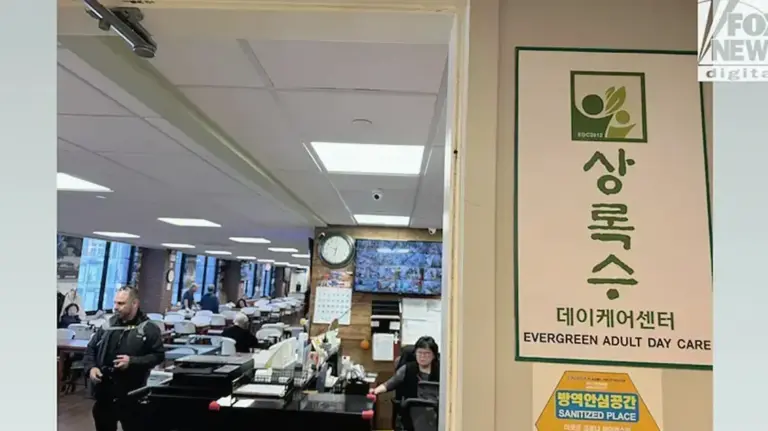
Oz, accompanied by senior federal health officials, delivered warning letters to Kent Senior Care and Evergreen Adult Day Care in Flushing, Queens, during a broader fraud crackdown that involved the FBI, the Department of Health and Human Services Office of Inspector General, the NYPD and other agencies.

The letters notified the facilities that their billing practices had raised concerns among federal authorities. The two visits by Oz were part of a broader crackdown in which CMS officials conducted more than 80 visits and delivered warning letters to providers across New York City on Tuesday.

Fox News Digital accompanied Oz as he pressed employees about questionable billing records and challenged their explanations for how taxpayer dollars were being spent.

DR. OZ NAMES 5 STATES IN FRAUD CRACKDOWN AS TRUMP ADMIN TARGETS MEDICAID ABUSE

“The whole experience was suspicious,” Oz told Fox News Digital in an exclusive interview following the visits.

Oz said federal authorities were conducting a broader crackdown that included arrests, search warrants and efforts to stop certain operators from billing Medicaid, although Fox News Digital did not independently witness those enforcement actions at either Queens facility.

Kent Senior Care declined comment during a phone call with Fox News Digital on Tuesday. Evergreen Adult Day Care did not immediately respond to Fox News Digital’s request for comment. 

Oz questions senior center director: ‘We don’t believe you’

The first stop came around 8:30 a.m. at Kent Senior Care, where Oz entered the facility and personally handed its director a letter from the federal government notifying the business that its billing practices were under scrutiny.

FBI LAUNCHES ‘MOST WANTED FRAUDSTERS’ LIST AS DOJ CHARGES OHIO DEFENDANTS IN $30M MEDICAID SCHEME FOR KIDS

“The bills are much higher than they should be,” Oz told the director. “The billing is for more people. It doesn’t look very crowded here.”

The director pushed back during the exchange, explaining that it was still early and additional seniors would arrive later in the morning, as Oz questioned whether the facility’s Medicaid billing records accurately reflected its actual attendance.

The occupancy of the space was 70 persons, according to an observe posted maximum occupancy sign on the wall.

“The bills we’re getting are as though it’s completely full all the time,” Oz said.

FBI ADDS 2 FUGITIVES TO ‘MOST WANTED FRAUDSTERS’ LIST AMID HISTORIC $6.5B HEALTHCARE TAKEDOWN: PATEL

The director maintained that the facility billed only for seniors who actually attended, and that it required participants to sign attendance sheets.

“You’re getting this letter from the U.S. Government because we don’t believe you,” he told the director.

During the exchange, Oz also questioned why the center’s billing records appeared to reflect seniors attending five days a week when the director acknowledged that many participants typically attended only two or three days.

The director insisted the facility billed for actual attendance and said some seniors attended more frequently than others.

The confrontation intensified when Oz and other federal officials raised questions about specialized transportation services billed for seniors using wheelchairs.

DR OZ SAYS 800 HOSPICE PROVIDERS SUSPENDED IN CALIFORNIA OVER ALLEGED $1B MEDICARE FRAUD SCHEME

“I don’t see any wheelchairs here,” Oz told the director.

Fox News Digital observed seniors inside the facility, including individuals using walking aids, but did not see anyone using a wheelchair during the visit.

Another official said billing records included charges for specialized wheelchair transportation, raising questions about whether the services had been provided and which company was responsible for submitting the charges.

The director said some seniors had mobility difficulties, including those recovering from strokes, and that the facility had wheelchairs available. He also said that workers could have copied information from previous files instead of properly updating the billing codes as it applied to wheelchair use.

“Probably he just copy and pasted,” the director said.

MEDICAID PROVIDER ALLEGEDLY BILLED $165K FOR DEAD PATIENT’S RIDES AMONG FRAUD EXPOSED IN EXPLOSIVE REPORT

During the visit, Oz walked over to several mahjong tables set up inside the facility, questioning whether taxpayer dollars were being properly spent on the recreational activities offered through the Medicaid-funded program.

“Should the American taxpayers be paying so folks can play mahjong?” Oz asked the director.

The director defended the activity, explaining that mahjong helps seniors exercise their fingers, socialize and improve their memory, particularly those experiencing cognitive difficulties.

“It’s free for them, not free for the taxpayers,” Oz responded. “Is that what our federal tax dollars for Medicaid is supposed to go to? Or is it life-saving heart surgery? Or, you know, new therapies for cancer?”

Oz raises concerns over seniors entering without signing in

Oz raised additional concerns about the facility’s attendance records after observing seniors entering without signing in, despite the director’s insistence that participants were required to document their attendance.

“People were just walking in there without signing anything,” Oz said. “And then after I showed up and he saw what we were doing with my team, he started collecting these documents to be signed.”

Oz said the apparent inconsistencies raised further questions about whether the facility’s attendance records accurately reflected the services being billed to Medicaid.

Fox News Digital also witnessed several seniors enter Kent Senior Care without immediately signing attendance sheets. Additional seniors who arrived later were instructed to sign in.

Social adult day care programs can provide eligible seniors with structured activities, supervision, meals and social support. Medicaid reimbursement depends on applicable program rules, individual eligibility and documentation of services provided.

TREASURY HAILS SUCCESS OF ANTI-FRAUD PROCESS THAT FLAGGED AND PREVENTED $99 MILLION IN PAYMENTS TO DEAD PEOPLE

At the second stop, Evergreen Adult Day Care, Oz confronted a floor manager over another set of billing discrepancies before examining the facility’s attendance records.

The manager told Oz that approximately 200 seniors attended the facility on Mondays, Wednesdays and Fridays, compared with about 150 on Tuesdays and Thursdays, although it was unclear whether those figures represented total daily attendance or the number of seniors present at one time.

But Oz questioned those numbers after walking through the facility and observing significantly fewer people.

“So I look at maybe 25 people in the whole space now,” Oz said.

The manager disputed that estimate, explaining that some seniors were participating in classes while others had left to shop, visit a pharmacy or attend medical appointments.

“The numbers don’t seem to add up,” Oz responded.

Oz also questioned the manager about wheelchair-related billing, asking how many participants used wheelchairs.

TRUMP’S WAR ON FRAUD EXPANDS AS TREASURY LAUNCHES NEW SITE WITH WHISTLEBLOWER INCENTIVES

The manager initially indicated that none did before acknowledging that a small number of seniors used them.

“But you said there weren’t any, were you?” Oz pressed.

He subsequently discussed the apparent discrepancy with other federal officials accompanying him.

“I’m struck by how few people are here as well,” Oz said. “This makes me wonder how they sustain these billing levels.”

The visit took another turn when Oz examined the facility’s attendance books, which he said contained “fraud.”

Fox News Digital observed sign-in sheets that appeared to contain names entered for Oct. 22, and Oct. 23, dates that had not yet occurred at the time of the visit.

The entries dated Oct. 22 and Oct. 23, both after the visit, raised questions about whether the facility was documenting attendance in advance, although Fox News Digital could not immediately establish whether the entries were completed attendance records or advance schedules.

Oz alleges organized crime ties to NYC Medicaid fraud

Oz said federal authorities believed organized criminal networks were exploiting the Medicaid-funded programs by offering seniors money to attend facilities and then billing the government for services that were not actually provided.

Oz alleged that individuals he described as being connected to the “Chinese mafia” were paying some seniors between $1,000 and $1,200 to participate in fraudulent billing arrangements, though the administrator did not identify a specific criminal organization or provide supporting evidence during the interview.

Oz said the federal government had identified significant spikes in billing across the industry and claimed that annual spending on the programs had approached $1 billion.

“We know from the billing here that there’s no way this business is running in the way that they claim to be running without something being wrong,” Oz told Fox News Digital.

“Is it an innocent mistake? A hundred times in a row, I don’t think so.”

Oz alleged that proceeds from fraudulent Medicaid billing schemes were being used to finance other criminal activities, including money laundering and human trafficking, although Fox News Digital had not independently verified those connections or established any such link to the two facilities visited.

“It’s really a clubhouse for crime,” Oz said while describing the alleged broader scheme.

He said fraud accelerated during the COVID-19 pandemic and criticized the previous administration for failing to address what he described as rapidly rising spending and suspicious billing.

New York Gov. Kathy Hochul acknowledged the crackdown on Tuesday, calling it part of a “massive effort to combat fraud and abuse” in Medicaid and confirming that state health officials had joined federal and state law enforcement in targeting suspected fraud at social adult day care programs.

While Oz personally delivered warning letters to the two Queens facilities, state, local and federal law enforcement officials were simultaneously conducting searches at other locations across New York City as part of the coordinated crackdown.

Specific details about the facilities targeted, individuals involved and evidence recovered were not immediately available as the investigations remained ongoing.

A winery co-owned by the husband of Rep. Ilhan Omar, D-Minn., was shuttered amid fraud claims, House Oversight Committee Chairman James Comer, R-Ky., said.

Comer said over the weekend that the winery had been selling empty barrels to investors under the guise of “wine to be aged.”

“I can tell you from our initial investigation of Omar and her financial disclosure form that there are multiple fronts where you could get a search warrant issued,” Comer told Trey Gowdy on Fox News’ “Sunday Night in America.”

“First of all, not only was there a huge discrepancy in the financial disclosure form, there was the winery that was the big base of her $25 million listing on her financial disclosure form. That winery has, according to the press, been shut down because of fraud.”

ILHAN OMAR’S EMBATTLED HUSBAND APPEARS AT SCENE OF HSI RAID IN MIDST OF CRIMINAL FRAUD INVESTIGATION

The winery, co-owned by the congresswoman’s husband, Tim Mynett, shut down in April this year amid congressional scrutiny over Omar’s finances.

His and his business partner’s lawyers told the Minnesota Reformer, “Any suggestion that Will or Tim deliberately defrauded investors or otherwise consciously conspired to rip people off would be false and defamatory.”

OMAR’S DISCLOSURES ERASED MILLIONS, LEAVING HER WITH POTENTIAL NEGATIVE NET WORTH. SHE WON’T EXPLAIN WHY

The revelation is not new, but it’s one of several details that have resurfaced in recent days amid a federal probe into Omar’s citizenship in the U.S.

Federal law enforcement executed a search warrant at her D.C. home earlier this month. The operation was linked to allegations that she and her father misrepresented the congresswoman’s age to more easily obtain American citizenship.

REP ILHAN OMAR’S IMMIGRATION HISTORY FACES NEW SCRUTINY AS FEDERAL INVESTIGATORS SUBPOENA RELATIVES

Omar’s critics, like House Majority Whip Tom Emmer, R-Minn., have called for the progressive Democrat to be deported if the allegations were proved true.

She and her allies have denied wrongdoing and attacked the investigation as a partisan hit job against one of President Donald Trump’s most vocal opponents.

But it’s not the first time Omar has faced accusations of impropriety as a member of Congress.

The House Oversight Committee had earlier probed Omar’s finances after her public disclosures showed a rapid, and at the time unexplained, increase in her net worth. Omar previously chalked up the discrepancy to an accidental accounting error.

Comer zeroed in on the winery in a February letter sent just weeks before the business closed down.

He wrote to Mynett that Omar’s 2023 financial disclosure forms “lists a stake in your winery eStCru worth between $15,001 and $50,000.” The following year, her financial disclosure form listed a stake in eStCru “worth between $1,000,001 and $5,000,000.”

TRUMP RALLY CROWD CHANTS ‘DEPORT’ AS PRESIDENT RIPS ILHAN OMAR AFTER FEDERAL RAID

“There are serious public concerns about how your businesses increased so dramatically in value only a year after reporting very limited assets,” the letter said.

Omar told The Wall Street Journal in mid-April that she and her husband have less than $100,000 combined.

The winery, eStCru, was based in California and was founded in 2020 by Mynett and a business partner. The industry outlet Wine Business named it one of its “Hot Brands of 2022.”

When asked about the probe, a spokesperson for the House Oversight Committee pointed out to Fox News Digital that Comer had referred the case of Omar’s finances to the House Ethics Committee for review.

“Regarding the investigation into her spouse, the House Oversight Committee referred the matter months ago to the House Ethics Committee and encouraged it to do its job and review the concerning allegations,” the spokesperson said.

The bipartisan panel is tasked with investigating accusations of impropriety by lawmakers and recommending punishments if those probes turn up wrongdoing. It has not yet taken up Omar’s case.

Fox News Digital reached out to Rose Lake Capital, another venture by Mynett and his business partner, for comment on Comer’s remarks. 

FIRST ON FOX: The State Department warns that antifascist groups are planning to participate in a “potentially more confrontational protest” this weekend as the far-right National Rally holds its political convention just days after widespread riots overwhelmed police and exposed major security failures.

As party leader Marine Le Pen prepares for the gathering on Oct. 24–25 in Orléans, France, an internal document obtained by Fox News Digital cautions that antagonists are planning more demonstrations near the convention venue that could “expose further security shortcomings and deepen political tensions.”

The warning comes at a particularly dangerous political moment for President Emmanuel Macron, considering the same unrest that exposed his government’s security vulnerabilities could also give National Rally and center-right parties an opening to challenge his record, according to the State Department assessment.

GLOBAL ‘CHAOS INC’ GROWS TO 101 GROUPS WITH PLANS FOR NEW ROUNDS OF DEMONSTRATIONS

Now, French authorities face another high-stakes security test as demonstrators prepare to converge on the congress of a party that could benefit politically from the previous unrest.

The demonstrations are expected to coincide with the National Rally’s two-day party congress, where Le Pen is set to launch her presidential campaign. Left-wing parties, unions and activist groups are planning a march Saturday, while antifascist groups have announced plans for a separate protest Sunday near the convention venue, according to the State Department assessment.

WHO’S WHO: INSIDE FRANCE’S ‘CHAOS INC.’ FRANCHISE OF COMMUNIST GROUPS, LABOR UNIONS AND GLOBAL ACTIVISTS

National Rally President Jordan Bardella has ruled out canceling the congress, while local authorities are preparing additional security restrictions around the gathering.

The looming confrontation comes as France is still reeling from the Oct. 17 unrest, when authorities badly underestimated the scale of demonstrations that descended into widespread rioting and looting.

Some 550,000 people joined 110 marches nationwide, according to France’s Interior Ministry. More than 2,400 people were arrested, nearly 1,000 law enforcement officers and firefighters were injured and thousands of businesses were damaged. And intelligence failures that far underestimated the turnout left authorities overwhelmed and facing more than double the number of protesters originally estimated.

The State Department’s internal assessment notes that the violence has reshaped France’s political debate just six months before voters choose Macron’s successor. It says the unrest has shifted attention away from the economic and education grievances that initially drove the protests and toward public security and government accountability, potentially giving National Rally and center-right parties an opening to challenge Macron’s record.

French officials have acknowledged that intelligence and planning failures contributed to authorities being overwhelmed during the Oct. 17 unrest.

Interior Minister Laurent Nuñez offered his resignation after acknowledging police “lost control” in some major cities. Macron rejected it, citing the need for continuity in law enforcement command, and ordered “full transparency” over the failures in planning and intelligence-gathering that preceded the violence.

Nuñez has said authorities need to improve their ability to anticipate large-scale mobilizations, putting added pressure on security services to avoid a repeat when demonstrators converge on Orléans this weekend.

And the government may have little time to recover even if the National Rally congress passes without major violence.

Labor organizations are already mobilizing for nationwide strikes and demonstrations Nov. 5 over wages, public services and the proposed 2027 budget, according to the State Department document.

The internal assessment said Macron faces competing pressure to restore order while addressing the grievances fueling the protests, with limited fiscal room for concessions as parliament debates next year’s budget.

With parliamentary scrutiny looming and further demonstrations already planned, the State Department assessed that France faces another potential flash point that could “expose further security shortcomings and deepen political tensions.”