Archive

October 8, 2026

Browsing

Former special counsel Jack Smith told lawmakers he had “never met” former CIA director and vocal Trump critic John Brennan when pressed about whether Brennan provided consultation or counsel during his tenure, but records just declassified by the White House reveal members of Smith’s team met with Brennan while preparing the classified-documents case against President Donald Trump.

The revelation about Brennan’s meeting with special counsel Smith’s team adds another wrinkle to Republicans’ broader scrutiny of Smith’s investigations into Trump, which has included claims of political bias, overreach and other investigative missteps.

“Jack Smith was a tool of the Biden administration to put Trump in prison,” said Harvard Law professor and former Trump impeachment counsel, Alan Dershowitz, who described Smith’s work as “a partisan weapon that broke the rules, lied to the court and engaged in bad faith throughout” in a 2025 op-ed for The Wall Street Journal. Another critic, investigative reporter John Solomon, recently described the probes as among a “10-year conspiracy to stop Donald Trump using the resources of the United States government.”

EXPLOSIVE NEW REPORT PUTS JACK SMITH BACK IN HOT SEAT AS JIM JORDAN ALLEGES HE TRIED TO ‘SWAY’ 2024 ELECTION

Two assistant special counsels working under Smith joined FBI agents for a November 2023 meeting with Brennan at CIA headquarters in McLean, Virginia, according to documents that were declassified Monday by the White House. The meeting was held “to discuss expert testimony to National Defense Information in the forthcoming trial,” indicating prosecutors were exploring the possibility of using the former CIA chief’s national security expertise as they prepared their case against Trump.

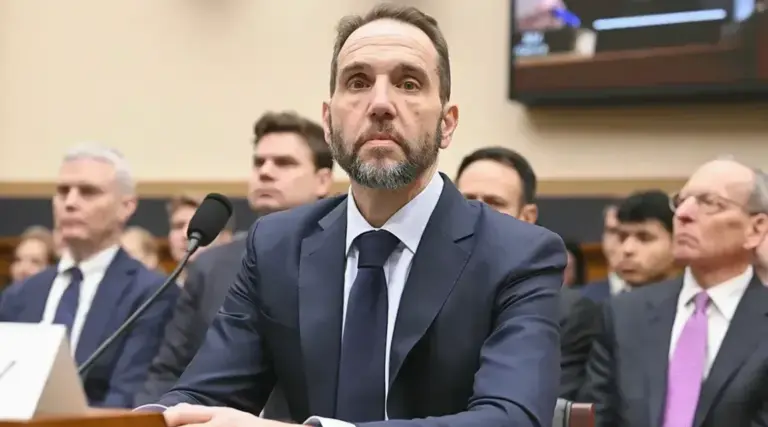
Meanwhile, Smith appeared before the Senate Judiciary Committee last week as part of the Republican-led panel’s oversight of his investigations into Trump. During the hearing, GOP lawmakers pressed Smith over allegations of political bias, investigative overreach and misconduct in both the Arctic Frost 2020 election probe and his classified-documents case known as “Plasmic Echo.”

In particular, Senate Judiciary Committee Chairman Chuck Grassley, R-Iowa, asked Smith whether he had ever received “consultation or counsel” from Brennan, including during his tenure as special counsel.

EX-CIA CHIEF ACCUSED OF ORCHESTRATING ‘RUSSIA HOAX’ SUES TRUMP ADMIN FOR ‘VINDICTIVE PROSECUTION’

“Have you ever received any consultation or counsel by John Brennan, former CIA director, whether during your time as special counsel or otherwise? If so, when and for what purpose?” Grassley asked.

“I’ve never met John Brennan,” Smith responded.

FORMER CIA DIRECTOR BRENNAN SUBPOENAED TO TESTIFY IN FEDERAL TRUMP CONSPIRACY CASE

Grassley’s question, however, was broader than whether Smith personally met Brennan, and the newly declassified records show prosecutors working directly under Smith met with the former CIA director as they prepared the government’s case against Trump.

“This meeting occurred during Jack Smith’s time as Special Counsel and constitutes ‘consultation or counsel’ from John Brennan to Smith and his team,” Grassley told Fox News Digital. “Smith’s response before the Senate Judiciary Committee was highly evasive and misleading, at minimum.”

During the hearing, Grassley later returned to the issue, asking Smith whether he had ever had a conversation with Brennan.

“I have no recollection of having a conversation with John Brennan,” Smith responded.

FBI QUESTIONING CURRENT AND FORMER CIA OFFICIALS IN DOJ PROBE INTO JOHN BRENNAN’S ROLE IN RUSSIA ASSESSMENT

In addition to the memo outlining the 2023 Brennan meeting, the declassified release also included two pages of notes bearing CIA headquarters headers where lines of text beneath Brennan’s name are blacked out by government redactions, leaving the remainder of the ruled pages blank.

Brennan was not serving as CIA director during the period covered by Smith’s classified-documents case, and the released records do not indicate he had firsthand knowledge of Trump’s alleged handling of the documents.

JACK SMITH’S TRUMP PROBE SWEPT UP FOX NEWS, OTHER MEDIA COMMUNICATIONS AS INVESTIGATION WENT BEYOND LAWMAKERS

Grassley, as well as other GOP lawmakers and critics, have accused the former special counsel of investigative overreach and political bias, including pointing to records showing his Arctic Frost investigation obtained financial information involving thousands of Trump donors and phone records of Republican lawmakers, among other investigative steps. Grassley has separately raised questions about the origins and conduct of Smith’s classified-documents prosecution.

Smith, meanwhile, has rejected allegations that his investigations were politically motivated and has maintained that his decisions were driven by the evidence and defending the work of prosecutors and investigators on his team.

Fox News Digital reached out to attorneys for Smith to obtain comment about the Brennan meeting, as well as the Justice Department, but did not receive a response.


China nearly doubled the number of military and coast guard ships it sent to a key flashpoint in the South China Sea last month, according to Manila’s military.

It comes as a series of increasingly tense encounters raises the risk of confrontation with a U.S. treaty ally located in the disputed waters. The Armed Forces of the Philippines said it tracked 101 different Chinese navy and coast guard vessels around four disputed areas over the course of September, up from 56 in August and 48 in July.

The sharp increase comes as Chinese and Philippine forces have faced off both at sea and in the air, including an encounter over the weekend in which Manila accused a Chinese fighter jet of repeatedly maneuvering dangerously close to an unarmed Philippine patrol plane.

China claims sovereignty over most of the South China Sea, including waters that fall within the Philippines’ exclusive economic zone, and uses coast guard ships, naval vessels and aircraft to assert those claims. Manila has continued patrolling the waters and resupplying Philippine positions, bringing forces from the two countries into repeated close contact.

US, CHINA STRIKE DEAL TO LOWER TARIFFS ON $30B IN GOODS AFTER TRUMP-XI WASHINGTON SUMMIT

The confrontations carry particular stakes for Washington: the Philippines is a U.S. treaty ally, and the U.S. has repeatedly said its Mutual Defense Treaty with Manila applies to armed attacks on Philippine armed forces, public vessels and aircraft — including in the South China Sea.

The latest Philippine count showed the largest number of Chinese vessels around Scarborough Shoal, where 39 different Chinese coast guard and People’s Liberation Army Navy ships were observed during September.

Another 28 were tracked around Thitu Island, known in the Philippines as Pag-asa; 23 around Second Thomas Shoal; and 11 around Sabina Shoal.

Rear Adm. Roy Vincent Trinidad, an Armed Forces of the Philippines spokesperson for the West Philippine Sea, said the figures showed China’s continued “illegal, coercive, aggressive and deceptive” activities in the region.

But Philippine officials stopped short of concluding that the jump represented a broader shift in China’s strategy. Asked why the number had nearly doubled from August, Trinidad said the military wanted to examine a longer period before drawing conclusions about the trend.

The increase comes as the two sides have repeatedly confronted each other around some of the same contested waters.

On Saturday, a Philippine C-208 maritime patrol aircraft was flying near Scarborough Shoal when it encountered two Chinese military aircraft, according to the Philippine military.

Manila said one of the aircraft, a Chinese J-16 fighter, repeatedly approached the unarmed Philippine plane and maneuvered in front of and behind it at what the military described as an unsafe distance.

“This incident is part of a recurring pattern of unsafe and coercive behavior against Philippine government vessels and aircraft conducting lawful operations,” the Philippine military said.

The Philippine aircraft completed its mission and returned safely to base.

TRUMP ENVOY WARNS CHINA’S POWER MOVE AT SEA IS THREAT ‘WE CANNOT AFFORD TO IGNORE’

Beijing offered a sharply different account, saying the Philippine aircraft had entered airspace over Huangyan Dao, China’s name for Scarborough Shoal, without permission and that Chinese forces took “necessary measures” in response.

Scarborough Shoal sits about 120 miles west of the Philippine island of Luzon and has become one of the most persistent flashpoints between Beijing and Manila. China has effectively controlled access to the shoal since a 2012 standoff, while the Philippines maintains that it falls within its exclusive economic zone.

China claims sovereignty over Scarborough and much of the South China Sea, overlapping claims by the Philippines and several other Southeast Asian nations. An international tribunal ruled in 2016 that China’s sweeping historic-rights claims in the South China Sea had no legal basis, a ruling Beijing rejects.

The encounters have continued despite a recent diplomatic thaw between Washington and Beijing, with President Donald Trump and Chinese President Xi Jinping emphasizing stability in the relationship during Xi’s state visit to Washington.

Days before the latest air encounter, Chinese coast guard and naval vessels moved to block a Philippine resupply mission to Second Thomas Shoal, another major flashpoint in the dispute.

The Philippines deliberately grounded the aging BRP Sierra Madre at Second Thomas in 1999 and keeps a small contingent of troops aboard the rusting ship to maintain its presence. Chinese vessels have repeatedly tried to block missions carrying food, water and other supplies to those troops.

The latest incidents put renewed attention on Washington’s defense commitment to Manila. The two countries have been bound by their Mutual Defense Treaty since 1951, and the U.S. has said an armed attack on Philippine armed forces, aircraft or public vessels anywhere in the South China Sea would invoke U.S. obligations under the treaty.

Jaguar has finally pulled back the curtain on the Type 01, marking a high stakes transition into an all electric future that is already sparking intense debate. While the automotive world focuses on the aesthetics, the machine beneath the skin is a powerhouse of engineering. Boasting a massive 1,015 horsepower and 1,007 pound feet of torque, the luxury brand is leveraging its success in Formula E to bring race track efficiency to the open road. With all wheel drive and precision steering, the vehicle aims to redefine performance for a new era of sustainable luxury.

The technical specifications suggest a car designed for long distance capability without sacrificing speed. Equipped with a usable 118 kilowatt hour battery pack and an advanced 850 volt architecture, Jaguar expects a range of roughly 400 miles per charge. For those worried about downtime, a high speed charger can push the battery from ten to eighty percent in just twenty two minutes. These innovations were honed through years of competition and factory refinement in the English Midlands, resulting in a highly aerodynamic frame with a drag coefficient of 0.23.

Despite these impressive numbers and an expected price tag between 120 thousand and 130 thousand dollars, the conversation surrounding the Type 01 has shifted away from performance toward pure controversy. Early reactions have been sharply divided, with critics questioning whether the daring new look abandons the timeless elegance associated with the Jaguar legacy. Some observers have gone so far as to call it devoid of personality, while others find it refreshing compared to other futuristic rivals like Tesla’s Cybertruck.

As Jaguar prepares to roll these vehicles into United States dealerships by mid 2027, they face a challenging balancing act. They must convince traditionalists that this radical departure is progress rather than an identity crisis. Whether buyers will embrace this provocative vision or mourn the loss of classic styling remains to be seen, but there is no denying that Jaguar has ensured everyone is talking about their return to the market.

Federal Reserve officials are preparing the public for one final interest rate increase before the year concludes, though they remain pointedly vague about exactly when that move will happen. According to meeting minutes released Wednesday, a vast majority of policymakers believe another hike is necessary to combat inflation that has stubbornly remained above target for over half a decade. This cautious stance comes as the central bank balances a resilient labor market against the persistent threat of rising prices.

While sixteen of eighteen forecasting officials expect another bump in rates, the committee is avoiding any firm commitment to a specific date. Decisions regarding upcoming meetings on October 28 and December 9 will be driven entirely by incoming data rather than a preset schedule. This flexible approach follows a period of intense speculation from Wall Street, where many traders initially bet on an October increase following hawkish remarks from Chairman Kevin Warsh about removing accommodation from monetary policy.

Recent economic indicators suggest the Fed might not feel pressured to rush into its next move. The latest personal consumption expenditures price index showed core inflation at 3 percent for August, which remains above the desired 2 percent goal but fell below general expectations. Despite these slightly cooling numbers, officials expressed concern during their September discussions that inflation could prove sticky given strong economic growth and an employment market operating near maximum capacity.

Beyond domestic rates, the Fed is keeping a close eye on surging Treasury yields, which have reached heights not seen since 2002. Officials attributed this spike to a combination of anticipated rate hikes and massive investments in artificial intelligence. Even efforts by Treasury Secretary Scott Bessent to stabilize markets through debt buyback programs have yet to significantly dampen those yields, leaving investors uneasy even as the Fed suggests it may hold steady throughout much of 2027 after this final projected push.

McDonald’s is facing a federal lawsuit in Chicago following allegations that it used an artificial intelligence tool to orchestrate pricing across its network of independent franchises. The legal action, proposed as a nationwide class-action suit, claims that the company violated antitrust laws by creating an information-sharing platform that effectively fixed prices for consumers. While most U.S. stores are independently owned and technically responsible for their own pricing, prosecutors argue that the corporate office used transaction data to inflate menu costs through a process disguised as optimization.

The case was sparked by Michael Thomas, an Illinois resident who noticed inconsistent pricing for his standard order even within his own neighborhood. His experience mirrors frustrations felt by other customers in cities like New York, where patrons report significant price gaps between different boroughs. These discrepancies have fueled concerns that the company uses location-based data to hike prices in high-traffic areas, leaving budget-conscious diners feeling squeezed during a period of widespread inflation.

McDonald’s has pushed back strongly against these accusations, stating that the complaint is riddled with inaccuracies. A company spokesperson clarified that while optional digital tools exist to provide business insights to franchisees, the actual decision on what to charge remains entirely with the local owners. They have dismissed reports suggesting that franchise owners were pressured into using specific AI recommendations as speculative and uninformed.

This legal battle arrives amid a broader national debate over how algorithms influence the cost of living. With dozens of legislative efforts currently targeting algorithmic price fixing across various industries, experts warn that such technology could worsen the current affordability crisis. For McDonald’s, this scrutiny follows several years of public backlash over rising costs, including a widely shared story of an eighteen dollar Big Mac meal that highlighted just how volatile fast food pricing has become since 2019.

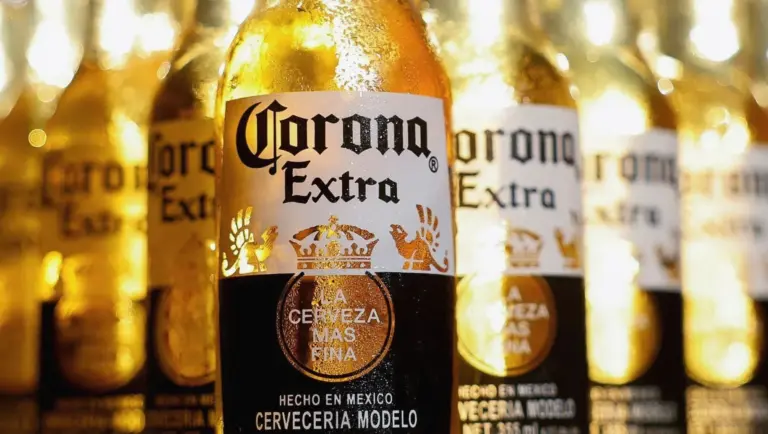
Constellation Brands managed to outperform Wall Street expectations in its most recent quarterly report, but the numbers tell a story of cautious optimism amid a tightening economy. Despite beating revenue and earnings targets through the success of staples like Modelo Especial and Corona, the company is grappling with a dip in actual consumer demand. High fuel and food prices have left many shoppers feeling the pinch, leading to a slight decline in beer depletions as people become more selective about their purchases.

To counter these headwinds, Chief Executive Officer Nicholas Fink is shifting the company’s approach toward experiential marketing. Rather than relying on beer as a default habit, Constellation is focusing on tying its brands to specific events such as sporting matches, concerts, and beach outings to attract younger drinkers. This strategic pivot is paired with a conservative pricing model designed to keep loyal customers from switching brands during an inflationary period, reflecting a belief that retaining current drinkers is far cheaper than trying to win them back later.

This economic sensitivity is particularly acute within the Hispanic community, which accounts for roughly forty percent of Constellation’s beer spending compared to fifteen percent for the general market. The company has acknowledged that demand has softened in regions with large Hispanic populations due to broader macroeconomic pressures and labor market volatility. In response, the firm has seen surprising strength in club stores where budget-conscious consumers often flock for bulk deals on essentials and discounted gasoline.

Looking beyond the brewery, Constellation is aggressively diversifying its portfolio to ensure long term relevance. The company recently announced the acquisition of SpikedAde, a spirit-based ready-to-drink beverage brand, in a deal potentially worth hundreds of millions of dollars. By entering the rapidly growing premixed cocktail segment, Constellation hopes to capture new demographics and satisfy distributors who are eager for products outside traditional beer categories, providing a necessary hedge against any further stagnation in alcohol consumption habits.

Lululemon is making an aggressive play for market dominance by raiding its competition, announcing Wednesday that it has hired Athleta CEO Maggie Gauger as its new president and chief product officer. The appointment comes via a newly created role designed to put design and innovation at the core of the company’s operations. In a striking example of the volatility within the athleisure industry, Gauger had only stepped into her leadership role at Athleta last year after moving over from Nike.

The hiring is part of a broader organizational overhaul led by Lululemon CEO Heidi O’Neill, who took control just last month following a period of stagnant sales and public friction with founder Chip Wilson. Along with bringing Gauger on board, O’Neill named Joseph Godsey as the new chief operating officer while confirming that two other high ranking executives, Nikki Neuburger and Ted Dagnese, will depart in November. This restructuring appears aimed at streamlining how the brand develops products and reaches its customers during a time of intense rivalry in the fitness apparel space.

Gap, the parent company of Athleta, confirmed Gauger’s departure and noted that Chief Marketing Officer Erika Everett will lead the brand on an interim basis. While Gap framed the transition as an opportunity to accelerate Athleta’s own growth strategies and better connect with its customer base, the loss of a top executive to a primary competitor highlights the ongoing talent war between these retail giants.

As Lululemon looks to regain its momentum, it isn’t stopping with one hire. The company revealed it is currently searching for several other key leaders, including new chiefs for technology, communications, and branding. By rebuilding its leadership team from the ground up, O’Neill is signaling a shift toward a more coordinated strategy intended to deliver highly differentiated products across both digital platforms and physical storefronts.