
Archive

August 27, 2026

Browsing

Far from the U.S. warships enforcing a blockade at the mouth of the Persian Gulf, nearly 40 million barrels of Iranian crude are sitting aboard tankers in waters near Malaysia, east of Singapore.

The cargo amounts to roughly 20 very large crude carriers’ worth of oil, a floating stockpile that could still give Tehran a way to turn crude already outside the blockade zone into cash even as the blockade sharply restricts fresh exports.

The stockpile poses a test for the Trump administration as it moves from military action and a naval blockade toward what the White House calls its financial “endgame” against Tehran.

TRUMP’S IRAN CRACKDOWN ‘SUFFOCATING’ REGIME AS OIL WELLS COULD SHUT WITHIN DAYS, BESSENT SAYS

Treasury Secretary Scott Bessent on Sunday launched Operation Economic Outcast, promising a “zero-leakage approach” designed to cut off Iran’s remaining sources of revenue after months of pressure on its oil sales, shipping networks and financial enablers.

The blockade appears to be making it substantially harder for Iran to export new oil. China’s imports of Iranian crude have fallen to an estimated 534,000 barrels per day so far this month, down from roughly 823,000 barrels per day in July, according to provisional Kpler data reported by Reuters.

But millions of barrels that moved beyond the blockade line before it tightened remain within potential reach of buyers. Iran has an estimated 80 million barrels of crude held in floating storage, Reuters reported, with roughly half aboard vessels near Malaysia.

That leaves Washington facing a different challenge: stopping Tehran from monetizing oil the blockade did not trap.

If Iran can still turn that crude into cash, the regime can use the proceeds to pay for imports and potentially finance efforts to rebuild its military even as the blockade restricts fresh exports.

That makes the tankers near Malaysia an early test of whether the administration can deliver the “total isolation” it has promised.

CHINA ORDERS FIRMS TO IGNORE US IRAN SANCTIONS, DARING US TO ENFORCE CRACKDOWN

“The blockade as it’s currently being practiced and enforced against isn’t really stopping the flow of Iranian oil that’s already past the blockade line,” Max Meizlish, a former Treasury official focused on sanctions policy and current senior fellow at the Foundation for Defense of Democracies, told Fox News Digital.

Iranian oil can move through ship-to-ship transfers, in which cargo is shifted from one tanker to another at sea. The practice can help obscure the oil’s origin before it reaches a buyer, often an independent Chinese refinery.

Simply having the crude outside the blockade zone does not automatically give Tehran usable revenue. Iran still needs to deliver the oil, collect payment and move the proceeds through the financial channels it has used to evade sanctions.

Treasury has said Iran primarily settles oil sales in Chinese yuan, with exchange houses and front companies helping convert those funds into currencies the regime can use. The department has also previously tied proceeds from Iranian oil sales to the Iranian government, the Islamic Revolutionary Guard Corps, weapons development and Tehran’s regional proxies.

Meizlish noted that the administration has continued sanctioning Chinese and Hong Kong trading houses, maritime service providers and other entities accused of enabling Iranian sanctions evasion but has stopped short of designating a Chinese financial institution.

The U.S. cut the bank off from access to the American financial system in 2012 over dealings with Iran, Meizlish said, but stopped short of placing it on Treasury’s Specially Designated Nationals list. He argued that formally designating the bank could put pressure on its owner, China National Petroleum Corporation, and potentially disrupt a channel used to move Iranian oil revenue.

Meizlish noted that the administration has continued sanctioning Chinese and Hong Kong trading houses, maritime service providers and other entities accused of enabling Iranian sanctions evasion, but has so far stopped short of designating a Chinese financial institution.

“Secretary Bessent didn’t mention China by name,” he said, adding that the issue could become a subject of higher-level engagement between Washington and Beijing.

The administration has already targeted the Malaysia route.

In April, Treasury sanctioned the Hong Kong-flagged tanker Lynn, saying the vessel conducted a ship-to-ship transfer of Iranian crude off Malaysia before delivering the cargo to China.

Meizlish said another option would be to expand pressure on shadow-fleet vessels operating near Malaysia and elsewhere in Asia in an effort to keep that oil from ultimately reaching Chinese buyers.

“The U.S. could expand the blockades in that sense by going after shadow fleet tankers, operating, for instance, off the coast of Malaysia, which is a huge hub for illicit ship-to-ship transfers,” he said.

He said the sharp decline in Chinese purchases suggests the pressure campaign is having an effect, but argued that crude already aboard shadow-fleet tankers remains a potential future source of revenue for Tehran.

“There’s a lot more that we can do,” Meizlish said.

“Unless we expect for this regime to ultimately fall, we should be putting a lot of pressure into interdicting this oil that’s on the market right now on shadow fleet tankers, because this money could eventually go into the regime’s pockets down the road,” he said.

SIGN UP TO GET THE POLITICS NEWSLETTER

Asked whether the administration planned further action against Iranian oil cargoes and shadow-fleet vessels near Malaysia, a War Department official told Fox News Digital that U.S. forces would continue “global maritime enforcement” to disrupt illicit networks and interdict sanctioned vessels supporting Iran “wherever they operate, at the time and place of our choosing.”

“Under Operation Economic Outcast, anyone foolish enough to continue doing business with the Iranian regime cannot continue to enjoy access to the global financial system,” a Treasury Department spokesperson told Fox News Digital. “We will cut every remaining economic lifeline Tehran has.”

Meizlish said money from oil already sitting on shadow-fleet tankers could still wind up in Tehran’s hands and help Iran rebuild military capabilities damaged in the conflict.

Going after those tankers would not be simple. The U.S. Navy is already stretched by operations in the Strait of Hormuz and elsewhere, he said, and seizing ships and their cargo can trigger legal fights over ownership, custody and what happens to the oil afterward.

Meizlish said Congress could make it easier for the government to seize illicit cargoes. He also argued that Washington should look for ways to expand its capacity to pursue shadow-fleet vessels if the Navy cannot do it alone.

Bessent’s new campaign goes beyond oil, targeting digital assets, technology, gold, aviation and shipping. He also threatened broader secondary sanctions against entities that continue doing business with Tehran.

The drop in Chinese purchases shows Iran is having a harder time getting new oil to market. But millions of barrels are already sitting outside the blockade.

Whether Tehran can still sell that oil, and whether Washington is willing to go after it near Malaysia, will help determine how much “zero leakage” actually means.

This post appeared first on https://www.foxnews.com
With the November midterms approaching, Pennsylvania Gov. Josh Shapiro is joining attorneys general from 23 states and Washington, D.C., in suing the U.S. Postal Service (USPS) over a Trump-backed mail-in ballot rule that would impose new federal requirements on how states prepare and send mail ballots.

“I’m suing the Trump Administration to stop their unconstitutional attempt to change the rules and restrict mail-in voting. I’ll remind the President of my track record going up against him in court — and winning — to protect Pennsylvania’s free, fair, safe, and secure elections. I’m prepared to do so again,” Shapiro wrote on X. “Nothing about voting by mail has changed here in Pennsylvania. You can still vote safely and securely by mail.

“While Donald Trump may try to inject chaos into our elections, the Constitution is clear: the authority to set election rules belongs to the states — not the federal government.”

The two-dozen state coalition returned to court two days after the Supreme Court stayed an earlier injunction issued by a Massachusetts federal judge against key parts of Trump’s mail-voting executive order, finding the states’ initial challenge premature because USPS had not yet issued a final rule when they filed suit.

TRUMP SCORES SUPREME COURT WIN ON MAIL-IN VOTING RESTRICTIONS BEFORE MIDTERMS

“The Supreme Court ruling was a major win for the security of American elections. Radical Democrats continue to oppose commonsense measures that protect the security of mail-in ballots and ensure only Americans are electing American leaders,” White House spokeswoman Lauren Bis said in a statement to Fox News Digital. 

“The Trump administration will continue to lawfully enact the agenda President Trump was elected on, which includes the safety and security of our elections.”

At issue is USPS’s newly finalized “Ballot Mail for Federal Elections” rule, which went into effect last week and was published Wednesday. 

It would require state and local election officials to submit information on intended mail-in ballot recipients to a USPS portal, where the agency would compile state-specific lists of enrolled mail voters. It would also require certain mail-in ballot design requirements, such as trackable barcodes, and require officials to submit ballot-envelope designs to USPS for pre-approval.

In their 53-page complaint, the states argue that the rule improperly gives USPS a new role in running elections, forcing election officials to adopt new procedures, share ballot recipient information and potentially replace already-purchased envelopes as the midterms draw closer. 

They also argue that Congress, not the president or Postal Service, has the authority to alter election rules and that USPS skipped a review process for major nationwide changes to postal services or operations.

NEWSOM PROMISES NEW LEGAL FIGHT AFTER TRUMP GETS SUPREME COURT VICTORY ON MAIL-IN VOTING

The coalition is asking the court to block the rule while the lawsuit proceeds and ultimately throw it out, arguing that their new challenge answers the Supreme Court’s timing concern. A separate Massachusetts injunction had temporarily blocked the USPS from putting the requirements in place for the November midterms, but the judge lifted that order Wednesday after the Supreme Court’s ruling.

“This Court held that ‘no law enacted by Congress delegates authority to control mail-in voting to USPS,’ and that the President’s directives to USPS were ultra vires,” the states wrote in their complaint. 

“The Supreme Court subsequently stayed the injunction — not because Plaintiff States’ claims lacked merit, but because the States ‘lack[ed] standing to bring’ their claims as to the [Executive Order].

“As the Court explained, USPS had not yet implemented the EO, but if USPS ultimately adopts a final rule that ‘harms the States, they may challenge that rule.’ USPS then published its final rule two days later.”

The USPS did not respond to Fox News Digital’s request for comment in time for publication.

Sen. John Fetterman of Pennsylvania, a centrist Democrat known for bashing his party’s left flank, is more popular among Keystone State Republicans than their own GOP senator, Sen. Dave McCormick, according to a new poll.

The release of the poll this week by the New York Times, Philadelphia Inquirer and Siena University is further evidence that Fetterman, who at times breaks with his party and aligns with President Donald Trump, and who is a frequent guest on the Fox News Channel, has become increasingly popular among Republicans.

The survey may boost speculation that the first-term senator could potentially bolt the Democrats and become a Republican. But Fetterman has denied that he plans to leave the Democratic Party.

Nearly 3 in 4 Republican registered voters in Pennsylvania (73%) held a favorable opinion of Fetterman, according to the poll. That’s 10 points higher than the 63% of Republicans in the state who viewed McCormick favorably.

DEMOCRACY ’26: STAY UP TO DATE WITH THE FOX NEWS ELECTION HUB

The 73% of Republicans who view Fetterman favorably is a major increase from the 25% who said the same thing in 2024, two years after the senator was elected.

But Fetterman’s standing among Democrats continued to sink, according to the poll.

Just 22% of registered Democrats in Pennsylvania said they had a favorable view of Fetterman, while 63% viewed him unfavorably. That’s a dramatic reversal from two years ago, when 74% of Democrats viewed Fetterman favorably.

The survey also indicated that by a 49%-35% margin, independents held a favorable view of Fetterman.

Matt Beynon, a veteran Pennsylvania-based Republican consultant, told Fox News Digital, “I think a lot of Republicans appreciate the fact that Sen. Fetterman is willing to stick his thumb in the radical wing of his party’s eye on issues like antisemitism.”

WHAT THE LATEST FOX NEWS POWER RANKINGS IN THE MIDTERM RACES SHOW

Fetterman’s growing popularity among Republicans has fueled speculation that he leave the Democratic Party before potentially facing a primary challenge when he’s up for re-election in 2028.

The senator, who is a strong supporter of Israel, has increasingly railed against fellow Democrats who have criticized Israeli leaders over their ongoing war against Hamas in Gaza. Fetterman has said he has “no plans” to leave the Democratic Party. But he added if Democrats officially became the “anti-Israel party,” count him out.

“My long-term concern has been with the Democratic Party, as I am a member of that, is that our party is going to back away and turn their back to Israel,” he said last month at a Hill Nation Summit in Washington, D.C.

“If our party ever becomes, and just makes it official, the anti-Israel party, that’s when I would leave because that’s been a moral clarity for me.”

SIGN UP TO GET THE POLITICS NEWSLETTER

Senate Majority Leader John Thune, R-S.D., and other Senate Republicans have reached out to Fetterman regarding a party switch.

“I have had conversations with him in the past, as have many of my colleagues about the challenges he faces in his caucus. And there are many of us who, I think, would welcome the opportunity to have him join the Republican conference, but ultimately that’s a decision that’s up to him,” Thune told reporters in July.

But Beynon said that regardless of Fetterman’s growing popularity among Republicans, “when it comes time for the senator’s re-election campaign in 2028, those same voters will be reminded that John Fetterman votes with Democrats more than 90% of the time.”

Fox News Digital reached out to the senator’s office for comment regarding the new poll, but did not receive a response at the time this story was published.

This post appeared first on https://www.foxnews.com

Bill Gates has issued a stark warning that the world is currently sailing blindly into a period of immense instability caused by artificial intelligence. In a recent essay and interview, the Microsoft co-founder argued that there is effectively no comprehensive plan to manage the social, political, and economic upheaval that accompanies the rise of AI. While he previously praised the technology as perhaps the most profound technical advancement of his lifetime, his tone has shifted toward urgency, suggesting that current efforts by global leaders and experts to confront these challenges are woefully inadequate.

The core of Gates’ concern lies in the unprecedented speed at which AI can replace human cognitive labor. Unlike previous industrial revolutions where workers had time to migrate to new sectors, Gates fears AI could displace employees faster than new roles can be created. He highlighted a looming crisis for both white collar professionals in fields like law and software engineering and blue collar workers facing competition from increasingly affordable robotics. This creates what he describes as a vicious cycle where companies adopt automation to slash costs, forcing their competitors to do the same just to survive, leaving low wage earners with almost no time to retrain.

Despite these grim predictions, Gates maintains that AI possesses the potential to be a great equalizer if managed correctly, offering breakthroughs in clean energy, disease eradication, and food security. However, capturing those benefits requires a total overhaul of how governments handle employment, taxation, and social safety nets. He believes individual nations cannot solve this alone because the risks transcend borders, meaning any domestic success would still leave a country vulnerable to global instability.

To mitigate this turbulence, Gates is calling for the creation of new national regulatory bodies and a powerful international organization dedicated specifically to AI oversight. He suggested modeling such an agency after existing global frameworks used for nuclear weapon inspections or aviation safety. Without this level of coordinated governance and proactive planning, he warns that the transition into the AI era will likely become one of the most volatile periods in human history.

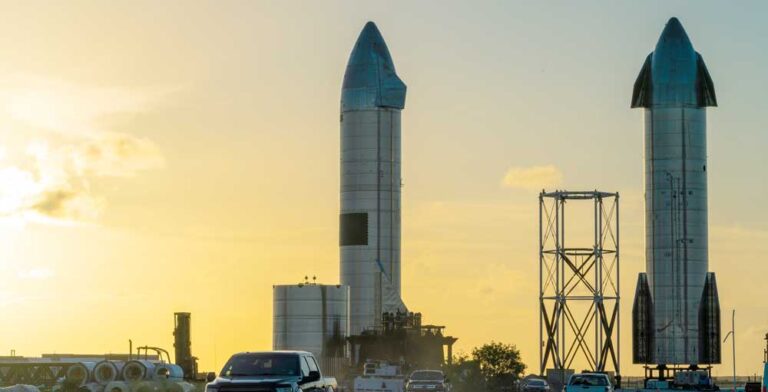
SpaceX is preparing to shift the center of gravity for American aerospace with a staggering hundred billion dollar plan to establish a new Starbase hub in Louisiana. This massive undertaking signals a strategic pivot for Elon Musk’s company as it seeks more expansive land and infrastructure to support the next generation of interplanetary travel. By moving operations toward the Gulf Coast, the company aims to streamline its production and launch capabilities on a scale previously unseen in private industry.

The move marks what many are calling the end of an era for Florida, which has served as the heart of U.S. space exploration since the days of Apollo. While Cape Canaveral and Kennedy Space Center have been synonymous with reaching the stars, this migration suggests that the requirements for modern mega rockets have outgrown traditional facilities. Local officials in Florida are now facing the reality that one of their most prominent commercial partners is looking elsewhere to build its future empire.

Louisiana stands to gain an unprecedented economic windfall from this investment, transforming regional landscapes into high tech corridors overnight. The proposed site will likely house everything from manufacturing plants to specialized launch pads designed specifically for the Starship system. As construction begins on this futuristic colony, the transition highlights a broader trend of corporate agility where legacy locations are traded for sites that can accommodate rapid scaling and extreme engineering demands.

Meta has reached a massive agreement to pay up to 18 billion dollars to settle a sweeping lawsuit brought by 29 U.S. states regarding child safety on its platforms. The legal battle centered on allegations that the tech giant intentionally engineered Facebook and Instagram to be addictive for children while ignoring known risks to their mental health. Furthermore, prosecutors claimed Meta bypassed federal law by collecting data from minors without parental consent, violating the Children’s Online Privacy Protection Act. While the company is not admitting guilt as part of the deal, the settlement suggests a strong desire to avoid the unpredictability of a jury trial.

As part of the agreement, Meta will roll out several strict safeguards for teenage users over the next decade, pending court approval. These changes include a default two hour daily time limit across its apps, accompanied by frequent reminders to encourage more intentional browsing. To curb late night scrolling and classroom distractions, Meta will implement a Night Mode that blocks access between midnight and 6 AM, along with School Mode to mute notifications during typical school hours. Other measures involve hiding like counts on teen posts and banning extreme makeup filters to reduce body image pressures among young users.

In a strategic twist, Meta is attempting to turn this legal defeat into an industry standard by challenging competitors like TikTok and YouTube to follow suit. A significant portion of the payout is tied to this goal; roughly 5.3 billion dollars of the settlement will only be paid if those rival platforms adopt similar time limits and age verification tools and contribute a matching sum of money. Meta’s chief legal officer stated that because teenagers jump between many different apps, any real solution must be applied across the entire industry rather than just one platform.

Despite the staggering cost, investors have reacted positively, sending Meta’s stock higher following the announcement. The company expects to record 10 billion dollars in legal expenses this quarter, which will weigh on short term profits but provides some level of regulatory certainty moving forward. Beyond financial penalties, Meta has pledged to invest heavily in age assurance technology to root out underage users and enhance parental controls meant to shield teens from unwanted interactions with adults.

Nvidia once again proved why it is the undisputed engine of the artificial intelligence revolution, posting second quarter results that beat analyst expectations across the board. Revenue soared to over 96 billion dollars, more than double what the company earned in the same period last year, while adjusted earnings per share hit 2.22 dollars against a predicted 2.10. Despite these powerhouse numbers and revenue guidance for the next quarter that topped estimates at roughly 108 billion dollars, the stock saw a slight dip in extended trading as investors weighed whether the company can maintain its breakneck pace of growth after a historic multi year rally.

Chief Executive Jensen Huang highlighted a fundamental shift in the AI landscape, noting that the demand for high powered GPU clusters is no longer driven by a single dominant laboratory. Instead, he described a golden age characterized by a surge of new startups and frontier labs scaling their operations in parallel globally. This diversification is evident in the company’s sales mix; while giant hyperscale cloud providers remain huge contributors, revenue from industrial and enterprise customers jumped an impressive 138 percent annually, signaling that AI integration is moving deeper into various sectors of the economy.

However, maintaining this dominance comes with significant logistical and financial hurdles. Nvidia revealed that its supply commitments more than doubled to 279 billion dollars this quarter, largely due to skyrocketing costs and shortages of critical memory components. These pressures are beginning to bite into profit margins, with gross margins expected to slip slightly to 74 percent in the current quarter. Additionally, the company continues to struggle in China, where government approvals for imports remain murky and shipments represent less than one percent of data center revenue.

To keep shareholders happy amid rising competition from rivals like AMD and Google, Nvidia has leaned heavily into returning capital. The company spent 26 billion dollars on share repurchases and dividends during the quarter and announced a further dividend payment of 25 cents per share. With nearly all of its income now derived from its data center unit, Nvidia remains betting big on its own ecosystem while diversifying its portfolio through strategic equity investments in firms like SpaceX and Intel to secure its place at the top of the tech food chain.

Bill Gates is weighing in on the societal fallout of artificial intelligence with a series of provocative proposals aimed at protecting the global workforce. In a detailed essay published on his Gates Notes site, the Microsoft co-founder acknowledged the immense potential for AI to revolutionize healthcare and scientific discovery, but warned that the rapid displacement of human workers could create a crisis if left unchecked. While he expressed sympathy for those calling for a slower pace of development, Gates admitted that such pauses might be unsustainable given the current competitive landscape.

To counter these risks, Gates suggested implementing a robot tax to level the playing field between human employees and automated systems. He pointed out a glaring flaw in current tax codes where hiring a person triggers payroll taxes while purchasing a robot often serves as a deductible business expense. By taxing automation, Gates argues that governments could discourage companies from rushing to replace humans with machines while simultaneously generating necessary funds to build stronger safety nets and provide retraining programs for displaced workers.

Beyond financial penalties, Gates introduced the concept of Human Reserved jobs, suggesting that certain roles should be legally barred from AI integration entirely. This approach would protect older workers who cannot easily pivot careers and ensure that deeply personal interactions remain human. For instance, he noted that while a machine might be technically capable of delivering an incurable medical diagnosis to a patient, it simply should not be allowed to do so because empathy is irreplaceable.

These suggestions represent a significant shift in the conversation around AI ethics, though they would likely face stiff resistance from major tech firms whose profit margins depend on efficiency gains through automation. Critics and policymakers are already questioning who would hold the authority to designate which jobs stay reserved for humans and how such regulations would be enforced globally. Despite these hurdles, Gates believes phasing in AI gradually over decades rather than years could prevent widespread economic instability.