Archive

August 28, 2026

Browsing

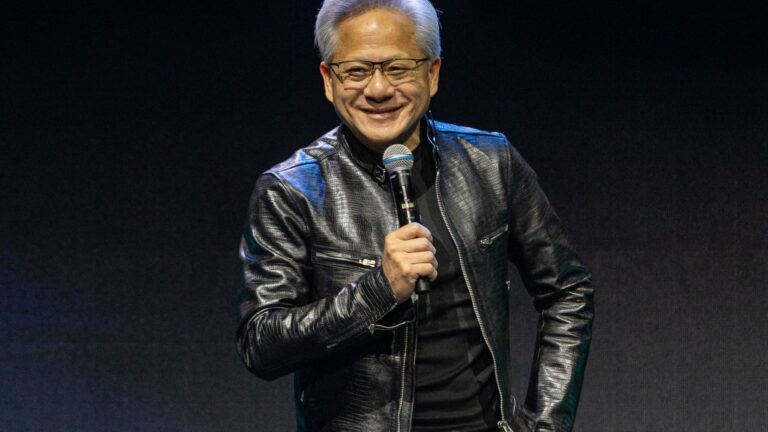
Nvidia shares surged more than seven percent in premarket trading Thursday after the semiconductor powerhouse delivered a set of financial projections that effectively quieted investor nerves regarding the future of artificial intelligence. For several quarters, the company had faced a curious pattern where its stock dipped immediately following earnings reports, even when expectations were met. This time, however, the market reacted with renewed enthusiasm, sparking a broad rally across the chip sector that lifted peers like Micron and AMD along with various cloud infrastructure firms.

The primary driver behind the jump was a bold outlook provided by leadership. Chief Financial Officer Colette Kress projected revenue growth of seventy percent for fiscal 2028, though CEO Jensen Huang suggested that actual demand far exceeds that figure. Huang noted that while they are currently limited by how much hardware they can physically supply—citing bottlenecks at TSMC and shortages in memory chips—the appetite for their GPUs has reached a critical inflection point. He described a golden age of expansion where demand is no longer driven by a single laboratory but by a diverse global ecosystem of startups and frontier labs scaling in parallel.

To reassure critics who worry that big tech spending might eventually plateau, Nvidia highlighted how its client base is diversifying. Sales from industrial and enterprise customers grew by an impressive one hundred thirty eight percent annually, reaching over forty billion dollars this quarter. This shift away from total reliance on massive hyperscalers suggests a deeper integration of AI into broader business operations, leading some analysts to argue that current valuations actually remain cheap given the potential trajectory through 2028.

Adding to the momentum are reports that Nvidia is moving aggressively to expand its influence beyond hardware. News surfaced Wednesday that the company has agreed to purchase Hugging Face, a dominant open source platform for AI models, for nearly thirteen billion dollars. By integrating such a vital piece of software infrastructure into its empire, Nvidia is positioning itself not just as the provider of the engines powering AI, but as the owner of the environment where those models are developed and shared globally.

Shares of Z.ai surged by more than 12 percent in Hong Kong on Thursday following the release of its latest artificial intelligence model, GLM-5.3-Flash. Designed specifically to operate on domestic Chinese hardware, the new model represents a leaner, lower-cost alternative to the company’s flagship offering. According to Z.ai, the system is powered by 100,000 domestically produced chips, though the company declined to specify which manufacturers provided the hardware and these claims have not been independently verified.

The market reaction follows an explosive debut for the model, which initially operated under the code name Ox Alpha during a one week preview window. During those first few days, it generated over 11 trillion tokens on OpenRouter, marking a record opening for the platform and quickly ascending to the top spot among coding models. With pricing set at roughly one tenth the cost of similar services, Z.ai aims to disrupt the market through sheer affordability and efficiency.

Industry experts suggest that Z.ai likely utilized a mix of processors from various local vendors, potentially including Huawei Ascend chips. This move aligns with a broader strategic shift within China to tighten integration between homegrown software and hardware stacks to bypass U.S. export controls on high end Nvidia semiconductors. By building a dedicated inference engine that reportedly triples serving performance over previous baselines, Z.ai claims it has reached efficiency levels comparable to industry standard Nvidia GPUs.

This technological pivot arrives as Beijing intensifies efforts to reduce reliance on foreign silicon while domestic firms accelerate their own competing offerings. For investors, the momentum appears unstoppable so far; Z.ai is scheduled to report its first half results this coming Monday with its stock already having climbed more than 800 percent since its public listing in January.

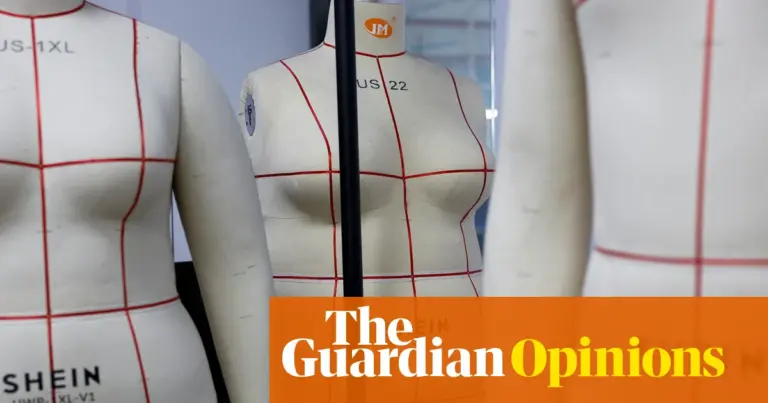
For a significant portion of the last two years, the City of London seemed poised to welcome Shein, the behemoth of fast fashion, to its stock exchange. Politicians from across the aisle spent months courting the Chinese founded giant, viewing a potential flotation as a much needed jolt of adrenaline for a stagnant local listings market. It was framed as a way to signal that Britain remained open for international capital and hungry for high growth tech players. However, those hopes evaporated as Shein instead opted for a debut in Hong Kong next week, leaving many observers feeling more relieved than disappointed.

Looking back, it becomes clear that London was never Shein’s first choice but rather a fallback option after New York became untenable due to geopolitical friction and scrutiny over labor practices. The eagerness of British regulators and politicians to embrace the company despite these red flags was concerning. While the Financial Conduct Authority argued that legal risks were common among listed firms provided they were disclosed, the relationship soured quickly when Shein’s representatives appeared before a parliamentary committee. Their refusal to answer basic questions about where their cotton originated was described by officials as bordering on contempt, exposing the fragility of the courtship.

The financial reality makes the avoided listing seem like an even greater victory for London. When Shein was flirting with the UK market, valuations were whispered at around 50 billion pounds. Now that it is heading to Hong Kong, that figure has plummeted to roughly 20 billion dollars. This sharp decline reflects growing investor anxiety over shifting trade laws and tax loopholes regarding low value imports which have long fueled Shein’s aggressive pricing model. Had the company listed in London at its peak, British investors would now be staring at a massive loss in perceived value.

Ultimately, the saga serves as a cautionary tale for policymakers desperate to revitalize the square mile. While there is an undeniable need for exciting new arrivals on the stock market, this episode proves that desperation should not override diligence. By failing to secure transparency and ignoring systemic risks associated with Shein’s supply chain and business model, London nearly invited a volatile asset into its fold. In retrospect, nobody is mourning a missed opportunity because the city simply dodged a bullet.

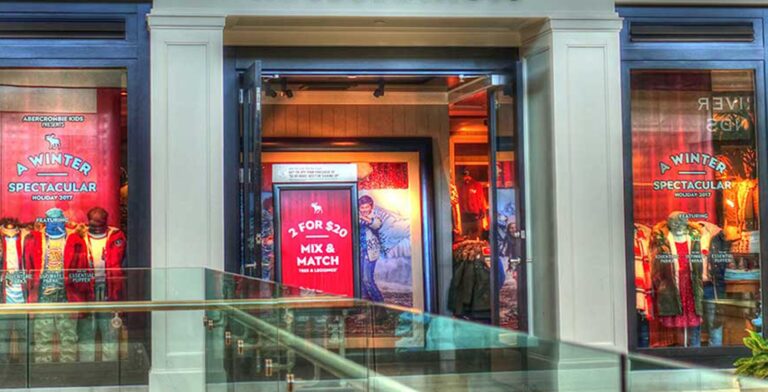
Wall Street is seeing an unexpected boost in second quarter corporate earnings as several major players receive massive windfalls from Trump era tariff refunds. While many investors were bracing for the impact of sticky inflation data, a handful of corporations managed to shatter analyst expectations by adding billions of dollars in recovered import taxes back onto their bottom lines. This sudden influx of cash has created a stark contrast between general market trends and the performance of specific industrial giants.

The surge was particularly evident in three standout stocks that saw their valuations climb after reporting figures bolstered by these government payouts. Analysts note that while consumers largely bore the brunt of previous trade wars through higher retail prices, these direct refunds act as a pure profit injection for the companies that originally paid the levies. By recouping costs they had already written off or passed along, these firms effectively supercharged their quarterly margins without needing to increase organic sales.

Industry experts suggest that this phenomenon highlights a lingering financial ripple effect from past trade policies. As more companies navigate the complex process of claiming these credits, other sectors may see similar surprise jumps in profitability throughout the year. For now, however, those few lucky enough to secure early repayments are riding a wave of investor optimism, proving that sometimes a policy reversal can be just as lucrative as a product breakthrough.

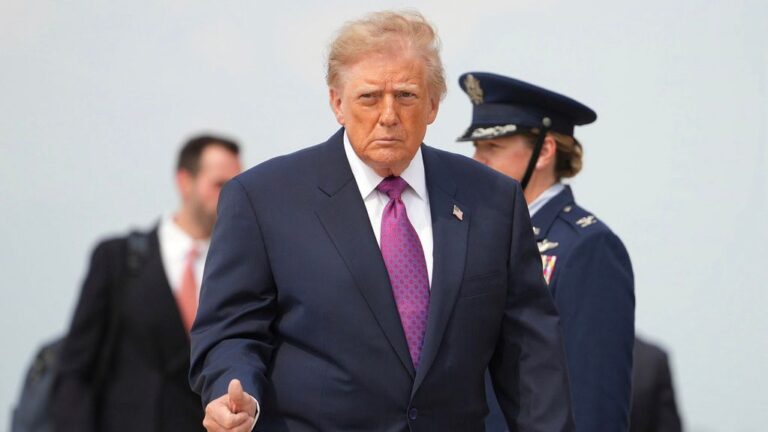
New financial disclosures reveal that President Donald Trump engaged in an aggressive trading strategy throughout June, executing more than 1,000 individual stock transactions. The detailed thirty four page ethics filing shows a wide range of activity, with some single trades exceeding one million dollars while others remained below five thousand. His movements spanned across several sectors, involving household names such as Apple, Amazon, Microsoft and McDonalds.

Much of the controversy centers on the timing and nature of these investments, particularly those involving energy giants like Exxon and Chevron and defense firms such as Lockheed Martin. Critics argue that these specific holdings are problematic because they are directly impacted by the ongoing conflict with Iran. Ethics watchdogs have expressed similar alarms regarding the president’s stakes in Nvidia, Meta and pharmaceutical company Eli Lilly, suggesting that these industries are heavily influenced by administration policies.

In response to the mounting scrutiny, the White House maintains that there is no conflict of interest. Officials stated that the president’s portfolio is handled entirely by an independent third party and insisted that neither Trump nor his family members have any power to direct or influence investment decisions. This defense comes as opponents point out that Trump has broken with presidential tradition by refusing to divest his assets or place them into a blind trust.

Adding to the political tension, Democrats on the Joint Economic Committee recently issued a report alleging that Trading in oil and gas stocks increased the president’s personal wealth by more than fifteen million dollars this year alone. They claim this profit came at a cost to American consumers facing higher prices at the pump. These revelations follow earlier reports indicating that Trump has seen unprecedented gains during his second term, bolstered significantly by over one billion dollars from various cryptocurrency ventures.

The United States is launching a sweeping effort to revitalize its domestic defense industry and secure its energy independence through a series of aggressive new initiatives. In a coordinated push to reduce reliance on foreign supply chains, the Small Business Administration and the Department of War have established the Smaller War Plants Commission. This new body is designed to funnel federal funding, contracts, and regulatory relief specifically toward the small manufacturers that make up over seventy percent of the American defense industrial base. By reviving a concept from the World War II era, officials aim to eliminate vulnerabilities in the supply chain and restore the kind of industrial dominance that defined the twentieth century.

Secretary of War Pete Hegseth emphasized that the administration refuses to accept a hollowed out industrial base while facing modern global threats. To achieve this, the government will utilize the Civil Reserve Manufacturing Network to map existing production capacities and identify critical gaps. The Small Business Administration will now prioritize lending and capital investments for essential sectors including munitions, drones, microelectronics, shipbuilding, and strategic minerals. Eligible companies can access enhanced loan guarantees to modernize facilities and expand their output, ensuring that the tools of national defense are forged within American borders rather than imported from potential adversaries.

Parallel to these manufacturing efforts, the U.S. Army is investing heavily in next generation energy infrastructure with the launch of Project Janus. The Army recently awarded up to 2.2 billion dollars in contracts to five different companies to install nuclear microreactors at various military bases across states like North Carolina, Texas, and New York. These reactors are intended to provide independent baseload power, shielding critical installations from failures or attacks on commercial electrical grids. Companies such as Radiant Industries and General Atomics are leading the charge to deploy these scalable systems, with a goal of having the first advanced reactors operational by late 2028.

These dual tracks of policy reveal a broader strategy centered on resource security and material autonomy. While the Smaller War Plants Commission focuses on securing critical minerals for electronics and weaponry, the shift toward nuclear microreactors creates an immediate need for specialized fuels and rare materials. Industry analysts suggest that this convergence will create significant opportunities for domestic junior miners and specialty suppliers who can fill these voids. Together, these moves signal a fundamental pivot toward a self reliant defense posture where energy production and hardware manufacturing are treated as inseparable pillars of national security.

The US Department of the Treasury has sparked a heated debate among economists and investors by announcing plans to roughly double the size of its long dated bond buyback operations. Starting in early September, the Treasury will increase the maximum size per operation for bonds in the ten to twenty year and twenty to thirty year ranges from two billion dollars to at least four billion dollars. While officials have characterized the move as routine liquidity support aimed at maintaining smooth market functions, critics argue the timing is far too convenient, noting that the announcement arrived just as thirty year yields hit their highest levels since 2007.

Billionaire investor Stanley Druckenmiller has emerged as one of the most vocal critics of the plan, suggesting that the government is attempting price management rather than simple liquidity maintenance. Writing in a Wall Street Journal opinion piece, Druckenmiller argued that there were no signs of market dysfunction, such as failed auctions or dealer balance sheet crises, that would justify such an intervention. Instead, he believes rising yields are a natural reaction to deteriorating economic fundamentals, including persistent inflation and a massive national debt exceeding forty trillion dollars. According to Druckenmiller, any attempt to artificially suppress yields serves only to subsidize governmental procrastination on fiscal discipline.

Adding a strange twist to the financial controversy, Druckenmiller found himself defending his writing process after social media users flagged his op ed as being generated by artificial intelligence. The veteran hedge fund manager admitted he used several AI tools to help draft the piece while on vacation, comparing the technology to using a calculator or a speechwriter. He maintained that while the prose may have been polished by software, the core economic arguments were entirely his own based on decades of experience. The Wall Street Journal stood by its decision to publish the piece, stating that the author’s credibility and original ideas outweighed the method of drafting.

As the implementation date approaches, Treasury Secretary Scott Bessent has attempted to downplay the friction, reminding observers that not a single bond has actually been purchased under these new terms yet. However, market participants remain skeptical about whether these operations are truly benign. With global tensions and oil market volatility continuing to influence bond pricing, traders are expected to closely scrutinize every buyback moving forward to see if the Treasury is merely supporting liquidity or actively fighting against market forces.

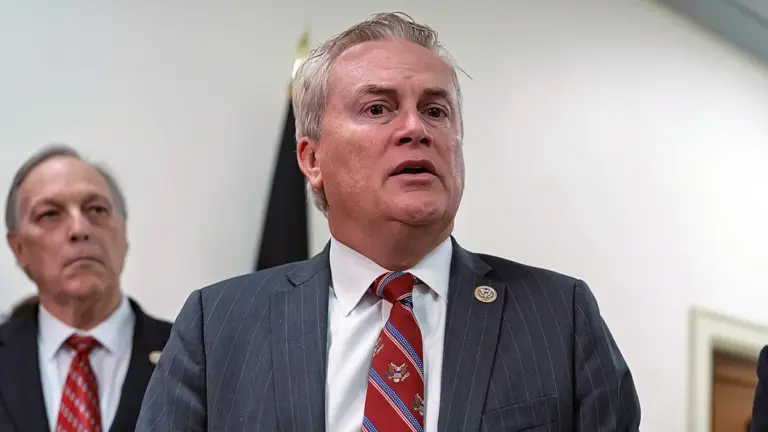
House Oversight Committee Chairman James Comer, R-Ky., is subpoenaing a doctor allegedly behind a sprawling birth tourism scheme based in Florida.

It comes as Rep. Brandon Gill, R-Texas, is setting his sights on a new target after his crackdown on the Smithsonian Institution made headlines and thrust fresh scrutiny onto its teaching of American history.

Gill’s task force on investigating institutional abuses, which is part of the House Oversight Committee, is now gearing up for a hearing on the practice of birth tourism — something the White House sounded the alarm on just this month.

As part of the hearing, Comer sent a subpoena to Dr. Wladimir Lorentz of Have My Baby in Miami, a South Florida business that’s aimed at helping foreigners give birth in the United States. The hearing is expected to take place Sept. 1.

Comer accused Lorentz of refusing to voluntarily appear via his attorney, and in a letter sent with the subpoena on Tuesday, Comer said Lorentz’s attorney argued he could not speak with the committee due to a pending criminal probe being conducted by the U.S. Attorney’s Office for the Southern District of Florida.

“As the Founder and Chief Medical Officer of a company doing business as ‘Have My Baby in Miami,’ your knowledge regarding the company’s marketing practices and direct observations relevant to the birth tourism industry is vital to the immediate investigation,” Comer’s subpoena letter read.

SEN ERIC SCHMITT SEEKS TO END BIRTH TOURISM, REVOKE CITIZENSHIP FOR BABIES OF FOREIGN DIPLOMATS

“Furthermore, given the national security concerns raised by birth tourism, delaying the hearing or deferring your testimony to some unknown date in the (potentially far) future would be an extraordinary action that would curtail the Committee’s ability to glean valuable information that will inform its oversight and further its legislative goals.”

Meanwhile, Gill echoed Comer’s concerns over national security.

BIRTH TOURISM FIGHT SHIFTS TO US ‘TROPICAL MATERNITY WARD’ WITH HISTORY OF CHINESE EXPLOITATION

“A growing industry is openly marketing American citizenship to foreign nationals who travel here for the express purpose of giving birth on U.S. soil. This abuse of our immigration system also raises serious national security concerns, particularly given the number of birth tourists traveling from adversarial nations like China and Russia,” the House GOP firebrand said.

His panel’s Sept. 1 hearing is also expected to feature testimony from Dr. Steve Camarota of the Center for Immigration Studies. The medical director and owner of a company called International Maternity Services, Dr. Julio César Novoa, was also invited.

TEXAS GOV ABBOTT SIGNS EXECUTIVE ORDER CRACKING DOWN ON ‘BIRTH TOURISM,’ SAYS US CITIZENSHIP NOT FOR SALE

Gill’s new task force, which was founded this year, has largely focused on diversity, equity, and inclusion (DEI) efforts across various sectors of American life.

He’s held hearings on whether the Smithsonian’s teaching of U.S. history involved overly ideological and political leanings, and whether DEI plays a role in running the American Bar Association (ABA).

Birth tourism is the colloquial term for the general practice of foreign nationals coming to the U.S. on temporary visas for the purpose of having a child who then automatically becomes an American citizen.

President Donald Trump targeted birth tourism in a recent executive order after the Supreme Court struck down his efforts to curb birthright citizenship writ large. He also signed an order banning specific categories, such as children born to foreign government workers, from automatically getting U.S. citizenship.

Have My Baby in Miami is just one company that appears to make it more accessible for foreigners to give birth in the U.S. Its website and social media pages appeared to be disabled as of Thursday.

But a YouTube page that appears to be associated with the business states, “Many people have questions about how to have a child in the United States, and we can help clarify how to deliver in Miami, how to live in the United States during your pregnancy, how to have a baby in the United States, how much it costs to deliver in the United States and how to go through pregnancy in the United States.”

“Children who are born in the United States, with rare exceptions, have US citizenship,” the summary states.

An October 2025 article by Local 10 in Florida appears to have obtained information from the now-deleted pages, including that the company reportedly touted that it helped deliver 2,000 babies.

It’s not yet clear if Lorentz will appear. But defying a congressional subpoena could risk criminal charges.

Fox News Digital reached out to his lawyer for comment.

The fuel most Americans rarely think about is becoming a new hurdle for President Donald Trump’s push to make housing more affordable, as the Iran war raises costs for construction sites.

With the midterm elections approaching, the diesel surge underscores the political tension facing Trump and congressional Republicans as they promise to bring down housing costs while war-driven energy prices add new pressure to home construction.

Builders are already wrestling with expensive financing, labor, materials and costs tied to regulations and permitting that Republicans have pledged to reduce. Because diesel powers the trucks and heavy equipment used throughout the construction process, higher prices can make it harder to deliver the lower-priced homes needed to ease America’s affordability crunch.

AMERICA’S HOUSING MARKET COULD RUN OUT OF SOMETHING MORE IMPORTANT THAN HOMES

Jim Tobin, president and CEO of the National Association of Home Builders (NAHB), told Fox News Digital that diesel is “critical to construction.”

“Diesel, which our workers use when they’re hauling materials on trucks and moving dirt on sites, has seen a spike, and that has really put a little bit of pressure on home building in the short term here.”

Unlike gasoline, which is felt most directly by motorists, diesel powers the trucks hauling lumber, concrete, appliances and other supplies to construction sites, as well as the heavy equipment that prepares lots and builds new homes.

The national average price of on-highway diesel climbed to $5.65 a gallon this week, up nearly $2.00 from a year ago, according to data compiled by the Energy Information Administration. Diesel’s year-over-year increase has been far sharper than gasoline’s, with the national average for regular gas at about $4.09 a gallon.

The added pressure comes as Trump has made housing affordability a key part of his second-term agenda. In March, he signed an executive order directing federal agencies to reduce regulatory barriers that raise construction and homeownership costs, with an emphasis on speeding permitting and expanding supply.

THE SURPRISING HIDDEN COST QUIETLY ADDING NEARLY $132K TO NEW HOME PRICES REVEALED

But even as the administration targets regulatory costs, builders say other expenses can quickly offset those savings.

Tobin said the industry has so far seen only a modest impact from tariffs on construction inputs. But he has begun hearing from manufacturers announcing price increases, particularly those tied to steel and aluminum costs. Diesel adds another layer of pressure by raising the cost of both getting materials to a job site and completing the work once they arrive.

The issue is especially significant in fast-growing states across the South and Southwest, where an influx of residents, businesses and capital has fueled demand for new housing.

“States that find themselves ahead of the curve are planning those two critical components, infrastructure and housing, together,” Tobin said. “They’re going to be better prepared for growth in the future.”

Builders are also grappling with a persistent shortage of construction workers. Tobin said the industry is roughly 250,000 workers short, raising labor costs and contributing to project delays.

More homes are needed to ease price pressures, but each increase in the cost of labor, land, materials, financing or fuel makes that task harder. Diesel may not appear on a buyer’s closing documents, but its cost can still be felt long before they get the keys.

The White House did not immediately respond to Fox News Digital’s request for comment.

Conservatives piled on Democratic Rep. Debbie Dingell after she argued Republicans are trying to make Michigan’s Senate race about socialist streamer Hasan Piker, with critics saying her frustration only highlighted a political vulnerability for Democrats.

“Debbie Dingell CRASHES OUT over terrorist-sympathizer Hasan Piker who has called to kill Republicans,’” wrote the Republican National Committee’s research account.

Critics took aim at Dingell for campaigning with Michigan Democratic Senate candidate Abdul El-Sayed after she told reporters she was done answering questions about Piker, whose past inflammatory remarks have drawn renewed scrutiny and pressure on Democrats to respond.

DEMOCRATS CONDEMNING HASAN PIKER AS BACKLASH SPREADS THROUGH PARTY

“YIKES: Democrats are getting tired of defending Abdul El-Sayed for his antisemitic campaign surrogate Hasan Piker Rep. Debbie Dingell: ‘I am DONE. So don’t any reporter ask me again about Hasan Piker.’ El-Sayed has yet to disavow Piker,” wrote Senate Republicans on X.

“Hint: she can stop these Qs by disassociating herself with Piker & stopping campaigning with him,” wrote Crime Prevention Research Center president John R. Lott Jr.

“Debbie Dingell does not want anyone talking about Hasan Piker because it is bad for Democrats ahead of the midterms… Watch how fast they all forget that Hasan Piker exists. I want to hammer this. If Dems like Dingell continue to slam Piker… he will hit back,” said conservative commentator Shawn Farash.

Dingell took the stage at an Ann Arbor town hall with Rep. Jamie Raskin to campaign for El-Sayed on Wednesday, arguing Piker is not central to the race in Michigan.

“I am done, so don’t any reporter ask me again about Hasan Piker,” Dingell said. “It’s not what November is about. Republicans are trying to make it – they’re trying to divide us, and we got to stop letting them try to divide us,” said Dingell.

PIKER DEMANDS DEMOCRATS DEFEND HIM FROM ATTACKS, CLAIMS HE’S NO ‘TOXIC RADICAL FORCE’

“I don’t agree with Hasan Piker on a lot of stuff, and I really don’t agree with him on some of the woman things he said. And I’m still trying to figure out, is it the reason he exercises and looks buff is why he has so many followers,” she added.

Dingell’s office also told Fox News Digital that she would not answer further questions about Piker.

“Congresswoman Dingell made clear this afternoon she will not answer any more questions about him. She doesn’t agree with him on many things, but this election isn’t about him. It’s about healthcare, affordability, hunger and other issues that impact working men and women,” Dingell spokesperson Matt Krack told Fox News Digital Wednesday.

Conservatives and other social media commenters continued to seize on Dingell’s remarks, arguing that her frustration only underscored the political vulnerability surrounding Piker’s association with El-Sayed.

“No, your party can’t stand up and say anything because they are so in shambles that they need a radical,” wrote popular account Defiant L’s.

“Debbie just told everyone what the Dems weak point is. Be a shame if this got exploited,” wrote one user on X.

“Good example of the contrast in messaging between establishment Democrats who see their interest as winning the race and having a Senate majority, and the ones who see their interest as losing the race in order to advance their own factional agenda,” pointed out one user.

“Call me crazy, but I think everyone should bring up the Democrat surrogate who thinks America deserved 9/11…,” wrote Heritage Foundation media fellow Tim Young.

“’Republicans are trying to divide us by pointing out that we are campaigning with a person who said America Deserved 9/11! Republicans are monsters! Blarrrgggg!!!’ Newsflash, you don’t get to play victim when you and your party openly campaign with extremists who hate America,” said Michigan Forward Network director of Advocacy Mike Banerian.

EL-SAYED PALS AROUND WITH FAR-LEFT STREAMER HASAN PIKER THE DAY BEFORE CRUCIAL MICHIGAN SENATE ELECTION

Socialist streamer Hasan Piker’s continued association with El-Sayed has come under fire from Republicans and other critics, particularly as Piker faces renewed scrutiny over inflammatory remarks from his past.

Piker has faced widespread criticism for saying that “America deserved 9/11” and, in another resurfaced remark, calling to let the streets soak in “red capitalist blood.”

El-Sayed was pressed on Piker’s remark during an appearance on NBC’s “Meet the Press” earlier this month.

“It was a dumb statement,” El-Sayed said, while making clear that he did not believe America deserved the Sept. 11 terrorist attacks, but rejected the idea that Piker should be cast aside over it.

In a statement earlier this month, El-Sayed called antisemitism “a scourge,” condemned rhetoric that puts Jewish Americans at risk and said “nobody speaks for this campaign besides me and my campaign spokespeople.”

Fox News Digital reached out to Hasan Piker for comment.

Fox News Digital’s Lindsay Kornick contributed to this report.