Archive

August 27, 2026

Browsing

While household names like Micron and SanDisk often dominate the conversation surrounding the artificial intelligence boom, a different player is quietly positioning itself for a massive windfall. The explosion of generative AI requires an unprecedented amount of storage to train large language models and handle complex user queries, leading to a critical shortage of hard disk drives and solid state drives. While many investors focused on chipmakers, Western Digital has emerged as a powerhouse in this space, seeing its revenue climb 36 percent to 12.9 billion dollars in its most recent fiscal year.

The momentum behind Western Digital appears far from exhausted. In a sign of extreme demand, the company has already sold out its hard drive capacity for 2026 and is currently negotiating supply agreements that stretch as far as 2031. This hunger for long term security among data center operators suggests that the structural deficit in storage will persist for years. Market analysts at Morgan Stanley believe this imbalance will likely push prices higher, as demand growth continues to outpace new supply, potentially doubling the cost per terabyte for high capacity drives used in these facilities.

From a financial perspective, the numbers suggest a significant opportunity for those who haven’t yet jumped in. With earnings expected to scale rapidly over the next few years, some projections indicate the stock could surge by roughly 165 percent within three years if it aligns with broader tech index valuations. Currently trading at a relatively modest multiple compared to its peers, Western Digital offers a combination of aggressive growth and an attractive entry point for investors betting on the physical infrastructure required to keep AI running.

Investors are currently weighing their options regarding Meta Platforms as the company finds itself entangled in a high stakes legal battle that could fundamentally alter its operational landscape. While the stock has shown resilience recently, with shares ticking upward toward the end of August, the looming uncertainty surrounding these court proceedings has left many market analysts questioning whether now is the time to buy, hold, or exit their positions.

The core of the dilemma lies in how much weight investors should give to potential judicial rulings versus Meta’s consistent ability to innovate and monetize its massive user base. For those who view the company through a long term lens, current price fluctuations might seem like mere noise compared to the overarching growth of AI integration across Facebook and Instagram. However, critics argue that systemic legal challenges can lead to costly settlements or restrictive mandates that stifle future revenue streams.

Ultimately, deciding what to do with Meta stock requires a careful balance of risk tolerance and confidence in the company’s leadership. Some financial experts suggest maintaining a diversified approach to mitigate any sudden shocks resulting from courtroom decisions, while others see these dips as prime entry points for a tech giant that continues to dominate global attention. As the trial unfolds, all eyes remain on the courts to see if the final verdict will be a minor speed bump or a major roadblock for Mark Zuckerberg’s empire.

Investors in memory stocks have had a rough ride lately as profit-taking and portfolio rotations led to a significant dip in the sector. The Roundhill Memory ETF serves as a stark example of this volatility, losing more than a quarter of its value in just a few short months. Despite this downward trend, there is growing confidence that the slump is temporary, largely because artificial intelligence has fundamentally altered the trajectory of the industry.

Sanjay Mehrotra, the CEO of Micron Technology, believes the era of extreme boom-and-bust cycles is finally over. Historically, memory companies were at the mercy of fluctuating sales in smartphones and personal computers, which often led to painful periods of oversupply. Today, however, AI infrastructure provides a steady and critical floor for demand. Because high-performance memory is essential for storing and transferring massive data sets to accelerator chips, it has transitioned from a commodity into a mission-critical component.

The current appetite for these components is immense, with Mehrotra noting that demand from data center customers actually exceeds supply by fifty percent. Beyond the cloud, new growth frontiers are opening up through robotics, autonomous vehicles, and edge AI devices. This shift indicates a structural change in the market where demand remains robust even while traditional consumer electronics struggle under higher pricing caused by these shortages.

For those watching from the sidelines, this correction may present an opportunistic entry point. Many leading memory players are now trading at attractive valuation multiples compared to the broader Nasdaq-100 index. Given the sustained role memory plays in the AI revolution, analysts suggest that adding these stocks now could be a strategic move before the sector accelerates upward once again.

As the NFL preseason enters its final stretch, teams are staring down a looming deadline to trim their rosters to 53 players by Sunday evening. With just a handful of games remaining, the fight for those final coveted spots has intensified, leaving scouts and general managers scouring recent film for hidden gems. While many established veterans feel safe, there is a growing group of fringe players whose stocks are skyrocketing, making them prime targets for other teams should they end up on the waiver wire or become available via trade.

Among the standouts is Baltimore Ravens quarterback Joe Fagnano, an undrafted free agent from Connecticut who has looked remarkably poised under pressure. In a summer where backup quarterback play has been largely mediocre across the league, Fagnano has excelled with a quick release and an ability to dissect complex defensive schemes. Given that Baltimore already has Lamar Jackson and Tyler Huntley locked in, Fagnano may find himself fighting for survival despite his efficiency, which would make him an immediate attraction for any team needing reliable depth behind their starter.

Over in Dallas, wide receiver Camden Brown is carving out a legitimate case for a roster spot. After a multi-touchdown effort early in the month, Brown continued to impress against Arizona with explosive plays and a level of toughness that caught observers’ attention during heavy hits over the middle. He currently finds himself in a tight battle with Jonathan Mingo for the bottom tier of the receiving corps, meaning he could either slide into the sixth receiver role or become one of the most intriguing offensive additions available upon cutdown day.

Defensive depth is also seeing some surprising surges, particularly with Ricky Barber in Washington and Solomon Byrd in Houston. Barber has evolved into a twitchy disruptor against the run since his time on the practice squad, while Byrd has used technical agility and spin moves to create havoc along the edge for the Texans. Similarly, Carolina’s Albert Reese IV has emerged as a powerhouse at right tackle, combining raw upper body strength with surprisingly light feet in pass protection. As these athletes push toward Sunday’s cutoff, their sudden rise provides a blueprint for struggling franchises looking to plug holes with high-upside talent on short notice.

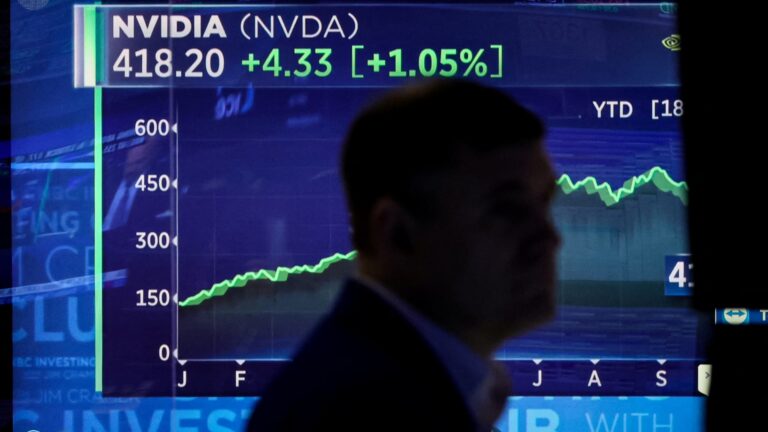
Wall Street is eyeing a positive opening on Thursday morning as stock futures climb following a wave of optimistic earnings reports from the tech sector. Leading the charge is Nvidia, which saw its shares jump more than 4 percent in extended trading after beating analyst expectations and projecting robust future revenue growth. For the semiconductor giant, these results may signal a turning point, breaking a frustrating streak where the stock frequently dipped even after delivering strong financial numbers.

The momentum extends beyond just one company, as several other high profile tech firms posted impressive quarterly results. Salesforce shares surged roughly 12 percent after reporting second quarter revenue that topped Wall Street estimates, while security firm Okta skyrocketed nearly 20 percent fueled by soaring demand for agentic AI tools. Even Agilent Technologies saw a boost with a 4 percent increase following its own better than expected revenue figures. Together, these gains have pushed Nasdaq 100 futures up nearly a full percentage point, while Dow and S&P 500 futures also showed steady advances.

Market analysts suggest that for long term investors, the valuation of these AI leaders remains attractive despite recent volatility. Some experts believe that once market multiples stabilize and move forward, these stocks are positioned for sustained growth over time. This optimism comes at a critical moment for traders who spent much of Wednesday in a holding pattern, leaving the major indexes largely unchanged as they waited for these key disclosures.

Looking ahead to Thursday, investor attention will shift toward the Federal Reserve’s annual symposium in Jackson Hole, Wyoming. While the immediate focus remains on corporate profits from names like Best Buy and Workday, the broader market will be listening closely for clues regarding future interest rate movements during the Fed’s gathering. For now, however, the artificial intelligence boom continues to provide enough fuel to lift spirits across the board before the opening bell sounds.

The global fascination with generative AI has reached a fever pitch since the 2022 debut of ChatGPT, turning OpenAI into one of the most sought after targets for investors worldwide. While many retail traders are eager to buy shares directly, the company remains private, meaning you cannot simply log into a brokerage account and purchase ticker symbols. However, the horizon is shifting. Recent reports indicate that OpenAI has confidentially filed a draft S-1 with the SEC, though a formal public listing may be pushed back to 2027. CEO Sam Altman has signaled that he views any valuation under one trillion dollars as a non starter, reflecting an ambitious trajectory mirrored by rivals like Anthropic.

For those who cannot wait for an initial public offering, there are indirect routes to gaining exposure to OpenAI’s growth. Accredited investors often turn to secondary marketplaces where employees or early backers sell their private shares before a company goes public. For the average investor, Microsoft represents the most prominent gateway. Having poured nearly fourteen billion dollars into OpenAI over several years, Microsoft holds a significant stake of roughly twenty seven percent and maintains deep integration between its Azure cloud services and OpenAI’s models through 2032. Despite periodic rumors of friction regarding revenue sharing and antitrust concerns, Microsoft remains inextricably linked to the chatbot’s commercial success.

Beyond direct stakes or partnerships, the broader generative AI ecosystem offers alternative avenues for investment. The massive momentum seen in recent high profile debuts, such as SpaceX’s record breaking IPO following its merger with xAI, shows that the market is hungry for AI infrastructure and platforms. As OpenAI continues to iterate with newer versions like GPT-5 and beyond, analysts suggest looking toward companies providing the hardware and cloud computing necessary to power these massive language models. Until OpenAI finally hits the open market, watching these strategic alliances and supply chain providers remains the most viable strategy for those wanting a piece of the AI revolution.

A wave of anxiety over potential U.S. trade policies has triggered a massive scramble among traders to flood American warehouses with refined copper. Fearing that new import tariffs could soon make shipments prohibitively expensive, market participants are rushing to stockpile the metal domestically, driving prices toward all-time highs even though global supplies remain technically sufficient. On the New York Commodity Exchange, September delivery prices surged to a record 6.7270 dollars per pound, creating a notable premium over the London Metal Exchange as inventories in the U.S. climb for the forty sixth consecutive day.

The urgency stems from an upcoming Commerce Department report that will help the White House decide whether to implement a fifteen percent tariff on refined copper starting in January 2027, with the possibility of those duties climbing to thirty percent by 2028. This threat has turned U.S. ports into magnets for cargo; in July alone, more than 200,000 tons of copper arrived on American shores, marking the highest monthly volume since 2014. Analysts suggest this shift has fundamentally altered the global landscape, turning what was expected to be a significant surplus into a balanced or even tight market because so much metal is effectively trapped inside U.S. borders to avoid future taxes.

While trade fears dominate the headlines, deeper structural issues are compounding the volatility. Supply chains are already fractured by geopolitical conflict and operational failures, including the closure of the Strait of Hormuz which hindered the flow of essential processing chemicals like sulfuric acid. At the same time, production drops in Chile and operating hurdles at major mines in Indonesia and the Democratic Republic of Congo have thinned out available reserves elsewhere. A recent export ban on concentrates from the DRC further drained London warehouse stocks just as demand spikes for AI data centers and electric vehicles continue to grow.

Industry leaders believe this frantic buildup may eventually stabilize once a definitive government decision is reached. Glencore CEO Gary Nagle suggested that while high stockpiles will exist within the United States for some time, they will likely be used internally rather than ever being exported again due to cost constraints. For now, however, until the regulatory fog clears and mining outputs recover from various shocks, copper remains caught between a surge of strategic hoarding and genuine systemic scarcity.

Washington is currently pouring billions of dollars into a massive overhaul of its domestic resource landscape, treating the procurement of critical minerals and AI infrastructure as a matter of urgent national security. Since early 2025, the Trump administration has greenlit roughly 40 billion dollars across 160 different minerals deals, shifting away from simple grants toward more direct government investments and accelerated permitting. While the White House frames this as a necessary move to break China’s stranglehold on global supply chains, the aggressive nature of these subsidies has sparked concerns over where public policy ends and private gain begins.

Much of this scrutiny centers on members of the Trump family whose business interests align closely with these new federal priorities. Ethics experts and lawmakers are questioning whether the boundaries between governance and personal profit are blurring, particularly given how certain investments seem to precede government action. A primary example involves Vulcan Elements, a rare earths magnet producer in North Carolina that received a 700 million dollar financing package from the Department of Defense. Reports indicate that an investment firm tied to Donald Trump Jr. took an undisclosed stake in the company just months before the Pentagon announcement, adding fuel to allegations that White House influence may have played a role in securing the funds.

Despite these controversies, many industry veterans argue that such heavy handed government intervention is the only way to compete globally. Some analysts describe this approach as a form of sector specific state capitalism, suggesting that without similar interventions used previously for the auto or banking industries, American firms cannot stand up to foreign competitors who ignore international trade rules. They contend that federal capital acts as a vital catalyst that reduces risk for junior miners and attracts further private investment into volatile markets like lithium and cobalt.

Ultimately, the current administration is betting that domestic independence in strategic materials outweighs the political optics of overlapping financial ties. By integrating government capital directly into the production of batteries and high tech magnets, Washington is attempting to reshape its industrial base in real time. Whether this transition can remain transparent remains a point of contention, as investigators continue to track whether official policies are being crafted for national stability or tailored for familial advantage.

Dan J. Sullivan Jr., a Senate candidate in Alaska who has made headlines for sharing a name with incumbent Sen. Dan S. Sullivan, R-Alaska, has officially advanced to the general election, The Associated Press announced on Wednesday.

He joins Sen. Sullivan and former Rep. Mary Peltola, D-Alaska, as the third of the final four candidates.

Alaska has yet to announce the fourth.

Sullivan Jr.’s advance, which seemed likely after the polls closed last Tuesday, complicates the picture for Republicans as they work against the clock to explain why two candidates have the same name — as well as which one to vote for. Unlike the primary, the general election picture is further clouded by ranked-choice voting (RCV), which raises more questions about how voters will react to the name overlap.

MORNING GLORY: ALASKA’S ‘REAL’ SENATOR DAN SULLIVAN STOOD UP OVER CHALLENGER

Under this system, voters rank their preferred candidates. If their top choice is eliminated, their support passes on to their next-ranked option. While supporters of the process argue it expands voters’ power and greatly increases the influence of candidates that may not otherwise be a top choice, critics — like Sen. Sullivan — believe it also introduces confusion.

“Like many others who did not support ranked choice voting in 2020, I still believe that this new election system has created unnecessary confusion among voters,” Sullivan told local Alaskan media in 2024.

Fears of that confusion were amplified by the emergence of the second Sullivan.

Sullivan Jr., a logger, appeared among the 16 candidates on the ballot as an independent in last week’s primary, snapping up 2.5% of the vote. Sullivan Jr.’s campaign announcement did not list a party affiliation. His website does not state his position on any political issues.

Instead, it leaned into the name overlap. “Dan Sullivan challenges Dan Sullivan for U.S. Senate Seat, urges Alaskans to defeat incumbent, elect a Sullivan who stands up for Alaska,” it read.

ALASKA REPUBLICANS SCRAMBLE TO EDUCATE VOTERS ON SUSPECTED DEM PLANT AS ‘BALLOT FATIGUE’ THREATENS RACE

According to his biography, Sullivan Jr. spent his early career working blue-collar jobs like logging, construction, bartending and forestry but decided to enter his bid for Senate after growing frustrated with government mismanagement.

A Fox News Digital review of the campaign earlier this year uncovered that Amber Lee, a progressive consultant, had helped author some of Sullivan Jr.’s campaign materials. Lee previously supported Peltola, the former congresswoman.

The campaign has drawn criticism from Republicans who believe it’s an effort to put two “Dan Sullivans” on the ballot in November and, through ranked choice voting, intentionally draw away votes from the senator.

Alaska state Sen. James Kaufman, a Republican, said he personally remains worried about conflation between the two.

He believes there are still some voters in Alaska, especially Republicans, who refuse to use the RCV system, citing disagreements with its implementation.

“Some people have a pretty strong traditionalist perspective: one person, one man, one vote,” Kaufman said.

JUDGE RULES REPUBLICAN WITH SAME NAME AS SEN DAN SULLIVAN CAN STAY ON ALASKA PRIMARY BALLOT

“And so, the ballot fatigue where people just don’t rank because maybe they disagree with it; there’s a pretty strong segment of the population here that just patently disagrees with the ranked-choice voting system we ended up with. And they don’t necessarily believe in utilizing it.”

Having cleared the primary, Sen. Sullivan, Sullivan Jr. and Peltola will face off in the general election on Nov. 3.

There’s a new frontier in the national privacy debate that’s uniting people on the right and left, and it’s a tool that millions of Americans encounter every day without even realizing it.

Automatic license plate reader (ALPR) companies have been brought under scrutiny by lawmakers in Washington as privacy hawks warn that the growing sophistication of artificial intelligence (AI) technology is testing the bounds of what ALPR devices can legally learn about drivers on the road.

One company in particular, Flock Safety, has been taking hits in the media and political sphere as news of Flock cameras’ misuse — and occasional success — dominates headlines.

“There’s cameras everywhere, people know that, but if law enforcement has the ability to monitor the comings and goings of citizens, I think that’s wrong. I mean, we’re not the CCP, we’re not 1984 and an Orwellian society, and Americans have rights,” Rep. Greg Steube, R-Fla., told Fox News Digital.

LICENSE PLATE CAMERAS ARE TRACKING DRIVERS EVERYWHERE

He pointed to a recent incident in his district where a now-former Sarasota police officer was fired and arrested after being accused of misusing Flock camera technology, using it to spy on one particular license plate over 300 times.

FLOCK SAFETY CAMERAS NEED CONSTITUTIONAL GUARDRAILS BEFORE FURTHER DEPLOYMENT, TENNESSEE MAYOR ARGUES

“I don’t think you’re gonna be able to stop these cameras from being out there, but at the very least, there should be some type of legal parameters put in place to protect people’s Fourth Amendment rights,” he said.

ALPRs automatically capture and analyze vehicle and location data on public roads without drivers’ consent. Supporters have argued that it’s a critical tool for public safety that only collects minimal information, while opponents labeled it an alarming expansion of the mass surveillance state.

LICENSE PLATE CAMERAS AT HOME DEPOT AND LOWE’S SPARK PRIVACY FEARS

Rep. Keith Self, R-Texas, told Fox News Digital, “These cameras are well beyond an automated license plate reader today. AI has made them so capable that they are now capable of facial recognition, of seeing what you’re doing inside your car. So it’s well beyond the license plate reader…that’s the problem. Technology has moved these beyond just looking at the back of a car.”

On the other side of the aisle, a spokesperson for progressive Rep. Delia Ramirez, D-Ill., pointed Fox News Digital to her recent comments responding to news that Flock was updating its oversight standards. Ramirez wrote on X, “Private tech companies have amassed record-breaking profits off our pain and the use of technology for mass surveillance is a threat to our democracy, civil liberties, and privacy. Congress must stop the ever-expanding surveillance state.”

‘DARTH VADER’ USES DARK SIDE TO MOCK CONTROVERSIAL SURVEILLANCE CAMERAS: ‘THE EMPEROR IS A FAN OF FLOCK’

The debate even exploded onto the campaign trail ahead of November’s midterm elections, where ALPRs join AI data centers as Big Tech’s big boogeymen.

“I oppose Flock’s mass surveillance technology, and I’ll stand with anyone in Congress, regardless of party, who wants to put limits on unchecked mass surveillance on the American people,” Will Lawrence, a Democrat running for the House in Michigan’s 7th Congressional District, told Fox News Digital.

DSA CANDIDATE PUSHES FEDERAL AI DATA CENTER MORATORIUM WITH MICHIGAN EARLY VOTING UNDERWAY

Abdul El-Sayed, the insurgent progressive Democratic nominee for Senate in Michigan, accused his opponent, former Rep. Mike Rogers, R-Mich., of supporting Flock cameras in a campaign video released on X.

“There’s been this mass proliferation of black cameras, any and everywhere, little cameras, watching your every move to collect information about you without you even noticing,” he said in the video. “If you believe, like me, that you shouldn’t just be surveilled because you’re driving along the street, then I hope I can earn your support.”

A spokesperson for Rogers told Fox News Digital that he “vehemently opposes unchecked use of Flock cameras to track law-abiding citizens. Security and liberty aren’t enemies. Good government protects both.”

Back on Capitol Hill, the furor over these cameras has prompted a flurry of legislative pushback.

Self is among the House lawmakers pushing bills aimed at the issue, along with Reps. Tim Burchett, R-Tenn., and Thomas Massie, R-Ky.

Steube told Fox News Digital that he’s also “looking at filing something at the national level,” and is sending a letter to Sarasota, Florida, officials threatening to withhold federal funding absent a promise of “reasonable restrictions” to “prevent the abuses that have happened right here in our backyard.”

Privacy and misuse concerns have sparked efforts across the country to cut ties with Flock specifically, from Lansing, Michigan, to Bernadillo County, New Mexico.

Flock is just one company of several that operate ALPRs, some of which have been used for years.

But the technology does have its benefits and has been used to stop crime.

Flock Safety founder and CEO Garrett Langley told Fox News’ “Saturday in America” that his technology has helped police find missing children at least twice, including after a recent carjacking in Atlanta. Flock has also said it does not use facial recognition and recently introduced new safety controls in response to the public backlash.

“When I think about legislation that calls for an outright ban, that’s like banning vehicles. That would never have made sense. Instead, what we did is we introduced laws against drunk driving. We introduced laws around seatbelts, laws around airbags,” Langley said. “What happens if law enforcement abuses this powerful technology today? It is too often that in Flock and in other technologies, there’s no regulation, there’s no accountability. And we think that’s wrong.”

Supporters of ALPRs like Flock cameras have held them up as a key crime-fighting tool, while agreeing that guardrails to prevent abuse would be helpful.

“I think it’s definitely a net positive. And I think that’s a very easy call… the use cases and the documented cases of these things being effective tools, I think, vastly outnumber the handful of cases of abuse and misuse that we’ve seen,” Rafael Mangual, a senior fellow at the Manhattan Institute, told Fox News Digital. “The fact that some police officers will misuse their firearms, for example, to hurt people, is not a reason to take away all police officers’ firearms.”

Mangual said he disagreed with accusations of Fourth Amendment violations as well: “I think as of right now, these cameras can’t be used to do the sorts of things that courts have recognized require a warrant.”

Jim Pasco, executive director of the National Fraternal Order of Police, told Fox News Digital, “There’s an awful lot of new and still developing technology out there that’s very helpful to law enforcement and to enhancing public safety. That said, all of these systems need to be regulated to ensure that they aren’t abused.”

He also cautioned against making policy decisions in the heat of an election cycle.

“The most dangerous time of governance to have a crisis in is an even-numbered year, because elections are always held in even-numbered years. And I would say this problem and this year are no exception,” Pasco said. “There needs to be a very careful analysis of the benefits and the risks inherent in abuse and any action that’s taken should, if anything, enhance the potential for these systems being used for good and minimize the chances of abuse.”

“Let’s not throw out the baby with the bath water here.”

This post appeared first on https://www.foxnews.com