
Archive

August 31, 2026

Browsing

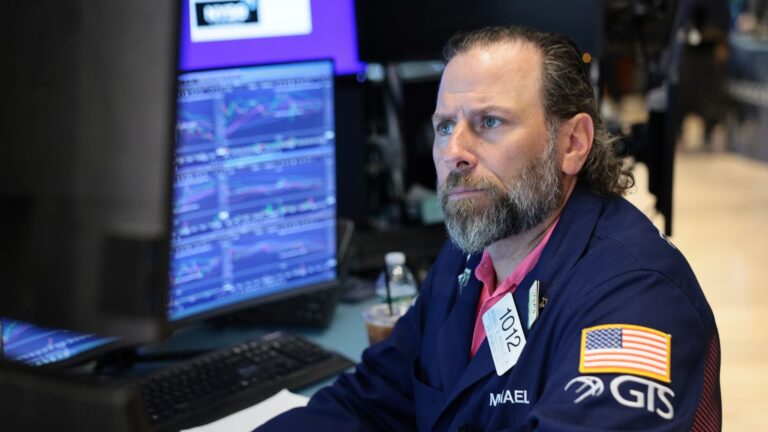
Investors are bracing for a pivotal week as several key economic catalysts converge to potentially shift the trajectory of the stock market. Analysts are keeping a close eye on upcoming inflation data and central bank signals, which will likely dictate whether equity markets continue their current momentum or enter a period of cautious consolidation. The intersection of corporate earnings reports and macroeconomic indicators has created an environment where even slight deviations from expectations could trigger significant volatility across major indices.

Chief among these concerns is the anticipation surrounding new employment figures and consumer price indexes. Traders are searching for any hint that inflationary pressures are cooling enough to justify further interest rate cuts, while simultaneously worrying that a labor market slowing too quickly could signal a broader economic downturn. This delicate balancing act means that every piece of government data released over the next few days will be scrutinized for clues regarding the Federal Reserve’s next move during its upcoming policy meetings.

Beyond the broad economic numbers, specific sectors are facing their own moments of truth with high profile quarterly results arriving mid week. Technology giants and semiconductor firms are expected to provide critical updates on artificial intelligence spending, helping investors determine if the massive capital investments seen over the last year are finally translating into tangible revenue growth. If these companies report strong margins and optimistic guidance, it could fuel another rally in tech stocks regardless of what happens with interest rates.

Finally, geopolitical tensions remain a wild card that could disrupt established trading patterns without warning. Fluctuations in energy prices driven by international instability often ripple through the transport and manufacturing sectors, adding another layer of complexity for portfolio managers trying to hedge their bets. As the closing bell rings on Friday, much will depend on how these three forces—inflationary trends, AI profitability, and global stability—interact to shape investor sentiment heading into the new month.


In an era where algorithmic trading and speculative hype often dominate the financial headlines, the latest results from the Financial Times stock picking game have provided a refreshing reminder that the basics still matter. While many participants leaned into high growth projections and trendy sectors, it was those who adhered to traditional fundamental analysis who emerged victorious. The outcome suggests that digging deep into balance sheets and evaluating intrinsic value remains a potent strategy even in volatile markets.

The competition saw a diverse array of strategies clash, with some investors chasing momentum and others betting on macroeconomic shifts. However, the top performers were characterized by their discipline in selecting companies with strong cash flows and sustainable competitive advantages. By ignoring the noise of short term market swings and focusing on long term health, these winners managed to outperform portfolios built on more aggressive or intuitive guesswork.

Industry observers note that this result comes at a time when retail investing has become increasingly gamified through mobile apps and social media trends. The victory of fundamentals over speculation serves as a cautionary tale for those lured by quick wins without doing the necessary homework. It reinforces the idea that while luck can play a role in individual trades, consistency is almost always born from rigorous research and valuation metrics.

Ultimately, the experiment underscores a timeless truth in finance that is often forgotten during bull runs: price is what you pay, but value is what you get. As analysts dissect the winning picks, the consensus seems to be that patience and prudence are not outdated concepts but essential tools for navigating modern uncertainty. For those looking to build lasting wealth, returning to the core principles of accounting and business logic appears to be the most reliable path forward.

Investors looking at current market trends may find themselves experiencing a sense of deja vu, as the stock market is currently exhibiting valuation patterns that haven’t been seen since the height of the dot com bubble. According to the Shiller cyclically adjusted price to earnings ratio, which measures the S&P 500 against ten years of inflation adjusted earnings, the market is now the second most expensive it has ever been in recorded history. While the historical average for this ratio sits around 18, current readings have soared past 41, echoing the speculative frenzy of the late nineties.

This surge in valuation doesn’t automatically guarantee a disaster, but it does suggest that stocks are trading at levels far detached from their actual earnings. When prices climb this high, they are typically driven by optimistic projections for future growth rather than present reality. This creates a precarious environment where there is very little room for error. Much like the period leading up to the year 2000, any significant disruption—such as rising interest rates or missed profit targets—could easily trigger widespread panic among investors who realized they overpaid for growth that never materialized.

Looking back at the dot com crash provides a sobering lesson in how quickly things can turn. During that era, capital flooded into tech companies with virtually no revenue until a series of rate hikes by the Federal Reserve sparked a sell off. By October 2002, the Nasdaq had plummeted nearly eighty percent from its peak. While historians cannot predict exactly when or if another collapse will happen, they warn that extreme valuations historically precede either stagnant returns or sharp corrections.

For those concerned about a potential downturn, experts suggest focusing on stability rather than trying to time an exit from the market perfectly. Selling everything now carries its own risk, as missing just a few of the market’s best performing days can severely hinder long term gains. Instead, financial advisors recommend ensuring portfolios are well diversified across different industries and keeping some cash reserves available to take advantage of lower prices should a correction eventually arrive.

While Broadcom has had a relatively quiet run in 2026 with modest gains of about six percent, some analysts believe the company is sitting on a powder keg ready to ignite. All eyes are now turning toward September 2, when the chip designer is scheduled to release its fiscal third quarter results after the closing bell. While the market is already expecting strong numbers, there are several underlying drivers that could push the stock into a parabolic climb.

One of the most compelling arguments for a massive surge lies in the exploding optical networking market. Demand for these components is currently far outstripping supply, creating a gold rush environment. Research from Goldman Sachs suggests this sector could skyrocket from fifteen billion dollars in 2026 to over one hundred and fifty billion by 2028. Given that nearly forty percent of Broadcom’s AI revenue stems from networking products, any significant beat in this category could send shockwaves through the stock price.

Beyond general networking, Broadcom’s partnership with industry giants like OpenAI provides another catalyst for growth. The recent announcement of Jalapeño, OpenAI’s first custom AI chip developed alongside Broadcom, signals a long term pipeline of high margin work. With two more generations of processors already in development, Broadcom is positioning itself as an indispensable architect for the world’s leading AI labs, moving beyond off the shelf parts into highly specialized hardware.

From a valuation standpoint, many investors view the current price as an overlooked bargain. Trading at nineteen times forward earnings, Broadcom sits well below the broader Nasdaq 100 average despite projections of seventy percent earnings growth over the next two years. This gap between its perceived value and its actual growth trajectory creates a scenario where even a slight positive surprise during the September report could trigger a rapid and aggressive rally.

Wall Street entered the final stretch of August with stock futures remaining largely flat on Sunday night, reflecting a cautious mood among investors as they prepare to close out a generally successful month. While indices like the Dow Jones Industrial Average and the S&P 500 saw slight dips in early overnight trading, the broader trend for August remains positive. The Dow is currently tracking toward its fifth straight monthly gain, while both the S&P 500 and Nasdaq Composite are poised for their first single-month increases since May.

Much of this upward momentum has been fueled by a surge in technology stocks, particularly those tied to the ongoing boom in artificial intelligence. The tech sector within the S&P 500 has jumped nearly six percent over the course of the month, bolstered by significant rallies from industry giants such as Nvidia, Microsoft, and Micron Technology. This enthusiasm helped push both the Dow and S&P 500 to new all-time highs earlier in the period, despite an undercurrent of volatility throughout the weeks.

The market hasn’t sailed entirely smoothly, however, as lingering inflation concerns have pushed Treasury yields to multiyear highs. Recent comments from Federal Reserve Chairman Kevin Warsh have added to the tension, with Warsh suggesting that underlying inflationary trends haven’t meaningfully improved. These remarks have led some economists at Barclays to suggest that a rate hike in September is now more likely than not, creating a tug-of-war between tech optimism and monetary policy anxiety.

Adding to the instability are rising geopolitical tensions in the Middle East. Following confirmation from U.S. Central Command regarding strikes on rocket launchers on Iran’s Larak Island, crude oil prices saw a sharp spike on Sunday. Both U.S. and Brent crude rose nearly three percent, reminding traders how quickly external shocks can disrupt domestic market sentiment.

Looking ahead, investors are bracing for a heavy slate of economic data this week that could dictate the direction of September’s trading. Market participants will be closely watching reports on manufacturing and services sectors before shifting their full attention to Friday morning’s highly anticipated August jobs report for clues about where the economy actually stands.

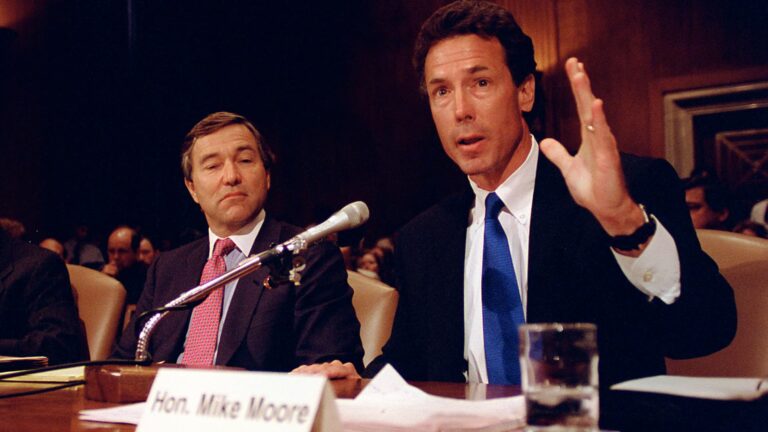
Mike Moore once stood at the center of one of the most consequential legal battles in American history, helping to secure a staggering 246 billion dollar settlement from Big Tobacco back in 1998. Now, the retired Mississippi attorney general is looking at the modern landscape of Silicon Valley and seeing a hauntingly familiar pattern. As Meta recently agreed to pay nearly 17 billion dollars to settle claims that it misrepresented the mental health risks its platforms pose to children, Moore believes we are witnessing the opening salvos of a campaign that could mirror the fight against cigarettes.

Through his involvement with a new nonprofit called the Attention Initiative, Moore is urging current state attorneys general to look beyond individual payouts and strive for a comprehensive, national resolution. His vision includes more than just fines; he is pushing for a permanent public education fund designed to shield young people from digital addiction. While Meta has already committed to nighttime blocks and stricter age verification, Moore argues that these are merely first steps toward a broader set of corrective actions that should apply across the entire industry, including giants like TikTok and Google.

However, some experts warn that applying a thirty year old playbook to the era of artificial intelligence might be overly simplistic. Jonathan Caulkins, a public policy professor at Carnegie Mellon University, suggests there is a fundamental difference between a cigarette and an algorithm. While tobacco serves no purpose other than recreation and addiction, social media exists in a gray area where immense societal benefit often clashes with psychological harm. Because technology evolves so rapidly, critics argue that any single settlement may become obsolete before the ink even dries, making it impossible to predict how these tools will impact users ten years down the line.

Despite these complexities, officials like California Attorney General Rob Bonta insist that recent victories are just the beginning. Calling Meta’s latest payment a conceptual floor rather than a ceiling, Bonta signaled that other tech firms should expect similar pressure soon. This sentiment is echoed by Josh Jacobs, the young founder of the Attention Initiative who reached out to Moore after becoming disillusioned with an industry focused on maximizing engagement at any cost. For Jacobs and Moore, the goal remains clear: treating social media addiction not as an inevitable byproduct of progress, but as a public health crisis requiring systemic intervention.

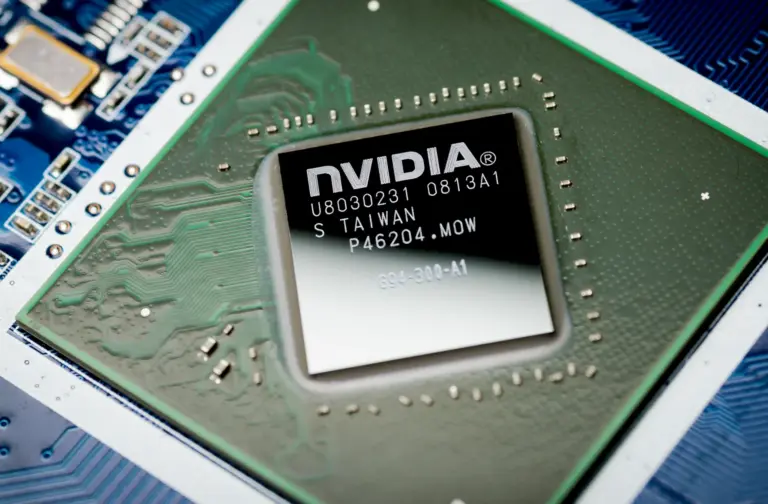
For months, Nvidia has seemed less like a semiconductor company and more like an unstoppable force of nature. Its ascent atop the artificial intelligence gold rush has been nothing short of meteoric, fueling a massive surge in its NASDAQ valuation as tech giants scrambled to hoard every H100 chip available. However, recent market movements suggest that the era of effortless growth might finally be hitting a ceiling, leaving investors to wonder if the cracks are starting to show in the AI powerhouse’s armor.

The primary concern centers on whether the current level of spending by hyperscalers is sustainable over the long term. While demand remains high, there is growing skepticism about when these massive investments will translate into tangible revenue for the companies buying the hardware. If cloud providers begin to scale back their capital expenditures because they cannot find immediate ways to monetize generative AI tools, Nvidia could face a sudden and sharp correction in order volume.

Furthermore, the competition is no longer just theoretical. From internal chip development at Amazon and Google to aggressive moves by AMD, the monopoly Nvidia once enjoyed is under siege. As alternatives emerge and customers seek to diversify their supply chains to avoid dependency on a single vendor, the pricing power that drove Nvidia’s astronomical margins may start to erode. This shift suggests that while the company remains a leader, its period of uncontested dominance is likely transitioning into a much more volatile phase of maturity.

The United States government has moved to sever the ties between the UAE operations of Banque Misr and the American financial system, alleging that the bank acted as a conduit for the Iranian government. In a stern announcement on Friday, US Treasury Secretary Scott Bessent stated that the move is part of a broader strategy called Operation Economic Outcast, designed to eliminate the remaining economic lifelines available to Tehran. According to officials, Banque Misr’s UAE branches served as a critical node for Iranian shadow banking networks, processing roughly 1.8 billion dollars for over one hundred companies linked to the Iranian regime between early 2024 and mid 2026.

Specifically, the US Department of the Treasury’s Financial Crimes Enforcement Network proposes revoking the bank’s correspondent banking access. This would effectively block those specific UAE offices from carrying out transactions in US dollars or accessing US markets. Washington claims that front companies associated with Iran’s Ministry of Defence and the Islamic Revolutionary Guard Corps used these accounts to evade sanctions and launder money. These actions are part of a wider crackdown that has recently seen sanctions imposed on dozens of individuals and entities across various jurisdictions, including targets in Hong Kong and managers at other regional banks like Bank Melli in Dubai.

Banque Misr responded on Saturday by stating it is currently reviewing the notice and treating the allegations with the utmost seriousness. The bank noted that there is still an official window for submitting comments before a final decision is reached, meaning current services remain active during this interim period. Meanwhile, the Central Bank of Egypt has rushed to clarify that these penalties apply strictly to dollar transactions within the UAE branches and do not jeopardize any other parts of Egypt’s banking sector or Banque Misr’s domestic operations back home.

Adding more pressure to the situation, banking authorities in the UAE have launched their own urgent investigation into Banque Misr’s activities within their borders. The UAE central bank announced it will perform a forensic lookback at transactions mentioned by US authorities, emphasizing that no institution should use Emirati financial infrastructure to create reputational risks or violate international law. As diplomatic tensions persist between Washington and Tehran over stalled truce talks, this high stakes regulatory battle highlights how deeply geopolitical conflicts now penetrate global finance.

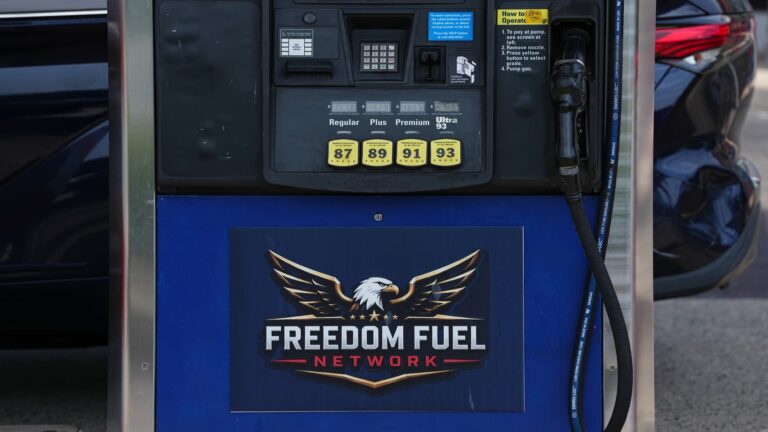
A high profile gasoline network once lauded by President Donald Trump for its aggressively low prices is now at the center of a multimillion dollar legal battle. A lawsuit filed by Georgia based supplier Mansfield Oil alleges that a significant amount of the fuel sold through the Freedom Fuel Network may have gone unpaid, suggesting that the deep discounts touted as patriotic gestures were actually funded by unpaid debts.

According to federal court documents, Mansfield Oil claims that businessman Syed Kazmi and his company, KRSM, obtained over 1.1 million gallons of fuel from a Pennsylvania terminal between May and July. When the supplier issued an invoice for roughly 4 million dollars in July, the bill remained unpaid. The lawsuit argues that these missing payments allowed KRSM to provide fuel to certain Freedom Fuel stations at prices far below market value, effectively subsidizing the promotional rates that caught national attention.

The controversy stems from an early July promotion where twenty five stations across Pennsylvania and New Jersey slashed prices to 3.47 dollars a gallon to celebrate Trump’s status as the 47th president. At the time, Trump praised the retailer on Truth Social, claiming they were leading the way toward record low prices because of their love for the country. However, Mansfield Oil contends that this publicity was built on a foundation of debt rather than business efficiency.

Legal representatives for KRSM have denied any wrongdoing, characterizing the situation as a simple accounting dispute involving incorrectly priced invoices from Mansfield Oil. While several Freedom Fuel locations in New Jersey are reportedly managed by Syed Kazmi’s brother, Shamikh Kazmi, the network itself is not named as a defendant in the suit. Meanwhile, White House officials have distanced themselves from the matter, stating there has been no direct contact or dealing with those involved in the litigation.

The neon lights of the Las Vegas Strip have weathered many storms, but the current climate feels particularly hostile for the city’s casino moguls. Beyond a grueling summer of record heat and a noticeable dip in tourism, resort owners are facing what they describe as an existential crisis brought on by the explosive growth of prediction markets. Platforms like Kalshi and Polymarket have rapidly evolved from niche tools for political junkies into multibillion dollar industries where users trade event contracts on everything from elections to sports. By framing themselves as financial trading platforms rather than gambling houses, these companies have managed to sidestep traditional state gaming boards and avoid the heavy taxation that typically funds public infrastructure and education.

For established players like Derek Stevens, owner of several Vegas casinos and Circa Sports, this regulatory loophole is nothing short of theft. Stevens has characterized the founders of these platforms as pirates and marauders who used clever legal maneuvering to dodge taxes while siphoning off customers. While some analysts argue that the recent downturn in Vegas is simply a result of rising living costs for consumers, sportsbook operators are seeing harder evidence in their ledgers. Stevens reports a staggering 35 percent drop in total wagers at his properties this year, attributing the loss directly to the migration of bettors toward these unregulated digital markets.

The backlash has recently gained significant legal momentum, culminating in a unanimous ruling by the Ninth Circuit Court of Appeals that allows states to regulate prediction platforms as gambling. This decision provided a blueprint for other jurisdictions across the country, leading to similar crackdowns from Connecticut to Wisconsin. The battle has also moved to Washington D.C., where a rare bipartisan coalition of lawmakers has introduced numerous bills aimed at reining in the industry. The push isn’t just coming from wealthy casino lobbyists; it includes 44 state attorneys general and various tribal governments who fear a massive loss in tax revenue dedicated to schools and highways.

Supporters of prediction markets view this onslaught as a predictable reaction from an industry desperate to maintain its monopoly. Former Nevada Senator Dean Heller, now an advisor to Kalshi, argues that this is simply how the gaming industry reacts whenever it encounters genuine innovation or competition, citing previous fights against tribal gaming and online poker. Despite this defense, the numbers tell a compelling story for both sides. While large land-based casinos still report record revenues overall due to high-spending VIPs, specialized sportsbooks and online giants like DraftKings have felt a sharp chill. With billions of dollars now flowing into sports-related event contracts on prediction sites, the conflict has shifted from a boardroom disagreement into an all out war for the future of betting in America.