
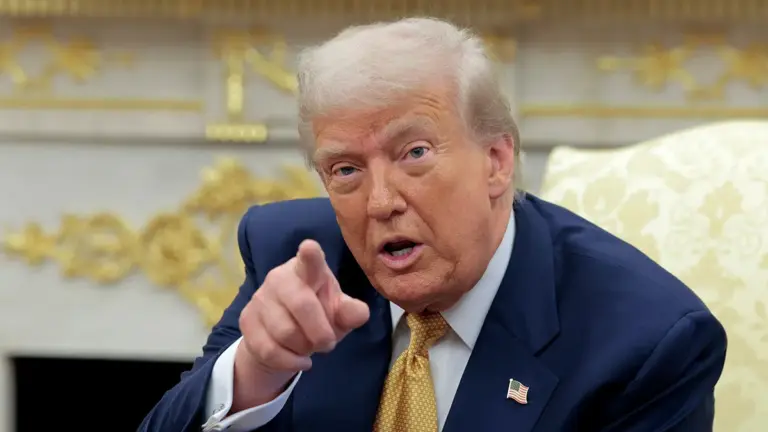
One year ago this week, Texas passed a new congressional redistricting map, giving President Donald Trump his first major victory in his push to give Republicans a big boost heading into the midterm elections by drawing more right-leaning districts.
One year later, as they fight to hold their razor-thin House majority, Republicans are the big winners, with partisan redistricting netting them at least 10 additional right-leaning congressional seats in time for the midterms.
Democrats and left-leaning pundits repeatedly railed against Trump’s efforts and charged they would “shred our country’s democracy.”
Top Democrats aimed to fight fire with fire but fell short. Their efforts to keep pace with the GOP were derailed following major court rulings by the Supreme Court and Virginia’s top court earlier this year, which were seen as major legal victories for Republicans. And the GOP scored another redistricting win earlier this month in Missouri, when a judge allowed a new map, backed by Trump and passed last year by Republican state lawmakers, to be used in November’s elections.
BLOCKBUSTER SUPREME COURT RULING IGNITES REDISTRICTING WARS ACROSS SOUTHERN STATES
Progressive pundits that cast Trump’s push for Texas to redraw its congressional map before the 2026 midterms as a threat to voting rights and democracy. Among them was former MSNBC anchor Joy Reid.
She branded the fight a “Voting Rights 911” and later titled a segment on “The Joy Reid Show” as “Texas’s War on Democracy Through Gerrymandering.”
John Oliver, host of “Last Week Tonight” on HBO, was also among a group of pundits that criticized the redistricting push as a power grab by Trump and the GOP.
Oliver said gerrymandering was the practice of manipulating maps “to get the outcome you want,” and called it “putting a heavy thumb on the scale of who gets elected.”
Fox News Digital reached out to representatives for Reid and Oliver to see if they continue to stand by their criticism, but didn’t receive responses by the time this story was published.
It wasn’t just pundits who spoke out.
Top Democrats also took action, after Trump, aiming to prevent what happened during his first term in the White House when Democrats reclaimed the House majority in the 2018 midterms, first floated the idea of rare, but not unheard of, mid-decade congressional redistricting.
After Texas led the way last summer, Democratic National Committee Chair Ken Martin called a ruling by the conservative-dominated Supreme Court to greenlight the redistricting a victory for a “rigged map” meant to protect the GOP from midterm accountability.
“But it will backfire,” Martin predicted.
California Gov. Gavin Newsom, who led a successful redistricting effort in his Democrat-dominated state last year to negate the GOP gains in Texas, emphasized, “California will not sit idle as Trump and his Republican lapdogs shred our country’s democracy before our very eyes.”
TWIN COURT RULINGS RESHAPE HOUSE BATTLEFIELD AS DEMOCRATS FIGHT UPHILL REDISTRICTING BATTLE
And Democratic Gov. Kathy Hochul of New York, who considered but decided against redrawing congressional maps in the blue-leaning state, charged that Trump and Republicans were aiming to “erode our democracy and drag us toward authoritarianism.”
A veteran Republican strategist sees the Democrats’ arguments as hypocritical.
“The left’s overcharged political rhetoric is undermined by Governor Gavin Newsom’s willingness to spearhead a power grab in his state that eliminated at least 5 GOP congressional seats,” Colin Reed told Fox News Digital.
Reed argued that “Democratic leaders had the same goal as Republicans with mid-decade redistricting; they just weren’t as successful, but their intent makes any complaints about democracy ring hollow.”
But Democrats stand by their resistance.
“Elected leaders in every state should respond aggressively to this unAmerican attempt to rig control of congress for a generation,” John Bisognano, executive director of the National Democratic Redistricting Committee, told Fox News Digital.
SIGN UP TO GET THE POLITICS NEWSLETTER
While Texas and California were the first major battlegrounds in the redistricting war, the fight quickly spread from coast-to-coast.
Republican-controlled Florida, Missouri, and Ohio and swing state North Carolina, where the GOP dominates the legislature, drew new maps as part of the president’s push.
But in blows to Republicans, a Utah district judge late last year rejected a congressional district map drawn by the state’s GOP-dominated legislature and instead approved an alternate that created a Democratic-leaning district ahead of the midterms.
And Republicans in Indiana’s state Senate in December defied Trump, shooting down a redistricting bill that had passed the state House.
But Democrats were dealt a major blow this spring when the Virginia Supreme Court struck down the Democrat-controlled state’s congressional redistricting ballot measure, which would have produced up to four more left-leaning House seats.
DEMOCRACY ’26: STAY UP TO DATE WITH THE FOX NEWS ELECTION HUB
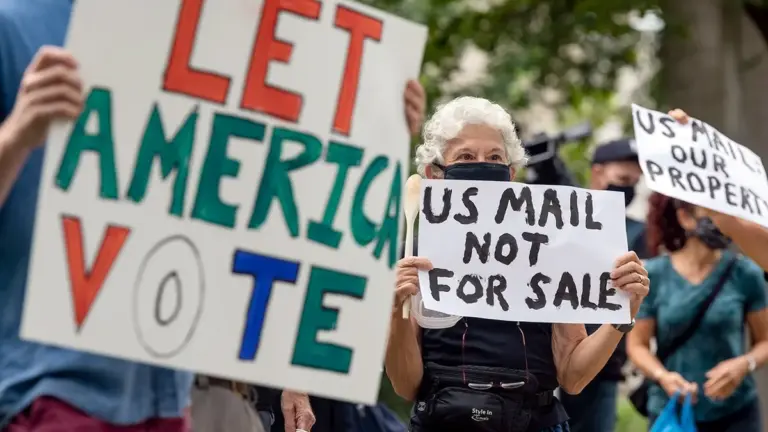
The next phase of President Donald Trump’s effort to change America’s mail-in-voting system is taking shape after the Supreme Court issued a largely favorable ruling for the White House in a challenge to Trump’s mail-in ballot restrictions.
Former White House deputy counsel Gene Hamilton said federal agencies such as the Postal Service can now move forward with parts of Trump’s election-integrity order, including new ballot-mail standards and efforts involving state citizenship lists, as opposing states wait to see which concrete federal actions could form the basis of new lawsuits.
“It’s really interesting what the court did [and] it’s actually exactly what you would expect the court to do,” Hamilton told Fox News Digital.
TRUMP SCORES SUPREME COURT WIN ON MAIL-IN VOTING RESTRICTIONS BEFORE MIDTERMS
Hamilton said that when Trump directed USPS, DHS and DOJ to prepare for the new protocols, several states immediately claimed harm, but the court’s majority rejected their challenge.
Originally, a Boston federal judge agreed with them, but the Supreme Court effectively said “you can’t enjoin [the feds] from thinking” — in Hamilton’s words — because no action had taken place yet.
JACKSON RIPS INTO SUPREME COURT COLLEAGUES’ ‘SERIOUS LEGAL ERROR’ ON TRUMP MAIL-IN VOTING ORDER
“It reminds the American people … just because something might happen in the future [it] doesn’t mean that you’re actually harmed today, and that’s really the crux of what the court did.”
Hamilton quipped that if the states challenging the order were proven right — and the possibility of future harm were enough to obtain a legal stay — his organization would “have a field day across the country” trying to head off new policies he and his clients oppose.
In that regard, he added that the district judge ultimately overruled by the Supreme Court made an “egregious” misread of Article III powers and essentially said states can dictate which cases the attorney general and DOJ try to prosecute.
He emphasized that the legal landscape could change quickly once Trump’s actions get underway, but said states challenging executive action must show a concrete or sufficiently imminent injury rather than rely on predictions about what agencies might eventually do.
DHS APPROVES PLAN TO VERIFY VOTER CITIZENSHIP, MONITOR MAIL BALLOTS AS TRUMP PUSH INTENSIFIES
Besides USPS, Trump’s order directs DHS to compile and provide states with lists of adult U.S. citizens, while DOJ was told to prioritize investigations and potential prosecutions involving ballots issued to ineligible voters.
“Let’s see what the departments and agencies actually do. Well, let’s see what they say they’re going to do,” Hamilton told Fox News Digital, as new concrete federal rules will come next.
USPS WOULDN’T DELIVER BALLOTS IN STATES THAT REFUSE TO FORK OVER MAIL-IN VOTER INFO UNDER PROPOSED RULE
The clock is ticking to implement the plan and respond to further legal challenges as states distribute mail ballots progressively earlier than in past decades.
USPS first proposed its ballot-mail rule in June and has since finalized it, requiring standardized ballot envelopes and unique tracking barcodes while directing states to use a federal portal to identify voters receiving mailed federal ballots. States that fail to comply could see outbound federal ballot mail refused or returned.
But the agency signaled at the time that it won’t implement the rule for the midterms unless the litigation is resolved. A separate injunction obtained in litigation by the League of Women Voters currently blocks USPS from implementing the rule.
“Why wouldn’t you take steps like getting a list of eligible voters, like asking the USPS to use standard mail security measures that they use for other things,” Hamilton commented.
Asked which provisions of Trump’s order the administration plans to implement following the ruling, when those actions would begin and how states would be directed to comply, the White House did not provide specifics.
“These are commonsense measures that protect the security of mail-in ballots and ensure only Americans are electing American leaders. This administration will continue to lawfully enact the agenda President Trump was elected on — which includes the safety and security of our elections,” White House spokeswoman Lauren Bis told Fox News Digital.
California Attorney General Rob Bonta — who led the plaintiffs from 23 states along with Pennsylvania Gov. Josh Shapiro — criticized the Supreme Court for letting Trump “try to make it harder for Americans to vote.”
Shapiro was listed separately because Pennsylvania Republican Attorney General David Sunday had not signed the state onto the suit.
“Not so fast,” the potential 2028 presidential candidate said in a statement. “Donald Trump does not run elections here in Pennsylvania — or in any state.”
“[The] SCOTUS decision does not deal with the substance of Trump’s unconstitutional Executive Order and does not mean his illegal attempt to restrict mail-in voting will go forward.”
On Wednesday, Arizona Attorney General Kris Mayes responded to the ruling, declaring, “Over my dead body is that rule going to go into effect. We are going to fight this tooth and nail in the courts.”
Bonta pledged to continue the fight and noted that Obama-appointed Judge Indira Talwani of Boston had originally sided with the plaintiffs.
SIGN UP TO GET THE POLITICS NEWSLETTER
Hamilton predicted such disputes would produce another round of litigation as agencies make their next moves.
“We have to get through the arbitrage of lower court proceedings, and I’m sure there’s going to be a lot more fighting to come,” he said.
Shapiro echoed the plaintiffs’ opposition to the ruling, tweeting:
“We’ll see the Trump Administration in court.”
Fox News Digital’s Hannah Brennan and Melissa Chrise contributed to this report.
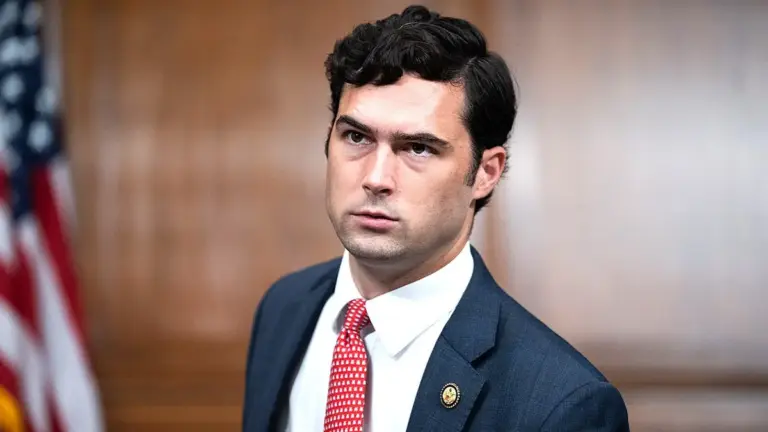
House Oversight Committee Chairman James Comer, R-Ky., is subpoenaing a doctor allegedly behind a sprawling birth tourism scheme based in Florida.
It comes as Rep. Brandon Gill, R-Texas, is setting his sights on a new target after his crackdown on the Smithsonian Institution made headlines and thrust fresh scrutiny onto its teaching of American history.
Gill’s task force on investigating institutional abuses, which is part of the House Oversight Committee, is now gearing up for a hearing on the practice of birth tourism — something the White House sounded the alarm on just this month.
As part of the hearing, Comer sent a subpoena to Dr. Wladimir Lorentz of Have My Baby in Miami, a South Florida business that’s aimed at helping foreigners give birth in the United States. The hearing is expected to take place Sept. 1.
Comer accused Lorentz of refusing to voluntarily appear via his attorney, and in a letter sent with the subpoena on Tuesday, Comer said Lorentz’s attorney argued he could not speak with the committee due to a pending criminal probe being conducted by the U.S. Attorney’s Office for the Southern District of Florida.
“As the Founder and Chief Medical Officer of a company doing business as ‘Have My Baby in Miami,’ your knowledge regarding the company’s marketing practices and direct observations relevant to the birth tourism industry is vital to the immediate investigation,” Comer’s subpoena letter read.
SEN ERIC SCHMITT SEEKS TO END BIRTH TOURISM, REVOKE CITIZENSHIP FOR BABIES OF FOREIGN DIPLOMATS
“Furthermore, given the national security concerns raised by birth tourism, delaying the hearing or deferring your testimony to some unknown date in the (potentially far) future would be an extraordinary action that would curtail the Committee’s ability to glean valuable information that will inform its oversight and further its legislative goals.”
Meanwhile, Gill echoed Comer’s concerns over national security.
BIRTH TOURISM FIGHT SHIFTS TO US ‘TROPICAL MATERNITY WARD’ WITH HISTORY OF CHINESE EXPLOITATION
“A growing industry is openly marketing American citizenship to foreign nationals who travel here for the express purpose of giving birth on U.S. soil. This abuse of our immigration system also raises serious national security concerns, particularly given the number of birth tourists traveling from adversarial nations like China and Russia,” the House GOP firebrand said.
His panel’s Sept. 1 hearing is also expected to feature testimony from Dr. Steve Camarota of the Center for Immigration Studies. The medical director and owner of a company called International Maternity Services, Dr. Julio César Novoa, was also invited.
TEXAS GOV ABBOTT SIGNS EXECUTIVE ORDER CRACKING DOWN ON ‘BIRTH TOURISM,’ SAYS US CITIZENSHIP NOT FOR SALE
Gill’s new task force, which was founded this year, has largely focused on diversity, equity, and inclusion (DEI) efforts across various sectors of American life.
He’s held hearings on whether the Smithsonian’s teaching of U.S. history involved overly ideological and political leanings, and whether DEI plays a role in running the American Bar Association (ABA).
Birth tourism is the colloquial term for the general practice of foreign nationals coming to the U.S. on temporary visas for the purpose of having a child who then automatically becomes an American citizen.
President Donald Trump targeted birth tourism in a recent executive order after the Supreme Court struck down his efforts to curb birthright citizenship writ large. He also signed an order banning specific categories, such as children born to foreign government workers, from automatically getting U.S. citizenship.
Have My Baby in Miami is just one company that appears to make it more accessible for foreigners to give birth in the U.S. Its website and social media pages appeared to be disabled as of Thursday.
But a YouTube page that appears to be associated with the business states, “Many people have questions about how to have a child in the United States, and we can help clarify how to deliver in Miami, how to live in the United States during your pregnancy, how to have a baby in the United States, how much it costs to deliver in the United States and how to go through pregnancy in the United States.”
“Children who are born in the United States, with rare exceptions, have US citizenship,” the summary states.
An October 2025 article by Local 10 in Florida appears to have obtained information from the now-deleted pages, including that the company reportedly touted that it helped deliver 2,000 babies.
It’s not yet clear if Lorentz will appear. But defying a congressional subpoena could risk criminal charges.
Fox News Digital reached out to his lawyer for comment.

Investors gave Marvell Technology a cold shoulder during premarket trading, sending shares tumbling 8 percent despite a financial report that showed impressive top line growth. The semiconductor firm reported second quarter revenue of 2.7 billion dollars, a 37 percent jump that slightly exceeded the company’s own projections from May. While these numbers look strong on paper, the market reaction suggests that Wall Street had already priced in perfection and was looking for something even more aggressive to justify current valuations.
The disappointment centered primarily on the company’s updated outlook for fiscal 2028. Although Marvell raised its revenue forecast to roughly 18 billion dollars, up from a previous estimate of 16.5 billion, the increase wasn’t enough to satisfy traders who have grown accustomed to explosive gains in the artificial intelligence sector. This skepticism persists even though Chief Executive Matt Murphy highlighted an acceleration in data center revenue growth to 46 percent and insisted that AI related bookings remain exceptionally robust moving forward.
Much of the heightened expectation stemmed from a recently announced partnership with Google, which could potentially see the search giant acquire millions of Marvell shares tied to specific performance targets through 2033. Because this deal focuses on critical hardware like AI inference chips and storage controllers for Google’s TPU systems, many hoped it would provide a massive immediate catalyst for earnings. Instead, limited details regarding how this relationship will impact near term financials left some investors feeling uneasy.
Analysts from Goldman Sachs pointed out that while the quarterly results were incrementally positive, the bar for success has been set incredibly high due to heavy spending among major cloud customers. They noted that Marvell currently trades at a premium compared to its industry peers, leaving little room for error when forecasts fail to blow away expectations. Despite today’s slide, the broader picture remains optimistic for the company, as its stock has still surged 184 percent so far this year fueled by the relentless global build out of AI infrastructure.

A massive eighteen billion dollar settlement between Meta and forty seven U.S. states has sent shockwaves through the regulatory halls of Brussels, leaving European officials wondering why American teenagers are suddenly getting better protections than Europeans. Under the terms of the deal, Meta has agreed to implement strict new guardrails on Facebook and Instagram to combat addictive designs, including tighter age verification, limits on daily screen time for minors, and the removal of certain cosmetic filters. While the move is being hailed as a victory for youth safety in the States, it has created a bit of an embarrassment for the European Union, which prides itself on having the world’s toughest tech laws.
Former European Commissioner Thierry Breton pointed out the irony that nearly all of the measures agreed upon in the U.S. are already covered by the Digital Services Act, a law Europe passed back in 2023. The frustration among EU lawmakers stems from a perceived lack of urgency; while U.S. courts moved quickly toward a historic payout and concrete changes, Brussels has been locked in investigations regarding addictive design and underage users for over two years without securing similar concessions from Meta. Some members of the European Parliament are now demanding to know why Meta was willing to blink first in America but remains defiant in Europe.
However, some critics argue that we should not mistake this settlement for a total victory. Policy researchers suggest that Meta’s promises in the U.S. are essentially business as usual because they rely heavily on parental controls and settings that can be easily toggled off. They argue that true reform requires changing the actual architecture of these apps—getting rid of things like infinite scroll and autoplay by default—rather than just putting a timer on how long a child can use them. This is where Europe believes it can still win by pushing for deeper structural changes that target how these platforms maximize engagement at any cost.
Despite the pressure, Meta is currently treating these updates as a localized experiment rather than a global standard, refusing to automatically roll out these safeguards to users in Europe or Asia. For now, EU regulators hold a significant financial hammer: if Meta continues to resist their demands, it could face fines totaling up to twelve billion dollars based on its annual global revenue. While that figure is lower than the U.S. settlement price tag, it represents a looming threat that might finally force Meta to align its protections across both sides of the Atlantic.

The United States Treasury Department has announced new restrictions on an Egyptian bank following allegations that the institution facilitated prohibited financial transactions with Iran. The move comes as Washington continues to tighten its grip on global financing networks used by Tehran, signaling a firm stance against those who attempt to bypass international sanctions regimes. While specific details regarding the volume of the trades remain under wraps, officials indicated that the measures were necessary to protect the integrity of the U.S. dollar and prevent illicit funding flows.
This regulatory action places the Cairo based lender in a precarious position, potentially limiting its ability to clear transactions through American banks or maintain critical correspondent banking relationships across Europe and Asia. For many institutions in Egypt, these ties are essential for conducting trade in hard currency, meaning the Treasury’s decision could create significant operational hurdles for both the bank and its corporate clients. Industry analysts suggest this is part of a broader pattern where the U.S. uses secondary sanctions to pressure third party nations into stricter compliance.
Egyptian authorities have not yet issued a formal response to the limitations, but sources close to the matter indicate that discussions may be underway to resolve the dispute through diplomatic channels. Meanwhile, market observers are watching closely to see if this development will trigger further scrutiny of other regional lenders operating within similar corridors. As geopolitical tensions persist in the Middle East, the intersection of finance and foreign policy remains a volatile space where small administrative lapses can lead to severe economic consequences.

In a decision that sends shockwaves through the burgeoning world of digital forecasting, a federal appeals court ruled Friday that states possess the authority to regulate prediction markets under existing gambling laws. The unanimous 3-0 decision from the Ninth Circuit Court of Appeals represents a significant setback for platforms like Kalshi, which have long argued that their operations are sophisticated financial exchanges rather than simple betting parlors. By siding with regulators, the court has essentially stripped away the shield these companies used to avoid state gaming taxes and oversight.
The legal battle began in Nevada, where officials sought to shut down Kalshi’s offerings. While these sites often obtain licenses from the Commodity Futures Trading Commission to trade event contracts as derivatives, forty four states have countered that calling a bet on a sporting event a swap does not change its fundamental nature. The panel of three Trump appointed judges found this distinction unconvincing, even describing it as disingenuous for Kalshi to claim its products were not sports betting while simultaneously using such language in its own marketing materials.
Nevada officials celebrated the victory as a win for the integrity of the traditional gaming industry. Governor Joe Lombardo and members of the Nevada Gaming Control Board expressed relief that the ruling vindicates their longstanding position that these platforms are simply unregulated sportsbooks. However, Kalshi has already signaled its intent to fight back, maintaining that current federal regulations do not prohibit their business model and stating that they will seek further review of the decision.
Because another appeals court recently sided with prediction markets in a similar dispute involving New Jersey, this latest ruling creates what lawyers call a circuit split. This contradiction between different regional courts makes it highly likely that the matter will eventually be decided by the Supreme Court. Until then, the Ninth Circuit’s ruling establishes a powerful precedent for several western states looking to clamp down on sites that currently handle billions of dollars in weekly trading volume.

In a significant blow to the prediction market industry, the U.S. Court of Appeals for the Ninth Circuit ruled on Friday that state governments maintain the authority to regulate sports wagering under their own local gambling laws. The three judge panel found that federal commodities trading regulations do not override Nevada’s specific statutes regarding bets placed on sporting events. This decision marks a major setback for companies like Kalshi, which have sought to operate these platforms outside the traditional framework of state gaming commissions.
The ruling creates a precarious legal landscape for prediction markets because it directly contradicts previous decisions made in other parts of the country. For instance, the U.S. Court of Appeals for the Third Circuit previously determined that New Jersey lacked the authority to regulate Kalshi’s operations. When different federal circuit courts reach opposite conclusions on the same legal question, it typically signals a growing crisis of consistency within the judicial system that requires higher intervention.
This emerging conflict between regional courts is widely expected to push the matter toward the U.S. Supreme Court for a final resolution. With approximately twenty states currently locked in similar litigation over whether sports related contracts should be treated as financial instruments or gambles, there is immense pressure to establish a single national standard. Until then, operators face a fragmented map where their business model may be perfectly legal in one state but strictly prohibited in another.