Archive

August 2026

Browsing

The Senate Leadership Fund (SLF), a top GOP campaign group aligned with Senate Majority Leader John Thune, R-S.D., announced that it and other allies have raised over $500 million ahead of the 2026 U.S. Senate elections, setting new records as they look to defend a Republican majority in the upcoming midterms.

Despite a historical precedent that sets long odds for the president’s party in the midterms, Republicans have built a war chest in recent months to put Democrats on the defensive in the House and Senate.

“Thanks to Leader John Thune and our generous investors, Senate Leadership Fund and its affiliated groups have raised more resources than any other Senate effort in history,” SLF Executive Director Alex Latcham said in a statement to Fox News Digital.

NRCC REPORTING RECORD $47.1 MILLION QUARTER, RECORD $28.1 MILLION RAISED IN MARCH

“However, we cannot slow down as Chuck Schumer and Radical Democrats seek to take our nation back to open borders, rampant crime and crushing inflation.”

It’s those elements the group hopes to put front and center.

In many of their materials, SLF looks to pin Democrats over their opposition to many pieces of President Donald Trump’s legislative agenda and past support for far-left policies.

Across races in Alaska, Iowa, Maine, Michigan and North Carolina, they are using ad campaigns to highlight elements like violence caused by soft-on-crime policies, opposition to wage hikes for veterans and past scandals that have followed some of the Democratic candidates.

HOW DEMOCRATIC LEADERSHIP SANK $40 MILLION MEANT TO DEFEND KEY SEATS ON A GAMBLE THAT BACKFIRED

“Logan was a casualty of an agenda,” one featured interviewee said, recounting how his daughter had been killed by Alexander Dickey, a repeat criminal who had faced nearly 40 criminal charges.

In another ad, SLF reminded voters in Iowa how Josh Turek, a Senate hopeful who had won gold for the U.S. in the Paralympic Games, had missed over 50% of his votes while running his campaign.

“We expect our lawmakers to show up, yet liberal politician Josh Turek missed 58% of his votes in the Iowa legislature — votes to help veterans and fund schools, yet still collected his full taxpayer-funded paycheck,” the ad states.

DEM SENATE HOPEFUL RIPPED AS ‘ABSENTEE LEGISLATOR’ AFTER MISSING NEARLY 60% OF VOTES

Latcham said he anticipates SLF’s layered strategy of messaging — and the resources needed to bring that message to voters — combined with the GOP’s candidate strengths will deliver wins in November.

“With incredible candidates, a winning message and record funding, we are confident that Senate Republicans will maintain their majority this November and continue to deliver for the American people,” Latcham said.

WASHINGTON, N.J. — Washington, D.C., is undoubtedly the center of gravity in American politics, but another Washington over 100 miles away could help decide the fate of Congress for the latter half of President Donald Trump’s term.

It’s a small town in New Jersey where Speaker Mike Johnson, R-La., urged GOP supporters to help get Rep. Tom Kean Jr., R-N.J., re-elected to the House in November. Kean is seeking a third term representing the Garden State’s 7th Congressional District, which is notably home to Trump’s Bedminster golf course where he spends a significant amount of time.

“We consider this a top three race, not just a top 10. That’s how important it is to us. It has a target on its back,” Johnson told the room at Hawke Point Golf Club, Fox News Digital heard. “They’re investing tons of money to try to take [Kean] down, but they are not going to be successful.”

The district happens to be one of the most critical battlegrounds in the country this year. Trump narrowly won the area by two points in 2024, though it flipped for Democrat Gov. Mikie Sherrill by the same margin in 2025.

HOW ONE NYC SUBURB COULD DECIDE WHICH PARTY CONTROLS THE HOUSE

Democrats are now betting they have a real opportunity to score another victory in November by sending former Navy helicopter pilot Rebecca Bennett to the House. And with such a small number of House seats still considered politically neutral, it could prove decisive for which party controls the House next year.

Kean’s morning fundraiser saw key figures in New Jersey Republican politics having breakfast as the congressman and speaker made the case for why he needs another term. Attendees included members of the Republican National Committee, local elected officials, and former Rep. Leonard Lance, the last Republican to represent Kean’s district.

DEMS PICK CHALLENGER FOR GOP CONGRESSMAN WHO VANISHED FROM PUBLIC VIEW AMID HEALTH MYSTERY

If Republicans win, that means enacting Trump’s agenda for another two years. Johnson told Fox News Digital the GOP has “aggressive” plans to tackle government waste and excessive spending. But if Democrats win the district — and potentially the House — Trump’s goals could grind to a halt.

Kean, for his part, told Fox News Digital that he’s confident he can win again.

“I’ve been a really effective legislator who’s brought things back to the district, who’s listened to my constituents on their needs and their concerns, in contrast to my opponent, who has really been a very abject partisan,” Kean said on the sidelines of his event. 

“She’s actually stopped going to church because there are Republicans [there]. So when you think about that contrast — a person can’t even go to religious services with people of the other party — she’ll never work across the aisle. She’ll be always in the far-left corner of whoever is in her caucus and whoever is in her leadership. And that’s not what this district needs.”

ANTI-SOCIALISM PUSH CAN FLIP BATTLEGROUNDS, REPUBLICAN LEADER BETS AS PARTY FIGHTS TO HOLD HOUSE

Bennett spokesperson Carly Jones hit back at Kean’s accusation, “Rebecca is an active member of her local church and talks openly on the campaign trail about her faith, which inspired her to serve her country in uniform and run for office. She is proudly building a coalition of Democrats, Independents and Republicans to flip this seat in November.”

Kean noted he’s seen legislative success under both the Biden and Trump administrations, and his bipartisan efforts were on display — by what was not on display. The congressman’s name appeared throughout the event, but without mention of “GOP” or “Republican.” A sign outside the door only said “Tom Kean for Congress.”

Conventional wisdom dictates that the party in power faces significant losses in Congress during the midterms. Critics of whoever is president generally turn out in droves to vote for the other side, in this case, Democrats.

Kean noted that he’s had legislation signed into law by former President Joe Biden, but also insisted he backed Trump “fully.”

SOCIALIST VICTORIES SHOW DEMS’ DESCENT DOWN ‘DEADLY PATH OF COMMUNISM,’ JOHNSON WARNS

“He’s done great things for this country and will continue to do great things for this country. He has been a very effective leader,” Kean said of the current president.

And Johnson deployed a pinch-hitter to help gin up enthusiasm on Friday: All-Star professional baseball player Mark Teixeira, who posed for photos with excited attendees. Teixeira is running his own campaign for Congress and is likely to win a safe red seat in Texas.

Republican leaders are also seizing on the far-left insurgency that’s toppled establishment Democrats in recent months as evidence that they should not get control of the House.

“It’s very effective because people see what’s happening. This isn’t campaign rhetoric. They give us new illustrations every day,” Johnson told Fox News Digital in an interview. “It’s a challenge to the very foundational principles of America, and that is increasingly what the Democrat Party represents… The Marxist-communist element is taking over that party, sadly, and it’s really alarming for our country.”

Kean was notably absent from the campaign trail and the halls of Congress from March through June this year, with few knowing the circumstances until the congressman publicly admitted he was being treated for depression. Upon his return, he introduced legislation aimed at making it easier for people to pay for mental healthcare.

Bennett did not criticize the reason for his absence but has previously accused him of continuing to trade stocks during that time. She similarly told Fox News Digital in a written statement that Kean made millions from the stock market.

“I spent 15 years serving our country in the military, and I felt called to serve once again because I can’t sit on the sidelines while Washington corruption, rising costs, and devastating healthcare cuts crush New Jersey families. Congressman Tom Kean Jr. has failed to show up for our community while trading more than $3 million worth of stocks during his time in office,” she told Fox News Digital.

The U.S. military conducted a deadly attack against a vessel on Sunday, killing two people that it described as “narco-terrorists.”

Video footage shows the explosive strike on the low-profile vessel.

“On August 23, under the commander of U.S. Southern Command, Gen. Francis L. Donovan’s direction, Joint Task Force Western Hemisphere executed a lethal kinetic strike on a low-profile vessel operating along established narco-trafficking routes in the Eastern Pacific,” an Aug. 24 news release stated.

DEM SENATOR ACCUSES PENTAGON OF MURDER WITH BOAT STRIKES TARGETING DRUG TRAFFICKERS

“Confirmed intelligence revealed the vessel’s active involvement in narco-trafficking. The operation killed two narco-terrorists,” the release noted.

The military has executed dozens of strikes against alleged drug trafficking vessels during President Donald Trump’s second term in office, a policy that has been controversial.

US MILITARY CONDUCTS STRIKE ON ANOTHER VESSEL CARRYING ALLEGED NARCO-TRAFFICKERS, KILLING 2

The last time U.S. Southern Command announced such a strike was just over two months ago on June 21 — that strike killed two, but there were six survivors.

“When I ordered the establishment of Joint Task Force Western Hemisphere, it was precisely for this purpose: to accelerate, synchronize, and execute lethal actions against these destabilizing narco-terrorist networks,” Donovan said, according to the Monday announcement about the strike carried out on Sunday. “We are committed to imposing total systemic friction on narco-terrorists — disrupting their operations, dismantling their leadership, and eliminating cartel terror across the region.”

HORMUZ CRISIS HIDES A DEEPER OIL THREAT THAT COULD OUTLAST THE WAR

“Let me be clear, we will not permit narco-terrorists to operate with impunity in the Western Hemisphere, nor will we allow their deadly poison to reach American communities. This operation is a powerful demonstration of our lethal precision, overwhelming capability, and absolute resolve to protect the U.S. homeland,” he said.

The landscape of artificial intelligence has shifted dramatically since late 2025, moving away from simple chatbots toward complex, multi-turn agentic workloads. This transition became undeniable by early 2026 when enterprise spending on agents officially surpassed traditional ChatGPT usage. To keep pace with this evolution, the tech community has introduced AgentX 1.0, the first fully open source benchmark designed specifically for agentic coding inference at a massive one million token context window. Unlike previous tests that relied on static sequence lengths, AgentX mirrors the chaotic reality of modern AI development, accounting for frequent tool calls and the rapid accumulation of data across lengthy sessions.

Building this framework required an investment of over three million dollars and a staggering amount of compute power. The testing phase utilized roughly two megawatts of energy across more than a thousand chips to evaluate a diverse array of hardware, ranging from Nvidia’s latest Blackwell architecture to AMD’s Instinct series. Early findings suggest that while Nvidia continues to lead across many frontier models, AMD is showing impressive strength in specific comparisons. Rather than crowning a single winner, the project aims to provide transparent data that helps developers understand how different silicon handles the unique pressures of agentic traffic.

Beyond raw numbers, AgentX is already acting as a catalyst for systemic optimization throughout the industry. Its release has triggered dozens of updates across major software frameworks like vLLM and TensorRT LLM as engineers race to refine how memory and caches are handled during long conversations. By focusing on real world recipes rather than idealized laboratory settings, the benchmark ensures that performance gains actually translate to better experiences for end users rather than just higher scores on a spreadsheet.

As agentic workloads evolve into sophisticated systems problems involving intense prefix reuse and sub agent bursts, the demand for efficient data transfer between nodes becomes critical. The creators of InferenceX plan to maintain this momentum with regular updates and expanded hardware testing as new chips hit the market later this year. For now, the initiative stands as a collaborative effort supported by several tier one AI labs and chipmakers alike, signaling a broader industry commitment to open source standards in an increasingly competitive arms race for intelligence.

Nvidia shares continued their downward slide on Monday afternoon, marking the seventh consecutive day of losses for the artificial intelligence powerhouse. Investors appear to be gripped by pre-earnings jitters ahead of the company’s high stakes financial report scheduled for Wednesday after the closing bell. This nervousness follows a pattern among other tech giants like Meta, who recently missed quarterly projections, leaving traders wondering if the breakneck pace of AI growth is finally hitting a ceiling.

Adding fuel to the fire is a recent Bloomberg report suggesting that Nvidia plans to hike prices for its AI chip servers by as much as 15 percent next year to offset rising memory costs. While higher prices can sometimes mean better margins, they often signal friction for customers already spending billions on infrastructure. Meanwhile, the entire semiconductor sector felt the pinch on Monday, with industry peers like AMD and TSMC also seeing declines as part of a broader retreat in the Philadelphia Semiconductor Index.

Beyond the numbers, Nvidia is facing mounting scrutiny over its business tactics and external pressures. Critics have raised questions regarding circular financing deals where the company takes equity stakes in firms like OpenAI and Anthropic, which then spend those funds buying Nvidia hardware. Combined with growing political pushback against the massive energy demands of AI data centers, these headwinds are weighing heavily on investor sentiment in the short term.

Despite the current dip, many Wall Street analysts remain steadfastly bullish on the firm, noting that it remains one of the most valuable companies in history with a market cap hovering around 5 trillion dollars. Some experts from Cantor Fitzgerald believe this slump is merely temporary and expect a rapid recovery, setting ambitious price targets far above current levels. Even as CEO Jensen Huang saw his personal net worth dip by several billion dollars during Monday’s tumble, supporters argue that the long term trajectory for AI dominance remains intact.

Zillow has reached a formal settlement with the Federal Trade Commission to resolve an antitrust lawsuit centered on allegations that the real estate giant paid its competitor, Redfin, to exit the rental market. The legal battle began in September 2025 when regulators accused Zillow of paying Redfin 100 million dollars to shut down its internet listing service for apartment rentals for nearly a decade. This move sparked additional lawsuits from several states, including New York and Washington, which were eventually consolidated into the federal case.

Under the terms of the agreement, Redfin will now return to the apartment listing space. To ensure the comeback is effective and competitive, the FTC requires Redfin to relaunch its services with significantly more listings than it previously offered. Regulators believe that restoring this level of competition will lead to lower costs and faster innovation, ultimately benefiting both property management firms and everyday renters searching for homes.

The settlement extends beyond just listing sites, touching on internal corporate operations and customer rights. Zillow is required to share specific employee information with Redfin to facilitate fair recruiting practices between the two rivals. Furthermore, consumers who have existing contracts with Zillow will be granted the opportunity to renegotiate those agreements without facing penalties or incurring additional fees.

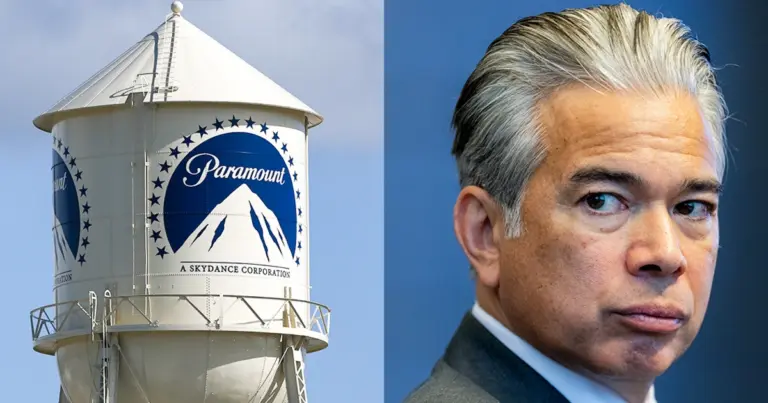
California Attorney General Rob Bonta abruptly canceled a planned meeting with Paramount Skydance on Monday, accusing the media giant of playing games during ongoing negotiations. The clash follows a series of settlement talks intended to resolve an antitrust lawsuit aimed at blocking the massive 110 billion dollar takeover of Warner Bros. Discovery. Bonta stated that while he prefers resolving disputes in the boardroom rather than the courtroom, he pulled the meeting after Paramount allegedly leaked and misrepresented the substance of their previous discussions.

Paramount quickly denied the accusations, with a spokesperson claiming the company shares Bonta’s frustration over public misreporting regarding the deal. Both parties appear to be reacting to a recent Wall Street Journal report that detailed private conversations held between them just days prior. This breakdown in communication adds another layer of tension to a high stakes corporate battle involving twelve state attorneys general and the Writers Guild of America, all of whom argue that the merger would stifle competition in theatrical releases and cable television.

Despite the current deadlock, Paramount maintains that the merger is legally sound and would actually increase production output across the industry. While they have already received regulatory approval from dozens of global territories and the Department of Justice, they remain stalled by this domestic legal challenge. To keep things moving, Paramount has agreed to freeze the merger until early 2027 or until a court reaches a decision, though an antitrust trial is currently slated for early March under Judge Araceli Martinez Olguin.

The clock is ticking for both sides due to significant financial pressures. If the deal does not close by October 1, Paramount faces a staggering ticking fee of 7 million dollars per day owed to Warner Bros. shareholders. Beyond the money, there is immense political pressure in California to find a resolution. Local leaders like Los Angeles Mayor Karen Bass have warned that prolonged uncertainty harms workers and production schedules throughout Hollywood, while Governor Gavin Newsom has reportedly expressed concern that blocking the deal could negatively impact statewide employment.

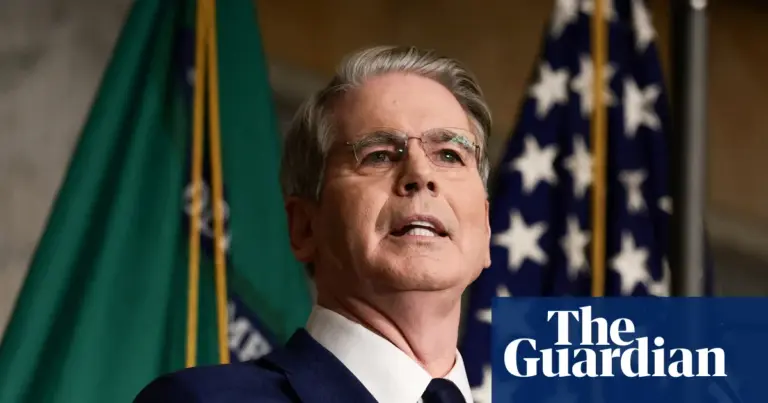
A high stakes clash is brewing between the US Treasury and the global bond market, with one of Scott Bessent’s own former mentors warning that the Treasury Secretary is fighting a losing battle. Stanley Druckenmiller, who worked alongside Bessent during their time at George Soros’s hedge fund in the nineties, argues that attempting to artificially suppress bond yields is a dangerous game. Writing in the Wall Street Journal, Druckenmiller cautioned that governments trying to defend prices against economic fundamentals always eventually fail, noting that the only real question is how much money they waste before finally giving in.

The tension follows Bessent’s decision to double the size of the Treasury’s buyback operations from two billion to four billion dollars in an effort to bring down borrowing costs. While the move caused a brief dip in yields, the effect was short lived as investors quickly pushed them back up. To Druckenmiller, this reaction proves that the market sees through these tactics as mere price management rather than genuine liquidity support. He contends that instead of intervening in the market, Washington needs to face the reality of its mounting debts and tackle the budget deficit directly.

There is a sharp sense of irony surrounding this struggle given Bessent’s history. In 1992, while working with Soros and Druckenmiller, he helped orchestrate the famous attack on the British pound that forced it out of the European exchange rate mechanism on Black Wednesday. That event served as a masterclass in how impossible it is for a government to defend a value once investors decide it is unsustainable. Critics now point out that Bessent seems to have forgotten those lessons, especially following recent efforts to prop up the Japanese yen to keep Tokyo from selling off US bonds.

Adding fuel to the fire are growing geopolitical instabilities and domestic fiscal pressures. With US national debt hitting forty trillion dollars and deficits continuing to climb, many analysts argue that meaningful spending cuts are the only durable way to lower long term yields. From failing peace talks pushing up oil prices to collapsing trade negotiations with Canada, external shocks continue to threaten inflation and growth, leaving Bessent in a precarious position where his tools for controlling interest rates may be entirely ineffective against an unforgiving market.

For investors looking to move their capital beyond American borders, the choice often comes down to whether they want a wide net or a sharp spear. The Vanguard Total International Stock ETF and the Schwab Emerging Markets Equity ETF both offer paths to global profits, but they operate with fundamentally different philosophies. Vanguard takes a comprehensive approach, providing broad access to nearly all non-U.S. equity markets including stable giants like Japan and the United Kingdom. Meanwhile, Schwab focuses exclusively on the high-growth, high-risk territory of developing economies, placing heavy bets on nations like Taiwan, China, and India.

When comparing the nuts and bolts of these two options, the differences are subtle yet telling. Both funds maintain very low costs, with Vanguard edging out Schwab slightly at an expense ratio of 0.05 percent versus 0.06 percent. Those seeking immediate income might find Schwab more attractive due to a marginally higher dividend yield of 2.6 percent compared to Vanguard’s 2.5 percent. However, the scale is vastly different; Vanguard manages a massive pool of over 646 billion dollars across more than 8,700 holdings, whereas Schwab operates a leaner portfolio of about 2,181 positions managing roughly 12.7 billion dollars.

Despite the allure of rapid growth typically associated with emerging markets, historical data suggests that stability has been the winning strategy here. Over various intervals including three, five, and ten year windows, Vanguard has consistently outperformed Schwab in terms of total return. A hypothetical investment of 1,000 dollars grew to 1,590 dollars over five years with Vanguard, surpassing the 1,426 dollars seen with Schwab during the same period. This trend persists even into current yearly figures where Vanguard continues to lead in overall percentage gains.

Ultimately, while Schwab provides an aggressive gateway into tech-heavy Asian markets through significant stakes in companies like Taiwan Semiconductor Manufacturing and Tencent, it comes with steeper volatility and lower historic returns than its counterpart. For most long term investors who prioritize steady growth and deep diversification without sacrificing too much upside, the evidence points toward Vanguard as the more profitable vehicle for international exposure_

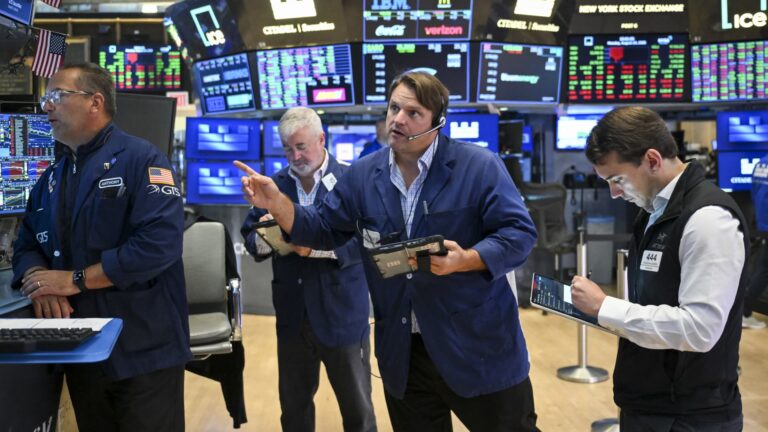
Wall Street entered the new trading week in a holding pattern, with equity futures remaining largely flat as investors braced for a series of high stakes catalysts. The caution follows a mixed session where the S&P 500 and Nasdaq dipped under the weight of sliding chip stocks, even as the Dow managed modest gains. Traders are now pivoting their attention toward Wednesday, which promises to be a pivotal day for the markets with both Nvidia’s highly anticipated earnings report and the release of July’s personal consumption expenditure price index.

The anticipation surrounding Nvidia continues to act as a primary driver for tech sentiment, while the upcoming inflation data will provide critical clues regarding the Federal Reserve’s next move on interest rates. Adding to the tension is an upcoming appearance by Fed Chairman Kevin Warsh at the annual Jackson Hole symposium on Friday. Market analysts suggest that this combination of heavy hitting reports, seasonal trends, and political uncertainty ahead of midterm elections could trigger increased volatility in the coming days. However, some strategists remain optimistic, viewing any potential pullbacks as opportunistic buying entries given strong corporate earnings fueled by artificial intelligence spending.

Beyond equities, other asset classes showed distinct movements as geopolitical tensions and policy shifts played a role. Bitcoin surged toward the 80,000 dollar mark following fresh inflows into spot ETFs and a significant short squeeze that liquidated billions in bearish positions. Simultaneously, gold climbed to its highest level in over three months, bolstered by a weakening dollar and Treasury Department plans to manage government bond purchases through its general account, which helped push long term yields slightly lower.

Across the Pacific, Asian markets mirrored much of the American hesitation. Japan’s Nikkei 225 and South Korea’s Kospi both opened lower on Tuesday morning, influenced by broader regional declines and emerging concerns over tightened U.S. sanctions targeting Iranian economic enablers. As investors navigate this complex landscape of macroeconomic data and diplomatic friction, most eyes remain fixed on Wednesday’s dual reveal of AI profitability and inflationary pressure to determine where indices head next.