Archive

August 2026

Browsing

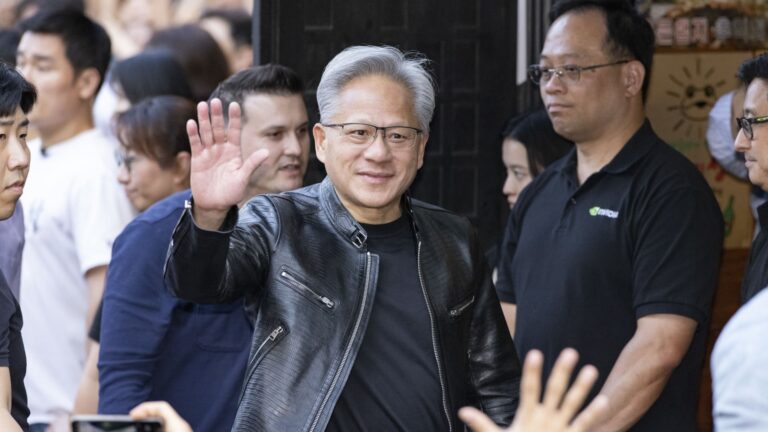
When Nvidia prepares to release its quarterly earnings report, it often feels like the entire financial world holds its breath. As the primary engine behind the artificial intelligence boom, the company has evolved into a bellwether for an entire sector of the economy. For investors, the anticipation isn’t just about whether Nvidia hits its numbers, but how those results will ripple through a complex web of related companies. Historically, certain stocks have moved in lockstep with these announcements, creating a high stakes environment where one balance sheet can dictate market sentiment for weeks.

The most immediate impact is typically felt by firms deeply embedded in the hardware supply chain. Companies that provide specialized semiconductor equipment or critical components often see their stock prices swing in tandem with Nvidia’s performance because they are essentially betting on the same demand curve. If AI chip shipments are soaring, it implies that the factories building them must be running at full capacity, driving growth across the board. This symbiotic relationship creates a cluster of tickers that traders watch closely as proxies for Nvidia’s own health.

However, not every tech giant follows this pattern. Some software companies and cloud service providers exhibit a decoupling effect during earnings season. While they rely heavily on Nvidia’s chips to power their platforms, their valuations are driven more by subscription growth and enterprise adoption than by raw hardware shipment data. In some cases, a massive win for Nvidia could even signal rising costs for these customers who must spend billions on infrastructure to stay competitive. This divergence reminds investors that while AI is a unifying theme, the actual financial mechanics vary wildly between those selling the shovels and those digging for gold.

Investors sent shares of Dick’s Sporting Goods into a tailspin on Tuesday after the retail giant issued a stark warning about cooling demand for athletic apparel and footwear. The company’s stock plummeted more than 29 percent during the trading session, marking what could be one of the steepest single day drops in its history. This volatility comes on the heels of a disappointing second quarter where the retailer missed both earnings and revenue estimates, forcing leadership to scale back their financial projections for 2026.

Much of the turmoil centers on Foot Locker, which Dick’s acquired for 2.4 billion dollars last year in an ambitious bid to dominate the sneaker market and expand globally. However, that expansion has hit a wall as consumers pull back on discretionary spending due to rising costs for essentials like food and gasoline. Company executives noted that classic shoe styles are simply not resonating with shoppers anymore, leaving stores burdened with excess inventory that requires heavy discounting to move.

Executive Chairman Ed Stack admitted that recent product launches failed to meet both internal and industry expectations, prompting a much more cautious outlook for the remainder of the year. While CEO Lauren Hobart expressed continued confidence in the long term potential of both brands, the immediate reality is grim enough that the company plans to close several Foot Locker locations. International markets have further complicated matters, as geopolitical instability continues to weigh on performance outside the United States.

Industry analysts suggest these findings should serve as a wake up call for major sneaker brands across the board. Neil Saunders of GlobalData noted that while some companies might try to pivot toward apparel ahead of events like the World Cup, the overall slump in lifestyle footwear sets off alarm bells for investors. For now, Dick’s is adjusting its sails by lowering annual sales forecasts and utilizing millions in tariff refunds just to fund promotional discounts in hopes of attracting wary shoppers back into their stores.

Wall Street is holding its breath tonight as stock futures remain largely unchanged, reflecting a cautious mood among investors waiting for two massive catalysts. Traders are bracing for the release of the Personal Consumption Expenditures price index on Wednesday morning, which serves as the Federal Reserve’s favorite gauge for measuring inflation. With a crucial September policy meeting on the horizon, economists are watching closely to see if inflation continues to cool, expecting a modest monthly increase of 0.1 percent.

Adding to the tension is the highly anticipated quarterly report from Nvidia, scheduled for release after the closing bell on Wednesday. As the heavyweight champion of the S&P 500 with a market capitalization exceeding 5 trillion dollars, Nvidia’s performance often dictates the direction of the entire tech sector and beyond. Analysts are projecting revenue of roughly 92 billion dollars, and any deviation from these high expectations could trigger significant volatility across the broader indices.

This period of hesitation follows a generally positive streak for the markets, fueled recently by dipping oil prices and retreating Treasury yields. Some experts suggest that falling energy costs could act as a primary driver for equity growth heading into autumn, providing much needed relief to inflationary pressures. While most eyes are on tomorrow’s data, seasoned investors are already looking further ahead to Friday’s symposium in Jackson Hole, where Federal Reserve Chairman Kevin Warsh is expected to speak on broad economic themes.

Beyond the macro trends, individual movers are creating their own ripples in the market. Zoom shares took a hit in extended trading following guidance that missed analyst marks, reminding investors that specific corporate headwinds persist even during general rallies. Meanwhile, in the digital asset space, Bitcoin continues to show strength as technical analysts signal a potential breakout from its summer slump, suggesting that appetite for risk remains present despite the nervous wait for official government data.

AuKing Mining has significantly expanded its footprint in Africa after agreeing to acquire Green Exploration, a Malawi focused subsidiary of Tusker Minerals, in a deal worth roughly 3.44 million US dollars. While the companies had previously been discussing an exclusive arrangement centered specifically on the Machinga heavy rare earths project, this broader agreement allows AuKing to absorb the entire subsidiary. As part of the transition, AuKing now secures several key exploration licenses including Ngala Hill, Salambidwe, and Karonga, though Tusker will carve out and keep ownership of its Mzimba rutile project before the deal closes by late 2026.

The financial structure of the buyout includes performance linked incentives designed to reward future discovery milestones. AuKing has committed to issuing 1.25 million Australian dollars in shares if they can prove a substantial rare earth oxide resource at Machinga within three years. An additional 500 thousand Australian dollars in shares will be triggered upon successful drilling results for copper, gold, and platinum at Ngala Hill. To facilitate the movement of these assets, Tusker will pay a four percent fee to Moa Mining Pty based on the final valuation of the transaction.

For Tusker Minerals, the move represents a strategic pivot toward titanium feedstocks while maintaining some skin in the game through their remaining equity positions. CEO Cliff Fitzhenry noted that the deal provides non dilutive funding and streamlines their corporate focus without completely abandoning the potential upside of rare earths. Meanwhile, AuKing managing director Paul Williams highlighted how these new acquisitions consolidate their presence in southern Malawi, placing them close to existing operations at Zomba and their current Tundulu project.

Looking ahead, AuKing plans to hit the ground running with immediate exploration activities once the paperwork is finalized. The company already has long term structural goals for these assets, intending eventually to split its business units by spinning off its base metal interests into a dedicated copper focused entity encompassing both Ngala Hill and Karonga. For now, however, the priority remains integrating these diverse geological prospects into their growing African portfolio.

Lundin Mining has been forced to scale back its annual copper production forecasts after a series of brutal winter storms battered Chile’s Atacama region. TheVancouver based miner revealed that a second severe weather event caused significant damage to infrastructure at the Caserones mine, specifically targeting a transmission tower that repair crews had only recently restored following a separate storm in late July. This latest blow knocked out power on August 14, leaving the site reliant on backup generators while technicians scramble to bring the grid back online before the end of the week.

Chief Executive Officer Jack Lundin explained that while the company initially hoped to absorb the losses from the first storm within their existing guidance, the repeat occurrence hindered recovery efforts and created unexpected downtime. Because of these delays, the firm has lowered its specific 2026 output forecast for Caserones to between 120,000 and 130,000 tons. This dip in productivity comes alongside rising costs, with cash cost projections for the mine climbing toward as much as 2.35 dollars per pound of copper.

On a broader scale, these setbacks have dragged down the company’s consolidated annual copper target to a range of 300,000 to 325,000 tons. While it is not all bad news across their Chilean portfolio, Lundin noted that operations at the nearby Candelaria mine remained largely unscathed by the recent volatility and continue to track toward original projections. The stability at Candelaria provides some balance during a turbulent season characterized by unpredictable mountain weather.

Despite these immediate hurdles in Chile, Lundin continues to lean on a strong financial foundation established earlier this year. The company reported substantial second quarter revenues of over one billion dollars and maintains a healthy net cash position even after investing heavily in expanded interests at both Caserones and the Los Helados project. Looking further ahead, the miner remains focused on growth in South America, particularly with its Vicuña project in Argentina where it expects to reach a critical sanction decision by the close of the year.

Lithium Chile is pushing back against the Canadian government following a national security review that threatens to block the sale of its Argentine subsidiary to China Union Holdings. The Calgary based exploration firm is currently weighing its legal options after being notified that the deal could potentially harm Canadian national security under the Investment Canada Act. At the heart of the dispute is Argentum Lithium, whose primary asset is a majority stake in the Arizaro lithium project located in Argentina’s Salta Province.

In a sharp rebuttal to federal regulators, Lithium Chile argues that the Canadian government simply has no jurisdiction over the matter. The company pointed out that Argentum conducts no business within Canada, employs no Canadian residents, and holds no physical assets on domestic soil. Management expressed frustration over what they describe as an extensive period of regulatory silence, noting that they proactively informed the government about the deal in January but received no response until mid August.

Company executives warn that this sudden intervention creates dangerous uncertainty for investors who operated under the assumption for seven months that there were no regulatory hurdles. This deadlock does more than just stall a single sale; it disrupts Lithium Chile’s larger strategic plan to funnel those proceeds back into its massive portfolio of high potential projects throughout Chile.

Despite the friction with Ottawa, both Lithium Chile and China Union insist they remain fully committed to finalizing the transaction. Chief Executive Officer Steve Cochrane assured shareholders that his team is working closely with legal advisors to find a viable path forward, whether through a formal defense or by restructuring the deal to satisfy legal requirements while still monetizing their interests in Argentina.

Agnico Eagle Mines is expanding its footprint in Quebec with a strategic investment of 57.1 million Canadian dollars, roughly 41.1 million US dollars, to take a significant stake in Radisson Mining Resources. Through a non brokered private placement, the mining giant will acquire more than 53 million units, consisting of common shares and purchase warrants. Once the deal closes around early September, Agnico will hold a 10.45 percent interest in Radisson, which could climb to nearly 15 percent if those warrants are exercised over the next five years.

The influx of capital is earmarked for an ambitious underground exploration program at the O’Brien gold project. This phase involves constructing critical infrastructure including an access ramp and water management facilities to better understand the site’s geology and determine the most effective mining methods moving forward. While Agnico funds this deep dive into the earth, Radisson plans to use its own cash reserves to push ahead with a massive 140,000 meter step out drilling campaign to further define the area’s mineral wealth.

Beyond the financial injection, the partnership creates a tight structural bond between the two firms via an investor rights agreement. Agnico will earn a seat on Radissons board and retain the ability to keep its ownership percentage steady during future funding rounds. In exchange for this support, Radisson has agreed to restrictions on selling assets or entering into new royalty and streaming agreements through late 2028, effectively locking in a stable trajectory for the O’Brien project under Agnicos watchful eye.

This move comes at a pivotal time for Agnico Eagle as it seeks to strengthen its domestic supply chain despite some recent turbulence. The company recently dealt with operational setbacks at its Canadian Malartic complex after rock movements forced a suspension of extraction in part of the Barnat open pit. However, backed by record free cash flow from earlier this year and multi billion dollar commitments across Ontario and Quebec, Agnico remains aggressive in its growth strategy. Investors reacted positively to the announcement, sending Radisson shares soaring to an all time high while Agnico saw its own stock edge upward.

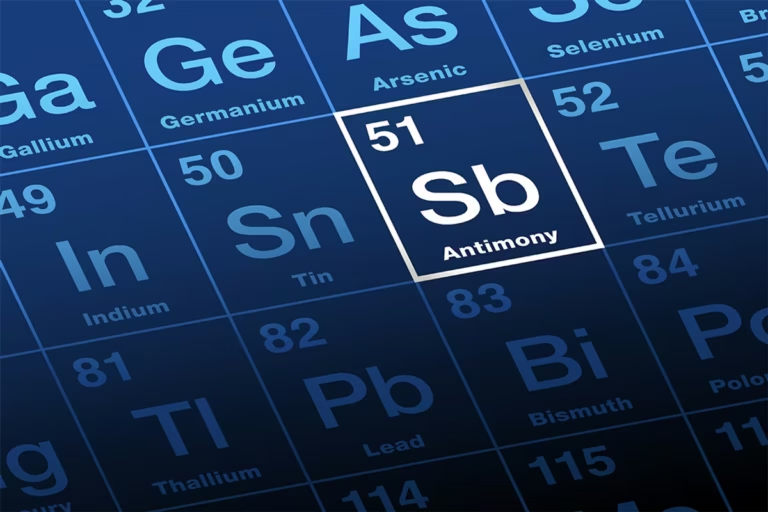
United States Antimony has significantly ramped up its efforts in Montana, announcing that it has more than doubled the daily extraction rate at its Stibnite Hill mine. The company is now pulling 42 tons of ore per day from the site, marking a substantial leap in productivity compared to previous campaigns. Since restarting operations in April after the winter freeze, crews have already extracted 576 tons of high grade stibnite ore, with shipments averaging about fourteen tons per load and maintaining an antimony content of approximately ten percent.

The logistics chain for these materials involves transporting the raw ore to a flotation mill in Radersburg, Montana. Once concentrated, the mineral is sent to smelting facilities located either in Thompson Falls or Madero, Mexico, where it is refined into finished products. Joseph Bardswich, the company’s executive vice president and chief mining engineer, noted that the increased speed is a result of improved contractor efficiency and favorable conditions within the vein systems they are currently excavating. He also indicated that similar operational gains are expected soon at their sites in Alaska.

This surge in private production comes at a time when the United States government is aggressively pursuing a strategy to secure domestic supply chains for critical minerals. To reduce reliance on foreign sources, Washington has begun deploying significant capital toward new infrastructure projects. A prime example is the massive financial backing provided via the US Export Import Bank for Perpetua Resources’ separate gold and antimony venture in Idaho. With billions in proposed loans and existing cash reserves, that project aims to establish a long term pillar of domestic stability for antimony supplies.

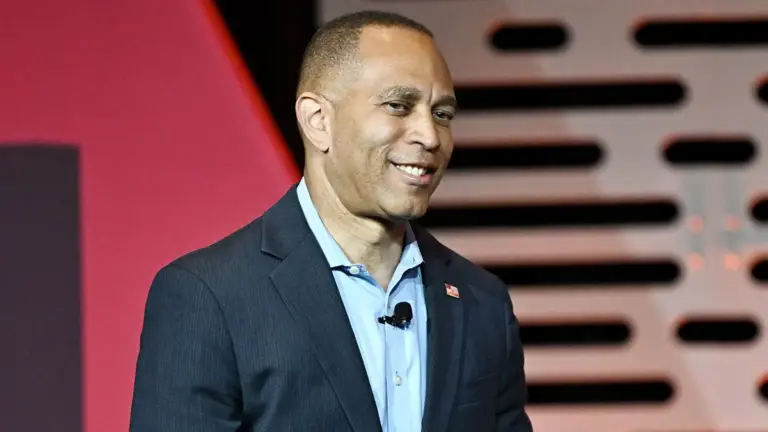
House Minority Leader Rep. Hakeem Jeffries of New York is slamming comments from Hasan Piker after the far-left controversial online streamer suggested that Jewish Americans were inviting violence against themselves over their support for Israel.

“The malicious claim that American Jews are inviting violence against themselves is dangerous and antisemitic,” Jeffries charged in a social media post. And he added in a CNN interview on Tuesday that Piker’s comments were “malicious” and “should not be tolerated by anyone in the public square.”

While Jeffries became the highest-ranking congressional Democrat to fire back at Piker, the criticism from the top Democrat in the U.S. House comes after he has largely stayed silent on the far-left insurgency, backed in part by Piker, that’s gripped his party this election cycle.

Jeffries spoke out after Piker, on his stream last week, featured an image of state Sen. Jeremy Moss, the Democratic nominee in Michigan’s 11th Congressional District. Moss, who is Jewish, has said that people are sharing a fake audio clip of him claiming that his entire reason for running for Congress is to make sure that America continues to support Israel.

EL-SAYED TRIES TO DISTANCE HIMSELF FROM HASAN PIKER AFTER LATEST FIRESTORM

“If Jews in America keep putting this idea out there that they are singularly invested in Israel, eventually someone is going to come around and take action, not against the state of Israel, mind you, but against American Jews,” Piker warned.

Piker, who has over three million online followers, has repeatedly stood by his numerous past comments slamming Israel over its ongoing war against Hamas in Gaza.

Jeffries emphasized in his social media post, “There is zero justification for threats against the safety of our Jewish brothers and sisters at a moment of rising hate. We will fight the cancer of antisemitism with the fierce urgency of now.”

ABDUL EL-SAYED FACES OFF WTIH FOX NEWS’ JESSE WATTERS IN PRIMETIME

Piker’s comments were also blasted by Democratic Rep. Hillary Scholten, D-Mich., who charged that Piker is “a hack who thrives on hate.”

Rep. Susie Lee, D-Nev., took to X to write, “Claims that American Jews are responsible for the violence being committed against their communities are unacceptable and cannot be tolerated. It’s dangerous and antisemitic.”

“We must stand up to the scourge of antisemitism wherever it rears its ugly head,” Lee added.

Rep. Josh Gottheimer, D-N.J., praised Jeffries’ pushback against Piker.

In an interview on Fox News’ “America’s Newsroom,” Gottheimer called Piker’s comments something “right out of the Nazi playbook.”

Gottheimer, who is Jewish and a strong supporter of Israel, emphasized, “This is a call for violence against Jews,”

He was also critical of Abdul El-Sayed, the Democratic Senate nominee in Michigan.

DEMOCRATS ‘WHO NEVER VOTED REPUBLICAN’ BACKING THIS GOP SENATE NOMINEE

El-Sayed, who is facing off against former Republican Rep. Mike Rogers in battleground Michigan in a high-stakes Senate showdown, on Monday tried to put some distance between himself and Piker, who is a top supporter.

“I want to be crystal clear, nobody speaks for this campaign besides me and my campaign spokespeople,” El-Sayed said in a statement.

Gottheimer said that El-Sayed insufficiently pushed back against Piker: “El-Sayed’s response was pathetic,”

“No Democratic members should allow Piker anywhere near them on the campaign trail,” Gottheimer argued.

Piker endorsed El-Sayed for the Democratic nomination and appeared at some of the candidate’s campaign events including a primary night party earlier this month in Detroit, Michigan.

Piker’s latest comments were blasted by a growing number of Republicans since they grabbed attention this past weekend, including Rogers, who took aim at both Piker and El-Sayed in a social media post.

“More calls for violence coming out of the El-Sayed campaign,” Rogers said on Sunday. And he claimed, “Here is his running mate, Hasan Piker, saying that if AMERICAN JEWS support Israel, they will be violently targeted because of it.”

DEMOCRACY ’26: STAY UP TO DATE WITH THE FOX NEWS ELECTION HUB

Rogers, who is making a major push to court Democrats in Michigan, added, “Absolutely DISGUSTING. If Abdul El-Sayed had any courage at all, he would call this out and disavow Hasan Piker once and for all. We’re waiting, Abdul…”

El-Sayed, in his Monday statement, wrote, “I believe all Americans deserve the right to advocate for what they believe without fear of violence. This is particularly true for communities that have been intimidated for their beliefs in the past.”

“My commitment to Jewish safety is the same as my commitment to the safety of my own daughters. Antisemitism is a scourge, and we need to address it in all its forms. And I stand against any rhetoric that puts the community at risk,” he added.

WHAT THE LATEST FOX NEWS POWER RANKINGS IN THE MIDTERM RACES SHOW

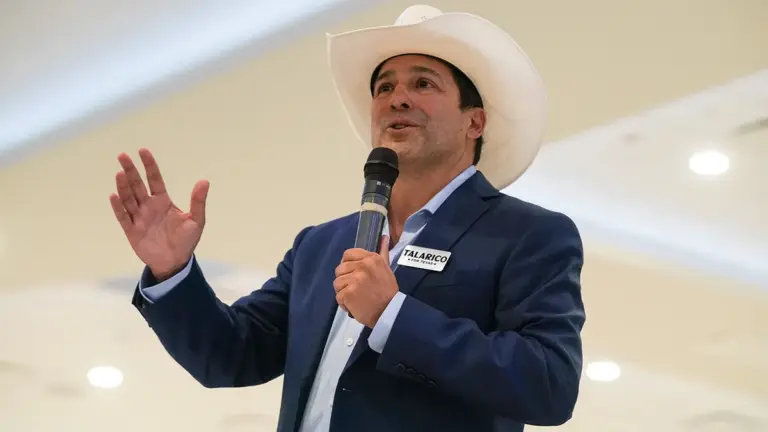
In a 2016 interview, Latin Grammy Award-winning artist and Democratic congressional candidate Bobby Pulido defended a fellow singer against criticism for a graphic music video that depicted acts of sexual violence and murder.

In the video production of “Fuiste Mía” or “You were mine” by Gerardo Ortiz, a singer walks in on his girlfriend cheating on him. After shooting her lover, he then handcuffs her to a pole, blindfolds her, and gropes her before putting her in the trunk of his car and setting it on fire.

In response to backlash, Pulido defended Ortiz, calling the video a matter of artistic direction.

“I’ve made videos with suggestive images; some have stayed, others have been edited, and still others were never used. That’s the decision of the artist and their team,” Pulido said in response to public backlash against the production.

Pulido’s resurfaced response to the music video is the latest in a series of controversies he has tried to downplay as he pursues a seat in the U.S. House of Representatives in Texas’ 15th Congressional District — one of the country’s most competitive seats.

FORMER DISNEY TEEN STAR EXPOSES CHILLING WARNING SIGNS OF PREDATORY BEHAVIOR IN HOLLYWOOD

Pulido is best known for Tejano, or Mexican–Spanish folk-style, songs like “Desvelado” and “Se Murió de Amor,” and received five nominations for a Latin Grammy Awards, winning Best Tejano Album in 2025 and 2022.

He filed to run for Congress in Texas’ 15th District, challenging Rep. Monica De La Cruz, R-Texas. A two-term incumbent, she last won election to the district in 2024 in a 57.1% to 42.9% victory over Democratic nominee Michelle Vallejo. 

Along the way, Pulido has drawn scrutiny for a resurfaced history of posting links to explicit websites on his personal X account — as well as for a social media post of what appeared to be him urinating on President Donald Trump’s Hollywood Walk of Fame star. Pulido has shrugged off criticism for both, stating in 2024 that it’s “it’s impossible to have Twitter and not watch porn,” and that he had only poured water on Trump’s star as a joke.

More notably, Pulido has also had to fend off criticisms of bringing a registered sex offender to a Texas middle school benefit concert in 2018.

DEM TIED TO CARTEL OPERATIVE SAYS ‘WHITE NATIONALISTS’ JOINING IMMIGRATION ENFORCEMENT TO ‘HUNT DOWN PEOPLE’

In that case, Pulido denied knowledge of his associate’s status at the time and has dismissed coverage of it as a “nothing story,” according to Axios.

Similarly, in his defense of Ortiz, Pulido downplayed the music video, arguing that viewers had become accustomed to increasingly graphic images.

“What happens when there’s a [car] accident?” Pulido asked, comparing the music video to real-life instances of tragedy.

“Traffic doesn’t flow because people slow down or even stop to see what happened; something similar happens with the regional Mexican genre when these kinds of incidents occur.

Pulido in the 2016 interview also noted that he didn’t agree always with his fellow artists’ depictions of women but said he believes everyone is entitled to an opinion.

When asked about the music video and Pulido’s response to it, his campaign framed it as a distraction from other elements in the race, including controversy on the Republican side of the aisle.

“This is emblematic of national Republicans doing anything and everything to distract voters from what are very real — not based on a fictional video — child abuse accusations against Monica De La Cruz and her refusal to release the Epstein files after thousands of girls were trafficked and abused,” a Pulido campaign spokesperson said.

De La Cruz’s former husband, Johnny Hernández, accused her of verbally abusing his 14-year-old daughter from a previous relationship in 2021 divorce proceedings. Authorities did not press charges or open an investigation into the allegations.

“Monica De La Cruz knows she’s losing, so she’s deploying the RNC to do her dirty work and deliberately mischaracterized a decade-old Spanish-language interview, in which Bobby said he respects artists’ right to make their own music – a right that Republicans used to believe in but apparently don’t when it comes to their opponents,” the campaign added.

DEM RIPPED FOR ‘DISGUSTING’ ABSENCE ON BILL TO PUNISH VIOLENT CRIMINALS AFTER GIRL STRANGLED IN GRISLY KILLING

At least one Republican onlooker is left unconvinced by the defense of the music video — and defenses of other past behaviors.

“Bobby Pulido has spent his entire adult life defending perverts and predators while lashing out at members of law enforcement who keep Texans safe. He is a truly sick individual who is morally rotten,” Zach Kraft, a spokesperson for the Republican National Committee (RNC), said in a statement to Fox News Digital.

Having cleared their respective primaries, Pulido and De La Cruz will face off in the state’s general elections on Nov. 3.