Archive

September 10, 2026

Browsing

Brent crude oil pushed past the psychological milestone of 100 dollars a barrel on Wednesday, reflecting growing anxiety over an intensifying conflict between the United States and Iran. The price spike follows a series of aggressive military exchanges, including U.S. strikes on five Iranian oil carriers and subsequent Iranian missile attacks targeting American forces in Jordan and regional shipping lanes. Secretary of State Marco Rubio reinforced Washington’s stance, stating that the U.S. will continue to target tankers as long as warships remain under threat.

The sudden volatility in energy markets sent ripples through global finance, putting downward pressure on equity markets from Wall Street to Europe. While Asian tech stocks found some support thanks to the ongoing artificial intelligence boom, industrial and banking sectors in Europe took a significant hit. Analysts suggest that while the 100 dollar mark is largely symbolic, the broader trend signals a collapse of the summer’s optimism regarding a potential peace agreement in the region.

Economists warn that these surging fuel costs could reignite inflation, potentially forcing central banks to maintain high interest rates longer than investors had hoped. With the European Central Bank expected to act Thursday and the Federal Reserve meeting next week, there is mounting fear that energy-driven inflation will trigger further monetary tightening. This tension has already spilled into bond markets, where yields in several major economies have reached multi-decade highs, complicating government borrowing costs during an already unstable period for global financial institutions.

Investors are witnessing a surprising shift in market leadership as 2026 unfolds, with a sudden resurgence in strategies focused on total shareholder yield. For several years, the broad market was dominated by growth giants that hoarded cash or reinvested heavily in expansion, leaving dividend and buyback strategies in the dust. However, the Morningstar US Dividend and Buyback Index has staged a dramatic comeback, gaining 31.5 percent so far this year and effectively doubling the returns of the broader US total market.

This turnaround is particularly evident within the technology sector, where legacy players are currently stealing the spotlight from the usual suspects. Companies such as Cisco, Dell, and Texas Instruments have seen monster years, benefiting from the ongoing artificial intelligence buildout while aggressively returning cash to shareholders. Meanwhile, the famous Magnificent Seven firms like Nvidia, Apple, and Microsoft remain excluded from this specific index due to their relatively low yields. While these tech titans drove the market for years, investors are now finding more success in companies that combine consistent dividends with strategic share repurchases.

The data reveals a fascinating divide between how companies handle their wealth. Analysts often describe dividends as a marriage because of the long term commitment involved, whereas buybacks are more like dating since they can be paused or accelerated based on price and available cash. Though buybacks have become more volatile recently as firms divert funds toward AI infrastructure, they generally remain a more tax efficient way to reward investors than traditional dividends. This trend suggests that old valuation models focusing solely on dividend yields may soon become obsolete.

For the average investor, this shift highlights a diversifying landscape beyond simple growth versus value plays. While pure dividend portfolios offer higher immediate income and potentially more protection against an AI bubble, a total shareholder yield approach provides a middle ground that feels more aligned with general market movements. As legacy tech continues to thrive and corporate cash allocation evolves, the ability to capture both dividends and buybacks appears to be the secret sauce for beating the market in 2026.

Managed care investors faced a rocky session this week after CVS Health signaled that medical costs are continuing to climb at an elevated pace. Speaking during a Wells Fargo investor conference on Wednesday, executives from the pharmacy giant highlighted a high trend in cost growth, a revelation that sent ripples through the healthcare sector and shifted market sentiment toward different types of providers.

While the news was unwelcome for insurance focused firms, it provided an unexpected boost to hospital operators. Stocks like HCA Healthcare saw their prices rise as traders bet that higher medical spending would translate into increased revenue for facilities providing direct patient care. The divergence created a clear split in the market between those paying the bills and those receiving them.

The impact among insurers was mixed but generally negative. While shares of CVS remained relatively steady despite the company delivering the warning, other major players were not as fortunate. UnitedHealth experienced a dip in share price, reflecting broader anxieties about how rising utilization rates might eat into profit margins across the industry.

Oscar Health took one of the hardest hits of the group, with its stock stumbling following the announcement. The volatility underscores a growing concern among analysts regarding whether managed care organizations can keep up with escalating healthcare expenses without compromising their bottom lines or raising premiums beyond what consumers can afford.

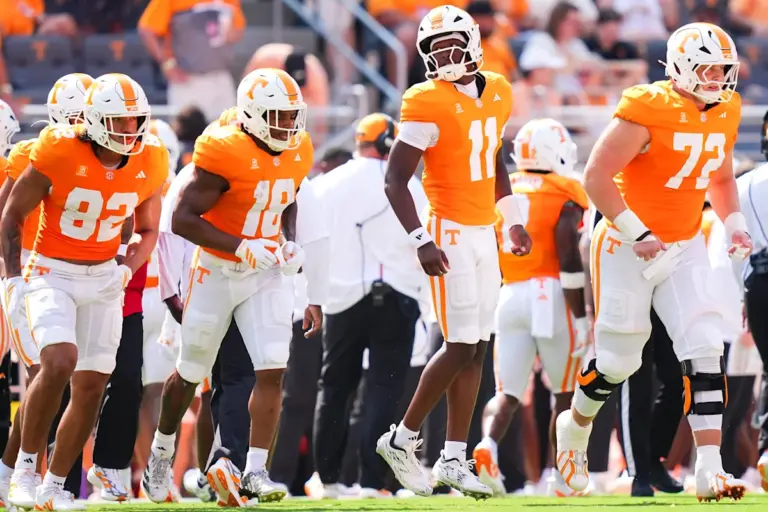
Tennessee entered their season opener with plenty of questions, but they answered most of them emphatically in a 56-9 demolition of Furman. The Volunteers racked up a staggering 638 yards of total offense, a performance that earned them a jump to number 18 in the latest AP Poll. While it is always tempting to overreact after a blowout win against an FCS opponent, the sheer efficiency displayed by the Vols suggests there is something genuinely special brewing in Knoxville this year.

The biggest story of the night was true freshman quarterback Faizon Brandon, who looked like a seasoned veteran under center. Brandon dismantled the Furman defense with thirteen completions on seventeen attempts for 226 yards and three passing touchdowns, while also adding another two scores on the ground. His poise earned him SEC Freshman of the Week honors and effectively erased what many considered to be the team’s greatest vulnerability heading into the season. Beside him, receiver Matthews proved he can change a game in seconds, turning just four catches into 132 yards and two long touchdowns of fifty-five and fifty-seven yards respectively.

On the other side of the ball, Tennessee played like an SEC powerhouse should when facing inferior competition. The defense held Furman to just 220 total yards and strangled their passing attack, which managed only 43 yards through the air. Defensive lineman Xavier Gilliam was nearly untouchable, recording five tackles for loss and three sacks in a dominant individual effort. However, not everything was flawless; head coach Josh Heupel noted some concerning communication lapses and technical errors from an offensive line struggling without starting center Sam Pendleton during the early stages of the contest.

Despite those minor hiccups up front, Tennessee leaves week one looking dangerous and hungry. The excitement is palpable, but reality will set in quickly as they prepare for a significantly tougher test against Georgia Tech before hosting Texas in what promises to be a massive home showdown. For now, the stock on these Volunteers is soaring high, leaving fans wondering if this is finally the breakthrough season they have spent years anticipating.

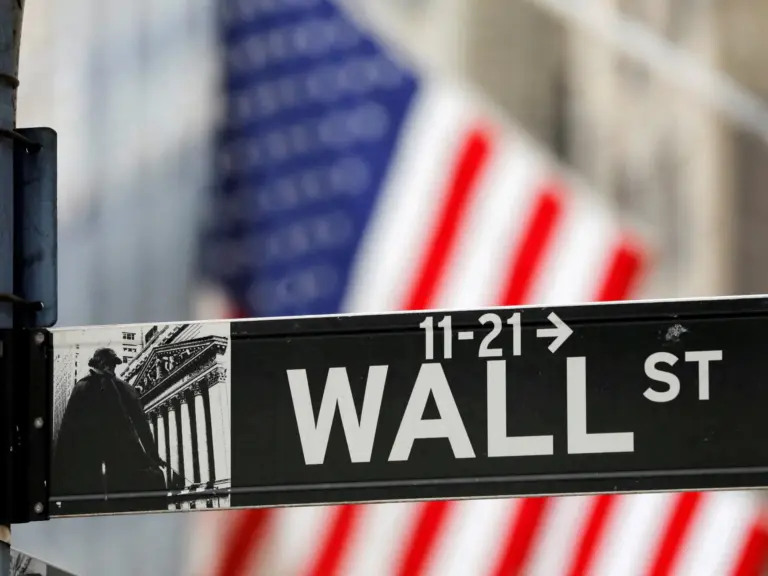
Wall Street faced a bruising Wednesday as major indices slid for the third consecutive session, driven by a volatile cocktail of geopolitical tension and shifting fiscal policy. The Dow Jones Industrial Average led the decline with a loss of nearly zero point eight percent, while the S&P 500 and Nasdaq followed suit, dropping roughly zero point five and zero point six percent respectively. Investors were rattled by a sudden spike in Treasury yields, with the ten year yield hitting four point eight three percent, its highest mark since late 2023. This surge came shortly after Treasury Secretary Scott Bessent announced ambitious plans to triple the department’s next bond buyback program in an attempt to manage mounting borrowing costs.

The anxiety in the markets was further amplified by escalating conflict between the United States and Iran. Following U.S. strikes on five Iranian oil tankers, Brent crude futures broke through the hundred dollar per barrel threshold for the first time in over a month. This energy shock sparked immediate fears regarding supply disruptions in the Strait of Hormuz, leading many traders to bet that the Federal Reserve may be forced to raise interest rates next week to combat renewed inflationary pressures. Adding to the strain, reports indicate that U.S. diesel stockpiles could plummet to their lowest levels since 2003, pushing diesel prices toward an unprecedented six dollars per gallon.

Amidst the broader market turmoil, corporate news provided a mixed landscape of winners and losers. Apple stepped into a new chapter as CEO John Ternus debuted several highly anticipated products, including the company’s first foldable device known as the iPhone Duo alongside updated watches and AirPods. Despite the innovation, Apple shares edged lower, following a common pattern where investor caution prevails immediately after product reveals. In contrast, Meta saw its stock surge over six percent as enthusiasts and analysts praised the launch of Muse, its new standalone AI chatbot assistant.

Other sectors felt the pinch of regulatory scrutiny as Fox Corporation and Roku both saw their share prices dip about two percent. The slump occurred after disclosure that the Justice Department has requested more detailed information regarding Fox’s proposed acquisition of Roku, effectively extending the waiting period for the deal by thirty days. With few other earnings reports providing support on Wednesday afternoon, investors remained focused on those macroeconomic headwinds as they braced for potential volatility heading into next week’s central bank decisions.

The financial landscape of digital defense is shifting rapidly as cybercrime costs are projected to soar past 23 trillion dollars by 2027. This escalating threat environment has turned the cybersecurity sector into a primary focus for investors, particularly as artificial intelligence creates a double edged sword. While AI empowers defenders, it also equips hackers with sophisticated tools capable of bypassing traditional safeguards and identifying code exploits with unprecedented speed. According to recent data from the Investing News Network, the industry is currently dominated by a mix of specialized security firms and massive tech conglomerates that have integrated defense into their core ecosystems.

Leading the pack by market capitalization is Microsoft, which holds a staggering valuation of 3.58 trillion dollars. Though not a dedicated security firm, Microsoft has become a powerhouse in cloud native application protection. The company recently pushed boundaries with the launch of Codename MDASH and its accompanying AI tool, MAI Cyber 1 Flash, specifically designed to hunt for zero day vulnerabilities before they can be weaponized by malicious AI agents. Close behind is Amazon, leveraging its long history of high level government contracts to expand its AWS ecosystem. With the introduction of AWS Continuum in mid 2026, Amazon continues to blend automated vulnerability discovery with strict user defined guardrails to keep enterprise data secure.

Beyond the cloud giants, hardware and networking veterans like Broadcom and Cisco Systems have pivoted aggressively toward intelligent security. Broadcom has utilized strategic acquisitions such as Symantec and VMware to build a fortress around private clouds and payment authentication. Meanwhile, Cisco has spent billions expanding its reach, most notably through its massive acquisition of Splunk and the subsequent rollout of Cisco Cloud Control. These platforms reflect a broader trend in the industry where human operators now work side by side with agentic AI to manage complex IT infrastructures in real time.

Specialized players continue to hold significant ground despite the encroachment of big tech. Palo Alto Networks maintains its status as a global leader by focusing on advanced firewalls and dynamic access management via its new Idira tool, while IBM remains a cornerstone of integrated security services for large scale enterprises. As these ten titans vie for dominance on the NASDAQ and NYSE, their trajectory suggests that the future of cybersecurity will not just be about building higher walls, but about deploying smarter, faster autonomous systems that can evolve as quickly as the threats they fight.

Mining giant BHP has entered into a strategic global alliance with Poland’s KGHM Polska Miedz to hunt for and develop new copper deposits. The partnership, formalized through a memorandum of understanding announced Tuesday, creates a collaborative framework where the world’s largest mining firm and the European Union’s leading copper producer can share technical data and evaluate early stage assets. While the two companies already maintain joint operations in Chile, this new pact aims to push their search for minerals far beyond their established footprints in Australia, Europe, and the Americas.

The move comes at a critical time as the global demand for copper surges, fueled by digital infrastructure investments and the ongoing shift toward green energy. BHP Chief Executive Brandon Craig noted that the industry must find new ways to unlock growth opportunities to keep pace with these trends. For KGHM, which also holds the title of the world’s second largest silver producer, the deal offers a structured path to diversify its pipeline as competition for high grade ore becomes increasingly fierce on a global scale.

Industry analysts warn that physical supply constraints are tightening across traditional mining hubs. Recent reports suggest a looming global deficit could reach seven million metric tons by 2035, exacerbated by falling ore grades in Chile and operational hurdles in Indonesia and the Democratic Republic of Congo. This scarcity makes partnerships like this one essential for BHP as it pursues an ambitious goal of producing two million metric tons of copper annually by the mid 2030s.

Copper has rapidly become a cornerstone of BHP’s financial strategy, recently overtaking iron ore as its primary profit engine. To complement this new alliance with KGHM, BHP continues to pour capital into its own holdings, including significant upgrades at its Escondida mine in Chile and expansion efforts at Olympic Dam in South Australia. Together, these initiatives signal a massive bet on the long term necessity of copper in a modernizing world economy.

Mining giant Rio Tinto has reached an agreement to acquire the Aurukun bauxite project in Northern Queensland from a joint venture consisting of Glencore and Mitsubishi Development. Situated in Western Cape York, the project currently holds a mineral development license but has not yet secured a formal mining lease. According to statements released via Reuters, Glencore noted that while they invested significant resources into the design and advancement of the site, they believe Rio Tinto is better positioned to lead its future development due to the company’s extensive existing bauxite infrastructure in the surrounding region.

Despite the strategic fit for Rio Tinto’s regional network, the transition arrives amidst tension with local communities. Representatives of the Wik Waya people, the traditional owners of the land, have expressed frustration over a lack of consultation during previous stages of the project. Former Aurukun Mayor Keri Tamwoy criticized Glencore for failing to properly engage with those affected by the developments, noting that such decisions deeply impact employment, health, and education opportunities for her people. A spokesperson for Rio Tinto stated that the company intends to seek all necessary regulatory clearances and maintain active engagement with traditional owners moving forward.

This acquisition comes at a time when Rio Tinto is attempting to overhaul how it manages Indigenous partnerships across Australia. Coinciding with the announcement, the company reached an interim agreement with the Ngarlawangga Aboriginal Corporation to implement a co-management approach on Ngarlawangga Country. This updated framework replaces a 2011 agreement and mandates more transparent communication throughout every stage of a mine’s operational life cycle.

On a broader industrial level, securing the Aurukun assets helps stabilize raw material supplies for Rio Tinto’s alumina refineries in Gladstone. The move aligns with other sustainability efforts in Queensland, including a recent five year deal with SuperChar to introduce bio pellets produced from local bana grass into their energy mix. By shifting away from traditional fuels at its Yarwun and Queensland Alumina facilities, Rio Tinto expects to significantly lower its annual carbon emissions while maintaining strong overall production growth across its global portfolio.

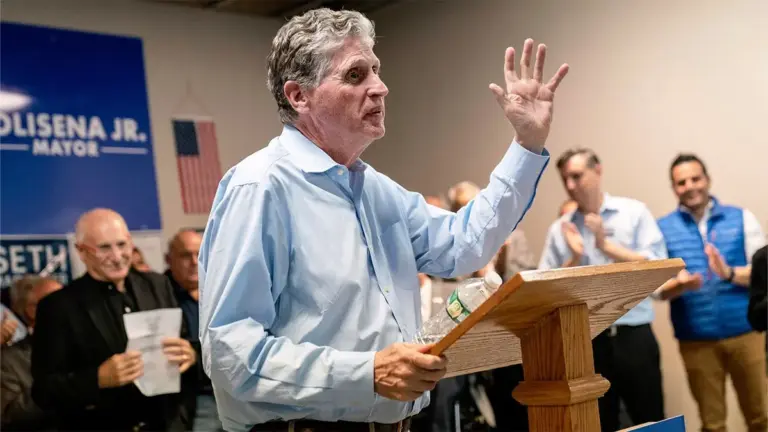
Democratic Gov. Dan McKee of Rhode Island is fighting for his political life in the smallest U.S. state’s primary elections on Wednesday as he faces potential downfall stemming from the nearly three-year partial closure of a crucial bridge.

McKee first assumed office in March 2021 when then-Gov. Gina Raimondo stepped down to become U.S. Commerce secretary. He was then elected four years ago for a full term. Now, McKee is trying to avoid becoming the nation’s first elected governor in a dozen years to lose renomination.

The governor is facing off in a primary rematch with Helena Buonanno Foulkes, a former longtime executive with CVS, which is based in Rhode Island.

THESE 12 MIDTERM RACES WILL DECIDE WHICH PARTY CONTROLS THE SENATE

McKee narrowly edged Foulkes, who is the niece of former Democratic Sen. Chris Dodd of neighboring Connecticut, in a multi-candidate field in the 2022 Democratic primary before winning the general election in the solidly blue state.

As he fights for renomination, the governor has been outspent by a nearly two-to-one margin by Foulkes, according to Rhode Island campaign finance records.

Also working against McKee is his handling of the reconstruction of the Washington Bridge, which was shut in December 2023 after officials spotted critical structural flaws.

The bridge connects Providence to East Providence and before its westbound span was shut, it carried roughly 100,000 vehicles per day. Westbound and eastbound traffic share the reconfigured eastbound span with reduced lanes.

State officials originally estimated the bridge would reopen this year, but the completion date was later pushed back to November 2028.

The bridge has become a top issue in the gubernatorial primary, with McKee and Foulkes battling over the bidding process for reconstruction and the pace of rebuilding.

While pushing back on criticism over his handling of the bridge, McKee has slammed Foulkes as an out-of-touch corporate executive trying to buy herself an election win.

DEMOCRACY ’26: STAY UP TO DATE WITH THE FOX NEWS ELECTION HUB

But also working against the governor in an anti-incumbent year are the high electricity rates Rhode Islanders pay and the state’s severe shortage of affordable housing.

The winner of the Democratic primary will be considered the clear favorite in the general election against either Aaron Guckian, a state trade association executive and the 2022 GOP lieutenant governor nominee, or former actress and first-time candidate Elaine Pelino, who are both vying for the Republican nomination. The state GOP has endorsed Guckian.

In the race for the Senate, Democratic Sen. Jack Reed, who has served for three decades, faces two long-shot challengers in their party’s primary.

SIGN UP TO GET THE POLITICS NEWSLETTER

Raymond McKay, a former president of the Rhode Island Republican Assembly and a former leading state GOP official, is the presumptive Republican Senate nominee.

Democratic Rep. Gabe Amo faces no opposition for renomination in the state’s 1st Congressional District, while entrepreneur Kellie Keenan is the presumptive GOP nominee.

Democratic Rep. Seth Magaziner is the presumptive nominee in Rhode Island’s 2nd Congressional District.

Businessman Victory Mellor and physician Stephen Skoly are facing off in the Republican primary.

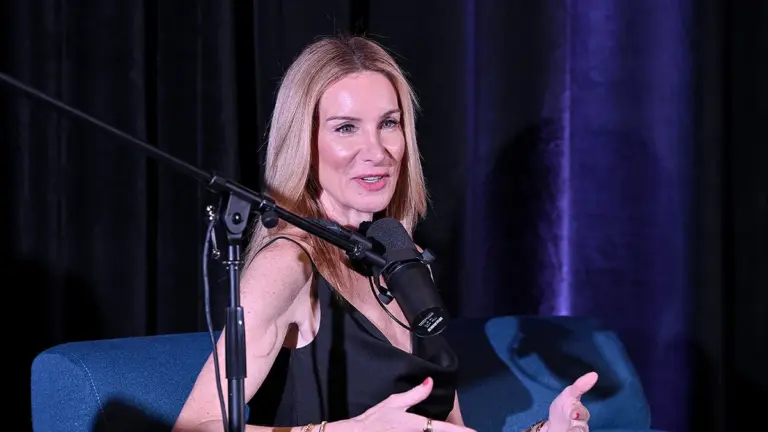
A far-left podcaster known for her vile, often curse-laden rants against the political right took aim at first lady Melania Trump in a recent episode of her show.

“I don’t like anything for Melania,” Jennifer Welch said in a clip making its rounds on social media.

“And I wish I could be the bigger person and say that I do, but I don’t,” she continued. “I don’t like anything possible for her. She is, I think, just an absolutely horrific person.”

MELANIA TRUMP CALLS FOR ABC TO FIRE JIMMY KIMMEL OVER ‘HATEFUL AND VIOLENT RHETORIC’

Other recent clips attacking homeschool parents and late South Carolina Republican Sen. Lindsey Graham have earned Welch a description as a member of the “dirtbag left.”

She describes herself as an “atheist from the Bible Belt” and often levies attacks against Christianity.

Welch, after calling the first lady “horrific” in her recent podcast episode, launched into a rant about a controversy involving a model and former diplomat, who was a friend of Melania’s, threatening in April to expose unspecified information about the first lady and President Donald Trump.

Then, the left-wing podcaster turned to taking a dig at the first couple’s sex lives.

“She cared enough in the bogus $40 million payoff she got to make sure that everybody — not only in the United States, but in the world — knows she does not screw her husband,” Welch said, referring to Amazon’s $40 million purchase of the rights to the “Melania” documentary.

There are no details about intimacy between the pair in the movie, according to a transcript of the film.

Still, Welch persisted.

KIMMEL CALLS MELANIA TRUMP AN ‘EXPECTANT WIDOW’ BEFORE WHITE HOUSE CORRESPONDENTS’ DINNER SHOOTING

“They could have cut that part out, but she made sure the world knows, ‘I do not screw my husband.’ So I’m not buying into this that Melania all of the sudden is liberated and doesn’t give a s— about stuff anymore, because I think that’s the thing that eats the Trumps up all the time.

“They care what everybody thinks about them, and they want to change everybody’s opinion on them.”

The first lady’s office did not return Fox News Digital’s request for comment on the podcaster’s remarks.

Welsh also attacked the rest of the Trumps in the episode, saying that even if they received the highest praise, the family members would still be “broken.”

“We are elevating the bad guy right here,” Welsh said. “We are elevating the most dysfunctional family in the United States, and wrapping it up in traditional Christian values. It’s just such bulls—.”

Welch makes a habit on her podcast of discussing the private lives of Republicans. When Sen. Graham died, she graphically discussed long-circulated rumors that he was gay.