
Archive

September 2, 2026

Browsing

Financial markets experienced a volatile session on Tuesday as a wave of inflation fears triggered a sharp spike in government borrowing costs and sent major stock indices tumbling. The yield on the 10 year Treasury note climbed to approximately 4.79 percent, marking its highest point since early 2025. This surge coincided with a rough start for Wall Street, where the S&P 500 dipped toward a monthly low and the tech heavy Nasdaq saw significant losses. The turmoil reflects a growing consensus among investors that the Federal Reserve may be forced to hike interest rates at its upcoming policy meeting to keep stubborn inflation under control.

Geopolitical instability played a primary role in fueling this volatility, specifically escalating tensions between the U.S. and Iran. Reports of attacks in the Strait of Hormuz pushed Brent crude prices above 92 dollars per barrel, adding fresh pressure to energy costs globally. These external shocks arrived shortly after Federal Reserve Chairman Kevin Warsh signaled his discomfort with current inflation levels, noting that business investment fueled by artificial intelligence and strong consumer demand remained aggressively brisk. For many traders, these factors combined create a perfect storm that necessitates higher returns for lending money to the government.

The implications of these rising yields extend far beyond trading floors, as the 10 year Treasury serves as a critical benchmark for everyday American loans. Consumers should prepare for more expensive mortgages, auto loans, and credit card debt in the coming months if this trend persists. Similar patterns emerged internationally, with Japanese bond yields hitting record highs and U.K. gilts reaching levels not seen since 1998, suggesting that developed nations are collectively struggling with mounting debts and tightened oil supplies.

However, some analysts argue that this shift isn’t entirely negative. Some economists suggest that rising yields actually signal a period of reinvigorated economic health driven by AI innovation and government spending, making safe haven bonds less attractive than growth oriented stocks. While Treasury Secretary Scott Bessent has dismissed these concerns as temporary supply shocks related to Middle Eastern conflicts, others warn that if inflation becomes permanent, the Federal Reserve will have little choice but to slow economic growth through aggressive rate hikes, potentially leading to further equity market declines.


Wall Street is seeing some significant volatility during midday trading as several heavy hitters across different sectors experience sharp price swings. Investors are keeping a close eye on technology and energy giants, with companies like Apple and Palo Alto Networks leading the charge in terms of volume and movement. The shifts suggest a mixed sentiment among traders who are balancing growth expectations against broader economic headwinds.

In the tech space, Apple continues to be a focal point for market participants, while cybersecurity firm Palo Alto Networks is drawing attention through substantial intraday fluctuations. These movements often reflect shifting confidence in artificial intelligence integration and enterprise spending trends, which have become the primary drivers for high growth stocks throughout the current fiscal year.

The energy sector is also feeling the heat, with Chevron showing notable activity alongside emerging players like Fervo Energy. This contrast between an established oil major and a newer geothermal innovator highlights a growing tension in the markets between traditional fossil fuel stability and the aggressive push toward sustainable energy alternatives. As these prices fluctuate, analysts are looking for clues regarding future commodity pricing and government policy changes.

Overall, the midday action reflects a broader pattern of selective investing where capital is rotating quickly between defensive plays and speculative bets. While some indices may appear stable on the surface, the underlying turbulence within individual names suggests that investors remain cautious but opportunistic as they navigate an uncertain macroeconomic landscape.

Investors in Meta Platforms have plenty of reasons to feel optimistic as the company clears a major hurdle that has long cast a shadow over its financial outlook. For months, the tech giant has been squeezed between mounting skepticism regarding its aggressive artificial intelligence spending and a series of grueling lawsuits alleging that its platforms contributed to social media addiction among young users. While those AI costs continue to pinch short term margins, the resolution of the legal battles provides a much needed breath of fresh air for shareholders.

The breakthrough comes via a settlement agreement with a coalition of U.S. states and territories totaling up to 17.1 billion dollars. While such a figure would bankrupt most companies, it is relatively manageable for a behemoth like Meta, particularly because the payments are spread over a decade. When viewed against quarterly revenues exceeding 60 billion dollars, the total cost represents roughly one quarter of earnings distributed across several years. By settling now, Meta avoids years of unpredictable litigation and prevents its top executives from facing an embarrassing parade of public testimonies that could have further eroded the brand’s reputation.

This pattern is not new for the social media kingpin, which previously weathered a 5 billion dollar FTC fine in 2019 without seeing any lasting negative impact on its stock performance relative to the broader market. With the legal cloud largely dissipating, investor focus is shifting back to whether Mark Zuckerberg can actually monetize his expensive bet on artificial intelligence. The company is currently pivoting toward highly personalized AI agents designed for daily use across its massive ecosystem of 3.6 billion active users.

If these AI agents drive deeper engagement or if Meta succeeds in renting out its excess computing capacity to other firms, the current dip in profit margins may soon look like a strategic sacrifice rather than a mistake. Given that Meta has effectively neutralized one of its primary systemic risks while maintaining a dominant grip on global digital attention, the overall trajectory suggests that the company is well positioned for long term growth despite the temporary noise surrounding its balance sheet.

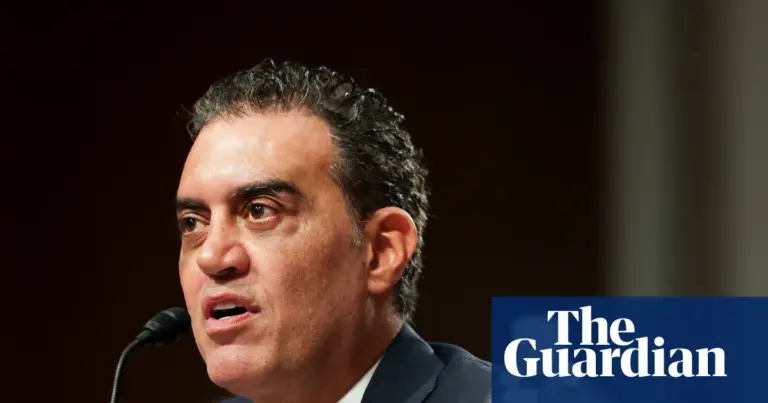
Emil Michael, the high ranking Pentagon official tasked with shaping military artificial intelligence policy, has offloaded millions of dollars in shares from another AI venture, adding to a series of lucrative trades that have raised eyebrows among ethics watchdogs. According to recent financial disclosures reviewed by the Guardian, Michael sold his holdings in Perplexity, an AI powered search engine currently seeking a massive valuation, for a sum estimated between five million and twenty five million dollars. This move follows previous revelations that he earned up to twenty four million dollars earlier this year after selling investments in Elon Musk’s xAI company.

The timeline of these transactions suggests a pattern of significant wealth accumulation while serving in a role that oversees the very technology driving these market surges. Beyond his equity stakes, documents show that Michael previously served on an advisory board for Perplexity and received a personal loan from the firm ranging from two hundred fifty thousand to five hundred thousand dollars shortly before joining the federal government. While he reportedly stepped down from the board upon entering public service and pledged not to profit from certain unvested stocks, critics argue that maintaining such close ties creates an inherent conflict of interest.

Ethics experts suggest that standard practice for high level appointees involves divesting from industry related assets entirely before assuming office to avoid even the appearance of impropriety. Richard Painter, a former White House lawyer under George W Bush, noted that most administrations would have required him to exit those positions immediately. However, a Pentagon spokesperson defended the arrangement, insisting that Michael is in full compliance with all existing ethics laws and emphasizing that the department utilizes a rigorous framework to manage potential conflicts.

The controversy extends beyond the realm of artificial intelligence into broader fintech ventures. Disclosures indicate that Michael also realized substantial gains through the sale of holdings in Brex LLC, a financial software company backed by Peter Thiel. After reporting his stake in Brex was worth relatively little early last year, he saw those holdings jump significantly during his tenure in government, resulting in a payout potentially reaching twenty four million dollars following its acquisition by Capital One. These overlapping interests continue to fuel debate over whether current oversight rules are sufficient for officials operating at the intersection of national security and Silicon Valley wealth.

Shares of Palo Alto Networks saw a notable lift today after the cybersecurity giant reported fourth quarter fiscal results that comfortably exceeded analyst expectations. The company managed to beat both top and bottom line estimates, signaling strong demand for its integrated security platforms even as the broader tech sector navigates a complex macroeconomic environment. Investors reacted positively to the numbers, sending the stock climbing as confidence grew in the firm’s ability to maintain momentum.

Beyond the immediate quarterly wins, much of the market excitement stems from management’s optimistic long term projections reaching into 2027. By providing a clear roadmap for growth over the next few years, Palo Alto has signaled that it sees significant untapped potential in its platformization strategy. This approach aims to consolidate various security tools into a single ecosystem, which leadership believes will drive sustainable revenue increases and deeper customer loyalty through the end of the decade.

Market analysts suggest that this combination of short term execution and forward looking guidance positions the company well against its competitors. While some firms have struggled with fluctuating enterprise spending, Palo Alto seems to be capturing a larger share of the cybersecurity budget by offering more comprehensive solutions. As companies continue to grapple with sophisticated cyber threats, the shift toward consolidated platforms looks like a winning bet for shareholders.

Western Potash has been pushed into court supervised insolvency proceedings after failing to settle more than 108 million US dollars in debt. The move comes from senior secured lender Appian Capital Advisory, which filed for protection under the Companies Creditors Arrangement Act following years of project delays and missed payments. At the center of the collapse is the Milestone project near Regina, Saskatchewan, a massive operation spanning thousands of acres that promised a forty year mine life but never actually reached commercial production despite hundreds of millions of dollars in investment.

The road to bankruptcy was paved with unsuccessful attempts to find new investors. While strategic advisers reached out to over a hundred potential partners throughout 2026, no acceptable deal materialized, leaving the company unable to cover basic costs like municipal taxes and provincial lease obligations. With construction having halted back in May 2024, the site currently sits in care and maintenance mode. A fourteen week window has now been opened for bidders to vie for the assets, with final decisions expected by mid December.

This corporate failure arrives amid a heated political debate within Canada regarding how to handle trade tensions with the United States. Some leaders, including Ontario Premier Doug Ford, have suggested using potash exports as a geopolitical weapon, noting that because Canada provides about eighty five percent of American potash supply, cutting shipments could devastate U.S. agriculture almost overnight. It is a high stakes gamble that some believe could force Washington into making significant concessions on other trade fronts.

However, not everyone in Canada agrees with this aggressive strategy. Saskatchewan Premier Scott Moe has strongly opposed any export tariffs or resource restrictions, warning that such moves would lead to immediate local job losses and encourage American buyers to seek alternative global suppliers. Even as Prime Minister Mark Carney meets with industry titans like Nutrien to navigate these turbulent waters, many major producers are already hedging their bets by stockpiling inventory across the border to protect themselves from potential volatility.

LG Energy Solution has solidified its foothold in the North American battery market by signing a binding ten year agreement with Smackover Lithium to secure 80,000 metric tons of battery grade lithium carbonate. This massive supply deal is expected to yield enough cathode material to power roughly 1.8 million high performance electric vehicles, each capable of traveling over 500 kilometers on a single charge. By sourcing these materials through Smackover Lithium, which utilizes low carbon direct extraction technology, LG Energy can better align itself with the strict requirements of the US Inflation Reduction Act and reduce its strategic dependence on Chinese chemical suppliers.

The partnership marks a critical step toward creating a closed loop local supply chain in North America, where LG Energy already operates or is building eight different production facilities. For Smackover Lithium, a joint venture between Canada’s Standard Lithium and Norway’s Equinor, this contract serves as a vital pillar for their financial future. According to Standard Lithium CEO David Park, this agreement alongside a previous deal with Trafigura secures nearly ninety percent of the project’s initial annual capacity, clearing a major hurdle as the company moves toward a final investment decision.

Beyond the immediate supply of minerals, the structure of this contract is designed to help facilitate significant debt financing for assets located in Arkansas. The companies are currently working through due diligence with three major export credit agencies that have expressed interest in providing more than one billion dollars in project debt. With an engineering and construction agreement already in place for the site’s central processing facility, the project is rapidly transitioning from planning to execution.

This latest move reflects LG Energy’s broader global strategy to diversify its raw material sources and mitigate geopolitical risks. While this Arkansas venture strengthens its domestic presence, it complements existing large scale contracts with providers like Chile’s SQM and Australia’s Liontown. As the demand for lithium iron phosphate batteries grows across the continent, these regionalized partnerships ensure that manufacturers can keep pace with an accelerating transition to electric mobility without relying on volatile overseas shipping lanes.

In central Washington, a farming town of roughly 8,100 people has become an unlikely showcase for America’s data-center boom.

Quincy, long known for potato fields, apple orchards and food-processing plants, has spent two decades attracting some of the world’s largest technology companies. Microsoft began building data centers there around 20 years ago, drawn by affordable land, the region’s cool climate and abundant hydropower from the Columbia River.

Now the town is becoming central to Microsoft’s response to a backlash against the facilities powering cloud computing and artificial intelligence. The company this year cited Quincy as proof that data centers can bring tangible benefits to the communities that host them, as residents elsewhere raise alarms over electricity prices, water use and limited local job creation.

ONE OF THE WORLD’S HOTTEST INDUSTRIES IS SPARKING A BLUE-COLLAR JOBS BOOM

The economic gains are visible in Quincy.

KUOW reported that years of data-center tax revenue have helped support a state-of-the-art high school and hospital.

The city recently opened a new aquatic center, complete with a six-lane lap pool, lazy river and waterslides, and is planning a separate indoor sports complex.

Data centers are not an employment engine on their own. A single facility can operate with 50 employees or fewer, KUOW reported. But Quincy has enough facilities that the sector has become a meaningful employer in aggregate, while also supporting construction, service businesses and the city’s broader tax base.

TRUMP HEADS TOWARD UNLIKELY CLASH WITH CLOSE ALLY OVER FUTURE OF MULTIBILLION-DOLLAR INDUSTRY

Microsoft says its new national approach will ask local utilities to set rates high enough to cover data-center energy use and grid upgrades without raising prices for residents. The company also says future facilities will use closed-loop cooling systems that recycle water rather than drawing from local supplies.

Quincy already has such a system. Microsoft and the city partnered on a $31 million water-reuse utility that treats and recirculates cooling water. The EPA says the project reduces the company’s reliance on potable groundwater and saves an estimated 138 million gallons of water a year.

Still, Quincy is not without skeptics.

Former Mayor Patty Martin, according to KUOW, has warned that the town must look beyond its immediate economic gains and consider its long-term water and electricity needs, pointing to population growth, electric vehicles and changing snowpack as added pressures on the region.

Quincy’s boom shows what data centers can bring to a small town and the questions communities must answer before they arrive.

EXCLUSIVE: The White House and Department of Homeland Security are pushing back on “false narratives” being advanced by the mainstream media and bringing the receipts after the Washington Post and New York Times reported that noncriminal ICE arrests are skyrocketing under President Donald Trump.

The Washington Post reported last week that ICE is arresting “soaring numbers” of “noncriminal” illegal immigrants. The outlet said the agency had “detained more people without a criminal record this year than in all of 2025.” The New York Times took a similar line, reporting that “ICE arrests soar as people with no criminal record are increasingly targeted.”

However, Lauren Bis, a special assistant to the president and White House spokeswoman, told Fox News Digital that though “nearly 70% of illegal aliens arrested by ICE have been convicted or charged with a crime in the United States,” the “actual arrests of public safety threats and criminals is much higher.” This, she said, is due to many of the “noncriminal” illegal immigrants arrested by ICE having prior criminal history in their home country, including murder, child sex abuse and gang activity.

“These are just a few of the media’s ‘non-criminals,’” said Bis, adding, “Why does the mainstream media continue to peddle false narratives protecting criminal illegal aliens?”

TRUMP ADMINISTRATION’S IMMIGRATION PUSH FUELS ICE’S BIGGEST ARREST MONTH IN AGENCY HISTORY

Fox News Digital reached out to the Washington Post and New York Times for comment.

According to the Department of Homeland Security, “Nearly 70% of illegal aliens ICE arrested across the country have criminal convictions or pending criminal charges just in the U.S.”

The agency said, however, that this statistic “doesn’t account for those wanted for violent crimes in their home country or another country, INTERPOL notices, human rights abusers, gang members, terrorists” and other offenses in foreign countries.

While DHS has emphasized that entering the country unlawfully constitutes a crime, the agency has previously shed light on some of the serious criminal charges of individuals considered noncriminal arrests.

This May, Homeland Security Investigations arrested Salvadoran national Josue Saul Garcia-Lopez, who, despite not having a U.S. criminal record, had an international warrant showing him as an active member of the foreign terrorist organization MS-13 and had been involved in extortion and robbery schemes in El Salvador for several years.

NEW YORK TIMES TORCHED FOR ‘FALSE’ REPORTING ON ICE INVESTIGATIONS, OUTLET FIRES BACK

Just days before, ICE had also arrested a Honduran national named Fredy Alexander Lopez Lara, who had an international warrant for homicide in his home country.

Another MS-13 member, Salvadoran national Danny Granados-Garcia, was arrested by ICE in April. He was wanted in his home country for murdering a pastor.

In March, San Diego Sector Border Patrol agents arrested Mexican national Salvador Suazo-Garcia in Lemon Grove, California, processed him administratively, and turned him over to Mexican authorities. Suazo-Garcia entered the U.S. legally in May 2021 under the Biden administration. He was wanted in Mexico for lewd and lascivious acts upon a child.

Shortly before Suazo-Garcia’s arrest, Border Patrol agents also arrested a female illegal immigrant from Mexico named Silvia Del Rosario Torres-Castro, who was wanted in her home country for homicide.

Late last year, ICE arrested Antonio Israel Lazo-Quintanilla, a Salvadoran national who is a member of another foreign terrorist organization called the 18th Street Gang. DHS said that “while technically his only crime in the United States is driving without a license,” Lazo-Quintanilla was on El Salvador’s most wanted gang members’ list and was wanted for aggravated homicide, extortion, possession of drugs and other felonies. Lazo-Quintanilla’s mugshot showed his face covered in tattoos, including the numbers “666” across his forehead.

Months before that, DHS said that U.S. Immigration and Customs Enforcement arrested Mexican brothers Pedro Luis Ortiz-Mendez and Jose Vicente Ortiz-Mendez in Texas. Both brothers are wanted for multiple murders tied to an attack on a festival in San Luis Potosi, Mexico, where at least one victim was shot and another victim was attacked with a machete.

BORDER CZAR TOM HOMAN FIRES BACK AFTER DEMOCRAT CHRIS MURPHY CLAIMS ICE IS ‘TERRORIZING LITTLE KIDS’

Bis said that “these are just a few examples of murderers, gang members, and pedophiles the media refers to as ‘non-criminals’ because they only have criminal records in their home country.”

“No one would want these heinous criminals to be their neighbors,” she said. “From foreign fugitives, gang members, and terrorists, ICE is getting the worst of the worst off our streets and out of our country.”

Addressing deep intra-party divides over Israel ahead of the general election, Michigan’s Democratic Attorney General Dana Nessel urged a private gathering of Jewish Democrats to place the needs of “the rest of humanity” above their own “safety and security.”

Nessel, Michigan’s top law enforcement officer who is also Jewish, made the remarks during an Aug. 30 event in Birmingham hosted by the Michigan Democratic Party’s Jewish Caucus, where members of the press were barred. According to a video recording reviewed by The Detroit News, Nessel invoked the story of Queen Esther to argue that Jewish Democrats have a “moral imperative to place the needs of the world above even our own self-interest,” urging attendees to “sacrifice the comfort, safety and security and even the very future of our own people in exchange for the opportunity to save the rest of humanity.”

The comments highlight a boiling point for Democrats in crucial battleground Michigan, where many Jewish voters report feeling forced to choose between their faith and their party amid rising anti-Israel rhetoric from progressive, far-left candidates. 

The private gathering was attended by Democratic U.S. Senate candidate Abdul El-Sayed — a vocal critic of Israel and U.S. military aid to the Jewish state — who used the event to publicly apologize to the Jewish Caucus for past controversial comments. Notably, Nessel has publicly stated she will not vote for Republican Mike Rogers in the tight Senate race, but has thus far withheld her endorsement from El-Sayed over concerns regarding his stance on Israel.

JEWISH AG’S CONVENTION BOYCOTT EXPOSES DEEPENING ISRAEL FAULT LINE AMONG MICHIGAN DEMOCRATS

During the speech, Nessel explicitly weighed the survival of Israel against global crises, including questioning the value of protecting the Jewish state if climate change goes unaddressed.

“What good is defending the historic homeland of our ancestors and demanding that candidates acknowledge its right to exist if the planet upon which it rests is no longer inhabitable?” Nessel asked, according to the recording reviewed by The Detroit News. She went on to characterize supporting former President Donald Trump as an “abdication of our responsibilities as Jews,” arguing that Jewish tradition demands “compassionate action toward others” over what she called “blind obedience to the world’s biggest and most dangerous fool.”

CARVILLE WARNS DEMOCRATS ANTI-ISRAEL ‘LOUDMOUTHS’ COULD COST ELECTIONS

While Nessel acknowledged the frustration in the room—noting that arguments equating Zionism to racism are often made “by people whose entire understanding of Jewish-Israeli history fits neatly into a 47-second TikTok produced by Qatar or Iran” — she also argued that the GOP and its loyalty to Trump poses a great threat and blasted Republicans for focusing on cultural issues like “transgender girls playing JV volleyball” instead of issues like wealth inequality and artificial intelligence.

Fox News Digital reached out to Nessel’s office to ask for more details about the intended effect of her remarks, but did not receive a response in time for publication.

ANTISEMITIC VIOLENCE REACHES DEADLIEST LEVEL SINCE 1994, NEW GLOBAL REPORT FINDS

“Michigan Attorney General Dana Nessel reportedly told Michigan Jewish Democrats to channel Queen Esther and prioritize the survival of ‘the world’ over their own self-interest,” said Hen Mazzig, author and senior fellow at the Tel Aviv Institute, which describes itself as “an emerging media innovation lab” aimed at countering antisemitism and “changing” how people think about Jews and Israel.

“I am a gay man and lifelong liberal,” Mazzig continued. “I understand why many American Jews care so deeply about the Democratic Party. But Esther risked her own safety for the Jewish people’s survival, she didn’t risk them to save others. Using her story this way is not accurate or helpful.”

Meanwhile, George Mason University constitutional law professor, David Bernstein, offered a more pointed criticism of the reported remarks.

MS RACHEL CONFRONTED ON ACCUSING ISRAEL OF ‘GENOCIDE’ IN PARK INTERACTION WITH PODCASTER

“You may have thought I was exaggerating when I tweeted last week about how a segment of the American Jewish community is suicidal. The real news here is not that Nessel said this, but that she thinks it’s a viable pitch to at least a large segment of an audience of Jewish Democrats,” Bernstein said, adding that Nessel’s comments reminded him of “Jewish Stalinists who stayed with Stalin through the pact with Hitler, and then through the antisemitic purges of the late 1940s, because they believed that absorbing this stuff was the price Jews needed to pay for a better world.”

Nessel, who skipped the recent Michigan Democratic Party convention due to safety concerns, has become a prominent voice amid Michigan’s crucial Senate race. 

Fox News Digital reported last week that during an appearance on The Atlantic’s “David Frum Show,” Nessel accused the Democratic Party of not valuing its Jewish constituents and making them feel less welcome than members of other minority groups. She also argued that Jewish Democrats have felt ostracized by their own party since the attacks in Israel on Oct. 7, 2023, and accused leadership of cherry-picking issues that are relevant to supporters.

Nessel added that if faced with the choice, she would choose her Jewish heritage over her party affiliation. She also criticized some of El-Sayed’s past rhetoric about Israel and his refusal to retract certain comments prior to his apology to Jewish Dems in Michigan at the Aug. 30 private confab.  

Fox News Digital’s Julia Bonavita contributed to this report