
Archive

September 6, 2026

Browsing

Despite a volatile week characterized by climbing Treasury yields and surging oil prices, the broader market indices managed to hold their ground. While macroeconomic headwinds created plenty of noise for investors, certain individual equities began flashing strong bullish signals, suggesting that growth opportunities remain available even amidst general uncertainty.

Leading the charge is software powerhouse ServiceNow, which has emerged as a primary stock to watch as it approaches key buy points. The company continues to attract attention from analysts looking for resilience in the tech sector, positioning itself at the forefront of a small group of names showing positive momentum.

Joining ServiceNow in this shortlist are several companies across diverse sectors. Investors are keeping a close eye on digital banking newcomer Dave Inc. and the commodities trading platform Marex Group, both of which are exhibiting technical patterns that often precede upward moves. These financial plays provide a contrast to other high-interest names like Welltower, a senior living real estate investment trust, and the biotechnology firm Exelixis, which focuses on innovative cancer treatments.

Together, these five stocks represent a cross section of industry strength ranging from healthcare and finance to enterprise software. For traders focusing on entry points, these movements suggest that while the overall index may be weathering turbulence, specific leadership stocks are carving out their own paths toward potential gains.
Goldman Sachs analysts are urging investors to act quickly and capitalize on recent market volatility by buying the dip in five specific stocks. According to the latest guidance from the investment giant, current price drops have created an ideal entry point for those looking to build long term positions in companies with strong fundamentals that may be temporarily undervalued due to broader economic noise.

The firm suggests that while short term fluctuations can often trigger panic selling, these particular assets possess the resilience and growth potential necessary to bounce back strongly. By stepping in now, investors can potentially lock in lower share prices before a projected upward trend takes hold, effectively turning a period of instability into a strategic advantage for their portfolios.

Market watchers note that such recommendations usually come after rigorous quantitative analysis of earnings reports and future projections. While any investment carries inherent risk, Goldman Sachs believes these selected equities offer a compelling balance of value and momentum. The overarching message is clear: patience has its place, but waiting too long could mean missing out on significant gains as the market corrects itself.

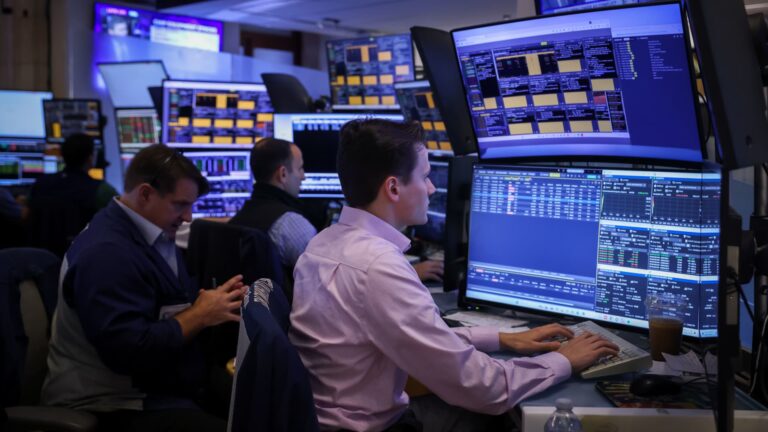
The atmosphere on Wall Street has shifted noticeably over the past several days as investors begin to question whether artificial intelligence stocks have climbed too high, too fast. After months of unchecked optimism and skyrocketing valuations, traders are now signaling a move toward a more defensive posture. The prevailing sentiment suggests that while the long term potential of AI remains intact, the immediate expectations for growth have reached a ceiling that few companies can realistically sustain without flawless execution.

This strategic pivot comes as analysts raise the bar for what constitutes success in the tech sector. It is no longer enough for a company to simply mention generative AI during an earnings call to see its stock price jump. Investors are now demanding concrete evidence of monetization and tangible returns on the massive capital expenditures being poured into data centers and chips. This transition from hype to accountability has left many portfolio managers trimming their positions in high flying semiconductor firms to lock in gains before any potential correction occurs.

By playing defense, market participants are diversifying away from concentrated bets on a handful of mega cap tech giants and rotating back into value plays or stable dividends. There is a growing sense that the low hanging fruit of the AI rally has been plucked, leaving only the most disciplined investors to navigate the volatility ahead. While some argue this is merely a healthy consolidation phase, others fear it marks the beginning of a broader cooling period for the technology trade.

Ultimately, the current tension reflects a classic tug of war between visionary enthusiasm and fiscal reality. As Wall Street demands higher benchmarks for performance, the industry enters a proving ground where software capabilities must translate directly into corporate profits. For now, caution has become the new currency among institutional traders who would rather be slightly behind a rally than caught holding overpriced assets during a downturn.

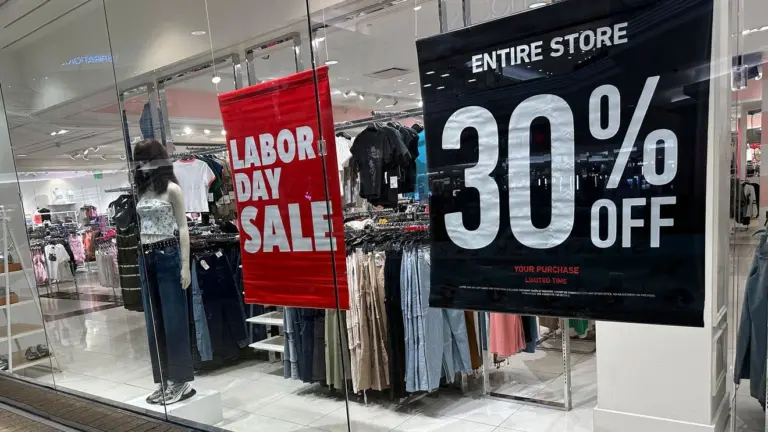
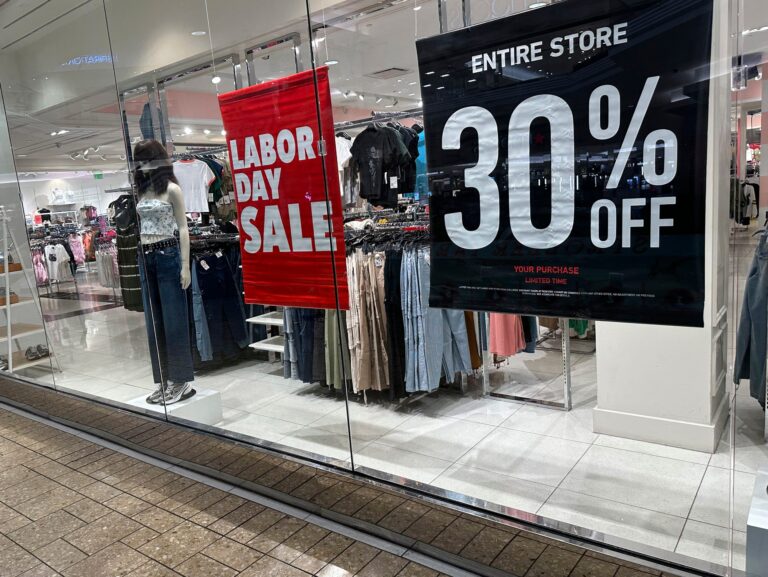
As the first Monday of September arrives, millions of Americans are preparing for a long weekend that balances relaxation with a flurry of shopping and travel. While Labor Day was established in 1894 under President Grover Cleveland to honor the contributions of workers following grassroots movements in the late nineteenth century, the modern observance has evolved into a massive commercial event. For most people, this means a stark divide between where they can spend their time and money over the holiday break.

If you are planning to run errands, you will find that most major national retailers and grocery stores remain open, often using the occasion to launch aggressive promotional sales designed to draw in crowds. However, there are notable exceptions; warehouse giant Costco remains closed for the holiday. Those hoping to handle official business will face more hurdles, as government offices, post offices, courts, and schools are all shuttered. Similarly, the financial sector takes a breather with both banks and the U.S. stock market remaining closed throughout Monday. Shipping services like FedEx and UPS will also suspend standard pickup and delivery operations, though limited critical services may still be available at specific sites.

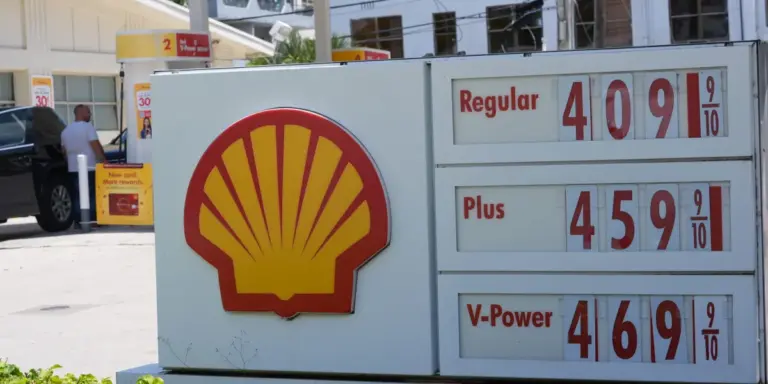
For those looking to escape the city for one final summer getaway, the cost of doing so has climbed significantly this year. According to data from AAA, flight prices to popular domestic spots have jumped nearly twenty percent compared to last year, while hotel rates have seen similar increases. Drivers are feeling the pinch at the pump as well, with regular gas averaging just under four dollars and ten cents per gallon, reflecting a rise of ninety cents over previous years partly fueled by global conflicts affecting oil supplies. Interestingly, cruisers may find better luck with their wallets, as departures from U.S. ports are roughly four percent cheaper than they were last season.

Regardless of how they choose to celebrate, experts suggest that travelers take basic precautions before hitting the road. AAA recommends checking tire pressure and fluid levels while packing an emergency kit containing water and jumper cables to avoid any holiday mishaps. Whether spending the day hunting for retail bargains or navigating crowded highways toward a beach destination, Americans continue to mark this historic tribute to labor with a mixture of leisure and consumption.

As America prepares to mark the unofficial end of summer, residents are finding that whether they can run their errands depends entirely on where they need to go. Following a tradition that dates back to 1882, when thousands of laborers marched through the streets of New York City to demand recognition, Labor Day remains a complex mix of closure and commerce. While President Grover Cleveland formally established the first Monday of September as a legal holiday in 1894, the modern reality sees a sharp divide between public institutions and private retail.

For those needing official business handled, the day will bring significant shutdowns. Government offices, courts, schools, and post offices will all remain closed throughout Monday. Financial activity will also pause as banks and U.S. stock markets take the day off. Logistics will see similar interruptions; while some critical services might persist at specific hubs, standard pickup and delivery operations for both FedEx and UPS are suspended for the holiday.

On the flip side, consumers looking for deals will find plenty of options. Most major national retailers and grocery stores stay open specifically to capitalize on the long weekend with various promotional sales designed to draw crowds. There are few exceptions among the giants, though warehouse club Costco notably closes its doors on Labor Day. Shoppers are encouraged to verify hours with their local branches since timing can fluctuate across different regions.

Meanwhile, millions of people are braving higher costs to squeeze in one final getaway before autumn arrives. Despite rising flight and hotel prices—with airfare jumping nearly twenty percent over last year—and gasoline hovering around four dollars and ten cents a gallon, travel remains high. Those opting for cruises may find relief in slightly lower fares compared to previous years. To avoid mishaps during these journeys, AAA recommends thorough vehicle inspections and packing basic emergency kits containing water and flashlights before hitting the highway.

For over a century, General Motors and Ford have fought for dominance on American roads and racetracks, but their legendary rivalry is now expanding into entirely new territories. The competition is moving beyond showrooms and onto active battlefields and the national energy grid. Both automotive giants are aggressively pursuing U.S. military contracts and venturing into the energy storage system market, signaling a strategic shift as they look for fresh ways to grow while traditional vehicle sales face headwinds.

The push into defense marks a significant pivot toward government contracting. GM took an early lead by reviving its defense unit in 2017, securing high profile projects like the Infantry Squad Vehicle for the U.S. Army. Ford has recently entered the fray, joining the race for military contracts after federal officials encouraged domestic manufacturers to apply their mass production expertise to army needs. While these contracts represent a fraction of the companies total revenue, they allow both firms to leverage their vast supply chains and manufacturing scale in a way that diversifies their portfolios beyond civilian transport.

At the same time, both companies are betting heavily on energy storage systems to salvage investments made during the initial electric vehicle rush. After spending billions on battery plants only to see EV demand soften, GM and Ford are repurposing that capacity to create batteries for homes, businesses, and utility grids. This transition allows them to capitalize on the booming need for power storage driven by rising energy costs and the massive electrical requirements of modern data centers. For Ford, this includes a planned two billion dollar investment to convert existing facilities into hubs for energy storage production by 2027.

Wall Street analysts view these moves as essential survival tactics rather than mere side projects. By pivoting toward new verticals like defense and grid scale energy, the automakers can avoid idling expensive factories designed for EVs that aren’t selling as fast as predicted. While it may be difficult for these ventures to fundamentally change the bottom line of multi billion dollar corporations overnight, they provide a critical hedge against volatility in the car market and position Detroit’s biggest players as central figures in U.S. national security and infrastructure.

President Donald Trump took to the Oval Office on Friday to launch a blistering attack on financial markets and federal policymakers, claiming that stupidity rather than economic success is the true driver of inflation. Despite a surprisingly positive jobs report showing an increase of 162,000 positions in August, the president appeared frustrated by the market’s reaction, which saw stocks dip amid lingering fears that strong employment figures could further fuel price hikes. Rejecting standard economic theory, Trump dismissed these concerns as crazy and insisted that his vision for growth remains intact despite current headwinds.

The outburst comes at a precarious moment for the administration, just two months before Election Day and amidst a period where actual growth has lagged behind previous benchmarks. While Trump has frequently promised an immediate and historic economic boom upon his victory, annual growth has hovered around 2 percent, trailing the gains seen during the Biden era. To explain this discrepancy, Trump pointed toward high interest rates on government debt and suggested that the United States could retaliate against foreign nations by halting trade altogether. This threat follows existing tensions sparked by tariffs on Canada that have already created political friction for Republicans in key battleground states like Maine and Michigan.

Economists warn that the president’s approach may be counterproductive, noting that his own tariff policies and geopolitical instability have contributed to the very inflation he now decries. Experts suggest that forcing the Federal Reserve to cut interest rates prematurely could flood the economy with cash, potentially worsening inflation and destabilizing an already fragile recovery. While Trump predicted that lower rates could propel GDP growth to unprecedented heights of 15 percent, critics argue such projections are wildly optimistic and disconnected from fiscal reality.

Inside the White House, officials remain hopeful that artificial intelligence and continued tax cuts will eventually trigger a surge in productivity and domestic manufacturing. However, with national debt crossing the 40 trillion dollar mark and presidential approval ratings on the economy sliding significantly since 2018, there is growing skepticism about whether these strategies can bridge the gap between campaign rhetoric and economic performance. As Treasury Secretary Scott Bessent attempts to project confidence globally, the administration faces the looming challenge of reducing a massive budget deficit without triggering widespread political backlash through spending cuts.

What began as a routine journey from Dallas Fort Worth to Newark turned into a chaotic scene midair on Thursday night when a first class passenger became violently disruptive. According to witnesses, the man began shouting profanities and hurling racial and homophobic slurs before turning physical, attacking the passenger seated next to him and striking a woman who attempted to step in and calm the situation.

As the tension escalated, Richard Olenick and Juan Mejia, a retired New Jersey police officer, stepped forward to help the crew regain control. After being provided with zip ties by a flight attendant, the men managed to secure the passenger’s wrists. However, the struggle intensified when the man attempted to bite both Mejia and Olenick, prompting them to use duct tape to further restrain him to his seat. Olenick noted that they carefully avoided covering the man’s mouth to ensure he could breathe while continuing to resist their efforts.

The ordeal lasted another fifteen minutes, during which Olenick actually had to sit on the restrained man’s lap to prevent him from breaking free. For those on board, the timing felt particularly heavy given that the anniversary of the September 11 attacks is approaching next week. Both Olenick and Mejia recalled how their personal connections to that tragedy heightened their concern for everyone’s safety during the confrontation.

American Airlines diverted Flight 618 for an emergency landing at Baltimore Washington International Thurgood Marshall Airport, where Maryland Transportation Authority Police were waiting on the tarmac. An unidentified man was taken into custody on state charges before the aircraft finally continued its trip toward Newark. In a statement following the incident, American Airlines emphasized that they do not tolerate violence and praised both their staff and passengers for their professionalism under pressure.

This event comes amid a troubling trend of air rage across the country, with more than 1,100 unruly passenger incidents reported this year alone. While most flights remain peaceful, airlines continue to carry restraints like flexible handcuffs and duct tape specifically for these rare but dangerous scenarios. The Federal Aviation Administration has warned that such behavior can lead not only to criminal charges but also massive civil fines exceeding forty thousand dollars.

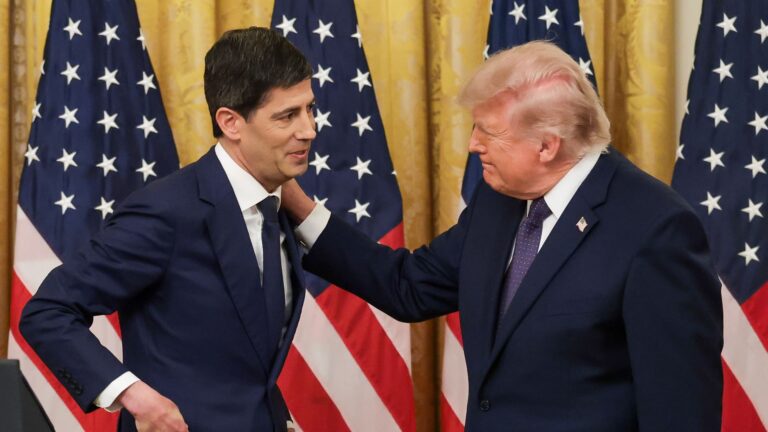
The Trump administration has launched an aggressive, multi front campaign to prevent the Federal Reserve from raising interest rates, ramping up the pressure just ten days before a pivotal policy meeting. While President Trump has been more reserved in his direct criticism of new Fed Chairman Kevin Warsh compared to his treatment of predecessors, he escalated the stakes on Friday by threatening to impose tariffs on countries with trade surpluses unless the central bank lowers rates. This marks a significant shift in tactics, linking international trade policy directly to domestic monetary decisions.

The push for lower rates has become a coordinated effort across the executive branch. Vice President JD Vance and Treasury Secretary Scott Bessent have both publicly urged the Fed to provide relief, while senior economic counselor Peter Navarro took a sharper tone, calling members of the rate setting committee clowns and describing any potential hike as careless. The administration argues that strong growth fueled by tax cuts and capital investment expands economic capacity without triggering inflation, suggesting that the United States should maintain the lowest interest rates in the world given its current trajectory.

Chairman Warsh finds himself in a precarious position as he balances political pressure against stubborn economic data. Although he has maintained that presidential influence has no bearing on his decisions, citing previous holds on rate cuts as proof of independence, he has acknowledged that politicians have a right to voice their opinions. Meanwhile, internal divisions within the Fed persist, with some officials warning that inflation remains too high and pointing toward rising energy costs and geopolitical tensions as primary drivers.

With the November midterm elections looming and voters expressing frustration over high prices, the stakes extend beyond economics into politics. Markets are currently split on whether a hike will occur during the September 15-16 meeting, though a strong recent jobs report has increased those odds. All eyes now turn to upcoming consumer price index reports, which will serve as the final gauge for whether Warsh yields to administration demands or prioritizes the fight against inflation.

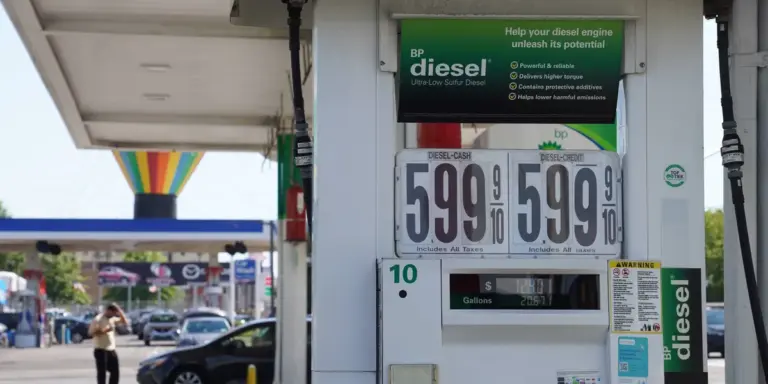
Republicans are beginning to panic as diesel prices climb to an unprecedented peak, leaving party operatives worried that no amount of political maneuvering can hide the economic pain hitting voters. According to recent data from the American Automobile Association, the average cost for a gallon of diesel has surged to five dollars and eighty eight cents. Internal GOP polling suggests that voters are directly linking these skyrocketing costs to President Donald Trump’s controversial conflict with Iran, creating a volatile atmosphere ahead of the 2026 midterms. One party insider admitted bluntly that with gas hovering around four dollars and diesel at an all time high, there is simply no way to message those numbers away.

Despite the growing alarm within the party, many GOP candidates feel trapped by their loyalty to the president. Sources indicate that because Trump maintains such a tight grip on the base necessary for victory in swing districts, lawmakers cannot afford to distance themselves from his policies. This leaves them tethered to an administration whose foreign policy decisions appear to be fueling the very inflation they promised to fight. It is a precarious position for incumbents who must answer to struggling constituents while remaining firmly aligned with a leader whose actions are viewed by many as the root cause of the crisis.

In an attempt to shift the narrative, Transportation Secretary Sean Duffy appeared on Fox News this weekend to argue that the price spikes are driven by external forces rather than domestic policy. Duffy pointed toward Russia and Ukraine, noting that Russia’s status as a top global exporter makes its absence from certain markets a primary driver of volatility. He insisted that President Trump has championed American energy dominance and remains the only person actively working to lower costs, despite widespread reports suggesting that the president’s own military engagements have destabilized energy markets.

The stakes extend far beyond the pump, as rising diesel costs act as a hidden tax on every meal Americans buy. Because diesel powers everything from tractors in the field to delivery trucks heading toward supermarkets, fuel typically accounts for fifteen to thirty percent of total food costs. With grocery bills already serving as a primary point of stress for families over several years, these new peaks threaten to undermine a core campaign promise from 2024 where Trump pledged that food prices would drop immediately upon his taking office.