Archive

September 16, 2026

Browsing

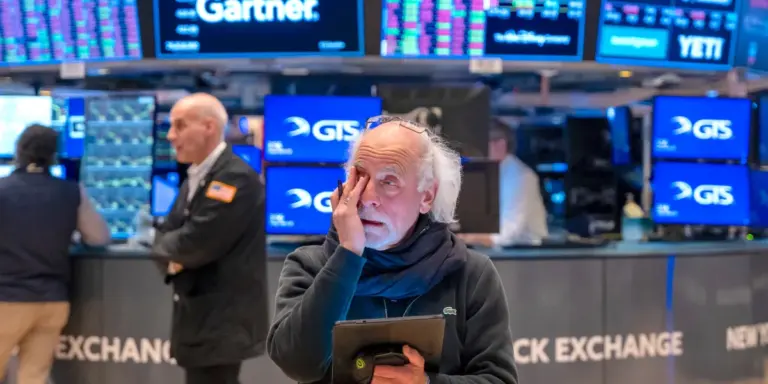
Global equity markets are sliding into a deep selloff as investors grapple with a volatile combination of geopolitical strife and shifting dynamics in the bond market. Stock indices across North America, Europe, and Asia saw widespread declines this week, reflecting growing anxiety that U.S. government debt is entering a riskier phase. With the 10 year Treasury yield climbing past 5 percent for the first time since 2023, financial analysts are warning that we have entered a new era of instability where traditional safe havens may no longer provide the security they once did.

Much of this turmoil is being traced back to the escalating conflict between the United States and Iran, which has already cost taxpayers over 33 billion dollars. Beyond the human and structural toll reported by the Pentagon, the war has pushed Brent crude oil prices above 100 dollars per barrel. This surge in energy costs is refueling domestic inflation and heightening expectations that prices will continue to climb, forcing investors to demand higher risk premiums on long dated bonds to protect their returns from being eroded by rising costs.

Wall Street observers fear these conditions create a dangerous feedback loop for the broader economy. Persistent inflation puts immense pressure on the Federal Reserve to maintain or even increase interest rates to tighten the money supply. For corporations, particularly those heavily invested in the current artificial intelligence boom, higher borrowing costs could prove devastating. Analysts suggest that if treasury yields breach certain thresholds, it could choke off the massive capital expenditures required to build data centers, potentially triggering a sharp correction in tech stocks.

Despite these warnings, political rhetoric remains defiant. President Trump recently highlighted a surge in elite weapons production and dismissed concerns regarding defense spending, suggesting that Iran is eager to reach a deal quickly. However, economists remain divided on how to handle the fallout. While some call for tighter monetary policy to combat inflation, others argue that raising rates now would be a mistake given that many of these inflationary pressures are temporary shocks rather than systemic failures. For now, global traders remain on edge as they wait to see if this shift in bond market psychology marks a permanent change in global finance.

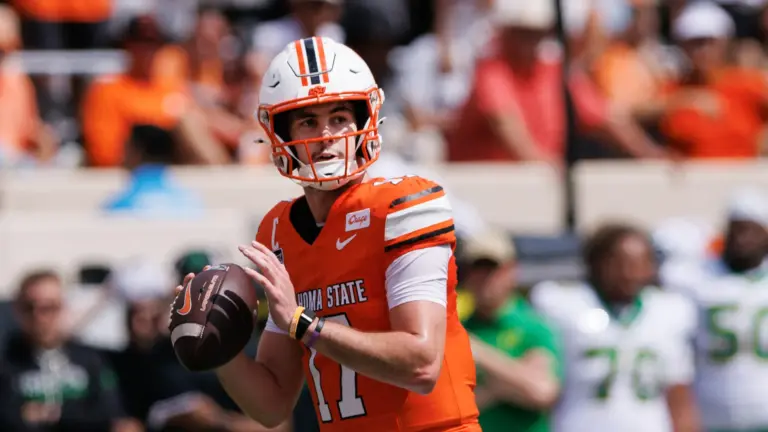
While it is usually too early to draw definitive conclusions just two weeks into the college football season, Oklahoma State quarterback Drew Mestemaker is already defying the standard timeline. After a standout performance in a stunning upset victory over number six Oregon, Mestemaker has vaulted himself into serious first round NFL Draft conversations. While he put up 317 passing yards, scouts attending the game in Stillwater were less interested in the statistics and more impressed by his composure. Despite throwing two interceptions and seeing Oregon reclaim the lead late in the game, Mestemaker refused to unravel, proving to evaluators that he possesses the mental toughness required for the professional level.

His rapid ascent puts him in elite company alongside other highly touted prospects like Texas quarterback Arch Manning and Notre Dame’s CJ Carr. According to NFL scouts, there could be as many as nine quarterbacks viewed as first round talents for the 2027 draft class, but few have seen their stock rise as sharply as Mestemaker has in such a short window. What was once considered a long term developmental project has suddenly become a primary point of discussion for teams looking toward the future of the league.

Meanwhile, the focus shifts to Oxford this Saturday night for a clash between LSU and Ole Miss that feels larger than a standard regular season game. The narrative centers entirely on Lane Kiffin’s return to Ole Miss, a scenario drawing comparisons to legendary coaching homecomings like Nick Saban at LSU or Steve Spurrier at Florida. The hype is reflected in the numbers; school officials report receiving over 325 credential requests from media outlets, more than double what is typically seen for a high profile SEC matchup in Oxford. For a coach who thrives under scrutiny and loves the limelight, Kiffin will find exactly what he wanted as every camera focuses on his homecoming.

Beyond individual storylines, the landscape of college football scheduling is poised for a major shift starting in 2027 when schools can schedule Week 0 games without special exemptions. Programs like Houston are already planning to utilize this opening to secure additional bye weeks throughout the grueling season. While heat and player safety remain significant concerns for those playing in August, sources suggest that Big 12 schools especially may embrace this change to gain much needed breathing room during an expanded postseason era.

Finally, tensions continue to simmer within the SEC regarding roster management and eligibility rules. Several member schools have expressed private frustration over how LSU handled players pursuing professional opportunities before returning to campus. Although some executives hoped for fines or formal sanctions from Commissioner Greg Sankey following these boundary pushing moves, they instead received a measured public statement acknowledging that discussions are ongoing. To some disgruntled rivals, this lack of severe punishment serves as an ominous preview of how aggressive programs will operate moving forward in an increasingly unregulated environment.

The digital asset market took a sharp hit today after hopes for legislative progress vanished following the failure of the Clarity Act vote. Investors had been pinning their expectations on the bill to provide a much needed regulatory framework for cryptocurrencies, but its defeat has left the industry in a state of legal limbo. The immediate reaction was swift and severe, sending shockwaves through both traditional equity markets and the crypto space itself.

Bitcoin led the decline, tumbling alongside various crypto linked stocks as traders rushed to offload positions in response to the uncertainty. Many analysts suggest that the failed vote represents more than just a political setback; it signals a stalling of market structure evolution that institutional investors have been craving. Without clear rules of engagement from lawmakers, many big players are hesitant to commit further capital, fearing that sudden enforcement actions could replace structured guidelines.

This volatility highlights the deep sensitivity of current valuations to government action. While proponents of decentralized finance often argue that these assets should exist outside traditional oversight, the reality is that mainstream adoption remains tethered to legislative legitimacy. With the path toward clarity now blocked, speculators are bracing for a period of increased instability until a new strategy emerges from Capitol Hill.

It is often tempting to dismiss the opening week of the NFL season as a statistical anomaly, but for several quarterbacks, the debut performances provided undeniable proof of growth. Caleb Williams, Brock Purdy, and Trevor Lawrence saw their stocks soar in recent rankings after delivering commanding displays that validated their place among the league’s elite. Rather than dwelling on theoretical fits or past struggles, these players leaned into their specific offensive systems to dismantle their opponents.

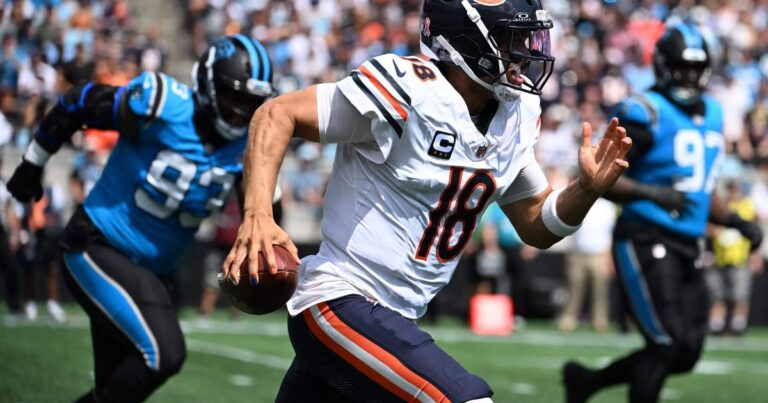
For Caleb Williams, the explosion came in a dominant win over the Carolina Panthers where Chicago hung 59 points on the scoreboard. Under the guidance of coach Ben Johnson, Williams managed to channel his raw physical talent into a disciplined attack, totaling 269 passing yards and four touchdowns without a single turnover. After some early career volatility and playoff struggles, Williams looked polished and poised, suggesting that his strong finish to last season was not a fluke but a foundation.

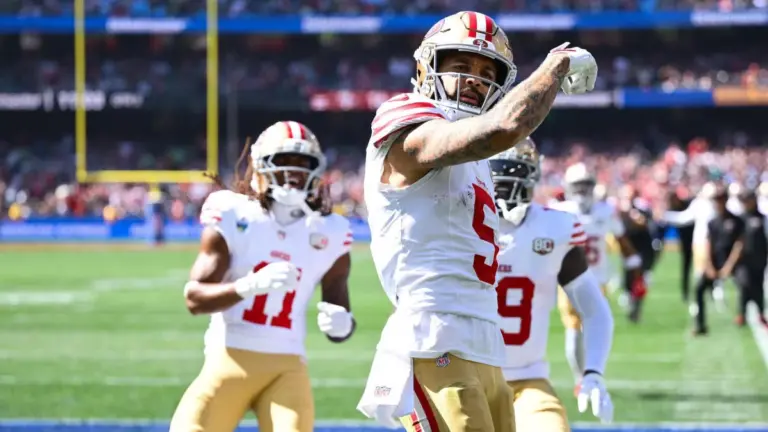
Brock Purdy continued to silence critics with a masterful performance in Australia against the Los Angeles Rams. Despite missing significant time last year due to injury and dealing with various roster instabilities in San Francisco, Purdy remained unstoppable through the second half of the contest. Similarly, Trevor Lawrence experienced a sort of professional rebirth under coach Liam Coen. In a blowout victory against Cleveland, Lawrence completed 18 of 23 passes for four touchdowns, appearing more stable and permanent in his ascent than ever before.

However, while some climbed higher, others felt the sting of an immediate reality check. Jordan Love faced a nightmare outing against the Minnesota Vikings, enduring fifteen hits and four sacks that derailed Green Bay’s momentum and led to a late collapse. Meanwhile, Washington’s Jayden Daniels struggled under constant pressure from Philadelphia, hampered by both opposing defenders and injuries to his own offensive line. As the season progresses, the divide between those flourishing in their environments and those fighting uphill battles has become starkly apparent.

While early September is usually too soon to crown a champion, the opening weekend provided plenty of evidence regarding who belongs in the conversation and who is sliding backward. The San Francisco 49ers sent a clear message to the rest of the league by dismantling the Los Angeles Rams in Australia, securing a dominant 27-7 victory that felt more like a statement than a simple win. Despite dealing with some lingering injuries to key players like Alfred Collins and Mykel Williams, San Francisco looks significantly healthier and more cohesive than they did throughout the previous season.

The 49ers appear to be operating at a different speed than their divisional rivals, boasting a defense that stifled a reigning MVP and an offense that continues to evolve. Between Brock Purdy’s connection with newcomer Mike Evans and the reliable presence of Deebo Samuel, the Niners possess an arsenal that makes them look like the premier force in a crowded NFC West. If they maintain this trajectory, Kyle Shanahan may well be steering this squad toward its third Super Bowl appearance under his leadership.

Conversely, the mood in Los Angeles is considerably darker following the Chargers’ disappointing outing. Facing one of the toughest schedules in the league this year, Jim Harbaugh’s squad needed to secure easy wins at home early on to build momentum. Instead, they suffered a frustrating loss to an Arizona Cardinals team many expected to struggle this season. Dropping twelve points at SoFi Stadium while turning the ball over twice creates an immediate hole for the Chargers, leaving them fighting for footing in a competitive AFC West before they even hit their most brutal stretch of games.

Meanwhile, eyes are shifting toward New York where John Harbaugh is already making waves with the Giants. A gritty win over the Dallas Cowboys showcased an improved Jaxson Dart and an exciting new dynamic with tight end Isaiah Likely. While critics might argue that Dallas looked vulnerable, the Giants played complete football on both sides of the ball during their prime-time debut. As we move into Week 2, these diverging paths suggest that while some teams are accelerating toward February, others are already scrambling to save their seasons.

The landscape of cannabis in Australia remains a complicated patchwork of strict prohibitions and emerging medical acceptance. While the federal government legalized medicinal cannabis back in 2016, the industry is still finding its footing. Market analysts expect revenues to climb toward four point five billion dollars by 2029, yet actual patient access remains tightly controlled. Only two products are officially registered with the Therapeutic Goods Administration, and because nothing is subsidized under the Pharmaceutical Benefits Scheme, many patients find themselves navigating expensive and bureaucratic hurdles just to receive basic care.

Beyond the pharmacy, the battle over recreational use continues to divide lawmakers and the public. Recent polling suggests nearly half of Australians now support legalization, a significant jump from a decade ago. This shift led to the introduction of the Legalising Cannabis Bill 2023, which proposed allowing adults to grow their own plants and possess small amounts of the drug. However, the dream of a national legal market hit a wall in late 2024 when Parliament voted overwhelmingly against the measure. Supporters of the bill argue that continuing to criminalize cannabis disproportionately harms marginalized groups, particularly Aboriginal youth who are heavily overrepresented in the prison system.

For those using medicinal cannabis legally, daily life presents its own set of risks depending on where they live. In almost every state except Tasmania, drivers can still face penalties if THC is detected during a roadside test, regardless of whether they are actually impaired at the moment of driving. This lack of nuance in state laws has created ongoing tension between health advocates and police enforcement agencies across the country.

Adding to the friction is a growing conflict within the supply chain itself. Local farmers recently formed the Australian Cannabis Cultivator Guild to protest an import dominated market that they say favors foreign producers over domestic ones. These growers claim that exorbitant licensing costs make it impossible for Australian farms to compete with cheaper imports. As these economic and social pressures mount, Australia finds itself in a precarious middle ground where public opinion is shifting faster than the legislative framework allows.

The United States government is making a massive bet on domestic mineral security, announcing a series of strategic investments aimed at reducing reliance on foreign adversaries for materials essential to national defense. In a dual move revealed Monday, the Department of War injected 450 million dollars into tungsten producer The Elmet Group and expanded existing grants for rare earth developer Ucore Rare Metals. This push comes as Washington seeks to insulate its military supply chain from geopolitical volatility and tightening export controls from Beijing.

For The Elmet Group, the deal involves a complex financial arrangement where the newly created Economic Defense Unit will acquire preferred equity and warrants for nearly twenty percent of the company’s stock. Maine based Elmet plans to funnel over 165 million dollars into upgrading facilities across Maine, Michigan, and Ohio. These sites are vital hubs for producing tungsten components used in some of the country’s most sophisticated weaponry, ranging from F-35 fighter jets and Virginia class submarines to various missile systems like the Patriot and Javelin. Additionally, Elmet is partnering with Blue Moon Metals and Australia’s EQ Resources to revive ammonium paratungstate conversion at a mine in Nevada.

Beyond the immediate capital injection, Elmet has also locked in a long term safety net via a separate contract with the Defense Logistics Agency valued at up to 2 billion dollars. This agreement ensures that the National Defense Stockpile remains supplied with tungsten ores and concentrates through at least 2031. According to Elmet CEO Peter V. Anania, these steps are fundamental to ensuring a resilient supply of materials that underpin America’s broader industrial and economic stability.

At the same time, Canada based Ucore Rare Metals received additional funding to bolster its work on light rare earths specifically samarium and gadolinium. A new contract modification brings total Pentagon funding for Ucore’s RapidSX project to 27 million dollars. These specific minerals are crucial for high temperature magnets and nuclear reactor control rods, both of which have become higher risk assets following Chinese export restrictions earlier this year. With upcoming regulations set to ban defense procurement of magnets refined in certain covered countries by early 2027, Ucore CEO Pat Ryan noted that Washington is increasingly recognizing the urgent national need for independent separation capabilities within North American borders.

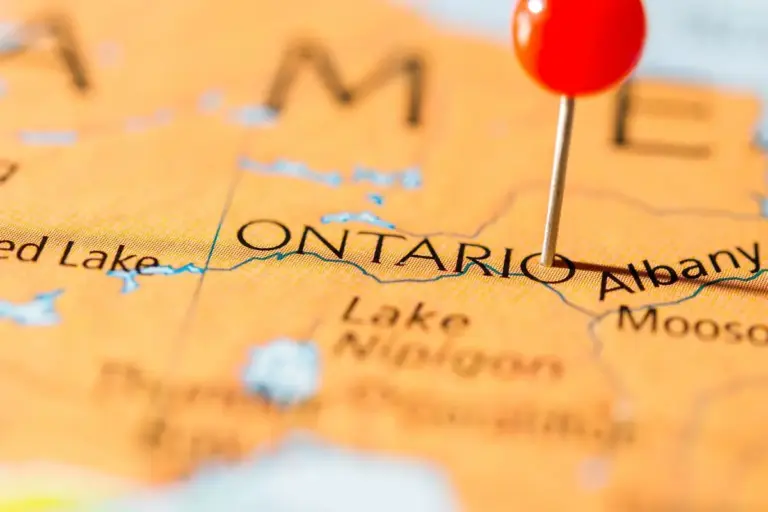
Toronto-based Generation Mining has officially crossed the finish line in its quest to fund the ambitious Marathon copper-palladium project in Northwestern Ontario. The company recently secured a final C$340 million in financing, completing a massive C$1.3 billion capital package required to bring the mine into operation. This final push was made possible through a complex mix of public offerings, private placements, and strategic government support, signaling strong confidence in the project’s long-term viability.

A significant portion of the funding came from federal anchor commitments designed to bolster Canada’s critical minerals sector. The Canada Growth Fund provided C$140 million while the Canada Infrastructure Bank contributed C$50 million. To round out the figures, Generation Mining organized a C$200 million public offering supported by industry heavyweights including Wheaton Precious Metals and Glencore Canada, alongside additional convertible notes that carry a nine percent annual interest rate.

Beyond the raw numbers, the company has locked in its operational future through a comprehensive supply agreement with Glencore AG. Under this deal, Glencore will purchase all of the project’s polymetallic copper concentrate during the first two years of production and again from year thirteen onward, maintaining a fifty percent stake during the intervening decade. Most importantly for domestic interests, the materials will be processed right here at home at Glencore Canada’s facilities in Quebec.

CEO Jamie Levy described the achievement as a landmark day for the firm, praising the Canadian government for providing the necessary financial tools to bridge the gap. Finance Minister François-Philippe Champagne echoed this sentiment, noting that securing reliable sources of copper and palladium is vital for Canada’s role in clean energy and advanced manufacturing globally. Over its projected thirteen year lifespan, the Marathon site is expected to yield hundreds of millions of pounds of copper along with significant quantities of palladium, platinum, gold, and silver.

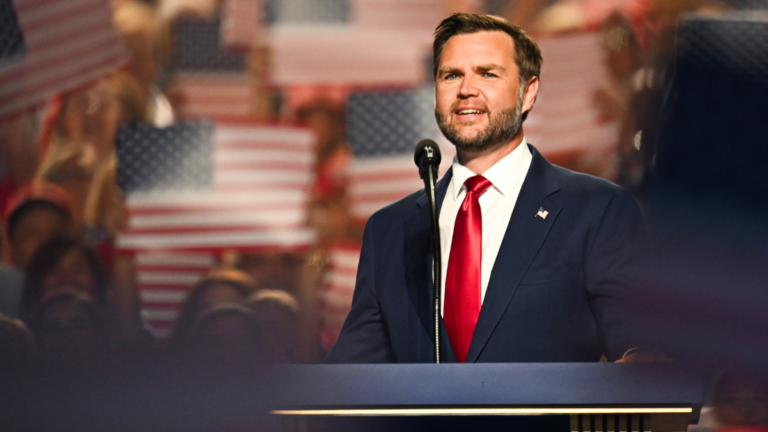
EXCLUSIVE: Vice President JD Vance energized Republicans during a huddle on Capitol Hill Tuesday where he urged lawmakers to “kick a–” in the 49 days before the midterm elections, according to audio obtained by Fox News Digital from a person in the room.

He wants members of Congress who are on the campaign trail to tell Americans how Trump administration’s policies benefit them daily.

“There’s people out there right now whose lives are going to get better, or their lives are going to get worse based on whether we’re in the majority or whether we’re in the minority,” Vance told the Republican lawmakers in spelling out the stakes of the 2026 midterms.

“There are going to be people who are going to be poorer. Who are going to be less able to afford their prescription drugs, who are going to be less safe in the homes in their neighborhoods if the other guys get the majority,” he continued. “And there are people who are going to be able to walk down the street in safety if you guys keep the majority. If we keep the majority together.”

Specifically, Vance told incumbents to hammer home the issue of crime, noting that the homicide rate has reached a 126-year low. Vance explained that in a country of 330 million people, that crime stat translates to “thousands of people,” including mothers and fathers, who are coming home to their families instead of being victims of deadly crimes.

FBI REPORTS LARGEST DROP IN VIOLENT CRIME AND MURDER SINCE 1937 AS HOMICIDES FALL MORE THAN 18%

“There are tens of thousands of children who will come home tonight and work on their homework with mom or dad, rather than a stranger, because of what we’ve been able to do in supporting law enforcement,” Vance said in the closed-door meeting.

“This is not an abstraction, ladies and gentlemen,” the vice president continued. “This is not about what you see on CNN or Fox News. This is not whether someone with an ‘R’ or a ‘D’ next to their name wins. This is about whether the American people in this country that we love have a government that they deserve, that protects them, that fights for them, or whether they have a government that treats them as a means to end.”

Fox News Digital caught up with some lawmakers after the meeting.

One House Republican granted anonymity to speak candidly told Fox News Digital the meeting was  “a pep rally for the midterms. It was about raising money, showing up, making sure that everybody’s all hands on deck going into November.”

“I think he did a great job,” Rep. Tim Burchett, R- Tenn., assessed. “He’s very good. He’s very personable.”

“He’s got some kind of voodoo thing going on where he remembers everybody’s dadgum name,” Burchett told Fox News Digital. “It kind of freaks me out a little bit. But, I mean, every time I’ve run into him — I remember one time I was waiting in line to go to the bathroom and he walked out of the bathroom. ‘Hey, Tim, what’s going on?’ I invited him to a [University of Tennessee] game.”

Vance offered some campaign tips to the lawmakers while ribbing the political consulting class for sometimes being out of touch, and saying “the American people are not dumb.”

He said voters understand President Donald Trump and his administration inherited problems, including inflation, massive debt and “a country that was weaker on the national stage.”

“They know that Rome wasn’t built in a day,” he said.

THE ONE LINE FROM JD VANCE’S GOP KEYNOTE THAT REVEALS HIS VISION FOR AMERICA

The vice president directed members to “pound the pavement” in their home districts to personally connect with as many voters as possible.

Just as importantly, Vance said, Republicans in safe districts who have no real opposition from the left should contribute money to the campaigns of fellow Republicans who are in competitive districts.

“So here’s the thing, this is not rocket science. You guys know this better than I do, you know your districts better than I do,” Vance said . “We know that most voters, particularly the voters who are open-minded, who are not hardcore partisans, they don’t really start paying attention to the election until right about now.”

THUNE-ALIGNED GROUPS UNLEASH HISTORIC WAR CHEST TO DEFEND SENATE MAJORITY: ‘WINNING MESSAGE’

Vance also spoke fondly of when late Republican Sen. Lindsey Graham of South Carolina joined him in Ohio while he was campaigning for the Senate in 2022.

“I’ll never forget this,” said Vance. ” Lindsey Graham comes out — I didn’t know Lindsey Graham at all, and you guys know how the campaign trail is in the final stretches. You wake up in a crappy hotel, you haven’t seen your wife, your kids in a few days, and it’s a lot more fun when you have some company out there.”

“You’re telling jokes, you’re enjoying it. That energy — people pick up on it. So, get out there and campaign with your friends.”

Vance recalled how Graham told him stories that had him “aching with laughter,” half of which he said he could not repeat.

One source told Fox News Digital that Vance stayed after his remarks in tacit encouragement for House Republicans to pledge more money to their campaign arm, which several did. One person said Rep. Brandon Gill, R-Texas, for example, pledged $1.1 million to the National Republican Congressional Committee (NRCC).

Speaker Mike Johnson, R-La., told reporters afterward that the meeting raised $20 million toward Republicans’ re-election efforts.

Voters squeezed by rising costs are skeptical of President Donald Trump’s proposed $5,000 dividend — with at least one resident pointing to a previous DOGE dividend proposal that never materialized.

“I feel like that’s a pitch to get more votes,” Yolanda Lewis told Fox News Digital. “I’m still waiting on the DOGE check that he promised that we never received, so until he gives us a definite date saying when we’re gonna get that and receive it, then I’ll take that into consideration.”

Trump suggested in February 2025 that a portion of savings generated by the Department of Government Efficiency (DOGE) could be returned to taxpayers, while Elon Musk entertained a proposal that envisioned payments of as much as $5,000. Trump later backed the idea of returning 20% of DOGE savings to Americans. DOGE reported $110.3 billion in savings from contracts, grants and leases, though a Government Accountability Office review later found that some of its estimates were inaccurate or lacked sufficient supporting evidence.

Now, with affordability a top-of-mind issue for voters across the country, Trump has unveiled a new “Trump dividend” plan at the Midterm GOP Convention last Wednesday that would give $5,000 to American adults if Republicans maintain control of Congress.

Several Detroit voters, interviewed by Fox News Digital at the Detroit Health Department’s annual Block Party on Sept. 12, rejected the proposal, with some calling it a “bribe” and others questioning whether the money would ever be paid out.

TRUMP MAKES STUNNING FIRST-OF-ITS-KIND CASH PROMISE IN BID TO RALLY GOP VOTERS AT DALLAS MIDTERM CONVENTION

“I think it’s kind of irresponsible because what is the long-term impact of this money?” Jahdante Smith, the Green Party candidate for the state House of Representatives 9th district, told Fox News Digital.

Smith, who supports Medicare for All, pointed to the nation’s roughly $40 trillion debt in questioning how the proposal would be funded.

“So where does that money come from? Where do you divert those funds from? Also, I think that it is sort of a bribe,” Smith said.

Michigan, which Trump won by 1.4% in 2024, has become a key battleground in the fight for Senate control as Democratic Senate candidate Abdul El-Saye and Republican Mike Rogers are both vying for Michigan’s open Senate seat.

El-Sayed called Trump’s $5,000 proposal “unserious” during a rally in Lansing, Michigan.

“Funny thing about it is like there’s no world in which you can pay for it,” El-Sayed said. “So how about you actually do some governing and like solve the Social Security problem. How about we guarantee people health care so they don’t have to pay so much for that.”

Rogers’ campaign did not directly comment on the former congressman’s stance on Trump’s $5,000 dividend plan. Instead, it pointed to El-Sayed’s support for implementing a progressive tax plan.

“You know what’s not serious? Challenging Mike to a 1:1 football scrimmage, taking money from Designated Terrorist Organizations and advocating to raise taxes for Michiganders while they’re already paying for Democrats’ mismanagement,” said Alyssa Brouillet, communications director for the Rogers campaign. “Funny enough, those are things Abdul does.”

Prices are an acute concern in Detroit, where roughly a third of residents live below the federal poverty line. The city’s median household income is below $40,000, according to U.S. census data.

“Well, as a city Detroit retiree, affordability is very important, and I think the prices since Trump’s been back in office have gone up on everything, especially gas, diesel, you know, affordabilities went out the window,” William Davis told Fox News Digital.

The current cost of gas in Detroit is $4.11 per gallon. Before the Iran war, gas prices hovered between $2.81 and $2.92 per gallon in January.

TRUMP FACES RECKONING AS GOP FIGURES LABEL $5K PROMISE A ‘SOCIALIST VOTE-BUYING SCHEME’

Martesha Adams, a young mother and nurse living in Detroit, told Fox News Digital at the Detroit Health Department Block Party that she also viewed the $5,000 proposal as an attempt to win over struggling Americans.

“The whole time I feel that he’s been in the office, it’s been a kind of game,” Adams said. “America has been laughed at from everywhere. And the $5K for bribery, that’s nothing. So I hope that people do not go for that bribe, and they really look into the politics.”

For Shelby Campbell, a 2023 graduate of Wayne State University, affordability has already forced significant changes. She said she sold her car because she could no longer afford Michigan’s no-fault auto insurance and has struggled to find an affordable rental in Detroit.

Campbell called Trump’s $5,000 proposal “disgusting.”

“He shouldn’t be able to offer people money if we have one party in office,” Campbell said. “It’s supposed to be about everybody and what we all want and need, so it’s just bribery in my opinion.”

Campbell, who said she plans to vote for El-Sayed in the general election, argued that money already plays too large a role in politics.

“I think he’s genuinely a good guy, and he wants to get money out of politics, and I am all for that,” Campbell said. “We seriously need that because big corporations buy our elections just like Donald Trump is trying to do.”

Other Detroit residents echoed Lewis’ skepticism about whether Trump would actually deliver the proposed payments.

BILLIONS SPENT BY KEY FEDERAL AGENCY HASN’T MADE AMERICAN DREAM OF HOMEOWNERSHIP ANY EASIER: REPORT

Trump also proposed a separate $2,000 dividend last year funded by tariff revenue, though those payments never materialized.

“I don’t think it’s realistic to think he’s going to do that,” Davis said of Trump’s latest proposal.

Fox News Digital reached out to the White House for comment.

House Speaker Mike Johnson, R-La., said Sunday on “Meet the Press” that the $5,000 payments would require congressional approval, while pledging to work toward Trump’s proposal.

“I never go out and give big commitments on the front end because I’ve got to work through it, and that’s what we do every single day,” Johnson said.

While Trump’s proposal has garnered mixed reactions within the Republican Party, Sen. Bernie Moreno, R-Ohio, posted on X that he’d work to prepare a bill and get it passed before the election.

House Majority Whip Tom Emmer, R-Minn., rejected the idea that Trump was seeking to “bribe” voters.

“The only thing that I knew of was that he has this concept of a dividend of all Americans being able to share in the success of America,” Emmer told Politico.

“Let the policy guys draft it. Let them debate it. Let them move it through committee,” Emmer told Politico. “You get it to the whip’s office. We’ll pass it.”