Archive

September 23, 2026

Browsing

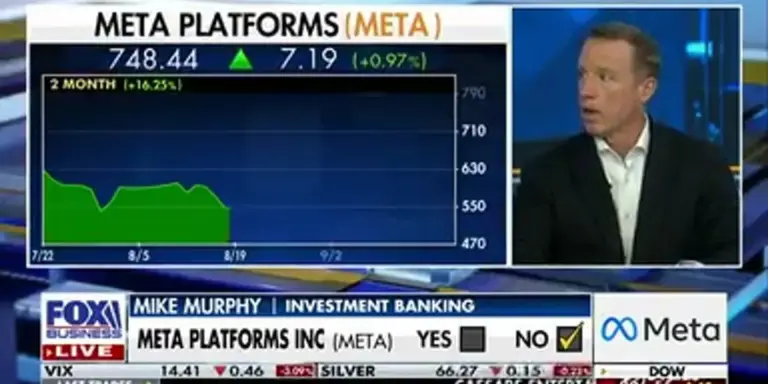
Meta shares climbed sharply during Tuesday trading as investors reacted with enthusiasm to the official rollout of Muse, the company’s latest venture into generative artificial intelligence. Market analysts suggest that the surge reflects a growing confidence in Mark Zuckerberg’s pivot toward integrated AI tools, which aim to reshape how users interact across Facebook and Instagram. The stock price jumped significantly shortly after the announcement, signaling that Wall Street views Muse as a potential catalyst for new advertising revenue streams.

The tool itself represents a major leap forward in Meta’s strategy to compete with other tech giants in the AI arms race. By embedding sophisticated creative capabilities directly into its social platforms, Meta is betting that it can keep younger demographics engaged while providing businesses with more efficient ways to generate marketing content. Early reports indicate that the integration is seamless, allowing creators to produce high quality visuals and text without leaving their existing workflows.

While some skeptics have questioned whether another AI tool is necessary in an already crowded market, today’s stock movement suggests a different narrative among shareholders. Many believe that Meta holds a unique advantage because of its massive existing user base, giving Muse an immediate distribution network that rivals lack. As the day progressed, traders continued to pile into the stock, anticipating long term growth driven by these automation efficiencies.

Looking ahead, all eyes will be on how quickly developers and brands adopt Muse over the coming quarter. If early adoption rates match current investor optimism, Meta could see sustained momentum heading into its next earnings report. For now, the financial community seems convinced that this move marks a turning point in how the company leverages machine learning to maintain its dominance in the digital attention economy.
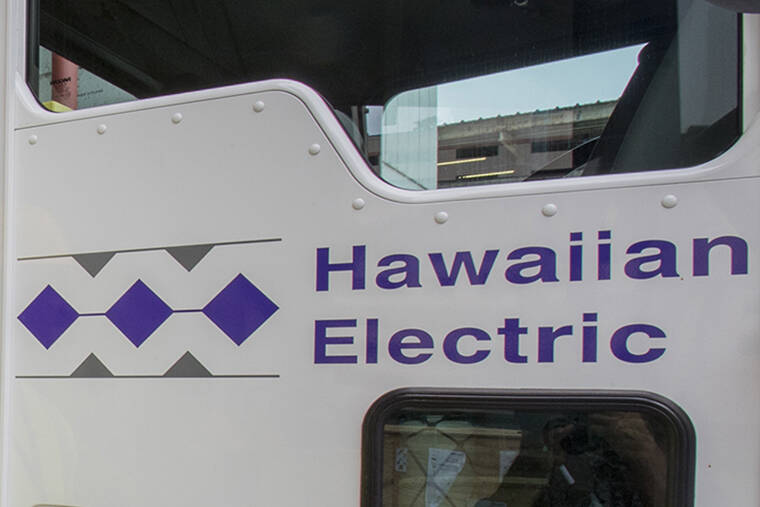

Hawaiian Electric Industries has secured a significant cash infusion after selling a portion of its holdings in American Savings Bank during the financial institution’s recent initial public offering. In a disclosure made Monday, the parent company revealed it netted 29.5 million dollars after transaction fees by selling approximately two million shares. This move reduced HEI’s ownership stake in the bank to roughly six percent, continuing a broader strategy to liquidate assets as the utility provider grapples with massive liabilities.

The decision to cash in on the bank stock is directly tied to the fallout from the devastating August 2023 wildfires that decimated Lahaina and claimed 102 lives. With more than twenty thousand victims filing claims for billions of dollars in damages, HEI has committed to paying two billion dollars toward a larger settlement package. Chief Executive Officer Scott Seu stated that monetizing these shares strengthens the company’s liquidity and reduces its reliance on outside financing to meet these looming obligations.

This latest sale follows a series of aggressive financial maneuvers designed to keep the company solvent while preparing for four equal annual settlement installments. Earlier in 2024, HEI raised 558 million dollars through new share offerings and contributed another 75 million dollars to a state fund for victims opting out of litigation. While the company still holds millions of dollars worth of ASB stock, those remaining shares are currently under a lockup period and cannot be sold for another 180 days.

Despite these efforts to stabilize its balance sheet, investor confidence remains shaken. Shares of HEI recently hit a fifty two week low, closing at just nine dollars and fifty seven cents on Monday. To put that decline into perspective, the stock was trading at over thirty seven dollars just one day before the catastrophic fires began, reflecting the immense scale of the legal and financial crisis facing the energy giant.

Investors are keeping a wary eye on Tesla as a storm of macroeconomic pressures and shifting political landscapes threaten to destabilize the electric vehicle giant. While the stock has seen some recent appreciation, analysts warn that the company is facing a perfect storm of diminishing margins and aggressive competition. The looming possibility of Chinese automakers entering the U.S. market could strip away much of Tesla’s domestic dominance, creating a volatile environment for shareholders who have grown accustomed to the brand’s historic growth spurts.

The internal numbers provide an even grimmer picture, with Goldman Sachs recently slashing delivery estimates for the second half of the year. These lowered expectations come at a time when Federal Reserve interest rates remain a significant hurdle, making it more expensive for consumers to finance new vehicles. As demand softens, Tesla is simultaneously doubling down on massive capital expenditures, including a staggering 16.8 billion dollar commitment toward a chip fabrication project alongside SpaceX. Critics argue that spending billions on infrastructure while dealing with negative free cash flow creates an unsustainable level of risk.

From a valuation standpoint, some experts believe the current market price is wildly detached from reality. Using discounted cash flow models, certain bearish analysts suggest that Tesla’s fair value sits closer to 92 dollars per share, representing a drop of roughly 75 percent from where it trades today. They point to deteriorating fundamentals and an overreliance on optimistic future projections rather than present-day profitability. If these structural weaknesses collide with unfavorable policy shifts under a potential Trump administration or increased global trade tensions, the stock could see a dramatic correction.

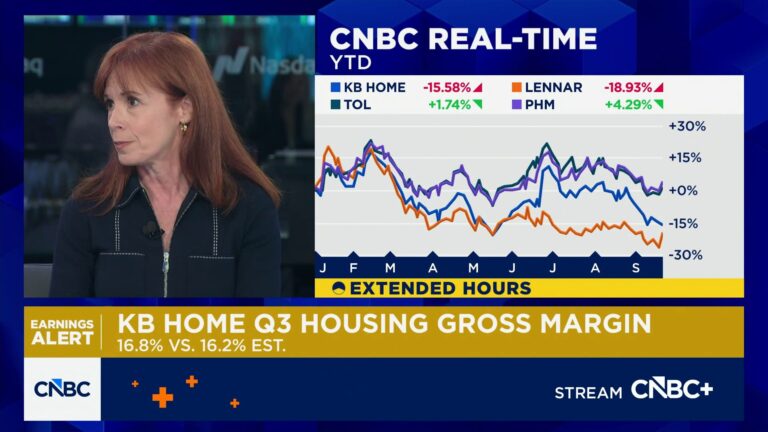
Investors who had been riding a wave of optimism regarding KB Homes saw their fortunes shift abruptly this evening as shares plummeted during extended trading hours. The homebuilder, which had recently enjoyed a steady climb in valuation, witnessed a sharp reversal that wiped out recent gains and left analysts questioning the sustainability of its current trajectory. This sudden downturn comes as a shock to those betting on a resilient housing market despite ongoing economic headwinds.

The sell off began shortly after the closing bell, with the stock sliding rapidly as traders reacted to new data or shifting sentiment surrounding the construction sector. While the company has previously signaled confidence in its pipeline and demand for new homes, tonight’s volatility suggests that shareholders are becoming increasingly wary of interest rate fluctuations and potential cooling in buyer appetite. The speed of the decline indicates a broad exit strategy among institutional investors who may be locking in profits before further instability hits.

Market watchers note that this move reflects a larger tension within the residential building industry where high material costs often clash with hopes for lower mortgage rates. For KB Homes, today’s slide serves as a reminder of how quickly momentum can evaporate when broader macroeconomic fears overshadow individual corporate performance. As the dust settles from this session of extended trading, all eyes will be on tomorrow’s opening bell to see if the dip was an isolated incident or the start of a deeper correction for one of the nation’s largest builders.

A soggy afternoon at Soldier Field turned into a nightmare for the Chicago Bears on Sunday, as they tumbled to a 9-3 loss against the Minnesota Vikings in their home opener. In a game defined by torrential rain and missed opportunities, neither side found much rhythm, but Minnesota managed to navigate the elements with far fewer errors. While the defense held firm for most of the day, keeping the Vikings out of the red zone nearly entirely, three field goals were enough to seal the victory. To make matters worse, quarterback Caleb Williams suffered a hamstring injury late in the fourth quarter during a run that looked destined for the end zone, leaving the team with significant questions heading into Week 3.

Despite the frustrating result, some individual performances provided a glimmer of hope. Rookie safety Dillon Thieneman continues to justify his first round draft status, leading the team in tackles for the second consecutive week and delivering a massive stop against Justin Jefferson. Cornerback Tyrique Stevenson also shone under pressure, effectively shutting down one of the league’s most dangerous receiving corps despite exiting early with an injury. On the defensive line, Dayo Odeyingbo showed versatility and aggression by rotating inside to disrupt the pocket, recording a sack and putting together one of his strongest outings since joining Chicago in 2025.

Conversely, several players saw their stock plummet following the defeat. Center Garrett Bradbury had an abysmal outing against his former teammates, plagued by four penalties and botched snaps that disrupted an already struggling offense. The frustration extended to the tight end position where rookie Sam Roush became a primary target for fan criticism after dropping what likely would have been a walk-in touchdown late in the game. Meanwhile, high profile talent Colston Loveland remains inexplicably sidelined in Ben Johnson’s scheme; finishing with just one reception for three yards suggests a disconnect between his ability as a playmaker and his actual usage on the field.

As head coach Ben Johnson evaluates this lackluster performance, he faces immediate dilemmas regarding both personnel and strategy. With potential injuries to Williams and Stevenson looming over next week’s preparations, the coaching staff may need to reconsider its offensive approach to unlock players like Loveland before more games slip away. The resilience shown by rookies like Thieneman offers some optimism, but until Chicago can stabilize its protection and finish drives in adverse conditions, these growing pains will continue to weigh heavily on a hopeful fanbase.

Luca Mining has significantly expanded its footprint in Mexico after reaching an agreement on Monday to acquire the Cozamin underground copper-silver mine from Capstone Copper. Located in the Zacatecas district, the twenty year old operation comes with a price tag of 290 million dollars upfront, with another 95 million dollars potentially following in deferred and contingent payments. This move marks a major strategic step for Luca Mining, coming just a week after it agreed to pick up the El Barqueño project in Jalisco state from Agnico Eagle Mines.

The acquisition provides Luca with a turnkey operation featuring robust infrastructure, including two ramp declines and the San Roberto shaft. The site is currently equipped to process 4,400 tons of ore daily, but Luca sees room for growth. Specifically, the company intends to investigate restarting an inactive zinc flotation circuit to take advantage of shifting market conditions for base metals. Recent years have already seen significant modernization at the site, as Capstone invested heavily in 2022 to implement a filtered tailings system and a paste backfill plant, supported by a prior streaming agreement with Wheaton Precious Metals.

From a geological perspective, Cozamin sits within a productive belt of vein deposits where mineralization remains open both at depth and along key strikes. The primary Mala Noche Vein spans five and a half kilometers, while high grade zones discovered more recently offer further promise. According to resource estimates from late 2025, the mine holds roughly 17.5 million tons of measured and indicated resources characterized by promising grades of copper and silver.

Dan Barnholden, CEO of Luca Mining, described the asset as a cash generating engine with deep untapped potential. While previous owners had projected a mine life extending to 2030, Barnholden believes there is plenty of room for expansion. To achieve this, Luca plans to aggressively increase exploration spending far beyond the current annual budget of two million dollars, aiming to push the operational lifespan of the mine well into the future through deeper drilling and discovery work.

Melbourne based Telix Pharmaceuticals is making a massive play for dominance in the nuclear medicine space, announcing an agreement to acquire Germany’s ITM Isotope Technologies in a deal valued at roughly 1.65 billion dollars. This strategic move allows Telix to take full control of a vast global production and distribution network stretching across more than 65 countries. Most importantly, it secures their access to commercial grade radioisotopes, including lutetium 177, which ITM produces on a global scale, along with other critical materials like actinium 225 and terbium 161.

The financial structure of the acquisition involves a complex mix of cash and equity. Telix plans to pay the initial sum on a cash free and debt free basis, utilizing about 1.25 billion dollars in Nasdaq listed American Depositary Receipts and assuming some of ITM’s net debt. On top of the upfront cost, there could be as much as 700 million dollars in additional contingent milestone payments depending on future performance. Once the dust settles, original Telix shareholders will maintain about 76 percent ownership of the expanded company.

Beyond the logistics of isotopes, this merger significantly boosts Telix’s medical pipeline. By absorbing ITM, they gain access to ITM 11, a promising therapy for certain types of neuroendocrine tumors that has already finished phase three trials. This complements Telix’s existing portfolio, which includes recent successes like the glioma diagnostic Pixclara and the prostate cancer imaging agent Illuccix. Management expects these synergies to drive significant growth, projecting over 1.3 billion dollars in revenue by 2026 and positive earnings shortly thereafter.

Christian Behrenbruch, managing director and group CEO of Telix, noted that this merger places his company at the center of an industry wide trend toward consolidation as the field matures. This activity mirrors several other high profile acquisitions seen recently among pharmaceutical giants such as Eli Lilly and Sanofi. For Telix, combining their research capabilities with ITM’s industrial scale creates what Behrenbruch describes as one of the most exciting portfolios in the theranostics sector today.

The U.S. Securities and Exchange Commission has opened a strategic window for the future of finance by issuing a conditional five year exemption that allows tokenized versions of U.S. listed stocks to trade on blockchain platforms. Known as the Innovation Exemption, this move permits these specialized venues to operate without the burdensome process of registering as full national securities exchanges. Rather than establishing a permanent rule, the agency is treating this period as a temporary bridge, providing a sandbox for technology to evolve while regulators determine long term frameworks.

This sudden shift follows closely on the heels of a legislative setback in the Senate, where the Digital Asset Market Clarity Act failed to secure enough votes to advance. Had that bill passed, it would have shifted significant regulatory power toward the Commodity Futures Trading Commission, specifically regarding tokens that meet certain decentralization criteria. By stepping in now with its own exemption, the SEC is maintaining its grip on securities regulation while offering a compromise to an industry eager for clearer guidelines on how to merge traditional equity with distributed ledger technology.

However, the path to qualification is narrow and strict. For a tokenized stock to benefit from this exemption, it cannot simply track the price of a share; it must grant holders the exact same economic and governance rights as original shareholders, including voting power and dividends. This means many existing products offered by firms like Robinhood or Kraken, which provide price exposure without actual ownership status, do not qualify under current structures. Furthermore, liquidity providers who typically rely on automated smart contracts can avoid certain restrictive dealer registrations provided they adhere to these specific parameters.

Industry reactions have been polarized between those seeing a revolution and those fearing chaos. Coinbase vice chairman Ryan VanGrack described tokenization as the most significant upgrade to financial infrastructure since the transition from paper to electronic trading. Conversely, critics like SIFMA chief Kenneth Bentsen warn that allowing lightly regulated parallel markets could fragment liquidity and confuse investors. While proponents celebrate the potential for twenty four seven trading and instant settlement, skeptics argue that putting a stock on a blockchain does not magically resolve the fundamental legal differences between owning an asset and holding a synthetic derivative.

Investors poured into Greenland linked equities on Monday after the United States formalized a trilateral security pact with Denmark and the Arctic territory. The agreement, aimed at expanding the American military footprint in the region, triggered massive gains for several US listed companies. Shares of Greenland Mines surged over 200 percent, while Greenland Energy saw a leap of 159 percent. Critical Metals also experienced significant growth, climbing nearly 37 percent as markets reacted to the shift in geopolitical stability.

The deal was announced by President Donald Trump via Truth Social, where he asserted that the United States would maintain the permanent ability to take necessary actions to ensure the security of both Greenland and America. According to the president, the arrangement involves no financial cost to Washington but paves the way for a substantial military buildup. This resolution comes after a period of high tension during which Trump had suggested that acquiring the semiautonomous territory was psychologically important and viewed anything short of full ownership as unacceptable.

Despite previous fears that could have led to drastic measures from Copenhagen, including plans to disable airfields in anticipation of an invasion, leadership in Denmark and Greenland expressed relief. Danish Prime Minister Mette Frederiksen stated that the pact preserves national sovereignty and territorial integrity, while Greenland Prime Minister Jens Frederiks Nielsen noted that it recognizes their interests within international cooperation. By securing these guarantees of self determination, officials hope to balance strategic defense needs with local governance.

Beyond military strategy, the surge reflects intense interest in Greenland’s vast mineral wealth. Companies like Critical Metals are focusing on sites such as the Tanbreez rare earths mine, which contains materials vital for electric vehicles and defense technology. Because Western nations are eager to reduce their reliance on China for critical minerals, these assets have become central to economic security strategies. With some reports suggesting the US government has even considered taking direct equity stakes in these ventures through grants, investors now see a clear path toward accelerated resource extraction under American protection.

Artemis Gold has announced a definitive agreement to acquire Vista Gold Corp in an all-stock deal valued at 427 million US dollars. This strategic move grants Artemis full ownership of the Mt Todd gold project located in Australia’s Northern Territory. Under the terms of the arrangement, Vista Gold shareholders will receive 0.0966 Artemis common shares for every share they currently hold. Once the transaction closes, original Artemis shareholders will maintain roughly 95 percent ownership of the merged company, while Vista shareholders will account for the remaining 5 percent.

The centerpiece of this acquisition is the Mt Todd site, situated about 290 kilometers southeast of Darwin on land managed by the Jawoyn Association Aboriginal Corporation. Although mining operations there stopped in 2001, the feasibility stage project boasts substantial reserves, including over nine million ounces of measured and indicated mineral resources. The site already possesses critical regulatory permits for a large scale processing facility and sits adjacent to vast areas of exploration licenses that could yield further discoveries of gold, copper, tin, and tungsten using modern drilling techniques.

Dale Andres, CEO of Artemis Gold, noted that adding such a high quality asset creates a clear path toward producing one million ounces of gold annually when paired with their current Blackwater growth initiatives. Despite the size of the deal, Artemis clarified that it will not interfere with the funding or timeline of its immediate priorities at Blackwater. The company does not expect to spend significant capital on constructing or developing Mt Todd until after mid-2028, intending instead to use future cash flows from its established operations to finance the Australian venture.

This expansion comes on the heels of a strong performance period for Artemis Gold, which recently reported record second quarter production figures showing a twenty percent increase over previous months. Investors reacted positively to the merger news on Tuesday, sending Artemis shares up more than five percent as the company continues its trajectory toward meeting aggressive yearly production targets and commissioning new expansions by the end of December.