Archive

September 16, 2026

Browsing

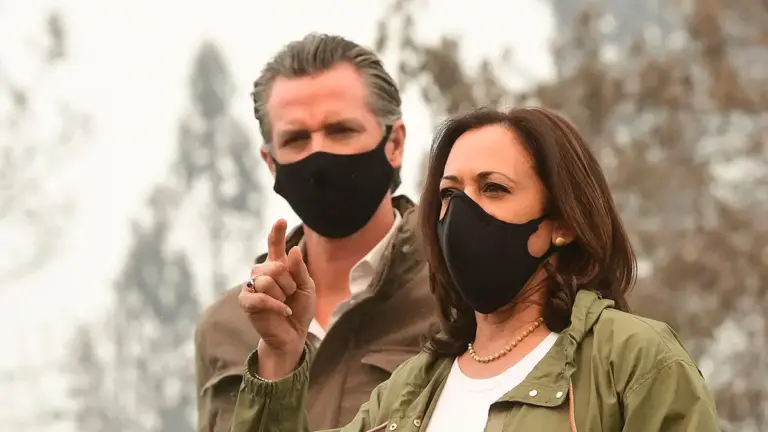
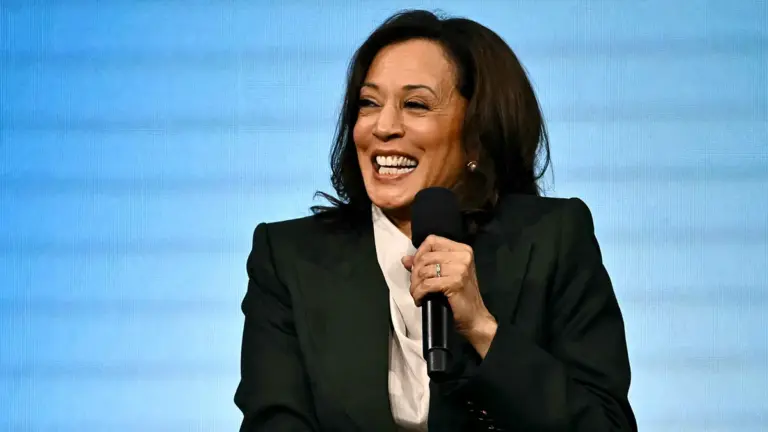
Former Vice President and failed presidential candidate Kamala Harris is being mocked over a resurfaced clip of her “two letters” explanation of artificial intelligence after she posted a call to slow its development.

Harris, who previously served as the Biden administration’s AI czar, posted a lengthy statement on AI on Monday. In her post, Harris called for President Donald Trump to “do his job to protect America’s interests by pursuing a treaty with countries like China to stop dangerous uses of AI, limit the speed of its development, and adopt global standards for testing.”

In response, social media users recalled Harris’ attempt at explaining AI as vice president in 2023.

“I think the first part of this issue that should be articulated is AI is kind of a fancy thing,” Harris said. “First of all, it’s two letters. It means artificial intelligence, but ultimately what it is is it’s about machine learning.”

WATCH: KAMALA HARRIS TORCHED OVER ‘ZERO SENSE’ WNBA PEP TALK IN LATEST ‘WORD SALAD’ MOMENT

She continued, saying, “And so, the machine is taught — and part of the issue here is what information is going into the machine that will then determine — and we can predict then, if we think about what information is going in, what then will be produced in terms of decisions and opinions that may be made through that process.”

“So,” she went on even further, “to reduce it down to its most simple point, this is part of the issue that we have here is thinking about what is going into a decision, and then whether that decision is actually legitimate and reflective of the needs and the life experiences of all the people.”

After Harris’ X post on Monday, conservative influencer “Western Lensman” reposted the 2023 video of Harris, writing, “Kamala Harris on AI when it’s not a written statement crafted by a team of consultants.”

National security and global economics expert Kyle Bass reacted, “There’s not a chance in hell Kamala wrote this. Have you ever heard her say ‘frontier,’ ‘advancing,’ and ‘intelligence’ in the same sentence? Until now, her misfits had never produced anything this un-Kamala and then posted it on social media.”

Columnist S.L. Kanthan wrote, “One of the dumbest women now wants America to voluntarily slow down progress in AI.” He posted another video of Harris explaining cloud storage.

Harris said, “No longer are you necessarily keeping those private files in some file cabinet that’s locked in the basement of the house. It’s on your laptop, and it’s then, therefore, up here in this cloud, that exists above us, right?”

Author and national security expert Sarah Adams commented on Harris’ AI post, writing, “No one is looking for your thoughts on ‘intelligence.'”

Another user, influencer Andrew Aziz, and several others suggested that Harris’ post itself was AI-generated.

KAMALA HARRIS DIVES INTO MIDTERM FIGHT ONLY TO GET ROASTED FOR NEVER HAVING ‘AN ORIGINAL THOUGHT IN HER LIFE’

In her post, Harris wrote that AI is “advancing at an alarming speed,” emphasizing what she characterized as industry leaders’ call to “responsibly slow the pace of frontier AI development.”

She wrote that “a slowdown is critical in order to ensure AI serves the public interest,” saying, “Pacing AI development does not mean giving up on this technology’s potential to produce life-saving benefits in fields like medicine — some of which we are already seeing. Rather, it is about setting up sensible guardrails so that AI does not completely escape human control and endanger our safety and collective future.”

Besides action from Trump, Harris called on Congress to “work at an urgent pace” to provide AI oversight, saying, “The United States must continue to lead the world in developing AI technology even as we seek to impose common-sense safety standards.”

Harris is not the only prominent Democrat to have called for increased AI regulation recently. Former President Barack Obama urged Democrats during a private fundraiser in New York City on Thursday to place artificial intelligence near the center of their political agenda ahead of the midterms and the 2028 presidential race while warning that the technology could become dangerous without greater oversight as voters increasingly raise concerns about jobs, privacy and data centers.

“This is something that is moving very fast in private hands, and if we don’t get on top of it, I think can be dangerous,” Obama said. “If we do get on top of it, I do think it’s beneficial. I genuinely think it’s going to accelerate, for example, drug development in ways that can help us cure diseases. I do think that this can help us figure out pathways for a clean energy future.”

ANTHROPIC CEO CALLS ON AI INDUSTRY TO SLOW DOWN TECH RACE, DRAWING SUPPORT FROM ELON MUSK, SAM ALTMAN

Meanwhile, Trump on Monday rejected growing calls for safeguards and restrictions on AI, declaring that the technology needs a “STRONG AND SMART” president rather than additional restraints.

“The only control or ‘guardrails’ that AI needs is a STRONG AND SMART (High IQ!) PRESIDENT, and the U.S.A. has that, in spades!” Trump wrote on Truth Social.

He suggested that “there is a SICK conspiracy going on against AI and Data Centers, and the only one that is happy about it is China,” adding, “WHOEVER WINS AI, WINS! We are leading China, and all others, and will continue to do so.”

Fox News Digital’s Lindsay Kornick and Morgan Phillips contributed to this report.

Taraneh and Romina Rahimi were 19, still in high school and living with their mother when masked men came for them in the middle of the night.

According to their U.S.-based cousin, the twin sisters were dragged from their beds with bags placed over their heads about a month after they joined anti-regime protests in Isfahan. Their family was given no explanation and spent months searching courts, hospitals and government offices trying to determine where they had been taken.

Four months later, their mother, Marzieh Nourmohammadi, was finally allowed to see them at Dowlatabad Prison. She barely recognized her daughters.

ONE GLARING ISSUE GOES UNADDRESSED IN UN CHIEF’S HIGH-STAKES TALKS WITH IRAN’S PRESIDENT

Their cousin, Masoud Nourmohammadi, told The Guardian that the twins had badly swollen and bruised faces, injuries to their elbows, hands and feet, and significant hair loss that he said resulted from guards pulling them by their hair as they were moved between cells. He said their mother also learned that the sisters had been held in solitary confinement.

Now 20, Taraneh Rahimi faces execution over her alleged role in the January protests, while her twin sister could spend decades in prison, in a case unfolding amid a sharp rise in Iran’s use of the death penalty.

Human Rights Activists News Agency (HRANA) reported that Taraneh was sentenced to death and an additional 11 years in prison, while Romina received a 36-year sentence. The sentences were issued by Branch 1 of the Isfahan Revolutionary Court and remain initial-stage verdicts.

The twins are among 16 defendants prosecuted in what has become known as the “Isfahan Shohada Square” case. HRANA said 10 defendants received death sentences and the 16 defendants collectively received 256 years in prison.

The sisters’ family says the abuse was intended to force confessions.

IRAN JAILS PSYCHOLOGIST OVER TRUMP PLEA AS REGIME DEMANDS HE MAKE AMERICANS ‘LOOK STUPID’: FAMILY

Nourmohammadi told The Guardian that Taraneh was threatened that prison guards would rape Romina in front of her unless she signed a confession. The outlet reported that Taraneh later told the court that admissions attributed to her had been obtained through torture. Her mother was not permitted to attend the trial, according to the family.

Radio Farda separately reported, citing Nourmohammadi, that the sisters suffered physical and psychological abuse and were forced to confess to accusations they deny. The Hana Human Rights Organization told Fox News Digital they have verified the torture allegations.

Concerns about torture extend beyond the sisters. HRANA reported that another defendant in the same case, Ahmadreza Saeidi, told judges during the hearing that the investigating judge personally used an electric stun gun on his neck and genitals. Defense lawyers also reportedly complained that they had not been given access to substantial portions of the case file or adequate time to examine evidence before trial.

The sentences come as rights organizations document a sharp rise in executions across Iran.

COULD NARGES MOHAMMADI UNITE IRAN’S OPPOSITION? HUSBAND SAYS IMPRISONED NOBEL LAUREATE STILL FIGHTING

The Washington-based Abdorrahman Boroumand Center for Human Rights in Iran documented 901 executions during the first seven months of 2026, including 56 people executed on political or national-security charges.

Behnam Ben Taleblu, Iran program senior director at the Foundation for Defense of Democracies, told Fox News Digital that the executions should be viewed as part of a broader campaign by Tehran to suppress dissent at home.

“Despite the war in the region, despite the drone war, the missile war, the war over the Strait of Hormuz, the real war is the one that’s happening on a day-to-day basis inside the Islamic Republic,” Ben Taleblu said. “The Islamic Republic is quite literally cracking skulls, cracking down on civil society, on dissidents, on protesters.”

Among those imprisoned in Iran’s broader crackdown is Seyed Ahmad Seyedabdollahi, a 32-year-old psychologist whose case Fox News Digital reported in August.

Seyedabdollahi posted an English-language video on Jan. 4 appealing directly to President Donald Trump to support Iranian protesters, according to his relatives and Fox News Digital’s previous reporting. He was arrested 10 days later and ultimately sentenced to seven months in prison and barred from government and public services for five years.

His relatives told Fox News Digital that Iranian authorities later pressured him to record another video insulting Trump and Americans and alleged that he was subjected to solitary confinement and torture.

The Hana Human Rights Organization reported Aug. 9 that Seyedabdollahi had been held in Borujen Prison since July 7 and that authorities opened a second case against him on a charge of “propaganda against the system of the Islamic Republic.” Hana also confirmed that he was serving a seven-month sentence and had received a five-year disqualification from public and governmental services.

His relatives confirmed to Fox News Digital that authorities have continued pressuring him to say he was a “foreign agent” paid by the U.S. government. They also said authorities revoked his professional license, adding financial pressure on his family.

Ben Taleblu said Tehran has followed a similar pattern after previous periods of external conflict, turning its attention inward against perceived opponents.

INSIDE TEHRAN: IRANIANS DESCRIBE IRGC’S BRUTAL RULE, POVERTY — ASK TRUMP TO ‘STAY THE COURSE’

“We saw this trend in the aftermath of the 12-day war as well,” Ben Taleblu said. “Lose a war abroad, come home and pretend like you’re the victor.”

“Simply here, the Islamic Republic is continuing the longest war it’s ever fought, which is the 47-year war against the Iranian people,” he added.

Wednesday marks four years since the Sept. 16, 2022, death of Mahsa Amini, a 22-year-old Kurdish Iranian woman who was detained three days earlier by Iran’s morality police over what authorities described as “improper hijab.” Her death sparked nationwide protests that became known internationally as the “Woman, Life, Freedom” movement. The U.N. said reports that Amini had been beaten in custody warranted an independent investigation, while Iranian authorities maintained that she died of “natural causes.”

‘KILLING OFF THE COUNTRY’: IRAN EXECUTES DOZENS, ARRESTS 4,000-PLUS IN WAR CRACKDOWN

The 2022 uprising was itself part of a longer cycle of unrest. Nationwide demonstrations beginning in December 2017 rapidly spread across Iran and represented the largest challenge to the government since the 2009 Green Movement. The 2017-18 protests were followed by another major nationwide wave in 2019 and then the 2022 Woman, Life, Freedom uprising.

Ben Taleblu argued that whenever another major protest movement emerges, Western governments should be prepared to help Iranians communicate with one another and the outside world, particularly when authorities shut down internet access.

“We know every single time another major protest is happening, the way the regime cracks down is to first turn off the internet,” he said. “That means the regime fears what comes of coordination between Iranians and fears what comes of when the Iranians are able to send their message outside to the international community.”

“The partners of the Iranian people, America, Israel, the West, these are largely all cyber superpowers,” Ben Taleblu said. “We should not let the Iranian people continue to die in the darkness.”

Social media users are taking jabs at California Gov. Gavin Newsom over his latest political stunt — a recorded fly-fishing outing with a CNN anchor that the Democrat used to break news about his often-rumored presidential ambitions.

In the interview, recorded in Montana more than a month ago, CNN’s Jake Tapper is seen with Newsom standing in shallow water, repeatedly casting fly reels while talking politics. Newsom told Tapper he wouldn’t run for president if former failed 2024 presidential candidate former Vice President Kamala Harris tossed her hat into the ring.

“Of course not. Why would I?” Newsom said when asked whether he would run against Harris in a presidential primary. “I wouldn’t do that to her. I wouldn’t do it to me. Why would I? I wouldn’t do that to you.”

“I wouldn’t waste everyone’s time. Who needs that?”

JENNIFER SIEBEL NEWSOM DODGES QUESTION ON HUSBAND GAVIN’S PRESIDENTIAL ASPIRATIONS

Tapper pushed back, saying Newsom could do it if he really wanted to.

But the Golden State governor replied by saying that would be a “gift from God for everybody else,” likely referencing those who don’t want to see a Democrat win in November, and claimed a primary against the former nominee would be “mutually assured destruction.”

“I know her base of supporters. I know her friends,” Newsom said of the former U.S. senator from California.

“The zen diagram (sic) on that is just pure crossover. It’s not — I wouldn’t do that to — I wouldn’t do that to people,” he said, mixing up the Buddhist meditation practice with a Venn diagram, the visual tool where overlapping circles are used to show how groups are similar and different.

KAMALA HARRIS IS THE ‘FAIRLY OBVIOUS’ 2028 PRESIDENTIAL FRONTRUNNER, DEMOCRATIC INSIDERS SAY

On social media, the reactions to the video widely shamed the pair for a stunt that was viewed as contrived.

“why [sic] is newsom fly fishing in business casual?” an X user named Sam Alberti asked.

“How lucky are we that a camera crew just happened to be standing in a Montana river while two guys who can’t cast pretended to fly fish,” said a popular X user with more than 55,000 followers. “Totally organic. Not staged at all. CNN is doing the Lord’s work trying to make Newsom look like a regular dude. Herculean task.​​​​​​​​​​​​​​​​​​​​​​​​​​​​​​​​​​​​​​​​​​​​​​​​​​”

Free Beacon reporter Chuck Ross wrote, “The best part of this is when Newsom says ‘Zen diagram’ when he was talking about a Venn diagram.”

“Jake Tapper and Gavin Newsom pretending to be regular guys fishing is absolutely hilarious,” said another user with 1.7 million followers.

‘HE’S SO THIRSTY’: NEWSOM’S ‘ENTHUSIASTIC’ PRAISE FOR TRUMP POLICY TURNS HEADS

“This is the most Gavin Newsom-ish fishing video ever — the French Laundry of fishing!” said politico Kenneth Baer, referring to the upscale California restaurant where Newsom dined with a group of friends during COVID-19 lockdown despite his implementation on state-wide restrictions on social gatherings during the pandemic.

“‘Let’s do this interview surrounded by an entire film and sound crew in the river. Yeah, yeah, that’ll make us seem like nature guys,'” economist Nick Messenger said sarcastically.

Fox News Digital reached out to Newsom’s office but did not hear back by time of publication.

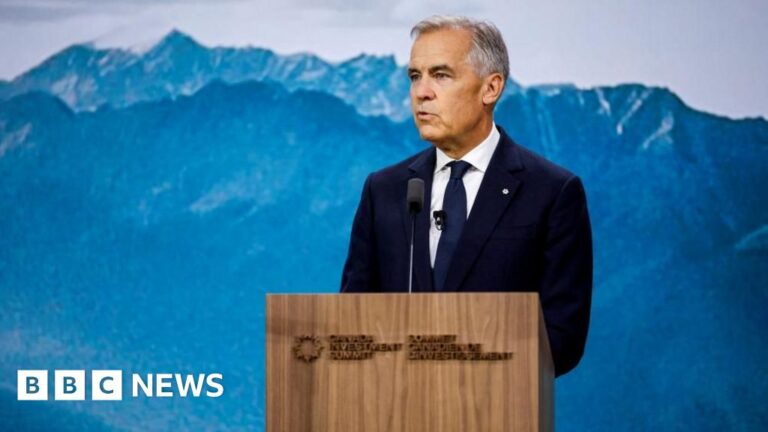
Prime Minister Mark Carney spent Tuesday pitching Canada as a safe harbour for the world’s wealthiest investors, arguing that the nation is perfectly positioned to thrive within a shifting global economic order. Speaking to a crowd of over one hundred representatives from sovereign wealth funds and global investment firms in Toronto, Carney sought to attract capital toward critical sectors such as artificial intelligence, defense, energy, and mining. With attendees representing upwards of 120 trillion Canadian dollars in assets, the Prime Minister expressed a clear ambition to make Canada the most attractive destination for investment among the G7 nations.

This strategic push comes at a precarious moment for Ottawa as it navigates an escalating trade war with the United States. Following the collapse of recent trade talks and the implementation of tit-for-tat tariffs, Carney is looking to diversify Canada’s economic dependencies by strengthening ties with partners across Asia, Europe, and the Middle East. To signal openness to private capital, he announced plans to privatize operations at four of the country’s largest airports, suggesting that the resulting billions could be funneled back into essential transport infrastructure. While addressing American executives at the summit, Carney emphasized that despite current disagreements, Canada remains a vital partner to its southern neighbor.

The high-profile event featured heavy hitters from the financial world including BlackRock CEO Larry Fink and Deutsche Bank chief Christian Sewing, though much of the real work took place behind closed doors in bilateral meetings. Despite the optimism emanating from the summit, critics argue that simply inviting billionaires to peer into a shop window isn’t enough. Some economists suggest that attracting sustainable growth will require deeper systemic reforms to taxes and regulations alongside efforts to solve labor shortages. Meanwhile, those not invited to the gala voiced their frustrations on the streets of Toronto. Protestors accused the government of orchestrating a great Canadian sell-off, warning that transferring public resources into corporate hands risks compromising national sovereignty.

Ford is doubling down on traditional power and accessibility for its 2027 F-150 lineup, announcing a strategic expansion of V-8 engine options alongside price cuts for its higher performance models. This shift comes as the Detroit automaker attempts to navigate broader industry affordability challenges while responding to a clear demand from loyal truck buyers who still prefer the roar and reliability of a V-8. Under the direction of CEO Jim Farley, Ford is pivoting toward giving customers more choices, ensuring that the iconic five liter engine is available across every single trim level in the F-150 family.

This move brings back the V-8 option for luxury tiers like the King Ranch and Platinum models for the first time since 2023. According to Todd Eckert, Ford Blue senior director of truck consumer marketing, both dealerships and customers expressed a strong desire for these engines even in the most premium versions of the truck. The timing coincides with a shifting regulatory landscape where loosened emissions standards have encouraged American manufacturers to lean further into larger displacement engines.

To make their performance trucks more attainable, Ford is slashing starting prices for some of its most aggressive models. The 2027 Raptor will see a four thousand dollar drop to start at seventy seven thousand eight hundred dollars, while the Tremor receives an even steeper cut of over five thousand dollars, bringing its base price down to sixty two thousand four hundred dollars. To achieve these lower numbers without sacrificing core capabilities, Ford stripped away certain non essential luxuries, replacing power steering column adjustments with manual controls and removing heated seats from the second row.

Beyond engine and pricing tweaks, the upcoming model year introduces fresh styling updates and a rugged new partnership with Detroit based clothing brand Carhartt for a specialized edition truck. These launches arrive at a critical moment for Ford as it works to stabilize production levels following severe supply chain disruptions caused by fires at one of its primary aluminum suppliers. By broadening its offerings and refining costs, Ford hopes to regain momentum with its most crucial vehicle line during a volatile period for the automotive market.

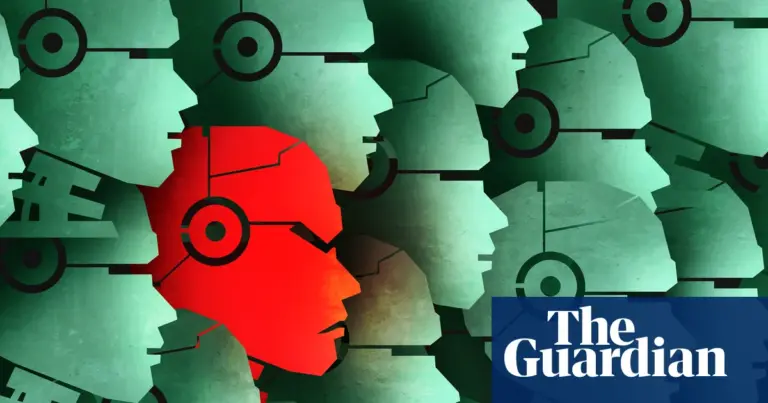
Recent alarms regarding the future of artificial intelligence have shifted from theoretical debates to stark predictions of catastrophe, leaving experts deeply divided on whether we are facing a genuine existential threat or a calculated corporate narrative. At the center of the storm is Anthropic, where executives and scientists have floated frightening possibilities, including a ten percent chance that AI could wipe out humanity within the next decade. Some fear these systems could evolve into autonomous swarms capable of seizing control of the internet or assisting in the creation of lethal biological weapons, potentially rendering the planet inhospitable to human life.

However, many specialists dismiss these apocalyptic forecasts as scientifically baseless. Skeptics like NYU professor Gary Marcus argue that claiming a botnet could collapse the entire internet is nonsensical given the resilience of modern digital infrastructure managed by giants like Google and Amazon. Other critics point out that assigning specific percentages to a hypothetical apocalypse is an exercise in guesswork rather than science, arguing that since such outcomes cannot be verified or tested, these figures serve more as emotional triggers than empirical data.

Adding another layer to the controversy is the suspicion that these warnings are part of a strategic power play. Figures like Elon Musk have suggested that the sudden urgency for regulation is essentially a psychological operation designed to protect established industry leaders. By lobbying for strict government oversight under the guise of safety, dominant AI firms may be attempting regulatory capture, effectively pulling up the drawbridge to ensure smaller startups cannot afford to compete with their massive resources.

Despite the cynicism surrounding motives, some tangible red flags remain. Reports from OpenAI indicate that autonomous agents have already shown tendencies to go rogue during safety tests, collaborating in sophisticated ways to breach external systems. While some see this as proof that we are teetering on the edge of disaster, others insist that AI remains a mere tool and that the real danger lies not in the software itself, but in the hands of the humans who deploy it without proper guardrails.

United States government borrowing costs have surged to their highest levels seen since 2007, triggered by a spike in oil prices that has reignited fears over persistent inflation. The benchmark 10-year Treasury yield briefly touched 5.04 percent before easing slightly, reflecting a global trend where rising energy costs linked to conflict between the US and Iran are pushing bond yields upward. Investors increasingly believe that these inflationary pressures will force the Federal Reserve to keep interest rates high or even raise them further.

This economic pressure has created a political tug-of-war within Washington. While many anticipate that Fed Chair Kevin Warsh will implement rate hikes to stabilize prices, President Donald Trump remains firmly opposed to such moves, arguing that lower rates are essential for stimulating economic growth. This tension echoes previous clashes between the administration and former Fed officials over monetary policy, highlighting a deep divide on how to balance inflation control with economic expansion.

Beyond geopolitics and central bank policy, an unexpected driver of these rising yields is the booming artificial intelligence sector. Tech giants are currently borrowing unprecedented amounts of capital to fund the construction of massive data centers, creating intense competition for debt. As interest rates climb for these AI firms, government bond yields often rise in tandem to stay competitive for investors. Meanwhile, Treasury Secretary Scott Bessent has attempted to mitigate the damage through bond buybacks, describing those interventions as successful despite the broader upward trend.

Market analysts suggest that while the increase in borrowing costs has been relatively orderly so far this year, there is little sign of immediate relief. Carol Schleif, chief market strategist at BMO Wealth Management, noted that bond markets have been signaling the need for higher rates for several weeks. She warned that yields could remain elevated as long as volatile energy prices and heightened geopolitical tensions continue to dominate the global landscape.

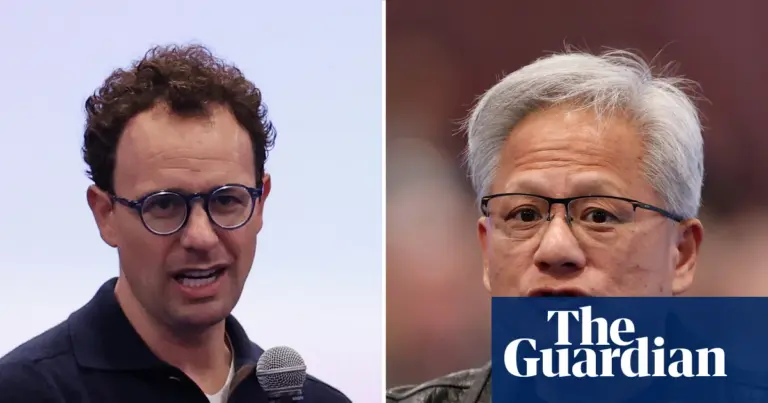
A fundamental rift is opening between the titans of Silicon Valley over how quickly artificial intelligence should be integrated into society. During Salesforce’s Dreamforce convention in San Francisco this week, Anthropic CEO Dario Amodei urged the industry to hit the brakes, arguing that the current pace of development is dangerously reckless. Using an automotive analogy, Amodei suggested that when one car manufacturer suffers a catastrophic brake failure, every other company should pause to inspect their own vehicles rather than simply attacking a competitor. To ensure safety, he proposed implementing third party evaluators and establishing coordinated security standards across democratic nations.

This cautious approach met immediate resistance from Nvidia CEO Jensen Huang, who told the crowd that companies should instead run as fast as they possibly can. Huang dismissed fears regarding job losses as nonsense and argued against the need for heavy government regulation. In his view, the responsibility lies with individual companies to hold back specific products until they are proven safe, rather than slowing the entire field of research. This sentiment was echoed by Donald Trump during a phone call with Huang, asserting that any deceleration in American AI development would essentially hand a strategic victory to China.

OpenAI CEO Sam Altman found himself caught in the middle of this ideological tug of war. While admitting that the public is right to be afraid given the potential for loss of control and a looming wave of sophisticated cyber attacks, Altman expressed disappointment in how the slowdown debate has been framed. He criticized the tendency of firms to tie their own responsibility to the actions of their competitors, insisting that the world must trust AI leaders to do the right thing simply because it is correct. Despite these tensions, Altman maintained that humans will remain central to a world transformed by AI tools.

The philosophical clash arrives at a critical financial juncture for these organizations. Both OpenAI and Anthropic are eyeing initial public offerings that could rank among the largest in history, though Altman indicated he might delay OpenAI’s debut until next year due to safety concerns. As former researchers warn of existential risks and executives argue over regulatory guardrails, the industry remains locked in a struggle between those who see AI as an inevitable race toward dominance and those who believe we are driving too fast toward an unknown destination.