Archive

September 9, 2026

Browsing

The biotechnology sector is feeling the aftershocks of a significant clinical setback following an unexpected failure from pharmaceutical giants Novartis and Ionis Pharmaceuticals. Investors reacted sharply on Tuesday as news spread that the companies’ collaborative effort to tackle cardiovascular disease hit a major wall, sending ripples of uncertainty across several other high profile biotech firms.

At the center of the turmoil is pelacarsen, a drug designed to lower Lipoprotein A, more commonly known as Lp(a). While late Friday reports indicated that the medication successfully reduced these cholesterol carrying particles in the bloodstream, it failed at its primary objective. The trial revealed that lowering those levels did not actually result in a reduction of overall cardiovascular events, effectively rendering the treatment unsuccessful for its intended purpose.

This disappointing outcome triggered a sell off that extended far beyond the two developers involved. Shares of NewAmsterdam Pharma, Amgen, and Eli Lilly all tumbled as traders grew wary of similar therapeutic approaches within the industry. When a high profile project involving established leaders like Novartis fails to deliver results despite hitting secondary markers, it often casts doubt on the broader scientific premise shared by competitors working in the same space.

Industry analysts suggest that this volatility reflects the inherent risks associated with cutting edge medical research where biological success does not always translate into clinical benefit. As investors recalibrate their expectations for heart health innovations, the fallout serves as a stark reminder of how one single trial result can rattle confidence across an entire segment of the stock market.

Uber shares took a dip on Tuesday as investors began weighing the long term implications of Tesla’s latest foray into the autonomous ride hailing market. The sell off comes on the heels of an official launch event in Austin, Texas, where Elon Musk unveiled the Cybercab, a vehicle designed specifically to function without a human driver. While Uber has dominated the ride sharing landscape for years, the prospect of a dedicated fleet of robotaxis is creating visible nerves among shareholders.

The downward pressure on Uber’s stock persists even though many Wall Street analysts remain optimistic about the company’s ability to pivot. Experts suggest that Uber possesses a massive existing network of users and operational expertise that would be difficult for any newcomer to replicate overnight. However, the sheer scale of Tesla’s ambition combined with the growing presence of Google backed Waymo suggests that the era of human drivers may face more immediate disruption than previously anticipated.

Despite these headwinds, some observers believe Uber can find a middle ground by integrating third party autonomous vehicles into its own app rather than fighting them head on. By positioning itself as the primary platform through which all rides are booked regardless of who owns the car, Uber could potentially turn its competitors into partners. For now, however, the market seems focused on the potential loss of market share as Tesla moves closer to turning its futuristic vision into a commercial reality.

Bombardier shares took a sharp dive on Tuesday after President Trump issued a blunt ultimatum via Truth Social, threatening to ban the Canadian jet maker from the U.S. market. In a post where he accused the company of treating America like a piggy bank, the president insisted that if Bombardier wants access to U.S. buyers, it must move its manufacturing operations onto American soil. The reaction from investors was immediate, with shares opening down over six percent in Toronto before managing to recover some ground throughout the trading session.

The threat comes at a volatile time for North American trade relations, arriving just as Canada slapped retaliatory tariffs on billions of dollars worth of U.S. goods following a breakdown in trade negotiations last month. While the rhetoric suggests a total shutdown, any actual blockade would likely create significant ripples within the United States itself. Bombardier already maintains a massive domestic footprint, employing roughly 3,500 Americans and spending more than 2.5 billion dollars annually with U.S.-based suppliers across several states.

Local lawmakers in key aerospace hubs are already pushing back against the president’s stance, citing the risk to thousands of jobs and critical defense partnerships. Senator Jerry Moran and Representative Ron Estes have highlighted Bombardier’s essential role in Kansas and Texas, noting that the company is deeply integrated into the U.S. military infrastructure through high value contracts with the Air Force for specialized communication platforms. They argue that punishing the firm could jeopardize national security missions and damage an extensive local supply chain.

For its part, Bombardier has attempted to play a diplomatic hand by emphasizing its commitment to growth within the U.S., pointing to recent expansions such as a new component plant in California and maintenance facilities in Delaware. The company stated it intends to continue investing in its American workforce and communities despite the political pressure. As the trade war between Washington and Ottawa escalates, all eyes remain on whether these existing economic ties will be enough to shield the jet maker from further presidential ire.

Meta is stepping up its game in the artificial intelligence race with the official launch of Muse, a personal AI agent designed specifically for ease of use. While many current AI tools require complex prompting or technical knowledge to get high quality results, Meta says Muse is built to feel intuitive and seamless. The goal is to move away from the feeling of chatting with a computer and instead create an experience that feels like having a highly capable digital assistant at your fingertips throughout the day.

The new agent integrates directly across Meta’s ecosystem, meaning users can likely access it through their favorite social platforms without needing to switch apps. From organizing schedules and drafting emails to providing instant creative brainstorming, Muse aims to handle those small but time consuming tasks that clutter a typical workday. By lowering the barrier to entry, Meta hopes to attract casual users who have previously found generative AI too intimidating or cumbersome for daily practical application.

Industry analysts suggest this move is part of a broader strategy by Mark Zuckerberg to embed AI into every facet of the user experience. As competitors push toward more specialized enterprise tools, Meta seems focused on winning over the general public by prioritizing simplicity and accessibility. If Muse manages to become a staple in how people manage their personal lives online, it could significantly increase user retention and open up new avenues for personalized advertising and service integration within the company’s vast network.

Tesla shares took a notable hit last week, sliding roughly six percent following the debut of the much anticipated Cybercab. While the event in Austin, Texas, was intended to showcase the future of Tesla’s robotaxi strategy, it seemingly failed to ignite investor confidence. The reveal introduced a sleek, two passenger electric vehicle stripped of all traditional manual controls, including steering wheels and pedals. Although Tesla has already begun offering limited rides in Austin with around forty five vehicles registered in the state, the presentation lacked the typical theatrical flair and detailed production timelines that shareholders have come to expect from the company’s high profile launches.

Adding fuel to the fire, the National Highway Traffic Safety Administration stepped in just hours after the unveiling to announce a formal investigation into the new service. NHTSA Administrator Jonathan Morrison stated that while the agency supports the growth of automated vehicles, it must ensure that all federal safety standards are met and verify the basis for Tesla’s own self certification. This sudden regulatory scrutiny has become a primary drag on the stock price, as analysts worry about whether these driverless cabs can perform reliably under real world conditions given their unconventional design.

For many investors, the stakes are incredibly high because a successful robotaxi network would fundamentally change how Tesla makes money. Moving away from one time vehicle sales toward a recurring revenue model based on individual rides could unlock massive financial growth. However, current sentiment remains deeply divided. Some see a revolutionary shift in transportation, while skeptics point to competitors like Waymo who maintain certain manual overrides and question why Tesla opted for such an aggressive removal of human controls.

Moving forward, Wall Street will likely ignore the hype and focus on hard data regarding production schedules and geographical expansion beyond Texas. The outcome of the NHTSA probe now stands as a critical pivot point for TSLA shares. Depending on whether regulators find fault with the system or give it a green light, this investigation could either serve as a catalyst for further growth or emerge as a long term liability for Elon Musk’s ambitious vision of an autonomous future.

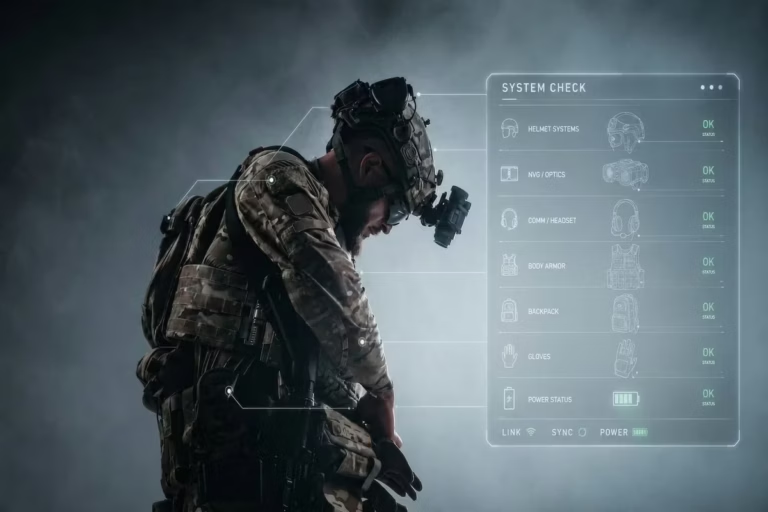
The global scramble for critical minerals is no longer just about electric vehicles and power grids. A new frontier is emerging in the defense sector, which, while smaller in volume than the automotive industry, offers a highly lucrative opportunity for next generation battery technology. Experts from SC Insights suggest that while military demand isn’t large enough to justify building massive standalone factories, it provides a vital catalyst for commercializing high performance options like solid state and lithium sulfur batteries. Unlike car manufacturers who prioritize low costs, defense and aviation clients are often willing to pay a premium for extreme energy density and reduced weight.

This shift is being accelerated by real world combat experience, specifically the war in Ukraine. The staggering scale of drone deployment has highlighted a desperate need for agile supply chains capable of pivoting from peacetime levels to wartime production almost overnight. While many current drones rely on standard commercial batteries, the push toward more sophisticated unmanned ground vehicles and aircraft means that basic chemistry will soon hit a ceiling. In aviation especially, where every single kilogram counts, the transition to advanced chemistries becomes a strategic necessity rather than a luxury.

Despite this growth, analysts warn against the mistake of trying to build an entirely isolated supply chain solely for military use. With projected annual growth between twenty and forty percent for high tech applications, the sector remains tiny compared to the thousands of gigawatt hours required by transport and grid storage. Building specialized refineries or mines just for defense would be economically impractical given the sheer disparity in scale. Instead, the goal should be fostering a deep and flexible industrial base that includes skilled labor and diversified processing capacities.

One of the most pressing vulnerabilities remains the heavy reliance on China for anode active materials, which still dominates nearly ninety one percent of production despite the abundance of graphite globally. While cathode capacity is beginning to expand in North America and Europe thanks to new legislation, experts argue that true resilience comes from broad industrial depth rather than simple stockpiling. By integrating defense needs into a wider commercial ecosystem, Western nations can ensure they have the technological edge without attempting to sustain an unsustainable independent infrastructure.

The financial world has long looked to copper as a barometer for the global economy, giving the red metal the nickname Dr. Copper because its price fluctuations often predict whether the world is heading toward growth or instability. After hitting a low of roughly 2.17 dollars per pound during the depths of March 2020, copper has embarked on a steep climb. By 2026, the metal began trading around the six dollar mark, driven by a perfect storm of surging demand and a dwindling supply chain that has struggled to keep pace with modern industrial needs.

Much of this price surge stems from the aggressive shift toward electrification and artificial intelligence. While traditional construction remains a primary consumer of copper due to its conductivity and resistance to corrosion, new frontiers are pushing costs higher. Electric vehicles require significantly more copper than internal combustion engines, with battery electric buses using over ten times as much material as standard cars. When combined with the massive infrastructure requirements for AI data centers and renewable energy grids, the result is a widening gap between how much copper is available and how much the world actually needs.

On the supply side, the situation has grown precarious as high grade ore deposits deplete and new discoveries remain rare. Bringing a new mine from discovery to production can take up to two decades, leaving markets vulnerable to short term shocks. Recent disruptions have only worsened the deficit, including government shutdowns of major sites like Cobre Panama and operational accidents at other massive mines in Mali and Indonesia. These losses, compounded by geopolitical tensions and trade tariffs under President Donald Trump, have sent prices reaching record highs throughout 2025 and 2026.

Looking ahead, experts warn that we may be entering an era of chronic scarcity. The International Energy Agency has forecasted a potential thirty percent shortfall in copper supply by 2035 if current trends continue. To bridge this gap, industries are increasingly relying on recycled scrap metal to balance their books. While there are hopes that renewed investment in exploration will eventually stabilize the market, for now, Dr Copper continues to signal an era of intense competition for one of earth’s most essential materials.

Iran-backed Houthi rebels struck Saudi Arabia with dozens of ballistic missiles and drones Tuesday, hitting multiple energy targets, including the facilities of the world’s largest oil company.

The attacks on Aramco, the state-owned national oil company of Saudi Arabia that produces 10 million barrels of oil per day, threaten to tighten pressure on a second critical oil route as the Middle East war continues to restrict shipping through the Strait of Hormuz.

Aramco notably supplies roughly 10% of the world’s total oil demand. And attacks on its facilities raise the risk of higher oil, shipping and transportation costs that could hit U.S. consumers in coming months — just in time for the 2026 midterm elections.

IRAN CALLS ON HOUTHIS TO PREPARE TO CUT OFF RED SEA GATEWAY — CAN THE TERROR GROUP DO IT?

The attacks hit the southern Saudi Arabian cities of Jazan, Najran, Abha and Khamis Mushait, wounding 73 people and sparking fires at energy facilities and utilities that temporarily forced some operations to stop, according to Saudi officials. The Jazan site includes a refinery capable of processing roughly 400,000 barrels of crude per day, according to the Associated Press.

Tuesday’s strikes land at a particularly vulnerable moment for global energy markets. With oil flows through the Strait of Hormuz sharply reduced, Saudi Arabia has redirected more crude toward the Red Sea — increasing the importance of the Bab el-Mandeb, where the Houthis have already threatened and attacked Saudi-linked shipping.

The Energy Information Administration estimates that just 4.9 million barrels of oil and petroleum liquids moved through Hormuz per day in the second quarter of 2026, down from 21.6 million barrels per day before the conflict. Before the conflict 20% of the world’s oil moved through the consequential waterway.

Traffic through the Bab el-Mandeb, meanwhile, averaged 8.1 million barrels per day during the quarter as Saudi Arabia redirected more crude to bypass Hormuz amid ongoing conflict.

That creates a potentially costly vulnerability: renewed Houthi attacks on Saudi energy infrastructure or commercial vessels could put pressure on two crucial oil routes at once, raising the risk of higher crude, shipping and transportation costs that could eventually reach U.S. consumers.

Brent crude was trading near $99 per barrel Tuesday.

Houthi military spokesman Yahya Saree claimed responsibility for Tuesday’s strikes, saying the group had used “dozens of ballistic missiles and drones” against Aramco facilities, the Jazan industrial zone and a Saudi air base, according to Xinhua.

RUBIO ACCUSES IRAN OF FLYING IRGC PERSONNEL INTO YEMEN AS HOUTHI THREAT ESCALATES

The Houthis said the operation was retaliation for Saudi airstrikes in Yemen and threatened “stronger and wider strikes” if Riyadh’s military campaign continues.

The escalation also comes with a warning already issued by President Donald Trump.

After the Houthis struck two Saudi oil tankers in the Red Sea in July, Trump said the U.S. would hold Iran responsible if the group attacked ships again and threatened “major military punishment” against both Tehran and the Houthis.

“If they do this again, the U.S. will hold Iran responsible, in that the Houthis are a Surrogate and/or Proxy of Iran, and major military punishment will be inflicted upon Iran and, of course, the Houthis, themselves,” Trump wrote on Truth Social at the time.

The warning followed the Houthis’ announcement of a maritime blockade targeting Saudi Arabia and attacks on Saudi tankers in the Red Sea. The escalation sent Brent crude above $100 per barrel amid fears that disruption could spread from the Strait of Hormuz to the Bab el-Mandeb.

The latest strikes targeted Saudi territory and energy infrastructure rather than ships, leaving unclear whether the White House considers them to cross the line Trump drew in July. It creates a new test for the administration as Houthi attacks increasingly intersect with the wider conflict over Iran and regional energy supplies.

The Trump administration has previously authorized U.S. strikes against Houthi weapons and infrastructure in Yemen in response to attacks and threats against American forces and shipping. A White House report says Trump directed those actions to defend U.S. forces and protect American national-security interests.

The U.S. Maritime Administration also maintains an active advisory warning that the Houthis continue to pose a threat to commercial vessels in the southern Red Sea, the Bab el-Mandeb and the Gulf of Aden.

From November 2023 through October 2025, the Houthis carried out more than 100 attacks on commercial vessels affecting more than 60 nations, according to the MARAD advisory. The attacks forced major shipping companies to avoid the Red Sea and reroute vessels around the Cape of Good Hope, adding time to voyages and increasing fuel, freight and insurance costs.

The Houthis renewed that threat in July when they targeted Saudi oil tankers and threatened a blockade of Saudi shipping through the Red Sea.

Saudi Arabia’s increased reliance on the route makes another sustained disruption potentially more consequential. The EIA says alternate routes used to bypass disrupted waterways are longer, more expensive and limited in capacity.

The latest strikes threaten to revive pressure on the Red Sea route just as the Iran conflict has made the Persian Gulf route more difficult to use. The Houthis may lack the capability to permanently close the Bab el-Mandeb, but repeated missile, drone or tanker attacks could still reduce traffic through the waterway if shipping companies determine the risks are too high.

Saudi Arabia condemned Tuesday’s strikes on civilian and economic assets and vowed to defend its territory. The Saudi-led coalition described the attacks as a “dangerous escalation” and said it would take measures to deter further attacks.

The immediate economic impact will depend on how quickly Saudi Arabia restores affected operations and whether commercial shipping continues moving through the Bab el-Mandeb.

The next test could be whether the Houthis again target tankers or other commercial vessels. Another attack could put greater pressure on a waterway carrying an increased share of Middle Eastern oil — while also testing Trump’s warning that renewed Houthi attacks on shipping would bring U.S. retaliation against both the group and Iran.

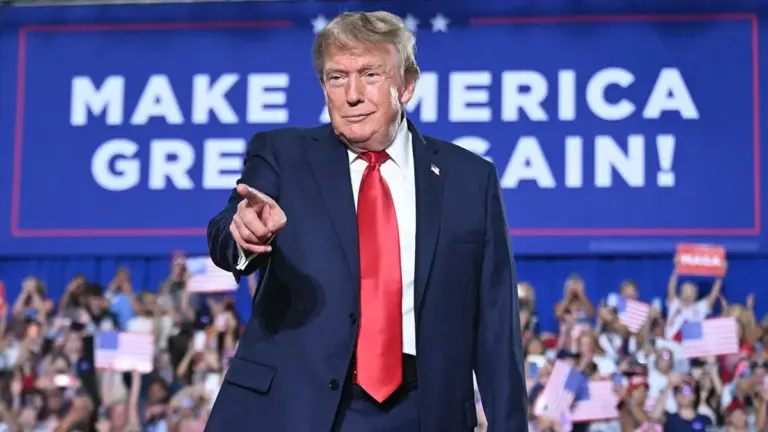
EXCLUSIVE — DALLAS — With an eye toward energizing the GOP’s MAGA base, the Republican National Committee (RNC) on Tuesday announced the speaking order and times of this week’s first-ever GOP midterm convention, and President Donald Trump will be the Primetime headliner both nights.

According to the list, which was shared first with Fox News Digital on the eve of the convention, the president will deliver Wednesday’s keynote address, which is tentatively scheduled to start at 9 p.m. ET.

Trump will return on Thursday evening at the American Airlines Center in downtown Dallas to close out the convention, with remarks after Vice President JD Vance gives the second night’s keynote speech.

With less than two months to go until the midterm elections, Trump and Republicans are gathering in Texas for their historic confab as they aim to energize the party’s base ahead of key races that will determine whether the GOP keeps control of Congress. Supporters of the president traditionally do not turn out in robust numbers when Trump is not on the ballot.

DEMOCRACY ’26: STAY UP TO DATE WITH THE FOX NEWS ELECTION HUB

Democrats and Republicans traditionally hold large nominating conventions during presidential election years. But Trump last year floated the idea of a similar gathering ahead of the midterms to showcase the signature policy achievements he and Republicans in Congress have produced over the past two years.

The president called the convention “a truly Historic Event” and “a RALLY like none other!” when he announced it earlier this summer.

The convention comes as Republicans face energized Democrats and stiff political headwinds as they defend their slim House and Senate majorities in the midterms.

But Republicans are expected to paint a contrast, as they use the convention to spotlight the Democrats’ leftward lurch and tie the entire Democratic Party to far-left and socialist proposals.

“The midterm election is about the future of our country. President Donald Trump and Republicans are fighting to launch the golden age of America while extreme liberal Democrats want to tear this country apart and create a liberal failed state with their out-of-touch and anti-American views,”,” Republican National Committee chair Joe Gruters argued in a statement to Fox News Digital.

THESE 12 MIDTERM RACES WILL DECIDE WHICH PARTY CONTROLS THE SENATE

Gruters emphasized that “the choice is clear in November and the American people will reject these liberal policies and deliver historic wins for Republicans across the country.”

The DNC, which remains in debt and decided against holding a similar convention, sees the GOP confab as a chance to blast Republicans.

“While everyday Americans struggle to pay their bills, fill up their tanks, or put food on the table, Republicans are hosting a multi-million dollar celebration to satisfy an aging and erratic Trump and tie vulnerable Republican candidates closer to his failed agenda,”,” DNC Rapid Response Director Kendall Witmer charged.

Witmer argued that “Americans don’t want a ‘Trumpapalooza’ — they want lower costs and affordable healthcare.”

The convention will also serve as the GOP’s closing argument heading into November. In the fight for the Senate majority, Republican candidates in some of the most crucial races will also address the convention.

Texas Attorney General Ken Paxton, the GOP nominee in Texas who is facing off against Democratic state Rep. James Talarico in the race to replace Republican Sen. John Cornyn, will speak on the first evening. So will former RNC Chair Mike Whatley, who is defending retiring GOP Sen. Thom Tillis’ seat in battleground North Carolina.

SIGN UP TO GET THE POLITICS NEWSLETTER

Sen. Jon Husted of Ohio, who is in a pitched fight with former longtime Democratic Sen. Sherrod Brown, will also address the crowd, as will Rep. Mike Collins of Georgia, the Republican challenger taking on Democratic Sen. Jon Ossoff in swing state Georgia.

Former Rep. Mike Rogers of Michigan, who is hoping to flip a Democrat-held open seat in the key Great Lakes battleground as he runs against far-left Democratic nominee Abdul El-Sayed, speaks on Thursday evening.

In the battle for the House, where the GOP holds a razor-thin majority, incumbents and candidates in competitive races will also be in the speaking spotlight.

They include Reps. Monica De La Cruz of Texas, Derrick Van Orden of Wisconsin, Rob Bresnahan of Pennsylvania, and candidates Mike LiPetri of New York and Jay Feely of Arizona on Wednesday night.

Among the House Republican incumbents and candidates in close races speaking on Thursday are Reps. Ryan Mackenzie of Pennsylvania and Mike Lawler of New York, along with nominees Greg Cunningham of New Mexico, Derrick Merrin of Ohio and Eric Flores of Texas.

STATE OF PLAY: WHO’S UP AND WHO’S DOWN IN THE LATEST FOX NEWS POWER RANKINGS

Speaker Mike Johnson will speak on Thursday evening, according to the RNC schedule.

Johnson’s Senate counterpart, Senate Majority Leader John Thune (R-South Dakota), is notably absent from the list of speakers released by the RNC. But a source familiar with the planning tells Fox News Digital that Thune will be in Dallas, with a full schedule that includes helping Senate candidates fundraise.

Texas Gov. Greg Abbott, who is running for a fourth term leading the Lone Star State, speaks on Thursday. So does Sen. Ted Cruz of Texas, the conservative firebrand who is not on the ballot this year but could make a second White House bid in 2028.

Meanwhile, some of the biggest names in Trump’s Cabinet are scheduled to speak, including Attorney General Todd Blanche and Treasury Secretary Scott Bessent on Wednesday evening, and Health and Human Services Secretary Robert F. Kennedy Jr., who spearheaded the Make America Healthy Again (MAHA) movement, on Thursday evening.

This post appeared first on https://www.foxnews.com

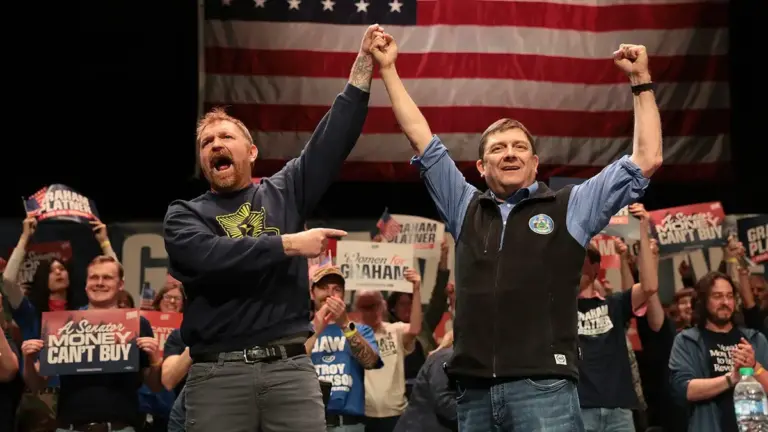
Graham Platner’s replacement in the Maine Senate race suggested the government should be able to take over private property when necessary, appearing to echo socialist New York City Mayor Zohran Mamdani’s housing agenda.

Troy Jackson, a Democrat running for the Senate, came under fire for suggesting the government should be able to take over private property when necessary. The comments drew fresh scrutiny to a candidate the Pine Tree State’s GOP chair previously dubbed “Maine’s Mamdani” to Fox News Digital, as debates over government intervention in housing and private ownership gain new attention.

“It’s a major issue. The greed that’s happening right now in this country that people in mobile home parks are feeling is like something I’ve never seen,” Jackson told a small crowd of residents at Blueberry Ridge Mobile Village, one of several Maine trailer parks where concerns about costs, quality-of-life and ownership arose.

MAINE DEMOCRATS CROWN TROY JACKSON AS PLATNER REPLACEMENT AS FRESH SCRUTINY CLOUDS SENATE RESET

“The other thing that I do hear a lot about, too, is how [landlords] won’t do anything for services. And that is completely unfair and not right. And we have to make that change. I feel strongly that if needed, the state should be able to come in [and] take these places over. Some people will say that that’s insane,” Jackson told the residents in Wells, the town next to the politically-notable Kennebunkport.

“But until the people get the chance to start a co-op or whatever, there should be a way to hold these, so that you don’t see private-equity coming in and making the killing on these parks.”

PROPERTY OWNER ADVOCACY GROUPS PUSH BACK ON MAMDANI’S ‘RENTAL RIPOFF REPORT,’ PUBLIC DATABASE OF LANDLORDS

During his visit, Jackson held up a mason jar of brown water a resident said came from their tap.

Jackson said some residents saw their lot rental fees approach $850, adding he once lived at a mobile home park in Aroostook County and understands their plight.

“I’m going to add my voice to that every damn day,” he said. “I just can’t imagine owning a home and feeling the threat that you do daily and getting the squeeze and not being able to afford that.”

Jackson’s proposal echoes one of the more aggressive elements of Mamdani’s housing agenda: a willingness to use government power to wrest control of troubled properties away from private owners and toward tenants, nonprofits or community stewardship.

MAMDANI RIPPED OVER ‘FREAK SHOW’ NEWS CONFERENCE WHERE EVICTION WAS DECLARED A FORM OF ‘VIOLENCE’

Like Mamdani, Jackson was endorsed by the Democratic Socialists of America (DSA) in his prior unsuccessful gubernatorial primary bid earlier this year.

Mamdani’s Block by Block housing plan, released in May, calls for aggressive legal action against negligent landlords and says chronically neglected properties could be transferred to community land trusts, nonprofits or tenants.

BERNIE-BACKED SOCIALIST WHO ALLIED WITH PLATNER COULD SUPPLANT HIM ON BALLOT

“Through the Open-Door program and by supporting community land trusts, we will remove negligent owners and property managers of buildings suffering from chronic neglect or mired in foreclosure and shift ownership to responsible community stewards,” Mamdani said in June.

While Mamdani’s more nationally-visible rent-freeze plans are materially different from Jackson’s considerations, they share a common thread: the government should intervene in the housing market when politicians believe pricing or practices are untoward.

MAMDANI’S $22 BILLION HOUSING LUNACY PROPOSAL WILL SOCIALIZE THE SKYLINE

That commonality led to Jackson being lambasted after the fact.

“Another full-on Communist running for office,” said Lt. Col. Tony Shaffer [Ret.], a former intelligence officer, posted to X.

“Troy Jackson is ready to violate the rights of Mainers because he feels that they make too much money engaging in free market commerce,” Shaffer tweeted. “Spoken here like the true Stalinist he is.”

RESURFACED ASSAULT REPORT PUTS DEM SENATE NOMINEE IN GOP CROSSHAIRS: ‘GRAHAM PLATNER 2.0’

The Republican National Committee also caught wind of Jackson’s comments, tweeting through their rapid-response arm.

“Troy Jackson wants the government to seize private property from Mainers,” they wrote.

SIGN UP TO GET THE POLITICS NEWSLETTER

Maine law already gives mobile home park residents a limited pathway to take ownership when a park is put up for sale. Under Title 10, Section 9094-A, a group of mobile home owners or a residents’ association has the first option to purchase the park and generally has 60 days after notice of an intended sale to submit an offer.

Fox News Digital reached out to Jackson’s and Collins’ campaigns and Mamdani for comment.

This post appeared first on https://www.foxnews.com