Archive

September 2, 2026

Browsing

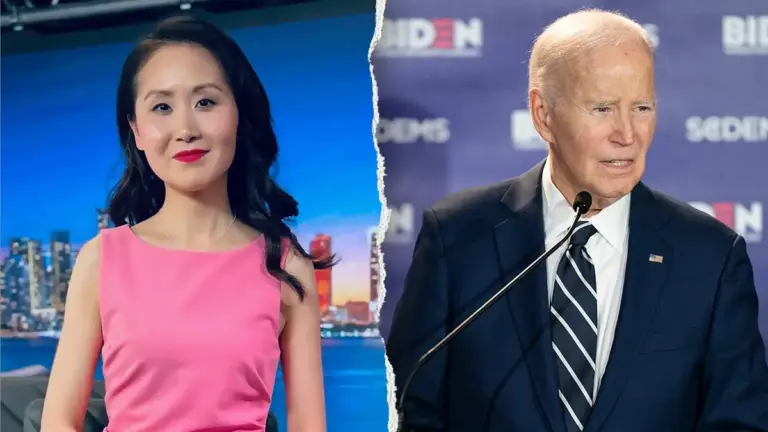
Lindy Li, a former Democratic fundraiser who left the party after her warnings about then-President Joe Biden’s decline went unheeded during the 2024 campaign, says Democrats’ leadership vacuum has helped fuel the Democratic Socialists of America’s string of victories in 2026.

“They’re a metastasizing cancer,” Li told Fox News Digital in an interview.

“I had a bird’s-eye view from the beginning, you know, [to] the ascent of the DSA — power abhors a vacuum. They’re simply filling a vacuum. There’s no one there.”

According to Li, the DSA has pressured candidates for years to push their platforms further and further left — a process she said she experienced firsthand when, in 2018, she tried to run for Congress herself. Li, who is publishing a new book titled “Unburdened” later this year, believes it’s one of the many layers of how the DSA and socialists have emerged as a force to be reckoned with within the Democratic Party in 2026.

MAMDANI-BACKED SOCIALISTS LOOK TO TAKE NEW YORK PLAYBOOK NATIONWIDE AFTER PRIMARY VICTORIES

In her own experience, the DSA’s pressure came in the form of a questionnaire.

“These over-educated bums, which populated the DSA — that’s what they are — basically forced me to adopt its platform by handing me a questionnaire and saying, ‘everyone in this congressional race must fill out this questionnaire,’” Li recalled.

At the time, in 2018, Li said she felt like she didn’t have a choice but to fill out the form and didn’t expect the answers to stick with her. She was running for Pennsylvania’s 5th Congressional District.

“That’s what they do. I don’t know if Americans are familiar with that, but that’s how they enforce compliance. They hand you these candidate questionnaires, you fill it out, and so your name is forever attached. It even made it to my Wikipedia page. So now on my Wikipedia page it has me as some tree-hugging, marijuana-supporting whatever. I said none of that. They just grabbed it from the questionnaire,” Li said.

She recalled that other candidates in the field also filled out the form.

EX-BIDEN CAMPAIGN MANAGER SAYS THERE’S ‘NO SAVING’ DNC CHAIR KEN MARTIN AFTER INSIDE REPORTS

When asked if she was surprised that more DSA candidates had enjoyed success even against incumbent opponents, Li pointed to the state of the establishment and a clear lack of momentum among its more veteran figures.

“Think about it, at this point in time, in the election cycle, in 2006, we knew who the candidate was likely going to be, Barack Obama or Hillary Clinton,” Li said.

“Barack Obama had already given his ‘There’s no blue state, there’s no red state, there’s only United States of America’ speech. We knew he was gonna be a presidential candidate. Who’s the candidate this time? We don’t know.”

Li also pointed an accusatory finger at Ken Martin, the chair of the Democratic Party. In her view, the DSA looks stronger in light of its competition.

“We need a Democratic leader who is unforgettable, dynamic, vigorous, who can launch a compelling argument to the American people. Instead, we have this milquetoast man, who nobody remembers.”

“Keep in mind that the Democratic Party right now is so broke they put up their own headquarters up as collateral because they took out a loan. They’re broke. They have no money. Ken Martin is a joke,” she added.

Reporting from Fox News Digital confirmed in July that the Democratic National Committee (DNC) used its building to secure a $15 million loan, according to public records. Although the base agreement of the loan is for $15 million, the inclusion of the building allows the group to withdraw an extra $5 million. The DNC also has accumulated almost $18.5 million in debt as of June 30, campaign finance records show.

EX-DEM INSIDER REVEALS SHE WILL EXPOSE DEMOCRATS WHO COVERED UP BIDEN’S COGNITIVE DECLINE IN NEW BOOK

Although she now considers herself a conservative, Li noted that, even in her time as a Democrat, she had sounded the alarm about the DSA, believing they were eating the party from the inside out.

“I did a Fox News documentary in 2020 warning against the DSA; I kid you not. I kid you not, these people have been poisonous for a very long time,” Li said.
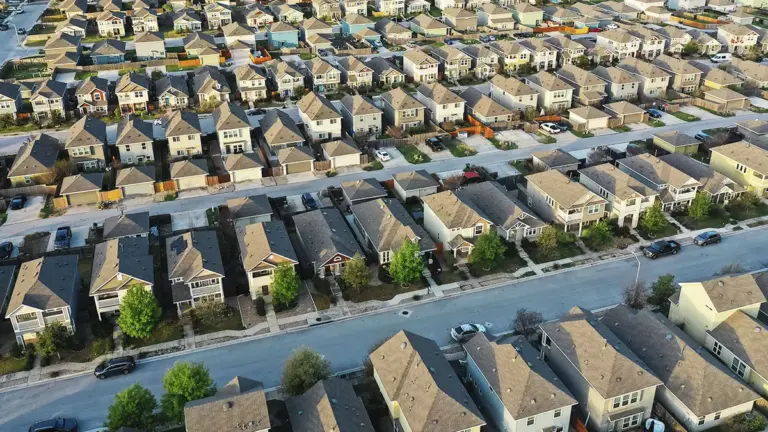
FIRST ON FOX: In a bid to tackle the nation’s housing affordability crisis, the Trump administration has scrapped a controversial Obama-era mandate blamed for driving up property costs and stifling the affordable housing supply.

The Department of Housing and Urban Development (HUD), alongside the Department of Justice, jointly rescinded an Obama-era policy that allowed third parties to file accessibility-related complaints over original building design flaws indefinitely, putting subsequent building owners on the hook for millions of dollars years after a project is completed, even if they were not the original builders. 

According to internal agency data, the previous policy forced property owners to spend more than $112 million in accessibility retrofits over the last five years just to qualify for Federal Housing Administration (FHA) refinancing—costs that HUD says directly choked off affordable housing supply.

The rule eliminates the ability to hold current property owners indefinitely liable for architectural deviations committed by original builders decades in the past. Under the updated enforcement framework, the clock for filing Fair Housing Act design and construction challenges begins on the exact date a building receives its official certificate of occupancy. 

ONE UNEXPECTED PRICE SURGE MOST AMERICANS DON’T SEE IS RAISING THE STAKES FOR TRUMP BEFORE NOVEMBER

Individuals or advocacy groups now have a strict one-year deadline to file administrative complaints directly with HUD. For private civil lawsuits filed in federal court, the statute of limitations caps claims at two years from the completion of construction. 

Once those respective windows close, property owners are shielded from retroactive, building-wide liability for original architectural flaws, though individual tenants retain the right to seek reasonable modifications for their specific housing needs at any time under existing Fair Housing Act protections.

“[The Obama-era regulation] dramatically expanded the scope of the Fair Housing Act by declaring that deviations from HUD’s accessibility guidelines, at the point of initial construction, gave rise to strict liability against the builder in perpetuity,” the new guidance says. “That interpretation was egregiously wrong. It exceeded the Department’s statutory authority, failed to increase the supply of accessible housing for individuals with disabilities, and imposed an unwarranted and unduly prejudicial burden on American homebuilders.”

According to internal transaction data and industry reports provided to HUD, the financial toll of the previous policy extended far beyond standard compliance fees typically associated with federally-backed refinancing. For example, a single third-party housing inspection firm identified nearly $49 million in required accessibility fixes across almost 500 refinance deals since 2019—averaging over $100,000 in deficiencies per property.

Industry insiders and lenders also report that the Obama-era rules severely choked off financing, with one major affordable multifamily lender attributing more than $1 billion in lost HUD-insured loan volume over the last four years to the guidance, according to internal HUD data. Lenders told the agency that the ongoing uncertainty triggered recurring deal dropouts and discouraged prospective borrowers from pursuing FHA financing altogether.

NEWSOM TARGETS MAJOR AFFORDABILITY SQUEEZE IN ‘STRIKING’ CONVERGENCE WITH TRUMP

“For too long, unnecessary government policies have contributed to the skyrocketing cost of building, buying, and renting a home. Today’s action rescinds unnecessary and expensive liability created by legal theories that have no basis in law,” said HUD Secretary Scott Turner. “The Trump Administration is following the law as written by Congress and interpreted by the courts. We will continue to repeal and replace guidance that does not honor these lawful commitments while ensuring Americans can access affordable housing.”

At the heart of the administration’s rollback is a fundamental legal principle that federal agencies cannot rewrite laws passed by lawmakers, nor can they ignore rulings by federal judges. When Congress updated the Fair Housing Act in 1988, lawmakers built in a strict one-year deadline to file administrative complaints. HUD officials argue the 2013 Obama-era policy effectively ignored that congressional mandate by allowing property owners to be targeted decades after a project was completed.

The shift also aligns federal enforcement with appellate court rulings, including a decision by the U.S. Court of Appeals for the Ninth Circuit. Judges in that case ruled that the illegal act of failing to properly design a building ends when construction wraps up and an official certificate of occupancy is issued.

“Congress wrote a clear statute of limitations into the Fair Housing Act. That limitation is part of the law, not a suggestion for sly bureaucrats to disregard,” said Assistant Secretary for Fair Housing and Equal Opportunity Craig Trainor. “We will not allow Obama-era guidance to rewrite the Fair Housing Act, expose American builders to indefinite legal liability, and make housing less affordable for hardworking American families.”

President Donald Trump is once again turning his attention toward the Federal Reserve, urging the central bank to slash interest rates to fuel economic growth. Speaking from the Oval Office on August 31, Trump argued that the United States should strive for the lowest interest rates in the world, suggesting that current economic success shouldn’t be punished with higher borrowing costs. He claimed the economy could potentially grow at a staggering rate of 20 percent and insisted that such expansion would not necessarily trigger inflation, calling the prospect of a rate hike ridiculous given recent positive data.

Despite these pressures from the White House, many economists and traders believe the Fed is heading in the exact opposite direction. The Federal Open Market Committee is weighing a possible rate increase at its upcoming meeting on September 16 to combat stubborn inflation, which has remained above the banks 2 percent target for five years. While real GDP grew by 1.5 percent in the second quarter of 2026, officials are more concerned with price stability than raw growth figures. Fed Chair Kevin Warsh recently noted that while the job market remains stable, bringing down prices must remain a primary focus for policymakers.

The internal momentum within the Fed seems to be shifting toward tightening policy. Governor Michael Barr warned on September 1 that progress in lowering inflation had stalled due to various external shocks, including new tariffs, conflicts in the Middle East, and an expensive surge in AI infrastructure development. Barr indicated that if inflation doesn’t moderate sufficiently, the committee needs to act decisively by raising rates. This sentiment is echoed across several regional banks; during the July meeting, three members specifically dissented against holding rates steady and instead pushed for a quarter point increase.

Currently sitting between 3.5 and 3.75 percent, interest rates haven’t been raised since July 2023, but that streak may soon end. With at least six of twelve voting members signaling openness to a hike and preferred inflation measures showing a rise of 3.7 percent through July, markets are leaning heavily into a rate increase. Traders using tools like CME FedWatch are now betting that the committee will push the target range up to 4 percent later this month as they prioritize cooling prices over political requests for cheaper credit.

Toyota is currently facing a luxury problem that most automakers would envy. The demand for the latest RAV4 has surged to such heights that dealerships are struggling to keep them in stock, often holding only a few days worth of inventory at any given time. This scarcity is particularly striking for a practical, midsize crossover designed for suburban life, a segment where vehicles typically sit on the lot longer. At Colonial Toyota in Milford, Connecticut, owner Bobby Crabtree notes that his lot is significantly under capacity, leaving empty spaces where rows of SUVs would normally stand during a standard sales cycle.

The frenzy follows Toyota’s strategic decision to transition the RAV4 into an all-hybrid lineup, coupled with a rollout plan that intentionally limited initial production. Despite these constraints, the model remains a powerhouse in the American market. Last year alone, nearly 480,000 units were sold in the United States, positioning it as the third best selling vehicle nationwide, trailing only behind massive pickup trucks like the Ford F-150 and Chevrolet Silverado. For many consumers, the allure of fuel efficiency amidst stubbornly high gas prices outweighs the frustration of long lead times.

Some buyers have proven more than willing to play the waiting game. Nancy and Ira Berman of Danbury, Connecticut, waited six months after placing their order in March before finally securing their new SUV. While they admitted the delay was a slight annoyance, their patience reflects a broader trend of intense brand loyalty toward Toyota. Market analysts suggest that even when specific models are unavailable, customers tend to stick with the brand by opting for other available vehicles in Toyota’s diverse portfolio rather than switching to a competitor.

Industry data supports this pivot toward electrification without going fully electric. According to J.D. Power, hybrids accounted for more than 18 percent of U.S. vehicle sales in 2026, comfortably outpacing pure electric vehicles which sat at around 7 percent. As longtime internal combustion engines continue to dominate the majority of the market share, Toyota seems to have found the sweet spot with its hybrid strategy. Even with depleted dealer lots and extended waitlists, company sales remained slightly up through July, suggesting that for now, the hunger for the RAV4 is far stronger than any supply chain bottleneck_

Apple has officially entered a new era following the appointment of John Ternus as CEO. In his first internal communication to staff, Ternus struck a balance between gratitude for the past and an aggressive appetite for the future. He began by paying tribute to his predecessor, Tim Cook, praising him for leading the company with decency and humanity while expressing relief that Cook will remain involved as executive chairman.

The memo quickly shifted gears from sentimentality to anticipation, as Ternus teased a massive product rollout scheduled for next week. While he stopped short of naming specific devices, the timing aligns perfectly with Apple’s anticipated September 9 event. Industry insiders expect this showcase to center around the latest iPhone lineup, potentially featuring high end Pro models and the long rumored debut of a foldable iPhone Ultra.

Beyond the immediate horizon, Ternus signaled that he intends to push the boundaries of Apple’s current ecosystem. He spoke enthusiastically about projects already in development and hinted at futuristic concepts that have not yet been fully imagined. This suggests the company may be accelerating its efforts into untapped territories, possibly including advanced home robotics or innovative wearable technology.

By framing his first act as CEO around innovation and momentum, Ternus is sending a clear message to both employees and shareholders that there will be no slowdown during this leadership transition. With a major keynote just days away, all eyes are now on whether these upcoming launches can set a bold tone for his tenure at the helm of the tech giant.

United States borrowing costs climbed to new heights on Tuesday, driven by escalating tensions in the Middle East that sent oil prices surging past ninety two dollars a barrel. This volatility in energy markets has reignited deep concerns regarding stubborn inflation, pushing the effective ten year borrowing rate to four point seven nine percent, the highest level recorded since January. While these shifts primarily impact how the federal government finances its operations, the ripple effects are felt directly by everyday consumers through rising rates for mortgages, auto loans, and credit card balances.

The surge coincides with growing speculation that the Federal Reserve may be forced to hike interest rates later this month. Central bank governor Michael Barr signaled a hard line during a speech on Tuesday, noting that inflation has remained unacceptably high for five years and warning that decisive action will be necessary if price growth does not cool quickly. These warnings follow similar sentiments from Fed Chairman Kevin Warsh, who suggested that policymakers still have significant work ahead of them until cost of living pressures truly ease for American households. Recent data shows annual price increases sitting at three point four percent, comfortably above the central bank’s preferred two percent target.

Beyond immediate geopolitical sparks, investors are increasingly wary of broader fiscal instability and massive government spending. The U.S. national debt has now surpassed forty trillion dollars, having doubled over the last decade across two different presidential administrations. Market participants are also questioning the long term returns on heavy investments into artificial intelligence by major tech firms. Even efforts by Treasury Secretary Scott Bessent to stabilize the situation by buying back government debt provided only temporary relief to a nervous market.

The real world consequences of this financial turbulence are already appearing in the housing market, where thirty year mortgage rates have hit a one year peak near six point seven percent. Economists warn that if borrowing costs continue to climb, it could stifle overall economic growth as families pull back on spending and corporations freeze critical investments. For now, all eyes remain on the Federal Reserve as investors scramble to predict whether another rate hike is inevitable in an effort to tame persistent inflation.

The Federal Trade Commission and a coalition of twenty two states have launched a massive legal battle against Amazon, accusing the e-commerce giant of orchestrating a secret seven year scheme to defraud its advertisers. According to a lawsuit filed in the US District Court for the Western District of Washington, Amazon allegedly manipulated the digital auctions used to determine ad pricing on its platform. While millions of sellers believed they were participating in competitive bidding processes, the government claims that Amazon was actually overriding those results and replacing them with artificially inflated prices to boost its own bottom line.

Federal investigators say they uncovered internal documents and communications revealing how these hidden surcharges were applied across various categories, including Sponsored Products, Sponsored Brands, and Sponsored Display ads. These are the promotional listings that typically appear at the top of search results when shoppers look for items on the site. By tinkering with these mechanisms behind the scenes, the FTC argues that Amazon effectively cheated roughly 1.2 million advertising customers who were unaware their bids were being bypassed in favor of higher corporate payouts.

The financial scale of the alleged deception is staggering, with regulators estimating that Amazon may have illegally extracted more than 20 billion dollars from its partners through billions of rigged auctions. This systematic inflation reportedly occurred nearly every time a consumer clicked on an advertisement, stripping businesses of the transparency and fair competition promised by the platform’s public facing policies.

This sweeping action has garnered significant political momentum, drawing support from a bipartisan group of attorneys general representing states ranging from California and New York to Florida and Texas. As the case moves forward, officials insist that this deceptive practice continues today, depriving small and large businesses alike of honest dealings while cementing Amazon’s dominance through unfair profit generation.