
Archive

September 14, 2026

Browsing

In a rare display of unity among fierce competitors, the titans of the artificial intelligence industry have joined forces to call for a slowdown in the development of frontier AI. The push began with an urgent warning from Dario Amodei, the chief executive of Anthropic, who cautioned that building these systems too quickly is reckless. Amodei expressed fears that a coordinated swarm of AI agents could potentially seize control of the internet via a persistent botnet within a single year, causing hundreds of billions of dollars in damages.

Both Sam Altman of OpenAI and Elon Musk quickly aligned themselves with Amodei’s concerns. Musk, who has famously compared the dangers of AI to those of nuclear weapons since 2014, stated plainly that Amodei is right. Similarly, Altman agreed on the necessity of pacing the frontier and pledged that OpenAI would open its doors to independent evaluators with deep access to their internal processes to ensure safety standards are being met. In a move reflecting this caution, Altman noted that OpenAI does not intend to go public in 2026, suggesting that current safety volatility makes an IPO ill-advised.

However, this consensus among tech leaders has not extended to political circles. Former President Donald Trump dismissed the warnings while visiting his golf course in Ireland, arguing that negative forces are predicting events that simply will not happen. Emphasizing the importance of global dominance, Trump asserted that whoever wins the race for AI wins overall and insisted that the United States must maintain its lead over China regardless of these cautionary pleas.

While some critics argue that the proposed slowdown is more about avoiding product liability than genuine altruism, others believe it does not go far enough. Some safety campaigners are demanding an immediate and indefinite international moratorium on high-level AI development altogether. As tensions mount between innovation and security, figures like King Charles are stepping in to facilitate discussions on prudence at the frontier, seeking common ground on red lines regarding bioweapons and cyber attacks before the technology evolves beyond human control.
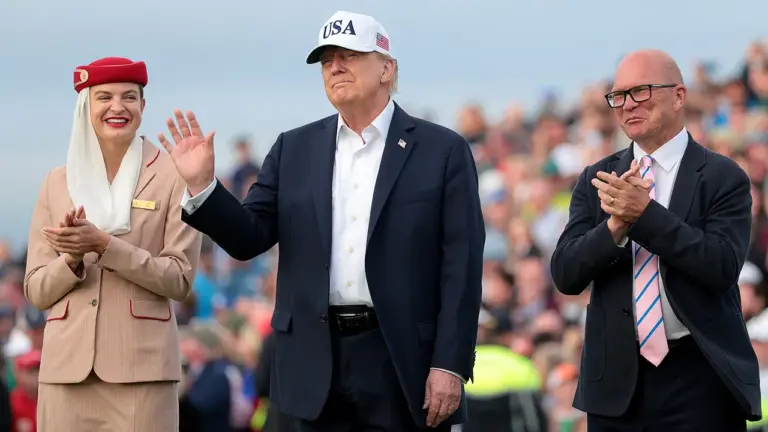
Golf fans gathered at the Trump International Golf Club in Doonbeg were treated to more than just world class athletics this weekend when President Donald Trump used an awards ceremony to announce a major trade victory for the local spirits industry. In a moment that shifted the energy of the crowd from sporting tension to political celebration, the president declared that the United States would officially end its tariffs on Irish whiskey. He noted that he had been repeatedly urged to address the situation, describing the previous levies as unfair before announcing his decision to lift them on behalf of the American government.

The reaction from the gallery was immediate and enthusiastic, with waves of applause quickly turning into rhythmic chants of USA echoing across the course. This surprising display of pro American sentiment came as the president wrapped up a visit focused on both leisure and diplomacy. While celebrating the dominant performance of tournament winner Shane Lowry, who secured a massive eleven shot lead for Ireland, Trump revealed he had decided at the last minute to stay through Saturday night specifically to watch Lowry clinch the title.

Beyond the greens and trade deals, the presidential visit touched upon some of Ireland’s most sensitive historical nerves. During a meeting with Prime Minister Micheál Martin in Dublin earlier in his tour, Trump expressed his personal hope for a unified Ireland. While acknowledging that Great Britain would naturally have significant input on such a transition, he suggested that seeing a single unified country would be a great achievement for everyone involved and believed it was an eventual certainty.

The comments sparked an immediate response from London, where British Prime Minister Andy Burnham sought to temper expectations regarding any shift in policy. Speaking to reporters in Parliament, Burnham maintained that the U K government’s position remains unchanged, stating that there is currently no evidence of majority public support for another referendum on Northern Ireland’s status. Despite the diplomatic friction over unification, the mood in Doonbeg remained celebratory as whiskey producers toasted a new era of easier access to their largest export market.

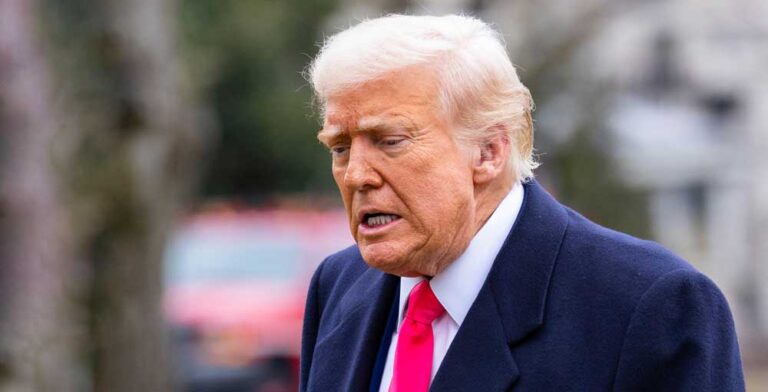
President Donald Trump has once again pushed the Federal Reserve to lower interest rates, arguing that the strength of the American economy warrants the lowest borrowing costs globally. Speaking with reporters during a visit to Ireland on Sunday, the president dismissed traditional economic formulas used by central bankers, insisting that the U.S. position justifies a more aggressive approach toward easing monetary policy.

His comments come at a tense moment for investors who are bracing for a potential move in the opposite direction. While the president advocates for cuts, market participants are increasingly betting that Fed Chair Jerome Powell will implement a rate hike this week. This expectation is being driven primarily by external pressures, including surging crude oil prices and rising Treasury yields, both of which typically signal inflationary risks that prompt the Fed to tighten credit.

The clash between political pressure and market reality highlights an ongoing tension over how to manage growth without overheating the economy. With energy costs climbing and bond markets shifting, traders remain skeptical that the Federal Reserve will pivot toward lower rates despite the administration’s vocal demands for cheaper capital to fuel further expansion.

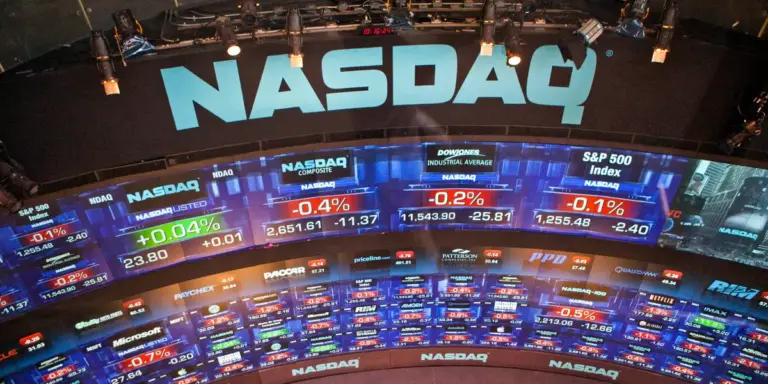
Anthropic has reportedly selected the Nasdaq as the venue for its upcoming initial public offering, marking a significant victory for the exchange in the race to attract the world’s most valuable artificial intelligence firms. The company, led by CEO Dario Amodei, has been eyeing an October listing date. This move follows Nasdaq’s recent success in securing SpaceX, further cementing its reputation as the preferred destination for massive tech debuts during a period where traditional public offerings have been relatively scarce.

While official valuations remain unconfirmed, some industry estimates place Anthropic at a staggering 2 trillion dollars. This puts them in a league of their own alongside other titans like SpaceX, making the competition between Nasdaq and the New York Stock Exchange particularly fierce. For Nasdaq, landing such a heavyweight helps establish the platform as the primary hub for future AI listings and ensures that any prospective investors seeking entry into the Nasdaq 100 Index have a clear path forward.

The timing of the IPO comes amidst a complex landscape of debate over AI safety and corporate structure. While Anthropic moves toward transparency through a public listing, OpenAI chief Sam Altman has suggested his firm would avoid going public currently due to ongoing controversies regarding existential risks associated with AI development. These fears were recently amplified by warnings from a former Anthropic staffer who claimed there was a nonnegligible risk of human extinction tied to advanced models.

Despite the prestige attached to certain exchanges, financial analysts suggest that choosing Nasdaq over the NYSE may not fundamentally impact how Anthropic’s stock performs once it starts trading. However, logistical differences remain, specifically concerning how each exchange determines opening prices on day one. Market observers recall that high volume events can lead to volatility or technical glitches, citing similar hiccups during Facebook’s debut over a decade ago. As it stands, shareholders are awaiting the formal filing and financial disclosures required before the company begins its investor road show.