Archive

September 17, 2026

Browsing

Republican lawmakers were apparently blindsided this week by new documents about Thomas Matthew Crooks, the 20-year-old who attempted to assassinate President Donald Trump and was subsequently shot dead.

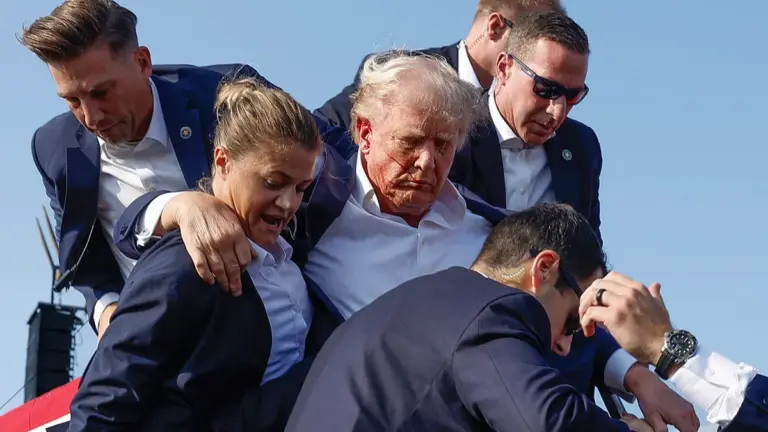
Crooks opened fire on Trump during a campaign rally in Butler, Pa., in July 2024. A bullet grazed the then-candidate’s ear, while a rally attendee was killed as he attempted to shield his family.

“During our piece that we were working on, none of the federal agencies were working with us at all. They were going to work on their own, and they told us, ‘We’re going to do ours, and then we’ll get back to you.’ So this is two years later. Nobody’s gotten back to us,” Rep. Mike Kelly, R-Pa., who chaired a bipartisan House task force aimed at investigating the shooting, told Fox News. 

“That’s under the former administration. So everything that’s under the executive branch at that time, under the Biden administration, we had no access to information at that time,” he said.

Kelly also said the House task force’s Dec. 10, 2024, report was written largely with input from local authorities and little from the federal level.

COLE ALLEN CLUES PILE UP AS THOMAS CROOKS’ SECRETS DIED WITH HIM — EXPERTS CITE EVIDENCE GAPS IN TRUMP ATTACKS

“It’s awfully strange that all the questions we asked, ‘We’ll have to get back to you on that.’ And we have very limited time, as you know, to actually get to what we wanted to. So when we finished our report, it was basically based on everything that we could gather from local law enforcement, hardly anything from the feds at that time,” Kelly said.

Fox News Digital reviewed the documents in question and found that Crooks’ father, Matthew Crooks, had searched for ways to prevent his son from accessing firearms in May 2024, roughly two months before he clambered up a rooftop in his attempt to assassinate Trump.

A source familiar with the task force’s work told Fox News Digital that the May 2024 search by Matthew Crooks was not known to House lawmakers during their investigation.

TWO YEARS AFTER BUTLER, THREATS AGAINST TRUMP KEEP ASSASSINATION ATTEMPT IN SHARP FOCUS

“The Task Force report corroborates that Matthew Crooks handed Thomas Crooks the rifle used in the assassination attempt on July 13, 2024,” the source said.

Kelly’s spokesman told Fox News Digital that his office was not aware of federal authorities interviewing Crooks’ family.

3 SECRET SERVICE OFFICIALS UNDER INTERNAL INVESTIGATION FOR POTENTIAL MISCONDUCT

The records were obtained by Senate Judiciary Chair Chuck Grassley, R-Iowa, as part of his ongoing inquiry into the Butler assassination attempt. So far, the records turned over to the Senate show Thomas’ actions were a surprise to his family, and his motive is still a mystery.

Members of the Senate Judiciary Committee told Fox News Digital that they had yet to see the FBI documents, but argued that it was reason enough that the full details of that day in July 2024 needed to be brought to light.

Sen. Josh Hawley, R-Mo., a member of the panel, told Fox News Digital that the documents dump is “something that should have happened,” but there was still “so much that we don’t know about what happened.”

“I think we have got to, I’ve been saying forever now, we have got to have a full accounting of everything that happened on that day, all of the failures, law enforcement failures that occurred,” Hawley said.

I WAS AT BUTLER TWO YEARS AGO WHEN AMERICA SAW WHAT COURAGE LOOKS LIKE

When asked about Crooks’ father trying to stop him from getting access to guns, Hawley said, “This gets back to if this guy was out there, if he was, if he was displaying erratic behavior, was that reported?”

He recalled being on the ground days after the attempt. Hawley described how easily he could’ve gotten onto the rooftop from where Crooks fired off rounds toward the stage and charged that there was “no coordination” among the several local and federal law enforcement agencies present that day.

“I mean, this is just wild. And I still don’t think we’ve gotten a full accounting,” Hawley said. “Pretty much everything we know about this is from whistleblowers. You know, we need a full accounting of what really happened on that day.”

“Listen, otherwise, we run the risk of things like this happening again. And we run the risk of it turning into a, you know, JFK situation where, all of these years later, we still don’t really know what happened,” he continued. “We owe it to the American people to figure out what exactly happened and what we need to fix. Clearly, there were massive failures.”
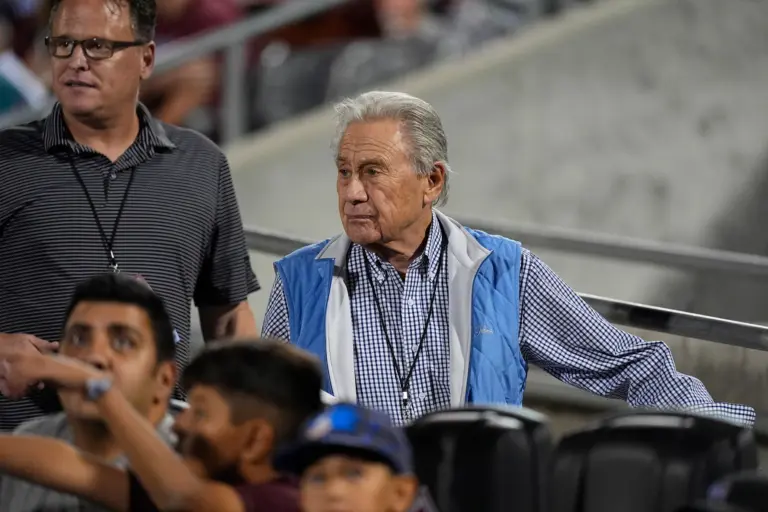

Colorado continues to hold a steady presence among the nation’s most affluent, though the barrier to entry for this year’s Forbes 400 has become significantly steeper. A massive surge in technology fortunes, particularly within the realms of artificial intelligence and semiconductors, pushed the collective wealth of the top 400 Americans up to 8 trillion dollars. This inflation meant that even several hundred billionaires were left off the list, including Fort Collins resident Patricia Stryker. As the founder of the Bohemian Foundation and heir to a medical equipment empire, Stryker was previously Colorado’s sole female representative on the list with a net worth of 4.1 billion dollars.

Despite that loss, Philip Anschutz maintains his position as the state’s wealthiest individual with an estimated net worth of 19.3 billion dollars. His portfolio is a sprawling mix of old-world infrastructure and modern entertainment, ranging from historic railroads and fiber optics to global arenas and sports franchises like Major League Soccer and the LA Kings. Locally, his influence remains strong through ownership of The Gazette and The Broadmoor Hotel. Much of his recent growth comes from the skyrocketing value of sports teams and entertainment venues, seeing his personal wealth jump by 78 percent since last year.

Other members of the local elite have experienced more volatile trajectories. Charlie Ergen, the head of EchoStar, saw his fortune plummet from peak highs in 2017 due to a costly struggle to build a national cellular network. However, strategic dealings involving AT&T and Elon Musk’s SpaceX helped stabilize his standing, leaving him with roughly 12.8 billion dollars. Meanwhile, Mark Stevens has seen a meteoric rise thanks to early investments in Nvidia during the AI boom. Now based in Steamboat Springs, Stevens has used some of his increased windfall to invest locally by purchasing apartment complexes and lowering rents for valley workers.

Rounding out Colorado’s quartet is John Malone, often called the cable cowboy for his mastery of financial engineering in telecom and media. Although he stepped down as chairman of Liberty Media earlier this year, Malone remains a powerhouse with 11.4 billion dollars to his name. Beyond his corporate legacy in cable broadband, Malone has shifted much of his focus toward environmental stewardship, establishing himself as one of the largest private landowners in the entire United States through extensive conservation efforts across various states.

The tech heavy Nasdaq managed to hold onto its gains today despite a fresh move by the Federal Reserve to tighten monetary policy. In a decision that many investors had already priced into their expectations, the central bank raised interest rates by a quarter point, seeking to balance inflation control with economic stability. While rate hikes typically put pressure on growth stocks due to higher borrowing costs, the market seemed more focused on the underlying health of the economy than the incremental increase itself.

Trading activity remained brisk throughout the session as analysts parsed through the latest guidance from Fed officials. Much of the optimism appeared to stem from a belief that these increases may be nearing their peak, suggesting a potential plateau in the coming months. This sentiment allowed major technology firms to defy the usual gravity associated with rising yields, keeping indices in positive territory even as some sectors struggled to find footing.

Market observers noted that investor resilience suggests a growing confidence in corporate earnings reports over macroeconomic headwinds. Although volatility persisted during the initial reaction to the announcement, the steady climb of high growth equities indicated that buyers are still willing to bet on innovation and long term expansion. As the trading day wound down, it became clear that for now, Wall Street is viewing modest rate adjustments as a manageable cost of doing business in an evolving financial landscape.

The Federal Reserve has voted unanimously to raise interest rates for the first time since July 2023, marking a decisive opening move for Chair Kevin Warsh. In a 12-0 decision, the open market committee increased the benchmark rate by a quarter-percentage point to a new range of 3.75 percent to 4 percent. Speaking at a press conference following the announcement, Warsh was blunt about the necessity of the move, stating that inflation is simply too high and has remained so for far too long. He noted that recent readings from over the summer suggest underlying inflationary trends have not meaningfully improved, forcing the Fed to prioritize price stability.

The timing of the hike places Warsh in a precarious political position, as he was appointed by Donald Trump with the general expectation that he would pursue rate cuts. Trump has previously expressed approval of certain inflationary pressures and pushed for lower borrowing costs, creating a looming clash between the White House and the central bank. When questioned about these external pressures and Trump’s specific demands, Warsh defended the institution’s autonomy, asserting that the Fed stays in its own lane and bases decisions solely on economic assessments rather than political influence or market volatility.

Wall Street reacted sharply to the news and Warsh’s hawkish tone. Major indices slid lower toward the end of the session, with the Dow tumbling by 850 points while both the S&P 500 and Nasdaq saw declines. Treasury yields shifted as investors recalibrated their expectations for future policy, and the US dollar index climbed slightly. Analysts suggest this could be just the beginning of a tightening cycle, with some economists predicting additional hikes later this year due to persistent energy prices and geopolitical instability involving Iran.

Political reactions were split along party lines almost immediately after the announcement. Representative Jason Smith of Missouri criticized the move as harmful to working families and small businesses who are already struggling with high borrowing costs. Conversely, Democratic Representative Brendan Boyle argued that the rate hike was inevitable given how tariffs and foreign conflicts have driven prices upward. As analysts warn that Warsh may now face public criticism similar to that experienced by his predecessor Jerome Powell, all eyes remain on how Donald Trump will respond to his nominee’s first major act of defiance against his preferred economic agenda.

The Federal Reserve broke a long streak of stability on Wednesday, raising its benchmark interest rate by 0.25 percent for the first time since 2023. The move pushes the flagship rate into a range between 3.75 and 4.00 percent, a decision made unanimously by policymakers who are grappling with a resurgence of inflation. While the central bank aims to steer inflation back toward its 2 percent goal, officials signaled that this may not be a one-time event, with most members forecasting at least one more hike before the year concludes.

This policy shift sets the Fed on a direct collision course with President Donald Trump, who has spent years demanding lower borrowing costs to stimulate the economy. Shortly after the announcement, Trump took to social media to demand that rates be lowered fast, suggesting they should sit at 1 percent or less due to what he called the best credit in the world. Despite these pressures, Fed Chairman Kevin Warsh remained firm during a Washington press conference, stating plainly that inflation has remained too high for too long and insisting that the current economic data did not justify keeping rates steady.

Much of the inflationary pressure stems from geopolitical instability, specifically the ongoing war with Iran which has sent oil and gasoline prices soaring by more than 45 percent since February. With overall inflation hitting 3.4 percent in August—surpassing average wage growth—Warsh acknowledged that while the Fed cannot control the specific cost of oil or groceries, it must act to prevent those price hikes from bleeding into other sectors of the economy. When asked directly about his message to the president regarding this defiance, Warsh declined to comment on any discussions with the White House, emphasizing instead that the committee intends to stay in its own lane.

Wall Street reacted sharply to the news as initial gains evaporated throughout Wednesday’s session. The Dow plummeted by 630 points, dragged down by losses in heavy hitters like Boeing and Goldman Sachs, while the S&P 500 closed slightly lower. Beyond stocks, treasury bond yields remain near historic highs, driven by a combination of domestic economic strength and intense competition for capital fueled by the boom in artificial intelligence companies. For now, investors are bracing for a potential new hiking cycle as the Fed prioritizes price stability over political preference.

San Antonio’s vibrant arts and cultural scene is facing a period of deep uncertainty as the City Council prepares to adopt the 2026-2027 budget on September 17. With a projected budget shortfall of roughly 158 million dollars, city leaders are weighing significant spending cuts across various sectors. While officials are desperate to avoid raising property taxes or slashing funds for essential services like public safety and road repair, several high profile cultural organizations find themselves in the crosshairs.

Mayor Gina Ortiz Jones has specifically pointed toward reductions in funding for local arts and culture agencies, suggesting that private philanthropy should step in to fill the gap. A variety of staples within the community, including the San Antonio Botanical Garden, the San Antonio Book Festival, and the commission responsible for the annual MLK march, are among those targeted for cuts. Additionally, the city is considering reducing support for its World Heritage office and eliminating its gastronomy program as part of a broader effort to trim expenditure.

Local advocates and nonprofit leaders have pushed back strongly against these proposals, arguing that such cuts will harm thousands of residents who rely on these services. During a recent rally at City Hall, representatives from the Nonprofit Council emphasized that these budgets represent more than just numbers on a page; they are lifelines for families and seniors in crisis. The San Antonio Book Festival has even launched a petition drive, reminding leadership that their event generates millions in economic impact while promoting critical literacy goals for local students.

Beyond direct grant cuts, traditional celebrations are also feeling the pressure. City leaders are discussing a plan that would require Fiesta event organizers to pay for half of their own police security and support costs. This shift has already prompted the Conservation Society of San Antonio to announce potential layoffs and a complete redesign of Night In Old San Antonio. Despite the financial strain, society officials claim they are using this moment as an opportunity to reimagine their premier event from the ground up with input from the community.