
Archive

September 21, 2026

Browsing

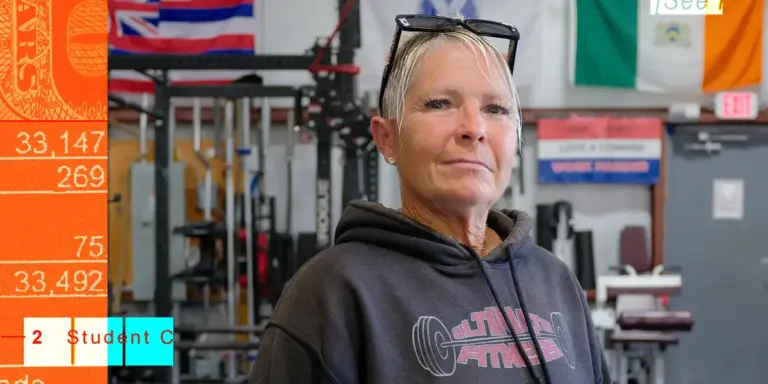
Nansi Lynch spent nearly three decades working as a school bus driver, balancing her mornings and evenings with running a gym she co owns with her son. While she never attended college herself, she wanted to ensure her children had every opportunity to succeed in the workforce. To make that happen, she took out federal parent PLUS loans to fund their degrees. Now 60 years old and eyeing retirement, Lynch finds herself trapped by a staggering 156,000 dollar balance that shows no sign of disappearing.

The financial burden is compounded by an interest rate of over nine percent, one of the highest available for federal loans. Because Lynch relied on income driven repayment plans and periodic deferments during gaps in employment, interest continued to pile up behind the scenes. This created a cycle where the total owed grew far beyond what she originally borrowed. With an annual salary of around 45,000 dollars from her driving job, the weight of six figure debt has become an insurmountable wall between her and the retirement she hoped to enter within five years.

Beyond the monthly payments, the debt has crippled Lynch’s ability to grow her small business. When she applied for a Small Business Administration loan to move her gym to a better location, the request was denied specifically because her debt load was already too high. Despite these hardships, Lynch refuses to let her children help with the payments, noting that they are already struggling with their own bills in a difficult economy. She would rather continue working well into her sixties or seventies than pass the financial burden back onto the very people she sacrificed for.

Looking back, Lynch says she does not regret providing an education for her children but warns others about the dangers of uncapped borrowing. She describes the current system as broken, pointing to recent graduates at her gym who hold expensive degrees yet cannot find stable employment. For Lynch, the lesson is a painful one about the true cost of parental sacrifice in an era of skyrocketing tuition and predatory interest rates that can follow a borrower long after their children have graduated.


For many American workers, hitting sixty feels like entering a precarious dead zone where they are viewed as too old to hire but remain far too young to retire. This gap is often exacerbated by the timing of government benefits, with Social Security typically unavailable until age 62 and Medicare not kicking in until 65. For those caught in the middle, a sudden layoff can trigger a crisis of confidence and financial stability, leaving seasoned professionals wondering why their decades of experience are suddenly seen as a liability rather than an asset.

Cynthia Hennessy experienced this firsthand after being laid off from her corporate law position at age 61 following a company reorganization. Despite twenty five years of service, she found herself struggling against an invisible age ceiling, famously sharing her frustration on social media after being rejected for a job driving the Oscar Mayer Wienermobile because the company preferred recent college graduates. While Hennessy eventually found fulfillment in a lower paying role at the Make A Wish Foundation, her journey highlights the psychological toll of late career unemployment and the feeling that one has become obsolete in the eyes of recruiters.

Other workers have responded to this systemic bias by abandoning the corporate world entirely to reclaim control over their livelihoods. Todd Fannin, who faced a cycle of downsizing and relocations throughout his fifties while working in insurance, reached a breaking point at age 61. Rather than risk another layoff, he and his wife invested three hundred thousand dollars from their retirement savings to open an outdoor living franchise in Georgia. It was a gamble born out of necessity, driven by the desire to build an asset they owned rather than relying on an employer who might see them as expendable due to their age.

Some have managed to turn these professional crises into unexpected second acts through sheer persistence and pivot strategies. Margaret Bowles found herself unemployed as an attorney during the Great Recession at age 60, sending out thousands of resumes without response. Out of desperation, she leaned into her passion for sports photography, transforming a weekend hobby into a full time career shooting for major outlets like the Associated Press and covering NFL games. While these success stories offer hope, they underscore a harsh reality for aging Americans whose skills remain sharp even as their opportunities shrink within traditional employment structures.

For Casey Pruim, running a dairy farm in Abbotsford, British Columbia, is a game of precision and timing. Every two days, 28,000 litres of raw milk leave his property to enter a complex distribution network designed on the belief that there will always be a buyer. However, that stability has vanished following the implementation of a fifty percent tariff by U.S. President Donald Trump on twenty billion dollars worth of Canadian goods. While much of Pruim’s milk stays within Canada, the sudden freeze in American sales has sent ripples through the provincial marketing system, leaving farmers wondering where their surplus will go.

The unique nature of dairy farming makes these trade tensions particularly volatile. Because cows cannot simply be turned off like a faucet, farmers face a harrowing dilemma when processors lose their export markets due to being priced out by tariffs. If the demand drops sharply, producers may be forced to dump fresh milk or take the drastic step of reducing their herds. Dylan Kruger from BC Dairy noted that while it is too early to determine if new international markets can mitigate the losses, the atmosphere remains one of profound uncertainty and instability for family businesses across the province.

This conflict stems from long standing disputes over Canada’s supply management system, which uses production quotas and import controls to stabilize prices for local farmers. Washington has characterized this system as protectionist and unfair to American producers, leading President Trump to claim via social media that Canada has been ripping off the United States for years. Canadian officials strongly reject this narrative, pointing out that despite current tensions, Canada actually runs a significant dairy trade deficit with its southern neighbor and provides substantial tariff free access to U.S. imports under existing agreements.

Economists warn that the immediate shock of losing such a massive market is nearly impossible to absorb quickly because profit margins are thin and alternative buyers do not appear overnight. Bryan Yu of Central 1 credit union suggested that while Canadian consumers might temporarily soak up some extra supply, there will likely be short term pain for many producers navigating these uncharted waters. Meanwhile, Prime Minister Mark Carney has signaled that Canada will not back down, implementing retaliatory tariffs on billions of dollars in U.S. goods as part of an effort to build economic resilience against aggressive foreign trade policies.