Archive

October 17, 2026

Browsing

Texas Democratic Senate nominee James Talarico is facing lingering frustration from inside his own political backyard over the cancellation of an event that was supposed to take place on Oct. 5 with a Black civic-service group.

The Central Texas African American Civic Engagement Symposium (CT-AACES) expressed deep frustration in an email, sent to the Talarico campaign and obtained by Fox News Digital, after the campaign cancelled an event – which had 325 confirmed registrants – during Talarico’s two-week absence from the campaign trail due to illness.

CT-AACES said the cancellation left them with “irrecoverable financial loss,” and that Talarico’s campaign had not engaged in rescheduling efforts

“While we understand Representative Talarico’s health required priority, we are deeply disappointed by the campaign’s decision to issue a flat cancellation rather than committing to a rescheduled date,” the email reads. “It was a missed opportunity for Representative Talarico to directly address community skepticism and demonstrate the sincerity of his commitment to Central Texas African Americans.”

The cancellation is the most recent instance of the tensions that Talarico’s campaign has faced with the Black community. It also casts doubt on the effectiveness of his efforts to reach Black voteBlack voters through a $25 million outreach pledge aimed at mobilizing black voters is fully reaching the ground.

TALARICO DISAPPEARANCE HAS DEM VOLUNTEERS WORRYING AND TRUMP ASKING, ‘WHAT IS GOING ON?’

The frustration isn’t isolated to CT-AACES.

At least one Austin-area Democratic operative who has met directly with Talarico told Fox News Digital that she remains frustrated by what she described as uneven follow-through on outreach to Black Democrats and candidates further down the ballot.

“Black voters aren’t a monolith,” the source cautioned, rejecting any blanket assertion that Black Texans distrust Talarico outright. “I think that there are pockets that do. There’s a pocket that doesn’t. And then there’s the pocket that’s really unsure,” she said.

The operative is particularly familiar with the nominee and the Democratic organizing landscape in the Austin region.

Asked about a $25 million investment to focus on door-knocking in Black neighborhoods, in-person community events and engagement with Black churches, the source said those investments haven’t manifested yet.

“We haven’t received the money, but we’re being told it’s coming,” she said of some accounts she has heard from the ground. “We received, you know, one or 2% of what we were told we were going to get. And then it’s been silence since,” she said.

DAVID MARCUS: HOW CROCKETT’S LAST STAND IN TEXAS COULD BRING DOWN TALARICO

The comments come after Talarico appeared on a Black voter coalition Zoom last week, delivering brief remarks about “put[ting] in the money … time … and effort to win” before his feed disappeared from the call reportedly without a public question-and-answer session. At the July Houston town hall where Talarico announced the $25 million pledge, nurse Kandice Webber confronted him as the event approached its scheduled end and demanded that he remain to answer questions. “Black people don’t trust you for this reason,” she said, according to the Texas Tribune .

“And you cannot win without us, so you stay here and you answer our questions, or you suffer the consequences,” Webber said.

During his primary, Talarico also encountered controversy over the black vote when reports surfaced the he had characterized rival candidate and former NFL linebacker Collin Allred as a “mediocre Black man.” “He had the audacity to say to a Black woman that he had signed up to run against a mediocre black man,” Allred said in a video response posted to X.

“We should say ‘thank you.’ Thank you for taking off the mask. Thank you for telling us who you really are and what you really think… keep my name out of your mouth while you’re at it.”

Talarico, for his part, described the wording as a mischaracterization, stating that he “described Congressman Allred’s method of campaigning as mediocre” and that he would “never attack him on the basis of race.”

Talarico also received criticism from Rep. Jasmine Crockett, D-Texas, his primary opponent in the Senate primary, after she accused him of darkening her skin in campaign ads against her.

“And you know, I’ve been asked a couple of times about it. And you know, I look at this specifically as a civil rights lawyer, and I see when they’re sending out ads and they’re darkening my skin. And I’m just like, I know what this is, right?” Crockett said at a press conference.

The operative said she personally pressed Talarico during a June meeting to do more to endorse and support down-ballot Democrats after hearing from campaigns that donors had already exhausted their political giving on his Senate bid and were asking whether he had endorsed those candidates.

FOX NEWS POLL: IT’S A LONE STAR SENATE SHOWDOWN BETWEEN TALARICO AND PAXTON

“He was very gracious. He said he understood,” she told Fox News Digital. “I followed up with his staff multiple times and to this day have still not heard anything, which has been really frustrating to me.”

Fox News Digital reached out to the Talarico campaign for a response to the characterizations and comments.
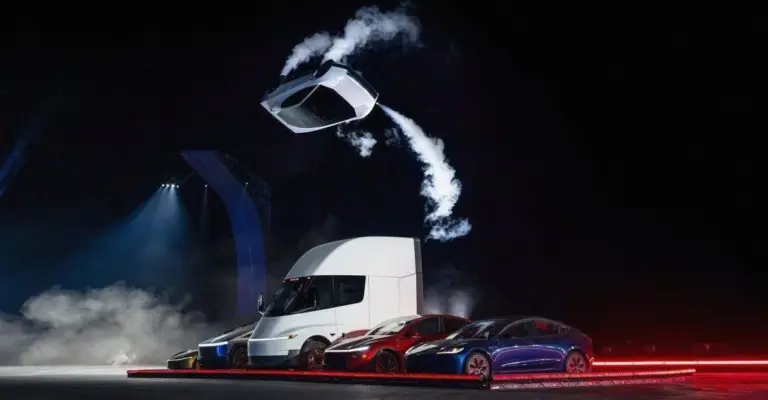
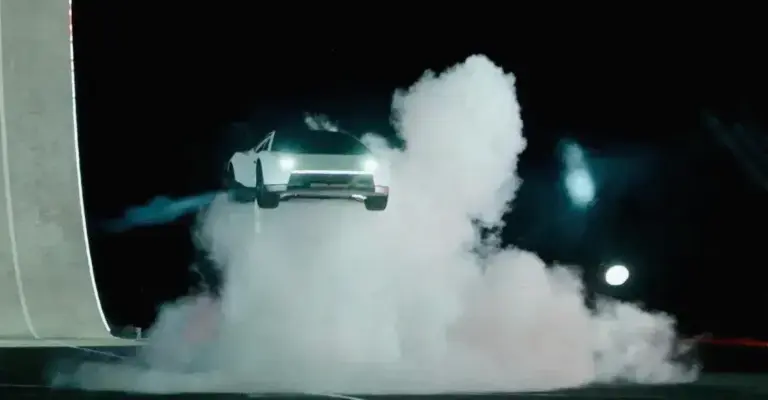
Elon Musk delivered exactly the kind of spectacle his followers crave during a recent demonstration in Waco, Texas, featuring a Tesla Roadster that defied gravity. In a sequence that felt more like a movie trailer than a product launch, the vehicle roared up a multi story ramp, launched into the air, performed a mid air kickflip over other Teslas, and touched down using cold gas thrusters. While the sheer audacity of equipping a supercar with SpaceX inspired suction fans and high pressure gas tanks was visually stunning, the event left many wondering if there is any actual substance behind the smoke and mirrors.

Despite the viral applause on social media, the flying Roadster appears to be less of a consumer product and more of an expensive piece of performance art. Tesla indicated that this Rocket configuration would be invite only, yet it lacks basic necessities for any real world owner. To make room for the massive gas tanks required for those brief moments of levitation, the passenger seat had to be removed entirely. More importantly, the company admitted that this specific version will not be approved for public road use, rendering it effectively useless as a vehicle for anyone who actually intends to drive somewhere.

The glitz of the flight path served as a convenient distraction from some disappointing logistical updates. Commercial details remained vague, and the projected battery range was slashed from 600 miles down to 300 miles. Perhaps most frustrating for early supporters is that Musk pushed the production timeline back to 2028, meaning those who paid fifty thousand dollar deposits over a decade ago are still waiting in limbo. By his own admission, Musk views the Roadster as a small potato project compared to mass market goals and autonomous driving technology.

Industry analysts suggest this display might be less about selling cars and more about corporate branding or setting the stage for potential maneuvers between Tesla and SpaceX. While competitors like BYD and Rimac are delivering legitimate hypercars with record breaking speeds today, Tesla chose to focus on a thirty minute flex of engineering muscle. It was an undeniable PR victory that dominated digital feeds across the globe, proving once again that while Musk may struggle with deadlines and delivery dates, he remains an unmatched master of the theatrical stunt.

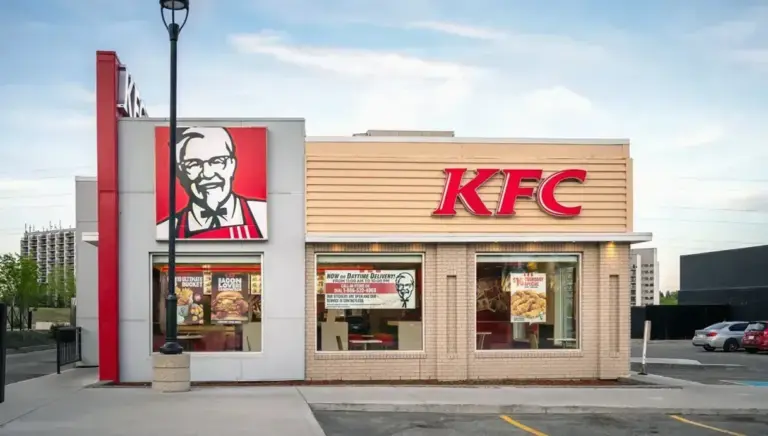
For nearly forty years, a bucket of KFC fried chicken has almost always been paired with a cold Pepsi. However, that long standing tradition is coming to an end as the fast food giant announces it will transition to Coca Cola products across its 3,700 U.S. locations. This shift marks the conclusion of a corporate marriage that dates back to 1986 when PepsiCo actually owned the chicken chain, maintaining the beverage tie even after spinning KFC off into Yum Brands decades later.

The rollout is scheduled to begin in January 2027, with the goal of having Coke fountains flowing in every American restaurant by that spring. According to KFC President Catherine Tan Gillespie, the decision is part of a larger strategy to modernize the brand and provide guests with fresh reasons to walk through their doors. She noted that bringing two original brands together would help create a more relevant experience for today’s diners while strengthening overall menu offerings.

Executives at Coca Cola are equally enthusiastic about the deal, suggesting that the partnership opens the door for innovative new food and drink combinations tailored specifically for KFC fans. Dagmar Boggs, who leads Coca Colas foodservice division, believes combining their diverse beverage portfolio with iconic fried chicken creates significant opportunities for growth and more memorable customer visits.

While this represents a loss for PepsiCo within the United States, it does not signal a total divorce from the brand globally. Reports indicate that PepsiCo has already renewed its agreements to remain the primary provider for Taco Bell and continues to serve as the official beverage partner for KFC outlets operating outside of America.

Netflix is undergoing a dramatic transformation at the top following a turbulent week that began with the announcement of layoffs affecting six percent of its workforce. In a sudden management shift on Thursday, the company revealed that Chief Content Officer Bela Bajaria is departing after a decade of service. Taking her place is Peter Rice, a seasoned veteran from Disney and Fox known for his operational scale and deep ties within the entertainment industry.

The departure marks the end of an era for Bajaria, who was pivotal in transforming Netflix into a global powerhouse through international expansion and a strategic pivot toward live events, including NFL and WWE broadcasts. Despite overseeing recent successes like KPop Demon Hunters, Bajaria’s tenure faced headwinds as investor patience wore thin over a perceived slowdown in massive hit releases and stagnant viewer growth. Industry analysts suggest that with Netflix stock plummeting forty percent over the last year, the board felt compelled to signal decisive action to shareholders.

Competition has intensified as free, ad-supported platforms like YouTube capture significantly more screen time than traditional paid streamers. This market shift, combined with Netflix’s decision to walk away from a potential acquisition of Warner Bros. Discovery due to cost concerns, has left the company searching for new ways to maintain its cultural dominance. Co-CEO Ted Sarandos acknowledged the volatility of the past year in a memo to employees but framed Rice’s appointment as an opportunity to revitalize the platform’s ability to create buzzy, high-impact hits specifically in North America.

Rice arrives with an extensive pedigree, having navigated Rupert Murdoch’s media empire for nearly thirty years and managed both television networks and prestige film divisions. His background suggests a possible refocusing of Netflix’s cinematic ambitions as the company attempts to right its ship financially while continuing to compete for global attention in an increasingly crowded digital landscape.

Elon Musk has once again blurred the line between automotive engineering and aerospace technology, unveiling a version of the long awaited Tesla Roadster that can actually take flight. During a livestreamed demonstration at a SpaceX facility in Waco, Texas, the vehicle performed a gravity defying stunt, launching from a curved ramp that sent it momentarily upside down before it flipped 180 degrees in midair to land perfectly on its wheels. Using ultra high pressure gas boosters rather than traditional wings, Musk declared that flying cars are now a reality, though he candidly admitted that success is not yet guaranteed.

The project serves as a tangible marriage between Tesla and SpaceX, utilizing propulsion and pressure vessel hardware developed by the rocket company to push the sports car into the sky. While the standard Roadster remains available for reservation with a five thousand dollar deposit, the full flight system will be restricted to an invitation only Rocket model. Production is slated for 2028, although Tesla has already noted on its website that the flying variant is not currently approved for public road use.

Despite the spectacle, the announcement has left regulators in a state of confusion regarding who actually oversees such a machine. The Federal Aviation Administration stated that the vehicle does not fit their definition of an aircraft, while officials at the Department of Transportation expressed skepticism about its practical takeoff capabilities. This leaves a significant legal gray area between highway safety standards and aviation law that Tesla will need to navigate before these cars leave the test track.

Wall Street analysts suggest that while the flying Roadster won’t significantly impact Tesla’s bottom line or overall revenue due to limited production numbers, it serves a larger strategic purpose. By showcasing this level of extreme engineering just ahead of third quarter earnings reports, Musk is reinforcing his brand’s image as an innovator at the absolute ceiling of technology. For now, the vehicle exists less as a mass transit solution and more as a high profile proof of concept for what happens when a car company and a rocket firm share a blueprint.

Global oil markets faced a volatile Friday as Brent crude touched the $110 mark for the first time since May, reacting to a wave of escalating conflicts across two different continents. Prices climbed sharply following reports of increased Iranian aggression in the Strait of Hormuz and persistent missile strikes launched by Houthi militants against Saudi Arabian targets. While Brent eventually settled slightly lower at $109.86, the overall trend remained bullish, with U.S. West Texas Intermediate closing above $101 per barrel after a massive weekly surge.

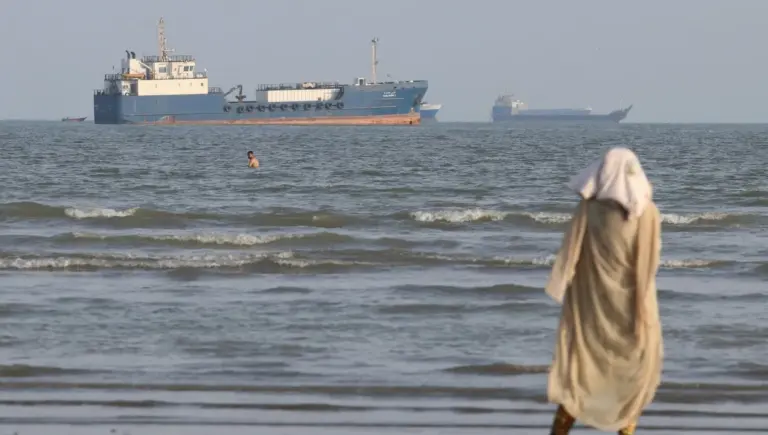
The situation in the Middle East has grown increasingly precarious, with Saudi Arabia intercepting multiple missiles aimed at key locations, including the vital Yanbu oil export terminal. Tensions peaked this week as Iran allied forces targeted administrative buildings belonging to Aramco and struck Riyadh’s international airport. Simultaneously, shipping lanes in the Strait of Hormuz became a primary battleground, where at least nine vessels have been attacked recently. The sinking of the container ship GFS Pride underscores the growing risk to global trade, leading to a significant drop in daily exports through the narrow waterway compared to previous months.

Adding to the instability is the collapse of a fragile energy ceasefire between Ukraine and Russia. After Moscow continued its campaign against Ukrainian infrastructure, President Volodymyr Zelenskyy announced that Kyiv would retaliate by resuming precision strikes on Russian refineries. This renewed hostilities comes at a time when diesel prices are already skyrocketing globally due to existing supply chain disruptions, leaving consumers facing costs significantly higher than they were just one year ago.

Domestic factors within the United States further fueled the price hike as hurricane activity disrupted production along the Gulf Coast. Data from the Energy Information Administration revealed a sharp decline in commercial inventories by more than eight million barrels during early October. Between these weather induced shortages and the geopolitical firestorm stretching from Eastern Europe to the Persian Gulf, traders are bracing for a prolonged period of extreme volatility in energy pricing.