Author

admin

Browsing

While early predictions for the 2026 season focused heavily on the Los Angeles Rams and Seattle Seahawks, the San Francisco 49ers have quietly reclaimed their spot as the team to beat. After a previous campaign marred by injuries, Kyle Shanahan has guided his squad to a perfect 5-0 start, establishing them as the new favorites in the eyes of oddsmakers. With a league-leading point differential and elite efficiency on both sides of the ball, San Francisco looks like a completed puzzle, blending high-level coaching with veteran brilliance.

The strength of this current iteration lies in the resurgence of established stars like Christian McCaffrey and Trent Williams, alongside an inspired performance from free agent addition Mike Evans. Even George Kittle has remained a focal point of the attack despite his history of major injuries. By sweeping their NFC West rivals early on, the 49ers have positioned themselves as the dominant force in football’s toughest division, leaving many analysts wondering if there is any team left capable of stopping their march toward a long-awaited championship.

In stark contrast, the Chicago Bears are struggling to find their identity while navigating a void at quarterback. The absence of Caleb Williams since Week 2 has turned promising momentum into a series of frustrating losses, including a recent blowout defeat at the hands of Green Bay. Without Williams under center, the offense has looked limited and prone to turnovers, leaving Chicago mired in the middle of a crowded NFC North standings battle further complicated by the suspension of star pass rusher Montez Sweat.

There is light at the end of the tunnel for Chicago fans, however, as Williams returned to practice this week following a hamstring injury and is expected to suit up against Atlanta in Week 6. While backups Case Keenum and Tyson Bagent managed to keep things moving, it is clear that Williams possesses the ceiling necessary to elevate this roster into true postseason contention. As he returns to action, the Bears hope to erase several hypotheticals and prove they belong among the league’s upper echelon.

Representative Byron Donalds has made his enthusiasm for the expansion of data centers a cornerstone of his bid for the Florida governorship. While some opponents have called for moratoriums on these massive facilities due to voter concerns, Donalds has remained steadfast, insisting that Florida remains wide open for development. He argues that the state possesses plenty of pristine land ready for use and dismisses calls for bans as mere political theater designed to play well on social media rather than serve economic interests.

This pro-tech stance extends beyond politics and into his personal life. His wife, Erika Donalds, has similarly championed artificial intelligence, suggesting that traditional teaching methods should evolve to incorporate AI tools despite resistance from veteran educators. Their shared belief in the digital frontier is mirrored in their finances, with recent congressional disclosures revealing nearly 400,000 dollars in stocks tied to the infrastructure of the AI boom. These holdings range from tech titans like Amazon and Microsoft to specialized construction firms operating right here in Florida.

To address potential conflicts of interest, Donalds maintains that he does not personally manage his trades. He asserts that a wealth management firm handles his portfolio independently and claims it would be unethical for him to direct specific trades. However, ethics experts argue that this defense doesn’t erase the inherent tension created when a lawmaker influences policy that could drive up the value of their own assets. This debate comes amid previous scrutiny regarding late financial disclosures and complaints involving the STOCK Act.

The connection between Donalds and the tech sector runs deep through both legislative action and campaign funding. From serving on a federal subcommittee focused on digital assets to aligning with allies who push for developer protections in Tallahassee, Donalds has positioned himself as the primary conduit for Silicon Valley in Florida. With millions in donations pouring in from tech developers, critics suggest that his vision for a digitally integrated Florida may be closely aligned with those providing the capital for its growth.

Tenet Healthcare has emerged as a standout performer in recent trading sessions, capturing the attention of analysts at Investor’s Business Daily. The company is currently riding a wave of positive momentum, characterized by a steady climb in share price that suggests growing confidence among traders. This upward trend reflects a broader shift toward healthcare assets as investors seek stability and growth in an unpredictable market environment.

The stock is rapidly approaching what technical analysts call a strategic buy point, a level where the risk to reward ratio becomes particularly attractive for those looking to enter a position. By maintaining this blue wave trajectory, Tenet is signaling strength relative to its peers, moving beyond previous resistance levels that had historically capped its gains. Many observers view this movement as part of a larger recovery pattern within the hospital management sector.

While the current surge provides plenty of optimism, seasoned investors remain cautious about timing their entries perfectly. The path toward the official buy point depends heavily on continued volume support and overall market sentiment remaining favorable toward large cap medical providers. If the shares can break through these final barriers with conviction, Tenet could establish a new baseline for long term growth.

As the company continues its ascent, industry watchers will be keeping a close eye on upcoming financial reports and operational updates to ensure the fundamental value matches the chart’s enthusiasm. For now, however, all eyes are on whether this bullish run can sustain itself long enough to trigger a widespread buying signal across institutional portfolios.

The high flying world of artificial intelligence is hitting a rough patch as investors begin to question whether the massive spending on infrastructure will actually yield proportional returns. This growing skepticism has triggered a significant sell off across the semiconductor industry, leaving some of the market most prized stocks in a precarious position. Despite the immense hype surrounding generative AI over the past year, traders seem to be shifting their focus toward tangible profits rather than future promises.

Even stellar performance from key players hasn’t been enough to stem the tide of losses. Taiwan Semiconductor Manufacturing recently posted a strong earnings report that should have bolstered confidence in the sector, yet the positive news failed to ignite a rally. Instead, the broader trend remained downward, suggesting that individual company success is currently being overshadowed by systemic worries about an investment bubble in the hardware space.

The scale of this downturn is becoming increasingly evident when looking at technical indicators like the Philadelphia semiconductor index. Known among traders as the SOX, the index is currently flirting with its longest losing streak since mid 2025. Seven consecutive days of declines signal more than just typical volatility; they suggest a deeper correction as the market attempts to find a sustainable price point for chips during what many call the AI supercycle.

As small cap stocks also struggle and inflation concerns linger, chip makers are finding themselves at the center of a larger economic tug war. For now, it appears that even the strongest balance sheets cannot protect these companies from a general retreat by investors who are suddenly wary of how much more capital can be poured into silicon before seeing a meaningful return on investment.

The euphoria surrounding the artificial intelligence gold rush hit a significant speed bump this week as investors began questioning whether the astronomical costs of building AI infrastructure can withstand rising borrowing costs. A sweeping global sell-off has wiped more than a trillion dollars in value from twenty of the world’s most prominent semiconductor and AI firms. Heavyweights like Nvidia and AMD saw their shares dip, while Dell Technologies took a sharper hit, sliding nearly seven percent amid growing anxiety that expensive capital is becoming a bottleneck for growth.

This volatility isn’t limited to Wall Street, as the contagion spread rapidly through Asian markets. South Korea’s chip giants SK Hynix and Samsung Electronics both suffered steep losses, and Japan’s SoftBank Group tumbled alongside several key semiconductor equipment suppliers. Even European stalwarts like ASML and Infineon felt the pressure. Much of this pessimism stems from recent U.S. inflation data, which suggests the Federal Reserve may keep interest rates high, thereby increasing the financial burden on companies attempting to scale up their data centers and hardware capabilities.

Beyond interest rates, long term supply concerns are beginning to cloud the horizon. There are emerging fears of a memory chip glut by 2029 as manufacturers race to expand capacity, coupled with reports of technological breakthroughs in China that could intensify competition in the RAM market. Industry leaders at Intel and Broadcom have explicitly warned that securing sustainable financing might eventually pose a greater threat to AI expansion than actual shortages of electricity or silicon chips themselves.

Despite the carnage, some analysts argue that this correction is merely a pricing adjustment rather than a collapse in utility. Dan Ives of Yorkville Ives noted that while climbing Treasury yields make project financing more expensive, they do not diminish the fundamental demand for AI computing power. He suggested that unless there is evidence of cancelled contracts or slashed spending from major cloud providers, this downturn represents a strategic buying opportunity for those who believe the AI revolution is still in its infancy.

Global oil markets are reeling after a series of violent escalations in the Middle East pushed Brent crude prices beyond the 104 dollar mark. Tensions spiked on Tuesday night when Houthi militias, aligned with Iran, launched a ballistic missile strike targeting the administrative headquarters of Saudi Aramco in Dhahran. While the Saudi Energy Ministry reported that the resulting fire was limited and no deaths occurred at the facility, the psychological impact on traders was immediate, sending prices leaping toward 107 dollars per barrel shortly after the blast.

The instability extended beyond land targets as maritime security in one of the world’s most vital chokepoints collapsed. A Singapore flagged container ship known as the GFS Pride was sunk in the Strait of Hormuz after being hit by an unidentified projectile. Although all twenty one crew members were rescued, a second vessel, the GFS Giselle, suffered hull damage in a separate attack the following day. The Maritime and Port Authority of Singapore has since condemned these actions as unprovoked breaches of international law, adding further volatility to an already fragile shipping environment.

These events come at a time when Saudi leadership had been attempting to project strength and stability. Just hours before the Aramco strike, Energy Minister Prince Abdulaziz bin Salman spoke at the WPC Energy Congress, describing Riyadh as the capital of energy security and urging a focus on resilience under pressure. However, those words did little to calm investors as Saudi forces responded with their own retaliatory strikes against Houthi controlled energy sites and ports in Yemen.

Industry experts now fear these disruptions could have long term consequences for global supply chains. The International Energy Agency has cautioned that continued attacks on Saudi infrastructure might derail current supply recoveries and lead to prolonged shortages in diesel markets through next year. In an effort to stave off more dramatic price hikes, reports suggest the Trump administration may look into easing sanctions on shadow fleet vessels carrying Russian oil to keep global volumes steady.

SSR Mining is significantly scaling up its presence in the American West through an all-cash acquisition of Roxmore Resources. The move focuses primarily on the Converse gold project, which sits just six kilometers away from the existing Marigold Complex along Nevada’s prolific Battle Mountain-Eureka Trend. By absorbing this neighboring asset, SSR Mining secures a massive resource consisting of millions of ounces of gold while cementing its position as the third largest gold producer currently operating within the United States.

Executive Chairman Rod Antal described the purchase as a compelling opportunity to secure a high quality resource at an attractive price point. Because the two sites are so close together, the company believes it can eliminate redundant administrative roles and overhead costs, leading to estimated savings of at least 200 million dollars over the life of the mine. This strategic alignment makes SSR Mining what leadership calls the natural acquirer for such a deposit, allowing them to leverage shared infrastructure and operational efficiencies across their Nevada holdings.

Looking ahead to production, the Converse project is expected to contribute between 150,000 and 170,000 ounces of gold per year starting around 2033. While initial construction is estimated to cost nearly 900 million dollars, those expenditures aren’t expected until the early 2030s. When combined with other major operations like Cripple Creek and Victor in Colorado, SSR Mining anticipates its total U.S. output will average up to 400,000 ounces annually over a decade starting in 2033, with some peak years potentially climbing even higher.

To fund this expansion without taking on new debt, SSR Mining is utilizing its own balance sheet, supported by recent divestments designed to shift its focus toward the Americas. Earlier this year, the firm generated substantial liquidity by selling most of its interest in Turkey’s Copler gold mine for 1.5 billion dollars. As part of this transition, non core exploration properties previously held by Roxmore will be spun off into a separate entity funded with 10 million dollars in cash and shared between both companies’ stakeholders.

Owning gold and silver has long been seen as a strategy for stability and wealth preservation, but actually using those assets to buy a cup of coffee or pay for groceries has traditionally been a cumbersome process. That changes today with the introduction of the OneGold Card. Developed by the vaulted metals platform in partnership with Mastercard, this new payment tool allows users to spend their precious metal holdings instantly at any retailer that accepts the network, effectively turning physical bullion into a liquid spending account.

The technology works by automating the liquidation process behind the scenes. When a user swipes their card or uses a digital wallet like Apple Pay or Google Pay, the platform calculates the necessary amount of gold or silver needed to cover the cost and converts that fraction of their holding into currency at current spot prices. This eliminates the old school headache of visiting coin shops, waiting for checks to clear, or dealing with slow bank transfers just to access one’s own investments.

To encourage adoption, OneGold is waiving selling fees on U.S. gold conversions used for these transactions, with a similar fee waiver extending to silver holders through late 2026. Ken Lewis, CEO of Bullion International Group, noted that this move essentially makes gold functional as money once again. By removing the barriers between storing value and spending it, the company aims to give investors the safety of physical ownership combined with the convenience of modern banking.

This launch coincides with a comprehensive overhaul of OneGold’s mobile app and website to streamline the user experience. Since its founding in 2018, OneGold has positioned itself as a middle ground between high-cost physical storage and abstract exchange traded funds. With over four million ounces of metal currently managed under insurance from Lloyd’s of London, the firm provides clients with audited ownership of physical assets stored in global vaults while now offering them unprecedented ease of access via their wallets.

Conservative Supreme Court Justice Neil Gorsuch has joined forces with liberal Justice Sonia Sotomayor to question the federal government’s prosecution of an illegal immigrant, marking the latest unlikely alliance between the two justices.

Gorsuch, appointed by President Donald Trump, and Sotomayor, appointed by former President Barack Obama, raised concerns about the government’s decision to prosecute a Mexican national twice for being found unlawfully in the United States — even after a federal court prohibited him from leaving the Eastern District of Oklahoma following his first conviction.

The unlikely pairing emerged Tuesday when the Supreme Court declined to hear an appeal from Jesus Herrera-Salazar, who argued that his second prosecution violated the Fifth Amendment’s protection against double jeopardy. Although the justices agreed the Court should not take up the case, Sotomayor issued a separate statement, joined by Gorsuch, warning of serious constitutional problems with the government’s actions.

GORSUCH SAYS IDEOLOGICAL DIVIDES ON SUPREME COURT COME DOWN TO ‘HOW YOU READ LAW,’ NOT POLITICS

“From the moment he was released from custody after serving his first term of imprisonment, Herrera-Salazar was presented with a Hobson’s choice,” Sotomayor wrote in the statement joined by Gorsuch. “In the Government’s eyes, whether Herrera-Salazar remained in the Eastern District of Oklahoma or left the United States, he would be breaking the law.”

The two justices questioned how the government could punish someone for remaining in the country after effectively prohibiting him from leaving, with the pair’s joint statement describing the situation as a “constitutional absurdity.”

Their agreement is particularly noteworthy given their differing judicial philosophies, but it is not the first time the pair has found common ground over constitutional protections against government action.

In November 2024, Sotomayor and Gorsuch jointly questioned whether homeowners should be compensated when police destroy private property while carrying out law enforcement operations. A few months later, they again joined forces to raise concerns about warrantless misdemeanor arrests. In both cases, as in the latest immigration dispute, the Court declined to hear the appeals, but the justices issued statements highlighting constitutional questions they believed deserved attention.

The pair’s latest expression of joint public concern came after Herrera-Salazar, a Mexican national previously removed from the United States, was indicted in 2020 for being found in the country following deportation, a violation of federal immigration law.

‘UNPRECEDENTED’: JUDGES REVEAL BEHIND-THE-SCENES COORDINATION ON TRUMP IMMIGRATION CASES

He pleaded guilty and served a prison sentence before being placed on supervised release, during which he was expressly prohibited from leaving the Eastern District of Oklahoma without authorization under the terms of his release.

While still under those restrictions, Herrera-Salazar was stopped by police in Heavener, Oklahoma, and subsequently charged again under the same federal immigration statute prohibiting previously deported individuals from being found unlawfully in the United States. A jury subsequently convicted Herrera-Salazar, resulting in another prison sentence and additional supervised release.

The second prosecution prompted Herrera-Salazar to challenge his conviction on double-jeopardy grounds, arguing that the government had effectively punished him twice for the same continuous period of unlawful presence.

The U.S. Court of Appeals for the 10th Circuit rejected that argument, concluding that the offense is completed when authorities discover a person’s unlawful presence and that a subsequent discovery can support a separate prosecution without requiring another illegal entry.

Sotomayor and Gorsuch questioned that reasoning, pointing to Supreme Court precedent establishing that prosecutors cannot evade double-jeopardy protections simply by dividing one continuous crime into separate periods. Their concern was not whether Herrera-Salazar had violated immigration law in the first place, but whether the government could repeatedly prosecute him for remaining in the United States without evidence of a separate unlawful reentry.

The justices also highlighted that Herrera-Salazar’s supervised-release conditions restricted him from leaving Oklahoma, meaning the government was effectively preventing him from ending the conduct for which it later prosecuted him again. Sotomayor warned that, under the government’s interpretation, prosecutors theoretically could have brought separate charges against Herrera-Salazar for each day he remained imprisoned following his first conviction.

The statement was issued despite the justices’ agreement with the Court’s decision not to review the case. Sotomayor explained that Herrera-Salazar had already been removed from the United States and expressed hope that the unusual circumstances surrounding his prosecution would not arise again.

SUPREME COURT KICKS OFF NEW TERM WITH FRESH QUESTIONS OVER ITS LEGITIMACY AND ITS FUTURE

Rather than dissenting from the Court’s refusal to hear the appeal, Sotomayor and Gorsuch used what is formally known as a statement “respecting the denial of certiorari” to publicly identify constitutional concerns and urge lower courts to avoid similar problems in future cases.

The unusual collaboration follows two earlier cases in which Sotomayor authored statements joined by Gorsuch after the Supreme Court declined review.

In November 2024, the pair raised concerns in Baker v. City of McKinney, a Texas case involving a homeowner whose property was extensively damaged during a police operation to apprehend an armed fugitive.

Police had used tear gas, explosives and an armored vehicle during the standoff, leaving the home severely damaged. Although the justices acknowledged that officers acted properly to protect public safety, they questioned whether the Constitution permits the government to impose the financial burden of such damage on an individual homeowner without compensation.

Meanwhile, in February 2025, Sotomayor and Gorsuch again joined forces, this time questioning whether the Fourth Amendment permitted police to make warrantless arrests for misdemeanors committed outside an officer’s presence that they did not personally witness.

That case involved a Florida man arrested for loitering and prowling after police responding to a report of suspicious activity encountered him walking through a residential neighborhood before dawn. A subsequent search uncovered stolen mail, leading to a federal criminal charge.

Fox News Digital reached out to the Supreme Court chambers for comment but did not hear back in time for publication.

The American military has largely operated on a familiar premise: combat the enemy overseas before the fight reaches home.

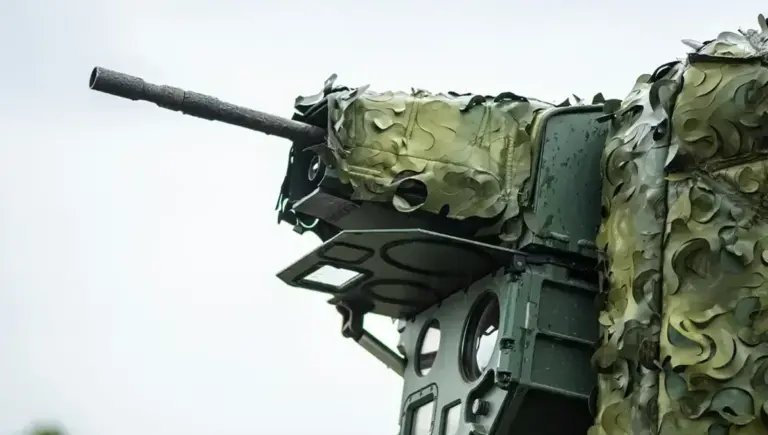
But as drones, cyberattacks and long-range weapons pose growing threats to U.S. military installations and critical infrastructure, Army leaders are preparing for a future in which American forces could come under attack before they ever deploy overseas.

“If we’re going against a pacing threat, power projection will be contested,” Gen. Christopher LaNeve, the Army’s acting chief of staff, told Fox News Digital on Wednesday.

He said the military is rethinking assumptions that were held during decades of fighting in Iraq and Afghanistan, when American forces could largely count on secure bases and supply lines at home.

FBI WARNS BATTLEFIELD-STYLE DRONE ATTACKS COULD REACH US: ‘ONLY A MATTER OF TIME’

“During the Global War on Terror, we took a lot of things for granted, because we could,” LaNeve said during a small-group roundtable at the Association of the United States Army’s annual conference in Washington this week.

In a potential conflict with China, disrupting American military bases, transportation networks and communications could delay U.S. forces from reaching the battlefield. The Pentagon’s latest report on China’s military capabilities warns that Beijing has positioned cyber capabilities inside U.S. critical infrastructure networks that could be used to disrupt American military mobilization during a conflict.

The concerns come as the Pentagon places renewed emphasis on homeland defense and military installations as they prepare to potentially confront threats closer to home. U.S. officials have previously confirmed drone incursions over installations — including Joint Base Langley-Eustis in Virginia and Picatinny Arsenal in New Jersey. Though those incidents have not been publicly attributed to China.

The warning of a future fight on American soil comes amid the How the Army Fights rollout. The new operational framework places greater emphasis on preparing American forces to deploy, communicate and sustain operations even when military bases, supply lines and communications networks are under attack.

The guidance places greater emphasis on the Army’s ability to deploy and sustain forces under threat, including when communications, supply lines and military infrastructure are disrupted.

US MILITARY BASES ARE ‘ILL-EQUIPPED’ TO STOP DRONE SWARMS, TOP COMMANDER REVEALS AFTER RUBIO’S UAP WARNING

LaNeve said the Army is using the framework to establish clearer priorities for how its formations train, fight and incorporate new technology.

“It was important to get this document out to provide a direction for our Army, a stake in the ground in where we’re moving,” LaNeve told Fox News Digital in an interview Wednesday.

The changes are being led by an Army leadership team serving in acting capacities following the departures of former Army Secretary Dan Driscoll and Chief of Staff Gen. Randy George. LaNeve remains the Senate-confirmed vice chief of staff.

LaNeve explained how the Army is preparing to keep fighting even when an adversary disrupts military communications.

“I think what you would see inside this command and control capability is the ability to operate disconnected and then reconnect when you have that capability, but to continue to be able to maneuver,” he said.

The Army is also rethinking how it protects military installations at home. LaNeve pointed to Joint Interagency Task Force 401, which is working with federal and local law enforcement to strengthen counter-drone defenses around military bases and critical infrastructure.

CARTELS USE DRONES TO SCOUT BORDER AGENTS AND MAP SMUGGLING ROUTES, EXPERT WARNS

Acting Army Secretary Adam Telle pointed to the southern border as an example of how soldiers are already confronting drone threats closer to home. He said soldiers are using the mission to test new counter-drone technology against real-world threats, gaining experience they can bring back to their units as the Army prepares for future conflicts.

The Army is also expanding its preparations for biological threats that could disrupt military operations. Officials announced this week that biological incidents will be incorporated into routine combat training as part of a broader effort to ensure soldiers can continue carrying out their missions through disease outbreaks or deliberate biological attacks.

During a separate panel Wednesday, Air Force Secretary Troy Meink warned that advances in surveillance technology could soon make it increasingly difficult for military forces to operate anywhere without being detected.

“We are rapidly heading to a point in time where, depending on what your signature is, how fast you’re moving, the enemy is going to have some sense to where you are no matter where you are on the planet,” Meink said.

He suggested that level of surveillance could emerge within five years, potentially sooner, as China and other adversaries expand their ability to track and target military assets.

Meink said the Pentagon is working to make its forces more survivable, including through autonomous systems capable of operating in dangerous environments where commanders might hesitate to send manned platforms.

War Secretary Pete Hegseth, speaking alongside Meink and the other service secretaries, criticized what he described as the Pentagon’s failure to keep pace with technological advances under the Biden administration.

“On hypersonics, they took a nap. On space, they took a nap. On weaponization of space, they took a nap. On drones, they took a nap,” Hegseth said.

LaNeve emphasized that despite the Army’s growing reliance on advanced technology, soldiers must still be able to carry out their missions when those systems are unavailable.

“Soldiers are our number one platform. It is the Army’s platform,” he told Fox News Digital.

The technology, he said, is intended to make troops more capable, but soldiers must remain grounded in the fundamental skills needed to fight without it.

This post appeared first on https://www.foxnews.com