Author

admin

Browsing

Investors are bracing for a volatile session this Wednesday as a flurry of economic data and corporate earnings reports threaten to shake up the current market trajectory. Analysts are keeping a close eye on several key catalysts that could dictate whether indices climb higher or retreat into a defensive crouch. From shifts in Federal Reserve sentiment to unexpected movements in treasury yields, the day promises plenty of action for both institutional traders and retail investors.

The primary focus remains centered on high growth tech stocks and their sensitivity to incoming inflation markers. As companies prepare to unveil their quarterly results, the street is looking for signs that artificial intelligence investments are finally translating into tangible revenue streams rather than just speculative hype. Any guidance suggesting a slowdown in spending could trigger a broader sell off across the Nasdaq, while positive surprises might fuel another leg of the rally.

Beyond the tech sector, commodity price swings and geopolitical tensions continue to add layers of uncertainty to the trading floor. Energy stocks are expected to react sharply to updated inventory levels, while global trade signals may impact multinational corporations with heavy overseas exposure. Traders will be scanning these indicators closely throughout the afternoon to determine where the safest harbors lie amid an increasingly unpredictable financial landscape.

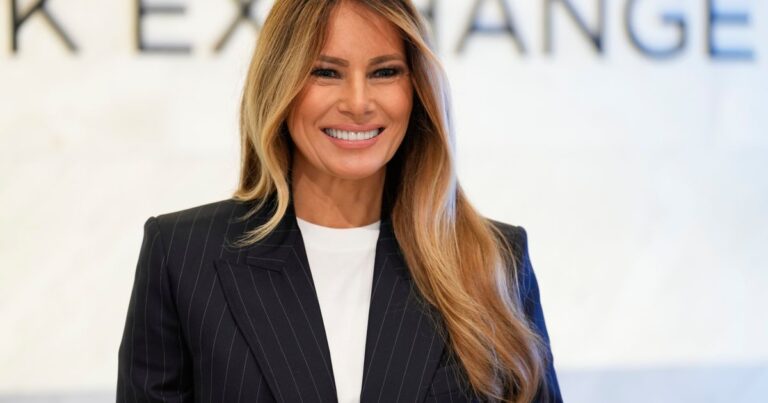
Melania Trump took center stage at the New York Stock Exchange on Wednesday morning, ringing the opening bell to mark the official launch of Imperia. The new initiative aims to empower women to secure greater economic influence and ascend into leadership roles across various industries. Comprised of a network of CEOs, founders, and entrepreneurs, Imperia represents a strategic shift for the first lady, moving beyond her previous focus on children to leverage her own business acumen in support of female financial independence.

Speaking to members of the group, Mrs. Trump emphasized that while previous generations fought simply for a seat at the table, the current mission is about ownership and creating opportunities for those who follow. She argued that true power comes from controlling equity, real estate, capital, and intellectual property. According to the first lady, many people still underestimate the scale of women’s impact on the global economy, asserting that women are not merely participants in the marketplace but serve as its very foundation and infrastructure.

The appearance coincided with a wider media push, including a rare interview on Fox & Friends where she addressed her evolving role in the public eye. Responding to suggestions that she has appeared less frequently than during her husband’s first term, she explained that her reduced visibility is a result of focusing more intensely on tangible outcomes behind the scenes. She pointed toward her involvement in preparing for Chinese President Xi Jinping’s state visit and her diplomatic efforts to reunite families separated by the conflict between Russia and Ukraine as evidence of her active workload.

Beyond her economic initiatives and humanitarian work, Mrs. Trump also teased upcoming creative projects. Following a previous documentary about her life around the time of Donald Trump’s second inauguration, she announced a new two-part docuseries arriving this fall. Describing it as a more intimate experience involving one-on-one conversations, she suggested that viewers can expect answers to private questions that have never been shared publicly before.

The stock market faced a challenging session on Wednesday as major indexes struggled to maintain momentum following a recent record high for the Nasdaq. Investors reacted cautiously to new economic data that came in hotter than expected, sparking fears that persistent inflation could complicate the broader financial outlook. While some sectors attempted to hold their ground, the overall mood turned bearish as traders weighed the implications of a resilient economy against potential interest rate pressures.

Small cap stocks bore the brunt of the downturn, leading the slide across various exchanges. This volatility was particularly evident in the technology sector, where several heavy hitters saw significant losses during midday trading. Alphabet emerged as one of the most notable decliners among big tech companies, signaling a shift in sentiment away from growth-oriented assets as investors shifted toward more defensive positions.

The semiconductor industry took an especially hard hit throughout the day. Chipmakers such as Micron Technology and Sandisk tumbled alongside Monolithic Power, dragging down expectations for a continued rally in hardware and AI infrastructure. This synchronized drop suggests that analysts may be recalibrating valuations for chip firms after an aggressive run upward, leaving many portfolios in the red as the live coverage continues into the afternoon.

The meteoric rise of ChatGPT has done more than just change how people write emails or brainstorm ideas; it has ignited a massive gold rush in the financial markets. By bringing generative AI into the mainstream, OpenAI sparked a wave of investor enthusiasm that propelled both the S&P 500 and the Nasdaq Composite to record heights. While retail investors cannot buy shares of OpenAI directly, they have pivoted toward the tech titans providing the backbone for this revolution. With the global generative AI market projected to skyrocket from roughly 161 billion dollars in 2026 to over 1.2 trillion dollars by 2034, the stakes for these companies have never been higher.

Among the heavy hitters leading the charge is Alphabet, whose Gemini model is now deeply woven into everything from Google Search to Pixel smartphones. The company isn’t just focusing on software, however, as it develops its own custom AI accelerator chips and leverages its DeepMind division for groundbreaking scientific research. Meanwhile, Microsoft has solidified its position as a primary gateway to AI through its multi-billion dollar partnership with OpenAI. By integrating Copilot across its ecosystem and scaling its proprietary MAI reasoning models, Microsoft has already seen tens of millions of paid users adopt its AI productivity tools.

Other industry leaders are carving out their own niches to ensure they aren’t left behind. Amazon has transformed its AWS cloud platform into a comprehensive hub for AI infrastructure and launched Alexa Plus to turn its home assistant into a truly conversational agent. Simultaneously, Meta Platforms is taking a different path by championing an open source philosophy. Through its Muse Spark model line, Meta is embedding advanced AI assistants across Facebook and Instagram, betting that widespread accessibility will drive long term dominance in the social media landscape. Together, these firms represent a diverse bet on a future where generative AI manages everything from corporate logistics to creative expression.

The scale of current investments in artificial intelligence has reached a fever pitch, with hyperscalers ramping up capital expenditures to historic levels. Recent data from Goldman Sachs highlights the intensity of this boom, noting that AI related issuers now make up a quarter of all new US investment grade corporate debt. For many of the world’s most creditworthy companies, spending has surged by at least thirty five percent annually for ten consecutive quarters. However, beneath these staggering numbers lies a growing tension between genuine structural demand and speculative fervor.

Lu Zhang, the founder and managing partner of Fusion Fund, suggests that the signal to noise ratio in the current market is dangerously low. While she acknowledges that big tech firms are determined to secure their computing power to avoid being left behind by competitors, she warns that much of the apparent demand may be illusory. Financial red flags have already begun to emerge, with giants like Microsoft, Alphabet, Amazon and Meta seeing capital spending grow significantly faster than their revenues. In some cases, free cash flow has plummeted or turned negative, leading critics to wonder if some of this growth is merely circular vendor financing rather than organic market expansion.

To cut through the hype, Zhang employs a rigorous three part test when evaluating AI ventures. Rather than focusing on model quality or massive spend totals, she looks for companies that possess curated industry specific data, optimized architectures that lower operational costs beyond mere training, and established partnerships with key industry players who control essential workflows. Without these pillars, Zhang argues that any perceived competitive advantage is likely temporary. She believes true durability is found not in headline revenue figures—which can be inflated in a seller’s market—but in actual budget allocations from non tech sectors like healthcare and insurance.

Beyond the balance sheets, Zhang identifies governance failures as one of the primary risks that could derail the AI thesis entirely. High profile security breaches and pauses in model development due to safety concerns illustrate how quickly regulatory or ethical lapses can freeze progress. As global powers discuss international safety standards and emergency hotlines to manage AI incidents, the industry faces a reckoning where technical capability must finally align with responsible oversight to ensure long term stability.

The precious metals market has entered a period of extraordinary volatility and growth, with gold, silver, and copper all hitting record highs throughout 2026. A cocktail of geopolitical instability, disrupted supply chains, and staggering government debt has driven investors toward hard assets for safety. Gold peaked at over 5,500 dollars per ounce in January, while silver soared past the 100 dollar mark. Even with the Federal Reserve raising interest rates to combat inflation—a move that typically hurts gold—the market has remained resilient thanks to aggressive purchasing from central banks, particularly in China.

Speaking at the Metals Investor Forum in Vancouver, Robert Sinn of Goldfinger Capital suggested that while these price surges are impressive, the real opportunity is just beginning to shift. According to Sinn, commodity cycles generally move through five distinct stages: starting with the raw metals themselves, then moving to major producers, then to developers, followed by exploration juniors, and finally ending in a state of speculative mania. While the giants like Newmont and Barrick have already filled their coffers with cash during the producer phase, Sinn believes we are now entering the fourth stage where capital begins to trickle down to smaller discovery plays.

This transition is becoming evident as major mining firms and institutional investors begin writing significant checks to junior miners with high quality assets. Recent examples include substantial financing rounds for companies like Snowline Gold and strategic investments from JPMorgan into Perpetua Resources. Furthermore, unlike previous cycles, current trends are being bolstered by unprecedented direct involvement from governments in the US, Canada, and Europe seeking to secure critical mineral supplies for national security reasons.

Crucially, Sinn argues that despite the record breaking prices, the market is far from a bubble. He noted that we have not yet seen the reckless behavior or fraudulent schemes that characterized historical crashes like those following Bre X or the Hunt brothers’ attempt to corner the silver market. Because the current rally is grounded in fundamental demand and corporate liquidity rather than blind speculation, Sinn believes there is still considerable upside ahead for investors targeting advanced junior explorers who possess assets that majors are eager to acquire.

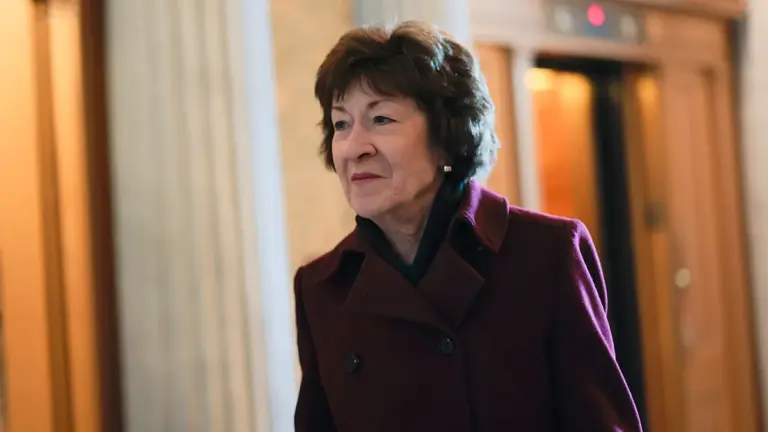
Maine Sen. Susan Collins, a Republican, is addressing claims she was caught up in an FBI bribery investigation, dismissing reporting on the story as the work of Democratic operatives and a known conman.

ProPublica reported that Martin Kao, a former defense contractor CEO and convicted fraudster, told the FBI his company funneled $150,000 through a shell company to a super PAC supporting Collins’ 2020 reelection as part of what he described as a broader pay-to-play operation involving political contributions and government contracts. His cooperation later helped open a new phase of the federal investigation that developed into a broader bribery probe.

Shortly after the story broke, Collins spoke up to dismiss Kao on the basis of his character and called into question the origins of the story. 

“I’ve got to say, I do not understand how anyone would take the word of a felon who’s been convicted twice — twice, two separate cases — of five counts of money laundering, counts of bank fraud, false submissions to the FEC. He is a convicted liar,” the senator told The Wall Street Journal’s Kim Strassel.

GOP SENATOR ALLEGES SCHUMER BEHIND ‘HIT JOB’ REPORT ON FORMER PATIENTS

In a separate interview with Punchbowl News, Collins blamed Democrats and Senate Minority Leader Chuck Schumer for the controversy, calling the report a “political hit job” and questioning its timing.

Collins is embroiled in a heated re-election campaign against Democrat Troy Jackson. Whether Collins keeps her seat could prove crucial to determining which party controls the Senate in 2027. Any hint of controversy for either candidate, naturally, is suited to become a national controversy.

FOX NEWS POLL: MAINE SENATE RACE IS TIGHT, WITH CONCERNS ABOUT BOTH CANDIDATES

Campaign finance records cited by ProPublica show that a shell company established by Kao made a donation to a super PAC supporting Collins’ 2020 re-election campaign. The outlet also obtained emails that it says show Scott Reed, head of the super PAC backing Collins that cycle, was aware of the fact that Kao had used a shell company to mask his illegal donation.

A 2019 email from a naval officer shows that the senator had advocated on behalf of Navatek, the contractor Kao was leading at the time. The email, however, was sent months before Kao routed his illegal donation to Collins’ super PAC. Federal contractors are barred from donating to political campaigns, which is why Kao resorted to a shell company.

FBI spokesman Ben Williamson told ProPublica the agency had investigated claims against Collins years ago “and ultimately found nothing implicating Senator Collins or Senator Collins’ campaign. Any suggestion otherwise is totally false.”

The FBI, however, did not respond to ProPublica’s questions about a new investigation it says was launched in 2024 after Kao spent years cooperating with federal agents and detailing his dealings with Collins and other lawmakers.

“The Biden-led Justice Department and FBI totally cleared my office, my campaign and me five years ago of these 7-year-old allegations,” Collins said, also not addressing the 2024 investigation directly.

GOP SENATOR ALLEGES SCHUMER BEHIND ‘HIT JOB’ REPORT ON FORMER PATIENTS

Kao had a clear incentive to cooperate with the FBI. He was facing years in prison and hoped that providing information would help reduce his sentence, although the judge ultimately gave him no leniency for his cooperation.

“This is a smear job. And as someone who has always prided herself on serving with integrity, it really offends me,” Collins said. “And I’m offended for my staff too, both on the campaign and in the personal office.”

Collins’ office did not return a request for comment when reached by Fox News Digital on Wednesday.

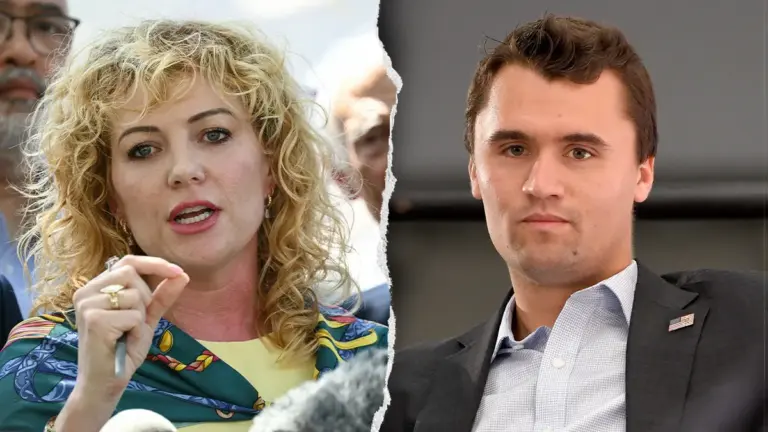
FIRST ON FOX: Kate Lincoln-Goldfinch, the lawyer representing an alleged illegal immigrant shot by Immigration and Customs Enforcement (ICE), is facing heat over a post critics say mocked the assassination of conservative commentator Charlie Kirk.

In a deleted post, re-surfaced in a screenshot from retired Air Force Lieutenant Colonel Larry Brock Jr., Lincoln-Goldfinch wrote, “How do you resist getting shot in the neck? Does Charlie Kirk have any advice on that?”

The post was quickly highlighted by conservatives on social media who made the argument that it questions Lincoln-Goldfinch’s credibility as she defends her client to the media and pushes back against the official story from federal law enforcement.

“Ladies and gentleman, the lawyer representing the Venezuelan illegal who was shot in Austin by DHS after a high-speed car chase, is exactly how you’d imagine her,” Charlie Kirk Show Executive Producer Andrew Kolvet posted on X.

DEM REACTIONS WITHIN MOMENTS OF AUSTIN ICE SHOOTING SPARK VIRAL OUTRAGE LOCALLY, ONLINE: ‘DISQUALIFYING’

“POS scum,” conservative influencer LibsofTikTok posted on X.

“She represents a man shot resisting federal officers, then jokes about Charlie Kirk catching one in the neck,” conservative influencer Gunther Eagleman posted on X, adding that the lawyer’s post was “sickening and pathetic.”

“That is not lawyering. That is cheering political violence. Remember her name. This is who they put on the case. America is done pretending these people are just professionals.”

KIRK FAMILY MAY HAVE PATH AROUND ARCHAIC LAW SHIELDING GOV’T IN POLICE CHIEF’S ALLEGED ‘GOT YOU COVERED’ TEXT

“Nasty woman,” Rep. Nancy Mace (R-SC) posted on X.

In a statement to Fox News Digital, Lincoln-Goldfinch publicly addressed the issue for the first time, saying, “A post referencing the death of Charlie Kirk was removed from our account. We recognized the post could be misconstrued and that’s why it came down. We have also addressed this issue internally.”

In a LinkedIn post last year, Lincoln-Goldfinch offered condolences to the Kirk family, pointing to “gun violence” as one of the main takeaways.

“My heart goes out to the family of Charlie Kirk,” she wrote. “Incidents like these are a painful reminder that none of us is truly safe from gun violence. We owe it to each other to process this event with compassion and seriousness, and also to approach solutions with equal seriousness.”

28-year-old Wilber Garces Perez was shot by ICE officers on Sunday, sparking protests across the city that resulted in arrests and injured police officers. The Department of Homeland Security says that Perez was an illegal alien who fled during a targeted vehicle stop.

“No amount of smears and false narratives will slow down ICE from doing its job to arrest illegal aliens from our communities,” the department said in an X thread outlining what it called misinformation about the shooting.

Lincoln-Goldfinch as pushed back on several of the government’s claims on social media, including that Perez is in the country illegally.

This post appeared first on https://www.foxnews.com

The Trump administration has backed away from a potential diesel export ban that was floated as a way to lower prices at the pump, a proposal economists warned could have ultimately driven up costs for American consumers and businesses.

The administration’s latest position marked something of an about-face after President Donald Trump told reporters Tuesday at the United Nations General Assembly in New York that he had urged aides to consider keeping more diesel at home. 

“I’ve said let’s not send out the diesel. We make a lot of diesel,” Trump said. “I’ve called for it within my people. I’ve been talking about it.” Alongside Trump, Treasury Secretary Scott Bessent said the administration was evaluating whether an export ban was “feasible in terms of the overall refining capacity” and whether “a full or partial ban would work.”

The White House did not respond to Fox News Digital’s request for comment.

Diesel and all major global crude prices have become an unexpected political headache ahead of November’s midterm elections as the war in Iran enters its eight month and shipping routes for oil remain significantly blocked or interrupted by conflict. 

The national average for diesel climbed to $6.53 per gallon for the week of Sept. 21, 2026, up from $3.75 during the comparable week a year prior, according to federal energy data.

Gasoline may get the headlines, but diesel is the workhorse fuel powering the trucks, farm equipment, freight trains and heavy machinery that keep the U.S. economy moving.

“The price of diesel touches everything within the transportation services category of the American economy. That means there will be an increase in your grocery prices, because everything that gets delivered to the grocery store will get that much more expensive with further rises in diesel prices,” Joe Brusuelas, principal and chief economist for RSM US LLP, told Fox News Digital.

Those higher fuel costs can ripple through supply chains, raising expenses for trucking companies — including those that carry most goods available to U.S. consumers — farmers tending to their fields and other businesses. Some of those raising diesel costs can ultimately reach consumers by the supply chain resulting in higher prices for groceries, packages delivered to their doorsteps, household goods and even new homes.

RECORD GAS PRICES SQUEEZE AMERICANS AS SUMMER TRAVEL SEASON ENDS, MIDTERMS LOOM AND IRAN WAR WAGES ON

Brusuelas warned that while restricting diesel exports could initially lower prices in some parts of the country, any relief could prove short-lived and trickle down to other areas of life.

“This is why this is one of those policies that sounds good on the surface but is significantly counterproductive, not just for overall inflation, but the balance sheets of American consumers and what they have to spend to maintain their livelihood,” he told Fox News Digital.

Brusuelas estimated that if a ban were to go into effect, consumers could begin seeing prices rise within four to six weeks.

WHY THE STRAIT OF HORMUZ MATTERS AS TRUMP ISSUES FRESH ULTIMATUM TO IRAN

The record price of fuel comes as the Iran war continues to disrupt shipping through the Strait of Hormuz, a key route for global oil and refined fuel that has become a chokepoint of where roughly 20% of the world’s petroleum and liquid fuel supply usually traverse.

Ukrainian strikes on Russian energy infrastructure have also disrupted refinery operations as Moscow already moved to restrict diesel exports, further tightening supplies. Additionally, Iran-backed Houthi’s advancing and attacking along Yemen’s coast has further restricted Middle East oil transport out of another key shipping route – the Bab al-Mandab Strait.

The U.S. shipped a record 1.6 million barrels of diesel overseas each day in August, up from roughly 1 million barrels per day in February, according to data from energy analytics firm Kpler.

Meanwhile, U.S. diesel supplies are nearly 13% below the average for this time of year, despite refineries operating at about 97% capacity.

FORGET GASOLINE: THIS OVERLOOKED FUEL COULD RAISE THE PRICE OF NEARLY EVERYTHING YOU BUY

Richard Stern, vice president of the Plymouth Institute for Free Enterprise, said the U.S. has already seen the consequences of restricting energy exports.

“We already tried fuel export bans in the ’70s, and it led to higher prices, starved our industries and aided our enemies. We should not repeat this disastrous policy,” Stern told Fox News Digital.

The U.S. imposed broad crude oil export restrictions in 1975. According to the institute’s analysis, gas prices more than doubled over the next six years, rising 50% faster than overall inflation. The report also says domestic oil production declined as reliance on foreign imports increased.

Stern said the history shows an export ban could create new problems without shielding Americans from global prices.

“Diesel and other fuels are part of a global market, and a U.S. export ban would simply redirect where fuel goes, not shield Americans from globally set prices,” Stern said. “Instead, the ban would force our allies to look to Russia and China for fuel and would ultimately interfere with the supply chains that feed American industry.”

THE SIMPLE FIXES CONSERVATIVES SAY COULD MAKE LIFE CHEAPER FOR AMERICANS

The ban could have initially pushed more diesel into the U.S. market and temporarily lowered prices, but analysts warn that relief could fade as refiners cut production and supplies tighten elsewhere.

Europe, which relies heavily on diesel from the U.S. Gulf Coast, could be forced to seek fuel from other suppliers, including Russia.

That could turn a proposal aimed at easing costs for Americans into a policy that raises prices, disrupts supply chains and complicates Trump’s pledge to make energy more affordable ahead of the midterm elections.

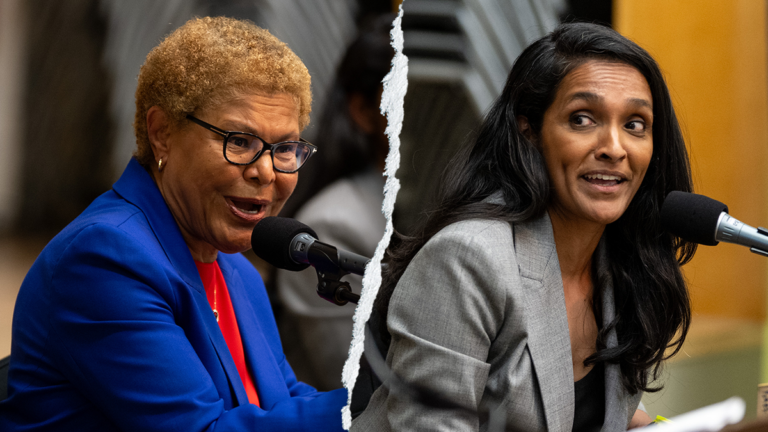
A new poll indicates socialist Los Angeles Council member Nithya Raman has opened up a double-digit lead over Democratic Mayor Karen Bass with six weeks to go until Election Day.

Raman, a member of the Democratic Socialists of America (DSA), stands at 39% support among likely Los Angeles voters in the race for mayor, with Bass at 28%, according to a University of California Berkeley Institute of Government Studies/Los Angeles Times poll released on Wednesday.

The survey, which found that a third of Los Angeles voters remained undecided, grabbed headlines less than two weeks before mail-in ballots are sent out in the Nov. 3 election.

“It’s extraordinarily unusual to see this many undecided voters at this point in the race,” poll director Mark DiCamillio said in a statement.

WATCH: RAMAN SAYS THE DSA WILL REMAIN A ‘PARTNER’ TO CITY HALL

The poll indicates many of the current undecided voters were backers of reality TV star and online influencer Spencer Pratt. The conservative-leaning candidate who ran for mayor as an independent was eliminated in the June primary, coming in third with 26% of the vote.

Bass and Raman, who finished first and second with 34% and 29% of the primary vote, advanced to the general election.

According to the poll, 63% of Pratt supporters remain undecided on whom they’ll back in the general election, with 22% favoring Bass and 16% supporting Raman.

FLASHBACK: DSA-MEMBER JUMPS INTO LA MAYORAL RACE

“I told everyone that if you don’t vote for me, Raman will beat Bass. That’s why she entered the race 10 minutes before the clerk’s office closed. She knew I was gonna destroy Bass 1-on-1. Good luck LA,” Pratt posted on social media, as he pointed to the poll’s findings.

And in a separate post he claimed, “Raman is Karen’s karma. Stabbed in the back by the commie she campaigned for, took pictures with her family… the moment Nithya saw an opening, she knifed Karen. Good lesson to all you democrats: NEVER trust the DSA. Socialists have no morals. They’ll gut you, too.”

Pratt’s post included a past video of Bass supporting Raman for her 2024 re-election to the city council.

CHECK OUT THE LATEST FOX NEWS POLLING IN THE MIDTERM ELECTIONS

The new poll indicates that Bass is being weighed down by a 63% unfavorable rating among LA voters, with just 28% holding a positive view of the mayor. By comparison, 40% held a favorable view of Raman, with 39% seeing her in an unfavorable light.

The survey also pointed to a large generational gap, with the 45-year-old Raman overwhelmingly winning voters 18 to 39, while Bass led among those 65 and older by 20 points.

Raman landed the endorsement of the DSA’s LA chapter earlier this month, and she’s also backed by some of the city’s local unions.

The mayor, a former state lawmaker who was later elected to the U.S. House, is supported by members of Congress and the state legislature as well as LA County officials.

The survey, which was conducted online, questioned 2,150 likely LA voters between Sept. 15 and 20. It had a margin of error of approximately 3 percentage points.

DEMOCRACY ’26: STAY UP TO DATE WITH THE FOX NEWS ELECTION HUB

Raman quickly highlighted the poll after its release.

“Big news! In the latest Berkeley/LA Times poll, we’ve surged ahead of Mayor Bass with an 11 point lead. This poll reflects the momentum we’re seeing on the ground. Angelenos are ready for change and want to see a City That Works. But we can’t take our foot off the gas!” Raman wrote on X.

Meanwhile, Bass took aim at the poll.

“One outlier poll which got the June primary wrong, means very little with 40 days to go,” the mayor argued in a social media post. “This is going to be a close race, and we’re in it to win. Let’s get to work!”

This post appeared first on https://www.foxnews.com