Author

admin

Browsing

In an era where artificial intelligence is reshaping every corner of the economy, one California homeowner is taking a massive gamble on the future of tech. Rather than asking for traditional currency, the owner of a luxury vacation property valued at 2.35 million dollars has listed the home for sale with a very specific requirement: they want pre-IPO AI stock in exchange for the deed. It is a move that turns the typical real estate transaction on its head, swapping tangible brick and mortar for the speculative promise of digital gold.

The unusual listing serves as a vivid illustration of the sheer scale of the current AI wealth boom. For some investors and employees within the tech sector, early access to shares in companies before they go public can lead to generational wealth almost overnight. By bypassing cash, this seller is essentially betting that these private shares will eventually dwarf the value of a multi-million dollar piece of coastal real estate, treating the home not as an asset to be preserved but as a chip to be played in a high-stakes game of venture capital.

While most people would hesitate to trade a guaranteed physical asset for paper promises, this deal highlights a growing appetite for risk among those captivated by the potential of generative AI. As firms continue to attract billions in funding and valuations soar into the stratosphere, the line between traditional investing and aggressive speculation continues to blur. Whether this particular swap ever closes remains to be seen, but it signals a cultural shift where some now view equity in an algorithm as more secure than land beneath their feet.

Lithium Argentina has solidified its financial footing after closing a 180 million dollar investment deal with Ganfeng Lithium. This strategic move arrives as an unsecured convertible note featuring a four percent annual coupon, allowing the Swiss-based miner to significantly clean up its books. By combining these new funds with available cash, the company plans to completely pay off 259 million dollars in existing convertible notes that were set to mature in early 2027.

Chief Executive Officer Sam Pigott noted that the infusion of capital combined with steady distributions from the Cauchari-Olaroz project creates a much healthier balance sheet. With lower net debt and a more favorable cost of capital, the company is better positioned for long term growth. For Ganfeng, the deal deepens an already close relationship; should the notes be fully converted into shares at twelve dollars and fifty cents each, the Chinese producer would see its ownership stake climb from roughly nine percent to over sixteen percent.

Beyond the immediate financial relief, this agreement paves the way for deeper operational integration between the two firms. They are currently working toward a joint venture involving the Pozuelos-Pastos Grandes project in Argentina’s Salta province, which they hope to finalize by late 2026. Meanwhile, their primary asset at Cauchari-Olaroz continues to show strength, maintaining high output levels despite scheduled maintenance shutdowns earlier this year.

Looking ahead, both partners are focusing on a massive stage two expansion aimed at adding another 45,000 tons of annual capacity. To achieve this, they are employing a modular direct lithium extraction approach using specialized equipment provided by Ganfeng. The project recently received approval from the Argentine government under a special incentive regime designed to provide fiscal stability and tax benefits for large scale investments, ensuring that the expansion can proceed with reduced regulatory risk.

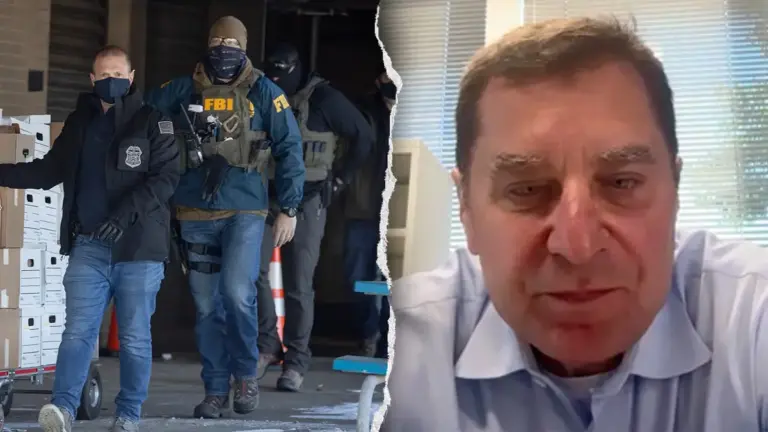
Criminals can turn stolen identities bought on the dark web into seemingly legitimate businesses — then use those companies to bill taxpayers for healthcare and other services that were never provided, according to a fraud expert who detailed the scheme to Fox News Digital.

The companies can hide in plain sight: Criminals create LLCs using information that may receive little scrutiny, pair them with stolen identities and submit fraudulent claims for everything from wheelchairs and diabetes treatments to childcare and autism services, according to Haywood Talcove, CEO of LexisNexis Risk Solutions Government.

But Talcove said the financial losses are only the beginning, warning the schemes can fuel “criminal enterprises.”

“They are using our money against us, whether it’s in social media campaigns, whether it is for human trafficking, drugs, disrupting our economy,” Talcove told Fox News Digital.

STOLEN IDS SOLD FOR ‘HAPPY MEAL’ PRICES FUEL BILLIONS IN US BENEFIT FRAUD

“When you think about fraud, don’t think about, ‘It’s great that we stopped a fraud ring that stole $5 million.’ Think about that as a criminal enterprise that goes beyond just stealing out of a benefit program.”

Despite fraud schemes surfacing nationwide, Talcove said Minnesota was “particularly egregious” because the state had little incentive to stop the fraud.

“Minnesota was particularly egregious once they started looking because it was really easy to find,” he said.

Talcove said one factor allowing the schemes to flourish in Minnesota and across the country is weak verification during the LLC registration process and reliance on “self-reported information.”

“In the case of Minnesota, you went and got your LLC, you opened up a childcare facility, and then the next thing you knew you were billing CMS [Centers for Medicare & Medicaid Services] for childcare or autism care, and nobody checked.”

The Trump administration launched an anti-fraud crackdown this year after Minnesota’s Feeding Our Future scandal, creating a task force led by Vice President JD Vance. The scheme allegedly stole $250 million from a federally funded child nutrition program during the pandemic, and many of those charged have since been convicted or sentenced to prison.

Without third-party audits, Talcove said many criminals slip through the cracks, racking up millions before they’re caught.

“One of the fundamental problems with these programs that are literally spending trillions of taxpayer dollars, they have nobody doing investigations or such a small, tiny amount of people that it’s not even possible to investigate,” he said.

FRAUD EXPERT WARNS AI IS HELPING CRIMINALS OUTPACE THE GOVERNMENT: ‘DON’T HAVE THE RIGHT TOOLS’

But Talcove said when these schemes are investigated, they expose much more than fraud.

“They’re not just involved in stealing Medicare, Medicaid, or food stamps, or unemployment insurance,” he said. “They have other interests.”

Talcove alleged some criminals use stolen funds to finance sex trafficking by bringing women from other countries and “renting them out” across the U.S., all while profiting from their “ill-gotten gains.”

“What they have to look for is beyond the fraud that they found to see if they’re involved in drugs, human trafficking, threats to our democracy, weapons,” he said.

Calling the fraud a “national security issue,” Talcove said some investigations have uncovered criminal groups involved in benefit fraud, including foreign cybercrime organizations such as APT41, a Chinese-linked hacking group.

“When you start looking at the criminal groups that are involved, APT41 and some of their peers and associates, as well as some of the other groups from North Korea and other countries, it is, right now, a national security issue,” he said.

FBI LAUNCHES ‘MOST WANTED FRAUDSTERS’ LIST AS DOJ CHARGES OHIO DEFENDANTS IN $30M MEDICAID SCHEME FOR KIDS

However, not all the money is sent to “overseas criminal organizations,” according to Talcove.

“Now, some of it, granted, is being used for luxury goods, homes, cars, vacations, but a lot of it is just going right back to the transnational location that it came from,” he said.

Talcove warned that unless investigators dig deeper, fraudsters will continue to exploit the system.

“They tend to get away with it because the investigation stops once you find the fraud,” he said.

Turning to the government’s role, Talcove said Democrats and Republicans must work together to tackle the nation’s growing debt, starting with stronger efforts to combat fraud.

“My hope is the fiscal situation that we’re currently in, driven by what’s going on with the bond market, is going to force elected leaders at the state and federal level to start paying attention,” he said.


FIRST ON FOX: Anxieties over data centers have cranked up considerably, and one Senate Republican wants to close a tax loophole that he argues tech giants are using as “corporate welfare” to build facilities throughout the country.

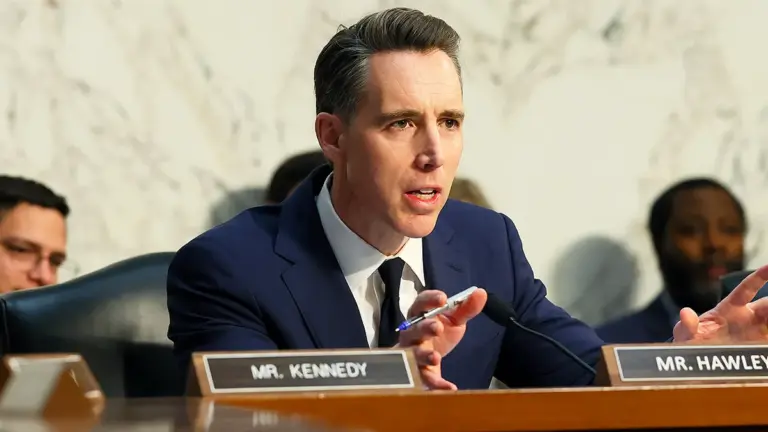
Sen. Josh Hawley, R-Mo., plans on introducing legislation that would tie up a tax loophole for data centers first unleashed by Republicans in 2017 that he charged has been exploited by tech companies to build their sprawling data center facilities. 

It comes as the GOP wrestles with how to handle the data center and AI issue, which has become a major political wedge on the campaign trail, one President Donald Trump has called a “hoax.”

‘WHY WOULD HE DO THIS TO US?’: ONE CRUCIAL TRUMP DECISION IS HURTING HIS BASE, REPUBLICANS WARN

That loophole, Hawley told Fox News Digital in an interview, is for Opportunity Zones, which he said are generally meant for “for low-income areas, low-income housing, low-income businesses or businesses in low-income areas.”

“These data centers have figured out a way that they think that they can access all of this money,” Hawley said. “So, let’s be clear. This is a form of corporate welfare. They don’t need any welfare. These people are rich. They can pay their own way.”

The tax breaks were first approved by Congress as part of Trump’s first-term tax cuts package, the Tax Cuts and Jobs Act of 2017. That initial bite at the apple established them as a means to spur investment into lower income or forgotten areas where tracts of land were dubbed Opportunity Zones.

AI’S MASSIVE APPETITE FOR POWER, WATER IGNITES FIGHT IN HIGH-STAKES TEXAS SENATE RACE

They were then made permanent last year through the “big, beautiful bill,” and though not explicitly intended to be used for data centers, have since provided a route for tech companies to defer, reduce or outright eliminate corporate gains taxes on their investments in the zones.

Since both tax packages were passed, 8,746 Opportunity Zones have cropped up in the U.S., according to the Department of Housing and Urban Development, just under half of all zones are in rural areas, where tech goliaths have set their sights on building data centers.

And, according to a report from the National Community Reinvestment Coalition, 14% of all data centers are in Opportunity Zones, while just over 17% of all permitted, approved and under construction data center projects are in the zones.

Hawley’s forthcoming bill would explicitly exclude data centers from being able to access the tax cuts, adding another barrier at the federal level in an attempt to try and slow their rapid development.

And it comes as Congress scrambles to answer the growing fears over unfettered AI development, which data centers play a key role in.

A SOUTHERN STATE JUST TOOK THE TOP SPOT IN ONE OF THE WORLD’S FASTEST-GROWING INDUSTRIES

Concerns have rippled through the halls of the Capitol since its return this week after a call from major players in the AI industry to slow development, which came after engineers at Anthropic revealed on X that there was a roughly 10% chance that AI could wipe out humanity within a decade. The topic of reining in the technology is not new.

Three years ago, Senate Minority Leader Chuck Schumer, D-N.Y., convened several panels with tech CEOs, including one with Tesla CEO Elon Musk and Meta CEO Mark Zuckerberg, to hash out what AI legislation could look like in Congress.

Since then, there has been little to no legislative action taken.

Hawley argued that Congress needs to at least put guardrails on AI and give people the opportunity to sue tech companies if their data and personal information has been used without their consent.

When asked why no real action had happened since Schumer’s series of AI summits, Hawley contended it was “because all the tech CEOs then promptly gave Schumer and the Democrats gobs and gobs money, and they decided that, you know what, maybe this industry is going fine.”

“And now what you see the same tech CEOs saying is they want an antitrust exemption so they can all talk together and work together,” Hawley said. ‘Any regulations, they want to write them themselves. And they’re out there saying, ‘The sky is falling, the sky is falling. You need to let us get together, write the regulations and figure out what we’re going to do.’ I’m pretty skeptical of that, I have to say.”

This post appeared first on https://www.foxnews.com

The U.S. accused Russian intelligence operatives of orchestrating a murder-for-hire plot targeting a Kremlin critic believed to be living in Washington, D.C.

In documents unsealed on Tuesday, federal prosecutors claim the conspiracy was part of a broader global network that recruited people to carry out assassinations and terrorist attacks on behalf of Moscow. The five men charged in the incitement allegedly worked for Russia’s intelligence services, and are accused of being paid and attempting to pay others in the U.S. and abroad to surveil and kill Russian dissidents.

Three of the defendants also face conspiracy to commit murder-for-hire charges. All five defendants remain at large, according to the Justice Department.

According to prosecutors, the alleged operation reached the nation’s capital in late August, when suspected Russian intelligence operatives directed a U.S.-based Venezuelan citizen to secretly film two Washington-area locations tied to a Kremlin critic before allegedly offering him $40,000 to carry out the killing. The recruit completed the surveillance but refused to commit the murder himself, according to the indictment.

Prosecutors allege the five defendants were members or associates of a Russian intelligence-directed network that financed terrorism and coordinated violent operations across multiple countries.

The recruiter walked the operative through the surveillance step by step, prosecutors say, and allegedly instructed him to put his phone in airplane mode, begin recording before entering the neighborhood, slow as he passed the target’s home and delete the messages afterward.

The indictment says the conspirators used coded language, referring to the assassination as “construction” and the surveillance as “measuring a plot of land.” When the recruit declined to carry out the murder himself, prosecutors allege the network sought other U.S.-based recruits while noting it also had “people in Mexico” available for the job.

RUSSIA’S SHADOW WAR IS PUTTING EUROPE ON EDGE AS GERMANY CONFRONTS A GROWING THREAT

In addition to the alleged murder plot in Washington, the indictment accuses members of the network of supporting attacks on civilian and military infrastructure in Europe and carrying out surveillance of Russian dissidents abroad.

The case marks one of the most serious publicly alleged Russian intelligence operations targeting an individual inside the U.S. in recent years.

The indictment names five alleged members of what prosecutors call the Russian Intelligence Services Network (RIS). They are Yuri Khrameev, a former Russian intelligence colonel known as “Colonel Yuri”; his son, Kirill Khrameev, an officer in Russia’s Federal Security Service (FSB); Oemis Romagoza Durruthy, a Cuban national living in Russia whom prosecutors describe as coordinating attacks for the network; Yaidel Delgado Suarez, known as “Viking,” and Angel Eduardo Castro.

Russia has repeatedly been accused by Western governments of targeting political opponents and defectors abroad.

Among the highest-profile cases was the 2018 poisoning of former Russian intelligence officer Sergei Skripal and his daughter in Salisbury, England, with the military-grade nerve agent Novichok. British authorities blamed Russian military intelligence for the attack, an allegation Moscow denied.

U.S. officials have also accused Russia of orchestrating killings of Kremlin critics overseas and conducting covert influence and espionage operations inside the United States, though prosecutors say the alleged Washington murder plot represents a rare instance in which Russian operatives sought to recruit someone on U.S. soil to carry out an assassination.

RUSSIA UNLEASHES NEARLY 600 MISSILES AND DRONES ON KYIV IN DEADLIEST STRIKE SINCE MAY

Prosecutors say the alleged Washington murder plot was part of a much broader Russian intelligence campaign that has operated since at least 2024. According to the indictment, the same network recruited a U.S. citizen in Lithuania to surveil another Kremlin critic before allegedly offering about $25,000 to kill him.

After that recruit refused, prosecutors say the network shifted to soliciting sabotage attacks against infrastructure in countries supporting Ukraine, including alleged plots targeting electrical substations , warehouses and transportation hubs.

The indictment comes as Western governments have warned that Russia has expanded its use of covert operations, sabotage and assassination plots beyond the battlefield since its full-scale invasion of Ukraine in 2022.

U.S. prosecutors allege the network shifted its focus from targeting Russian dissidents and defectors to attacking countries “aligned, or perceived to be aligned, with Ukraine.”

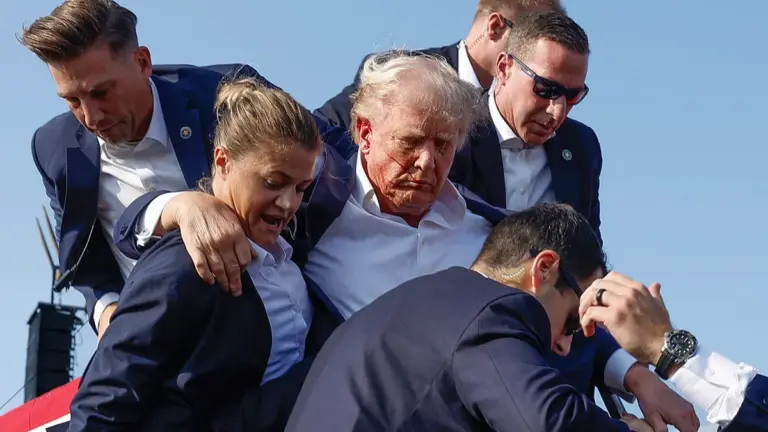
Republican lawmakers were apparently blindsided this week by new documents about Thomas Matthew Crooks, the 20-year-old who attempted to assassinate President Donald Trump and was subsequently shot dead.

Crooks opened fire on Trump during a campaign rally in Butler, Pa., in July 2024. A bullet grazed the then-candidate’s ear, while a rally attendee was killed as he attempted to shield his family.

“During our piece that we were working on, none of the federal agencies were working with us at all. They were going to work on their own, and they told us, ‘We’re going to do ours, and then we’ll get back to you.’ So this is two years later. Nobody’s gotten back to us,” Rep. Mike Kelly, R-Pa., who chaired a bipartisan House task force aimed at investigating the shooting, told Fox News. 

“That’s under the former administration. So everything that’s under the executive branch at that time, under the Biden administration, we had no access to information at that time,” he said.

Kelly also said the House task force’s Dec. 10, 2024, report was written largely with input from local authorities and little from the federal level.

COLE ALLEN CLUES PILE UP AS THOMAS CROOKS’ SECRETS DIED WITH HIM — EXPERTS CITE EVIDENCE GAPS IN TRUMP ATTACKS

“It’s awfully strange that all the questions we asked, ‘We’ll have to get back to you on that.’ And we have very limited time, as you know, to actually get to what we wanted to. So when we finished our report, it was basically based on everything that we could gather from local law enforcement, hardly anything from the feds at that time,” Kelly said.

Fox News Digital reviewed the documents in question and found that Crooks’ father, Matthew Crooks, had searched for ways to prevent his son from accessing firearms in May 2024, roughly two months before he clambered up a rooftop in his attempt to assassinate Trump.

A source familiar with the task force’s work told Fox News Digital that the May 2024 search by Matthew Crooks was not known to House lawmakers during their investigation.

TWO YEARS AFTER BUTLER, THREATS AGAINST TRUMP KEEP ASSASSINATION ATTEMPT IN SHARP FOCUS

“The Task Force report corroborates that Matthew Crooks handed Thomas Crooks the rifle used in the assassination attempt on July 13, 2024,” the source said.

Kelly’s spokesman told Fox News Digital that his office was not aware of federal authorities interviewing Crooks’ family.

3 SECRET SERVICE OFFICIALS UNDER INTERNAL INVESTIGATION FOR POTENTIAL MISCONDUCT

The records were obtained by Senate Judiciary Chair Chuck Grassley, R-Iowa, as part of his ongoing inquiry into the Butler assassination attempt. So far, the records turned over to the Senate show Thomas’ actions were a surprise to his family, and his motive is still a mystery.

Members of the Senate Judiciary Committee told Fox News Digital that they had yet to see the FBI documents, but argued that it was reason enough that the full details of that day in July 2024 needed to be brought to light.

Sen. Josh Hawley, R-Mo., a member of the panel, told Fox News Digital that the documents dump is “something that should have happened,” but there was still “so much that we don’t know about what happened.”

“I think we have got to, I’ve been saying forever now, we have got to have a full accounting of everything that happened on that day, all of the failures, law enforcement failures that occurred,” Hawley said.

I WAS AT BUTLER TWO YEARS AGO WHEN AMERICA SAW WHAT COURAGE LOOKS LIKE

When asked about Crooks’ father trying to stop him from getting access to guns, Hawley said, “This gets back to if this guy was out there, if he was, if he was displaying erratic behavior, was that reported?”

He recalled being on the ground days after the attempt. Hawley described how easily he could’ve gotten onto the rooftop from where Crooks fired off rounds toward the stage and charged that there was “no coordination” among the several local and federal law enforcement agencies present that day.

“I mean, this is just wild. And I still don’t think we’ve gotten a full accounting,” Hawley said. “Pretty much everything we know about this is from whistleblowers. You know, we need a full accounting of what really happened on that day.”

“Listen, otherwise, we run the risk of things like this happening again. And we run the risk of it turning into a, you know, JFK situation where, all of these years later, we still don’t really know what happened,” he continued. “We owe it to the American people to figure out what exactly happened and what we need to fix. Clearly, there were massive failures.”

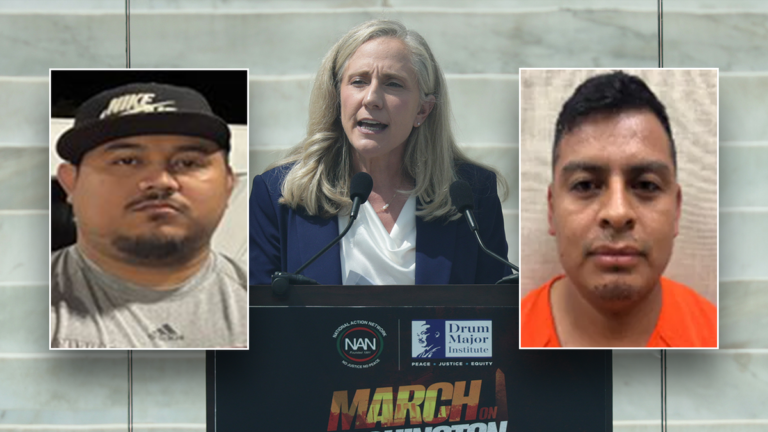
Anger is boiling over at Virginia Democratic Gov. Abigail Spanberger and sanctuary-friendly politicians over “out of control” killings in the state after U.S. Immigration and Customs Enforcement (ICE) asked the state not to allow the release of yet another illegal immigrant charged with carrying out a stabbing spree.

ICE sent a request to Spanberger and “her fellow sanctuary politicians” not to release Mexican illegal immigrant Freddi Chigo Mil following his arrest for allegedly stabbing two women on the streets of Staunton, Virginia, according to the Department of Homeland Security. Police responding to the incident found Mil at the scene along with two stabbed women, one of whom was pronounced dead while the other was transported to a local hospital.

Mil is charged with second-degree murder and aggravated malicious wounding causing permanent impairment, according to Middle River Regional Jail records. The same day, ICE arrested Salvadoran illegal immigrant Yinmi Molina-Zepeda in Woodbridge, Virginia, after it was discovered that he is wanted in his home country for aggravated homicide and other crimes.

Commenting on the growing list of illegal immigrants accused of violent crimes in Virginia, Homeland Security Secretary Markwayne Mullin remarked that “this is what the Commonwealth of Virginia has become under the sanctuary policies of Gov. Abigail Spanberger and her fellow sanctuary politicians.”

‘ALIEN HARBORING’ ACCUSATIONS FLY AS DC-AREA COUNTY SPENDS TAXPAYER FUNDS TO BLUNT ICE

Regarding Mil, Mullin said, “this illegal alien from Mexico has been charged with murder after a stabbing spree that killed one woman and injured another.”

He explained that “ICE has lodged a detainer asking Gov. Spanberger to cooperate with us and commit to not releasing this criminal from jail, so that he can be removed from our country once he faces justice.”

“It’s time to put an end to these preventable tragedies,” he continued, adding, “Deporting illegal aliens saves lives.”

Jennifer Harrison, executive director of the victim advocacy organization Victims’ Rights Reform Council, told Fox News Digital that “everything is out of control in these upside-down jurisdictions run by politicians like Spanberger who call themselves ‘moderate Democrats’ while implementing policies that put criminals ahead of victims and public safety.”

Harrison posed the question: “How much blood has to be spilled in our streets before elected officials wake up and change course?”

“We have reached a point where the federal government has to ask state and local officials not to release dangerous illegal immigrants back into American communities. Think about how insane that is,” Harrison continued.

“These are people who should not be in this country to begin with, and yet after they are accused of committing serious crimes here, when they have dead bodies in front of them, we are still having a debate over whether they should be released back onto our streets.”

SPANBERGER’S ICE RESTRICTIONS DEALT MAJOR SETBACK AS JUDGE WARNS OTHER BLUE STATES

In a news release, DHS pointed to 22 cases of violent crime involving illegal immigrants in Virginia this year. Charges filed against illegal immigrants in Virginia this year include child pornography offenses, sex offenses against children, attempted disarming of a law enforcement officer, murder, aggravated sexual battery, rape, abduction and other serious crimes.

A spokesperson for Spanberger’s office responded by telling Fox News Digital that the governor “strongly believes violent criminals who are in the United States illegally should be prosecuted to the fullest extent of the law and deported.”

The spokesperson said that “under Gov. Spanberger’s leadership, the Virginia Department of Corrections continues the long-standing practice of notifying ICE when individuals born outside of the United States are in state custody” and that “Virginia state law enforcement agencies also continue to participate in task forces and interagency cooperation with federal agencies.”

They added that “As a former federal law enforcement officer who went after child predators, Gov. Spanberger will always prioritize the safety and well-being of Virginia families.”

Fox News Digital also reached out to the Middle River Regional Jail for comment.

Sean Kennedy, president of Virginians for Safe Communities, told Fox News Digital, “Spanberger’s actions are not pro-immigrant. They are pro-criminal.”

“By shielding dangerous offenders from removal precisely because they are foreign nationals, she is loosing predators onto our streets. In fact, these predators overwhelmingly prey on other innocent immigrants, the ones she claims to be helping,” said Kennedy.

WATCH: ‘LIFELONG DEMOCRAT’ ADMITS SHE IS ‘ASHAMED’ OF PARTY AFTER SON KILLED IN ILLEGAL IMMIGRANT CRASH

He accused Spanberger of shielding illegal immigrant criminals from consequences “by blocking ICE at every turn,” saying, “Victims’ faces should haunt the governor when she looks in the mirror.”

“Every murder, rape, and robbery by an illegal alien was preventable if they had never been allowed in and let stay here,” he emphasized, concluding, “They didn’t have to die. She only had to follow the law, not her agenda.”

Colorado continues to hold a steady presence among the nation’s most affluent, though the barrier to entry for this year’s Forbes 400 has become significantly steeper. A massive surge in technology fortunes, particularly within the realms of artificial intelligence and semiconductors, pushed the collective wealth of the top 400 Americans up to 8 trillion dollars. This inflation meant that even several hundred billionaires were left off the list, including Fort Collins resident Patricia Stryker. As the founder of the Bohemian Foundation and heir to a medical equipment empire, Stryker was previously Colorado’s sole female representative on the list with a net worth of 4.1 billion dollars.

Despite that loss, Philip Anschutz maintains his position as the state’s wealthiest individual with an estimated net worth of 19.3 billion dollars. His portfolio is a sprawling mix of old-world infrastructure and modern entertainment, ranging from historic railroads and fiber optics to global arenas and sports franchises like Major League Soccer and the LA Kings. Locally, his influence remains strong through ownership of The Gazette and The Broadmoor Hotel. Much of his recent growth comes from the skyrocketing value of sports teams and entertainment venues, seeing his personal wealth jump by 78 percent since last year.

Other members of the local elite have experienced more volatile trajectories. Charlie Ergen, the head of EchoStar, saw his fortune plummet from peak highs in 2017 due to a costly struggle to build a national cellular network. However, strategic dealings involving AT&T and Elon Musk’s SpaceX helped stabilize his standing, leaving him with roughly 12.8 billion dollars. Meanwhile, Mark Stevens has seen a meteoric rise thanks to early investments in Nvidia during the AI boom. Now based in Steamboat Springs, Stevens has used some of his increased windfall to invest locally by purchasing apartment complexes and lowering rents for valley workers.

Rounding out Colorado’s quartet is John Malone, often called the cable cowboy for his mastery of financial engineering in telecom and media. Although he stepped down as chairman of Liberty Media earlier this year, Malone remains a powerhouse with 11.4 billion dollars to his name. Beyond his corporate legacy in cable broadband, Malone has shifted much of his focus toward environmental stewardship, establishing himself as one of the largest private landowners in the entire United States through extensive conservation efforts across various states.

The Federal Reserve has voted unanimously to raise interest rates for the first time since July 2023, marking a decisive opening move for Chair Kevin Warsh. In a 12-0 decision, the open market committee increased the benchmark rate by a quarter-percentage point to a new range of 3.75 percent to 4 percent. Speaking at a press conference following the announcement, Warsh was blunt about the necessity of the move, stating that inflation is simply too high and has remained so for far too long. He noted that recent readings from over the summer suggest underlying inflationary trends have not meaningfully improved, forcing the Fed to prioritize price stability.

The timing of the hike places Warsh in a precarious political position, as he was appointed by Donald Trump with the general expectation that he would pursue rate cuts. Trump has previously expressed approval of certain inflationary pressures and pushed for lower borrowing costs, creating a looming clash between the White House and the central bank. When questioned about these external pressures and Trump’s specific demands, Warsh defended the institution’s autonomy, asserting that the Fed stays in its own lane and bases decisions solely on economic assessments rather than political influence or market volatility.

Wall Street reacted sharply to the news and Warsh’s hawkish tone. Major indices slid lower toward the end of the session, with the Dow tumbling by 850 points while both the S&P 500 and Nasdaq saw declines. Treasury yields shifted as investors recalibrated their expectations for future policy, and the US dollar index climbed slightly. Analysts suggest this could be just the beginning of a tightening cycle, with some economists predicting additional hikes later this year due to persistent energy prices and geopolitical instability involving Iran.

Political reactions were split along party lines almost immediately after the announcement. Representative Jason Smith of Missouri criticized the move as harmful to working families and small businesses who are already struggling with high borrowing costs. Conversely, Democratic Representative Brendan Boyle argued that the rate hike was inevitable given how tariffs and foreign conflicts have driven prices upward. As analysts warn that Warsh may now face public criticism similar to that experienced by his predecessor Jerome Powell, all eyes remain on how Donald Trump will respond to his nominee’s first major act of defiance against his preferred economic agenda.

The tech heavy Nasdaq managed to hold onto its gains today despite a fresh move by the Federal Reserve to tighten monetary policy. In a decision that many investors had already priced into their expectations, the central bank raised interest rates by a quarter point, seeking to balance inflation control with economic stability. While rate hikes typically put pressure on growth stocks due to higher borrowing costs, the market seemed more focused on the underlying health of the economy than the incremental increase itself.

Trading activity remained brisk throughout the session as analysts parsed through the latest guidance from Fed officials. Much of the optimism appeared to stem from a belief that these increases may be nearing their peak, suggesting a potential plateau in the coming months. This sentiment allowed major technology firms to defy the usual gravity associated with rising yields, keeping indices in positive territory even as some sectors struggled to find footing.

Market observers noted that investor resilience suggests a growing confidence in corporate earnings reports over macroeconomic headwinds. Although volatility persisted during the initial reaction to the announcement, the steady climb of high growth equities indicated that buyers are still willing to bet on innovation and long term expansion. As the trading day wound down, it became clear that for now, Wall Street is viewing modest rate adjustments as a manageable cost of doing business in an evolving financial landscape.