Author

admin

Browsing

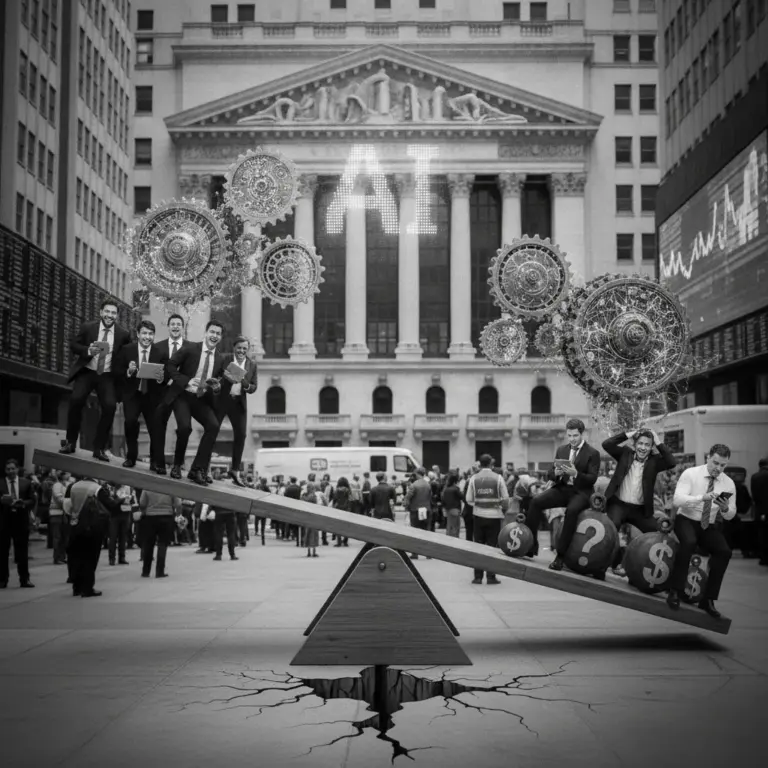
Investors fearing they have arrived too late to the artificial intelligence party may find that the real gains are actually still ahead of them. While the prospect of a massive bull market remains enticing, experts warn that a significant correction is likely to strike first, potentially shaking out those without a steady hand. History shows that buying the dip is often a winning strategy, but the current trajectory of the S&P 500 is an extreme statistical outlier. Having climbed for over seventeen years with gains exceeding one thousand percent, the market has far surpassed the historical average for secular bull runs, suggesting that a period of instability is overdue.

Despite these warnings, analysts argue that being late in a cycle does not necessarily mean the end of the road. Using complex wave patterns to map market psychology and price action, some firms suggest we are merely transitioning between phases of growth rather than facing a permanent collapse. Recent turbulence in international markets serves as a prime example, such as the dramatic plunge seen in South Korea’s KOSPI index. Because that index is so heavily weighted toward semiconductor giants like Samsung and SK Hynix, it became ground zero for AI volatility, yet technicians believe this drop was simply a necessary reset before another leg higher.

The focus now shifts toward specific bottlenecks within the AI infrastructure, moving beyond general chips into memory and networking solutions. Companies specializing in high bandwidth memory and energy efficiency are emerging as critical players as AI moves from initial training into the inference phase. From specialized networking hardware to innovative energy providers like Bloom Energy, certain sectors are exhibiting technical setups that could lead to years of further upside. For those willing to weather an imminent short term downturn, the structural demand for AI scaling indicates that the biggest chapter of this financial story has yet to be written.
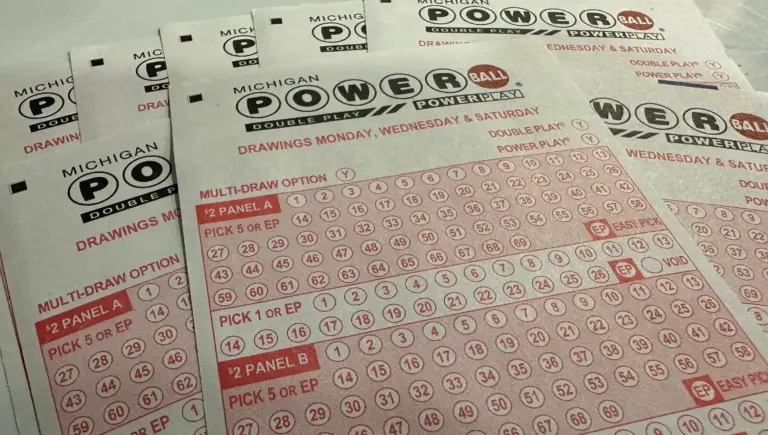
Hopeful gamblers across the country were left waiting for a miracle this weekend as the latest Powerball drawing failed to produce a grand prize winner. The jackpot had climbed to an estimated 516 million dollars, with a lump sum cash option of roughly 211.6 million dollars, but none of the tickets sold managed to match all six required numbers. Those who checked their slips on Saturday night found that the winning combination was 1, 4, 19, 33, and 51, with a Powerball of 15.

While the top prize remains unclaimed, one lucky player in California did manage to hit a significant milestone. By matching all five white balls without hitting the Powerball, that individual secured a prize of one million dollars. Other smaller prizes were distributed throughout the evening, bolstered by a Power Play multiplier of two times which increased payouts for some non jackpot winners.

With no single ticket claiming the massive hoard, the excitement now shifts toward the next opportunity to strike it rich. The lottery will hold its next drawing on Monday night at 10:59 p.m., meaning players have just enough time to grab tickets before the deadline. In states like Michigan, where previous jackpots have topped 800 million dollars, enthusiasts can purchase entries both online and in stores until shortly before ten o’clock on the night of the draw.

Federal authorities have arrested Edward Dubrovsky, a Canadian cybersecurity executive known for brokering deals between victims and ransomware attackers. The fifty four year old was taken into custody in the Philadelphia area on Thursday, facing serious federal charges including conspiracy to extort money by threatening the confidentiality of private information and interfering with commerce. According to court documents, Dubrovsky is currently being held at a federal detention center while awaiting transfer to Texas for further legal proceedings.

The arrest coincides with an aggressive push by the FBI to dismantle ShinyHunters, a notorious hacking collective that recently targeted the government’s employment portal and allegedly stole data belonging to nearly every employee within the bureau. While officials have not explicitly linked Dubrovsky to this specific breach, FBI Director Kash Patel took to social media on Friday to announce the capture of another suspected co conspirator associated with the group. This move is part of what Patel described as a broader effort to neutralize the network following several high profile incidents involving third party vendors.

Professionally, Dubrovsky operated in a gray area of digital security through his affiliation with CyberSteward, a firm specializing in settlement facilitation and negotiation with threat actors. Rather than focusing solely on defense, his role involved managing the delicate process of paying off hackers to ensure stolen data remained secret or was returned. Investigators now appear to be scrutinizing whether these professional intermediaries were merely facilitating payments or actively conspiring with criminals to profit from cyber extortion schemes.

For decades, investors looked to crude oil as the primary barometer for energy costs and economic health, but a strange shift is occurring in the financial markets. Recent data suggests that bond yields are now tracking diesel prices more closely than crude, reflecting a new reality where refined fuels are the true engines of inflation. Because diesel is indispensable for everything from farming to shipping, its current price spike has trickled down into every sector of the economy, forcing the Federal Reserve toward a more aggressive interest rate strategy to combat rising costs.

President Donald Trump has attempted to blunt this economic edge through a series of rapid interventions, including an executive order to defer federal taxes on diesel. More surprisingly, he recently announced a deal with Vladimir Putin to import millions of tons of Russian fuel, marking a dramatic pivot from previous sanctions against Moscow. These moves appear designed to provide immediate relief to truckers and farmers ahead of crucial midterm elections, yet analysts suggest these gestures may be far too small to move the needle on actual affordability.

Industry experts argue that importing Russian diesel is essentially rearranging deck chairs on the Titanic, noting that shifting supplies from one customer to another rarely lowers global prices. Furthermore, the political payoff seems slim; polling indicates that even a significant drop in fuel costs would fail to sway the majority of undecided voters. With inflation deeply entrenched and borrowing costs climbing alongside pump prices, there is a growing sense among strategists that no amount of diplomatic maneuvering can undo the damage already done to the American consumer’s wallet.

Citroen is betting on nostalgia and affordability as it prepares to revive one of the most beloved symbols of French motoring. Set to make its grand entrance at the 2026 Paris Motor Show, the new 2CV concept aims to capture the spirit of the original Duck while transforming it into a practical, ultra-compact electric vehicle. Positioned between the tiny Ami and the larger C3, this reimagining focuses on simplicity and playfulness, offering a breath of fresh air in an era dominated by oversized SUVs and complex tech.

While it retains the rounded silhouette and charming proportions of its predecessor, the modern 2CV is actually slightly smaller than the original. This reduction in size is a deliberate move to ensure ease of parking in congested city centers. By keeping the vehicle lightweight, Citroen can avoid using massive, expensive batteries without sacrificing daily usability. To further lower costs, the designers have utilized broad, flat body panels and modular bumpers that can be replaced individually, ensuring that both manufacturing and future repairs remain budget friendly.

The aesthetic is a careful balance of retro charm and contemporary utility. Freestanding round LED headlights pair with a steeply raked windshield and a foldable fabric roof that mimics the breezy feeling of the vintage model. Inside, Citroen has avoided the trend of wall to wall screens in favor of a minimalist cockpit featuring a projected smart vision display and an eight inch touchscreen with comic book inspired graphics. In perhaps its most quirky touch, the car includes Radioen, a removable audio system that allows drivers to take their music with them once they leave the vehicle.

Attention to detail defines this rebirth, with countless nods to history tucked away throughout the cabin. From bakelite inspired accents and checkered upholstery to door pockets specifically designed to hold eggs, every element celebrates the eccentricities of the original brief. Even the pedals feature whimsical icons of turtles for braking and hares for accelerating. If Citroen manages to hit its targeted starting price of approximately fifteen thousand euros, this electric throwback could become one of the most accessible entry points into sustainable urban mobility today.

Investors experienced a whirlwind of emotion last week as the artificial intelligence boom continued to drive markets toward record peaks while simultaneously triggering sharp, sudden selloffs. It was a classic tug of war between optimism over future productivity gains and an increasing anxiety that valuations have climbed too high, too fast. For much of the trading session, tech giants seemed untouchable, pushing major indices into uncharted territory as fresh data suggested AI integration is finally beginning to show up on corporate balance sheets.

However, the momentum didn’t hold steady throughout the week. As soon as stocks hit these psychological ceilings, profit taking set in, leading to steep declines that caught many traders off guard. This volatility highlights a growing divide among analysts who wonder if we are seeing a sustainable shift in the global economy or simply a speculative bubble waiting for a catalyst to burst. The swings were particularly violent in semiconductor shares, where massive gains one day were erased by cautious outlooks the next.

Ultimately, the market seems to be searching for a new equilibrium. While the long term promise of generative AI remains the primary engine for growth, investors are now demanding more concrete evidence of revenue rather than just conceptual potential. Until those results become consistent across the board, shareholders should expect this erratic behavior to continue, turning what used to be stable blue chip holdings into some of the most volatile assets in any portfolio.

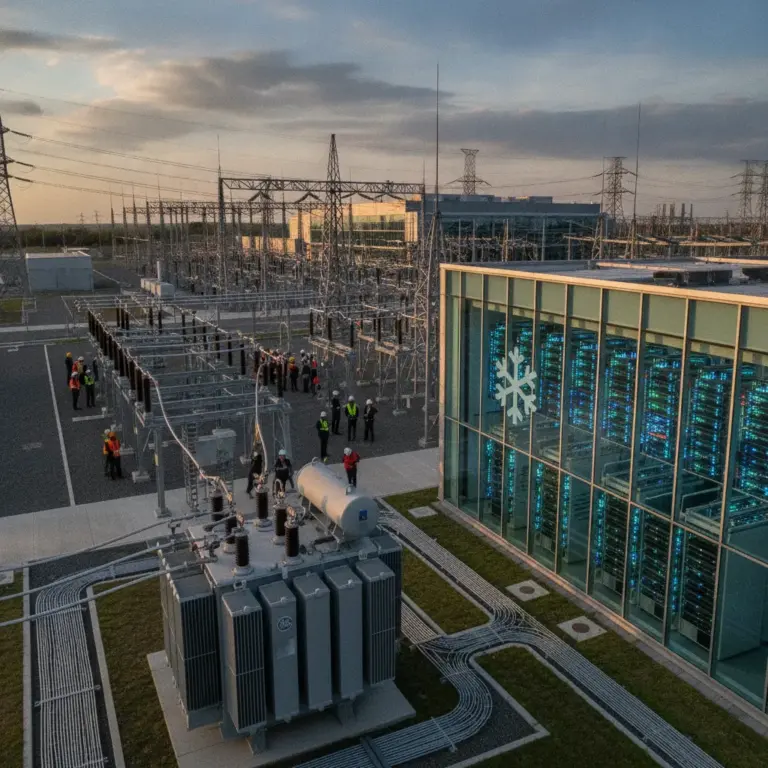
The current surge in artificial intelligence is moving beyond simple software applications and into the heavy lifting of physical and digital infrastructure. Leading this charge are companies like GE Vernova and Snowflake, which have emerged as top picks for investors looking to capitalize on the accelerating demand for AI enabled capabilities. While much of the early excitement centered on chips, the market is now shifting its focus toward the energy systems and data frameworks required to keep those processors running.

GE Vernova is positioning itself as a critical player by providing the gas turbines and nuclear reactors necessary to meet an unprecedented spike in electricity needs. At the same time, Snowflake is leveraging its role in data infrastructure to help enterprises manage the massive amounts of information fueling modern AI models. Both companies are seeing a notable acceleration in revenue growth, signaling that the appetite for industrial scale support is growing just as fast as the algorithms themselves.

This trend extends further into specialized hardware, where firms like ASE Technology are finding success through advanced semiconductor packaging. By streamlining how chips are assembled and integrated, these companies are removing bottlenecks that could otherwise slow down AI deployment. Together, this group of stocks represents a broader shift in investor strategy, prioritizing the essential plumbing of the tech world over purely speculative plays.

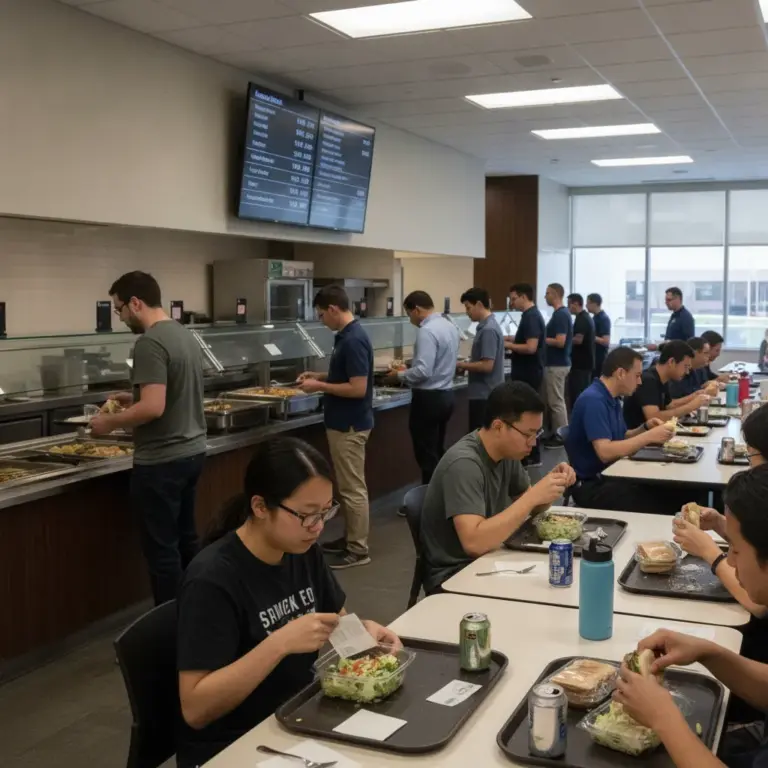
In the glittering landscape of Silicon Valley, where lavish perks like open bars and gourmet buffets have long been the gold standard for attracting talent, Nvidia is carving out a different path. Despite skyrocketing to a market valuation of roughly 5.6 trillion dollars and becoming the most valuable company on earth, the artificial intelligence powerhouse does not offer free lunch. Instead, engineers and executives at the Santa Clara headquarters find themselves paying for their meals and snacks in a move that defies the traditional playbook established by rivals like Google.

This culture of modesty is not a recent pivot but a decades old tradition. Reports indicate that Nvidia has utilized subsidized rather than free dining since at least 2014, with employees typically spending a few dollars on everything from sushi and acai bowls to butter chicken. While some visitors might find it jarring that coffee or bottled drinks aren’t complimentary at a company powering the global AI boom, many staff members seem unfazed. Some even praise the quality of the food, noting that the subsidization allows for high standards without the waste often associated with all you can eat corporate cafeterias.

The lack of free feasts appears to be a reflection of CEO Jensen Huang’s personal philosophy regarding struggle and resilience. Huang, who famously tells graduates that pain and suffering lead to success, operates under a permanent state of urgency. Even with trillions in market cap, he admits he still feels as though the company could go bankrupt at any moment. This mindset permeates the organization, prioritizing lean operations and intense focus over the serendipitous social engineering that Google attempts to foster through its countless micro kitchens and free eateries.

Ultimately, those questioning the lack of free sandwiches may be overlooking a much larger windfall. Rather than investing in daily catering, Nvidia has historically provided employees with opportunities to acquire company stock. With shares surging over 1 thousand percent in just five years, those holding equity have seen gains that dwarf the cost of ten thousand lunches combined. As other tech giants begin scaling back their extravagant benefits amid economic shifts, Nvidia proves that when your employees are becoming millionaires via stock options, they rarely mind paying for their own bagel.

The Dallas Cowboys suffered an inexplicable defeat at home on Thursday night, leaving fans and analysts stunned by a performance that felt more like a meltdown than a football game. Because the loss occurred during a short week, the team now faces a grueling stretch of downtime to dwell on their failures before they can seek redemption. The atmosphere at AT&T Stadium was one of disbelief as a roster brimming with talent failed to execute the most basic elements of the game, turning what should have been a manageable matchup into a complete disaster.

At the center of the storm is Brian Schottenheimer, whose leadership is under intense scrutiny after failing to prepare his squad for the quick turnaround. It has become increasingly difficult to ignore that since taking over, this team has rarely looked ready to compete, hovering around or below .500 for much of his tenure. While the defense has struggled consistently throughout the season, the responsibility ultimately falls on the head coach to find solutions, yet no answers seem to be coming from the sidelines.

The dysfunction extended across every unit of the team, starting with Dak Prescott who took far too long to ignite an offense touted as one of the league’s best. While some of his turnovers were unfortunate tipped balls, his inability to move the chains early allowed Tampa Bay to dig a hole that proved impossible to climb out of. On the other side of the ball, DaRon Bland continued a historically poor run of form, while Quinnen Williams failed to provide any meaningful pressure against an undrafted rookie quarterback despite being paid as a premier defensive anchor.

Even special teams contributed to the misery, with Nick Sorensen’s group struggling so significantly that it may have influenced coaching decisions regarding field goal attempts late in the game. A critical fumble by KaVontae Turpin further dampened any hopes of a comeback. Amidst the wreckage, only rookies Ryan Flournoy and Malachi Lawrence provided any glimmer of hope through individual effort, but those small victories offered little comfort in a game defined by systematic failure.

Texas A&M found itself staring at another disappointing result on the road this past Saturday, falling 27-6 to the Missouri Tigers. Coming off a bruising loss to LSU just two weeks prior, the Aggies struggled to find any rhythm in Columbia, mirroring a pattern of offensive stagnation that has begun to plague their season. While the final score reflects a dominant performance by Missouri, a closer look at the individual performances reveals a stark contrast between those keeping the team afloat and those sinking under the pressure.

The lone bright spot for Texas A&M continues to be kicker David Olano. The Illinois transfer remains an island of stability for an otherwise erratic squad, maintaining a perfect record on field goals this season. Olano showcased his leg strength early with a massive 53-yard strike and added another from 27 yards in the fourth quarter. By going eight-for-eight on the year, he is putting together the most reliable kicking campaign seen in College Station since 2004. Wide receiver TK Norman also managed to provide some modest utility, hauling in all three of his targets for 55 yards, though these gains felt like small comforts in a largely stagnant outing.

On the other side of the ledger, wide receiver Ashton Bethel-Roman had a nightmare afternoon that directly contributed to the loss. His inability to create separation or secure the ball proved costly, specifically during key red zone opportunities where he played too deep on routes or simply let balls slip through his fingers. These errors led directly to two interceptions, turning potential touchdowns into turnovers and further demoralizing an offense already struggling to move the chains.

Ultimately, however, the burden falls on quarterback Marcel Reed and an offensive unit that seemed completely lifeless for large stretches of the game. Reed continued a worrying downward trend in his play, completing fewer than half of his attempts as Missouri’s defense suffocated every attempt at momentum. The nadir came during a disastrous third quarter where Texas A&M managed a paltry three total yards of offense while allowing more points to leak away. Between dropping open passes and failing to sustain drives, it was a day defined by missed opportunities and systemic failure.