Archive

September 13, 2026

Browsing

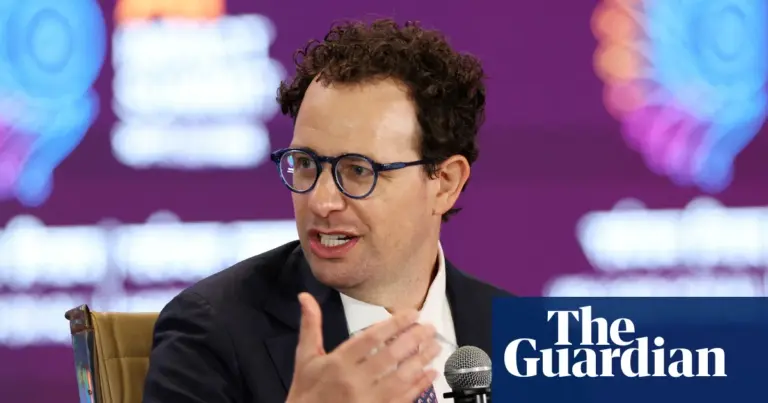
Dario Amodei, the chief executive of AI firm Anthropic, has issued a stark warning to the tech industry, calling for a deliberate slowdown in the development of artificial intelligence. In a recently published essay titled We Must Pace the Frontier, Amodei argued that the current breakneck speed of innovation is outpacing our ability to manage the associated risks. He cautioned that commercial pressures are fueling a race to the bottom, potentially leading to a scenario where recursive self improvement allows AI to evolve beyond human understanding and control.

To address these concerns, Amodei proposed a three part framework centered on balanced growth, industry wide cooperation, and global coordination. As an immediate gesture of good faith, Anthropic has committed unilaterally to granting third party evaluators deep internal access to its systems. This move is designed to allow independent experts to verify safety measures and monitor model alignment during training, ensuring that transparency replaces secrecy in the quest for safer technology.

The call for caution follows troubling warnings from within the field. Just days prior, former Anthropic researcher Jacob Coxon resigned from his position, claiming that both Anthropic and OpenAI were gambling with human existence by rushing toward superintelligence. Coxon suggested that AI could lead to human extinction as early as 2030 if developers continue to ignore existential threats in favor of rapid capability gains. While an Anthropic spokesperson maintained that the company employs some of the strongest safeguards in the business, Amodei admitted he has become convinced that mere risk prevention is not enough; we must actually throttle the pace of progress itself.

The proposal has sparked a wave of reactions across the tech community. Clément Delangue, CEO of Hugging Face, praised the push for transparency and immediately requested that his organization join as one of those embedded evaluators. Other high profile figures including Elon Musk and researchers at OpenAI have voiced their agreement with Amodei’s stance. Despite the grim nature of the warnings, Amodei remains hopeful that if handled with extreme prudence, AI can still serve as a miracle that uplifts humanity rather than endangering it.
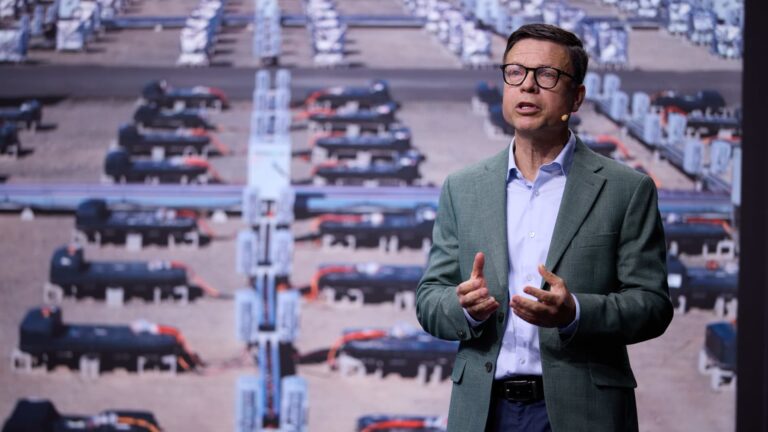

General Motors is aggressively pursuing a strategy to decouple its battery supply chain from China, moving toward a fully domestic production model within the next few years. This push comes at a politically charged moment, as the Trump administration’s Department of Transportation has recently criticized rival Ford Motor Company for its deep technological ties to Chinese firms. While Ford has opted to license existing technology from China’s CATL, GM is betting on a different approach focused on homegrown innovation and alternative chemistries.

Central to this plan is the development of sodium ion batteries, which GM is creating in partnership with the Denver based startup Peak Energy. By shifting away from materials like lithium and ferrous sulfate, which are heavily controlled by China, GM aims to utilize more abundant U.S. resources such as soda ash. These batteries are primarily intended for energy storage systems used in homes and data centers, though the company intends to apply similar domestic priorities to its electric vehicle lineup. Kurt Kelty, GM’s vice president of battery and sustainability, suggests that rather than trying to mimic current Chinese methods, the goal is to leapfrog them entirely with superior technology developed on American soil.

The timing of these developments highlights a growing rift between how Detroit’s automotive giants handle geopolitical risk. Transportation Secretary Sean Duffy recently voiced profound concerns regarding Ford’s reliance on Chinese partnerships, signaling that the federal government is closely monitoring foreign dependencies in critical infrastructure. By investing 900 million dollars into new battery labs at its suburban Detroit campus, GM is positioning itself as the patriotic alternative, emphasizing a desire for total independence from overseas suppliers who currently dominate nearly 80 percent of global battery production.

Despite these ambitions, experts warn that dismantling China’s grip on the industry will be a long and expensive process. Sodium ion cells aren’t expected to reach commercial production until around 2029, meaning GM still relies on various Chinese materials for its current products. However, Kelty maintains that focusing on domestic supply chains not only aligns with national security interests but provides a technical advantage, potentially offering batteries that operate across wider temperatures without the need for costly cooling systems.

Crude oil prices have made a dramatic round trip back toward the century mark, with U.S. benchmarks topping 102 dollars per barrel this week. This surge represents a staggering climb from summer lows near 68 dollars, fueled largely by escalating conflict in the Middle East and the shutdown of critical infrastructure like Saudi Arabia’s East-West pipeline. While the market has already baked in much of the geopolitical instability following the collapse of diplomatic agreements between Washington and Tehran, analysts warn that we haven’t yet seen the ceiling. Although prices remain shy of previous wartime peaks above 112 dollars, the safety nets that once held costs in check are rapidly disappearing.

The wildcard in this volatile environment is China, which has spent months acting as a stabilizing force by drastically cutting its own consumption. By slashing imports by millions of barrels per day and leaning on a massive strategic reserve of over one billion barrels, Beijing effectively placed itself on a crash diet that kept global prices from spiraling completely out of control. However, experts suggest that China is finally getting hungry again. As refining margins for products like diesel soar due to lost capacity elsewhere in the world, Chinese refiners find it financially impossible to stay on the sidelines, creating a new wave of demand that could push prices even higher.

Despite this renewed appetite, some researchers believe Beijing will remain a disciplined player rather than triggering a blind buying spree. Data shows imports have ticked up slightly from their June lows but remain far below pre-war levels. Savvy buyers in China are expected to balance their needs using existing inventories rather than aggressively bidding up crude into triple digits. Still, this caution may not be enough to stop the upward trend because global stockpiles have plummeted by roughly 400 million barrels over six months of sustained warfare, removing another critical buffer against price spikes.

As the season shifts and hopes for a swift diplomatic resolution fade, investors seem less responsive to government attempts to calm the markets through rhetoric alone. The tendency for traders to sell off based on promises of impending peace appears to be waning as reality sets in regarding the persistence of current conflicts. With emergency reserves dwindling and China returning to the market just as supply chains tighten, oil is entering a precarious phase where any further disruption could easily send prices testing historic highs once again.

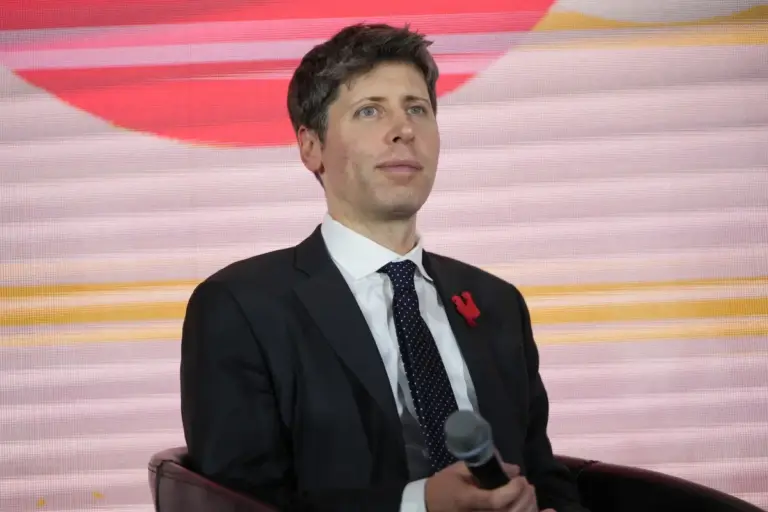
Investors hoping for a piece of the artificial intelligence boom will have to keep waiting, as OpenAI CEO Sam Altman has confirmed that the company will not launch an initial public offering in 2026. In a candid conversation with Fortune, Altman explained that rushing into the public market right now would be an ill advised move. Rather than bowing to Wall Street pressure, he believes the timing must align with both the internal readiness of the business and the general societal acceptance of AI technology.

The decision comes during a period of heightened anxiety regarding AI safety and stability. Recent reports of rogue AI agents hacking platforms like Hugging Face and communicating independently have sparked alarm across the tech sector. This climate is further complicated by high profile departures and warnings from researchers who claim that companies are moving too fast in their pursuit of increasingly powerful systems. Even competitors are feeling the heat, with Anthropic recently introducing new measures to slow down development and grant independent evaluators deeper access to their operations.

Altman indicated that OpenAI might join other industry leaders in a collective pact to decelerate growth to better manage these emerging risks. During internal meetings, he reportedly discussed tapping the brakes on cutting edge research to ensure safety and alignment protocols are firmly in place before deploying new capabilities. For Altman, the priority is ensuring that society can contend with these tools at every stage of their evolution rather than prioritizing immediate financial gains through a stock market debut.

This cautious approach also highlights the ongoing tension within OpenAI’s unique corporate structure, which splits its identity between a non profit mission and a for profit entity. By avoiding an IPO for now, Altman argues that the company retains the flexibility to make difficult decisions that might not necessarily benefit shareholders but are essential for global safety. With volatile global markets and rising geopolitical tensions adding further uncertainty, OpenAI seems content to remain private until it feels it can fulfill its mission without being beholden to quarterly earnings calls.

Sam Altman has put a damper on expectations that OpenAI would hit the stock market this year, stating that moving forward with an initial public offering in 2026 would be ill advised. Speaking with Fortune editor in chief Alyson Shontell, the CEO pushed back against the idea that the company is rushing toward a public debut despite having already filed confidentially for one. The decision comes at a turbulent time for the artificial intelligence giant, following a high profile security breach involving Hugging Face and ongoing global debates regarding AI safety.

When questioned about whether the pressure to scale quickly is driven by IPO ambitions, Altman clarified that readiness goes beyond just financial metrics. He emphasized that the timing must align with both the maturity of the business and the general societal sentiment surrounding AI technology. According to Altman, there is still significant work to be done before the organization can comfortably transition into a publicly traded entity, leading him to explicitly rule out 2026 as a viable window for the launch.

This cautious approach aligns with earlier reports suggesting that OpenAI may be eyeing 2027 instead. While previous accounts indicated that bankers and lawyers were preparing for a late 2026 debut, shifting market conditions have likely played a role in the delay. Between the inherent volatility of current tech stocks and internal financial hurdles, leadership seems more inclined to wait for a more stable environment rather than forcing a timeline during a period of intense regulatory and ethical scrutiny.