Archive

September 2026

Browsing

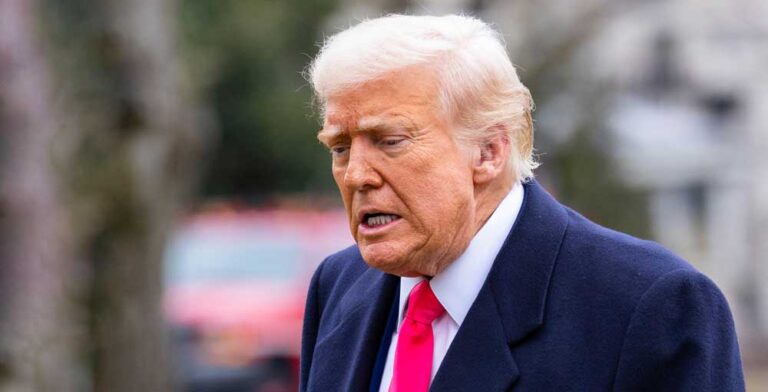
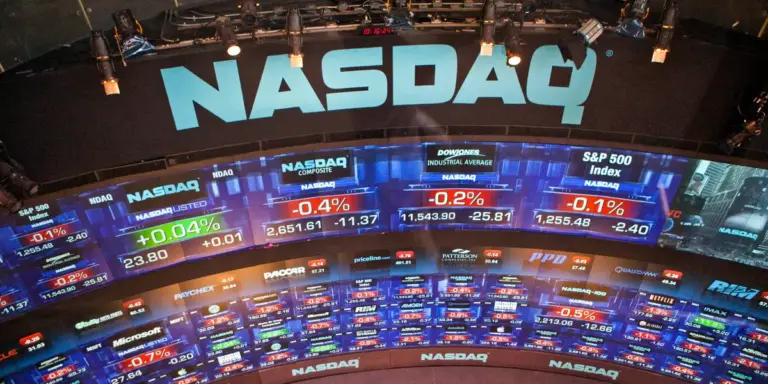
President Donald Trump took to the Oval Office on Friday to launch a blistering attack on financial markets and federal policymakers, claiming that stupidity rather than economic success is the true driver of inflation. Despite a surprisingly positive jobs report showing an increase of 162,000 positions in August, the president appeared frustrated by the market’s reaction, which saw stocks dip amid lingering fears that strong employment figures could further fuel price hikes. Rejecting standard economic theory, Trump dismissed these concerns as crazy and insisted that his vision for growth remains intact despite current headwinds.

The outburst comes at a precarious moment for the administration, just two months before Election Day and amidst a period where actual growth has lagged behind previous benchmarks. While Trump has frequently promised an immediate and historic economic boom upon his victory, annual growth has hovered around 2 percent, trailing the gains seen during the Biden era. To explain this discrepancy, Trump pointed toward high interest rates on government debt and suggested that the United States could retaliate against foreign nations by halting trade altogether. This threat follows existing tensions sparked by tariffs on Canada that have already created political friction for Republicans in key battleground states like Maine and Michigan.

Economists warn that the president’s approach may be counterproductive, noting that his own tariff policies and geopolitical instability have contributed to the very inflation he now decries. Experts suggest that forcing the Federal Reserve to cut interest rates prematurely could flood the economy with cash, potentially worsening inflation and destabilizing an already fragile recovery. While Trump predicted that lower rates could propel GDP growth to unprecedented heights of 15 percent, critics argue such projections are wildly optimistic and disconnected from fiscal reality.

Inside the White House, officials remain hopeful that artificial intelligence and continued tax cuts will eventually trigger a surge in productivity and domestic manufacturing. However, with national debt crossing the 40 trillion dollar mark and presidential approval ratings on the economy sliding significantly since 2018, there is growing skepticism about whether these strategies can bridge the gap between campaign rhetoric and economic performance. As Treasury Secretary Scott Bessent attempts to project confidence globally, the administration faces the looming challenge of reducing a massive budget deficit without triggering widespread political backlash through spending cuts.

What began as a routine journey from Dallas Fort Worth to Newark turned into a chaotic scene midair on Thursday night when a first class passenger became violently disruptive. According to witnesses, the man began shouting profanities and hurling racial and homophobic slurs before turning physical, attacking the passenger seated next to him and striking a woman who attempted to step in and calm the situation.

As the tension escalated, Richard Olenick and Juan Mejia, a retired New Jersey police officer, stepped forward to help the crew regain control. After being provided with zip ties by a flight attendant, the men managed to secure the passenger’s wrists. However, the struggle intensified when the man attempted to bite both Mejia and Olenick, prompting them to use duct tape to further restrain him to his seat. Olenick noted that they carefully avoided covering the man’s mouth to ensure he could breathe while continuing to resist their efforts.

The ordeal lasted another fifteen minutes, during which Olenick actually had to sit on the restrained man’s lap to prevent him from breaking free. For those on board, the timing felt particularly heavy given that the anniversary of the September 11 attacks is approaching next week. Both Olenick and Mejia recalled how their personal connections to that tragedy heightened their concern for everyone’s safety during the confrontation.

American Airlines diverted Flight 618 for an emergency landing at Baltimore Washington International Thurgood Marshall Airport, where Maryland Transportation Authority Police were waiting on the tarmac. An unidentified man was taken into custody on state charges before the aircraft finally continued its trip toward Newark. In a statement following the incident, American Airlines emphasized that they do not tolerate violence and praised both their staff and passengers for their professionalism under pressure.

This event comes amid a troubling trend of air rage across the country, with more than 1,100 unruly passenger incidents reported this year alone. While most flights remain peaceful, airlines continue to carry restraints like flexible handcuffs and duct tape specifically for these rare but dangerous scenarios. The Federal Aviation Administration has warned that such behavior can lead not only to criminal charges but also massive civil fines exceeding forty thousand dollars.

The Trump administration has launched an aggressive, multi front campaign to prevent the Federal Reserve from raising interest rates, ramping up the pressure just ten days before a pivotal policy meeting. While President Trump has been more reserved in his direct criticism of new Fed Chairman Kevin Warsh compared to his treatment of predecessors, he escalated the stakes on Friday by threatening to impose tariffs on countries with trade surpluses unless the central bank lowers rates. This marks a significant shift in tactics, linking international trade policy directly to domestic monetary decisions.

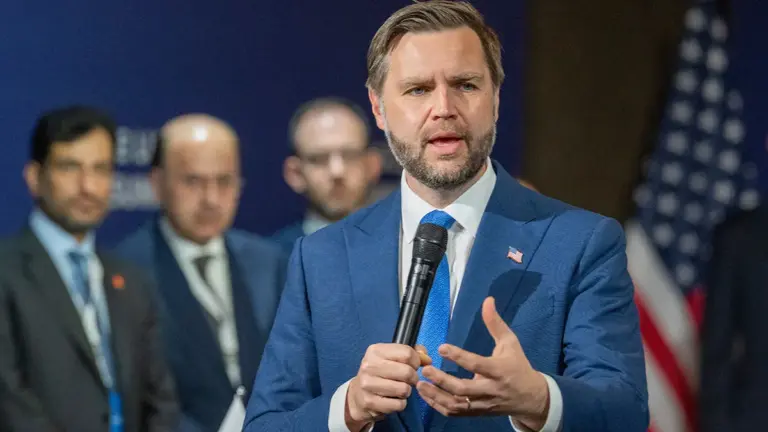
The push for lower rates has become a coordinated effort across the executive branch. Vice President JD Vance and Treasury Secretary Scott Bessent have both publicly urged the Fed to provide relief, while senior economic counselor Peter Navarro took a sharper tone, calling members of the rate setting committee clowns and describing any potential hike as careless. The administration argues that strong growth fueled by tax cuts and capital investment expands economic capacity without triggering inflation, suggesting that the United States should maintain the lowest interest rates in the world given its current trajectory.

Chairman Warsh finds himself in a precarious position as he balances political pressure against stubborn economic data. Although he has maintained that presidential influence has no bearing on his decisions, citing previous holds on rate cuts as proof of independence, he has acknowledged that politicians have a right to voice their opinions. Meanwhile, internal divisions within the Fed persist, with some officials warning that inflation remains too high and pointing toward rising energy costs and geopolitical tensions as primary drivers.

With the November midterm elections looming and voters expressing frustration over high prices, the stakes extend beyond economics into politics. Markets are currently split on whether a hike will occur during the September 15-16 meeting, though a strong recent jobs report has increased those odds. All eyes now turn to upcoming consumer price index reports, which will serve as the final gauge for whether Warsh yields to administration demands or prioritizes the fight against inflation.

Republicans are beginning to panic as diesel prices climb to an unprecedented peak, leaving party operatives worried that no amount of political maneuvering can hide the economic pain hitting voters. According to recent data from the American Automobile Association, the average cost for a gallon of diesel has surged to five dollars and eighty eight cents. Internal GOP polling suggests that voters are directly linking these skyrocketing costs to President Donald Trump’s controversial conflict with Iran, creating a volatile atmosphere ahead of the 2026 midterms. One party insider admitted bluntly that with gas hovering around four dollars and diesel at an all time high, there is simply no way to message those numbers away.

Despite the growing alarm within the party, many GOP candidates feel trapped by their loyalty to the president. Sources indicate that because Trump maintains such a tight grip on the base necessary for victory in swing districts, lawmakers cannot afford to distance themselves from his policies. This leaves them tethered to an administration whose foreign policy decisions appear to be fueling the very inflation they promised to fight. It is a precarious position for incumbents who must answer to struggling constituents while remaining firmly aligned with a leader whose actions are viewed by many as the root cause of the crisis.

In an attempt to shift the narrative, Transportation Secretary Sean Duffy appeared on Fox News this weekend to argue that the price spikes are driven by external forces rather than domestic policy. Duffy pointed toward Russia and Ukraine, noting that Russia’s status as a top global exporter makes its absence from certain markets a primary driver of volatility. He insisted that President Trump has championed American energy dominance and remains the only person actively working to lower costs, despite widespread reports suggesting that the president’s own military engagements have destabilized energy markets.

The stakes extend far beyond the pump, as rising diesel costs act as a hidden tax on every meal Americans buy. Because diesel powers everything from tractors in the field to delivery trucks heading toward supermarkets, fuel typically accounts for fifteen to thirty percent of total food costs. With grocery bills already serving as a primary point of stress for families over several years, these new peaks threaten to undermine a core campaign promise from 2024 where Trump pledged that food prices would drop immediately upon his taking office.

A surge in the stock market combined with disciplined saving habits has pushed the number of American 401(k) millionaires to an all-time high. According to new data from Fidelity Investments, the number of accounts holding at least one million dollars climbed to 769,000 in the second quarter, representing a sharp nineteen percent jump from the start of the year. This spike was fueled largely by a bullish market where the S&P 500 saw significant gains, alongside record average employee contribution rates that held steady at nine point six percent.

Despite these record breaking numbers, experts warn against viewing the million dollar mark as a universal benchmark for success. Michael Shamrell, a vice president at Fidelity, suggests that the focus should be on the behaviors that led to such balances rather than the figure itself. Most of these millionaires are older employees who spent decades consistently contributing to their funds regardless of economic volatility. While AI booms and favorable tax policies have accelerated growth recently, the foundation for these portfolios was built through long term persistence.

However, there is a stark divide between these top earners and the general workforce. For many Americans, a seven figure nest egg feels like an impossible dream rather than a reachable goal. With average account balances sitting significantly lower across 401(k)s and IRAs, nearly seventy two percent of workers report feeling behind on their retirement savings. A recent survey from NFP indicates that seven out of ten employees still doubt they will be able to retire comfortably, haunted by persistent inflation and rising living costs.

This disconnect shows that while a sturdy stock market creates headlines and mints new millionaires, it does not necessarily cure widespread financial anxiety. Many workers continue to struggle with daily expenses like groceries and utilities even as their portfolios grow slowly in the background. Nevertheless, analysts find it encouraging that people aren’t pulling back their contributions during lean times, suggesting a collective effort to secure a future stability that currently feels elusive for the majority of laborers.

The leadership at AMC Entertainment has launched a scathing attack on trading platform Robinhood, calling the company’s move into stock token trading inexcusable and vile. This latest escalation comes as part of a long standing tension between the cinema giant and the retail brokerage, which first peaked during the meme stock frenzy of previous years. The CEO expressed deep frustration over what he perceives as predatory practices that undermine the stability of traditional equity ownership.

At the heart of the dispute is Robinhood’s implementation of tokens that track stock prices rather than offering direct shares. From the perspective of AMC management, this creates a synthetic environment that separates investors from actual ownership rights while potentially introducing volatility that harms small scale traders. By labeling these actions as vile, the CEO is signaling that he views this shift not just as a business disagreement, but as an ethical failure on the part of the fintech firm.

Industry analysts suggest that this public outburst reflects a broader struggle within the financial sector as digital assets continue to blur the lines between gambling and investing. While Robinhood often frames its innovations as democratizing finance for a younger generation, critics argue that such tools can lead to excessive speculation. As AMC continues to navigate its own complex recovery process, it seems determined to fight any mechanism it believes manipulates its market value or exploits its loyal base of retail shareholders.

For years, the mantra of buying the dip has served as a comforting safety net for retail and institutional investors alike. The logic seems foolproof: when prices drop, you buy more shares at a discount, trusting that the market will eventually rebound to new highs. However, some financial strategists are now sounding an alarm, warning that this reflex has become dangerously automatic and may be masking deeper structural risks in the current economy.

The concern lies in what experts call a reflexive strategy, where investors stop analyzing company fundamentals or macroeconomic indicators and instead trade based on price action alone. By treating every downturn as a guaranteed purchasing opportunity, traders risk catching a falling knife during a true bear market rather than simply navigating a temporary correction. When the habit of buying dips becomes systemic, it can create an artificial floor for stocks that prevents them from reaching their actual fair value.

Critics argue that this psychological loop creates a feedback mechanism that fuels volatility. If everyone expects the government or central banks to step in whenever markets slide, they take on excessive leverage and ignore red flags that would have otherwise signaled caution. This mindset transforms disciplined investing into something closer to gambling, where the bet is not on the quality of the asset but on the persistence of a specific market pattern.

Ultimately, analysts suggest returning to a philosophy centered on valuation and long term goals rather than reacting to short term fluctuations. While opportunistic buying can certainly yield high returns during bull runs, relying solely on this tactic leaves portfolios vulnerable to sudden shifts in sentiment. The goal is to move away from instinctive reactions and back toward strategic planning before the next major dip proves too deep to recover from quickly.

Tesla shares took a sharp dive on Friday, sliding six percent after the company’s latest update on its highly anticipated Cybercab failed to move the needle for Wall Street. Investors had been hoping for a definitive roadmap toward dominating the American robotaxi market, where Alphabet’s Waymo currently holds a commanding lead. Instead, the reveal left many feeling that the company is lagging behind its own ambitious promises.

The disappointment centered largely on an invite-only event held in Austin, Texas, which stood in stark contrast to Elon Musk’s typical penchant for theatrical, globally streamed spectacles. Not only was there no public broadcast, but Musk himself was noticeably absent from the proceedings. While Tesla announced that riders using its dedicated app could now hail the steering-wheel-free, bronze-colored vehicles within specific geofenced areas of Austin, analysts argued that the presentation offered very little new information regarding pricing or production timelines.

Adding to the tension, regulators stepped in just as the company attempted to showcase its technology. The National Highway Traffic Safety Administration launched an audit query to verify whether Tesla correctly self-certified the Cybercab as safe for public roads and compliant with federal standards. This regulatory scrutiny coincided with reports from early users in Austin who complained via social media about significant glitches, including routing errors and excessively long wait times.

Market reactions were swift and critical, erasing much of the stock’s gains seen earlier in the week. Analysts from Wells Fargo explicitly described the launch event as underwhelming and pointed to early execution failures during the rollout. Even those maintaining a buy rating on the stock expressed frustration over the lack of transparency surrounding how Tesla intends to navigate complex regulatory hurdles and scale its fleet to compete with established autonomous rivals.

Adobe is currently navigating a challenging period of transformation that has left investors feeling uneasy. While the broader S&P 500 surged by 21 percent over the last year, Adobe shares tumbled 18 percent, reflecting a growing anxiety over the company’s new strategy. In a bid to capture more users, Adobe has pivoted toward a freemium model, lowering barriers to entry for tools like Firefly and Acrobat. This move successfully boosted monthly active users from 50 million to 90 million, but it came at a cost. By guiding potential customers away from immediate paywalls and delaying planned price hikes, the company has effectively slowed its short term annual recurring revenue growth.

Wall Street has reacted sharply to these shifts, with firms like Morgan Stanley downgrading the stock due to the rise of AI competitors. With shares trading significantly below their yearly highs and a leadership transition looming as Anil Chakravarthy prepares to take over as CEO in late 2026, some see the current dip as a warning sign. Management admits that the full financial benefits of this open funnel approach likely won’t materialize until 2027, leaving shareholders in a waiting game during a volatile era for creative software.

However, there is a silver lining keeping long term holders engaged: an aggressive share buyback program. Despite slowing organic revenue growth and slightly dipping margins, Adobe has been consistently retiring its own stock. Over the last three years, the share count dropped by more than 12 percent, which means earnings per share have grown faster than actual revenue. Essentially, Adobe is using its massive cash reserves to manufacture value for existing stockholders while they wait for the new user acquisition strategy to pay off.

For those weighing whether to hold or fold, the coming quarters will be critical. Investors are closely watching fiscal fourth quarter results to see if seasonal enterprise strength can offset the drag from the freemium experiment. While the path forward isn’t without risk, particularly given the competitive pressure from artificial intelligence, the combination of shrinking share counts and expanding user reach suggests that Adobe is attempting to build a wider foundation for future dominance even as today’s price reflects uncertainty.

The digital asset market saw a notable shift in momentum this week as Bitcoin managed to claw back significant ground, bringing some much needed relief to high profile institutional holders. Most notably, Michael Saylor’s strategy firm has swung back into the black, reporting a paper profit of over 2.8 billion dollars. This recovery comes after a volatile stretch that saw massive unrealized losses throughout July, but a recent rally pushed the price of Bitcoin toward 79,000 dollars, lifting the value of the company’s massive stockpile to approximately 66.4 billion dollars.

While Bitcoin found stability late Monday afternoon at around 78,895 dollars—aided by hints from Treasury Secretary Scott Bessent regarding potential bond market interventions—the broader altcoin market struggled to keep pace. Ethereum dipped slightly to about 2,480 dollars, while Solana and XRP both saw modest declines. The mixed sentiment reflects a tug of war between optimistic corporate accumulation and cautious warnings from Federal Reserve officials like Kevin Warsh, who suggested that stubborn inflation might lead to higher interest rates in September.

Beyond the price action, the industry faced a stark reminder of security risks when Cronos took the drastic step of halting its entire blockchain operations. The move followed a 75 million dollar exploit on the Tectonic lending protocol, where an attacker manipulated an illiquid governance token to borrow far more than the market could support. While the network shutdown helped freeze roughly 60 million dollars of the stolen funds, it highlighted ongoing vulnerabilities within decentralized finance ecosystems.

Despite these hiccups, institutional appetite for crypto infrastructure remains strong. Billionaire hedge fund manager Daniel Seth Loeb has recently placed large bets on Bitcoin mining companies that are diversifying into artificial intelligence hosting to offset fluctuating mining rewards. Simultaneously, accessibility is expanding in North America as Coinbase and Webull Canada deepen their partnership to provide regulated crypto trading and custody services for Canadian investors, signaling a continued push toward mainstream financial integration.