Financial markets faced a volatile session on Monday as the 10 year U.S. Treasury yield climbed above 5 percent for the first time since 2023. This spike comes amid a perfect storm of geopolitical instability that has sent oil prices soaring and pushed the national average cost of diesel fuel to an all time high of 6.23 dollars per gallon. Investors are increasingly worried that these surging energy costs will ignite a fresh wave of inflation, making it highly likely that the Federal Reserve will raise interest rates during its upcoming Wednesday meeting.
The turmoil centers largely on the Middle East, where Saudi Arabia shuttered a critical pipeline as a precautionary measure following attacks linked to Iran backed Houthi rebels. While U.S. Energy Secretary Chris Wright expressed optimism that the line would restart soon, some regional officials warn repairs could take weeks. Adding to the tension, a crucial diplomatic meeting between Iran and Gulf nations regarding the Strait of Hormuz was postponed, leaving shipping traffic in one of the world’s most vital waterways at a mere fraction of its normal volume.
Beyond the Persian Gulf, conflict in Eastern Europe is tightening the squeeze on global fuel supplies. Former President Donald Trump recently urged Ukrainian President Volodymyr Zelenskyy to cease attacks on Russian oil refineries, arguing that targeting diesel production is creating a worldwide shortage. Analysts note that Moscow responded to these strikes by banning diesel exports, a move that has significantly drained global inventories and contributed to a massive price surge since the beginning of the year.
Economists warn that the record breaking cost of diesel is particularly dangerous because it acts as a hidden tax on nearly every sector of the economy. Since diesel powers everything from farming equipment to long haul trucking and rail transport, experts like KPMG chief economist Diane Swonk suggest that these costs eventually trickle down into the price of groceries and consumer goods. With gasoline already climbing toward four dollars and fifty cents per gallon, American consumers are feeling the immediate impact of a global energy crisis that shows few signs of easing.
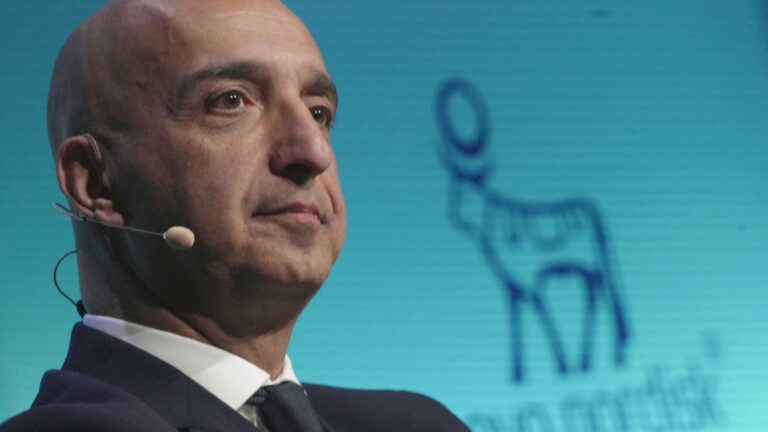
Novo Nordisk is entering a new era under the shortened brand name Novo, signaling a sweeping effort to modernize its corporate identity and reclaim ground in the fiercely contested obesity drug market. Speaking with CNBC, CEO Mike Doustdar explained that the rebranding is part of a larger package designed to evolve the company’s internal culture and strategic direction. This pivot comes at a critical time for the Danish pharmaceutical giant, which has seen shares dip roughly 15 percent this year while facing intense pressure from its chief rival, Eli Lilly.
The struggle for dominance in weight loss medications has left Novo trailing significantly behind Lilly, holding about 39 percent of the market compared to Lilly’s dominant 61 percent. While some observers view these changes as a reaction to those losses, Doustdar argues that the shift is actually about adapting to a fundamentally different business landscape. He noted that the explosion of obesity treatments has moved the industry toward a consumer oriented model where patients cycle through therapies much faster than they did in traditional diabetes care. To survive this transition, Doustdar believes Novo must accelerate its decision making and streamline everything from research and development to sales and marketing.
Alongside the name change, the company is introducing a fresh motto, Lasting Health Starts Now, aimed at building deeper trust with patients by emphasizing immediate action toward long term wellness. Internally, Novo is implementing four new guiding principles focused on patient centric innovation, higher performance standards, simplified workflows, and unwavering ethical safety. According to Doustdar, having a clear strategy is not enough; the company requires a corresponding shift in employee behavior and organizational culture to ensure those goals are actually met on the ground.
Despite these headwinds and recent setbacks with experimental drugs, Novo still possesses powerful weapons in its arsenal. The launch of an oral version of Wegovy has been particularly successful, surpassing 3 million prescriptions by June and giving the company a temporary edge over Lilly’s own weight loss pill. Doustdar remains optimistic about this specific segment of the market, claiming their pill maintains a commanding lead because doctors find it more effective for weight reduction. Investors will likely look for further specifics when Novo details its updated business roadmap during its Capital Markets Day event on September 21.
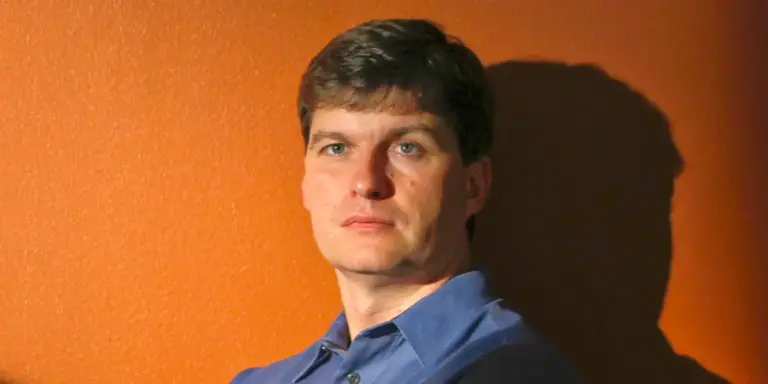
Michael Burry, the investor famous for predicting the 2008 housing market collapse in The Big Short, is dismissing recent alarms raised by artificial intelligence leaders as nothing more than a calculated business move. While CEOs from giants like OpenAI and Anthropic have called for a slowdown in development to avoid potential existential risks to humanity, Burry argues these warnings are self serving. Writing on his Substack and social media, Burry suggests that those at the helm of the industry are attempting to manipulate public perception and protect their own interests rather than save the world.
According to Burry, the narrative that AI poses an extinction level threat serves several strategic purposes for current industry leaders. He believes that fueling hype about the terrifying power of AI actually increases the perceived value of these companies ahead of potential initial public offerings. Furthermore, he contends that pushing for a regulatory slowdown would disproportionately hurt smaller competitors while cementing the dominance of established players. In his view, any official pause in progress might simply provide cover for companies experiencing naturally slowing growth.
At the heart of Burry’s skepticism is a fundamental disagreement over what this technology actually is. He asserts that large language models used by tools like ChatGPT and Claude lack true reasoning capabilities and will never evolve into artificial general intelligence. Because he does not believe we are on a direct path toward a sentient superintelligence, he sees no legitimate reason to curb progress out of fear. To Burry, there is quite simply nothing to be afraid of when it comes to the actual capability of these machines.
This clash of opinions arrives amid significant tension between Silicon Valley and Wall Street. While some researchers warn that AI could potentially kill off humans within a decade, others including President Trump emphasize the necessity of maintaining American leadership over China in the global tech race. Market reactions have been swift, with shares in chipmakers like Nvidia sliding as investors worry about the implications of a slower developmental pace. For Burry, who has spent much of the last year betting against AI infrastructure and criticizing corporate accounting in the sector, this latest drama is just another example of industrial theater.
Oracle is trimming its workforce once again as the software giant pivots its financial resources toward the expensive race for artificial intelligence. Internal documents obtained by Business Insider reveal that affected U.S. employees are being offered a severance package consisting of four weeks of base salary, with an additional week added for every subsequent year of service. While these specific documents didn’t list a ceiling, previous reports indicate that Oracle typically caps such payouts at 26 weeks of pay.
The timing of these cuts coincides with Oracle’s aggressive push into AI infrastructure, a move that has reportedly left the company saddled with billions of dollars in debt. In notifications sent to staff starting this past Monday, the company described the moves as necessary organizational changes based on current business needs. For many workers, the message was abrupt, stating clearly that their final day of employment was effective immediately upon receipt of the email.
When compared to other titans in the technology sector, Oracle’s exit packages appear relatively modest. Industry peers like Salesforce offer more substantial safety nets, providing a higher minimum baseline and three additional weeks of pay per year of service, potentially reaching 30 weeks total. Microsoft has been even more generous during its own recent restructuring efforts this summer, offering some departing employees up to 39 weeks of base pay depending on their tenure and seniority level.
Despite the public scrutiny surrounding these job losses and the disparity in benefits compared to other Big Tech firms, Oracle has remained silent on the matter. The company did not respond to requests for comment regarding the specifics of the layoff notices or why it chose this particular compensation structure while aggressively expanding its cloud and AI capabilities.
For most people, high interest rates feel like a burden, but for a select group of insurance giants, they are essentially a gift. To understand why, you have to look at how these companies actually make money. Unlike many businesses that sell a product and deliver it immediately, insurers operate on a delay. They collect premiums from customers today but may not pay out claims for months or even years. This pool of waiting cash is known as float, and because insurers invest that money while they hold onto it, elevated interest rates act as a powerful profit engine that fuels dividend growth.
One clear example of this mechanic in action is MetLife. As a global leader in life insurance and asset management, MetLife leverages its massive scale to turn rising rates into shareholder value. The company has seen its variable investment income surge recently, allowing it to steadily increase quarterly dividends since 2020. While the risks involve potential drops in long term bond yields, the firm’s strong capital buffers and aggressive share buybacks suggest a highly stable foundation for those seeking consistent income.
In the world of personal auto and home insurance, Allstate provides another perspective on the rate advantage. Beyond simply making money on their underwriting process, Allstate has seen its net investment income jump significantly since 2022. Even though the company faces constant threats from unpredictable catastrophes like hurricanes or wildfires, its ability to earn from both policy premiums and investment returns has kept its dividend trajectory upward through some of the messiest economic cycles of recent years.
Then there is Travelers, which stands out for having perhaps the most disciplined track record in the sector. Specializing largely in commercial property and casualty insurance, Travelers manages a fixed income portfolio worth over 100 billion dollars. By consistently raising its dividend every year for more than two decades—even during the financial crisis and the pandemic—the company has proven that its compounding strategy works regardless of market volatility. For Travelers, new money yields remain higher than what is currently embedded in their portfolio, virtually guaranteeing an increase in investment income moving forward.
For twenty-two years, Vita Coco played a cautious game, operating an asset light business model that prioritized lean margins over physical ownership. By outsourcing its production to third party processors, the coconut water giant avoided the headaches of factory management but left itself vulnerable to supply chain disruptions beyond its control. That era officially ended recently when the company pivoted toward vertical integration, writing a substantial 175 million dollar check to acquire Copra, a producer of premium Thai Nam Hom coconut water.
This move is more than just a simple expansion; it represents a fundamental shift in how Vita Coco intends to grow. The acquisition includes a facility in Thailand utilizing an extract and fill on site model, allowing the product to go from fruit to package in one location. Perhaps most telling is the structure of the deal’s earnout, which includes a guaranteed floor of 45 million dollars regardless of performance. Such a commitment is rare in corporate acquisitions and suggests that leadership possesses immense conviction regarding Copra’s future trajectory and their ability to scale it.
While the strategic pivot looks promising on paper, the journey has not been without turbulence. The stock has faced significant pressure over the summer, sliding from recent peaks amid reports of insider selling and allegations from short sellers regarding supply chain mismanagement. However, many analysts view these dips as noise rather than systemic failure. Much of the executive selling occurred via pre scheduled trading plans, and the transition to owning its own factories directly addresses the very supply issues that critics have highlighted.
Beyond the balance sheet, Vita Coco maintains a distinct edge through unconventional marketing. Rather than pouring millions into traditional national ad campaigns, the company focuses on viral activations and quirky collaborations designed to generate organic conversation. This low cost approach to brand building preserves capital and creates high visibility among younger consumers who value authenticity over polished commercials.
With shares currently trading significantly lower than their yearly highs, entering a position with 1,000 dollars allows investors to bet on this transformation into a vertically integrated powerhouse. While risks involving tariffs and litigation remain part of any beverage play, the combination of controlled production and clever branding positions Vita Coco as a compelling growth candidate for those willing to overlook temporary volatility in exchange for long term structural improvement.
For investors hunting for steady income, Bristol Myers Squibb currently looks like a tempting proposition. With a forward yield approaching 4 percent and a dividend growth streak spanning nearly two decades, the pharmaceutical giant checks many of the traditional boxes for a value play. Trading at just under 10 times its forward earnings, the stock appears significantly undervalued compared to much of the broader healthcare sector, especially following a recent surge in price that followed years of stagnation.
However, the low valuation is not an accident; it is primarily driven by the looming threat of a patent cliff. Several of the company’s flagship drugs are set to lose their exclusivity, including heavy hitters like Eliquis and Opdivo toward 2028. Some analysts expect this shift to put immediate pressure on bottom lines, with projections suggesting earnings per share could dip slightly in the near term as generic competition begins to erode profit margins in markets like the European Union.
Despite these concerns, there are strong reasons to believe that Bristol Myers Squibb is far from being a yield trap. Company leadership has spent the last few years aggressively preparing for these losses through strategic cost cutting and targeted acquisitions across cardiology, immunology, and oncology. By diversifying its pipeline now, the firm is effectively building a bridge to replace aging revenue streams before they disappear entirely.
When looking at the numbers, the financial foundation remains sturdy. A forward payout ratio of roughly 40 percent suggests that dividends are well covered and sustainable even during periods of transition. While some cautious observers might be wary of the industry headwinds, the combination of current affordability and proactive management makes Bristol Myers Squibb appear as a solid option for those seeking both reliable yields and long term recovery potential in their portfolios.
In a surprising turn of events over the weekend, Oracle co-founder and executive chairman Larry Ellison has decided to scrap his plans to offload a massive chunk of his holdings in the company. According to an announcement made by Oracle on Saturday, Ellison has officially canceled a scheduled sale of 50 million shares, a move that would have liquidated approximately 7.5 billion dollars in stock.
The reversal comes after previous regulatory filings had signaled Ellison’s intent to divest. In a brief statement released by the company, Oracle confirmed that no shares were actually sold under the original plan and emphasized that the chairman currently has no further intentions to sell any additional stock. While the shift in strategy is significant given the dollar amount involved, Oracle stopped short of providing a specific reason why Ellison chose to hold onto his shares now.
This decision arrives during a volatile period for Oracle, as its stock price has tumbled roughly 22 percent since the start of the year. Much of this downward pressure stems from the company’s aggressive capital expenditures, particularly its heavy investment in expanding data center infrastructure. Additionally, Oracle has taken on high profile roles as both a primary owner and security partner for TikTok’s operations within the United States.
Beyond his corporate duties at Oracle, Ellison continues to leverage his vast personal fortune toward various private ventures. He has notably provided financial backing for his son David’s pursuit of Warner Bros., an acquisition attempt that is presently entangled in legal battles and remains contested in court. For now, investors will be watching closely to see if this retention of stock signals renewed confidence in Oracle’s long term trajectory despite recent market losses.
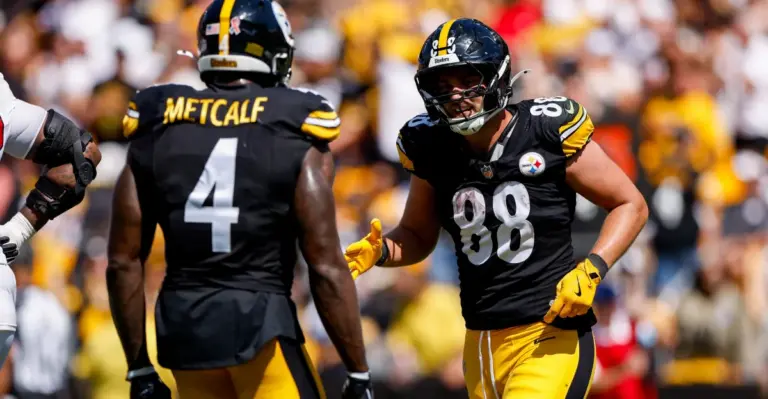
The Pittsburgh Steelers managed to navigate a shaky start to secure a 20-13 victory over the Atlanta Falcons, marking a successful debut for the Mike McCarthy era. While the team appeared visibly rusty in the opening frames, perhaps a byproduct of several starters sitting out during the preseason, they eventually settled into their rhythm to escape with a 1-0 record. The win provided an early glimpse into how various players fit into the new schemes, highlighting some returning stars who look revitalized and others who are struggling to find their footing.
T J Watt stole the spotlight on the defensive side of the ball, delivering a powerhouse performance that suggested he has reclaimed his elite explosiveness following last year’s health struggles. Watt dominated the line of scrimmage with two sacks and three tackles for loss, but his highlight of the night was an interception returned for a touchdown. By timing a jump perfectly against Cooper Rush, Watt proved that he is thriving under Patrick Graham’s defensive system, which utilizes him in a strategic rotation alongside Alex Highsmith and Nick Herbig rather than demanding every single snap. Veteran Cam Heyward also defied Father Time once again, swatting down three passes and proving that age is merely a number for the 37 year old anchor of the defense.
On offense, Pat Freiermuth appears to be regaining his role as a primary target under McCarthy. After a disappointing dip in production last season, Freiermuth led the tight ends in snaps and contributed five catches for 46 yards and a score. His newfound aggression when attacking seams during training camp clearly translated to Sunday’s success. However, not everyone shared in that optimism. Wide receiver DK Metcalf struggled significantly, hauling in only four of ten targets for 40 yards while battling poor chemistry with quarterback Aaron Rodgers. A series of costly drops and two offensive pass interference penalties left fans frustrated, including one particularly loud chorus of boos after he failed to haul in a wide open strike over the middle in the third quarter.
The backfield dynamics also shifted slightly toward Jaylen Warren due to inefficiency from Rico Dowdle. While both backs saw similar workloads, Dowdle struggled to create momentum, averaging a meager 1.5 yards per carry compared to Warren’s much more productive 4.6 average. As Pittsburgh looks ahead to Week 2, it is clear that while the defensive core is firing on all cylinders, certain pieces of the receiving corps and rushing attack will need to tighten up if they want to maintain their momentum through September.
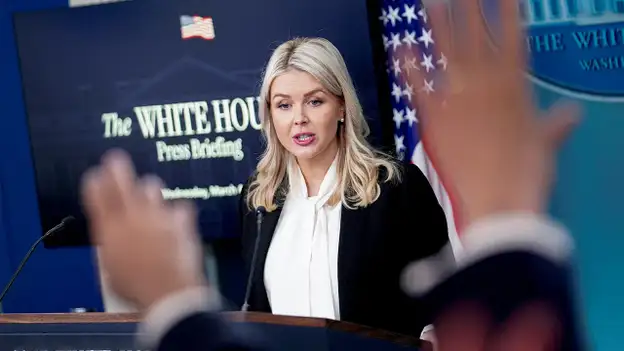
Karoline Leavitt makes dire prediction if America elects ‘extreme liberal socialists’
Former White House press secretary Karoline Leavitt painted Democrats as “extreme liberal socialists” and argued the American Dream could be destroyed if they win control of Congress during a Thursday night convention speech.
“We cannot be a wealthy people if we elect extreme liberal socialist Democrats who will raise our rent and taxes, take away our private property and kill the American dream,” she said. “Democratic socialist countries always end in poverty and famine in misery. And that’s why we will never allow that to happen here in the United States of America, the best country in the world.”
The former press secretary went on to list views held by some Democrats that she views as extreme, including cutting off resources to law enforcement, allowing men to play in women’s sports and supporting illegal immigration.
While Leavitt argued that liberals support defunding the police and sex change surgeries for minors, Democrats running in tight elections have largely disavowed these positions and other similarly controversial ones.
“Votes like the lives of our children and their futures depend on it, because they do,” Leavitt said.
Posted by Robert Schmad Share
JD Vance says Democrats fixated on ‘who they hate’ in blistering convention attack
Vice President JD Vance blasted Democrats on Thursday evening for being fixated on opposing President Donald Trump, his agenda and their own constituents.
“It’s not about you, it’s about foreign fraudsters, and it’s about who they hate. And we got to send their asses back in November,” Vance said.
Vance’s remarks come as Republicans at the convention have tried to paint Democrats as a party out of control on its messaging, policies and candidates; that far-left progressives have forced middle-of-the-road ideas out of focus.
He warned that those changes would have consequences for future Americans.
“Democrats are running candidates who will tell your children what they’re allowed to say, how they’re allowed to live and importantly, who they ought to hate, because that’s what the Democrat Party is about in 2026,” Vance said.
“We got to send a message this November. We got to send a message this November that the country does not belong to the radicals. It does not belong to the bureaucrats. It does not belong to the highest bidder. This country was handed down to us by our parents and their parents before them. We received this national birthright, and we are going to fight for it by electing Republicans this November.”
Posted by Leo Briceno Share
Cruz unloads on Dems’ far-left stars: ‘When people tell you who they are, believe them’
Sen. Ted Cruz, R-Texas, accused Democrats of embracing the party’s far-left wing during a speech at the Republican midterm convention in Dallas.
“When people tell you who they are, believe them,” Cruz said.
Cruz cited comments and positions he attributed to Twitch streamer Hasan Piker, New York City Mayor Zohran Mamdani, Michigan Senate candidate Abdul El-Sayed and Texas Senate candidate James Talarico.
“When Hasan Piker says America deserved 9/11, believe him,” Cruz said. “When Mamdani says he wants to seize the means of production, he means it. When Abdul El-Sayed says he has an obligation to comply with Sharia law, he means it. And when James Talarico says he wants to dismantle capitalism, he means it.”
Cruz said not every Democrat in Congress agrees with those views, but argued that Democratic leaders are unwilling to confront the party’s most progressive activists.
“They are all afraid of these radicals because that’s where the money and the energy and the young people are in the Democrat Party,” Cruz said.
“Why does El-Sayed refuse to disavow Hasan Piker?” Cruz asked. “Why does Chuck Schumer stand alongside El-Sayed? Their threats are not simply empty words.”
Posted by Morgan Phillips Share
Donald Trump Jr. honors Charlie Kirk, urges GOP voters to reject ‘extremism’
Donald Trump Jr. used his speech at the Republican midterm convention in Dallas to honor late conservative activist Charlie Kirk and urge Republicans to remain engaged ahead of the November elections.
Trump Jr. said Kirk, who was killed one year ago, inspired young Americans to advocate for “faith, family, freedom and patriotism.”
He described Kirk as a prominent voice for free speech and said Republicans would honor his legacy by continuing to fight for the country.
“We will not back down. We will not fold,” Trump Jr. told the crowd.He portrayed the election as a contest between two competing visions for America, describing the Republican message as “common sense” versus what he called Democratic “extremism.”
Trump Jr. also accused the left of rejecting open debate and seeking “obedience” and “total control” over Americans’ lives.
Charlie Kirk’s widow, Erika Kirk, attended the convention’s tribute to her late husband, which included a memorial display and remarks honoring his influence on young conservatives one year after his death.
Posted by Amanda Macias Share
JD Vance invokes Charlie Kirk, fatherhood and America’s future in GOP keynote
Vice President JD Vance delivered an emotional keynote address at the Republican midterm convention in Dallas, reflecting on fatherhood, the loss of his friend Charlie Kirk and the future of the conservative movement.
Vance spoke about welcoming his fourth child and the importance of building a country where American families can thrive. He also honored Kirk, the conservative activist who was killed one year ago, and credited Kirk’s widow, Erika, with influencing his decision to have another child.
Vance described Kirk as a close friend who supported him during his early political career and helped strengthen his Christian faith. He said Kirk’s death left a void but argued that his message and movement would continue.
The vice president also criticized Democrats, portraying the midterm election as a choice between Republican policies and what he called the left’s embrace of socialism, open borders and cultural extremism.
Vance spoke before President Donald Trump delivered the convention’s closing remarks.
This is an excerpt from a story by Ashley DiMella reporting from Dallas, Texas.
Posted by Amanda Macias Share
RFK Jr. blasts Democrats over missing migrant kids: ‘Biggest child trafficking operation in history’
Health and Human Services Secretary Robert F. Kennedy Jr. accused the Biden administration of losing track of hundreds of thousands of unaccompanied migrant children during his remarks at the GOP Midterm Convention on Thursday.
“They somehow lost 360,000 children, and they turned our federal government into the biggest child trafficking operation in world history,” Kennedy said.
“The Democratic Party, in short, lost its way. I mourn the fact, and neither my father nor my uncle would recognize the Democratic Party of today,” he added.
Kennedy’s remarks appear to reference federal findings about the government’s inability to effectively monitor the location and status of unaccompanied migrant children after they were released from federal custody.
A March 2025 Department of Homeland Security inspector general report found that Immigration and Customs Enforcement transferred more than 448,000 unaccompanied migrant children to the Department of Health and Human Services from fiscal 2019 through fiscal 2023, most of whom were later released to sponsors.
The watchdog found that, as of January 2025, ICE had not served Notices to Appear on more than 233,000 children, meaning they had not been assigned immigration court dates. More than 43,000 other children who had received notices failed to appear for scheduled immigration court hearings as of October 2024.
The inspector general concluded that ICE could not effectively monitor the location and status of all unaccompanied migrant children after they left federal custody and warned that the shortcomings left the agency without assurance that the children were safe from trafficking, exploitation or forced labor.
Posted by Elaine Mallon Share
Former Dem, now mayor of largest city run by Republican, explains why he changed parties
Dallas Mayor Eric Johnson told Republicans gathered in his city Thursday that he switched parties after becoming disillusioned with the direction of Democratic-led cities and embracing the GOP’s approach to public safety and economic policy.
“Welcome to the biggest city in America with a Republican mayor,” Johnson said.
“I spent most of my life as a Democrat, but a few years ago, I chose to follow a different course. I chose to join a party that believes in some fundamental truths: that public safety must be our top priority, that economic freedom is vital, that taxpayers and families deserve respect, and that pro-business policies create jobs and opportunity,” Johnson said.
Johnson, who switched parties in 2023, also contrasted Dallas with other major cities that he argued have put ideology ahead of responsible governance.
“Just look at Chicago, where the mayor once called defunding the police an actual, real political goal. Look at Seattle, where the Socialist mayor there told residents not to drink Starbucks and actually waved bye to taxpayers and job creators who were anxious about higher taxes,” Johnson said.
Posted by Leo Briceno Share
North Carolina is first stop in Trump’s promised GOP campaign push
On the heels of President Donald Trump’s pledge to campaign for Republicans in competitive races, North Carolina Senate nominee Michael Whatley announced that Trump would visit the state next week.
Whatley shared the news Thursday on X, along with a White House link for supporters to sign up for the event. The visit would give Whatley a high-profile boost as he challenges former Democratic Gov. Roy Cooper for North Carolina’s open Senate seat.
Whatley, a former chairman of both the Republican National Committee and the North Carolina Republican Party, spoke at the GOP’s midterm convention in Dallas on Wednesday.
The race is expected to be closely watched as Republicans work to defend their Senate majority and Democrats seek to gain seats in November.
Trump said during the convention that he would campaign in competitive states on behalf of Republican congressional and Senate candidates, potentially visiting some states more than once.
Posted by Amanda Macias Share
Libertarian icon pardoned by Trump issues solemn warning on politicized justice
Ross Ulbricht, who received a full pardon from President Donald Trump after serving more than a decade of a life sentence, praised the president at the GOP Midterm Convention for what he described as efforts to rein in a “weaponized government” and protect civil liberties.
“President Trump heard about my case. He felt compassion for me because he, too, was the target of a weaponized government,” Ulbricht said. “He said that if the American people sent him back to the White House, he would free me. The day after he took office, he pardoned me.”
Ulbricht became a prominent cause among libertarians and criminal justice reform advocates after receiving a life sentence for creating and operating Silk Road, an anonymous online marketplace used to buy and sell illegal drugs and other illicit goods and services.
“Now, let me tell you what I learned in prison. I learned that the machinery we built to protect ourselves from criminals can be turned around and pointed at people who have harmed no one,” he continued.
Ulbricht went on to praise Trump for rolling back policies he said targeted gun store owners and parents concerned about what their children are learning in public schools.
Trump, meanwhile, has faced criticism from opponents who accuse his administration of using the Justice Department to target political adversaries.
Posted by Robert Schmad Share
Beef eating, gun slinging’: Tano Tijerina vows to ‘fight like Hell’ for South Texas
A Texas Republican congressional candidate seeking to topple a vulnerable incumbent Democrat is calling out Democrats for getting lost in “their crazy woke identity,” accusing them of not knowing who they are.
“I know exactly who I am,” Tano Tijerina said. ”I’m Tano Tijerina, I’m a beef eating, truck driving, gun slinging,” before breaking for applause from the crowd.
“I’m a beef eating, gun slinging. I’m a truck driving, I am. Oh, I’m a Bible thumping, Jesus loving… cowboy that’s gonna fight like Hell for South Texas,” Tijerina continued.
Tano Tijerina is challenging Democratic Rep. Henry Cuellar in Texas’ 28th Congressional District, one of five Democratic-held seats targeted in the mid-decade redistricting effort pushed by President Donald Trump.
Tijerina served as Webb County judge beginning in 2015 and was elected as a Democrat before switching to the Republican Party in December 2024.
“I used to be a Democrat. Down in Webb County. That’s just who we were. My family was. My neighborhood was. It was like a religion,” Tijerina said.
“But here’s the truth. I didn’t leave the Democratic Party. The party left me.”
Posted by Elaine Mallon Share
‘We are no longer going to accept comfortable losing’: Charlie Kirk honored at GOP convention
The GOP Midterm Convention honored Charlie Kirk on day two with a video montage featuring clips of the late Turning Point USA founder, including a speech in which he urged his followers to take an active role in politics.
“Duty is ours and the result is the Lord’s,” Kirk said in the video. “We do our part and we trust in God for the rest. God will not honor our laziness if we think being apathetic is going to save the country. It’s about using your agency, using your ability to act.”
Kirk urged his followers to reject political complacency and push for change.
“We are no longer going to accept comfortable losing,” he said. “We are no longer going to accept excuses from our elected officials.”
“We have more combined political power than they have ever allowed us to believe,” Kirk continued. “We are the party of people that shower before work and shower after work. The people that get their hands dirty, the people that protect our streets, the people that have built this country.”
The tribute came on the one-year anniversary of Kirk’s assassination at Utah Valley University in Orem, Utah, where he was speaking at a Turning Point USA event on Sept. 10, 2025.
Posted by Elaine Mallon Share
Vance is expected to take a more personal approach during his keynote speech
Vice President JD Vance is expected to take a more personal approach during his keynote speech at the Republican National Convention in Dallas on Thursday night, according to a source familiar with the remarks.
Vance is expected to reflect on becoming a father again and the death of conservative activist Charlie Kirk while urging voters to continue fighting for their stake in the country.
The speech is expected to focus on fatherhood, the future and the direction of the nation, rather than the hardscrabble upbringing and “mamaw” story Vance emphasized during his 2024 Republican National Convention speech.
Vance’s remarks will come as he takes the primetime spotlight on the second night of the GOP’s first-ever midterm convention. President Donald Trump is scheduled to speak after Vance and deliver the closing address.
The speech also comes as Vance is increasingly viewed as a potential Republican presidential contender in 2028, though he has said he will wait until after the midterm elections before deciding whether to pursue a White House bid.
Posted by Amanda Macias Share
Slain Loyola student’s sister takes aim at sanctuary policies: ‘Sheridan would still be here’
Speaking at the GOP Midterm Convention in Dallas on Thursday evening, Madeline Gorman, sister of Sheridan Gorman, spoke out against sanctuary city policies that she said allowed the man now charged with killing her sister to remain free before the fatal shooting near Loyola University Chicago.
“If laws had been enforced and law enforcement had been able to work together the way common sense says they should, Sheridan would still be here,” Gorman said.
“If someone is here illegally and commits a crime, why wouldn’t local law enforcement cooperate with federal law enforcement?” she added.
According to authorities, Jose Medina had encounters with law enforcement before Gorman’s killing. He was apprehended after illegally crossing the U.S.-Mexico border in May 2023 and was later arrested in Chicago in connection with a retail theft case.
Gorman’s killing quickly became a flashpoint in the national debate over illegal immigration and sanctuary policies that have created roadblocks to local-federal immigration enforcement efforts.
Medina, a Venezuelan national who authorities say entered the country illegally, is charged with first-degree murder and other offenses in connection with Gorman’s death. He has pleaded not guilty.
Posted by Leo Briceno Share
Abbott vows to ‘keep Texas red’ as he attacks Democrats at GOP convention
Texas Gov. Greg Abbott used his speech at the Republican midterm convention in Dallas to promote the state’s immigration, law enforcement and election policies while criticizing Democrats running for statewide office.
Abbott praised President Donald Trump, saying no president had done more to secure the southern border. He highlighted Texas laws targeting sanctuary cities, illegal border crossings and foreign ownership of land, as well as measures addressing police funding and voter identification.
The governor also promoted Texas’ school choice program and his administration’s policies restricting transgender medical procedures for minors.
Abbott framed the upcoming election as a choice between “common sense and crazy,” accusing Democrats of supporting higher taxes, Green New Deal policies and what he called weak public-safety measures.
“We are going to demolish the Democrats,” Abbott told the crowd, urging Republicans to keep Texas red and help Trump “keep America great.”
Posted by Amanda Macias Share
‘America, let’s roll’: Rogers invokes 9/11 hero, attacks El-Sayed over radical ties
Mike Rogers, the GOP nominee for Senate in Michigan, recounted the story of the Flight 93 passenger revolt and compared that courage to the alleged extremism of his opponent, Abdul El-Sayed.
“But when the terrorist hijacked Flight 93, intending to bring death and destruction to our Capitol, a brave Michigander named Todd Beamer called his family,” Rogers said. “And then he went on to inspire a nation when he told his fellow passengers, ‘let’s roll.’”
After Flight 93 had been hijacked during the Sept. 11 terrorist attacks, Beamer rallied his fellow passengers to resist the terrorists, forcing them to crash the plane into a Pennsylvania field rather than their intended target of Washington, D.C. Beamer’s father, a Michigander, has endorsed Rogers over El-Sayed.
“He wants to represent Palestine. I want to represent Michigan,” Rogers said of El-Sayed. “And when the radical Islamic terrorists threaten Americans, we don’t need a senator searching for excuses. We need a senator hunting them. September 11th isn’t something that we deserved. No matter what Abdul’s buddies say.”
El-Sayed’s links to controversial Islamic clerics as well as Twitch streamer Hasan Piker, who once claimed America “deserved 9/11,” have become focal points of the Senate race in Michigan.
“America, let’s roll,” Rogers said, closing out his remarks.
Posted by Robert Schmad Share
‘Bringing those jobs back’: Ohio GOP candidate touts Trump’s manufacturing push
Ohio Republican congressional candidate Derek Merrin, who is seeking to defeat a long reigning Democrat incumbent, applauded President Donald Trump’s efforts to revive manufacturing jobs.
“The Trump administration is working to restore manufacturing and bring those back jobs back to my district and districts all across the country,” Merrin said during his address at the GOP Midterm Convention.
“Last month, America’s manufacturing activity was at its highest level in four years.”Merrin then goes on to list the new plants that are being built in Ohio, which includes an auto plant in Rossford, Ohio that will bring 500 new jobs and that another automaker invested 400 million in Toledo, which will bring 900 new jobs.
He scoffed at his opponent Rep. Marcy Kaptur, D-Ohio, who has been in office since 1983. He accused her of standing idly by while Ohioans struggled.
“For 43 years, my opponent, Marcy Kaptur, watched from her luxury Washington condo as domestic manufacturing floundered. Jobs disappeared one by one, hollowing out our city and sending our wealth to foreign nations,” Merrin said
Posted by Elaine Mallon Share
Mike Rogers unloads on Dem rival over Hasan Piker ties on eve of 9/11 anniversary
Former Rep. Mike Rogers, R-Mich., called attention to his opponent’s ties to Hasan Piker, a progressive streamer with an online footprint that has drawn scrutiny and alarm from Republicans.Rogers, the Republican nominee for U.S. Senate in the Wolverine state, is running against Abdul El-Sayed, a Democrat who has campaigned extensively with Piker.
“On the 25th anniversary of 9/11, [I am] running against a guy who, just 25 years later, after that horrific event, thinks it’s okay to chum around with a guy who believes we deserved 9/11, who says he is a terrorist sympathizer,” Rogers said.
Rogers, like many Republicans, has aimed to tie Piker and his many controversial comments to other Democrats he has campaigned with, pressing them on why they had chosen to associate with him.
In addition to his comments about 9/11, Piker has attracted criticism for his characterizations of U.S. foreign policy. Once, when asked if he supported terrorism, Piker answered by saying, “No, I don’t. I don’t support the state of Israel, and I don’t support the state of the United States of America.”
“This is as crazy and as wild and anti-American as it gets. It’s really important to come down and say, ‘these are your choices — not just for Michigan, but really for the country,” Rogers said.
Posted by Leo Briceno Share
‘I’m a Republican because we’re the party of the working class’: GOP lawmaker touts tax cuts
Rep. Jason Smith, R- Mo., who called himself a Hillbilly from the Ozarks in the beginning of his remarks of the GOP MIdterm Convention, said the Republican Party is the party of the working class — long believed to be true of the Democratic Party.
“I grew up in a single wide trailer, and then we upgraded when I was in junior high school to a double wide,” Smith said. “I’m a Republican because the Republican Party is the party of the working class.”
Like other speakers at the convention, Smith, who serves on the House Ways and Means Committee praised the Trump signing the Working Families Tax Cut Act into law.
“Thanks to the working families tax cuts, if you are a family of four and make less than $73,000 a year or less in the United States, you pay zero in federal taxes because of the big beautiful bill,” Smith said. “The personal stories I’ve heard from working families across the country speak to the real impact this tax relief has had on their lives.”
Posted by Elaine Mallon Share
Trump questions need for Congress to approve proposed $5,000 checks for Americans
President Donald Trump told a CBS News reporter Thursday that he does not believe he would need congressional approval to send $5,000 payments to American adults, a proposal he unveiled during the Republican midterm convention in Dallas.
Trump has described the payments as a dividend that could be funded through tariff revenue and other government proceeds. He said the checks would be issued if Republicans retain control of the House and Senate in the November midterm elections.
Some Republicans close to Trump have said they could introduce legislation to authorize the payments. Others have criticized the proposal as an expensive giveaway that could worsen inflation and increase the federal deficit.
The Constitution, however, gives Congress authority over federal spending. Article I, Section 9, says that “no Money shall be drawn from the Treasury” without an appropriation made by law. The Constitution Annotated, a congressional resource, explains that federal money generally cannot be paid out without an act of Congress.
The plan could cost more than $1 trillion, depending on eligibility rules. Vice President JD Vance has suggested that higher-income Americans might not qualify.
Trump has floated similar direct-payment proposals during his current term, but no nationwide $5,000 checks have been issued.
Posted by Amanda Macias Share
Mike Johnson touts ‘most productive Congress in 80 years’ at GOP convention
House Speaker Mike Johnson touted the Republican-led Congress as one of the most productive in American history during a speech at the GOP’s midterm convention in Dallas.
“The media won’t tell you this, but this has been one of the most productive Congresses in the history of the institution since 1789,” Johnson said. “It’s been the most productive Congress in 80 years.”
Johnson said the House has passed more than 900 pieces of legislation during the current Congress, including the SAVE America Act four times.
He also credited Republicans and President Donald Trump with delivering what he called the largest middle-class tax cut and largest spending cut in U.S. history, while touting lower crime, reduced illegal border crossings, new children’s investment accounts and lower prescription drug prices.
“Republicans delivering and Democrats radicalizing,” Johnson said. “That is the contrast for America.”
Posted by Morgan Phillips Share
Speaker Johnson says extreme leftists have cannibalized Dem party: ‘barbarians inside the gate’
U.S. House Speaker Mike Johnson, R-La., took to the stage at the GOP convention in Dallas on Thursday evening, warning that while all Democrats aren’t socialists, the failure to push back on far-left policies has transformed the party.
“Just last week, nearly every Democrat in the House of Representatives voted against condemning socialism in Marxism,” Johnson said.
“The Democrat Party has been taken over by crazy far-left radicals.”
Johnson argued that, while figures like Zohran Mamdani, the self-proclaimed socials mayor of New York City, have taken the spotlight, many lesser known figures like him are also making their ascent.
He believes silence from moderates is making it possible.
“We know who the Mamdani is, but it’s the Democrats in the swing seats who say one thing and then join forces and vote with the socialists that they’re afraid of. That is the dangerous part. They’re the ones who have let the barbarians inside the gate,” Johnson said.
Posted by Leo Briceno Share
Ted Cruz invokes his father’s escape from Cuba in call to defend freedom
Sen. Ted Cruz, R-Texas, invoked his family’s history in communist Cuba during a speech at the Republican midterm convention in Dallas, warning that Americans must remain vigilant in defending freedom.
Cruz said his father fled Cuba more than six decades ago and repeatedly expressed gratitude for the opportunity to build a life in Texas.
But he also recalled his father asking what their family would do if Americans lost their freedom.
“Where do we go?” Cruz recalled him asking. “We go nowhere.”
Cruz urged Republicans to unite around the Constitution and oppose what he described as the growing influence of communism and Islamism within the Democratic Party.
“Sharia law has no place in America,” Cruz said, arguing that it is inconsistent with the Constitution.
The Texas senator also praised President Donald Trump, saying the president had secured the border, attracted investment and helped transform the Republican Party into a “blue-collar party.”
Cruz’s remarks came as Republicans seek to rally voters ahead of the midterm elections.
He also referenced the anniversaries of Charlie Kirk’s killing and the Sept. 11 terrorist attacks, saying the party must stand against political violence and threats to American freedom.
Posted by Amanda Macias Share
Pennsylvania House Dem ‘gravely disappointed’ by Fetterman GOP convention ‘stunt’
Rep. Madeleine Dean, D-Pa., said Thursday she was “gravely disappointed” by fellow Pennsylvania Democrat Sen. John Fetterman’s surprise video appearance at the Republican midterm convention, calling it a “stunt” while criticizing his record in the Senate.
“I tell you, I was disappointed in that stunt,” Dean told reporters, recalling that she ran against Fetterman in Pennsylvania’s crowded 2018 Democratic primary for lieutenant governor.
“I got to know and really like him and his family and his values, but what we have seen in his service as a senator is something very different than what I got to know around John,” Dean said.
Dean criticized Fetterman’s “work ethic” and alleged lack of attendance and participation on Senate committees and argued that his voting record has increasingly aligned with President Donald Trump on issues including administration nominees and war powers.
“I am gravely disappointed with John and that stunt,” Dean said. “What I wish he was doing was back home in Pennsylvania making sure, like I am, that Pennsylvania will see more Democratic members of the House to uphold the values that he originally ran on.”
Fetterman was not physically at the GOP gathering in Dallas. The Pennsylvania senator appeared in a prerecorded video Wednesday introducing Republican Sen. Dave McCormick, whom he praised as a “great friend” and “the kind of senator that gets the job done.”
Fetterman described himself as a “common-sense Democrat” and said he would “reject the extremes and socialism” while pledging to work with McCormick and Trump to support Pennsylvania’s steel industry.
The appearance fueled renewed speculation about Fetterman’s relationship with his party, but the senator quickly rejected suggestions he could switch sides.
“I’m a lifelong Democrat who votes overwhelmingly with my party,” Fetterman said in a statement after the video aired, adding that if Democrats capture the Senate in November, “I will still be the 51st vote that I ran on.”
Posted by Alec Schemmel Share
MAHA advocate says parents ‘deserve honest labels,’ rejects ‘extremist’ tag over food concerns
A Make America Healthy Again (MAHA) advocate pushed back Thursday against labeling parents who question chemicals and additives in their children’s food as “extremists,” while rallying behind President Donald Trump and Health and Human Services (HHS) Secretary Robert F. Kennedy Jr. at the GOP’s midterm convention in Dallas.
“Parents who ask about chemicals, additives and where their food comes from are not extremists. They’re doing their job,” Amanda Hughes, a Minnesota mother and activist, told the crowd. “They deserve honest labels, serious research, and sunlight.”
Hughes pointed to the Trump administration’s MAHA agenda, highlighting efforts to phase out petroleum-based synthetic food dyes, restrict certain junk-food purchases through state SNAP waivers and increase federal oversight of substances added to the food supply.
Hughes said her goal was not to promise parents “a world without illness,” but to give children the healthiest possible start while ensuring parents have information to make decisions for their families.
“Children deserve protection. Parents deserve power. And families deserve the truth,” Hughes said.
She closed by throwing her support behind the administration’s MAHA push. “President Trump and Secretary Kennedy are leading it,” Hughes said. “They welcome our questions. They have our backs. Let’s have theirs.”
Posted by Alec Schemmel Share
‘Without God, liberty collapses’: Video game composer running for Congress addresses GOP convention
Marty O’Donnell, a congressional candidate who worked on the soundtracks for Halo and Destiny, spoke to the Republican midterm convention on Thursday, arguing for the importance of faith, family and the American dream.
“We hold these truths to be self-evident, self-evident, not negotiated, not hidden, not plead the fifth,” O’Donnell said. “Truth is knowable. Freedom is a gift from our creator. Lies and slavery come from the mind of man. That’s Marxism. Here’s the final thing. People need God. Without God, liberty collapses.”
“I’m running because of my grandkids,” O’Donnell continued. “I look at those kids, and I think about the country they’re about to grow up in. And I decided that I couldn’t sit on the sidelines any longer … One good job used to be enough. One good job was enough t