
Archive

September 2026

Browsing

The United States government is doubling down on the revival of dormant nuclear facilities to feed the insatiable appetite of the artificial intelligence boom. In a significant move to support tech infrastructure, the Department of Energy has granted a 1.9 billion dollar loan to NextEra Energy to refurbish the Duane Arnold Energy Center in Iowa. The plant had been mothballed since 2020 after severe storm damage made repairs financially unattractive at a time when cheap natural gas dominated the market. However, the landscape has shifted dramatically since then, turning old reactors into prime real estate for companies like Google, which plans to build up to six data centers near the site.

This financial injection marks part of a broader strategic pivot by the federal government to secure reliable, carbon free power for the next generation of computing. It follows a similar billion dollar loan provided to Constellation Energy for the restart of a reactor at Three Mile Island. According to officials, reviving these existing sites is far more efficient than building new ones from scratch. Once operational in 2029, the Iowa facility will produce roughly 615 megawatts of power, providing a steady stream of electricity that avoids the intermittency issues associated with wind and solar energy.

The trend reflects an urgent scramble among tech giants to solve a looming energy crisis created by generative AI. With data center electricity demand expected to nearly triple by 2035, firms such as Microsoft and Meta are increasingly stepping in as corporate anchors for aging nuclear plants. While some critics question whether these deals truly benefit local communities given that most of the power is earmarked for server farms rather than residential grids, proponents argue that this partnership between Big Tech and legacy energy provides a necessary lifeline for clean energy assets that would otherwise remain offline forever.

Transportation Secretary Sean Duffy has issued a stern warning to Ford Motor Co., claiming the legendary American automaker has become dangerously dependent on Chinese enterprises. In a letter addressed to CEO Jim Farley, Duffy argued that Ford’s current strategic direction threatens both U.S. national security and the stability of domestic manufacturing. This communication represents some of the most direct criticism the Trump administration has leveled against a major U.S. corporation regarding its international business ties, suggesting that an iconic American brand is effectively intertwining its future with state backed entities in China.

The Department of Transportation outlined two primary fears driving this rebuke. First, there is a significant worry that Chinese laws allow their government unrestricted access to proprietary and customer data, which could create severe security vulnerabilities within the U.S. infrastructure. Second, officials believe that continuing to rely on overseas production comes at a direct cost to American laborers and weakens the country’s industrial base. Duffy specifically highlighted Ford’s use of battery technology from CATL in Michigan and various ventures involving Geely and BYD as evidence of an unhealthy reliance on strategic competitors.

Beyond technical partnerships, Duffy expressed frustration over the slow pace of bringing luxury production back home, noting that plans to reshore certain Lincoln models might be delayed until 2030. He asserted that when a company chooses to deepen these operational dependencies, it ceases to be the reliable partner the American public expects from its leading industries. The secretary urged Ford to prioritize innovation and chart a definitive path toward technological self reliance rather than leaning on foreign systems for growth.

This clash unfolds during a period of heightened scrutiny across Washington as lawmakers push for stricter barriers against Chinese influence in the automotive sector. Recent bipartisan efforts in the Senate have sought to ban the import and operation of vehicles produced by foreign entities of concern, particularly focusing on connected vehicle technologies that could be exploited for surveillance or espionage. While industry groups have echoed calls for permanent bans on Chinese made cars, Ford has yet to officially respond to Secretary Duffy’s demands for a change in course.

The Trump administration has voiced profound concern regarding Ford Motor Company’s ongoing relationships with Chinese firms, suggesting these ties could jeopardize both the Detroit automaker and the broader American automotive sector. In a pointed letter sent to CEO Jim Farley, Transportation Secretary Sean Duffy questioned whether Ford’s current strategic direction threatens national manufacturing integrity and creates dangerous dependencies on technology from foreign adversaries. The tension centers largely on Ford’s licensing agreement with battery giant CATL, a partnership designed to bring advanced lithium iron phosphate batteries to the U.S. market.

Secretary Duffy argued that while he understands the pressures of global competition, Ford’s decision to intertwine its future with state backed Chinese enterprises paints a troubling picture for a foundational American brand. He specifically highlighted remarks made by Farley at a previous auto show regarding potential frameworks for Chinese joint ventures on U.S. soil, urging the CEO to instead prioritize allied supply chains and domestic self reliance to protect American workers.

Ford responded sharply to the accusations, dismissing the letter as a wrongheaded attempt to capture headlines rather than solve problems. In a public statement, the company defended its status as the top producing automaker in the United States and noted that it employs more hourly workers domestically than any of its rivals. The company further claimed that Duffy’s letter contained significant factual errors, particularly concerning the nature of any proposed joint venture frameworks for overseas manufacturers entering the U.S. market.

Despite the friction, Ford maintained that it supports the administration’s overall vision for boosting American innovation and manufacturing. However, leadership suggested that a private conversation would have been more productive than a public critique, stating they would have been happy to provide deeper details about their domestic commitments had Secretary Duffy reached out before releasing his concerns to the press. This clash marks another volatile chapter in an increasingly tense relationship between Washington and Detroit as shifting trade policies create fresh uncertainties across the industry.

As the gates close on another edition of the Great New York State Fair this Monday, local vendors are left reflecting on a season defined by a difficult financial balancing act. While the event remains a staple of summer tradition, many business owners found themselves caught between skyrocketing inventory expenses and the dwindling purchasing power of their customers. The struggle to stay profitable while keeping treats accessible has created a divide in how various stalls handled their pricing strategies this year.

For some operators, such as David Pizio of PZO’s, raising prices was simply a matter of survival. Between the rising cost of raw ingredients and an increase in labor wages, which now sit around sixteen dollars an hour, Pizio noted that adjustments were necessary to keep the doors open. However, these changes came with a visible trade off, as he reported seeing fewer customers overall compared to previous years, despite surprisingly strong turnout during the weekends.

Not every vendor opted for price hikes, however. Daniel Giamartino of Tully’s explained that his establishment chose to freeze prices for nearly three years, even while dealing with the high overhead of bringing in fresh chicken and supplies daily. Giamartino emphasized that since fairgoers are already feeling the squeeze at gas pumps and grocery stores, he wanted his business to provide some stability rather than adding to the consumer’s burden.

This tension was palpable among attendees throughout the fairgrounds. Some visitors expressed frustration over the growing costs, suggesting that affordability is key to ensuring people from all economic backgrounds can enjoy the festivities. Others admitted they had come prepared for inflation but still felt a sting when ordering. To cope with the expense, many families resorted to sharing large portions or hunting specifically for budget friendly options before heading home on Labor Day weekend.

Most investors instinctively turn to household names like ExxonMobil or Chevron when looking to add energy dividends to their portfolios. While these integrated giants offer stability, there is often better value and higher yields hiding in the corners of the market that rarely get the spotlight. For those willing to look past the biggest brands, companies like Kimbell Royalty Partners and The Williams Companies provide distinct ways to earn passive income while avoiding some of the most volatile risks associated with drilling.

Kimbell Royalty Partners operates on a model that is far less stressful than typical oil exploration. Rather than spending millions on rigs and labor, Kimbell simply owns the mineral rights to about 17 million acres across the United States. They essentially act as landlords, collecting a fixed percentage of revenue whenever another company drills on their land. This setup shields them from rising operational costs and inflation, allowing them to pass significant gains back to shareholders. With an annualized yield currently sitting around 13 percent and growing cash distributions, it serves as a powerhouse for income seekers who want exposure to oil and gas without the overhead of actual production.

On the other hand, The Williams Companies offers a different kind of security by focusing on midstream infrastructure rather than raw extraction. By managing over 33,000 miles of pipelines, primarily transporting natural gas, Williams earns money through tolls regardless of whether commodity prices swing wildly. Interestingly, the company has evolved into an unexpected play on the artificial intelligence boom. Because data centers require immense amounts of power—much of which comes from natural gas—Williams is positioning itself as critical AI infrastructure by building direct supply sites for tech hyperscalers.

While its current yield of 2.8 percent is more modest than Kimbells, Williams provides a growth trajectory that is hard to ignore. Analysts expect strong EBITDA growth through 2028, and since its available funds significantly outweigh its dividend payments, there is plenty of room for future payout increases. Together, these two stocks represent a balanced approach for investors wanting a slice of the energy sector through one aggressive high-yield vehicle and one steady infrastructure giant tied to the digital future.

The investment landscape throughout 2026 has been a rollercoaster ride for software investors, swinging wildly from a period of deep panic known as the SaaSpocalypse to a newfound optimism that artificial intelligence might actually boost software firms rather than destroy them. While broader indices like the S&P 500 have seen impressive gains, many software focused portfolios are still struggling to recover their footing. However, this volatility has created what some analysts describe as a once in a decade entry point for specific high quality assets, most notably within the specialized world of vertical software.

One such opportunity is found in Tyler Technologies, an S&P 500 mainstay that provides the essential digital backbone for government agencies. Unlike general consumer software, Tyler operates in a highly regulated environment where switching costs are astronomical and government inertia works in the company’s favor. From managing court records to streamlining DMV processes across different states, the company offers mission critical tools that are nearly impossible for competitors to displace. Because these services are vital to daily civic operations, they remain resilient even when government budgets tighten, granting Tyler significant pricing power and a protective moat against newcomers.

Adding to this stability is the company’s strategic embrace of AI. Rather than being disrupted by automation, Tyler is using AI as a carrot to move its legacy clients toward cloud based subscriptions. By offering advanced features like automated permit reviews and intelligent report writing exclusively to its SaaS customers, the firm is accelerating its transition to recurring revenue models. The financial results speak for themselves, with SaaS revenue climbing twenty two percent and free cash flow margins steadily marching toward ambitious long term goals set by management.

From a valuation perspective, the stock currently presents a rare window of opportunity despite a recent modest bounce. Trading at levels unseen in ten years relative to its free cash flow, Tyler Technologies appears significantly undervalued given its consistent growth trajectory and dominant market position. Management has already taken advantage of this dip by aggressively buying back shares and reducing the overall share count during the downturn. With projected free cash flows reaching potentially over one billion dollars by 2030 and a proven track record of successful acquisitions, the company looks positioned for substantial upside as it integrates next generation technology into its indispensable government network.

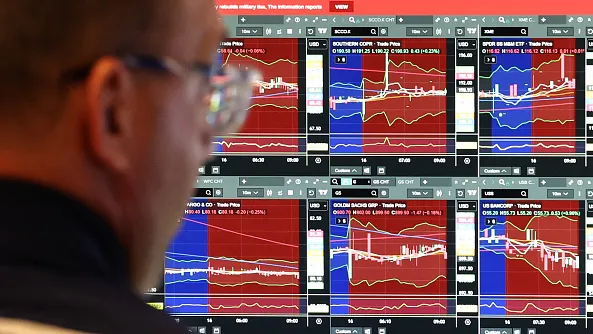
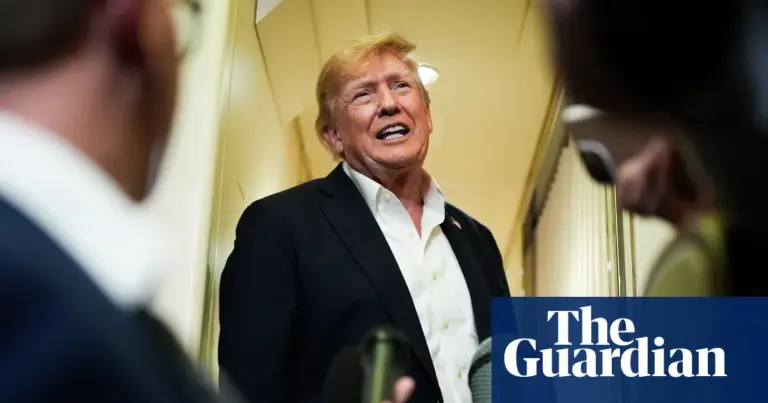
President Donald Trump took to Truth Social on Sunday to claim that he has generated hundreds of billions of dollars in stock market gains for the United States. Writing in his characteristic style, the 80 year old president insisted that these financial wins were achieved for the benefit of the country rather than himself, while lamenting that he continues to face criticism from whom he called Radical Left Dumocrats. To accompany the announcement, Trump shared an AI generated image showing him in the Oval Office surrounded by multiple monitors displaying complex stock data.

While the president provided no specific documentation to back up the staggering figure of hundreds of billions, some recent administrative moves suggest a strategy of direct investment. According to reports from CNBC, the administration acquired a ten percent stake in Intel back in August 2025, an investment that has surged in value and is currently estimated at around fifty billion dollars. However, this focus on market growth comes amid ongoing controversy regarding Truth API, a high priced subscription service on Truth Social that grants users early access to government announcements. This has led several senators to call for an SEC investigation into whether such privileged information gives certain investors an illegal edge.

The claims about wealth generation were part of a larger social media blitz lasting over ten hours, during which Trump and his team posted dozens of AI altered images. These visuals ranged from portraits of the president with historical figures to displays of American military dominance. In perhaps the most surreal moment of the weekend, the White House official account on X shared a generated video casting Trump as the DC Comics character Green Lantern. The clip featured the superhero’s iconic oath about fighting evil in both brightness and darkness, framing the president as an intergalactic protector alongside his economic assertions.

President Donald Trump sparked fresh controversy on Sunday after spending over ten hours posting a deluge of AI generated imagery and unverified financial claims to Truth Social. Among the most striking assertions was a claim that he has earned hundreds of billions of dollars through stocks and various holdings specifically for the benefit of the United States. This statement accompanied an artificial image showing the president monitoring market screens in the White House, where he lamented that his efforts are unfairly criticized by those he termed Radical Left Dumocrats.

While the administration provided no concrete evidence to support these massive figures, some point to a strategic investment in Intel from August 2025, which is currently valued at over fifty billion dollars. However, these boasts arrive amid ongoing scrutiny regarding the presidents relationship with financial markets. US Senators have already pressed the Securities and Exchange Commission to investigate Truth API, a high priced subscription service that offers early access to policy announcements, raising questions about potential violations of federal securities laws.

The surreal digital gallery extended far beyond economics, depicting the president in various heroic roles alongside historical figures like George Washington and even imagining actor Robert De Niro endorsing him. Some images leaned into aggressive geopolitical themes related to the current conflict with Iran, while others reimagined global geography entirely. These posts claimed ownership over celestial bodies and international waters, labeling the moon as American property and designating the Strait of Hormuz as new US territory.

This latest spree also highlighted escalating tensions with Canada following an executive order attempting to rename Lake Ontario as Lake America. While Trump used AI visuals to cement this territorial claim on social media, Canadian Prime Minister Mark Carney remained firm, stating that his country would continue to use its traditional name for the lake. The White House has yet to provide formal clarification or detail regarding the nature of these expansive claims and images.

The financial industry is facing a new wave of uncertainty as the Securities and Exchange Commission delays a highly anticipated innovation exemption. This pause has left firms developing tokenized securities and on-chain market infrastructure questioning when they can finally scale their operations. While some players have managed to launch tokenized funds under current regulations, the exemption was envisioned as a critical bridge allowing companies to issue, custody, and trade digital assets without being forced into outdated frameworks that were never designed for blockchain technology.

Ryan Louvar, the Chief Legal Officer at WisdomTree, suggests that the stakes here go far beyond any single financial product. According to Louvar, the goal of the exemption was to foster an entire ecosystem for on-chain trading rather than just providing a loophole for individual assets. By creating a limited, time-bound framework for these activities, the SEC could have reduced friction in how tokenized securities are handled globally without needing to permanently overhaul decades of established securities law overnight.

The ongoing delay highlights a deeper tension between regulatory caution and technological momentum. Many experts believe this stalemate reflects a lack of coordination between the commission and Congress, suggesting that while the SEC holds some levers of power, true stability requires legislative clarity. Until then, firms must navigate a fragmented landscape where progress continues in small increments despite the absence of a formal green light from Washington.

Ultimately, the situation serves as a reminder that technical capability often outpaces legal architecture. While tokenization proves that markets can operate more efficiently on-chain, those efficiencies cannot be fully realized until there are durable rules regarding custody and market structure. For now, the industry remains in a holding pattern, waiting for regulators to decide if they are ready to embrace a digitized version of Wall Street.

As artificial intelligence continues to reshape the modern workplace, many employees are left wondering whether their current roles will even exist a decade from now. The anxiety surrounding automation is no longer just a plot point for science fiction movies but a daily concern for millions of workers across various industries. In a recent exploration by The Indicator from Planet Money, the conversation shifted toward finding concrete answers amidst the uncertainty of an evolving economy.

To find some clarity, the program turned to one of the most reliable resources available: the Bureau of Labor Statistics’ Occupational Outlook Handbook. By diving into this comprehensive guide, they attempted to separate hype from reality regarding which professions are truly at risk and which ones possess built-in defenses against algorithmic takeover. Rather than guessing, the analysis relied on historical data and projected growth trends to identify where humans still hold an irreplaceable advantage over software.

The discussion highlighted that while certain repetitive tasks are prime candidates for disruption, other roles require emotional intelligence and complex physical problem solving that AI cannot yet replicate. By flipping through the handbook, listeners were encouraged to look beyond surface level fear and instead focus on the specific skills that make a career resilient. It turns out that being future proof often depends less on avoiding technology and more on occupying spaces where human judgment remains essential.

Beyond individual career paths, the broader implications of these shifts are already becoming visible in younger generations. Recent reports suggest that AI may be shrinking entry level opportunities for teenagers, potentially altering how new workers enter the labor market entirely. As these disruptions ripple outward, staying informed through tools like government projections becomes not just helpful, but necessary for long term financial survival in a digital age.