Archive

October 18, 2026

Browsing

For many modern couples, the joy of planning a wedding is often eclipsed by the sticker shock of the budget. With average costs climbing toward 36,000 dollars, newlyweds are finding themselves caught between inflationary pressures on everything from floral imports to formal wear and the desire to keep up with viral social media trends. As expenses mount, couples are forced to decide where to splurge and where to slash their spending. According to data from Zola, dessert has become a primary target for cost cutting, as many feel that a high priced specialty cake simply does not justify the expense.

Rather than abandoning the beloved tradition of slicing a cake altogether, some are turning to their local supermarkets for a more affordable alternative. In Alabama, brides have found success with Publix, which offers tiered designs that mimic luxury bakery styles at a fraction of the cost. By opting for grocery store tiers over custom creations, couples can save several dollars per slice without sacrificing the visual impact of a traditional white frosted centerpiece. For those looking for even deeper discounts, wholesalers like Costco provide massive sheet cakes that bring the cost down to mere cents per serving.

This shift toward convenience store confectionery is reflected in growing sales numbers. Retail specialists note that demand for wedding cakes at some regional grocery outlets has surged since 2020, proving that guests rarely notice the difference once the party starts. One bride recalled how her coworkers were shocked to discover her elegant cake came from Publix, especially after seeing how well it blended with her venue decor. While these options may lack the hyper customized flavor profiles or intricate artistry of a boutique pâtisserie, they fulfill the essential role of providing a crowd pleasing treat.

Ultimately, the move toward grocery store cakes highlights a broader perspective on what truly matters during a wedding celebration. For couples dealing with expensive destination venues or rising living costs, prioritizing memories over gourmet frosting makes practical sense. As one California bride noted after choosing a wholesale cake for her vineyard wedding, the specific brand of flour or sugar is irrelevant compared to the symbolism of sharing a first dessert together as spouses_

While Michael Dell often captures the headlines as one of the wealthiest individuals on earth, it is his wife, Susan, who serves as the primary architect behind their massive philanthropic engine. Together, they have distributed roughly 10 billion dollars through the Michael and Susan Dell Foundation, but Susan is widely recognized as the person calling the shots. Since co-founding the organization in 1999, she has steered its efforts toward education, health, and economic stability, managing over 800 projects annually across Texas, India, Israel, and Africa.

Susan’s dedication to these causes is rooted in her childhood. With a father who worked as a surgical oncologist, she developed an early obsession with public health that once led her to warn strangers in grocery stores about the dangers of smoking. This innate drive to improve lives defines her leadership style today. According to Janet Mountain, head of the foundation, Susan’s belief that individual people matter translates directly into a relentless pursuit of scalable systemic solutions.

One of her most ambitious recent moves involves a massive investment in American youth through Trump Accounts. By committing 6.25 billion dollars to provide small seed contributions to 25 million children in lower income zip codes, Susan aims to jumpstart generational wealth for families who otherwise lack access to such resources. It is part of a broader philosophy that providing a visible financial future for children creates tangible hope and lasting prosperity.

Closer to home in Texas, Susan has left an indelible mark on higher education and medicine. The couple recently became the first donors to give more than 1 billion dollars to the University of Texas at Austin, funding everything from AI medical centers to supercomputing facilities. From establishing the Dell Medical School to leading recovery efforts after Hurricane Harvey, her influence spans both cutting edge research and grassroots disaster relief.

Outside of her role as a philanthropist, Susan has lived a multifaceted life as an endurance athlete and a fashion entrepreneur who launched several clothing labels. Despite being inducted into the Texas Women’s Hall of Fame and receiving numerous accolades for her generosity, she remains remarkably humble about the scale of her impact. Looking back at years of global giving and billions spent on social progress, she maintains that they are really just getting started.

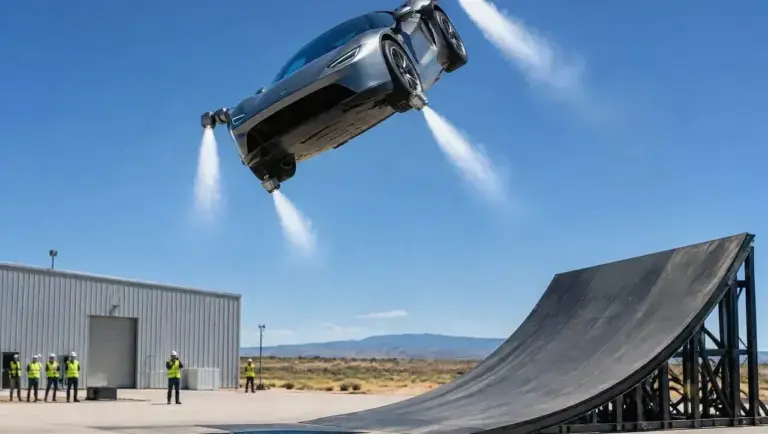
Elon Musk recently claimed that flying cars are finally a reality after a modified Tesla Roadster successfully took flight at a SpaceX test facility in McGregor, Texas. During the high profile demonstration, the vehicle sped up an inverted ramp, launched into the air, and executed a midair flip before landing via a series of integrated thrusters. While the spectacle produced viral footage and staggering performance claims, including an acceleration rate of zero to sixty in under a second, industry experts suggest there is a massive divide between a successful stunt and a certifiable aircraft.

The technology powering these leaps consists of compressed air thrusters known as reaction control systems, similar to those used by SpaceX and NASA to orient spacecraft in vacuum environments. However, applying this logic to a consumer vehicle introduces grueling safety requirements that go beyond simple propulsion. In the world of aerospace regulation, success is not measured by whether a machine works once, but by how it fails. For a vehicle to be certified for public use, Tesla must prove that the system possesses extreme redundancy, ensuring that a single leaking valve or computer glitch does not lead to a catastrophic loss of control while passengers are on board.

Comparing the Roadster to SpaceX’s own Dragon capsule reveals just how steep the climb remains for Tesla’s 2028 production goal. The Dragon employs layers of independent computers and separate power paths specifically designed so that no single hardware fault can end a crewed mission. Fitting that level of fail safe architecture into the cramped chassis of a sports car is an immense engineering challenge. Until Tesla releases detailed data on nozzle thrust output and failure mode analysis, critics argue that the McGregor demo was more of an exhibition in physics than a blueprint for transportation.

The United States government is facing a deepening fiscal crisis as the cost of servicing its massive national debt reaches staggering new heights. Recent Treasury Department data reveals that net interest payments have climbed to roughly 2.9 billion dollars per day, marking an eight percent jump in fiscal 2026. This surge is particularly alarming because it is outstripping the growth of federal revenue, overall spending, and even the nation’s gross domestic product, suggesting that the cost of borrowing is becoming a runaway train that the current economy cannot easily brake.

This financial pressure stems largely from a shift in interest rates following an aggressive tightening cycle by the Federal Reserve to combat inflation. With gross debt hitting 40 trillion dollars, interest payments have now surpassed defense spending and Medicaid to become the third largest line item in the federal budget. The situation is further complicated by a strategy of relying on short term debt; currently, more than 10 trillion dollars of publicly held debt must be rolled over within the next year, forcing the government to refinance old loans at today’s significantly higher market rates.

Geopolitical instability has added fuel to the fire, with conflicts involving Iran driving up bond yields beyond what nonpartisan agencies had predicted. While some officials argue that accelerating economic growth can provide a way out of this spiral, experts warn that such a theory is mathematically improbable. To truly stabilize the debt through growth alone without cutting spending or raising taxes, the U.S. would need real GDP growth rates nearly triple what it has seen in recent quarters.

Critics and budget watchdogs are sounding alarms that Washington remains paralyzed despite these warnings. Rather than implementing austerity measures or revenue hikes, current political trends suggest a continued appetite for rebates and dividends to voters. Without a significant fiscal intervention, analysts fear a vicious cycle where higher interest leads to more debt, eventually threatening the stability of the entire American financial system.

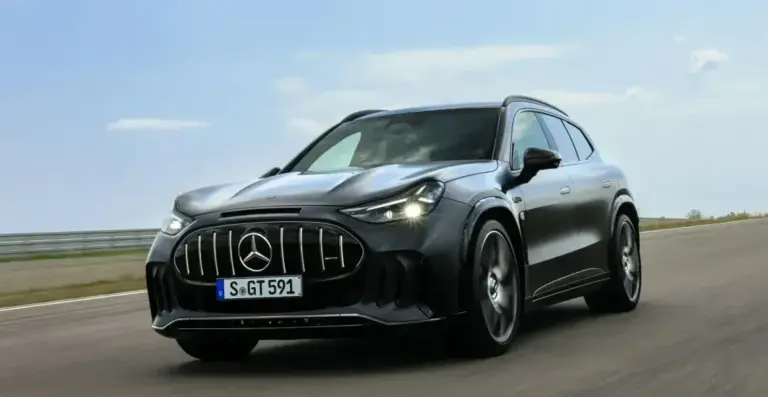
Mercedes-AMG is stepping into a new era of electrification with the reveal of the 2028 GT SUV, marking the first time in nearly six decades that the performance brand has designed a full-size utility vehicle entirely from scratch. Rather than adapting an existing frame, engineers utilized the dedicated AMG.EA architecture to blend suburban versatility with genuine sports car agility. Expected to arrive in the United States next summer, the lineup features three distinct trims, culminating in the flagship GT 63 which unleashes a staggering 1,153 horsepower via three axial flux motors. This puts it in direct competition with rivals like Porsche, potentially shifting the power dynamics of luxury EVs in cities like Stuttgart.

Underneath its muscular exterior lies some of the most advanced battery tech currently available to consumers. Drawing inspiration from Formula 1, the vehicle employs cylindrical cells and a specialized cooling system where nonconductive oil flows around each cell to maintain optimal temperatures during intense driving. For those worried about downtime, an 800-volt system allows for breathtakingly fast charging speeds up to 710kW. In practical terms, drivers can replenish their battery from ten to eighty percent in just twelve minutes or add roughly 280 miles of range in a mere ten minute stop.

Handling such immense power requires more than just raw strength, so Mercedes replaced traditional mechanical roll bars with an active hydraulic suspension system designed to kill pitch and roll during aggressive maneuvers. When paired with active rear axle steering and triple stage air springs, the result is a machine that aims to feel significantly smaller than its nearly six thousand pound curb weight. To keep things visceral despite the silent powertrain, AMG is piping in authentic recordings of V8 and six cylinder engines along with haptic seat vibrations and simulated gear shifts through paddle shifters.

The interior is equally futuristic, centered around a fourteen inch display powered by MB.OS and integrated AI assistants from Google and Microsoft. Beyond simple convenience and climate control, artificial intelligence plays a role in actual performance through a Predictive Performance Manager. By analyzing track mapping data in real time, the car can intelligently manage motor output based on terrain—saving energy on descents to ensure maximum thrust on long straights—effectively preventing overheating and ensuring consistent lap times for enthusiasts who take their family hauler to the circuit.