Author

admin

Browsing

The cruise industry saw a significant wave of optimism today as Carnival Corporation released third-quarter results that exceeded analyst expectations and lifted the spirits of investors across the board. Shares of Carnival surged 12 percent to 24.74 dollars following reports of record breaking top and bottom line performance. Chief Executive Josh Weinstein attributed the success to accelerating passenger demand and rigorous cost discipline, reporting revenue of 8.44 billion dollars and adjusted earnings per share of 1.43 dollars, both of which beat Wall Street forecasts.

Interestingly, the positive news acted as a rising tide for the entire sector, pulling up competitors who had yet to release their own financial data. Royal Caribbean Group shares climbed 7 percent to 258.55 dollars, while Norwegian Cruise Line Holdings rose 5 percent to 15.06 dollars. Market analysts suggest these sympathy gains indicate that investors are viewing Carnival’s strong performance as a proxy for general consumer appetite for cruises rather than an isolated win for one company.

This rally comes at a time when the industry has been plagued by anxiety over volatile fuel costs driven by geopolitical tensions in the Middle East. Because marine fuel represents one of the largest expenses for cruise operators, there is often an inverse relationship between energy prices and cruise stock valuations. Today’s jump coincided with a dip in the broader energy sector, suggesting that ease in fuel pricing combined with high booking demand created a perfect storm for growth.

Despite the enthusiasm, some cautious observers warn that Royal Caribbean and Norwegian are currently riding borrowed momentum. While Carnival has hard data to support its climb, its rivals are trading on inference alone. The ultimate test will be whether these gains hold once the initial excitement fades or if volatility in oil markets returns to threaten profit margins across the fleet. For now, however, the mood remains celebratory as travelers continue to flock back to the seas in record numbers.

Nvidia has sent shockwaves through the financial world by authorizing a massive 150 billion dollar increase to its share repurchase program, marking the largest buyback authorization in corporate history. This staggering move pushes the company’s total remaining buyback capacity to 235 billion dollars, which leadership expects to deploy through fiscal 2028. To put the scale of this decision into perspective, this single addition dwarfs Apple’s recent 110 billion dollar approval and exceeds the entire market capitalization of about 84 percent of all companies listed on the S&P 500.

Investors reacted positively to the news, sending Nvidia shares up more than 2 percent shortly after the announcement. While the stock has climbed over 20 percent so far this year, it had actually been lagging behind some of its closest rivals in the semiconductor space, such as AMD and Intel, both of which have seen much steeper gains. By returning such a significant amount of capital to shareholders, Nvidia appears to be signaling strong internal confidence despite the volatile nature of the tech sector.

Chief Executive Officer Jensen Huang attributed this financial flexibility to what he described as a once-in-a-generation shift toward artificial intelligence and accelerated computing. According to Huang, the company’s immense cash generation allows them to simultaneously fund cutting edge research and reward investors. With projected revenue growth of 70 percent by fiscal 2028, Nvidia believes its dominance in AI processor demand will continue to fuel an unprecedented level of free cash flow.

Beyond the balance sheet, Nvidia continues to expand its ecosystem with the launch of the Open Agent Safety Platform, a new initiative aimed at securing AI agents from development through deployment. The company is also making strategic moves in the broader AI landscape, reportedly negotiating a potential 10 billion dollar commitment for Anthropic’s upcoming initial public offering. As Anthropic eyes a historic valuation, Nvidia seems determined to solidify its position not just as a hardware provider, but as a central pillar of the global AI economy.

For years, investors in the resource sector have followed a simple mantra: bet on the management team. Legendary names like Pierre Lassonde and Ross Beaty became titans not through a single lucky strike, but through decades of repeated success across geology, financing, and construction. Yet as these industry giants approach the twilight of their careers, a pressing question looms over the sector. With gold, silver, and copper hitting record highs and capital finally returning to junior miners, who exactly is stepping up to lead the next generation of mining elites?

At a recent Young Leaders panel during the Beaver Creek Precious Metals Summit, three rising executives offered a glimpse into the future of the trade. Charles Funk of Heliostar Metals, Mani Alkhafaji of First Majestic Silver, and Frederick Bell of Elemental Royalty each arrived at their positions via different routes, but they shared a common philosophy regarding the necessity of boots on the ground. Whether it was Funk starting under geophysicists in Australia or Alkhafaji managing supply chains at remote sites, all three emphasized that understanding the grit and science of a mine is far more important than mastering financial spreadsheets in an office. Even Bell, whose journey included a degree in history and a painful lesson during the post-Fukushima uranium crash, noted that his resilience grew from building ventures from nothing.

Despite their optimism, these emerging leaders are candid about a looming crisis within the workforce. There is a palpable experience gap in the industry caused by a decade-long slump in new talent entering the field. To combat this brain drain, Alkhafaji advocates for community investment and scholarships to strip away the negative stigmas surrounding mining and inspire young professionals with a sense of purpose. Meanwhile, Funk suggests a mentorship model that pairs seasoned technical veterans—the weathered hands who know every pitfall—with ambitious younger managers hungry for growth.

Ultimately, these three men recognize that while they possess the energy and modern perspective needed for today’s markets, they are still chasing the kind of ironclad reputations held by their predecessors. They understand that trust in the mining world isn’t bought; it is earned through cycles of boom and bust. By focusing on operational fundamentals and aggressive talent cultivation, they are betting that they can bridge the generational divide and become the steady hands investors look for in an increasingly volatile global economy.

Canada continues to hold a commanding grip on the global potash market, accounting for nearly one third of the worlds total output. By 2025, the nation reached a production level of 15 million metric tons, cementing its role as a critical pillar in the global food supply chain. Despite this dominance, the sector has weathered significant turbulence recently, ranging from the lingering effects of the pandemic to geopolitical instability caused by Russias invasion of Ukraine. More recently, investors have kept a close eye on shifting trade relations between Ottawa and Washington. A brief scare occurred in September 2026 when President Donald Trump suggested sourcing cheaper minerals from Belarus, though he quickly reversed course after realizing Belarus lacked the necessary capacity, reaffirming that the United States would continue to rely on Canadian sources.

At the top of the investment landscape sits Nutrien, a behemoth formed by the merger of Potash Corporation of Saskatchewan and Agrium. With a massive market capitalization of over 48 billion Canadian dollars, Nutrien operates six mines in Saskatchewan and maintains an expansive retail network serving hundreds of thousands of growers worldwide. For those looking beyond these established giants, several smaller players are carving out niches through aggressive exploration and innovative technology. Millennial Potash is expanding horizons internationally with its Banio project in Gabon, while Gensource Potash is focusing on environmentally friendly operations in Saskatchewan that eliminate salt tailings and brine ponds.

Other firms are targeting specific regional demands or specialized product lines to stay competitive. Verde AgriTech has pivoted toward low carbon specialty fertilizers specifically for the Brazilian market, although recent tight credit conditions in South America have slightly dampened their sales volume. Meanwhile, Sage Potash is eyeing domestic American demand by developing properties in Utah using solution mining techniques rather than traditional underground methods. Together, these five companies represent a broad spectrum of risk and reward within an industry that remains essential for global agricultural productivity regardless of political winds.

FIRST ON FOX: House GOP lawmakers are rolling out a slew of new bills after a bombshell report found that hundreds of billions of taxpayer dollars are potentially being targeted by fraudsters every year.

As people across the U.S. are battling high costs that make it hard to make ends meet, a report released Tuesday by the House Energy & Commerce Committee warns that federally subsidized healthcare programs are rife with fraud and abuse — “impacting every single American, in one way or another.”

While no estimate for Medicare and Medicaid fraud exists specifically, the report noted, a 2024 estimate by the Government Accountability Office said $233 billion to $521 billion taxpayer dollars going to federal programs are lost to fraud every year. Federal healthcare programs accounted for 24% of federal spending in 2024, according to the Center on Budget Policy and Priorities.

Medicaid specifically is rife with vulnerabilities making it susceptible to fraud, the report said, which is why House Republicans are rolling out 14 bills aimed at closing loopholes in the system, shrinking bureaucracy, and making it easier for states to recoup lost dollars while also incentivizing them to go after potential fraudsters.

“Taxpayers that fund benefit programs with federal and state taxpayer dollars are cheated by fraud, inflating healthcare costs that are passed along to everyone,” the committee’s report states. “Every dollar stolen from federal health care programs is a dollar that is not spent on high quality healthcare for those that need it most.”

WHITE HOUSE PUSHES ‘WATERSHED’ FRAUD-FIGHTING REFORM IN CONGRESS AS VANCE CONVENES TASK FORCE

“The amount of fraud that the Biden-Harris Administration allowed to go unchecked in government health programs is unacceptable. Every dollar stolen by fraudsters or wasted on improper payments is a dollar that cannot be used to support families in need who rely on these programs,” House Energy & Commerce Committee Chairman Brett Guthrie, R-Ky., told Fox News Digital.

REPUBLICANS DECLARE WAR ON ‘ORGANIZED THEFT’ WITH GOVERNMENT FRAUD CRACKDOWN

Republicans’ new bills can be lumped into three categories: legislation aimed at improving identification of fraud in state and federal health programs, legislation aimed at enforcing anti-fraud rules, and legislation to hold states that allow fraud to run rampant accountable.

One bill led by Republican Study Committee Chairman August Pfluger, R-Texas, for example, would force states to designate a single role for internal financial controls of state Medicaid programs.

READ: DR. OZ PUTS ALL 50 GOVERNORS ON NOTICE OVER BILLIONS LOST TO MEDICAID FRAUD

A bill by Rep. Mike Rulli, R-Ohio, would force each state to annually report to the federal government on any potential Medicaid fraud vulnerabilities and their plan to fix it.

And legislation by Rep. Nick Langworthy, R-N.Y., would require states to check whether someone enrolling for Medicaid was removed from another taxpayer-funded healthcare program.

The report released on Tuesday said that Medicaid spending accounts for an average 30.7% of states’ budgets, and that those outlays have increased exponentially in recent years.

States like New York and California are also projected to see costs spike, the report said.

TOP FEDERAL PROSECUTOR CALLS CALIFORNIA A ‘FRAUDSTER’S PARADISE,’ WARNS STATE OFFICIALS COULD FACE CHARGES

The Golden State is expected to see annual Medi-Cal spending, its state healthcare program, rise from $83 billion per year in 2014 to $219.7 billion by 2027, the report said, adding, “New York is projected to spend 11% more on Medicaid from all funding sources in 2027 — a total of $124 billion.”

The report noted that federal healthcare is ripe for fraud given its size and complexity, as well as the traditional enforcement model of “pay and chase,” which relies on law enforcement to investigate fraud suspicions after a false claim has already been settled.

Provider fraud is also a common area of losing tax dollars, with healthcare providers being known to submit multiple claims for a single service or bill services and equipment for patients that they have never seen at all, the report said.

Transnational criminal groups have also profited from U.S. healthcare fraud, the report said, alleging that hardworking Americans are seeing their tax dollars not only lost to fraud at home but overseas as well.

TRUMP ADMIN’S FRAUD CRACKDOWN TARGETS FOREIGNERS ACCUSED OF INFILTRATING US FEDERAL PROGRAMS

The Department of Justice’s (DOJ) “Operation Gold Rush” uncovered that Russian organized crime actors billed over $10 million in false claims made via 30 medical supply companies they purchased in a years-long scheme, the report said.

It highlighted further foreign healthcare schemes that saw malign actors in Hong Kong, Georgia, Estonia, Pakistan and elsewhere attempt to steal billions more in U.S. taxpayer dollars.

The fraud reports come at a time when millions of Americans across the country are struggling with high living costs that have made it a challenge to make ends meet.

Guthrie said the House GOP legislative package amounted to “commonsense steps” to ensure states can recoup lost fraud dollars and incentivize them to close loopholes in the future.

It comes as the Trump administration is also prioritizing healthcare fraud crackdowns. Vice President JD Vance announced last week that 760,000 enrollees under the Affordable Care Act, also known as ObamaCare, would be removed over fraud claims.


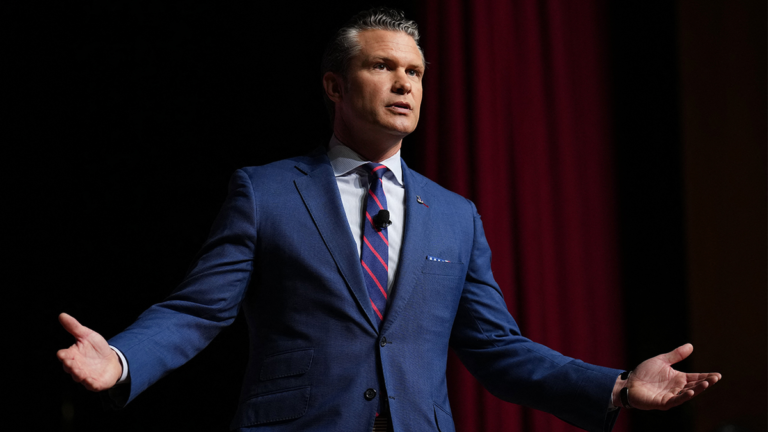
War Secretary Pete Hegseth will announce plans to reduce by 20% the number of positions reserved for generals and admirals during his State of the Force address on Wednesday.

Hegseth approved reduction plans for the Army, Navy, Air Force and the military’s joint pool earlier this month, according to memos seen by Fox News Digital. The services were directed to implement the plans and complete the reductions by Jan. 1, 2027.

Wednesday’s State of the Force address is expected to lay out Hegseth’s priorities for the military in the year ahead, with the reduction in senior leadership positions among the changes he will unveil.

The new target doubles the 10% overall reduction in general and flag officer positions Hegseth ordered last year as part of his effort to streamline the military’s senior ranks. That earlier directive separately called for a 20% reduction in active-duty four-star positions and a 20% reduction in National Guard general officers.

SENATE REPUBLICAN PUSHES MERIT-BASED MILITARY PROMOTIONS, TARGETS BIDEN-ERA DEI POLICIES

Hegseth dubbed that effort “less generals, more GIs,” arguing that reducing senior headquarters positions would push resources and authority toward troops closer to the fight.

The latest reductions apply to billets — positions designated for generals and admirals — rather than an across-the-board removal of 20% of the officers currently serving in those ranks, a War Department source told Fox News Digital.

At least some of the positions will be downgraded rather than eliminated altogether. In a Sept. 16 memo approving reductions to the military’s joint pool, Hegseth directed officials to establish O-6 requirements for general and flag officer positions identified for downgrade, allowing colonels and Navy captains to fill those jobs.

GOP REP THOMAS MASSIE INTRODUCES 8 ARTICLES OF IMPEACHMENT AGAINST WAR SECRETARY PETE HEGSETH

The announcement comes exactly one year after Hegseth summoned hundreds of generals and admirals from around the world to Quantico, Virginia, for an extraordinary gathering where he laid out his expectations for the military’s senior leaders and warned those who did not support his reforms to step aside.

Hegseth has argued that reducing the number of generals and admirals would strip away unnecessary layers of bureaucracy and push authority down the chain of command.

SIGN UP TO GET THE POLITICS NEWSLETTER

“This is not a slash-and-burn exercise meant to punish high-ranking officers,” Hegseth said when he announced the earlier reductions in May 2025. “This has been a deliberative process, working with the Joint Chiefs of Staff with one goal: maximizing strategic readiness and operational effectiveness by making prudent reductions in the general and flag officer ranks.”

This year’s audience will look different. Military commands have been asked to send top-performing service members who meet fitness and body-composition requirements and maintain “impeccable” grooming and uniform standards, according to published reports on internal Pentagon guidance for the event. Some troops selected to attend are also expected to participate in a workout with Hegseth.

FIRST ON FOX: The Trump administration is seeking to disrupt with a sweeping set of sanctions a sprawling Sinaloa cartel network accused of corrupting Mexican officials just across the U.S. border.

Los Mayos, a powerful faction of the Sinaloa cartel, and its U.S.-born leader are accused of funneling fentanyl and drug money through California and hiring hitmen to kill rivals on American soil.

The Treasury Department, according to material exclusively obtained by Fox News Digital ahead of their public release on Tuesday, will sanction 21 individuals and 25 entities in a crackdown against Los Mayos and their alleged illegal activity within U.S. borders.

The targets of the sanctions include Ismael Zambada Sicairos, known as “Mayito Flaco,” a dual U.S.-Mexican citizen born in Anaheim, California, whom Treasury describes as the “undisputed head” of Los Mayos.

MEXICAN GOVERNOR FACING US DRUG CHARGES SEEKS LEAVE JUST ONE DAY AFTER RETURNING TO OFFICE

The action lays out how one of Mexico’s most powerful cartel factions allegedly maintains its grip on two critical trafficking corridors along the U.S. border — through political and police corruption, money laundering and violence that Treasury says has extended into Southern California.

It also exposes what Treasury describes as deep cartel penetration of government and law enforcement in Baja California, the Mexican state bordering California.

The Treasury says Sinaloa-linked “narco-corruption has reached the highest levels” of the state government, alleging that the ex-husband of Gov. Marina del Pilar Ávila Olmeda used his political influence to protect cartel operations and that a former Mexicali public security chief accepted bribes to allow the cartel to exert control over municipal police.

The allegations shed new light on a controversy that erupted last year when the U.S. revoked the visas of both Ávila and her then-husband, Carlos Torres Torres.

The State Department revoked Torres’ U.S. visa in May 2025 over what Treasury now describes as his “cartel affiliation and work on behalf of the Sinaloa cartel.” Olmeda’s U.S. visa was also revoked around the same time, though U.S. officials did not publicly disclose a reason for the action against her.

The Department of War also played a role in the effort through Joint Interagency Task Force-Counter Cartel, which works with federal law enforcement, intelligence agencies and Treasury to identify cartel financial and facilitation networks.

“These sanctions reflect the impact of sustained interagency collaboration and intelligence fusion in identifying and disrupting the networks that enable violent transnational cartels,” Brig. Gen. Maurizio Calabrese, director of JIATF-Counter Cartel, told Fox News Digital.

Calabrese said the task force contributed analysis and operational insight on cartel-linked financial and facilitation networks to support the broader effort behind the sanctions.

POTENTIAL SECURITY THREAT PROMPTS US TRAVEL SUSPENSION FOR BORDER CITY ON ALERT

Treasury also alleges the cartel’s reach extended directly into California.

Lorenzo Castillo Maldonado, an associate in Mayito Flaco’s network, allegedly hired hitmen on the cartel leader’s orders to kill rival cartel members in Southern California. Another part of the network allegedly worked with complicit Southern California money exchanges to collect bulk cash from U.S. drug sales and move the proceeds back to Mexico.

The sanctions are aimed in part at disrupting Los Mayos’ grip on the Tijuana and Mexicali “plazas,” strategic corridors Treasury says the cartel uses to move fentanyl and other narcotics into the U.S.

“Today’s action underscores that no cartel kingpin, corrupt Mexican government official, or financial facilitator is beyond the reach of Treasury’s authorities,” Treasury Secretary Scott Bessent said. “Our message is clear: the Trump administration will identify and disrupt any cartel actor who threatens our security or the integrity of our financial system.”

The designations effectively cut the targets off from the U.S. financial system, blocking property and assets under U.S. jurisdiction and generally barring Americans from doing business with them. Foreign financial institutions that knowingly facilitate significant transactions for sanctioned individuals could also face U.S. sanctions.

At the center of Tuesday’s action is Mayito Flaco, who Treasury says has emerged as the undisputed leader of Los Mayos following the July 2024 arrest of his father, longtime Sinaloa cartel kingpin Ismael “El Mayo” Zambada Garcia.

SINALOA CARTEL BOSS ‘EL MAYO’ SENTENCED TO LIFE, ORDERED TO PAY $15B IN DRUG TRAFFICKING PROFITS

El Mayo’s arrest set off a violent struggle between Los Mayos and Los Chapitos, the Sinaloa faction led by sons of Joaquin “El Chapo” Guzman. Treasury says the two factions remain locked in a costly internal war that has forced both sides to rebuild their leadership and alliances.

Mayito Flaco, 44, was born in Anaheim in 1982 and later filed a U.S. name change to Fernando Sicairos Aispuro, according to Treasury. He was federally indicted in California in 2014 on drug trafficking and money laundering charges and remains a fugitive in Mexico.

The Treasury says he now commands Los Mayos’ drug trafficking, murder, extortion, corruption and kidnapping operations.

The sanctions also target Torres’ brother, Luis Alfonso Torres Torres, whom Treasury accuses of collecting bribes and laundering illicit funds through companies and political campaigns.

Former Mexicali Public Security Director Pedro Ariel Mendivil Garcia is also being sanctioned. The Treasury alleges Mendivil accepted bribes from Los Rusos leader Juan Jose Ponce Felix, known as “El Ruso,” in exchange for allowing the cartel to exert control over municipal police, facilitate drug trafficking and carry out enforcement operations.

Reported guidance directing some ICE offices to pull back on arrests of illegal immigrants without criminal histories triggered backlash from policy hawks, raising questions whether the Trump administration is sending conflicting signals on enforcement.

The guidance was rescinded within hours, and Trump told Fox News there had been no change in an enforcement posture that prioritizes — but is not limited to — the “worst first.” The verbal guidance had been relayed to ICE field offices around the country, according to multiple sources familiar with the matter, though it remains unclear who initially issued the instruction.

Administration officials later characterized it as a misunderstanding rather than a formal policy change, and new guidance reaffirming there had been no change in enforcement policy was sent within hours. The episode nevertheless reinforced concerns among some immigration hawks who say recent public messaging from administration officials has suggested a narrower approach to interior enforcement than Trump campaigned on.

Mike Howell, a leader of the Mass Deportation Coalition and president of The Oversight Project, argued public criticism helped force the reversal but said the episode also fit what he views as a broader pattern of mixed messaging from DHS on interior immigration enforcement.

“[The guidance] was walked back, allegedly, which is great, and I think it was in large part walked back because people spoke out very, very loudly,” Howell said, while adding there is a troubling undercurrent to some of DHS’ messaging on the greater matter:

WHITE HOUSE BRINGS RECEIPTS AFTER MEDIA CLAIMS NONCRIMINAL ICE ARRESTS ‘SOARING’: ‘FALSE NARRATIVES’

As an example, Howell pointed to a tweet from DHS Secretary Markwayne Mullin posted one day before the ICE guidance news broke, in which the secretary said the department was “not conducting worksite operations in Kansas” but was targeting criminal illegal immigrants and those facing removal.

The post followed ICE operations in Kansas that prompted complaints from Sen. Roger Marshall, R-Kan., who said DHS had failed to coordinate with local authorities during operations in cities including Liberal.

“I’ve never seen a secretary put anything like that in writing,” Howell said. “[If it were] an Obama or Clinton or Biden DHS secretary, we would have called for impeachment if they said that.”

‘GONE TOO FAR:’ GOP CANDIDATE RUNS TO TRUMP’S LEFT ON SIGNATURE ISSUE IN DEEP RED DISTRICT

FIRST ON FOX: FBI Director Kash Patel says the bureau is expanding its global hunt for sprawling scam compounds that prey heavily on Americans, telling Fox News Digital that Operation Blackout has seized roughly $17 billion tied to the schemes. 

“At 71 years old, I’m old enough to know that people my age are certainly often targeted because of our unfamiliarity with certain new technologies. Thanks so much for looking out for us,” one victim told the FBI.

“I watched my grandmother lose her life savings to scammers and I would love to see them all be put away,” said another victim.

Operation Blackout is the FBI’s global campaign to identify, disrupt and dismantle foreign scam compounds targeting Americans, combining overseas raids and asset seizures with efforts to cut off the networks’ communications, rescue trafficked workers and return stolen money to victims.

FBI WRAPS UP CYBERCRIME OPERATION TARGETING GLOBAL NETWORKS PREYING ON AMERICANS

Patel said the FBI-led initiative is targeting criminal syndicates operating massive scam compounds across Southeast Asia and the Middle East, where trafficked workers are forced to carry out fraud schemes against victims thousands of miles away.

“Unfortunately, the majority of the targets are senior citizens in America,” Patel told Fox News Digital, pointing to schemes carried out through social media, phone calls, text messages and Telegram.

“Our initiative, Operation Blackout, is to prevent, disrupt, and dismantle,” Patel added. 

FBI SEIZES RECORD-SETTING $8 BILLION IN CRYPTOCURRENCY AMID INTERCONTINENTAL ‘SCAM COMPOUND’ CRACKDOWN

In one common version of the scheme, criminals cultivate an online friendship or relationship with a victim before steering them toward a fraudulent cryptocurrency investment platform.

Victims may initially believe their investments are generating significant returns, only to discover they cannot withdraw their money.

“These are towns, these are cities,” Patel said of the scam compounds targeted by the operation. “These are actual villages with structures where they force people into forced labor.”

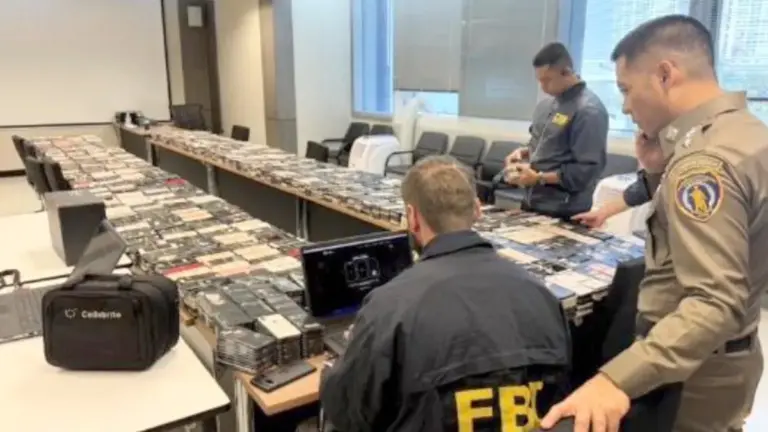
An August operation at Cambodia’s roughly 200-acre O’Smach Resort scam compound involved searches of 28 buildings over three days and resulted in the seizure of 113 hard drives, 15 computers and 35 boxes of evidence, according to the FBI.

The bureau is also trying to stop Americans from becoming victims before their money ever reaches the scammers.

SCAMMERS ARE COMING FOR YOUR MONEY. HERE’S THE ONE THING YOU MUST NEVER DO

Under Operation Level Up, its domestic prevention component working with U.S. Secret Service, the FBI proactively identifies and contacts potential victims of cryptocurrency investment scams. The bureau says it has notified 10,406 victims and prevented an estimated $660 million in losses, while seizing or freezing another $122 million in cryptocurrency.

The FBI said 77% of the people it contacted did not know they were being scammed. The bureau has also referred 99 victims for suicide intervention, seized 584 scam websites and sent 7,670 scam accounts to private-sector companies for action.

THE SECRET LIST THAT TELLS SCAMMERS YOU’RE AN EASY TARGET

In September, a DOJ Scam Center Strike Force team that included FBI Honolulu personnel helped authorities in Madagascar take down 13 scam centers operated by Chinese organized crime syndicates and process more than 3,200 electronic devices.

Patel said the geographic shift is part of a broader migration by the criminal networks.

“That’s why you’re seeing the migration of these scam compounds to central and sub-Saharan Africa, which is where we are already pre-positioned to take them off,” Patel said.

OpenAI turned heads at its latest DevDay in San Francisco, where CEO Sam Altman unveiled a sweeping array of updates designed to transform the chatbot into a comprehensive operating system for productivity. Among the biggest reveals were plugin extensions, which allow developers to embed entire applications, dashboards, and workspaces directly into ChatGPT and Codex. This shift toward deeper integration was paired with the introduction of GPT-6.1 Sol, a high-performance model launched just a week after its predecessor to enhance professional workflows and agentic coding capabilities.

To cater to power users and enterprise clients, the company introduced a new Pro 500 tier featuring an ultrafast speed setting that drastically reduces latency for those using the API and Codex. Addressing long-standing concerns regarding corporate security, Altman also previewed OpenAI Private Intelligence. This new framework offers zero data retention and private inference, ensuring that sensitive information remains off OpenAI servers while still leveraging the lab’s most advanced frontier models. These features were developed alongside major partners like Cisco, Databricks, and Snowflake to ensure they meet strict industry safety standards.

Beyond the technical roadmap, the atmosphere surrounding DevDay was charged with financial anticipation. Reports confirmed that OpenAI is currently in early stage discussions with investors for another massive funding round that could reach approximately 30 billion dollars. Driven largely by aggressive investor demand, this potential injection of capital comes on the heels of a historic valuation earlier this year and serves as a precursor to a highly anticipated initial public offering expected next year.

As the keynote wrapped up before thousands of attendees, Altman emphasized his vision of AI as a tool for personal empowerment rather than mere automation. He noted that every feature released throughout the day was intended to give people more control over their lives and greater capacity for discovery. With various executives scheduled to discuss scaling these technologies at upcoming forums, OpenAI appears focused on bridging the gap between experimental research and indispensable global infrastructure.