Author

admin

Browsing

A former engineer at OpenAI is facing federal charges after authorities say he attempted to spy on highly sensitive company discussions using makeshift surveillance equipment. Abdulrahman Alfozan, a 35 year old Saudi national and legal permanent resident of the United States, was arrested by the FBI following the discovery of a recording device hidden behind a television in one of the company’s most secure meeting rooms. In a detail that seems more like a movie plot than corporate reality, investigators found the bug carefully wrapped in toilet paper to avoid detection.

Court documents suggest that Alfozan may have turned to artificial intelligence to plan his operation. Prosecutors allege that between August and September, he used productivity chatbots to inquire about meeting room schedules and where external partners typically met with company executives. He reportedly went even further, utilizing a chatbot account belonging to his spouse to research how to construct a remote listening device and successfully install it without being noticed.

The stakes were particularly high given the nature of the targeted room, which served as a hub for discussing confidential technical strategies and government partnerships. While Alfozan had no authorization to attend these sessions, CCTV footage reportedly showed him loitering near the area multiple times throughout September. Security eventually uncovered the first device on September 30, and shortly thereafter, another similar recorder was found inside an unattended bag containing Alfozan’s identification.

OpenAI responded to the breach via social media, noting that they utilized their own AI models to analyze the hardware and trace its origin. Despite the intrusion, the company stated there is currently no evidence that proprietary source code or customer data was stolen. For now, Alfozan remains in legal limbo; while his attorney argues that these accusations are entirely out of character for a man who moved to America chasing a dream, the defendant faces up to five years in prison if convicted of intercepting oral communications.


Netflix is undergoing its most significant organizational overhaul in four years, resulting in the departure of Vice President of Film Doug Belgrad. The exit comes as part of a broader cost cutting initiative announced by co-CEOs Ted Sarandos and Greg Peters, who revealed that roughly 1,000 employees representing about six percent of the total workforce will be laid off. While leadership maintains that the company’s financial health remains strong, these cuts signal a strategic pivot toward leaner operations during a volatile period for the entertainment industry.

Belgrad arrived at the streaming platform earlier this year, serving as a critical lieutenant to film chairman Dan Lin. With a deep pedigree that included leading Columbia Pictures at Sony, Belgrad was tasked with managing over thirty production executives across Netflix’s vast array of original live action projects. He played a pivotal role in coordinating heavy hitting productions involving filmmakers like Guillermo del Toro and Greta Gerwig, and he recently celebrated the premiere of Ben Affleck’s latest directorial effort, Animals.

Under current management, Netflix has shifted its movie division into specialized genre silos to streamline development. This structure sees different executives handling specific categories such as thrillers and action films separately. Despite his high standing within this framework, Belgrad became a casualty of the reorganization aimed at improving efficiency amidst an annual content spend estimated at twenty billion dollars.

In a memo to staff, Sarandos and Peters acknowledged the difficulty of the layoffs but urged their teams to remain focused on innovation at the intersection of tech and media. They insisted that aggressive investments in high impact areas would continue even as they trim overhead. As for Belgrad, he continues to lead 2.0 Entertainment, his own venture which currently has several feature films in progress through partnerships with studios like Paramount and Sony.

Federal authorities have arrested a Saudi national employed as an engineer at OpenAI after he allegedly planted a secret recording device in an executive conference room. According to prosecutors, Abdulrahman Alfozan hid the device behind a television at one of the company’s San Francisco offices around late September. The discovery has sparked immediate concern regarding potential attempts to steal sensitive proprietary information from one of the world’s most prominent artificial intelligence firms.

In a twist of irony, investigators claim that Alfozan turned to the very technology he helped develop to orchestrate the operation. Federal prosecutors allege that the engineer utilized his wife’s ChatGPT account to research the logistics of corporate espionage. In the days leading up to the installation, Alfozan reportedly entered various prompts asking how to construct a continuous audio recorder, how to enable live listening capabilities, and how to effectively download or delete recorded files.

While Alfozan faces serious allegations tied to the assembly and placement of the surveillance equipment, officials have stated that his wife has not been charged in connection with the case. This breach comes at a tumultuous time for OpenAI, which continues to navigate intense scrutiny over safety protocols and internal stability as it leads the global race in generative AI development.

Netflix is feeling the sting of a massive corporate restructuring that has claimed some of its most seasoned creative voices. While co-CEOs Ted Sarandos and Greg Peters initially suggested that the bulk of the thousand job cuts would fall upon technical, legal, and HR departments, the reality has proven far more disruptive for the company’s storytelling engine. Among the highest profile departures is Carolina Garcia, who served as director of original series for a decade. Garcia was a cornerstone of the streaming giant’s growth, managing pivotal relationships with heavy hitters like The Duffer Brothers and overseeing global phenomena such as Stranger Things.

The purge extended deep into the television development ranks, removing several key directors and managers responsible for shaping the platform’s prestige slate. Departing executives include Lisa Lang McMullen, Andrew McQuinn, James Oh, and Jason Pan. These exits represent a significant loss of institutional knowledge and industry connections, as many brought decades of experience from legacy studios like Disney, Fox, and Warner Bros. On the film side, the losses were equally steep with the departure of Vice President Doug Belgrad.

Beyond content creation, Netflix appears to be drastically scaling back its pursuit of industry accolades. The publicity and awards teams took a severe hit, resulting in the exit of senior director Kelly Caton and entertainment communications director Dominic Pagone. Insiders suggest that a substantial portion of the awards strategy team has been eliminated entirely, signaling a potential shift in how the streamer approaches its image during award season.

Despite the scale of these departures—which account for roughly six percent of the total workforce—Netflix has remained tight lipped about the specifics. When pressed for details regarding why so many veteran programmers and strategists were caught in this wave of layoffs, company representatives declined to provide further comment.

Paycom is positioning itself for a potential breakout as software stocks experience a broad wave of momentum across the market. The company appears to be moving toward a critical buy point, signaling a possible turning point for investors who have been watching the payroll and human capital management sector closely. This movement comes at a time when many enterprise software firms are seeing renewed interest as businesses modernize their digital infrastructure.

The upward trend reflects a wider confidence in cloud based service providers, which have managed to maintain stability despite fluctuating economic conditions. By aligning itself with these broader sectoral gains, Paycom is attempting to capitalize on the current appetite for growth oriented tech assets. Analysts suggest that if the stock manages to clear its current technical hurdles, it could trigger a fresh round of buying activity from institutional traders.

While the short term outlook seems optimistic due to the general rally in software equities, seasoned observers remain cautious about long term volatility. The path forward depends largely on whether Paycom can translate this technical momentum into sustained fundamental strength. For now, however, the stock remains a focal point for those looking to ride the current wave of technology advancement back into profitability.

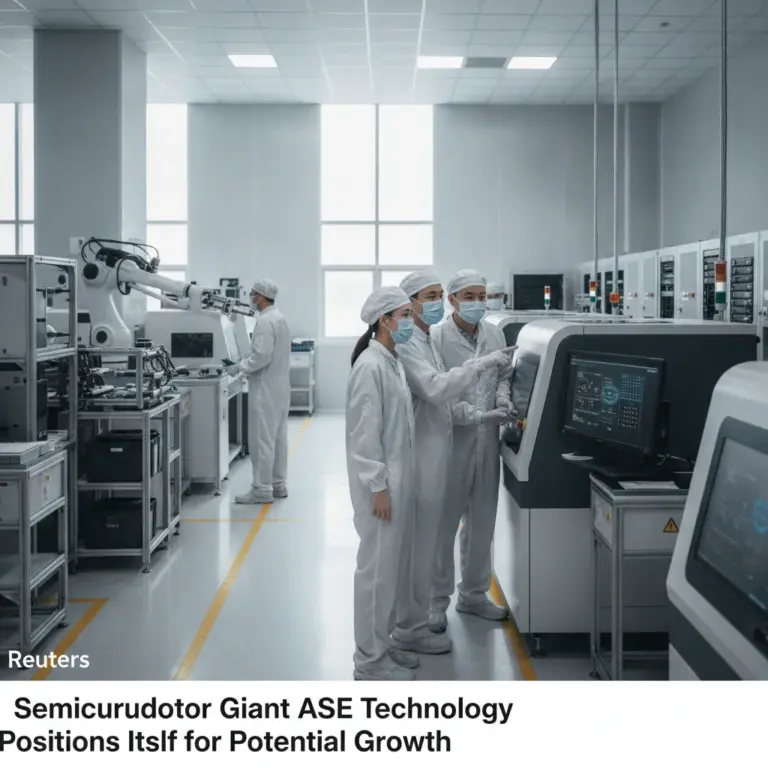
Investors are keeping a close eye on ASE Technology this week as the company emerges as a standout performer in the current market landscape. After a period of strategic movement, the stock has entered what analysts describe as the buy zone, suggesting that the valuation has reached a point where entry could be attractive for those looking to capitalize on semiconductor trends. This positioning comes at a time when global demand for advanced packaging and testing services remains high.

The recent price action indicates a stabilizing trend that often precedes a broader upward move. While volatility continues to touch various sectors of the tech industry, ASE Technology seems to be carving out a supportive base. Traders typically view these technical patterns as signals that the downside risk has diminished, making it an opportune moment for growth oriented portfolios to take notice.

However, seasoned investors remember that historical performance does not guarantee future results. Despite the optimistic technical indicators currently surrounding the stock, the semiconductor space remains sensitive to macroeconomic shifts and supply chain fluctuations. Those monitoring ASE Technology will likely watch for upcoming earnings reports and sector wide guidance to confirm if this buying window leads to sustained momentum throughout the year.

The high stakes world of artificial intelligence continues to drive market momentum as Advanced Micro Devices makes a commanding return to form. Despite an initial dip during Tuesday trading, the Santa Clara based chipmaker managed to rally with a two percent gain, signaling strong investor confidence in its long term trajectory within the AI sector. This recovery has propelled the company onto several prestigious stock lists, most notably joining the exclusive Big Cap 20.

Industry analysts are taking particular note of the company current standing, which is backed by a perfect composite rating of ninety nine. Such a score places AMD in the top one percent of all tracked stocks, reflecting a rare combination of price strength and fundamental growth that typically attracts institutional buyers. While other tech giants have experienced volatility leading up to major bank earnings reports, AMD appears to be carving out its own path toward record highs.

This upward movement comes at a time when the broader semiconductor landscape remains unpredictable. While some peers have slipped under pressure, AMDs resilience suggests that demand for specialized AI hardware remains insatiable. The surge reflects a wider trend where investors are aggressively hunting for quality assets capable of sustaining growth amidst shifting economic winds and evolving technological requirements.

On the surface, the S&P 500 appears virtually unstoppable, having maintained a relentless bullish streak for four years despite global conflicts, trade wars and aggressive interest rate hikes. However, recent data suggests that this strength is largely an illusion created by a small group of powerhouse stocks. Analysts have noted a troubling divergence beneath the index, revealing that forty-four percent of companies within the S&P 500 are actually sitting in bear-market territory, trading at least twenty percent below their yearly highs. This means nearly half of the market’s constituents are struggling even as the overall index continues to climb.

Adding to these concerns is a rare valuation alarm that has been flashing for several months. The Shiller price-to-earnings ratio, which measures whether stocks are overpriced relative to their historical earnings, has surged past the forty mark. To put this into perspective, this milestone has only been reached once before in history during the late nineties. While this specific metric does not pinpoint exactly when a crash might occur, it serves as a stark reminder that when valuations reach such extreme heights, they rarely remain there indefinitely.

The ghost of 1999 looms large here because the last time we saw these levels, it preceded one of the most devastating bear markets in modern memory. It creates a sense of impending volatility for those watching the charts closely. Yet historians remind us that while market collapses often feel apocalyptic in real time, they are fundamentally normal components of any investment cycle. From mild corrections to deep plunges like the dot-com bubble, downturns have always occurred and subsequently resolved themselves over time.

For the average investor, these warnings suggest a need for patience rather than panic. Attempting to time a market peak or guess precisely when a rebound will begin is widely considered a losing game. Instead, financial experts argue that maintaining a long term perspective remains the safest bet. By focusing on high quality companies and weathering the inevitable swings of the cycle, investors can navigate these precarious signals without succumbing to short term fear.

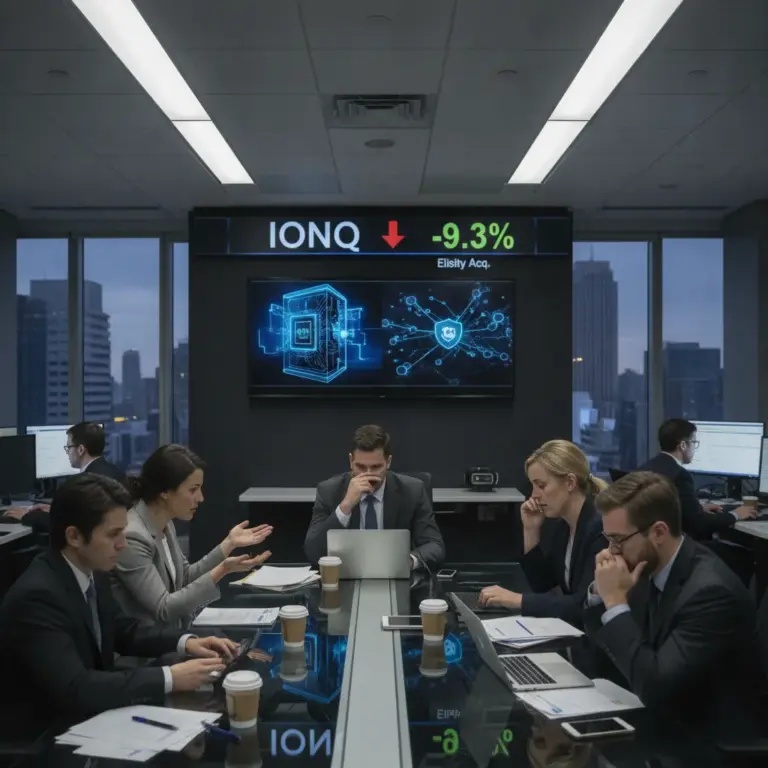
IonQ shareholders felt a sharp sting last week as the company’s stock tumbled over nine percent following the announcement of a massive all-stock acquisition. The firm agreed to purchase Elisity, a provider of zero-trust security software, in a deal valued at up to 1.3 billion dollars. While the move is designed to bolster IonQ’s long term ecosystem, the immediate reaction from investors was one of caution, largely driven by concerns over share dilution. By paying for the acquisition with equity rather than cash, IonQ may issue millions of new shares, effectively shrinking the ownership stake of current holders.

Despite the dip in share price, leadership views the Elisity deal as a critical bridge to wider commercial adoption. Chief Financial Officer Inder Singh has previously suggested that high end security services can act as a foot in the door, opening conversations that eventually lead clients toward complex quantum computing use cases. With federal mandates pushing for quantum safe security transitions by 2030, IonQ believes acquiring Elisity’s established relationships with chief information security officers will accelerate their entry into government and enterprise markets just as urgency peaks.

From a financial standpoint, opting for an all-stock transaction allows IonQ to preserve its precious cash reserves during a period of heavy spending and negative free cash flow. This strategic frugality helps extend the company’s operational runway while it pursues ambitious projects like those funded through DARPA. However, some transparency gaps remain that continue to unsettle the market; specifically, IonQ has not yet disclosed Elisity’s actual revenue figures, leaving investors to guess whether the premium being paid matches the target’s true value.

Looking ahead, holders are keeping a close eye on upcoming quarterly reports for any clues regarding Elisity’s recurring revenue and overall integration progress. While short term volatility persists due to the dilutive nature of the deal and general swings in the quantum sector, some analysts maintain an optimistic long term outlook based on aggressive revenue growth projections through 2030. For now, the stock remains caught between the excitement of rapid technological expansion and the cold reality of corporate financing costs.

The boundary between traditional finance and the digital asset world continues to blur as Securitize announces plans to launch tokenized versions of some of the most influential stocks in the world. By bringing shares of giants like Apple, Nvidia, and Microsoft onto the Solana blockchain, the firm aims to offer eligible investors in the US and EU a way to trade these assets during extended market hours. Unlike simple derivatives often found in offshore markets, these tokens are designed to maintain full ownership rights and economic benefits, effectively migrating regulated US capital market protections directly onto the chain.

This move comes amid a volatile but generally upward trend for major cryptocurrencies. Bitcoin recently touched levels above 83,000 dollars despite facing headwinds from geopolitical tensions in the Middle East and fluctuations in ETF inflows. Other major players followed suit with modest gains, as Ethereum climbed toward 2,500 dollars and Solana saw its own price rise alongside the announcement of New institutional integrations. Analysts suggest that while macroeconomic pressures persist, the appetite for integrating real world assets into blockchain ecosystems remains strong.

Beyond tokenization, legacy banking is showing increased interest in crypto infrastructure. Reports indicate that Wells Fargo may be exploring a liquidity partnership with Kraken to grant its clients better market access without needing to build an entirely new internal system from scratch. This follows a pattern of established firms seeking lean ways to enter the space, similar to how Chainlink is simplifying cross chain movements with its new vault adapters or how Moody’s has begun assigning formal credit ratings to decentralized protocols like Sky. Together, these developments signal a shift away from speculative trading toward a structured convergence of global finance and distributed ledger technology.