Author

admin

Browsing

The European Union has sparked a significant tremor in the global commodities market after announcing a strict annual cap on Chinese hybrid electric vehicle imports. Starting this December, customs officials will limit arrivals to 350,000 units per year, effectively blocking any additional shipments once that ceiling is hit. The move comes after European Trade Commissioner Maros Sefcovic finalized a quota system during talks in Beijing aimed at slashing China’s presence in the regional hybrid market to just three percent and curbing a staggering trade deficit that is costing the bloc roughly one billion euros every day.

The impact was felt almost immediately across financial markets, where lithium futures plummeted to their lowest levels in ten months. On Monday, the primary lithium carbonate contract on the Guangzhou Futures Exchange crashed nearly twelve percent, marking its sharpest daily slide since March. This volatility extended to industry giants like Tianqi Lithium and Ganfeng Lithium, both of which saw their shares tumble as investors braced for a slump in demand for the critical battery metal. These losses add further pressure to a market that has already seen lithium prices lose half their value since reaching peak highs earlier this year.

Brussels is bypassing traditional, slow moving anti dumping investigations by utilizing World Trade Organization safeguard measures to implement these restrictions quickly. The strategy targets hybrids specifically because they had become a loophole for Chinese automakers; while fully electric vehicles were hit with heavy tariffs in 2024, hybrid exports surged as brands pivoted to fill the gap. In recent months, those exports tripled in value to 6.7 billion euros, allowing Chinese brands to capture about twenty five percent of European hybrid sales by August.

To smooth over the friction caused by these caps, Beijing has agreed to several concessions including removing certain tariffs on auto parts and lowering duties on luxury European imports such as olive oil and ice cream. However, tensions remain high as EU leaders prepare to meet this Thursday to consider a proposed kill switch mechanism. If adopted, this tool would grant Brussels the power to instantly sever market access for specific foreign goods whenever external governments introduce trade policies deemed harmful to the union’s economic stability.

Ivanhoe Mines has reported a significant jump in its third-quarter copper production, driven largely by a thirty percent surge in underground mining rates. With monthly excavation now exceeding seven hundred thousand tons, the company has pushed linear underground development to record highs. This operational momentum helped push quarterly production to seventy six thousand four hundred and one tons, supported by improvements at its concentrators which saw a record eighty nine percent recovery rate following upgrades in July.

However, these short term gains have not been enough to keep the company on track for its most ambitious yearly goals. Despite the recent acceleration, management warned that full year output is likely to land at the lower end of its projected range of two hundred ninety thousand to three hundred ten thousand tons. While processing volume is up, technical hurdles remain, specifically elevated silica levels that have complicated smelting processes and increased slag concentrate production.

There is some silver lining in the form of secondary markets and other minerals. The company’s smelter produced a record amount of high strength sulfuric acid, fetching prices as high as nine hundred dollars per ton, while the Kipushi operation solidified its position as one of the world’s largest zinc mines with another record breaking quarter. These diversifications provide a financial cushion even as copper targets slip slightly.

Looking beyond current operations in the Democratic Republic of Congo, Ivanhoe is aggressively expanding into North America. Its US affiliate recently received preliminary support from the US Export Import Bank for over one billion dollars in debt financing for the Santa Cruz project in Arizona. By utilizing an innovative heap leaching process that skips traditional smelting altogether, the firm hopes to bring new American copper online by 2028.

In a move that signals growing confidence in next generation mining tech, lithium startup EnergyX has signed a massive ten year deal with Swiss commodities giant Trafigura. The agreement is valued at approximately two billion dollars and commits Trafigura to purchasing 100,000 metric tons of battery grade lithium. This represents one of the largest supply contracts ever linked to direct lithium extraction technology, providing the startup with critical financial stability as it scales up its operations across two continents.

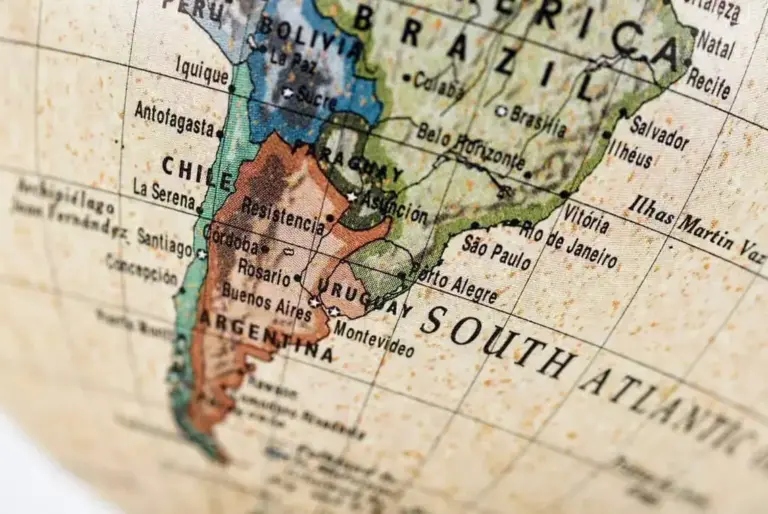
The materials will be sourced from two primary sites, splitting production between the Black Giant project in Chile and the Lonestar project in Texas. Under the terms of the take or pay contract, Trafigura will claim more than half of the initial output from the Chilean asset and nearly a third from the Texan facility. Beyond just securing a buyer, this partnership unlocks a separate six hundred ninety million dollar debt financing package from the US Export Import Bank, which required long term revenue visibility before finalizing the funds.

Teague Egan, founder and CEO of EnergyX, noted that such a high profile commitment proves there is significant market appetite for their specific extraction method. While much of the lithium is intended to fuel the American automotive and energy storage markets, some reports suggest Trafigura may initially route portions of the supply toward Chinese customers. Meanwhile, EnergyX continues to build momentum through diverse partnerships, including a recent equity injection from Italy’s Eni and a unique arrangement with the US Army to process minerals at a military depot in Texas.

Looking ahead, the company expects commercial scale production to begin at its Chilean site by 2028 and in Texas shortly after in 2029. With several other potential buyers still in talks to fill out remaining capacity, EnergyX appears to be rapidly transitioning from a developmental phase into a global industrial player. The strategic mix of government cooperation and private capital suggests that the race for sustainable battery materials is entering an aggressive new chapter.

A devastating landslide triggered by heavy rains has forced the closure of the open-pit section of Chile’s El Teniente copper mine, leaving two contract workers dead and another injured. The incident occurred shortly before 2:00 p.m. on Sunday as employees from Aura Ingeniería SA were carrying out routine inspections in the south pit. While rescue teams managed to extract one survivor and rush them to a nearby medical facility, they later recovered the bodies of two men, aged 34 and 53.

Codelco, the state-owned giant that operates the flagship site in the Andes Mountains, quickly moved to suspend activities in the affected area to ensure worker safety. However, this latest tragedy comes at a precarious time for the company, marking the second major disaster at El Teniente in just over a year. It follows a catastrophic rock burst in July 2025 that claimed six lives after a seismic event tore through underground tunnels, an accident that crippled production levels and sent shockwaves through Chile’s economy.

The recurring instability at El Teniente is part of a broader struggle for Codelco, which has seen production plunge nearly thirty percent earlier this year due to mounting geological risks. With additional deaths recently reported at the Radomiro Tomic and Escondida mines, critics are questioning whether safety protocols are keeping pace with increasingly volatile conditions. These internal struggles are now coinciding with external threats from El Niño weather patterns, which risk bringing even more torrential rain to South America’s vital copper belt.

Reactions immediately started pouring in after federal authorities raided the Washington, D.C., home of Rep. Ilhan Omar, D-Minn., with many on social media pointing to a previous claim from Omar that “no one” is above the law.

Omar’s home was raided by agents with the U.S. Department of Homeland Security’s (DHS) investigation unit in the early Monday morning hours, Fox News Digital first reported, in a search that stems from a criminal fraud investigation into the Somali-born congresswoman’s immigration paperwork, which was filled out by her late father when she was a child.

Omar has been under fire for months and faced a myriad of controversies during her time in Congress, most recently, her financial disclosures have come into focus, and questions have been raised by top officials about her path to citizenship as well.

Many on social media were quick to point to a previous comment from Omar where she declared that “no one is above the law” after Trump was indicted in a hush money case that conservatives argued was based on flimsy evidence and a political prosecution.

OMAR’S GOP CHALLENGER COMES OUT FIRING WITH VOW TO CLEAN UP ‘MESS’ IN DEEP BLUE DISTRICT: ‘PEOPLE ARE FED UP’

“Rather than issue our own statement, we’ll defer to Rep. Omar,” the Minnesota Republican Party posted on X. “She said it best back in 2023, when the subject of a criminal investigation was someone else.”

“We couldn’t agree more, Congresswoman. We’re sure you still feel the same way now that it’s your front door. Minnesotans will be watching closely, and so will we.”

“No one is above the law,” the Trump War Room account posted on X.

“It was an authorized search warrant approved by a federal judge as part of a criminal investigation,” conservative influencer LibsofTikTok posted on X. “No one is above the law.”

“Ilhan Omar was right,” Townhall columnist Dustin Grage posted on X. “Nobody is above the law.”

“No one is above the law,” Charlie Kirk Show executive producer Andrew Kolvet posted on X. “(And etting [sic] lectured by a Somali about the rule of law is rich. Not as rich as Rep. Omar was before she revised her financial statements, but rich.)”

“So much for ‘no one is above the law,’” conservative commentator Viva Frei posted on X.

CAUGHT ON CAMERA: SQUAD DEM SQUIRMS WHEN PRESSED ON VANCE DOJ FRAUD PROBE

Omar released a response to the raid accusing the Trump administration of improperly targeting her.

“I’m ok,” Omar wrote on X hours after the search commenced. “Make no mistake: this is an attempt to target political enemies and weaponize federal law enforcement.”

“For ten years, Trump has targeted me with baseless lies and smear campaigns,” she continued. “This is just the latest escalation in his campaign of political intimidation. I will not be silenced.”

Fox News Digital reached out to Omar’s office for comment.

“Today in the Washington, D.C., area, Homeland Security Investgations executed a judicially authorized search warrant secured by the Department of Justice. This enforcement action is part of an ongoing federal investigation,” a DOJ spokesperson told Fox News Digital.

The DOJ later added that the investigation was “criminal” in nature.

Ohio has emerged as ground zero in the growing political fight over the massive data centers powering America’s AI boom, with voters across the state set to weigh in on the industry’s rapid expansion this November.

Voters will decide 20 data center-related ballot measures across 17 Ohio jurisdictions — more than half of the 34 measures appearing on ballots nationwide — putting the battleground state at the center of a debate over the sprawling facilities’ impact on power, water and local communities.

The fight is also colliding with Ohio’s closely watched Senate race, where data centers have become a campaign issue as President Donald Trump pushes the multibillion-dollar buildout as critical to keeping the U.S. ahead in the global race for artificial intelligence power.

Sen. Jon Husted, R-Ohio, led the Senate push to pass the Ratepayer Protection Act, which would make data centers pay for the power and infrastructure they require rather than pushing it off to American taxpayers. This effort further underscored the importance of the scale of the issue in Ohio ahead of the midterm elections. 

8 EVERYDAY THINGS THAT WOULD QUIT WORKING WITHOUT DATA CENTERS

Democratic Senate challenger Sherrod Brown — who served as a senator in Ohio from 2007 to 2025 — has attacked Husted over data center development, and Trump has defended the Republican’s stance while campaigning for him. 

“Look, there’s so much money to be made for Ohio, you can’t just turn them off,” the president said.

Across the country, voters will decide 34 data center-related ballot measures in seven states — California, Florida, Illinois, Kansas, Nevada, Ohio and Wisconsin — as the once-obscure infrastructure behind America’s AI ambitions becomes an increasingly potent political issue.

A Fox News national poll conducted last month found voters struggling to reconcile AI’s potential benefits with the economic and environmental costs of the data centers that power the technology.

More than seven in 10 voters (71%) opposed building AI data centers in their area, including 46% who strongly opposed them. More than half (52%) supported building them in remote locations, while 44% opposed.

AI IS SUPERCHARGING POLITICAL AD WARS. BUT VIRAL DOESN’T MEAN VICTORIOUS

Overall, 60% of voters had a negative view of AI, compared with 37% who viewed it positively. That 23-point gap has more than doubled since a July Fox News poll.

The Fox News poll also found a partisan divide over AI and data centers. Voters with favorable views of AI leaned Republican, while those with unfavorable views leaned Democratic.

The divide was even sharper over data centers, with Republicans performing better among voters who supported them and Democrats among those who opposed them.

That partisan split comes as AI policy emerges as a growing fault line in Washington and on the campaign trail.

Trump has opposed wide-ranging federal regulation of the AI industry and warned that the U.S. cannot allow China to win the technology race.

‘BACKWARDS AND POOR’: TRUMP SLAMS COMMUNITIES BLOCKING DATA CENTERS

But as the midterms approach, the debate over AI and the data centers powering it is playing out in races across the country.

In Texas, Republican Gov. Greg Abbott, who previously courted major tech investments, recently ordered a pause on data center permitting and grid connections pending an audit. Democratic challenger Gina Hinojosa has supported temporary moratoriums.

Meanwhile, in the state’s Senate race, Republican Attorney General Ken Paxton and Democratic state Rep. James Talarico have battled over tax breaks for the industry.

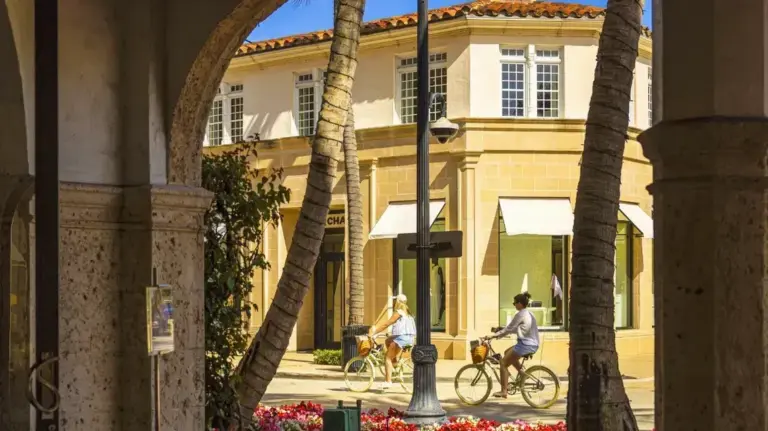
A wealthy Southern enclave once known as a playground for retirees and snowbirds is transforming into a growing technology and financial hub, drawing comparisons to Silicon Valley as businesses, Wall Street executives and entrepreneurs move in.

Palm Beach County, Florida, is attracting new attention as wealthy Americans seek alternatives to high-tax states like New York and California.

“Palm Beach has changed from a place where people come to retire to a place that people come to build,” luxury real estate expert Margit Brandt told Fox News Digital. “There’s been countless CEOs and major heads of companies that have moved their businesses to Palm Beach,” she said, pointing to Florida’s favorable tax climate and lifestyle as major draws.

THE RED STATES RACING AHEAD IN AMERICA’S POWERFUL WEALTH BOOM — AND THE STATES FALLING BEHIND

The region is also home to President Donald Trump’s Mar-a-Lago estate, often dubbed the “Southern White House,” placing the emerging business hub in the backyard of one of the country’s most recognizable political landmarks.

The shift comes amid changing migration patterns across the country, with Internal Revenue Service data for 2022–2023 showing taxpayer losses across numerous California and Northeastern counties, while much of the Southeast recorded gains.

Brandt believes Palm Beach County could become a major technology hub, citing its room for expansion as an advantage over more densely developed destinations.

“We have tons of room to grow,” she said, pointing to areas like Wellington and western Palm Beach County where new schools, hospitals and infrastructure could accommodate additional businesses and families.

The region is also attracting technology investment alongside its established financial services industry.

In September 2025, California-based software company ServiceNow announced plans to establish a regional innovation hub and artificial intelligence institute in West Palm Beach.

AMERICANS KEEP MOVING TO TEXAS AND FLORIDA — BUT ONE OTHER RED STATE IS GROWING EVEN FASTER

The expansion is projected to generate $1.8 billion in economic impact and create more than 850 jobs over five years, according to the company. ServiceNow also committed to occupying up to 200,000 square feet of office space at 10 CityPlace, a development by billionaire real estate investor Stephen Ross’s Related Ross.

“The tech has particularly been exciting for Palm Beach County,” Brandt said.

Meanwhile, Palm Beach County’s population reached an estimated 1.58 million residents in July 2025, an increase of 5.6% since April 2020, according to the U.S. Census Bureau.

Brandt said new office developments in West Palm Beach and Palm Beach Gardens have made it easier for companies to establish a presence in the region.

“Florida has just been a really easy landing place,” she said.

Beyond business opportunities, Brandt pointed to year-round outdoor activities, warm weather and family life as major attractions for newcomers.

For Brandt, the region’s evolution is far from complete.

“Palm Beach County, I think we’re like in beginning stages of what’s possible here,” she said.

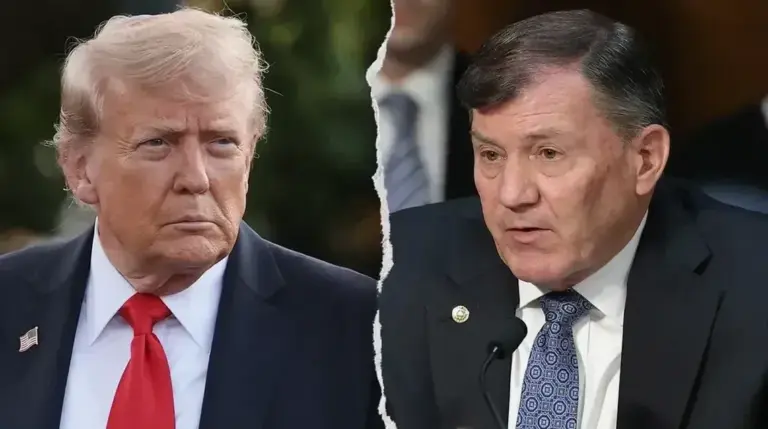
A Senate Republican running for re-election in ruby-red South Dakota has joined a growing number of candidates putting distance between themselves and President Donald Trump.

But it’s more subtle than Republicans opposing the Iran war or dodging Trump campaign visits as Election Day nears and his popularity struggles.

Just last month, Trump’s name and endorsement were featured prominently on Republican South Dakota Sen. Mike Rounds’ campaign website, but some mentions of the president have since been scrubbed, according to an older version of the website reviewed by Fox News Digital.

SLEEPER SENATE RACE EMERGES AS UNEXPECTED HEADACHE FOR REPUBLICANS AHEAD OF MIDTERMS

Rounds’ campaign noted to Fox News Digital that not every mention of Trump has been removed.

“The president’s endorsement is still front and center on the website in Mike’s announcement video,” Rounds’ campaign advisor, Rob Skjonsberg, told Fox News Digital. “But, generally speaking, it’s not abnormal to hone in on general election messaging.”

Trump endorsed Rounds last year and lauded the lawmaker as an “incredibly strong advocate for the wonderful people of South Dakota, a State I love, and WON BIG, in 2016, 2020, and 2024!”

“Mike Rounds has my Complete and Total Endorsement for Re-Election — HE WILL NEVER LET YOU DOWN,” Trump said on Truth Social at the time.

Still, Trump’s approval rating among voters has cratered — a Fox News poll last month found that overall, voters had a 39% approval rating of the president’s performance. Key issues like cost of living, cost of groceries and fuel, and the ongoing war in Iran were major sticking points for participants.

FOX NEWS POLL: MOST RATE THE ECONOMY NEGATIVELY, INCLUDING HALF OF REPUBLICANS

Rounds’ campaign website featured two mentions of Trump on its homepage, including “Endorsed by President Trump” and a photo of Rounds touting that “Mike is endorsed by President Trump and is working for South Dakota every single day.”

Those two mentions have since been removed, along with Trump’s name being removed in two places from the lawmaker’s “Issues” page on his website — the president was previously included in Rounds’ “Put America First” and “Education” sections.

The lawmaker is vying for a third term in deep-red South Dakota, where he previously served as the state’s governor and in the state Senate.

He’s running against independent Brian Bengs, who previously ran as a Democrat against Senate Majority Leader John Thune, R-S.D., in 2022. Thune easily defeated Bengs in the general election, securing over 70% of the vote.

SCHUMER DIGS IN AS PROGRESSIVE CANDIDATES WITHHOLD SUPPORT FOR TOP SENATE DEM

“I’m not running against the President,” Bengs said in a statement to Fox News Digital. “But to me it says a lot that this didn’t happen because of the Iran War that’s raising our costs or the tariffs that are hurting us — it only happened when Mike’s poll numbers went down and his big money allies are buying more ads to bail him out. I hope Mike finds the courage to debate me, so we can talk about it.”

And South Dakota, unlike other red states like Kansas, hasn’t budged from being considered “Solidly Republican,” according to the Cook Political Report.

Other Republican candidates in tighter races, like Rep. Ashley Hinson in Iowa and former Rep. Mike Rogers in Michigan, have publicly come out against some of Trump’s policies, including the war and embrace of data centers.

“Bengs, quite likely the most unlikable carpet bagger candidate to ever run in South Dakota, is doing what socialists do — trying to distract from his own liberal positions,” Rounds’ campaign advisor said. “He can’t defend his positions — so he attacks.”

“In this case, like every case prior, it’s coming from a Biden communications firm attempting to peddle garbage. We’re proud of the president’s endorsement. It’s still front and center,” he continued. “And, Bengs still wants to increase your taxes, take away your guns and expand Obamacare.”

This post appeared first on https://www.foxnews.com

There are two big differences between the previous Trump-era midterms and this year’s contest.

The first is the president’s approval rating, which is lower now than it was during President Donald Trump’s first term in 2018 or President Joe Biden’s term in 2022.

The second is Democrats’ generic ballot lead, which is wider and more enduring than it was in the 2018 “blue wave” election and much larger than the edge the GOP had in 2022.

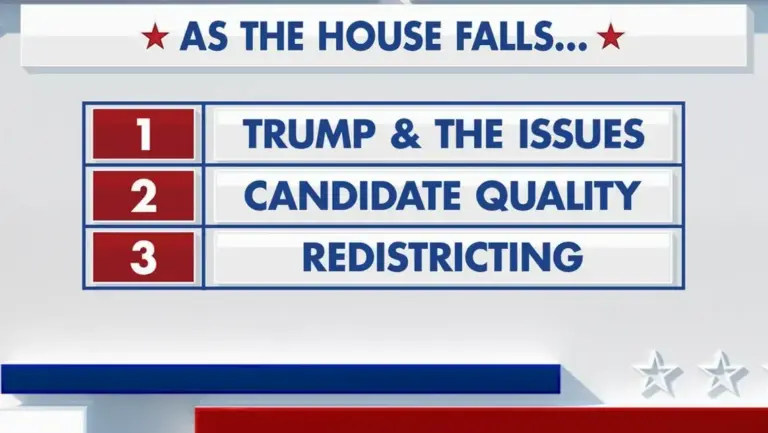
Combined with Democrats’ candidate quality improvements and a Republican-led redistricting effort that could fall short of expectations, the House is likely out of reach for the GOP this year.

REPUBLICANS FACE BRUTAL MIDTERM HEADWINDS. SIX FORCES COULD HELP THEM DEFY HISTORY.

Then there’s a similarity: in all three elections, the Senate has been in play right up until the finish line.

In Trump’s first term, the Republicans ended up gaining two Senate seats despite a gloomy national environment. Four years ago, with inflation surging, the Democrats managed to add a Senate seat to their tally.

12 RACES SCRAMBLE SENATE BATTLEFIELD AS DEMOCRATS EYE COMEBACK

The Democrats have plentiful paths to 51 seats on election night. Republicans keep plowing money into six toss-up states, plus Kansas, and those efforts haven’t much moved the needle.

Yet the GOP’s paths to 50 are getting wider. That, plus a major update to the House forecast, in this week’s edition of the Power Rankings.

House: Democrats set to take control with up to 237 seats

The Democratic Party has enjoyed a lead in the House all year. Now, as another 20 races shift leftward, this forecast sees the Democrats taking control.

THE BLUE WAVE LOOKS REAL UNTIL YOU LOOK A LITTLE CLOSER

Democrats have an advantage in at least 219 seats, while Republicans should hold on to at least 198 seats. There are 18 toss-ups on the board.

On a good night for the Democrats, the party will hold around 237 seats, or a gain of 22 from their current position. That’s because toss-up seats have mostly fallen in one party’s direction in previous elections.

FOX NEWS POWER RANKINGS: FOR THE DEMOCRATS, WHERE COULD IT POSSIBLY GO WRONG?

(A “great night” for the Democrats, which would see the party take some Lean R seats as well, would mean a Democratic majority of up to 249.)

If the toss-up seats go the other way, the GOP could make life hard for the left. A good night for Republicans would see the party end up with around 216 seats. That’s two short of a majority but also leaves the Democrats with a mere two-vote cushion in the House.

In that scenario, a coalition of far-left Democrats, like the “Squad” of years past, could band together to put policy pressure on the next House speaker. That group is about to get bigger, thanks to the sure-thing victories of Democratic Socialists like Darializa Avila Chevalier and Claire Valdez.

Some of this week’s shifts are a product of polling. The Democrats’ generic ballot lead has pushed districts like Kentucky’s 6th District (Lexington and its suburbs) and Texas’ 15th District (Rio Grande Valley and Coastal Bend) away from the GOP.

The party’s strength in statewide races also plays a role, especially in Iowa (the 1st and 3rd districts, which contain the state’s biggest cities), and in Pennsylvania (three districts have shifted to the left, thanks in part to Governor Josh Shapiro’s coattails).

Other shifts are the result of Republican groups moving resources elsewhere, like from New York’s 19th District. Democratic Rep. Josh Riley lost this race by fewer than 5,000 votes four years ago, but as the GOP sends its money to more winnable races, it’s moving to Solid D.

A more surprising theme is also emerging: the GOP is in trouble with rural voters.

Sitting above Albany, New York’s 21st District contains some of the state’s most rural areas. Its voters delivered President Trump a 21-point victory over Vice President Harris two years ago. A survey last week had the Democratic candidate four points ahead of the Republican, 46%-42%.

DEMOCRATS SEE NEW CHANCES TO FLIP RED STATES — BUT A $400M GOP SPENDING ADVANTAGE COULD DERAIL THEIR PLANS

Maine’s 2nd District, which famously voted for President Trump three times in a row – and last time by nine points – is an open race this year after Rep. Jared Golden’s retirement. It was thought to be one of the best flip opportunities for the GOP. A new poll has the Democrat at 51% and the Republican at 45%.

Even Virginia’s 5th District, stretching across the Southside region and home to a two-thirds rural population, is a six-point race in a recent survey (45%-51% with the Republican ahead). The Democrat, Tom Perriello, was recently endorsed by Rep. Alexandria Ocasio-Cortez.

Gas, diesel and grocery prices are to blame. In dollar terms, the cost of living is higher in cities and suburbs, but voters across the country keep saying they are feeling the pressure of those increases and blame Republicans for them.

Iowa, for example, has experienced the fourth-highest gas price hike in the nation. Kentucky, Ohio and Texas are all in the top five states for diesel increases. That has proven tough for GOP candidates to counter.

New York’s 21st District moves from Solid R to Likely R. (Virginia’s 5th and Maine’s 2nd districts remain at Lean R and Toss-up, respectively.)

Senate: Michele Tafoya plays offense in Minnesota

The Senate is still a toss-up with Democrats and Republicans taking 47 seats apiece. Six toss-ups are the most likely to determine control.

If Democrats win all six of those states, the party will take the majority with two seats to spare, for a total of 53. On the other hand, this forecast still sees a pathway for the GOP not to lose any seats. They’d accomplish that just by holding on to the same six states.

The toss-ups have largely been locked in through summer. There’s been a lot more movement in the “lean” categories (Kansas in, Georgia and North Carolina out). Collectively, you can think of these as the election night battlegrounds.

This week, a ninth state joins the list: Minnesota.

The North Star State has been on the political radar since Republicans recruited Michele Tafoya, the former NFL sideline reporter. She has deftly navigated her foray into politics by focusing on fraud, crime, and the cultural issues that animate GOP voters.

She also has a favorable matchup against Peggy Flanagan, Minnesota’s sitting lieutenant governor. It’s not clear whether Flanagan’s progressive politics or her proximity to the fraud issue is giving voters pause. Whatever the cause, there are signs that they are.

A new gold-standard survey shows 47% of likely voters support Flanagan, while 43% back Tafoya. Another 9% are undecided.

Republicans are fully united behind Tafoya, while 9-in-10 Democrats say they’ll support Flanagan’s bid. Independents are much less settled: 38% back Tafoya, 32% support Flanagan, and 29% haven’t decided.

Minnesota’s voter profile and election history suggest that there are some left-of-center voters in the “independent” column. They may be wavering on Flanagan now, then show up to vote for her on election day.

The Senate hopeful’s spot on the ballot next to Amy Klobuchar, the Democrats’ gubernatorial candidate and electoral over-performer, may also help push her over the line.

Either way, that poll can’t be ignored. Minnesota moves from Likely D to Lean D.

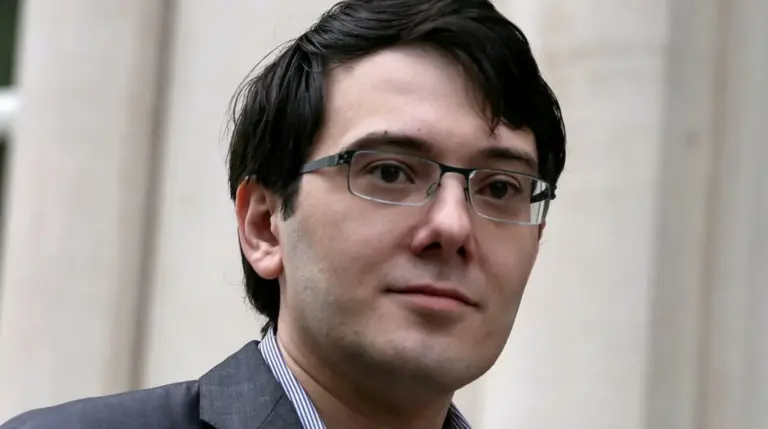
Martin Shkreli is facing new legal battles as the Federal Trade Commission and seven states move to hold him in contempt of court. According to a recent filing in a Manhattan federal court, the man famously known as Pharma Bro has flagrantly ignored a 2022 lifetime ban from the pharmaceutical industry. Authorities allege that since his release from prison two years ago, Shkreli has been active in the sector by trading at least 60 different pharma stocks and using social media platforms like X, YouTube, and Reddit to broadcast his opinions on how various companies are managed.

The current legal clash stems from a previous ruling that found Shkreli orchestrated an anti-competitive plot to maintain a monopoly over the drug Daraprim, which saw its price skyrocket from seventeen dollars to seven hundred and fifty dollars per pill. While those actions previously cost him millions in fines and earned him a permanent exile from the industry, officials say he simply hasn’t stopped. FTC Commissioner Mark Meador emphasized that such bans are meaningless unless there are real consequences for those who choose to ignore them.

Government lawyers are now asking a judge to force Shkreli to sell off any remaining pharmaceutical holdings and pay back every cent of profit made from these trades, regardless of any losses he may have incurred along the way. More seriously, they are pushing for escalating penalties for future slip ups, suggesting that further defiance could result in additional financial hits or even return trips to jail.

The scope of the investigation has expanded beyond Shkreli himself, with the FTC requesting that his sister and significant other preserve all evidence related to these activities. Prosecutors suspect both women may have helped him bypass the injunction. This latest civil dispute remains separate from the securities fraud convictions that originally landed Shkreli in prison several years ago, but it underscores a continuing effort by regulators to keep him entirely out of the medical marketplace.