Author

admin

Browsing

Investors eyeing Qualcomm right now find themselves weighing a classic corporate pivot. During its fiscal third quarter call, the company admitted that its slice of the latest iPhone launch would be significantly smaller than previously expected, falling well below the estimated twenty percent mark. This creates a precarious gap in the balance sheet, but leadership isn’t blinking. Instead, they have aggressively hiked their non-handset revenue target for fiscal 2029 to forty billion dollars, nearly doubling their previous goal as they bet big on automotive technology, the Internet of Things, and data centers.

On paper, the valuation looks attractive. Trading at nineteen times earnings, Qualcomm is cheaper than the broader S&P 500. It boasts impressive operating margins driven largely by its licensing business, yet it struggles with stagnant growth compared to the wider market. For those considering a buy order today, the central question is whether these new revenue streams can arrive fast enough to offset the loss of Apple’s dominance. There are promising signs, such as record breaking quarterly results in automotive chips and fresh collaborations with giants like Amazon for custom AWS silicon.

However, significant headwinds remain that could complicate this transition. Android revenue has dipped sharply and forecasts suggest a general decline in the handset market through 2026. While management believes Chinese smartphone markets have finally hit rock bottom, rising input costs and thinner margins on data center hardware continue to act as a drag on profitability. Essentially, buyers are paying for current margins while gambling on growth scheduled for late 2027 and beyond.

The coming weeks will provide critical clues during the fiscal fourth quarter report. All eyes will be on whether QCT automotive continues its sixty percent climb and if newly minted custom silicon deals begin generating meaningful cash flow by December. If Qualcomm can prove that its price hikes are offsetting higher costs while diversifying away from Apple, the current stock price may look like a bargain. If not, investors might find themselves holding a company whose legacy strengths are eroding faster than its new ventures can scale.

Recent turbulence in the artificial intelligence sector has left many investors wondering if their portfolios are at risk. While not everyone owns shares of specialized AI firms, the reality is that most retirement savers are exposed to these swings through their 401(k) plans. This happens primarily because a handful of technology giants like Nvidia, Microsoft, and Apple now make up roughly 30 percent of the S&P 500. Since so many employees rely on index funds for their savings, any significant dip in these mega-cap companies can create a ripple effect throughout an entire retirement account.

This exposure often extends further than people realize. Beyond the famous software and chip makers, AI influence reaches into industrial companies providing power and data center infrastructure, as well as various small-cap stocks. Even those using target-date funds, which automatically adjust risk as a person nears retirement, likely have heavy ties to the AI trade because the broader U.S. market is currently so intertwined with these technologies. Financial experts warn that while These funds remain diversified across hundreds of companies, the sheer size of the tech leaders creates a concentration risk that savers should monitor.

Despite the recent volatility, advisors suggest that panic selling is rarely the right move. Because most 401(k)s contain a blend of stocks and bonds across multiple sectors, it is unlikely that an investor’s entire nest egg is tied solely to AI success. Instead of making impulsive changes during a market swing, professionals recommend reviewing your top holdings to see exactly where your money is parked and rebalancing your portfolio if you have become too heavily weighted in large-cap tech stocks due to recent gains.

For those approaching retirement, a bucketing strategy may provide peace of mind by keeping immediate spending needs in stable assets like cash or bonds while leaving long-term growth investments alone to weather the storm. Ultimately, the goal is to maintain a perspective focused on decades rather than days. By understanding their actual level of risk and sticking to a disciplined asset allocation, savers can avoid letting short term headlines derail their lifelong financial goals.

Market analysts are keeping a close eye on NB Bancorp this week as the regional banking leader shows signs of preparing for another significant move upward. After navigating the typical volatility associated with recent public offerings, the company appears to be stabilizing in a way that suggests it is poised to hit a new buy point. Traders are watching technical indicators closely, looking for the right moment to enter positions as the stock builds momentum against a backdrop of shifting interest rates and evolving consumer demand.

The strength behind NB Bancorp stems largely from its dominant position within its home markets and a disciplined approach to loan growth. While many smaller banks have struggled to find their footing in an uncertain economic climate, this firm has managed to maintain a healthy balance sheet while expanding its service offerings. This operational stability has made it a standout candidate among IPO stocks, drawing interest from both institutional investors and retail traders who specialize in identifying emerging leaders before they reach peak valuation.

However, experts caution that timing remains critical when dealing with high growth potential stocks in the financial sector. The anticipation surrounding a new buy point often brings increased volume, which can lead to short term price swings before a sustainable trend is established. Investors are encouraged to look at broader market trends and regulatory shifts that could impact regional lenders across the board, ensuring that any move into NB Bancorp aligns with a diversified long term strategy rather than speculative trading.

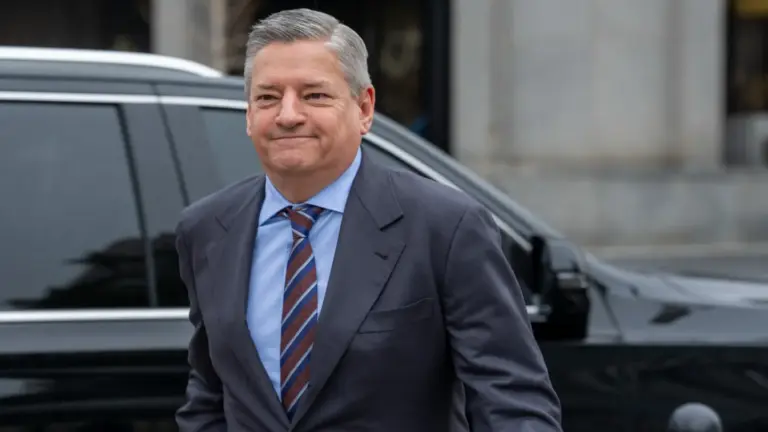
Netflix saw its share price slip nearly five percent on Friday following a sobering assessment from analysts at Wells Fargo. In a report bluntly titled Engagement Risk, analyst Steven Cahall warned that viewership trends for the streaming giant are beginning to look worrying. The downgrade comes as data from the Nielsen Gauge shows a dip in performance, while the platform’s top one hundred titles have experienced a slight year over year decline, suggesting that viewers may be spending less time on the service than they once did.

The core of the problem, according to Cahall, is a noticeable lack of massive original series hits lately. Wells Fargo suggests that Netflix may be suffering from an identity crisis as it attempts to compete directly with YouTube by diversifying its offerings. By pouring resources into video podcasts, gaming, and various creator deals, the streamer might be diluting its focus away from the prestige scripted dramas and comedies that originally built its empire.

Looking forward, the bank believes Netflix faces some difficult decisions to reverse this trend. Potential solutions include a total reboot of how content is funded or pursuing expensive licenses for live sports through partners like Fox or NBCUniversal. There is even the possibility of mergers and acquisitions to bolster their library, though such moves would make the company’s financial narrative significantly more complicated for investors to track.

Despite the grim outlook, there are reasons for cautious optimism. Record level spending on content means that Netflix still has several high budget projects waiting in the wings that could become surprise global breakouts. Furthermore, much of the company’s international growth remains difficult to predict and could provide an unexpected boost in viewing hours. While the market reacted sharply to the downgrade, Netflix continues to hold significant pricing power and margins that may shield it from long term damage.

The landscape of global finance is standing on the precipice of a major shift as tokenization begins to weave its way into the fabric of traditional stock trading. By converting ownership of physical assets or equity shares into digital tokens on a blockchain, the industry is looking at a future where liquidity increases and barriers to entry vanish. This process essentially allows high value assets to be broken down into smaller, fractional pieces, making it possible for retail investors to own slices of companies or properties that were previously reserved for institutional giants.

Market analysts suggest that this evolution will not just change how we trade but who benefits most from the transition. The primary beneficiaries are expected to be the technological infrastructure providers and financial institutions already pivoting toward decentralized ledger technology. Companies specializing in secure custody solutions and blockchain integration are seeing increased interest as brokerage firms scramble to update their legacy systems to accommodate these programmable assets.

Beyond the tech providers, there is significant potential for growth among mid cap firms that have historically struggled with low trading volumes. As tokenization democratizes access through fractional ownership, these stocks could see a surge in demand from a broader base of international investors. When an asset becomes easier to buy and sell across borders without the friction of old school clearinghouses, the resulting influx of capital can drive valuations higher.

However, the road to full implementation remains paved with regulatory hurdles. Government bodies are still grappling with how to categorize these tokens under existing securities laws, creating a climate of cautious optimism. While the technical capability exists today, the true boom for related stocks will likely depend on when regulators provide a clear green light for widespread adoption in public markets. For now, savvy investors are keeping a close eye on those few early adopters leading the charge into this digital frontier.

Global crude oil prices climbed to 104 dollars per barrel on Friday, driven by a volatile mix of targeted infrastructure attacks and a dramatic slowdown in shipping traffic through the Persian Gulf. Brent crude edged up slightly from Thursday’s levels, marking a steady upward trend that has seen prices jump 12 percent over the last month. This surge represents a staggering increase compared to last year, when barrels were trading closer to 68 dollars, leaving consumers to deal with the fallout at the pump. In the United States, these pressures have pushed gas averages to over four dollars a gallon while diesel hit a record high of 6.40 dollars.

The current crisis was sparked by physical strikes on Saudi Arabia’s critical East-West pipeline, which serves as the kingdom’s main land route for bypassing the Strait of Hormuz. Satellite images have already revealed significant damage to multiple pumping stations and an Aramco bulk plant in Abha. Adding to the chaos, Houthi rebels claim they launched waves of drones and missiles at facilities in Yanbu. With their primary overland alternative crippled, Saudi officials have been forced to resort to ship-to-ship transfers off the coast of Oman just to keep oil moving toward international markets.

Simultaneously, the Strait of Hormuz has become nearly impassable for commercial trade. Traffic plummeted yesterday to just four vessels, far below the recent daily average of sixteen ships. Experts suggest that several safety nets which once protected global markets from such shocks have now vanished. According to Bob McNally of Rapidan Energy Group, previous buffers like strategic reserves and lower Chinese demand are no longer available as those reserves run dry and China increases its appetite for crude again.

As fuel costs skyrocket domestically, American politicians are considering drastic measures to stabilize prices. Senate Majority Leader John Thune suggested that a federal ban on diesel exports could be an option to preserve local supplies for U.S. drivers and industries. However, many economists argue that such a move would be counterproductive, warning that it does nothing to fix limited refining capacity and could potentially trigger an even deeper energy crisis across the globe.

Foreign actors hacked two Colorado water utilities’ computer systems last month, changing pumping cycles, disabling alarms and altering equipment settings before operators regained control, state officials said Thursday.

The intrusions did not affect drinking water quality or treatment processes, according to Colorado Gov. Jared Polis’ office. But the incidents add Colorado to a widening series of breaches in U.S. water and wastewater infrastructure.

High-profile cyberattacks have targeted more than 100 drinking water and wastewater systems across 12 states this year, according to the Environmental Protection Agency, expanding the footprint of a threat that federal authorities warned this summer was disrupting water operations across the country.

WATER CYBERATTACK HITS AT LEAST 7 STATES

Colorado officials have not identified the actors behind the intrusions of the two small systems or said whether they are connected to the broader activity reported elsewhere in the country.

“These were brief incidents, and the risks were quickly addressed by the providers themselves, who subsequently alerted the state,” Polis spokeswoman Eric Maruyama said in a statement.

The hackers altered equipment settings, disabled remote access and alarms and changed pumping cycles, according to the governor’s office.

The incidents demonstrate how hackers can reach beyond traditional computer networks and gain access to operational technology used to control physical equipment at water plants, including pumps, valves and other machinery.

The water utility systems that were impacted provide drinking water to approximately 400 people.

IRANIAN HACKERS ATTACKED OUR WATER SYSTEMS. HERE ARE 5 THINGS OUR LEADERS NEED TO DO NOW

Federal authorities warned in July that malicious cyber actors were targeting internet-connected operational technology at water and wastewater utilities. At the time, the FBI and EPA said utilities in at least seven states had reported incidents, some of which degraded water operations.

The agencies said attackers had remotely accessed internet-facing programmable logic controllers, or PLCs, and tampered with device configurations, in some cases causing utilities to lose monitoring or control capabilities. Reported operational effects included loss of water pressure and flooding.

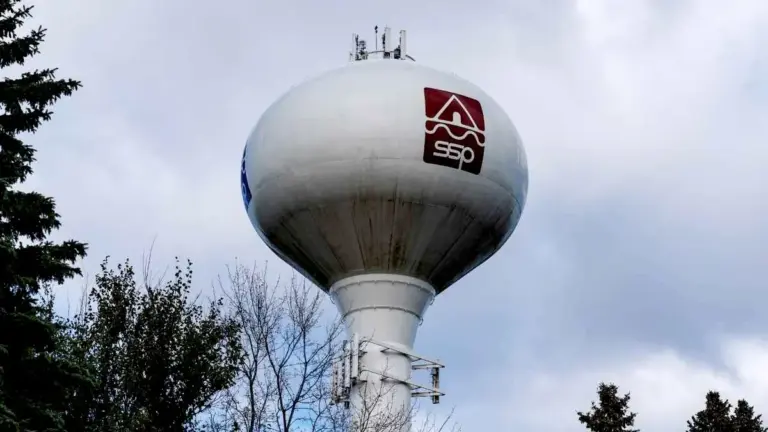
The Colorado breaches follow a series of attacks on water systems across the country this summer, including cyber activity affecting more than 30 community water systems in Minnesota.

Federal investigators have examined whether Iranian actors or hackers affiliated with Iran were responsible for the Minnesota attacks, though officials had not publicly attributed the activity at the time.

President Donald Trump disputed suggestions that Iran was behind the Minnesota attacks, saying during a Cabinet meeting, “They blame it on Iran. I don’t think so.”

He instead blamed Minnesota officials.

IRAN’S CYBERWAR TARGETS ORDINARY AMERICANS. WE NEED TO DISMANTLE THE HACKER NETWORK

The recent incidents have renewed attention to longstanding cybersecurity vulnerabilities within America’s water infrastructure, particularly among small and rural utilities that can have limited cybersecurity staff and resources.

Many utilities use internet-connected industrial control systems to remotely monitor and operate pumps, valves, water pressure and other equipment. Federal officials have urged operators to remove programmable logic controllers from direct exposure to the internet and strengthen authentication and access controls.

The EPA, which serves as the federal government’s sector risk management agency for water and wastewater systems, told Fox News Digital it is working with utilities, states and federal partners to identify vulnerabilities and strengthen cybersecurity.

Since fiscal year 2025, the agency has identified more than 900 vulnerabilities in over 650 water systems and helped eliminate about 700 at more than 500 utilities.

The EPA has also conducted more than 710 cybersecurity risk assessments and provided direct technical assistance to approximately 15,900 utilities.

The FBI declined to comment when reached by Fox News Digital.

While many investors are hesitant to enter the precious metals market during periods of volatility, veteran analyst Jeff Clark is taking a decidedly different approach. The founder of TheGoldAdvisor.com suggests that rather than pulling back, savvy investors should view current price fluctuations as an invitation to build their positions. According to Clark, the present landscape offers significant value for those looking to secure gold and silver before the next major move in the cycle.

Clark believes that now is not the time for caution or exit strategies but instead a moment for aggressive action. He argues that current pricing levels provide a strategic entry point, allowing investors to acquire assets at what he considers a discount relative to their long term potential. By staying invested and leaning into the dip, he suggests that traders can position themselves more favorably for future growth.

The confidence expressed by Clark comes at a time when global economic uncertainty often drives people toward hard assets as a hedge against inflation and currency devaluation. His perspective encourages a mindset of accumulation over hesitation, emphasizing that patience and conviction are key when navigating these specific commodity cycles. For those following his lead, the goal is clear: treat the current market softness as a sale rather than a warning sign.

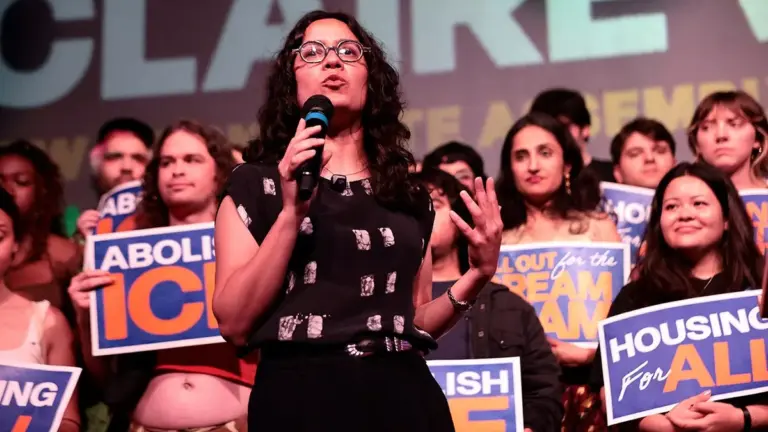
A New York City socialist seeking to replace a retiring Democrat drew criticism Thursday after pledging to carry the “fight” inspired by Mexico’s struggle for independence into Congress. And critics pointed to her disclosure that she met with members of Mexico’s ruling left-wing party.

Claire Valdez, who is seeking Rep. Nydia Velázquez’s seat in a district that includes Bushwick and Ridgewood, is facing calls for the State Department to investigate her under the Logan Act. It’s a rarely enforced 1799 law that criminalizes certain unauthorized efforts by private citizens to influence foreign governments in disputes involving the U.S. Democrats have also invoked the law in connection with President Donald Trump.

In response to her post, immigration attorney and columnist Alicia Nieves tweeted at Deputy Secretary of State Christopher Landau, a former ambassador to Mexico, calling for an investigation of Valdez after the candidate disclosed that she had met with members of Morena, Mexico’s ruling left-wing party.

“Given that she is currently a congressional nominee, not a member of Congress, and appears to have discussed facilitating support contrary to current U.S. policy as well as describing our country an ‘empire’ that has ‘stolen from us’ … I hope the administration will review whether these communications warrant investigation under the Logan Act.”

COLORADO’S SOCIALIST CANDIDATE CALLS FOR ‘MORE IMMIGRANTS INTO OFFICE’ TO STOP AMERICA’S ‘EXPLOITATIVE’ NATURE

The act, enacted in 1799, came after the John Adams administration and congressional Federalists objected to Pennsylvania politician George Logan’s unauthorized trip to France, where he sought to ease tensions during what was called the “Quasi-War.” Federalists feared private diplomacy could undermine the U.S. government’s foreign policy.

Adams and his Federalist allies also viewed Logan’s actions through the partisan tensions surrounding the 1800 presidential race against Thomas Jefferson.

In her tweet, Valdez wrote, “215 years ago, Mexicans fought an empire that demanded our land and our labor. And we won.

“I’ll carry that fight with me to Congress as New York’s first Mexican-American representative,” Valdez pledged. “And I’m strengthened not just by Mexico’s history but its present.”

She said she met “comrades” in the Morena party who are “standing up to the empires and corporations that have always taken from us — and building a government for the working class. Viva la Independencia, Viva México!”

MAMDANI-BACKED SOCIALIST PREVAILS IN CROWDED PRIMARY TO REPLACE RETIRING REP

Fox News Digital reached out to Valdez and the Mexican government for comment. Morena could not immediately be reached.

Critics also pointed out that Valdez’s father, Larry, is linked to a company that helped construct a Texas immigration center during the Obama administration. They contended that the connection conflicts with her opposition to immigration enforcement.

“This would be a great campaign for Congress in Mexico,” added Christina Pushaw, a top communications official for Florida Gov. Ron DeSantis.

Fox News Digital also reached out to community organizer Melvin Rivera, the Republican opponent facing Valdez, for comment.

Democrats cited the Logan Act in connection with Trump after he publicly remarked, “Russia, if you’re listening, I hope you’re able to find the 30,000 emails that are missing” in reference to his 2016 opponent Hillary Clinton.

Then-Senate Democratic Leader Harry Reid of Nevada suggested that Trump had violated the Logan Act. The law has also been invoked against other public figures, including former Sen. John Kerry, D-Mass., and the Rev. Jesse Jackson, but no prosecution under the statute has resulted in a conviction.

SIGN UP TO GET THE POLITICS NEWSLETTER

Two men faced proceedings under the Logan Act but were never convicted. A grand jury indicted Kentucky farmer Francis Flournoy in 1803 after he advocated a separate Western United States allied with France. Jonas P. Levy was arrested and held to bail under the law in 1853 after writing to Mexico’s president.

Valdez, the Democratic nominee for New York’s 7th Congressional District, will face  Rivera and other candidates in the November general election. 

This post appeared first on https://www.foxnews.com

A federal lawsuit filed Thursday alleges the city of Dearborn spent thousands of taxpayer dollars on public displays celebrating Muslim holidays while ignoring a Christian resident’s repeated requests for Easter and Passover recognition.

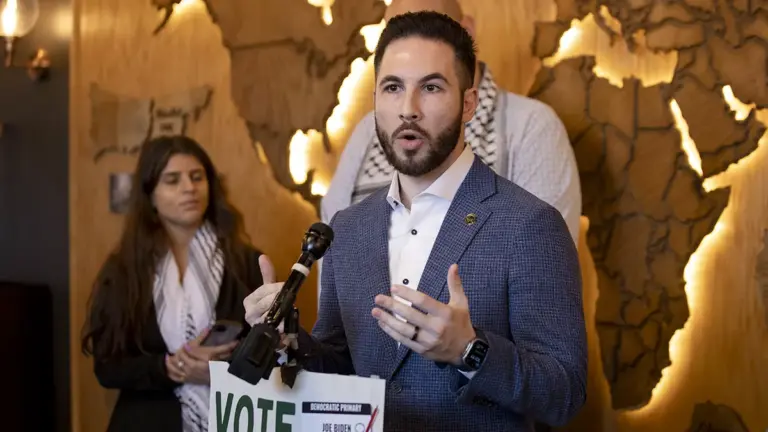
Margot Cleveland, a journalist with The Federalist, filed a civil rights lawsuit with the American Freedom Law Center (AFLC) against the city of Dearborn and Democratic Mayor Abdullah Hammoud, alleging the city violated her First and Fourteenth Amendment rights, including protections involving religious establishment, free speech and equal protection.

“The City of Dearborn spent taxpayer money to light up its streets and parks for Ramadan while stonewalling a resident who simply asked that Easter, Passover, and other Christian and Jewish holy days be treated the same way,” Robert J. Muise, AFLC co-founder and senior counsel, said in a statement. “That is a straightforward Establishment Clause violation, and the retaliation our client faced for speaking up about it only compounds the constitutional harm.”

PASTOR UNLEASHES ON DEARBORN AS RELIGIOUS TENSIONS ERUPT AT CITY COUNCIL MEETING: ‘ENOUGH IS ENOUGH’

Dearborn is home to one of the largest Arab American communities in the country. The city had 109,976 residents in the 2020 Census, and 54.5% reported Middle Eastern or North African ancestry. Michigan Avenue, the city’s main thoroughfare, is lined with businesses featuring Arabic-script signs and Middle Eastern cuisine. There are ten mosques within the city limits, according to an online directory.

Hammoud was first elected mayor in November 2021, becoming the first Muslim and Arab American to lead the city of Dearborn.

“What makes this case especially troubling is that City officials, up to and including the Mayor, responded to a citizen’s respectful request for equal treatment with silence, stonewalling, and outright hostility — including the Mayor’s own words telling a Christian resident he is ‘not welcome’ in his own city,” David Yerushalmi, an attorney on the case, said. “Our client is simply asking the City to treat Christians and Jews as equal citizens.”

Lawyers for Cleveland pointed to a September exchange between Hammoud and Christian pastor Ted Barham as evidence of what they allege is the city’s hostility toward Christians. Barham had raised concerns during a City Council meeting over the city’s decision to rename a street after Usama Siblani, publisher of The Arab American News, who has made statements expressing support for Hezbollah.

TRUMP INAUGURATION PASTOR SAYS DEARBORN CHRISTIANS ‘AFRAID’ TO SPEAK OUT IN MUSLIM-MAJORITY CITY

In the exchange, Hammoud called Barham a “bigot” and an “Islamophobe.”

“And although you live here, I want you to know as mayor, you are not welcome here,” Hammoud told the Christian pastor. “And the day you move out of the city will be the day that I launch a parade celebrating the fact that you moved out of the city… because you are not somebody who believes in coexistence.”

But Cleveland’s lawsuit alleges that city leaders ignored her requests for the city to also recognize Christian and Jewish holidays after she began seeing “Ramadan Kareem” banners and large crescent moons displayed across the city in spring 2025. A FOIA request revealed that the city had spent $1,500 on Ramadan banners and $5,000 on the crescent-moon display. The Dearborn Police Department was also selling Ramadan-themed T-shirts.

In emails to the city, Cleveland said she did not want the city to stop celebrating Muslim holidays but wanted equal recognition for Christian and Jewish holy days.

“I much prefer to ensure equality of faith traditions, as opposed to a challenge to the display,” Cleveland wrote in an email.

MASSACHUSETTS HIGH COURT BLOCKS CITY FROM DISPLAYING CATHOLIC SAINT STATUES HONORING FIRST RESPONDERS

Not only did the city allegedly ignore Cleveland’s requests, but in February 2026, it expanded its Ramadan displays, commissioning crescent-and-star lights that were displayed on municipal streetlights across the city.

“This initiative reflects who we are as a city,” Hammoud said in a statement.

Tensions between Cleveland and city officials continued in April, when Cleveland alleges she was told she could attend a community meeting as a resident but not as a journalist. The lawsuit also alleges Hammoud made what it describes as a “snide comment” about residents who criticize the city on social media to monetize their posts.

The lawsuit also alleges that in February 2026, the city expanded its Ramadan displays, commissioning crescent-and-star lights for municipal streetlights across the city.

SIGN UP TO GET THE POLITICS NEWSLETTER

Cleveland pushed back, according to the lawsuit, saying she was simply “a concerned resident who was ignored when I asked for the City to treat Christians and Jews equally.”

“Despite the repeated requests, they treated her as if she were an outsider and not a full member of the political community,” Muise told Fox News Digital.

The lawsuit comes during Michigan’s closely watched 2026 U.S. Senate race, with Democratic nominee Abdul El-Sayed, who is Muslim and the son of Egyptian immigrants, facing Republican nominee Mike Rogers for the state’s open Senate seat. Religion and antisemitism have become points of dispute in the race, with Republicans and some Democrats criticizing El-Sayed over his association with streamer Hasan Piker, who said the U.S. was worse than al Qaeda “pound for pound, as far as the number of deaths,” while arguing that U.S. military actions that kill civilians can amount to acts of terror.

At the same time, El-Sayed and his supporters have accused opponents of targeting him with anti-Muslim rhetoric.

Fox News Digital reached out to Hammoud’s office and Cleveland’s attorneys for comment.