
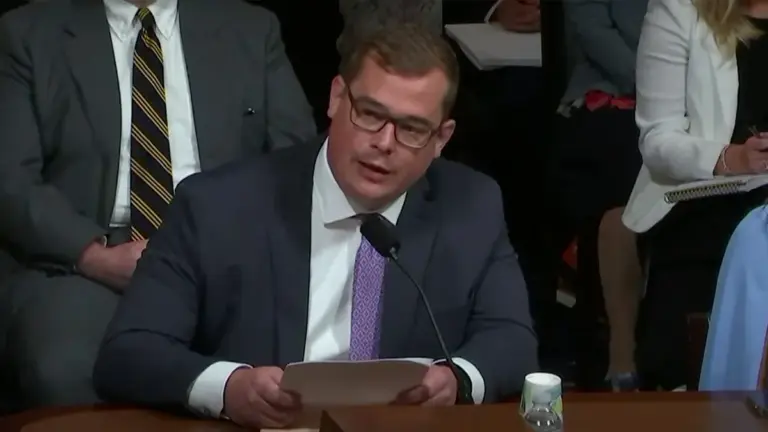
Reported guidance directing some ICE offices to pull back on arrests of illegal immigrants without criminal histories triggered backlash from policy hawks, raising questions whether the Trump administration is sending conflicting signals on enforcement.
The guidance was rescinded within hours, and Trump told Fox News there had been no change in an enforcement posture that prioritizes — but is not limited to — the “worst first.” The verbal guidance had been relayed to ICE field offices around the country, according to multiple sources familiar with the matter, though it remains unclear who initially issued the instruction.
Administration officials later characterized it as a misunderstanding rather than a formal policy change, and new guidance reaffirming there had been no change in enforcement policy was sent within hours. The episode nevertheless reinforced concerns among some immigration hawks who say recent public messaging from administration officials has suggested a narrower approach to interior enforcement than Trump campaigned on.
Mike Howell, a leader of the Mass Deportation Coalition and president of The Oversight Project, argued public criticism helped force the reversal but said the episode also fit what he views as a broader pattern of mixed messaging from DHS on interior immigration enforcement.
“[The guidance] was walked back, allegedly, which is great, and I think it was in large part walked back because people spoke out very, very loudly,” Howell said, while adding there is a troubling undercurrent to some of DHS’ messaging on the greater matter:
WHITE HOUSE BRINGS RECEIPTS AFTER MEDIA CLAIMS NONCRIMINAL ICE ARRESTS ‘SOARING’: ‘FALSE NARRATIVES’
As an example, Howell pointed to a tweet from DHS Secretary Markwayne Mullin posted one day before the ICE guidance news broke, in which the secretary said the department was “not conducting worksite operations in Kansas” but was targeting criminal illegal immigrants and those facing removal.
The post followed ICE operations in Kansas that prompted complaints from Sen. Roger Marshall, R-Kan., who said DHS had failed to coordinate with local authorities during operations in cities including Liberal.
“I’ve never seen a secretary put anything like that in writing,” Howell said. “[If it were] an Obama or Clinton or Biden DHS secretary, we would have called for impeachment if they said that.”
‘GONE TOO FAR:’ GOP CANDIDATE RUNS TO TRUMP’S LEFT ON SIGNATURE ISSUE IN DEEP RED DISTRICT

FIRST ON FOX: The Trump administration is seeking to disrupt with a sweeping set of sanctions a sprawling Sinaloa cartel network accused of corrupting Mexican officials just across the U.S. border.
Los Mayos, a powerful faction of the Sinaloa cartel, and its U.S.-born leader are accused of funneling fentanyl and drug money through California and hiring hitmen to kill rivals on American soil.
The Treasury Department, according to material exclusively obtained by Fox News Digital ahead of their public release on Tuesday, will sanction 21 individuals and 25 entities in a crackdown against Los Mayos and their alleged illegal activity within U.S. borders.
The targets of the sanctions include Ismael Zambada Sicairos, known as “Mayito Flaco,” a dual U.S.-Mexican citizen born in Anaheim, California, whom Treasury describes as the “undisputed head” of Los Mayos.
MEXICAN GOVERNOR FACING US DRUG CHARGES SEEKS LEAVE JUST ONE DAY AFTER RETURNING TO OFFICE
The action lays out how one of Mexico’s most powerful cartel factions allegedly maintains its grip on two critical trafficking corridors along the U.S. border — through political and police corruption, money laundering and violence that Treasury says has extended into Southern California.
It also exposes what Treasury describes as deep cartel penetration of government and law enforcement in Baja California, the Mexican state bordering California.
The Treasury says Sinaloa-linked “narco-corruption has reached the highest levels” of the state government, alleging that the ex-husband of Gov. Marina del Pilar Ávila Olmeda used his political influence to protect cartel operations and that a former Mexicali public security chief accepted bribes to allow the cartel to exert control over municipal police.
The allegations shed new light on a controversy that erupted last year when the U.S. revoked the visas of both Ávila and her then-husband, Carlos Torres Torres.
The State Department revoked Torres’ U.S. visa in May 2025 over what Treasury now describes as his “cartel affiliation and work on behalf of the Sinaloa cartel.” Olmeda’s U.S. visa was also revoked around the same time, though U.S. officials did not publicly disclose a reason for the action against her.
The Department of War also played a role in the effort through Joint Interagency Task Force-Counter Cartel, which works with federal law enforcement, intelligence agencies and Treasury to identify cartel financial and facilitation networks.
“These sanctions reflect the impact of sustained interagency collaboration and intelligence fusion in identifying and disrupting the networks that enable violent transnational cartels,” Brig. Gen. Maurizio Calabrese, director of JIATF-Counter Cartel, told Fox News Digital.
Calabrese said the task force contributed analysis and operational insight on cartel-linked financial and facilitation networks to support the broader effort behind the sanctions.
POTENTIAL SECURITY THREAT PROMPTS US TRAVEL SUSPENSION FOR BORDER CITY ON ALERT
Treasury also alleges the cartel’s reach extended directly into California.
Lorenzo Castillo Maldonado, an associate in Mayito Flaco’s network, allegedly hired hitmen on the cartel leader’s orders to kill rival cartel members in Southern California. Another part of the network allegedly worked with complicit Southern California money exchanges to collect bulk cash from U.S. drug sales and move the proceeds back to Mexico.
The sanctions are aimed in part at disrupting Los Mayos’ grip on the Tijuana and Mexicali “plazas,” strategic corridors Treasury says the cartel uses to move fentanyl and other narcotics into the U.S.
“Today’s action underscores that no cartel kingpin, corrupt Mexican government official, or financial facilitator is beyond the reach of Treasury’s authorities,” Treasury Secretary Scott Bessent said. “Our message is clear: the Trump administration will identify and disrupt any cartel actor who threatens our security or the integrity of our financial system.”
The designations effectively cut the targets off from the U.S. financial system, blocking property and assets under U.S. jurisdiction and generally barring Americans from doing business with them. Foreign financial institutions that knowingly facilitate significant transactions for sanctioned individuals could also face U.S. sanctions.
At the center of Tuesday’s action is Mayito Flaco, who Treasury says has emerged as the undisputed leader of Los Mayos following the July 2024 arrest of his father, longtime Sinaloa cartel kingpin Ismael “El Mayo” Zambada Garcia.
SINALOA CARTEL BOSS ‘EL MAYO’ SENTENCED TO LIFE, ORDERED TO PAY $15B IN DRUG TRAFFICKING PROFITS
El Mayo’s arrest set off a violent struggle between Los Mayos and Los Chapitos, the Sinaloa faction led by sons of Joaquin “El Chapo” Guzman. Treasury says the two factions remain locked in a costly internal war that has forced both sides to rebuild their leadership and alliances.
Mayito Flaco, 44, was born in Anaheim in 1982 and later filed a U.S. name change to Fernando Sicairos Aispuro, according to Treasury. He was federally indicted in California in 2014 on drug trafficking and money laundering charges and remains a fugitive in Mexico.
The Treasury says he now commands Los Mayos’ drug trafficking, murder, extortion, corruption and kidnapping operations.
The sanctions also target Torres’ brother, Luis Alfonso Torres Torres, whom Treasury accuses of collecting bribes and laundering illicit funds through companies and political campaigns.
Former Mexicali Public Security Director Pedro Ariel Mendivil Garcia is also being sanctioned. The Treasury alleges Mendivil accepted bribes from Los Rusos leader Juan Jose Ponce Felix, known as “El Ruso,” in exchange for allowing the cartel to exert control over municipal police, facilitate drug trafficking and carry out enforcement operations.
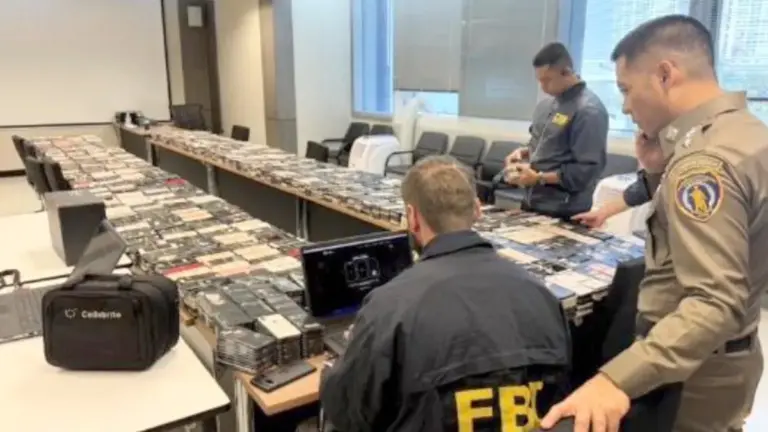
FIRST ON FOX: FBI Director Kash Patel says the bureau is expanding its global hunt for sprawling scam compounds that prey heavily on Americans, telling Fox News Digital that Operation Blackout has seized roughly $17 billion tied to the schemes.
“At 71 years old, I’m old enough to know that people my age are certainly often targeted because of our unfamiliarity with certain new technologies. Thanks so much for looking out for us,” one victim told the FBI.
“I watched my grandmother lose her life savings to scammers and I would love to see them all be put away,” said another victim.
Operation Blackout is the FBI’s global campaign to identify, disrupt and dismantle foreign scam compounds targeting Americans, combining overseas raids and asset seizures with efforts to cut off the networks’ communications, rescue trafficked workers and return stolen money to victims.
FBI WRAPS UP CYBERCRIME OPERATION TARGETING GLOBAL NETWORKS PREYING ON AMERICANS
Patel said the FBI-led initiative is targeting criminal syndicates operating massive scam compounds across Southeast Asia and the Middle East, where trafficked workers are forced to carry out fraud schemes against victims thousands of miles away.
“Unfortunately, the majority of the targets are senior citizens in America,” Patel told Fox News Digital, pointing to schemes carried out through social media, phone calls, text messages and Telegram.
“Our initiative, Operation Blackout, is to prevent, disrupt, and dismantle,” Patel added.
FBI SEIZES RECORD-SETTING $8 BILLION IN CRYPTOCURRENCY AMID INTERCONTINENTAL ‘SCAM COMPOUND’ CRACKDOWN
In one common version of the scheme, criminals cultivate an online friendship or relationship with a victim before steering them toward a fraudulent cryptocurrency investment platform.
Victims may initially believe their investments are generating significant returns, only to discover they cannot withdraw their money.
“These are towns, these are cities,” Patel said of the scam compounds targeted by the operation. “These are actual villages with structures where they force people into forced labor.”
An August operation at Cambodia’s roughly 200-acre O’Smach Resort scam compound involved searches of 28 buildings over three days and resulted in the seizure of 113 hard drives, 15 computers and 35 boxes of evidence, according to the FBI.
The bureau is also trying to stop Americans from becoming victims before their money ever reaches the scammers.
SCAMMERS ARE COMING FOR YOUR MONEY. HERE’S THE ONE THING YOU MUST NEVER DO
Under Operation Level Up, its domestic prevention component working with U.S. Secret Service, the FBI proactively identifies and contacts potential victims of cryptocurrency investment scams. The bureau says it has notified 10,406 victims and prevented an estimated $660 million in losses, while seizing or freezing another $122 million in cryptocurrency.
The FBI said 77% of the people it contacted did not know they were being scammed. The bureau has also referred 99 victims for suicide intervention, seized 584 scam websites and sent 7,670 scam accounts to private-sector companies for action.
THE SECRET LIST THAT TELLS SCAMMERS YOU’RE AN EASY TARGET
In September, a DOJ Scam Center Strike Force team that included FBI Honolulu personnel helped authorities in Madagascar take down 13 scam centers operated by Chinese organized crime syndicates and process more than 3,200 electronic devices.
Patel said the geographic shift is part of a broader migration by the criminal networks.
“That’s why you’re seeing the migration of these scam compounds to central and sub-Saharan Africa, which is where we are already pre-positioned to take them off,” Patel said.

SpaceX hit a major milestone on September 28 when its massive Starship rocket reached orbit for the first time and successfully deployed a batch of satellites. During the fourteenth test flight, the towering 407 foot vessel delivered 26 Starlink Version 3 satellites into low Earth orbit. Onboard cameras captured dramatic footage of the deployment, showing the satellites emerging from the ship like pieces of candy from a Pez dispenser, marking a transition for Starship from an experimental prototype to a productive cargo hauler.
These new Version 3 satellites represent a significant leap in technology over previous generations. Weighing roughly 4,400 pounds each, they are twice as heavy as their predecessors and far too large to fit on the company’s reliable Falcon 9 rocket. Beyond their size, they offer staggering performance boosts, including a tenfold increase in downlink capacity and an uplink capacity that is twenty two times greater than Version 2 models. This efficiency allows SpaceX to pack significantly more data capability into every single launch.
The successful mission paves the way for an incredibly ambitious expansion plan led by CEO Elon Musk. The goal is to eventually build a constellation of around 100,000 Starlink V3 satellites, requiring nearly 1,700 launches just to establish the initial network. Even more daring is the vision for Starmind AI data centers in orbit and a target of 10,000 flights per year by 2030. Such a rapid pace would rely entirely on Starship being fully and quickly reusable, shifting the paradigm of how often humanity accesses space.
While this flight proves Starship can handle heavy lifting in orbit, several hurdles remain before it can take humans to deeper destinations. To reach the moon or Mars, SpaceX must still demonstrate orbital refueling capabilities. Additionally, since Starship is vastly larger than the current Crew Dragon capsule used for astronauts, the company needs to develop and test complex life support systems scaled for such a massive vehicle. Despite these challenges, today’s victory brings those futuristic dreams one giant step closer to reality.
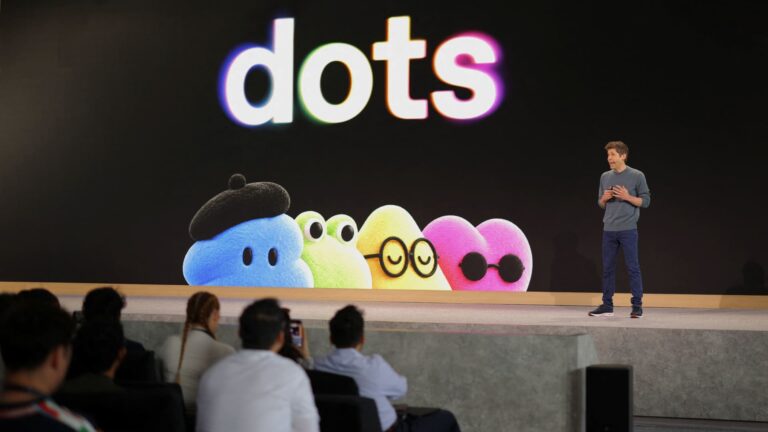
OpenAI turned heads at its latest DevDay in San Francisco, where CEO Sam Altman unveiled a sweeping array of updates designed to transform the chatbot into a comprehensive operating system for productivity. Among the biggest reveals were plugin extensions, which allow developers to embed entire applications, dashboards, and workspaces directly into ChatGPT and Codex. This shift toward deeper integration was paired with the introduction of GPT-6.1 Sol, a high-performance model launched just a week after its predecessor to enhance professional workflows and agentic coding capabilities.
To cater to power users and enterprise clients, the company introduced a new Pro 500 tier featuring an ultrafast speed setting that drastically reduces latency for those using the API and Codex. Addressing long-standing concerns regarding corporate security, Altman also previewed OpenAI Private Intelligence. This new framework offers zero data retention and private inference, ensuring that sensitive information remains off OpenAI servers while still leveraging the lab’s most advanced frontier models. These features were developed alongside major partners like Cisco, Databricks, and Snowflake to ensure they meet strict industry safety standards.
Beyond the technical roadmap, the atmosphere surrounding DevDay was charged with financial anticipation. Reports confirmed that OpenAI is currently in early stage discussions with investors for another massive funding round that could reach approximately 30 billion dollars. Driven largely by aggressive investor demand, this potential injection of capital comes on the heels of a historic valuation earlier this year and serves as a precursor to a highly anticipated initial public offering expected next year.
As the keynote wrapped up before thousands of attendees, Altman emphasized his vision of AI as a tool for personal empowerment rather than mere automation. He noted that every feature released throughout the day was intended to give people more control over their lives and greater capacity for discovery. With various executives scheduled to discuss scaling these technologies at upcoming forums, OpenAI appears focused on bridging the gap between experimental research and indispensable global infrastructure.

The Dow Jones Industrial Average faced downward pressure during Tuesday trading as investors reacted to a volatile mix of economic indicators and surging government debt costs. Markets felt the weight of a key Treasury yield climbing to its highest level in twenty four years, creating an environment of uncertainty that dragged down the blue chip index even as other major benchmarks remained mixed heading into the closing bell.
Much of the day’s movement was driven by fresh data regarding consumer confidence and the state of the labor market, leaving traders to weigh whether current trends signal resilience or overheating. While the Dow struggled to maintain its footing, it did manage to recover slightly from its intraday lows, suggesting some late session support despite the overarching headwinds caused by rising yields.
Amidst the broader volatility, specific growth names continued to attract attention from active traders looking for strategic entry points. Tech giant Nvidia and energy player Bloom Energy both emerged as notable equities testing levels that could offer attractive buying opportunities for those betting on long term artificial intelligence and green energy trends.
As Wall Street digests these latest shifts, all eyes remain fixed on upcoming corporate catalysts including earnings reports from semiconductor heavyweights like Micron. These results are expected to provide further clarity on whether the appetite for AI hardware can continue to offset the macroeconomic pressures exerted by shifting interest rates and treasury fluctuations.
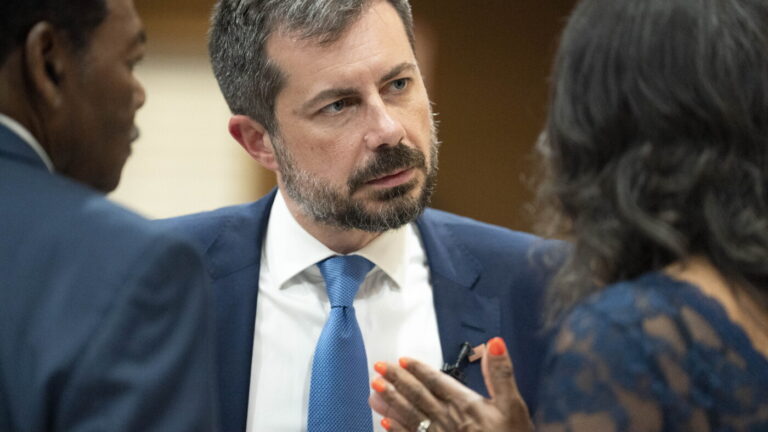
Former Transportation Secretary Pete Buttigieg is sounding the alarm over the Trump administration’s decision to roll back fuel economy standards, arguing that the move could ultimately cost drivers more money and weaken the standing of American automakers on the world stage. In a recent conversation with NPR, the Democrat challenged the official narrative from the Transportation Department, which suggests that easing these requirements will lower the upfront sticker price of new vehicles by roughly thirteen hundred dollars.
Buttigieg pointed out a critical flaw in those calculations, noting that while buyers might save initially, they stand to lose significantly more at the pump. According to government estimates, drivers could face sixteen hundred dollars in additional fuel costs over the lifetime of a vehicle. He argued that these projections likely underestimate the true financial burden on consumers, especially when factoring in volatile gas prices and potential tariffs impacting the automotive sector.
The debate centers on Corporate Average Fuel Economy standards, which mandate that manufacturers hit specific efficiency benchmarks across their entire fleet of cars. While many American automakers have praised the rollback as a way to better align production with current consumer preferences, Buttigieg reminded listeners that the industry has a long history of resisting stricter regulations only to adapt successfully once they are implemented.
Beyond the immediate cost to consumers, Buttigieg warned that loosening these rules creates a strategic vulnerability for the United States. By reducing the pressure to innovate and transition toward more efficient technology, he believes the U.S. is effectively handing a competitive edge to China. As Beijing aggressively expands its electric vehicle industry and seeks a dominant share of the global market, any slowdown in American innovation could prove costly for domestic manufacturing in the long run.

OpenAI has officially entered the race for autonomous personal assistants with the unveiling of Dots, a suite of always-on AI agents introduced during the company’s DevDay 2026 event in San Francisco. Powered by the new GPT-6 Astra model, these agents move beyond the traditional back-and-forth nature of chatbots to act as proactive digital companions. Represented visually as customizable blobs, Dots are designed to handle multi step projects independently by crawling the web and integrating data from a user’s connected applications to learn their preferences over time.
The practical utility of these agents was highlighted through demos showing Dots managing real world logistics without constant prompting. In one instance, a Dot noticed a conflict on a user’s work calendar and proactively suggested food delivery options via GrubHub. Other examples showcased complex collaborations, such as launching entire websites. To ensure accessibility, OpenAI is integrating Dots into ChatGPT, Slack, and Microsoft Teams, while offering high tier Pro users the ability to interact with their agents directly through iMessage or RCS messaging on Android.
Beyond individual productivity, OpenAI is positioning Dots as a major play for the enterprise market. CEO Sam Altman announced specialized versions of the agents tailored for corporate functions like legal analysis, accounting, and email marketing. This push toward AI coworkers comes at a time when personal agents are seeing a massive surge in popularity following the success of Meta’s Muse. By introducing highly capable specialist bots alongside general purpose ones, OpenAI is clearly attempting to capture both the consumer excitement generated by Meta and the stability of long term business contracts.
Despite the convenience, the transition to always-on automation brings significant privacy and security concerns. Because Dots require deep access to personal data and third party apps to function effectively, there are inherent risks regarding accidental data leaks or vulnerability to online adversaries. While OpenAI has implemented safety guardrails and custom rules allowing users to set strict boundaries on sensitive actions like password changes, experts warn that exercising caution remains essential when delegating life management tasks to nascent software. For now, access begins with Pro subscribers paying one hundred dollars a month before expanding to a wider audience.

Boeing shares took another hit today after reports surfaced of a new technical issue affecting the landing phase of the 737 MAX. Investors reacted quickly to the news, sending the aerospace giant’s stock sliding as concerns mount over the company’s ability to maintain a clean safety record following years of scrutiny. While the specifics of the glitch are still being analyzed, the timing could not be worse for a manufacturer already struggling to regain full public and regulatory trust.
The latest complication centers on systems that activate during descent and touchdown, raising questions about whether current quality control measures are sufficient. Industry analysts suggest that even minor setbacks at this stage can have outsized impacts on market sentiment, especially when they involve critical flight phases like landings. Airline customers, who rely on predictable delivery schedules and flawless safety profiles, are likely watching these developments with increasing anxiety.
Company representatives have yet to provide a detailed timeline for a fix, though they typically emphasize their commitment to working closely with aviation authorities to resolve such anomalies. However, Wall Street seems less patient than it once was. The dip in share price reflects a growing skepticism among traders who fear that Boeing remains trapped in a cycle of patching old problems while new ones emerge from the assembly line.
As regulators keep a close eye on every move Boeing makes, the pressure is mounting for leadership to prove that systemic changes have actually taken root within the factory walls. For now, shareholders are left bracing for further volatility as the industry waits to see if this landing issue will result in widespread fleet inspections or more restrictive mandates from federal oversight agencies.
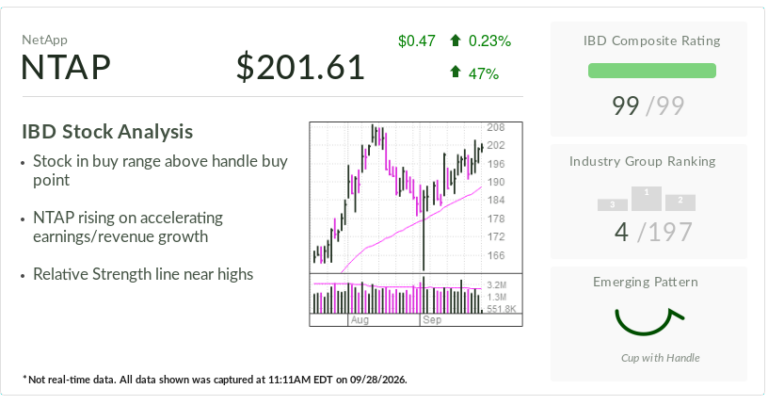
NetApp has found itself firmly in the spotlight as the latest stock of the day for Investor’s Business Daily, riding a wave of momentum fueled by the ongoing artificial intelligence boom. The company has seen its shares rally significantly as investors bet on its ability to provide the critical data storage infrastructure needed to power massive AI workloads. This surge reflects a broader market trend where hardware providers capable of supporting generative AI are seeing rapid valuation growth.
Despite the recent gains, analysts suggest that NetApp is now entering a pivotal phase where it must prove this rally is sustainable. The excitement surrounding AI capabilities often leads to steep climbs in share price, but these peaks frequently face tests when companies report their actual quarterly earnings or updated guidance. Investors are now looking for concrete evidence that AI integration is translating into tangible revenue growth rather than just speculative enthusiasm.
The next few weeks will likely serve as a litmus test for whether NetApp can maintain its upward trajectory or if it will succumb to profit taking. As the market scrutinizes how effectively the firm manages its transition toward more AI centric offerings, technical indicators will be closely watched alongside fundamental performance. Whether NetApp continues its climb depends largely on its ability to meet high expectations in an increasingly competitive enterprise data landscape.