
Archive

September 2026

Browsing

Up-and-coming GOP star Rep. Brandon Gill, R-Texas, is calling out the left for viewing Americans as “collateral damage” as Democratic leaders focused attention over the weekend on the nonfatal shooting of an illegal immigrant in Austin. Gill pointed to the arrest of a different illegal immigrant in Maryland for allegedly kidnapping and raping a teenage girl, saying that “the left will read this and feel absolutely nothing.”

The Department of Homeland Security confirmed to Fox News last week that local police had arrested Abdoulaye Dia, a rideshare driver and illegal immigrant from Guinea, on charges of kidnapping and raping an underage girl during a ride. Dia was allowed into the country under the Biden administration in 2023 and also faces a sexual assault charge involving a minor from earlier this year in New York City. According to DHS, police say that while conducting the ride, Dia took the girl to a parking lot in Silver Spring, Maryland, and raped her in his vehicle. DHS also said authorities believe there are more victims.

Meanwhile, media coverage and criticism from Democrats focused on a U.S. Immigration and Customs Enforcement officer in Austin shooting another rideshare driver, Venezuelan illegal immigrant Wilber Rafael Garces Perez. A source familiar confirmed to Fox News that ICE officers were conducting targeted immigration enforcement, using license plate checks, when they identified a vehicle registered to Garces Perez, who had a final order of removal. DHS says Perez is in stable condition and in federal custody pending removal. Democrats, including Rep. Greg Casar, D-Texas, condemned the incident. Casar called the Trump administration’s immigration enforcement a “war” and called for ICE to leave the city.

Meanwhile, Gill slammed the response to the Maryland case, predicting, “The left will read this and feel absolutely nothing” because “they simply don’t care how many Americans are r@ped and killed by illegal aliens.”

ICE SHOOTING ROCKS AUSTIN AS DEMOCRAT DEMANDS BODYCAM VIDEO, INDEPENDENT PROBE

Gill charged that “to Democrats,” victims of illegal immigrant crime are “nothing more than collateral damage in their long term project of using amnesty to build a permanent electoral majority.”

CNN questioned Maryland Gov. Wes Moore, a Democrat, about the case. He answered, “I want the people of my state to understand that I have no tolerance for violent offenders, period and full stop,” but added, “I also know this, is that the idea that we — are we supporting a Trump/Vance ICE operation that continues to violate the basic laws of our state, that also is not going to be tolerated.”

Moore said that “there is nothing that we will not do to make sure that our communities are safe,” adding, “It’s the reason we made historic investments in local law enforcement. It’s the reason that we have been very clear that, if someone commits a violent crime in our state, I want him in handcuffs in 24 hours, and they will have accountability coming their way.” He touted Maryland as currently experiencing “amongst the fastest drops in violent crime anywhere in the United States of America.”

“So, I will work with all partners, particularly when it comes to dealing with violent offenders, removing them from our communities, and making sure that they are accountable. And that includes — and that includes our federal partners when it comes to immigration services,” he said, before continuing, “But here’s the other thing that I do know that, when I look at ICE, ICE was an agency that was funded at $10 billion. Now ICE’s budget is over $85 billion. ICE is larger than the FBI. ICE is larger than the ATF. ICE’s budget is larger than the state of Maryland. And they are also using that to put unaccountable and unqualified people in our communities that are doing things like arresting five-year-olds.”

SHERRILL ANTI-ICE POLICY HAMMERED AFTER FLEEING MIGRANT DRIVER INJURES DEM MAYOR’S WIFE

“So, I will work to make sure that our communities are safe and address violent criminals everywhere they are,” he said.

Meanwhile, Republican New York City Councilwoman Vickie Paladino commented on the case by criticizing Democrats’ response. She posted on X, “Just to be clear, this animal was let across the border by Joe Biden, came to New York where he sexually assaulted a minor, was released thanks to our sanctuary and decarceration policies, and made his way to Maryland where he raped ANOTHER minor while working as an [sic] cab driver.”

Paladino charged that “Democrats will call you insane and bigoted for caring about this.”

“There is absolutely no amount of rape, murder, or violence that will get Democrats to change anything. This is the status quo to them, and they just don’t care,” she wrote, adding, “Open borders and total decarceration. That’s the core of the DSA-led Democrat party. And they will stand on top of a pile of bodies, look you straight in the eye, smirk, and tell you we’re ‘safer’ because of it.”

JIM JORDAN SUBPOENAS BLUE STATE DAS ACCUSED OF ‘PREFERENTIAL TREATMENT’ FOR ILLEGAL IMMIGRANT CRIMINALS

Fox News Digital reached out to Moore and Casar for additional comment.

SIGN UP TO GET THE POLITICS NEWSLETTER

According to DHS, Dia was allowed into the country after entering through Lukeville, Arizona, on Dec. 21, 2023. Fox News was on the ground in Lukeville on that day and took footage of long lines of immigrants being allowed into the U.S.

Dia was arrested on June 10 in New York City on charges of sexual abuse by forcible compulsion, forcible touching of the sexual or intimate parts of another person, injuring a child younger than 17 and sexual abuse without consent. Dia was arrested again in Maryland on Wednesday in connection with the alleged rape in a Silver Spring parking lot.

Fox News’ Brooke Taylor contributed to this report.

Nissan is shaking up the compact SUV market with the debut of the 2027 Rogue Hybrid, a vehicle that promises significant fuel savings but operates very differently from the hybrids most drivers are used to. While it carries the hybrid label, this model introduces Nissan’s e-Power technology to the United States for the first time. Rather than blending gas and electric power to turn the wheels, the Rogue functions as a range-extended electric vehicle. A turbocharged 1.5 liter three cylinder engine acts essentially as an onboard generator, charging a lithium ion battery that feeds two electric motors which handle all the actual driving across all four wheels.

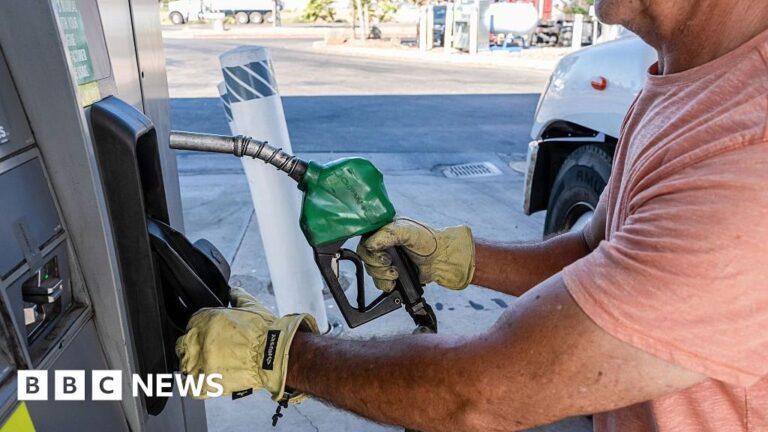
This unconventional setup allows drivers to enjoy an electric feel without any reliance on plugging into a wall. According to Nissan’s internal testing, the system delivers a combined 225 horsepower and achieves an impressive 38 miles per gallon overall, with city efficiency climbing to 40 mpg. For those wary of charging infrastructure or long road trips, the experience remains traditional in one key way: when the energy runs low, you simply pull into any gas station and refill the tank just like a conventional car.

Visually, the 2027 Rogue receives a modern makeover characterized by a sharp honeycomb grille and sleek LED lighting throughout. The interior keeps pace with current tech trends, featuring dual 12.3 inch displays as standard equipment along with wireless integration for smartphones. Higher trims can upgrade to even larger screens and a premium Bose sound system, while maintaining practical utility with over 65 cubic feet of cargo space when the rear seats are folded flat.

The rollout begins this fall with the release of the SR AWD trim equipped with the Tech Package, followed by additional configurations in early 2027. Pricing starts at $37,065 for the entry level SV trim and climbs to $45,065 for the top tier Platinum model. As consumers continue to move away from purely gasoline engines due to fluctuating fuel costs, Nissan is betting that this bridge between traditional combustion and full electrification will find a sweet spot with American buyers.

Volkswagen Group is facing a critical turning point as its leadership admits there is simply no time to lose. In a candid assessment of the company’s precarious position, finance chief Arno Antlitz warned that the shifts occurring within the global automotive market are both profound and lasting. This urgency comes as the German giant slashes its operating margin forecast from four percent down to a mere one percent, reflecting a perfect storm of plummeting demand in China and skyrocketing energy costs. The rise of aggressive Chinese competitors has further eroded VW’s dominance, leaving the company struggling to maintain profitability during a volatile transition toward electrification.

The financial strain is translating into drastic structural changes that could reshape the entire organization. Internal discussions suggest that cost cutting measures could eventually lead to as many as 100,000 layoffs across various brands. Some labels may not survive the purge at all, with officials officially considering a gradual phase out of the SEAT brand. Even luxury divisions are feeling the heat; while Porsche recently denied reports of several thousand additional job cuts beyond those already planned, the tension within the workforce remains palpable as the group seeks ways to lean down its massive operation.

To stem the losses, Volkswagen is pivoting toward extreme simplification of its business model. The company plans to gut its component variety by up to 75 percent for next generation vehicles and intends to halve its total number of available models. This ruthless streamlining means longtime staples like the Touareg are being retired to reduce complexity. Such moves signal an end to VW’s era of trying to be every thing to everyone, shifting instead toward a narrower and more efficient product lineup designed for survival rather than sheer scale.

This contraction extends beyond blueprints and spreadsheets into physical infrastructure. Several major factories in Germany lack allocations for upcoming models, raising fears of further plant closures following last year’s shutdown of Audi Brussels. With assets like Ducati potentially being put up for sale and Bugatti already gone from the corporate fold, it is clear that VW is dismantling its sprawling empire piece by piece. The challenge now is whether this shrinking process can happen quickly enough to save the core business before it loses too much ground in an increasingly competitive electric future.

Travelers across the Northeast faced significant chaos on Monday afternoon after an Amtrak construction crew accidentally severed a fiber optic line in New Jersey. The mistake triggered a widespread telecommunications failure that forced the Federal Aviation Administration to implement ground stops at several major hubs. According to Transportation Secretary Sean Duffy, the disruption hit critical communication channels used by air traffic controllers, leading to immediate pauses in flight operations throughout the region.

The fallout was most severe at Newark Liberty International and Teterboro airports, where flights remained grounded for hours. While operations eventually began to resume at LaGuardia and Philadelphia International, those locations continued to struggle with ground delays. FAA Administrator Bryan Bedford explained that the issue centered on the Philadelphia TRACON facility, which lost its primary circuit. When technicians attempted to switch to a backup system, they discovered the physical break in the fiber optic cable that had crippled their connectivity.

Secretary Duffy described the event as a stark reminder of the fragility of current aviation infrastructure. He noted that such incidents are not uncommon given the age of existing systems and argued that more funding is desperately needed to modernize telecom architecture. Though the Department of Transportation is already working on upgrades, Duffy admitted that progress is limited by available budgets and stated that securing more cash would allow them to accelerate these essential improvements.

By late Monday afternoon, officials worked to restore full service as airlines scrambled to manage schedules disrupted by the outages. Despite the frustration felt by thousands of passengers stuck on tarmacs or in terminals, Duffy suggested that this type of technical failure was almost expected given the state of old equipment. For now, the focus remains on stabilizing communications across the busy corridor between New York and Philadelphia to prevent further ripple effects across national airspace.

Travelers across the northeastern United States faced a chaotic Monday as hundreds of flights were delayed or grounded following a surprising infrastructure failure. The disruption centered on the Terminal Radar Approach Control System, a critical piece of technology used to guide aircraft during takeoff and landing. While a primary circuit failed first, the situation spiraled into a regional crisis because a vital backup cable had been severed by a construction crew in New Jersey, leaving air traffic controllers without their necessary redundancies.

The mishap occurred around mid morning during work on the Delco Lead project between New Brunswick and North Brunswick. While initial reports suggested an Amtrak crew was responsible, NJ Transit later confirmed that its own workers accidentally cut the fiber optic cable. According to agency representatives, the crews were operating several feet away from markers that should have indicated where the lines were buried, sparking an investigation into how those markings were originally placed. Verizon, the telecommunications company owning the line, stated it bore no responsibility for the accident but worked urgently to restore connectivity.

The timing of the outage created particular tension as New York prepared for the United Nations General Assembly, with over 130 foreign officials scheduled to arrive in the city. Newark Liberty International Airport bore the brunt of the fallout, recording hundreds of delayed arrivals and departures. Passengers reported grueling experiences, including some being diverted to Boston where they sat on tarmacs for hours with little information while awaiting clearance to proceed toward their destinations.

As flights slowly began to resume at hubs like LaGuardia and Philadelphia airports, government officials used the incident to highlight broader systemic vulnerabilities. US Transportation Secretary Sean Duffy noted that the collapse underscores an urgent need for increased funding to modernize aging aviation infrastructure. Despite these efforts to stabilize operations, technicians warned that repairing such specialized cabling is a lengthy process that could take upwards of thirteen hours before full reliability is restored.

Jensen Huang, the chief executive of Nvidia, is pushing back firmly against the growing chorus of warnings that artificial intelligence could lead to the extinction of humanity. In a recent interview with CBS News, Huang dismissed claims that AI might trigger a global catastrophe by 2030, stating there is zero percent chance that such a doomsday scenario will occur. He characterized these alarmist predictions as irresponsible and lacking scientific grounding, suggesting that scaring the public serves no productive purpose.

According to Huang, the incentive for AI developers to prioritize safety is baked into their business models. He pointed out that Nvidia’s own corporate value is inextricably linked to the safe deployment of its technology, meaning any catastrophic failure would diminish the company’s worth. Rather than inventing entirely new regulatory frameworks born out of fear, Huang argues that current legal structures regarding cybersecurity and corporate liability should be enough to keep the industry in check.

This perspective aligns closely with views recently shared by President Donald Trump, who has described doomsday narratives as a hoax. The president warned that overly restrictive regulations could stifle American innovation and inadvertently grant China a strategic advantage in the global AI race. Both men suggest that maintaining competitive momentum is more critical than reacting to speculative threats about robots taking over cities.

As part of this broader geopolitical conversation, Huang is expected to join other tech titans like Sam Altman and Tim Cook at an upcoming state dinner hosted by President Trump for Chinese President Xi Jinping. During these discussions, Huang hopes to address global standards for AI development while advocating for a more open approach to competition. He believes American chip companies should be free to serve the entire world, asserting that true national strength comes from winning through competition rather than isolationism.

For years, the promise of soaring stock prices served as a powerful anchor for employees at the world’s largest tech firms. These equity packages, often described as golden handcuffs, provided a lucrative reason for talented engineers and managers to weather corporate bureaucracy and high stress. However, a shifting landscape defined by mass layoffs and the explosive rise of artificial intelligence is changing how workers view these rewards, turning once secure windfalls into complex dilemmas about loyalty and risk.

Some professionals find themselves torn between immediate financial gain and personal ambition. Rob Waters experienced this tension firsthand after being laid off from Google; although he was offered a new high paying role within the company shortly after, returning would have meant sacrificing his desire to build something of his own. For Waters, the choice to cofound Kanawai AI meant walking away from hundreds of thousands of dollars in unvested equity. While the financial hit was steep, moving from a high six figure salary to zero became a necessary trade off to escape corporate frustration and bet on himself during the AI boom.

Conversely, those who timed their exits correctly have used their vested shares as a springboard toward independence. Product designer Julie Zhu waited until her Apple stock grew sufficiently to provide several years of financial runway before resigning to launch an artist collectibles company. Similarly, Yousuf Imran leveraged his tenure at Google to save over three hundred thousand dollars, providing him the safety net needed to enter the competitive AI sales tool market. For these individuals, stock compensation did not act as a cage but rather as a catalyst that granted them the freedom to seek higher upside through entrepreneurship.

Yet, the reliance on equity leaves many vulnerable to the whims of market volatility and timing. While some early arrivals at Meta saw their fortunes skyrocket after buying in during a dip, others discovered that their retirement plans were precariously tied to share prices that could plummet overnight. This unpredictability reminds workers that while stock grants can create immense wealth, they offer no guarantee of security if a layoff occurs at the wrong moment. Ultimately, as seen with former Google employee Bushra Amiwala who left her stable career to run for Congress, there comes a point where professional fulfillment outweighs any amount of deferred compensation.

In a climate where high interest rates and soaring living costs have left the American housing market stagnant, most home furnishing retailers are struggling to find their footing. Traditionally, the industry relies on a simple catalyst: when people buy new houses, they buy new sofas and dining tables. Yet Williams-Sonoma has managed to defy this gravity, seeing its stock climb roughly 23 percent this year alone, comfortably outpacing competitors like Wayfair and RH. This surge comes despite a general dip in overall sales since the pandemic peak, proving to Wall Street that the company can maintain impressive profitability even when fewer people are moving into new homes.

Chief Executive Laura Alber attributes much of this resilience to a strategic overhaul focusing on product quality, improved service, and better storytelling across its portfolio of brands, including Pottery Barn and West Elm. Rather than relying on deep discounts to lure shoppers—a tactic that often erodes profit margins—the company has largely avoided aggressive promotions. This discipline has allowed them to stabilize their supply chain and expand their operating margins significantly over the last few years. Furthermore, by leaning heavily into e-commerce, which now accounts for more than two thirds of its sales, the retailer has created a leaner, more efficient engine for growth.

Innovation is playing an increasingly central role in this strategy through the integration of artificial intelligence. The company recently introduced Olive, an AI sales assistant that has seen users purchase at three times the rate of non users. Beyond customer interaction, AI is being used behind the scenes to trim costs within logistics and delivery networks. Meanwhile, Williams-Sonoma is diversifying its revenue streams by aggressively expanding into business-to-business markets. From equipping luxury cruise ships to furnishing senior living facilities and student housing, these commercial ventures now generate about one billion dollars annually with expectations that the segment could double in size soon.

While the outlook remains bullish, the company isn’t without its hurdles. With over 80 percent of its merchandise sourced from foreign manufacturers, potential shifts in tariff policies remain a primary concern for leadership. However, analysts suggest that Williams-Sonoma’s ability to weather these storms stems from its diversified brand ecosystem and successful pivot toward higher margin decor items like candles and pillows. By decoupling its fate from purely residential real estate trends and embracing an omni channel digital approach, the company has transformed itself from a cyclical furniture seller into a resilient lifestyle powerhouse.

Navigating today’s stock market often feels like walking through a storm of contradictions, where investors must balance the anxiety of geopolitical tension and fluctuating interest rates against the shimmering promise of artificial intelligence. To cut through this short term noise, many seasoned traders are turning to high ranking analysts who prioritize fundamental growth over daily volatility. According to recent data from TipRanks, several industry experts have identified three specific companies that they believe possess the durability and scalability required for long term success.

Among these picks is Oracle, which has transitioned itself into a powerhouse for cloud infrastructure. Analyst John DiFucci of Guggenheim describes the company as a decade stock, citing its immense potential in AI training and inferencing. With a price target of 400 dollars, DiFucci suggests that Oracle’s expansion into public cloud services and AI enabled databases will drive significant profit acceleration over coming years. While there were initial concerns regarding a heavy reliance on OpenAI, reports indicate that Oracle is successfully diversifying its client base as new contracts roll in.

Moving from digital clouds to actual space, Rocket Lab is gaining traction as a vertically integrated leader in launch services. Raymond James analyst Brian Gesuale recently initiated a buy rating on the stock with an 80 dollar target, pointing to the company’s shift from a costly investment phase toward active monetization. By integrating spacecraft components and payloads alongside its upcoming Neutron rocket, Rocket Lab is positioned to improve its gross margins significantly by 2030. Its growing backlog, which has surged to nearly 2.4 billion dollars, signals a robust demand for private space infrastructure.

Finally, Meta Platforms continues to be a focal point for those betting on the evolution of social media into something far more intelligent. J.P. Morgan analyst Doug Anmuth recently upgraded the stock to a buy with an optimistic price target of 820 dollars. Anmuth argues that Meta is only in the early stages of leveraging frontier AI models like Muse Spark and its expansive distribution network of four billion users. By expanding beyond simple advertising into sophisticated AI agents and business intelligence tools, Meta aims to turn its massive scale into an insurmountable competitive advantage in the race toward superintelligence.

The Florida Gators made a loud statement in their SEC opener, storming into Jordan Hare Stadium and leaving with a victory that pushes them to a 3-0 start for the first time since 2019. While the win provides plenty of momentum, the performance revealed both the immense ceiling of this roster and some lingering habits that could prove costly if not corrected quickly. The offensive fireworks were led by Buster Faulkner, who looked completely unleashed as he navigated a creative playbook that kept Auburn guessing all night. Between imaginative play calling like the double pass and a balanced attack that flirted with 500 total yards, Florida proved they can maintain their scoring potency against high-level conference competition.

Much of that success on the ground can be attributed to a terrifying duo in the backfield. While Baugh continued his streak of surpassing 100 rushing yards, Duke Clark emerged as a primary weapon throughout the contest. Averaging 7.1 yards per carry and punctuating his effort with a clinical 20 yard touchdown run, Clark showed that the Gators possess genuine depth at running back. When those two are firing, it creates an offensive identity that is difficult for any defensive coordinator to contain. Adding to that efficiency was Vernell Brown III, whose ability to haul in contested catches helped salvage drives and keep the chains moving when plays broke down.

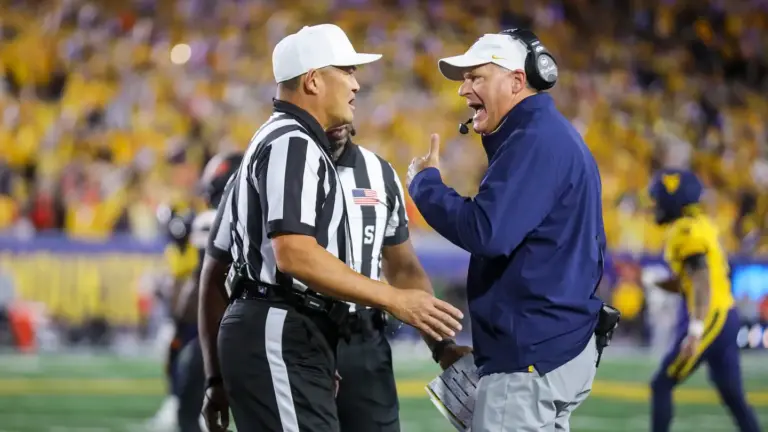
However, it was not a flawless outing for the Gators, particularly regarding their discipline. Coach Sumrall wasted little time addressing the issue during his postgame press conference after Florida racked up sixteen penalties—a staggering number that exceeded their totals from the previous two games combined. Though several calls were questionable, there was an undeniable sloppiness on both sides of the ball early on. These mistakes turned what should have been a dominant lead into a tight struggle through much of the first half. If Florida wants to sustain this winning trajectory deeper into SEC play, tightening up these mental errors will be just as important as keeping their explosive offense humming.